Shortwave listening and everything radio including reviews, broadcasting, ham radio, field operation, DXing, maker kits, travel, emergency gear, events, and more
Many thanks to SWLing Post contributor, Bill Hemphill, who writes:
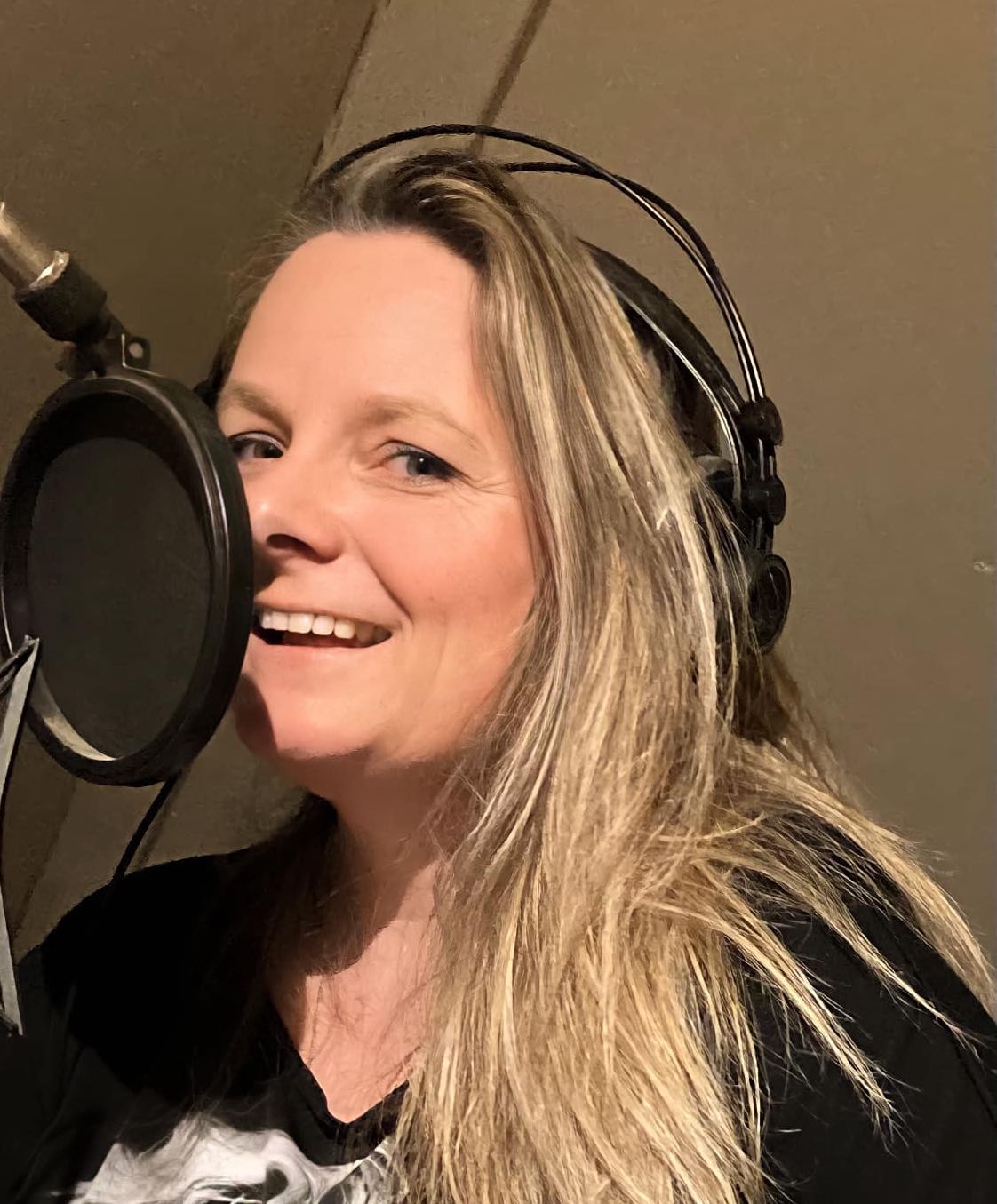
I ran across a reference to Radio Delta International Shortwave, a Hollands station on 6020 kHz. The reference was to a song that was recorded for them by Silvia Swart en het Radio Delta lied. Which (according to Google) translates to The Radio Delta Song. It’s on YouTube and I like the sound of it even thought I don’t know Dutch.
I learned that his store carries Pirate Music as well as the usual Dutch and other stuff a record store would normally carry. Now I understand her interest in radio.
One last song I found that she recorded with her group, The Greenlights:
Mijn opa is een zendpiraat
Which translate to: My grandfather is a radio pirate
Maybe one of the forum members can give us a quick translation/summary of the songs.
73
Bill Hemphill
WD9EQD
Thank you for sharing this, Bill! Any fans of Silvia Swart out there? Please comment!
A ceremony has been held to mark 80 years since the start of radio service at Japan’s only station broadcasting programs overseas on shortwave bands.
The KDDI Yamata Transmitting Station in Koga City in Ibaraki Prefecture, north of Tokyo, is used by NHK World Radio Japan.
About 50 officials from NHK, KDDI and other entities took part in the ceremony on Wednesday.
The chief of the communications ministry’s Kanto Bureau of Telecommunications, Tsubaki Yasufumi, said remotely at the event that he honors the station’s 80 years of stable operations. He also said he hopes for continued efforts so that programs from Japan can be broadcast overseas.
Terada Kenji of the NHK Engineering Administration Department said shortwave broadcasting served as a lifeline on many occasions such as the 2014 coup in Thailand. He said he wants to express gratitude to all the people involved in shortwave broadcasting.
After the ceremony, the head of the station, Saito Toshimitsu, said it plays an important role in providing information from Japan. He added that he will keep working hard so that the station will be passed down to younger generations.
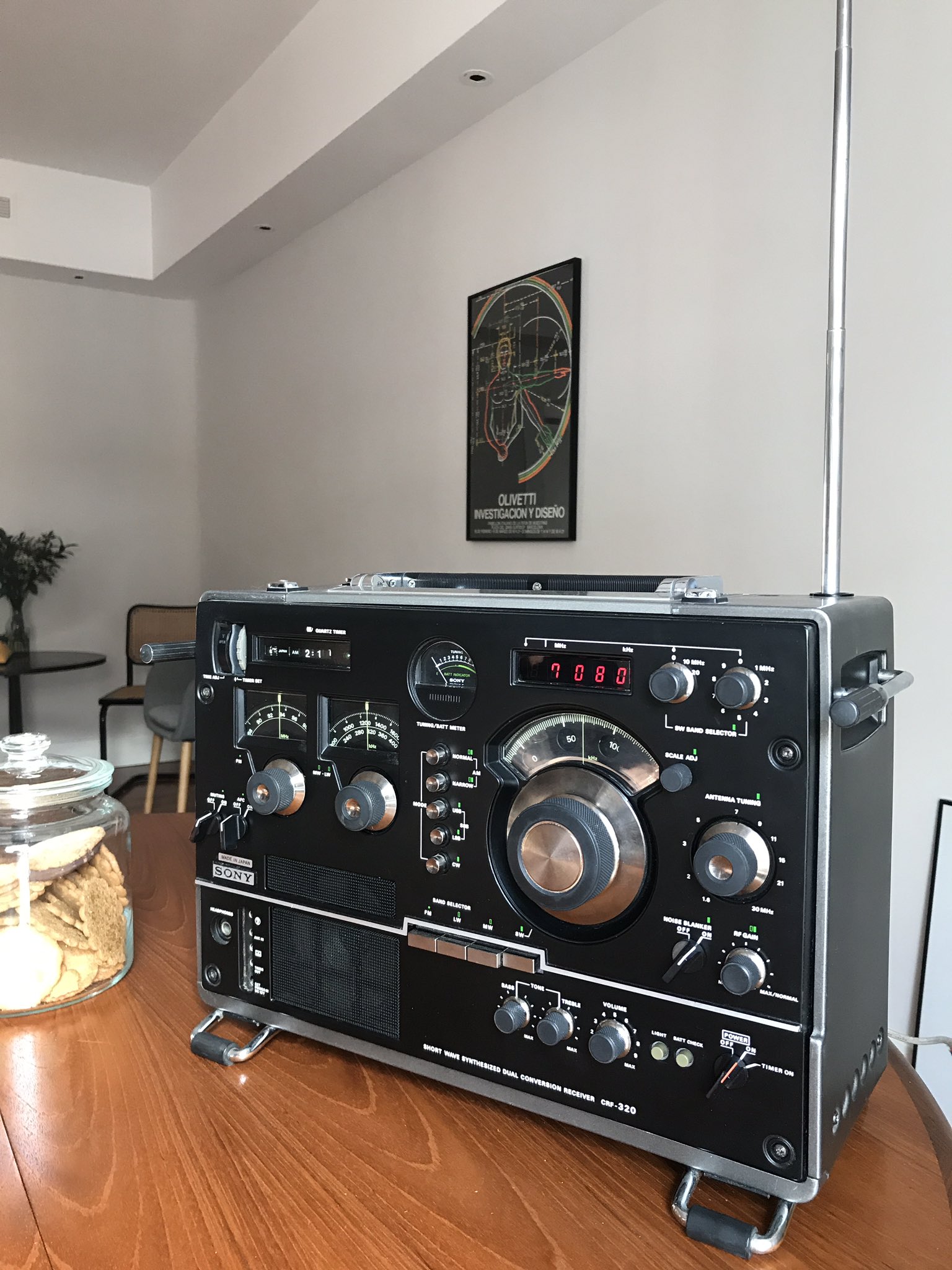
“Testing the good old Sony CRF-320 after many years not in use. It works flawlessly in all bands”
EA4HGN’s photo, above, reminds me that the Sony CRF-320 sports one of the best designs I’ve ever seen in a portable radio. A proper Apollo era aesthetic!
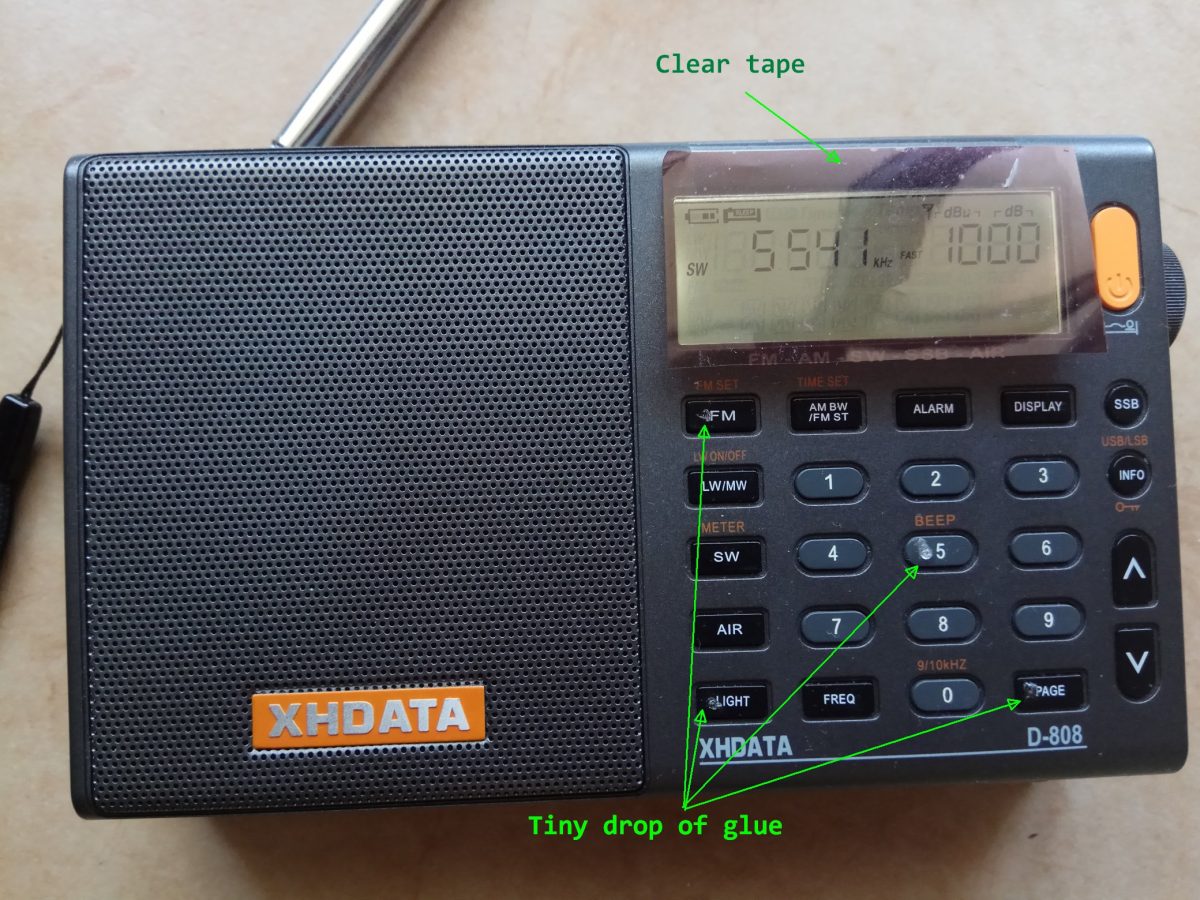
Many thanks to SWLing Post contributor, Adid, who shares two inexpensive mods he made on his XHDATA D-808 shortly after taking delivery of it in 2018. One is simply clear tape over the display to protect it from scratches. The second is applying three tiny drops of glue which create tactile points on the keypad for nighttime operation.
Many thanks to SWLing Post contributor, John K5MO, who writes:
Hi Thomas
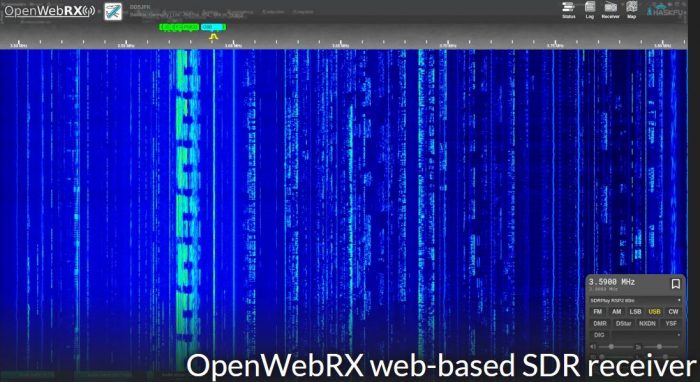
Just a heads up if you didn’t know…openwebrx has a new release and it’s a good one. No more muddling around with a text editor to change configurations, rather there’s a built in editor for this purpose. The release is V1.0 and it can be found
Many thanks to SWLing Post contributor, TomL, who shares the following guest post:
Comb Stereo on Shortwave
by TomL
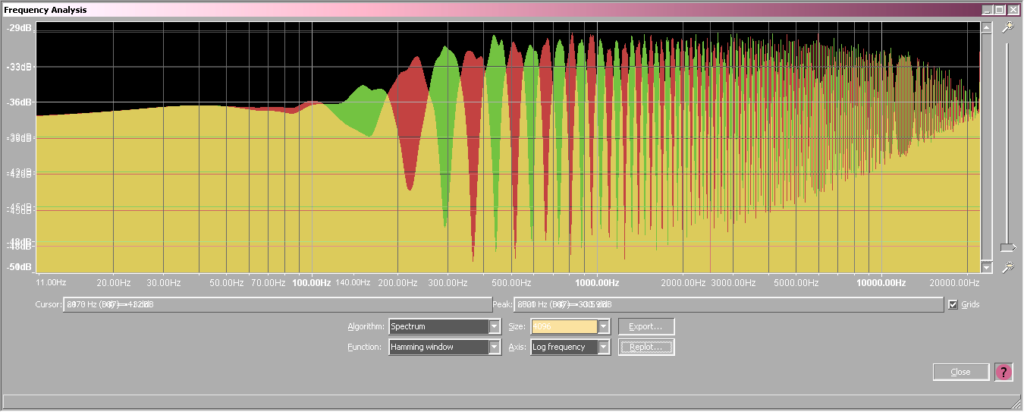
Comb Stereo is an old technique being implemented over shortwave by the main sound engineer (Daz) at Radio Northern Europe International (RNEI). It ONLY works on Comb Stereo broadcasts which currently are RNEI, This Is A Music Show (WRMI), and one of the KBC broadcasts. It works in real-time or for SDR recorded files, too. It does NOT need a special HD/DAB+ radio.
A number of pluses for Comb Stereo on shortwave compared to digital:
“The bandwidth is the same as mono – So the SNR should be about the same as mono.
Selective fading doesn’t affect the comb bands much, so the balance is largely unaffected by selective fading notches.
The Comb Stereo artifacts are much like typical music effects of echo, chorus, fast reverb or room reflections.”
An enhanced version is broadcast on WRMI for the RNEI time slot on Thursday morning (01:00 UTC) on 5850 kHz. It sounds very good and is not a pseudo-stereo like in my previous article, Music on Shortwave. For one thing, pseudo stereo is not real two-channel encoding and shifts vocals to one side, depending on which channels are chosen for high and low filters, which might get annoying after awhile. What seems amazing to me is that I have been able apply some minor noise reduction in Audacity and the Comb Stereo stays perfectly intact. It also still works after converting the WAV file to MP3 and sounds much like a regular FM broadcast. Furthermore, it does not require a special patented transmitter or receiver chip. It is compatible with regular mono transmitters.
If you want to try it, go to the RNEI web site; download and install the two files listed (VB Audio Cable and CombStereo Pedalboard x64):
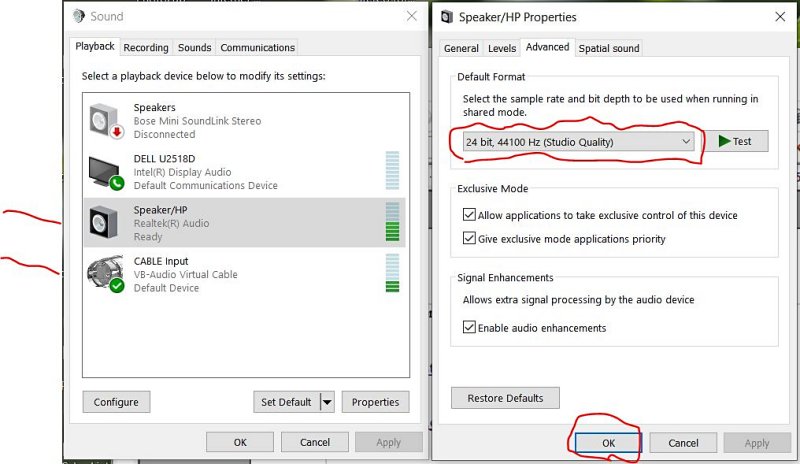
It is slightly tricky to setup and use or you will not hear anything (most Windows systems default to 48000 Hz these days). Right-click on the lower-right taskbar Sounds settings. Make sure to setup Properties – Advanced in both the VB-Audio Virtual Cable (Playback and Recording) and your output speakers (Playback) to 24-bit 44100 Hz processing.
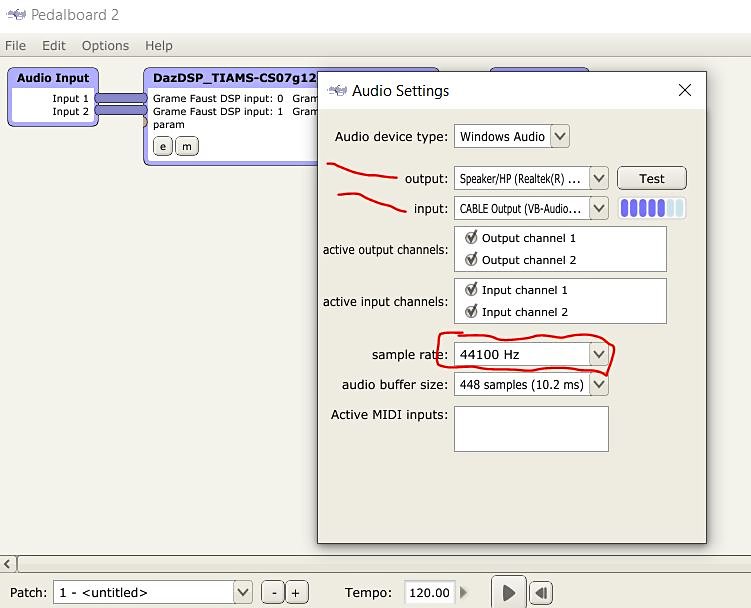
Now run the app Pedalboard BAT file which corresponds to the broadcast you recorded (in this example “Start Comb Stereo for WRMI.bat”). Set the Options – Audio Settings:
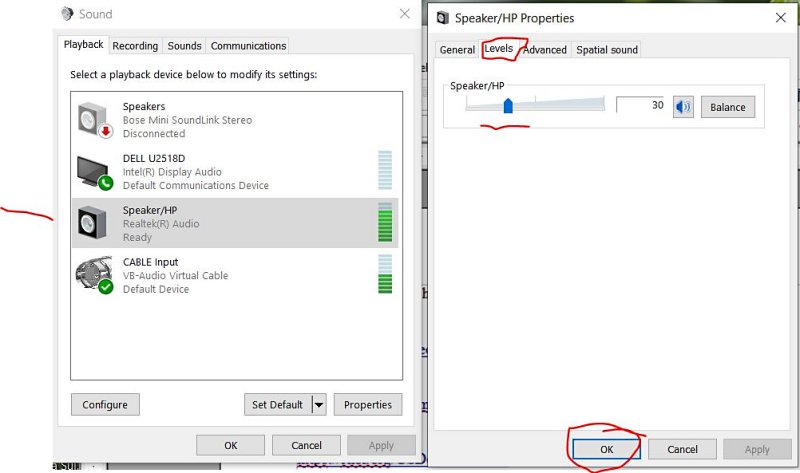
Since the VB-Audio Virtual Cable takes over your volume output, adjust the volume of your Speakers in Windows’ Sounds – Levels (or you can adjust the volume in the sound player you are using, too):
Play the mono WAV or MP3 file and you should be hearing stereo!
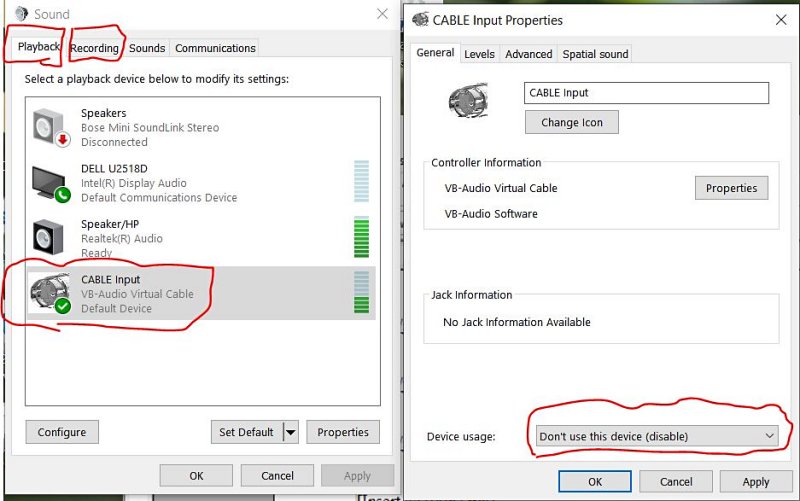
When you are done, close Pedalboard2 and then disable the VB-Audio Virtual Cable for Playback and Recording to get your Sounds back to normal:
I cannot demonstrate what it sounds like unless you have the VB-Audio Virtual Cable and the Comb Stereo app setup and working properly. Here are snippets from recent RNEI broadcasts captured by my noisy porch antenna:
Here are links to the artists’ YouTube videos for comparison:
What is nice is that I can create a space-saving MP3 mono file and this setup will decode the stereo when run from the computer (sounds really nice on a stereo system with a subwoofer). Unlike digital, this analog-friendly stereo seems mostly immune to fading, has a minimum of digital artifacts, and will not go silent and “drop out” like digital does for long, annoying periods of time. It is not perfect stereo but audio players with features like Stereo Widener or Windows Sonic for Headphones can overcome some limitations. Perhaps content providers should consider Comb Stereo for all their shortwave radio shows since it is perfectly compatible with mono AM transmissions!