Category Archives: Shortwave Radio

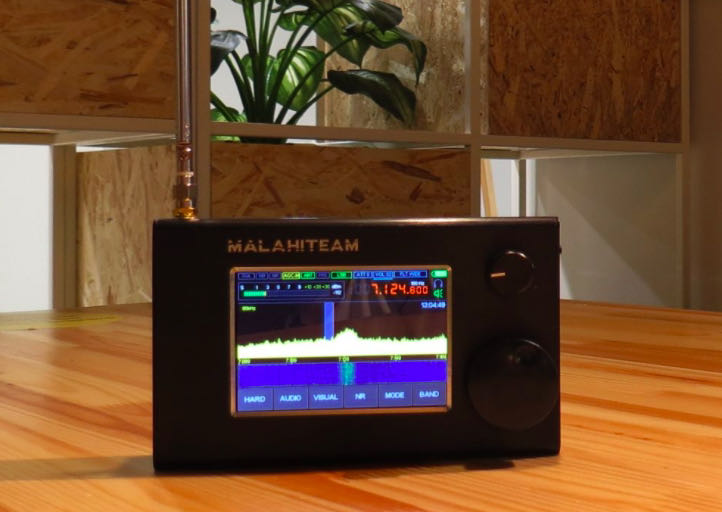
Malahit DSP-2: Dan’s thoughts on external antennas, firmware, and purchase decisions

Many thanks to SWLing Post contributor, Dan Robinson, for the following guest post:


Additional Thoughts on the Malahit DSP-2 

  • Potential for Noise Reduction Using Non-Whip Antennas
  • Latest Firmware Changes

by Dan Robinson

After my last update on the Russia-made Malahit DSP-2, I thought it important to add something about the receiver, as it could well influence those who may be on the fence about purchasing one.

In a series of communications, Georgiy at Malahit team has stressed steps taken to attempt to deal with internal interference seen across the bands.  And he has asserted

that noise spikes lessen if the receiver is connected to a non-whip antenna.

Most of my tests have used whip antennas of various lengths, in various locations indoors and outdoors, because it’s my view that portability is a major attraction of these small SDR receivers.

Continue reading →

Radio Waves: Radio Prague Special Broadcast, WNP Marks 100 Years, Ham Interference, and RTE on Longwave

Radio Waves:  Stories Making Waves in the World of Radio

Because I keep my ear to the waves, as well as receive many tips from others who do the same, I find myself privy to radio-related stories that might interest SWLing Post readers.  To that end: Welcome to the SWLing Post’s Radio Waves, a collection of links to interesting stories making waves in the world of radio. Enjoy!

Many thanks to SWLing Post contributors David Iurescia, Ronnie Smith, Troy Riedel, Jack Dully, and the Southgate ARC for the following tips:


Radio Prague asks, “Would you like to be featured on our broadcast?” (Radio Prague via Facebook)

Our 85th anniversary is coming up on August 31st! We’re celebrating the occasion with a special broadcast that day and would love to hear from you – our listeners. If you’d like to send us your greetings, please record a message and send an audio file via email (to [email protected]) or Facebook. Due to time constraints, your recording should be around 30 seconds long. Please include your first name, where you live, how long you’ve been listening, and what you like most about Radio Prague Int’l.

We look forward to hearing from you!

Sailing Vessel with Ham Radio History Marks 100 Years (ARRL News)

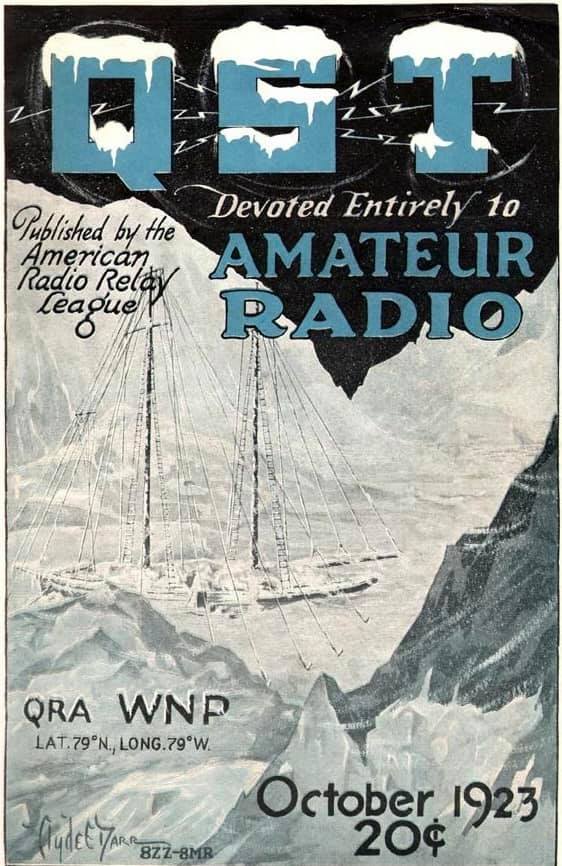
The schooner Bowdoin is a century old this year. Now owned by the Maine Maritime Academy (MMA) as a training vessel, the ham radio history of the 88-foot (LOA) Bowdoin is often neglected. Constructed in Maine specifically for Arctic exploration, the vessel relied on amateur radio for communication during explorer Donald B. MacMillan’s Arctic Expedition of 1923 and on the MacMillan-McDonald-Byrd Expedition of 1925 — thanks in part to ARRL co-founder Hiram Percy Maxim, W1AW. The venerable vessel, the official vessel of the State of Maine and the flagship of Maine Maritime Academy’s Vessel Operations and Technology Program, recently underwent a complete hull restoration and refitting and has done a little touring to mark its centenary. Its home port is Castine, Maine.

The longwave transmitters MacMillan used on his earlier missions had proved “unable to penetrate the screen of the aurora borealis,” then-ARRL historian Michael Marinaro, WN1M (SK), explained in his article, “Polar Exploration,” from the June 2014 issue of QST. In 1923, MacMillan turned to ARRL for help in outfitting his next expedition with better wireless gear. Marinaro recounted, “It was enthusiastically provided.” Maxim and the ARRL Board recruited Donald H. Mix, 1TS, of Bristol, Connecticut, to accompany the crew as its radio operator.

M.B. West, an ARRL Board member, designed the gear, which was then built by amateurs at his firm, Zenith Electronics. The transmitter operated on the medium-wave bands of 185, 220, and 300 meters, running 100 W to a pair of Western Electric “G” tubes. Earlier exploratory missions had used gear that operated on longwave frequencies. The shipboard station on board the Bowdoin was given the call sign WNP — Wireless North Pole. [Continue reading…]

The Machines That Built America (History Channel)

In 1893, sending information across America is a time-consuming process. Letters travel slowly by land, and those who can afford it, send telegrams along a limited network of fixed wires. But two rival inventors have the same idea for improving things: wireless communication. Nikola Tesla is one of the most famous and successful thinkers of his day, single-handedly changing the way electricity is supplied and generated. Guglielmo Marconi is a young, uneducated Italian inventor who ignores scientific consensus and goes with his gut. Both want to rid the world of wires and send messages through the air. With millions of dollars on the line, the two men battle to dominate the new market and bring radio to the masses. [Click here to view episode on the History Channel.]

Woman fights to have ham radio operations banned after potential interference with insulin pump (WFTV)

MARION COUNTY, Fla. — A Marion County woman is taking on her neighborhood association, in a matter she said puts her health at risk.

Michelle Smith, a Type 1 Diabetic, and a consultant determined that her neighbor’s ham radio hobby might have interfered with the doses of insulin being pushed out from her pump.

The 55+ community where she lives hired that consultant and told the neighbor to shut down his amateur radio station.

But a copy of the community’s rules shows a change was put in place that could pave the way for other similar antennas to be installed.

9 Investigates learned that Smith’s complaint went all the way to the state level.

She wants the Florida Commission on Human Relations to make a determination whether the community’s board and management is doing enough to protect her and others with medical devices.[…]

RTE on long wave 252 kHz back on air (Southgate ARC)

RTE carried out essential maintenance of the Long Wave transmitter in Clarkstown, Co. Meath for two months during which period RTE Radio 1 was not available on 252 kHz.

This essential maintenance of the transmitter was due to be carried out in 2020, but was postponed due to Covid-19 restrictions. For the health and safety of those carrying out the works, the transmitter had to be switched off for the works period. Any overhaul has to be completed during the summer months when there is good light and weather conditions.

Transmissions commenced once again last Monday with an output of 500 kiloWatt during daytime and 100 kiloWatt at nighttime.

During this shutdown, one could receive Radio Algeria transmitting on the same frequency with 1.5 megaWatt during the day and 750 kiloWatt at night, broadcasting a varied program.


Do you enjoy the SWLing Post?

Please consider supporting us via Patreon or our Coffee Fund!

Your support makes articles like this one possible. Thank you!

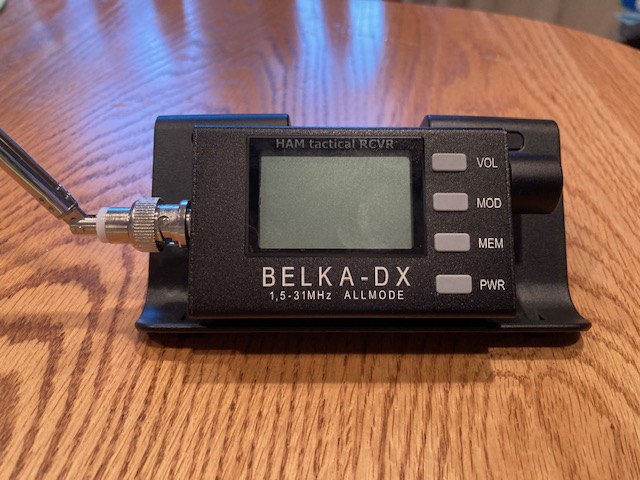
Greg’s Uniden stand works perfectly with the Belka-DX

Belka-DX StandMany thanks to SWLing Post contributor, Greg Hathaway, who writes:

Hi there –

I bought a Belka-DX recently and am really enjoying it! The stand from my Uniden Home Patrol 1 scanner works great with it. The stand is sold separately by Uniden for those who may be interested.

Best,
Greg Hathaway

Thank you for sharing this, Greg. You’re right: that little Uniden stand fits the Belka perfectly!

Radio Waves: Radio Hats, FCC Fees in 2022, Ham Saves Friend’s Life, and Monitoring the fall of the Afghan Government

Radio Waves:  Stories Making Waves in the World of Radio

Because I keep my ear to the waves, as well as receive many tips from others who do the same, I find myself privy to radio-related stories that might interest SWLing Post readers.  To that end: Welcome to the SWLing Post’s Radio Waves, a collection of links to interesting stories making waves in the world of radio. Enjoy!


The story of the Radio Hat, 1949 (Rare Historical Photos)

In 1949, Victor Hoeflich held a press conference to introduce the “Man from Mars, Radio Hat”. Hoeflich knew a picture would tell the story so he had several teenagers modeling the radio hats for the reporters and photographers. Soon pictures and news stories appeared in newspapers coast to coast. The articles typically included a photo of a young lady wearing the hat and a six-paragraph story.

Although the radio hat had a futuristic appearance at the time, this was in fact due to technical limitations. While the transistor had been invented in 1947, it was still experimental and not widely available. The hat’s radio relied on vacuum tube technology, and Hoeflich made the tubes a prominent feature, as well as the loop aerial. The tuning knob sat between the two valves. The battery was carried in the user’s pocket.

Continue reading →

Mark recalls passing the Voice of Mongolia by train

Many thanks to SWLing Post contributor, Mark Fahey, who shared the following comment in reply to this recent post. Mark writes:

A few years ago I traveled Beijing to Helsinki – a 3 week journey via the all stops SLOWWWWW trains via Ulan Bator & Moscow. I was only carrying a backpack so I took along a Tecsun PL-380 (I think that was the model? – It’s up in my Bali home at the moment so I can’t check for sure) and it worked amazing well using the whip next to the train window.

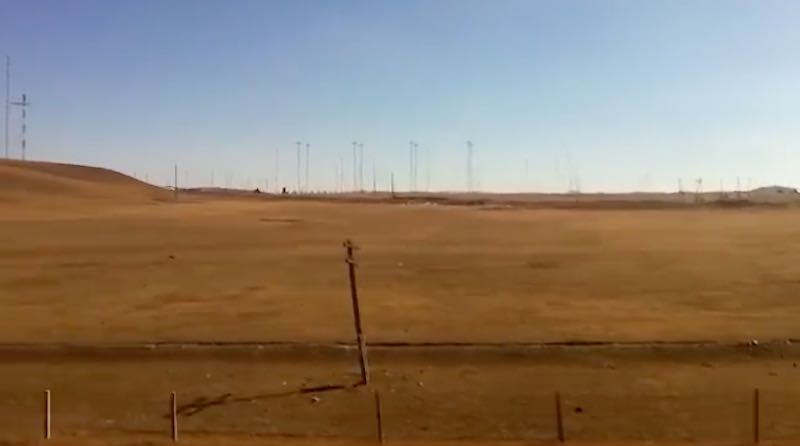
On the journey I passed the Voice Of Mongolia SW Transmitter site – here is a link to my video of the antennas and township (Khonhor) – was a great trip! I will be doing it again next year – this time slightly longer Shanghai to Frankfurt.

That’s just brilliant, Mark! Thanks for sharing. Looking forward to a full tour of the Voice of Mongolia next time you’re passing by! 😉

Malahit DSP-2 Review Update 3: Dan evaluates the latest hardware version

Many thanks to SWLing Post contributor, Dan Robinson, for the following guest post:

UPDATE NO 3: Malahit DSP-2 (August 18, 2021)

A few weeks ago, I wrote about my experiences with the Russia-made Malahit DSP-2 receiver, and made a recommendation that potential purchasers of the receiver hold off until the design team in Russia made some changes.

Weak points included the SMA antenna connector – specifically the short cable going from the antenna to the PCB board, and sharp noise spikes seen at numerous locations throughout the spectrum from mediumwave up to 30 MHz.

My particular DSP-2 unit went dead after an update to an early version of the 2.10TEST firmware.  At the time, I had spoken via Skype with Georgiy on the Malahit team and kept up a string of communications on the Malahit Telegram channel.

It was not clear to me whether the problem with the first DSP-2 was primarily due to SMA antenna issues or also due to a problem with the firmware update I had applied at the time (it was an early version of 2.10TEST).

My appreciation goes to Georgiy who decided to send a new DSP-2 to me.  This took about 3 weeks from the end of July until just recently when the receiver arrived (though the U.S. Postal Service made the end of that journey quite interesting).

Here are some observations that I hope will help current and prospective owners of the DSP-2: Continue reading →

Carlos Latuff’s shortwave radio logs are a work of art

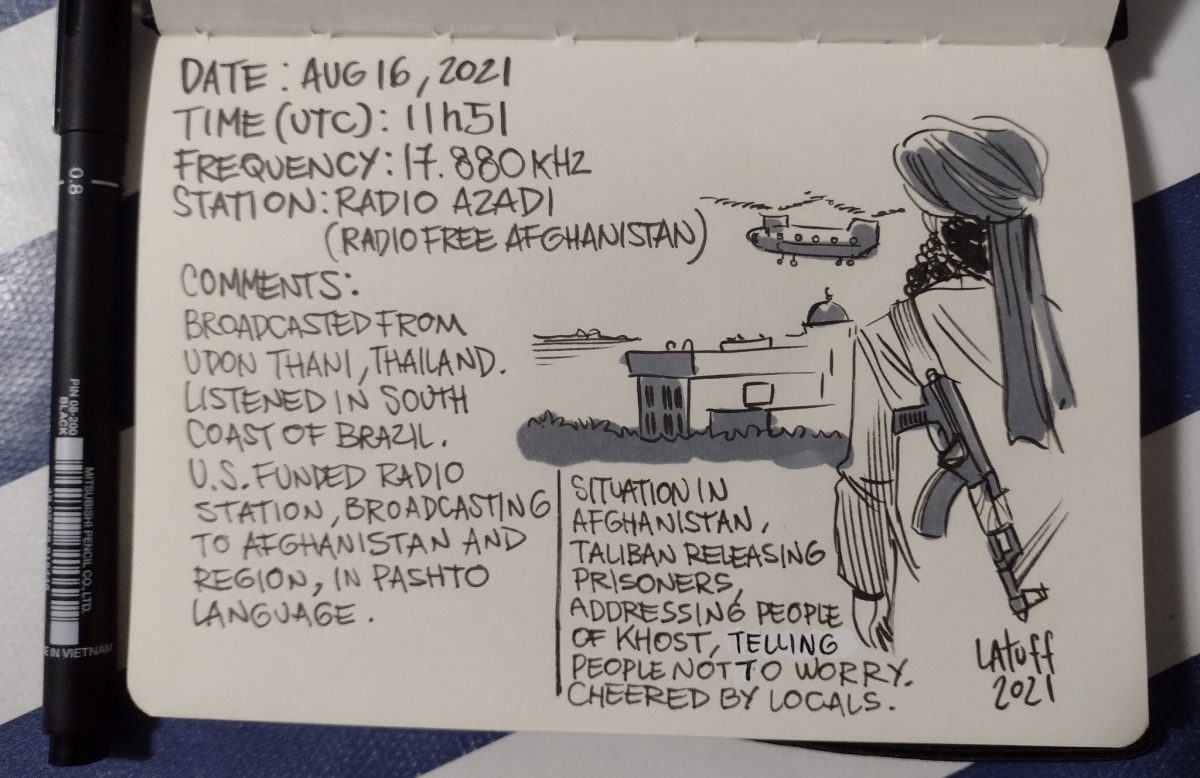
For those who don’t know, our friend and SWLing Post contributor, Carlos Latuff, is not only a devoted radio enthusiast, but also a prominent political cartoonist in Brazil and throughout the world.

Recently, Carlos has been posting his shortwave logs on his Twitter feed and they’re pretty amazing.

Carlos’ shortwave logs not only include comments and notes from each broadcast, but also his own artwork.

Here’s Carlos’ recording of Vatican Radio which accompanies the log at the top of this post:

Click here to check out Carlos’ Twitter feed where he posts his political cartoons and, yes, even the occasional shortwave listening log!

If you’ve been a reader of the SWLing Post for long, you’ll notice that we’re not a space for political discussions; there are much better options out there on the Internet. Here, we stick to the world of radio, but we can’t help but highlight this intersection and Carlos’ creative logs.

In fact, Carlos, I might nudge you for that Vatican Radio recording and your artwork to post on the Shortwave Radio Audio Archive!