Shortwave listening and everything radio including reviews, broadcasting, ham radio, field operation, DXing, maker kits, travel, emergency gear, events, and more
Many thanks to SWLing Post contributor, Chris Rogers, who writes:
Hi Thomas,
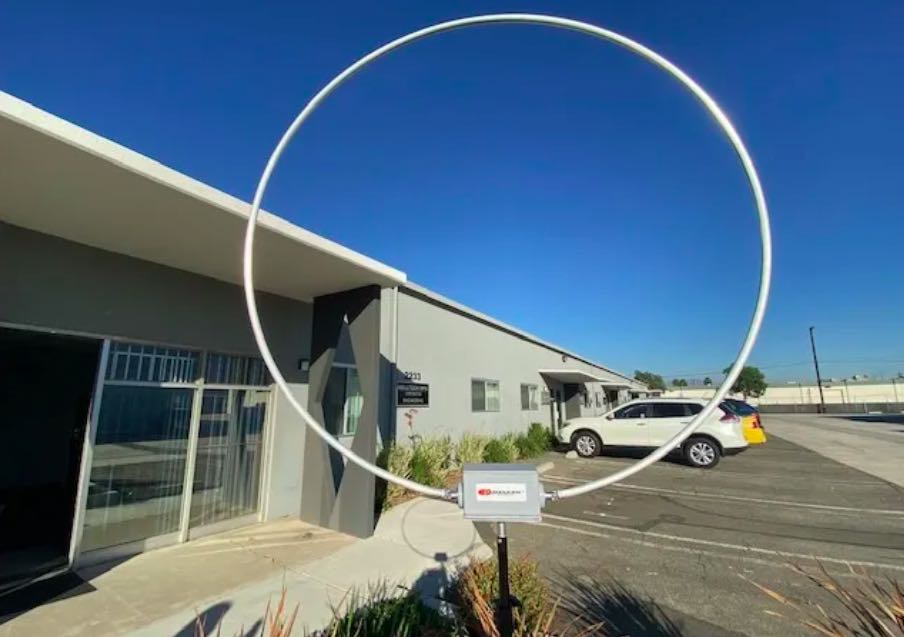
An interesting new product has just been released for pre order, a US made Chameleon model CHA-RXL receive loop covering from 137 kHz -30 MHz.
Looking at the options it comes on the web page it mentions a Loop type ”US single section” or “two sections European”. I am not sure of the difference however. In the specifications it claims a 36” loop.
However a very interesting new antenna to compete with the likes of Wellbrook, W6LVP etc
Hopefully you may, or one of your readers get one for review.
Thank you, Chris! I do plan to check out and review this loop from Chameleon. I’ve been evaluating a number of their ham radio field antennas and can say that the quality is simply military grade.
I’m guessing (and it is truly a guess) that the EU version of the antenna is simply in two sections to save the customer excess shipping charges based on the package dimensions.
Many thanks to SWLing Post contributor, Nick Booras, who writes:
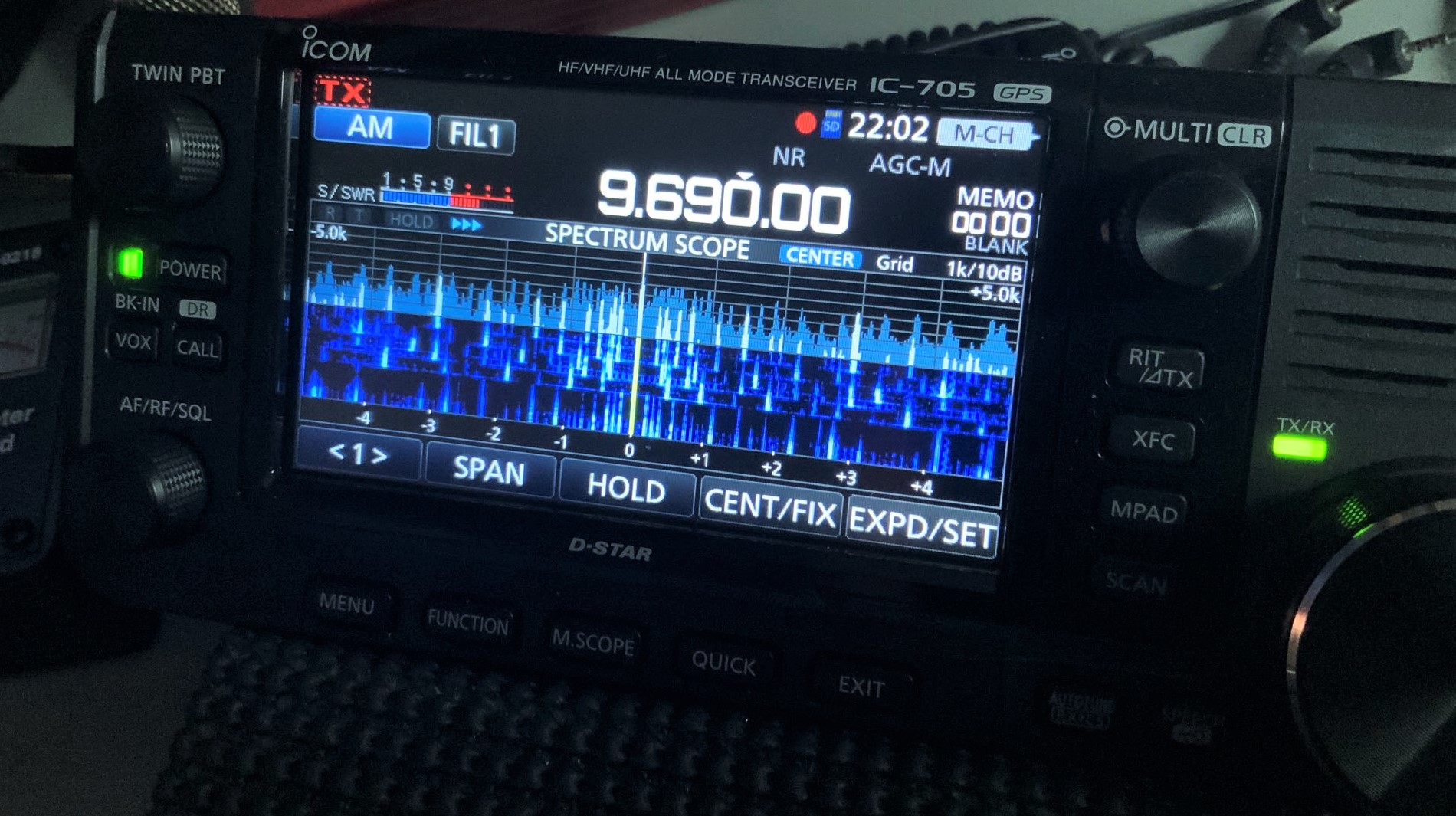
I am stuck in the house in Texas, bored and with no power. So I decided to make a couple videos with my phone. One nice thing about a power outage… no RFI [Radio Frequency Interference].
This Icom 705 is an awesome radio! Perhaps your viewers might like these.
Thank you for sharing these, Nick! Yes, as we’ve noted before, power outages are an ideal time to play radio and indulge in a low-noise environment! And I agree with you: the IC-705 is a superb shortwave broadcast receiver.
I hope our readers in Texas will have power restored soon–this has been a rough week for many.
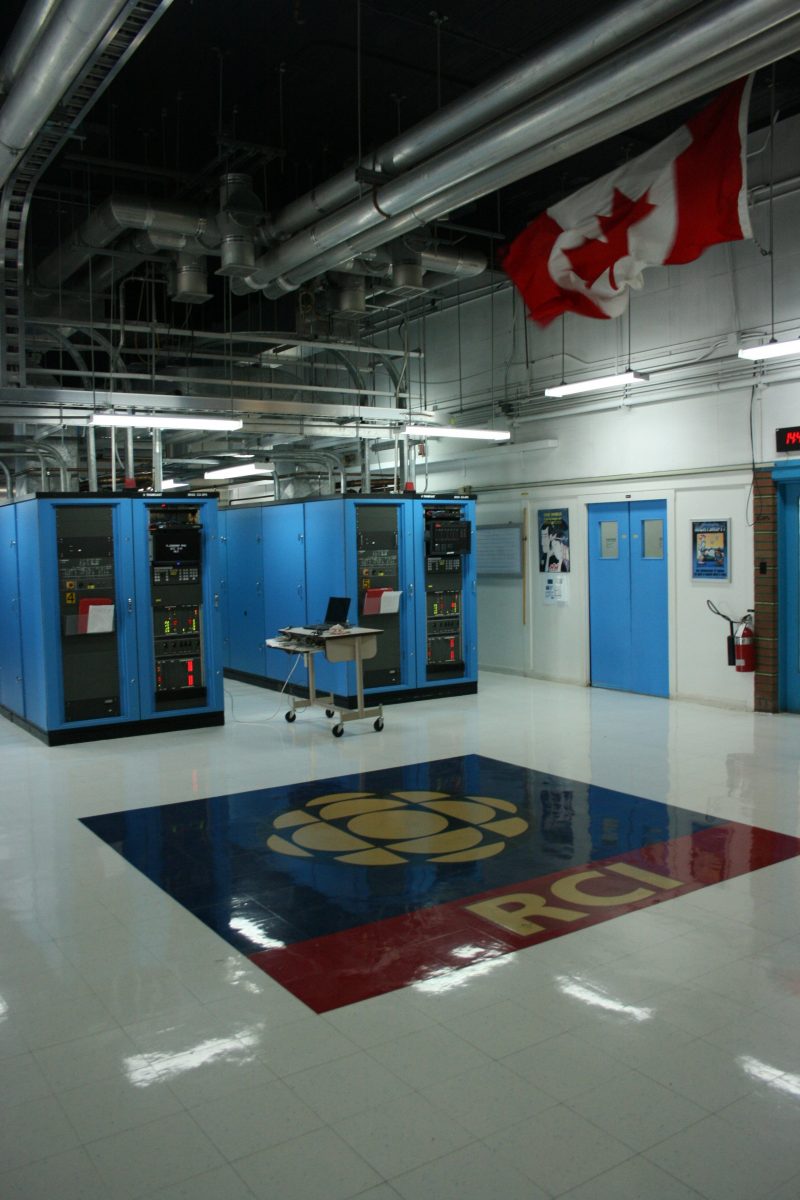
Photo from the RCI Sackville transmitter site in 2012, a few months prior to its closure.
Radio Waves: Stories Making Waves in the World of Radio
Because I keep my ear to the waves, as well as receive many tips from others who do the same, I find myself privy to radio-related stories that might interest SWLing Post readers. To that end: Welcome to the SWLing Post’sRadio Waves, a collection of links to interesting stories making waves in the world of radio. Enjoy!
Many thanks to SWLing Post contributors Mike, Troy Riedel, David Iurescia, and Bob Janney for the following tips:
Ham radio operators are doing something that until recently only big Deep Space Networks could do. “We’re monitoring spacecraft around Mars,” says Scott Tilley of Roberts Creek, British Columbia, who listened to China’s Tianwen-1 probe go into orbit on Feb. 10th. The signal, which Tilley picked up in his own backyard, was “loud and audible.” Click to listen:
The signal Tilley received from Tianwen-1 is dominated by a strong X-band carrier wave with weaker side bands containing the spacecraft’s state vector (position and velocity). Finding this narrow spike of information among all the possible frequencies of deep space communication was no easy task.
“It was a treasure hunt,” Tilley says. “Normally a mission like this would have its frequency published by the ITU (International Telecommunications Union). China did make a posting, but it was too vague for precise tuning. After Tianwen-1 was launched, observers scanned through 50MHz of spectrum and found the signal. Amateurs have tracked the mission ever since with great accuracy thanks to the decoded state vector from the probe itself.”[…]
Open letter to PM, Ministers calls for international service to be strengthened, not cut (RCI Action Committee)
The following open letter was sent February 15, 2021 to Prime Minister Justin Trudeau, Deputy Prime Minister Chrystia Freeland, Foreign Affairs Minister Marc Garneau, and Canadian Heritage Minister Steven Guilbeault asking them to maintain the integrity of Canada’s Voice to the World, Radio Canada International (RCI).
Thirty-two signatories, including former Prime Minister Joe Clark, former Canadian ambassador to the United Nations Stephen Lewis, author-composer-songwriter-film director Richard Desjardins, author Naomi Klein, and actor Donald Sutherland, ask that the CBC/Radio-Canada policy announcement of December 3, 2020 be blocked, as well as any changes to RCI, until RCI staff, along with an assembled group of qualified people outside CBC/Radio-Canada, can propose a plan to rebuild the international service.
The signatories say the plan should devise a form of financial and editorial autonomy for RCI. And outline a path to follow to restore the international mandate and effectiveness of Radio Canada International in the context of today and the future.
For more information, please contact Wojtek Gwiazda, Spokesperson, RCI Action Committee, [email protected]
If you would like to help us please consult this page:
OTTAWA – A group of prominent Canadians is calling on the CBC to rethink its decision to significantly cut staff and rebrand the globally focused Radio Canada International to focus on domestic news.
Wojtek Gwiazda, spokesman for the group trying to save RCI, says the CBC is planning to cut 13 full-time staff and three contract jobs from a staff of about 20.
They’ve sent Prime Minister Justin Trudeau a letter signed by 32 prominent Canadians, including former prime minister Joe Clark, former Canadian ambassador to the United Nations Stephen Lewis, author Naomi Klein and actor Donald Sutherland asking for the decision to be reversed.
Gwiazda says the new CBC policy will focus almost exclusively on producing programming for ethnic communities and the ethnic media inside Canada, instead of directing programming to an international audience.
Gwiazda says the move is a violation of the Broadcasting Act and order-in-council that created RCI in 1945.
In the December memo to RCI staff, the CBC said it was “modernizing” the news service for the 21st century by offering more translated CBC content in new languages such as Punjabi and Tagalog, which is spoken in the Philippines.
“By becoming more relevant, more visible or more widely available in the languages spoken by the largest number of new Canadians, the new offering will allow Radio Canada International to better connect and engage with its target audience. RCI will also make all this content freely available to interested ethnic community media,” says the CBC statement.
RCI is used to fighting for its survival since the CBC cut its shortwave radio service in 2012, which severed the broadcaster from its Chinese audience, said Gwiazda.[…]
Fashion boutiques, shop-fitters and others advertised alongside raves on early 1990s pirate radio. Now, a new compilation is rediscovering a slice of the underground
ave you got that record that goes ah-woo-ooo-ooh-yeah-yeah?” It’s a scene familiar to anyone who spent time in a hardcore rave record shop in the 1990s – a punter asking for a tune they’ve heard on pirate radio or at a rave but they don’t know the title of, so they mimic the riff or sample hook hoping someone behind the counter recognises it.
A relic of pre-Shazam life, the ritual is preserved in an advert for Music Power Records aired on the pirate station Pulse FM in 1992. Nick Power, owner of the north London shop, recalls that no matter how mangled the customer’s rendition, “nearly always, you’d be able to identify the exact record they were looking for”. In the advert, Power plays the roles of both sales assistant and punter, pinching his nose to alter his voice. Almost 40 years later, the comic skit commercial has been resurrected alongside others on two volumes of London Pirate Radio Adverts 1984-1993, by audio archivist Luke Owen. Power is pleasantly bemused by this turn of events: “I can’t see there’d be a demand for radio ads, but there’s got to be someone out there who’s interested enough to buy it. I don’t see it being a platinum release, though!”
Released via his label Death Is Not the End, Vol 1 is available digitally at a name-your-price rate and for £7.50 as a limited-edition cassette tape – an echo of the format on which pirate listeners captured transmissions of hardcore and jungle. Back then, most fans pressed pause when the ad break started, which means that surviving documents of the form are relatively scarce. But what once seemed ephemeral and irritating has acquired period charm and collectability.[…]
Reception Reports & QSL Cards for WBBR-AM (via Bob Janney)
Good Day Dxers and SWLers
We are pleased when we receive requests to confirm reception of Bloomberg radio station WBBR-AM New York 1130 kHz 50 Kw DA-N. We enjoy reading those reports and listening to recordings of your reception from WBBR-AM. We are responding by e-mail to all reception reports as quickly as we can. Following the email response we will mail our QSL Card to the DX’er or club that provided us with the reception report.
Please note that my colleague in New York City, Mr. Michael Lysak has become quite busy with radio program and reporter scheduling so, in the future could you please ask everyone to direct their reception reports to:
Bob Janney WB3EBN
WBBR-AM Transmitter Site Technician
E-mail [email protected]
If you are in touch with other radio clubs would you please advise those clubs to send requests for our QSL card to Bob.
Many thanks to SWLing Post contributor, Mei Tao, who shares the following:
Hi Thomas:
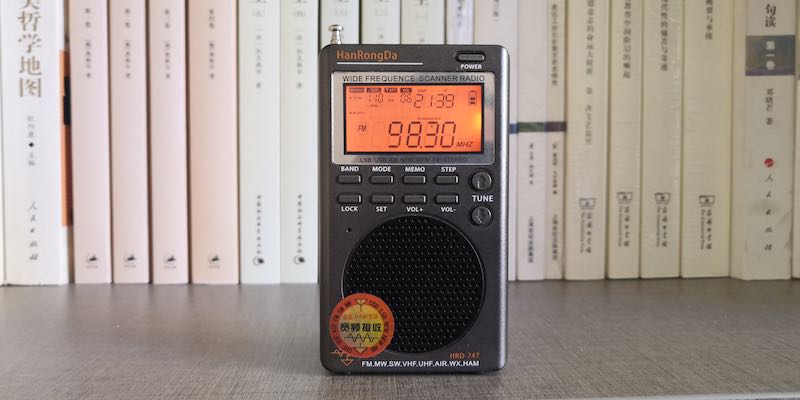
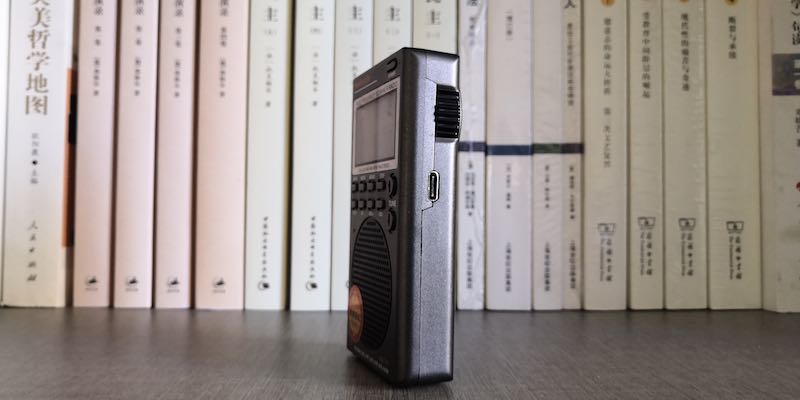
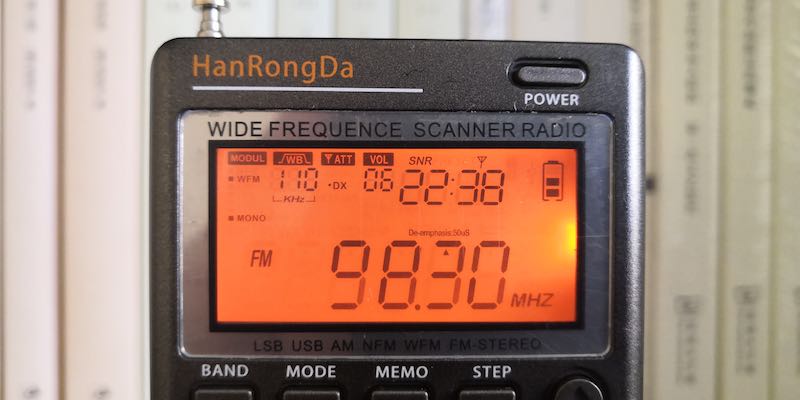
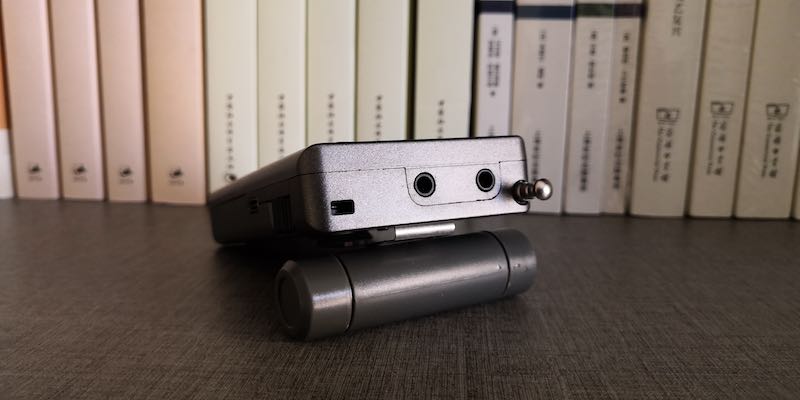
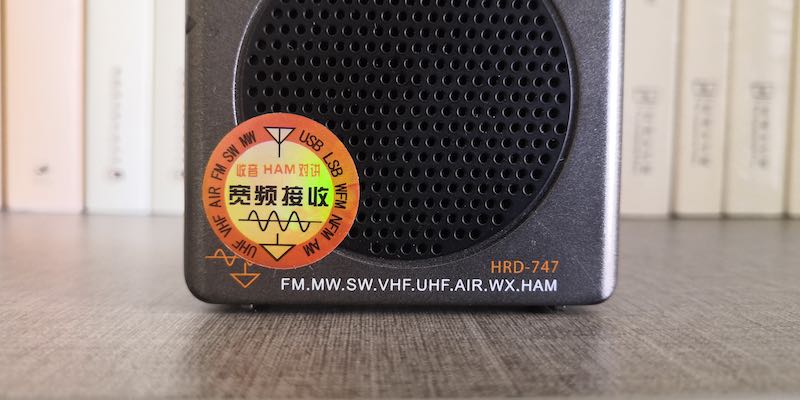
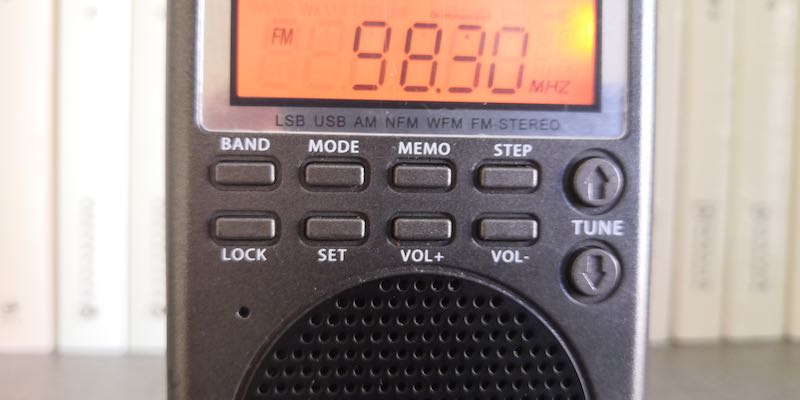
Before the Chinese New Year, I received a prototype of the HRD-747 radio and was asked for suggestions on how to improve it. As far as I know, this little gem will hit the Chinese market in April.
Here are its major features and some photos:
More like a handheld wideband receiver: covers UHF?300—520MHz), VHF?30—300MHz), AIR, FM (64—108MHz), SW, MW, USB, LSB, WFM, NFM, and AM.
Based on a DSP chip?sensitivity and selectivity are excellent.
SSB?selectable USB/LSB?reception with 10Hz step tuning.
Multiple tuning methods: ATS, presets, manual tuning, auto tuning, etc.
Equipped with tuning knob.
Bandwidth is selectable.
Squelch level can be adjusted.
ATT control, external antenna jack.
1000 memory presets.
Powered by BL-5C cellphone battery (removable).
Sincerely
Mei Tao
Photos
Thank you, Mei Toa! The HRD-747 certainly offers a wider frequency range that we’re used to seeing in small portable radios. I’m very curious how sensitive and selective it is in those higher VHF/UHF bands and if imaging or poor selectivity are issues.
Many thanks to SWLing Post contributor, Robert Richmond, who writes:
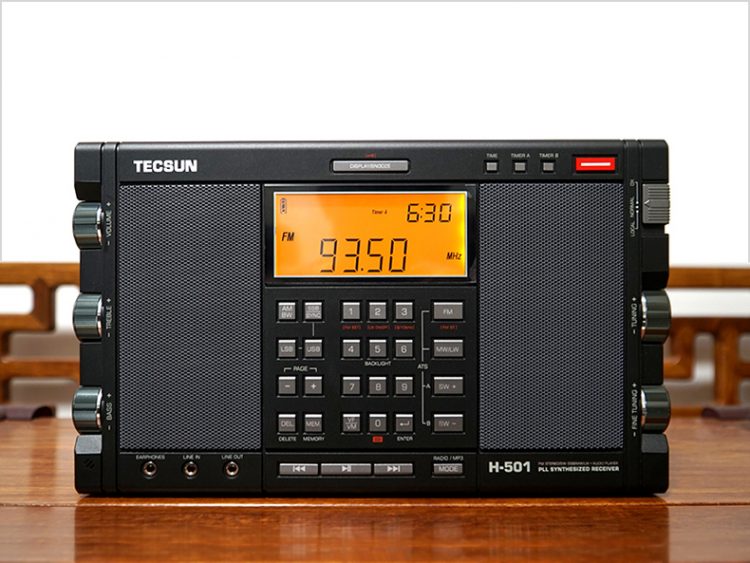
You probably have seen the info months ago, but I just noted Tecsun China has officially launched the Tecsun H-501 receiver in China priced at 1500 Yuan, which is about $230 USD. Add shipping.
The Chinese domestic market H-501 model on AliExpress and Bangood has been averaging $400+ USD. I have no idea if the Desheng/Tecsun store ships outside China, but it seems like a considerable savings for customers outside of China if actually capable of ordering there.
The Tecsun homage currently features a H-501 banner:
Thank you for the tip, Robert! I’ll be waiting for Anon-Co to distribute the export version of the H-501, but the 1500 Yuan/$230 USD price point is much closer to what I expected rather than those early inflated AliExpress prices. Thanks again!
Many thanks to SWLing Post contributor, Mark Hirst, who writes:
Thomas,
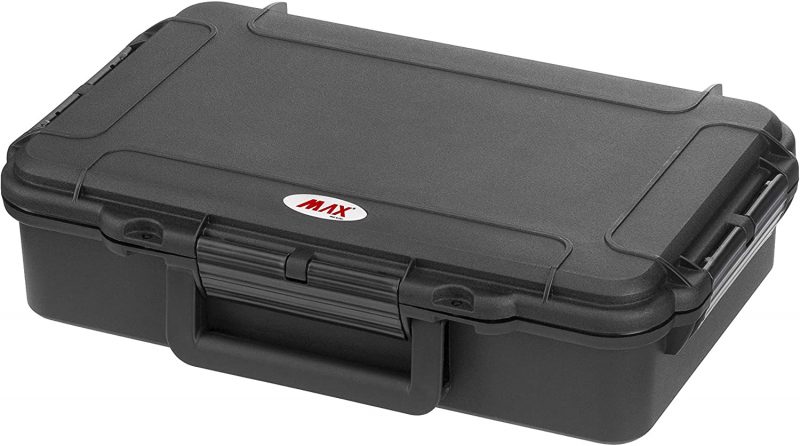
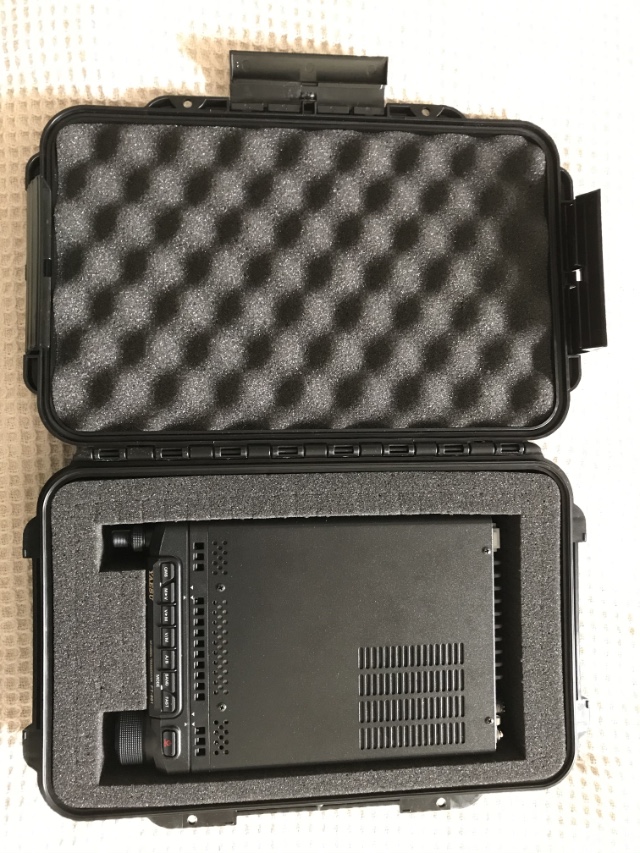
I got a new FT-891 recently and wanted a protective case for taking it out into the field.
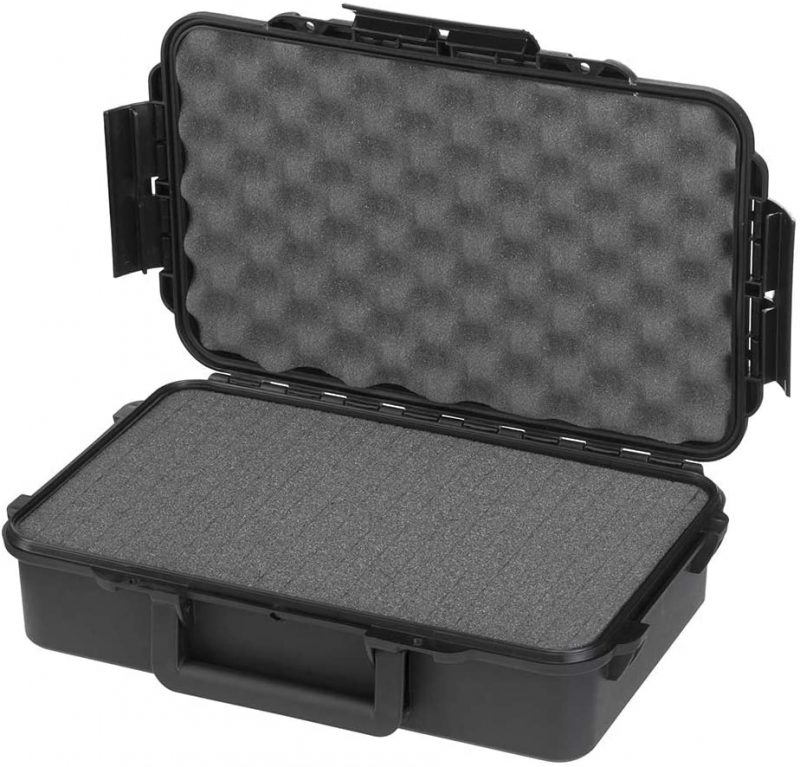
A mixture of internet searches and Amazon algorithms turned up this very affordable case which closely matches the size of the radio, as the enclosed photograph shows.
It uses the familiar pick and pluck foam, although in two layers.
The base layer is a bit thin, so I might put a layer of rigid plastic over it to stop the feet of the radio pushing down to the outer case.
I prioritised the side wall thickness opposite from the carry handle, as the case is designed to sit on its side like a briefcase.
Wow, Mark! I do love the size of this case and the fact that it fits the FT-891 so perfectly.
Recently, I’ve been thinking about building out a case to hold one of my smaller QRP transceivers (the KX1, KX2, or MTR3B) in the field to be used when it’s raining. Perhaps this has been on my mind because I’ve been enjoying nearly 5 straight days of rain and fog! A case like this would be an affordable solution and I wouldn’t feel terribly bad about drilling through the case to mount antenna, key, mic, and headphone ports.
I, for one, would love your thoughts about the Yaesu FT-891 as well. I’ve contemplated reviewing it this year mainly because so many field operators rave about it. I’d be curious what you think about it in terms of shortwave radio listening.
Thank you again for the tip!
Note that the Amazon affiliate links above support the SWLing Post at no cost to you. If you’d rather not use these links, simply search Amazon for “Max MAX004S.” Thank you!
Many thanks to SWLing Post contributor, Bruce (VE6XTC), who writes:
Hi Thomas;
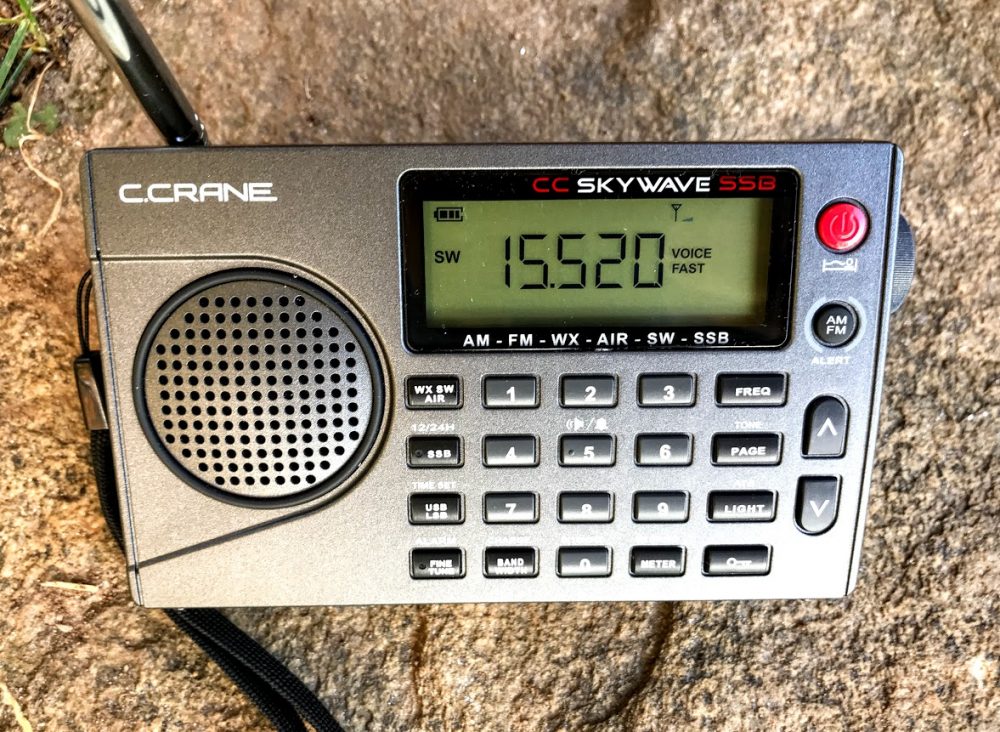
Are any other North American shortwave listeners hearing Chinese and North Korean stations in the 19, 16, and 13 meter bands in the dead of night? I heard plenty of regional stations plus North Korea on 15180 KHZ after 4:00 UT, February 13th. China Radio International was also broadcasting in English on 17730 KHZ with a program about Chinese New Year music. Most of the signals were quite strong on my CC Skywave SSB receiver with about 4 meters of random wire for an antenna..
Since nobody else I know knows as much as you and your blog readers, I’d like to ask you and them about this question.
73,
Bruce VE6XTC
Thank you for sharing your experience and question with us, Bruce. Lately, I’ve had very little in the way of late-night listening sessions so really can’t comment. With that said, I love openings like this. It’s amazing to be on a band that is dead quiet, yet have DX stations pop up from nowhere.
SWLing Post readers: Please comment if you, like Bruce, have been enjoying some late night, high band DX!
Please support this website by adding us to your whitelist in your ad blocker. Ads are what helps us bring you premium content! Thank you!