Category Archives: Shortwave Radio

ABR Industries and the importance of quality cable and connectors

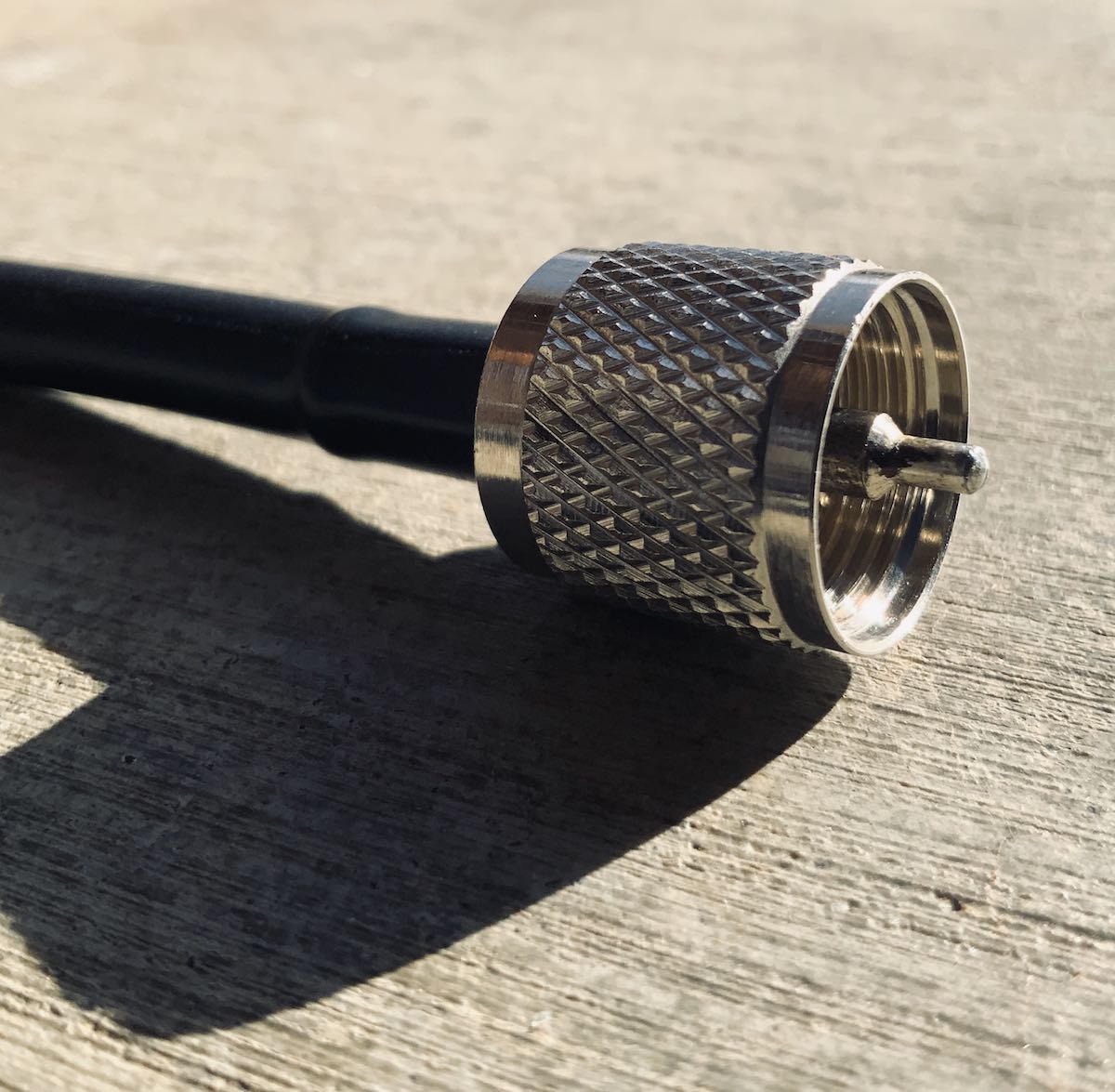
Two radio accessories I often forget to mention in my posts and reviews are cable and connectors. When a cable functions well, it’s taken for granted and easily overlooked.

You’ll hear me say that a radio is only as good as its antenna and while that’s true, the important link in the system is your antenna cable and connectors. If you have a fabulous antenna and a benchmark radio, but you connect the two with substandard cables, it will create unnecessary losses and even shorts if you’re not careful.

But let’s be honest: it’s easy to cheap out on cables.

When I first started using tabletop receivers and transceivers in my youth, I had a tight budget. When I would go to a local hamfest where I’d find excellent prices on cable assemblies from those accessory retailers who sell a little bit of everything.  You know…the tables with everything from $10 multimeters to $5 blinking lights–? I’d find their prices for cable assemblies too attractive and would grab them.

No more.

Back when I owned my original Yaesu FT-817, I used one of these cables on Field Day and blew my finals due to a small short ono a connector end (if memory serves, braiding was touching the conductor). From that point forward, I decided I’d invest in quality cables.

ABR Industries

At the Hamvention in 2010, I found ABR Industries’ table. The only thing they had on display were cable assemblies and a handful of cable accessories. I picked one cable up and inspected it–I could tell it was good quality. Although I know how to make my own cable assemblies (with PL-259s, at least) I appreciate professionally-built assemblies.

I spoke with the representative that day and learned about their company and how they go about making standard and custom cable assemblies in the USA for the consumer, commercial, and government markets.

Although the price was at least double what I would have paid at one of the discount retailers, I never looked back.

From that point forward, I’ve only purchased ABR cables typically at Hamvention, Universal Radio, or even directly from ABR’s website (when I ordered custom assemblies).
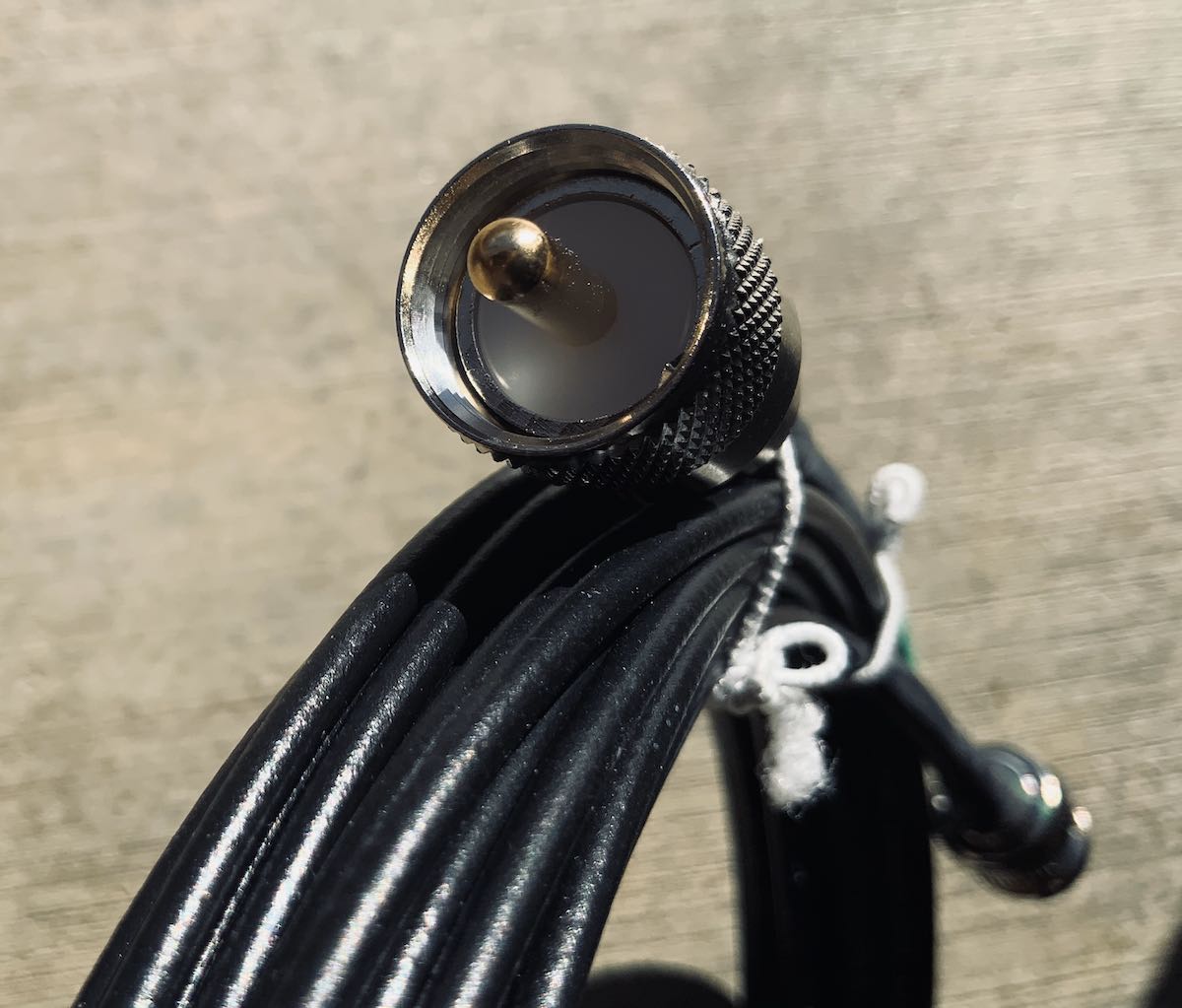
The quality of ABR cables is second to none. I have never had one fail at home or (especially) in the field.
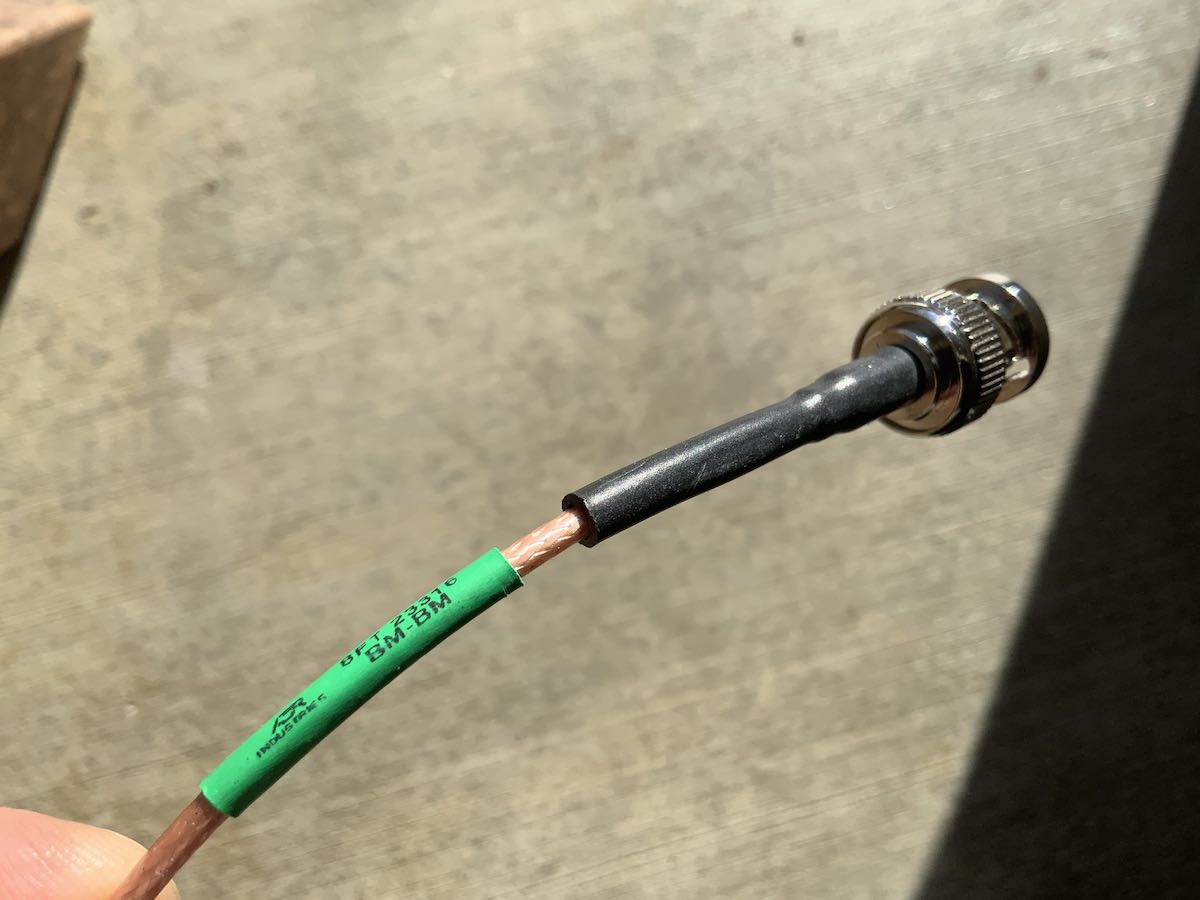
For my QRP POTA activations, I started investing in ABR316 and ABR100 BNC to BNC assemblies. I’m especially fond of the ABR316 assemblies (above) because they’re so resistant to memory when I coil them.

You pay for what you get
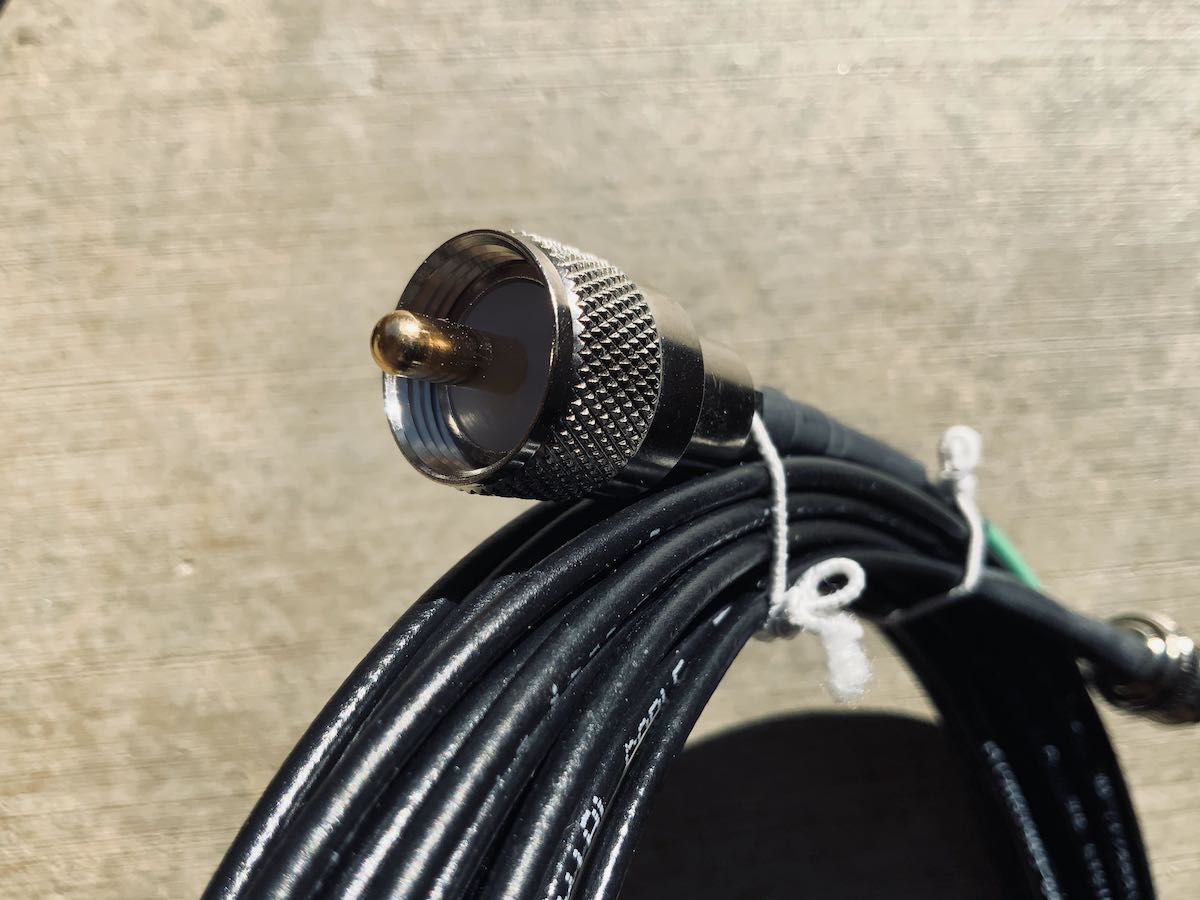
I suppose this is on my mind because I’m about to do an assessment and make another ABR order so that my new field radio kits have their own dedicated cable assemblies with correct ends (so I’m also not forced to use BNC or PL adapters for matching).

I’m also replacing some of my 3 foot cable assemblies with SMA connectors to PL-259 for my bank of SDRs. This is a part of achieving one of my goals for 2021. I’ll know then that each receiver will have a quality link to my antenna splitter and antenna.

My point here is don’t skimp on your cable, adapters, or cable assemblies.

If you have the skill to build your own, buy quality components and take your time building them.

If you prefer purchasing pre-made cable assemblies, talk with your local ham radio retailer, or seek out cable assembly houses like ABR Industries. I’d avoid purchasing cheap cables you may find on eBay or Amazon.com, for example. That’s not to say that there aren’t quality discount assemblies out there, I just prefer buying from a company that takes pride in their work and stands behind the quality.

Click here to check out ABR Industries. 

ABR Industries isn’t a sponsor of the SWLing Post (although I’d love to add them!)–I’m just a long-time customer who is happy to plug their products. I can recommend them without reservation.

[Update: In August 2023, we did become an affiliate of ABR Industries. Purchasing with our links supports the SWLing Post at no cost to you.]

I’ve also bought numerous long cable runs, wire, DC cable, ladder line, paracord, and sealant from The Wireman. I also highly recommend them.

ABR isn’t the only quality cable assembly house–there are many others throughout the world. Who do you recommend? Please leave a comment and links to your picks!

Radio Waves: Michael Pack Resigns, FCC Enforcement Advisory, Upcoming ISS SSTV, and Prowling TV Detector Vans

Radio Waves:  Stories Making Waves in the World of Radio

Because I keep my ear to the waves, as well as receive many tips from others who do the same, I find myself privy to radio-related stories that might interest SWLing Post readers.  To that end: Welcome to the SWLing Post’s Radio Waves, a collection of links to interesting stories making waves in the world of radio. Enjoy!

Many thanks to SWLing Post contributors Eric McFadden, Ronald Kenyon,  for the following tips:


Defined By Scandal At Voice of America, CEO Resigns At Biden’s Request (NPR)

Michael Pack resigned Wednesday as the CEO of the federal agency over the Voice of America and other federally funded international broadcasters after a turbulent seven-month tenure. He leaves the U.S. Agency for Global Media with a Trumpian legacy of ideological strife, lawsuits and scandal, his departure effective just two hours after the swearing-in of President Biden, who requested him to leave.

Biden has named senior VOA news executive Kelu Chao as acting CEO.

Pack came to lead the U.S. Agency for Global Media with the support of former President Donald Trump; his appointment was delayed more than two years in the U.S. Senate by lawmakers who feared he was too ideological and also who questioned his finances. The soft-spoken conservative documentary maker proved to be an ideological warrior in the mold of his patron, taking to one conservative news outlet after another to denounce his own staff, all in the name of fairness.

In his resignation letter, Pack said he was “solely focused upon reorienting the agency toward its missions.” And he attacked the request for his resignation as “a partisan act,” saying the leadership of the agency and its networks “is meant to be non-partisan, untethered to alternations in the political regime.”

He added, “I had no political agenda coming into USAGM, and I still do not have one.”

NPR conducted scores of interviews over the controversies Pack’s actions engendered. And few at the agency or its broadcasters agreed with Pack’s characterization of his mission or performance, instead characterizing him as seeking political control over their coverage. Just last week, a VOA reporter’s insistent questions to then-Secretary of State Mike Pompeo and VOA Director Robert R. Reilly over the siege on Congress after a public event led to her demotion and an investigation.

Pack routinely accused journalists of anti-Trump bias, sought to fire top executives as part of a “deep state,” ominously accused the networks of being receptive to foreign spies and denied requests for visa extensions from his own staffers who are foreign nationals.[]

FCC Issues Enforcement Advisory: Radio Users Reminded Not to Use Radios in Crimes (ARRL News)

The FCC has released an Enforcement Advisory for licensees and operators across radio services.

[Complete text of FCC Enforcement Advisory follows.]

FCC ENFORCEMENT ADVISORY

DA 21-73

Released: January 17, 2021

WARNING: AMATEUR AND PERSONAL RADIO SERVICES LICENSEES AND OPERATORS MAY NOT USE RADIO EQUIPMENT TO COMMIT OR FACILITATE CRIMINAL ACTS

The Enforcement Bureau (Bureau) of the Federal Communications Commission issues this Enforcement Advisory to remind licensees in the Amateur Radio Service, as well as licensees and operators in the Personal Radio Services, that the Commission prohibits the use of radios in those services to commit or facilitate criminal acts.

The Bureau has become aware of discussions on social media platforms suggesting that certain radio services regulated by the Commission may be an alternative to social media platforms for groups to communicate and coordinate future activities. The Bureau recognizes that these services can be used for a wide range of permitted purposes, including speech that is protected under the First Amendment of the U.S. Constitution. Amateur and Personal Radio Services, however, may not be used to commit or facilitate crimes.

Specifically, the Bureau reminds amateur licensees that they are prohibited from transmitting “communications intended to facilitate a criminal act” or “messages encoded for the purpose of obscuring their meaning.” 47 CFR § 97.113(a)(4).

Likewise, individuals operating radios in the Personal Radio Services, a category that includes Citizens Band radios, Family Radio Service walkie-talkies, and General Mobile Radio Service, are prohibited from using those radios “in connection with any activity which is against Federal, State or local law.” 47 CFR § 95.333(a).

Individuals using radios in the Amateur or Personal Radio Services in this manner may be subject to severe penalties, including significant fines, seizure of the offending equipment, and, in some cases, criminal prosecution. 47 U.S.C. §§ 401, 501, 503, 510.

Media inquiries should be directed to 202-418-0500 or [email protected].

To file a complaint with the FCC, visit https://consumercomplaints.fcc.gov or call 1-888-CALL-FCC. To report a crime, contact your local law enforcement office or the FBI.

To request materials in accessible formats for people with disabilities (Braille, large print, electronic files, audio format), send an e-mail to [email protected] or call the Consumer & Governmental Affairs Bureau at (202) 418-0530 (voice), (202) 418-0432 (TTY).

Issued by: Chief, Enforcement Bureau[]

ISS SSTV 145.800 FM Jan 28-29 (Southgate ARC)

Russian cosmonauts on the International Space Station (ISS) are planning to transmit Slow Scan TV images on 145.800 MHz FM using the SSTV mode PD-120

The transmissions are part of the Moscow Aviation Institute SSTV experiment (MAI-75).

Jan 28 – Starts after 12:10 GMT and ends at 17:15 GMT*

Jan 29 – Start about 13:10 GMT and ends at 18:05 GMT*

*Dates and times subject to change.

ARISS SSTV Blog
https://ariss-sstv.blogspot.com/

Useful SSTV info and links
https://amsat-uk.org/beginners/iss-sstv/

TV Detector Vans Once Prowled The Streets Of England (Hackaday)

The United Kingdom is somewhat unique in the world for requiring those households which view broadcast television to purchase a licence for the privilege.

Initially coming into being with the Wireless Telegraphy Act in 1923, the licence was required for anyone receiving broadcast radio, before being expanded to cover television in 1946. The funds generated from this endeavour are used as the primary funding for the British Broadcasting Corporation.

A typical TV licence invoice. Separate licences for black and white and color sets still exist, with 6000 B&W licences issued in 2019.

Of course, it’s all well and good to require a licence, but without some manner of enforcement, the measure doesn’t have any teeth. Among other measures, the BBC have gone as far as employing special vans to hunt down illegally operating televisions and protect its precious income.

THE VAN IS COMING FOR YOU

To ensure a regular income, the BBC runs enforcement operations under the TV Licencing trade name, the entity which is responsible for administering the system. Records are kept of licences and their expiry dates, and investigations are made into households suspected of owning a television who have not paid the requisite fees. To encourage compliance, TV Licencing regularly sends sternly worded letters to those who have let their licence lapse or have not purchased one. In the event this fails, they may arrange a visit from enforcement officers. These officers aren’t empowered to forcibly enter homes, so in the event a homeowner declines to cooperate with an investigation, TV Licencing will apply for a search warrant. This may be on the basis of evidence such as a satellite dish or antenna spotted on the roof of a dwelling, or a remote spied on a couch cushion through a window.[]


Do you enjoy the SWLing Post?

Please consider supporting us via Patreon or our Coffee Fund!

Your support makes articles like this one possible. Thank you!

Don discovers a treasure trove of digitized vintage radio books and magazines

Many thanks to SWLing Post contributor, Don (W7SSB), who writes:

I thought these links might be of interest to your readers:

https://www.qsl.net/va3iul/Files/Old_Radio_Frequency_Books.htm

https://www.qsl.net/va3iul/

Brilliant! Thanks for the tip, Don!

Of course, another deep treasure trove is the World Radio History website.

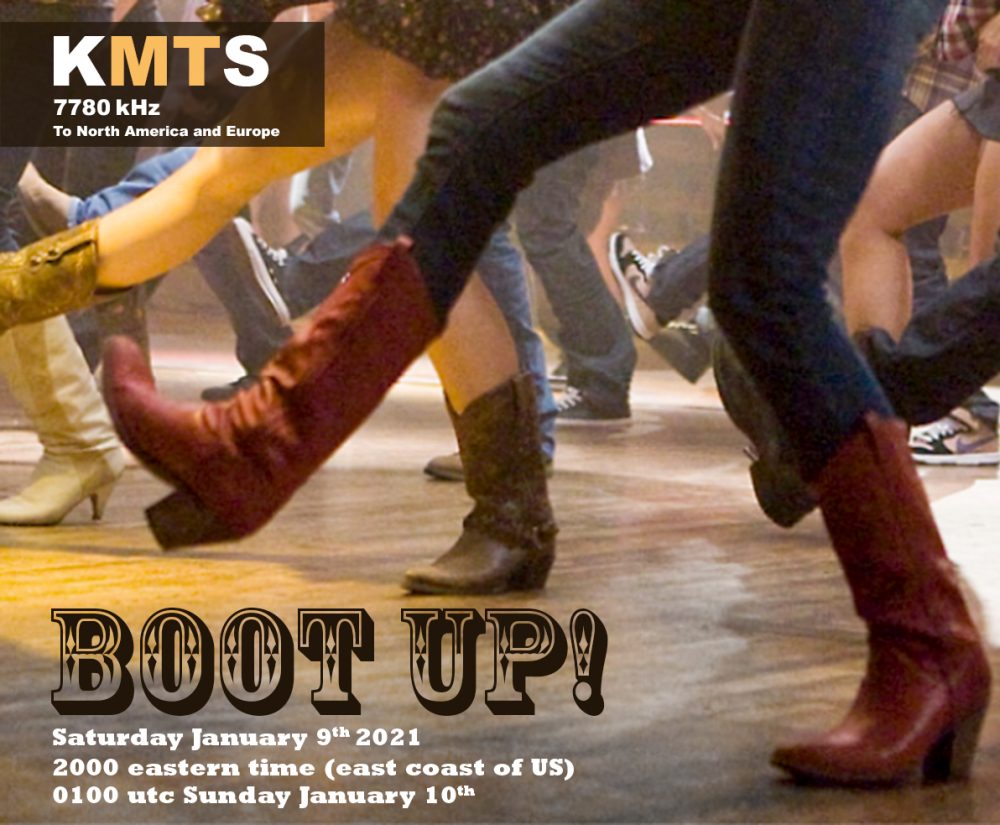
Studio recording of the KMTS “Boot Up!” broadcast

Many thanks to the folks at KMTS who share the following:

A studio version of the KMTS Boot Up Special of 17.1.2021 on 7780 kHz at 0100 UTC. This transmission consisted of Country and Western sounds, engineer test signals, rare re-media mixes of cult radio favourites, strange tones, and vox.

Rebroadcasts: 7 pm eastern time Sunday January 17th 2021 and Sunday January 24th 2021 (0:00 UTC Monday 1/18 and 1/25 on 9395 kHz.

Click here to listen via SoundCloud.

Radio Waves: FCC Warn Extremists Using Radio, ARRL Statement, Historic Radio Tirana Building, and Bob’s Replica Broadcast Studios

Radio Waves:  Stories Making Waves in the World of Radio

Because I keep my ear to the waves, as well as receive many tips from others who do the same, I find myself privy to radio-related stories that might interest SWLing Post readers.  To that end: Welcome to the SWLing Post’s Radio Waves, a collection of links to interesting stories making waves in the world of radio. Enjoy!

Many thanks to SWLing Post contributors Pete, Bill, Trevor R. and Steve Reardon for the following tips:


Blocked from social media, extremists discuss turning to radios to plan attacks, FCC warns (CNN Business)

The US government is warning that groups could rely on radio equipment as an alternative to social media to plan future criminal activities.

In a stark warning Sunday, the Federal Communications Commission’s enforcement bureau said people coordinating or conducting criminal activity over radio waves are breaking the law.

“The Bureau has become aware of discussions on social media platforms suggesting that certain radio services regulated by the Commission may be an alternative to social media platforms for groups to communicate and coordinate future activities,” the FCC said in its warning Sunday. “Individuals using radios in the Amateur or Personal Radio Services in this manner may be subject to severe penalties, including significant fines, seizure of the offending equipment, and, in some cases, criminal prosecution.”

The FCC licenses certain signals for people to broadcast over radio waves. Those messages are generally protected by the US Constitution’s First Amendment. But the FCC reminded radio licensees and operators that it is prohibited to transmit “communications intended to facilitate a criminal act.” People are also not allowed to encode their messages to obscure their meaning from law enforcement.

The laws governing airwaves apply to amateurs broadcasting with personal ham radios, which can reach long distances. But they also apply to people using Citizens Band (CB) radios commonly used for communication between truckers — or even walkie-talkies.

In the wake of the January 6 Capitol riots, Facebook (FB), Twitter (TWTR) and other mainstream social networks have become more vigilant about policing people who use their platforms to plan or incite attacks. They have booted off several high-profile radicals and thousands of groups and users who the platforms say engage in harmful conspiracy theories and other violence or hate speech.[]

ARRL on the Purpose of Amateur Radio (ARRL News)

For over 100 years amateur radio and ARRL — the National Association for Amateur Radio® — have stood for the development of the science and art of communications, public service, and the enhancement of international goodwill. Amateur Radio’s long history and service to the public has solidified the well-earned reputation that “Amateur Radio saves lives.”

Amateur Radio Operators, due to their history of public service, their training, and the requirement that they be licensed by the FCC have earned their status as a component of critical communications infrastructure and as a reliable resource “when all else fails.”

Amateur Radio is about development of communications and responsible public service. Its misuse is inconsistent with its history of service and its statutory charter. ARRL does not support its misuse for purposes inconsistent with these values and purposes.[]

Historic Radio Tirana Building Looks Set to Be Demolished (Exit News)

The doors and windows of the historic Radio Tirana building were removed in the middle of the night during the weekend, while Albanians stayed inside due to heavy rains.

The Villa is a second category monument and was the first media institution in the country. It was built in 1938 by the Kollciu family as a house for two of the brothers. Completely symmetrical in its design and layout, it was built in the Italian neoclassical style that was popular at the time.

It was later seized under the order of King Zog and was the base for Radio Tirana until 1965. It was then used by the Institute of Anthropology and Art until the previous owners took it back. It has since been left to decay and is in a bad state of disrepair.

It stands over four floors including a basement. It features two main entrances, columns, a hallway with marble tiles, wooden framed windows and metallic balustrades.

As it was abandoned, a few members of the Roma community were living there.

Despite it being a cultural monument, the removal of these fixtures signals that demolition could be imminent. It lies just off Rruga Kavajaes and occupies prime Tirana real estate.[]

N.S. radio enthusiast turns basement into replica studio (CBC Nova Scotia)

There’s no denying Bob Cooke’s passion for radio. The Lower Sackville man used to work in the business back in the mid-1970s and now, it’s likely he has the largest collection of radio gear in Canada. CBC’s Colleen Jones reports.


Do you enjoy the SWLing Post?

Please consider supporting us via Patreon or our Coffee Fund!

Your support makes articles like this one possible. Thank you!

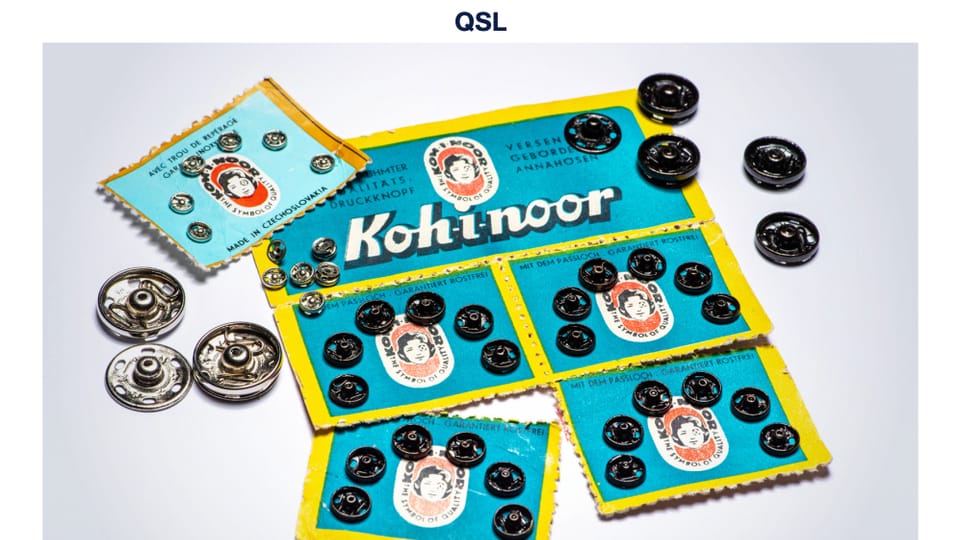
Radio Prague’s 2021 QSL Cards

(Source: Radio Prague International via David Iurescia)

The three letters – QSL – constitute one of the codes originally developed in the days of the telegraph. All codes consisted of three letters beginning with “Q”. Later some of these “Q” codes were adopted by radio-telegraphists and radio listeners. QSL means “contact confirmed” or “reception confirmed”.

The expression “QSL card” or just “QSL” gradually came to be used among radio-amateurs and then more broadly as radio began to develop as a mass medium. Radio stations were keen to know how well and how far away their programmes could be heard and began to send their listeners “QSL cards” in return for reception reports. The card would include letters making up the “call sign” of the station – the system still used in the United States – or the broadcasting company’s logo or some other illustration. The card would also include a text stating the frequency and the transmitter output power, and a confirmation of when the listener heard the station.

Domestic broadcasters do not tend to use QSL cards these days, but their popularity remains among radio stations broadcasting internationally. They are still keen to know how well they can be heard in the parts of the world to which they broadcast. In the era of shortwave broadcasts Radio Prague sent out QSL cards for reception reports received. Today we also send QSL cards to those who listen to us on the internet.

https://english.radio.cz/reception-report

Click here to view all of the 2021 QSL Cards at Radio Prague International.