Category Archives: Shortwave Radio

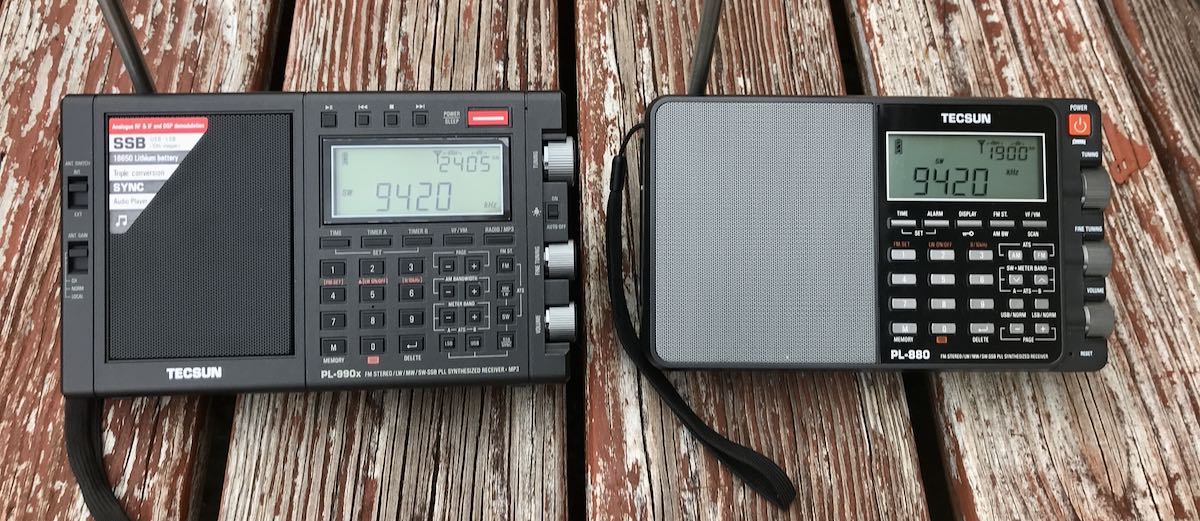
Tecsun PL-990x vs. PL-880: Comparing SSB audio characteristics and pre-production/production PL-990 models

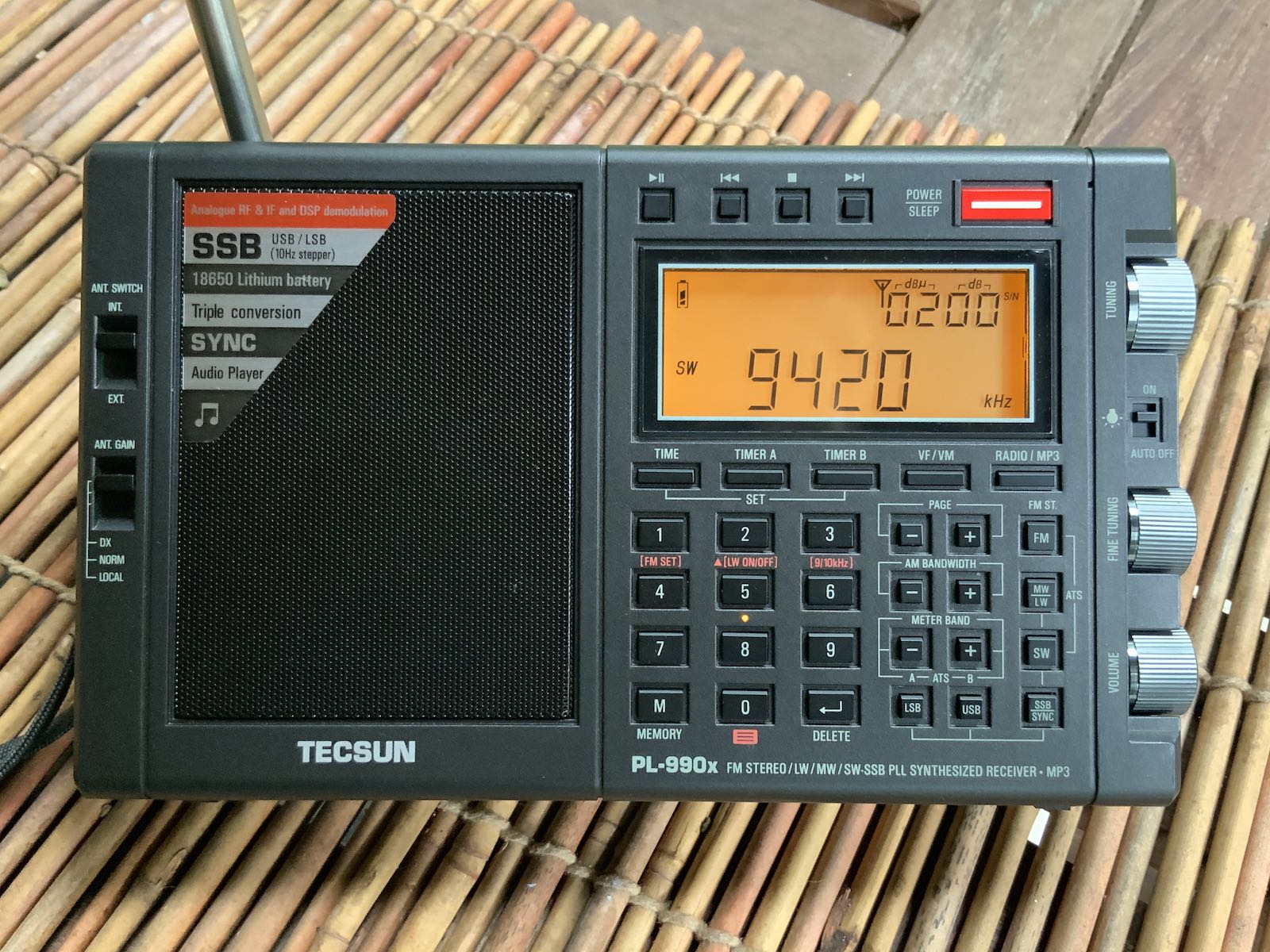
A number of SWLing Post readers have been asking about SSB audio characteristics on the new Tecsun PL-990.

Earlier this week, I took a moment while visiting family to make a few quick comparison videos with the PL-880 outdoors and away from RFI.

As I mention in the videos, there are a lot of cicadas singing in the background and you can also hear a bit of road noise–not ideal for audio, but I had to take advantage of a break in the weather!

You should also note that this isn’t a sensitivity comparison. The radios were pretty close together–if measuring sensitivity, I would have spaced them much further apart. Rather, I hope these videos give you an idea of the audio characteristics in SSB (both CW narrow and voice) and one comparison in AM. If you’re curious about sensitivity and how the PL-990x compares, check out Dan Robinsons initial evaluation.

CW Audio: .5 kHz filter on the 80 meter band

CW Audio: .5 kHz filter on the 30 meter band

SSB audio: 75 meter band

AM Audio: 5 kHz filter WWV 10 MHz

My thoughts

While these videos are far from ideal, they should give you a real-word impression of audio characteristics.

Personally, I think the PL-990x is a much better performer in single sideband. The noise floor is lower, but I think that may have more to do with better filter implementation. I’ve always felt that the PL-880 audio sounds “wider” than the selected filter in the more narrow SSB selections.

In addition, the PL-990x exhibits better SSB stability that’s especially noticeable in CW. The PL-880, at times, almost sounds garbled in comparison.
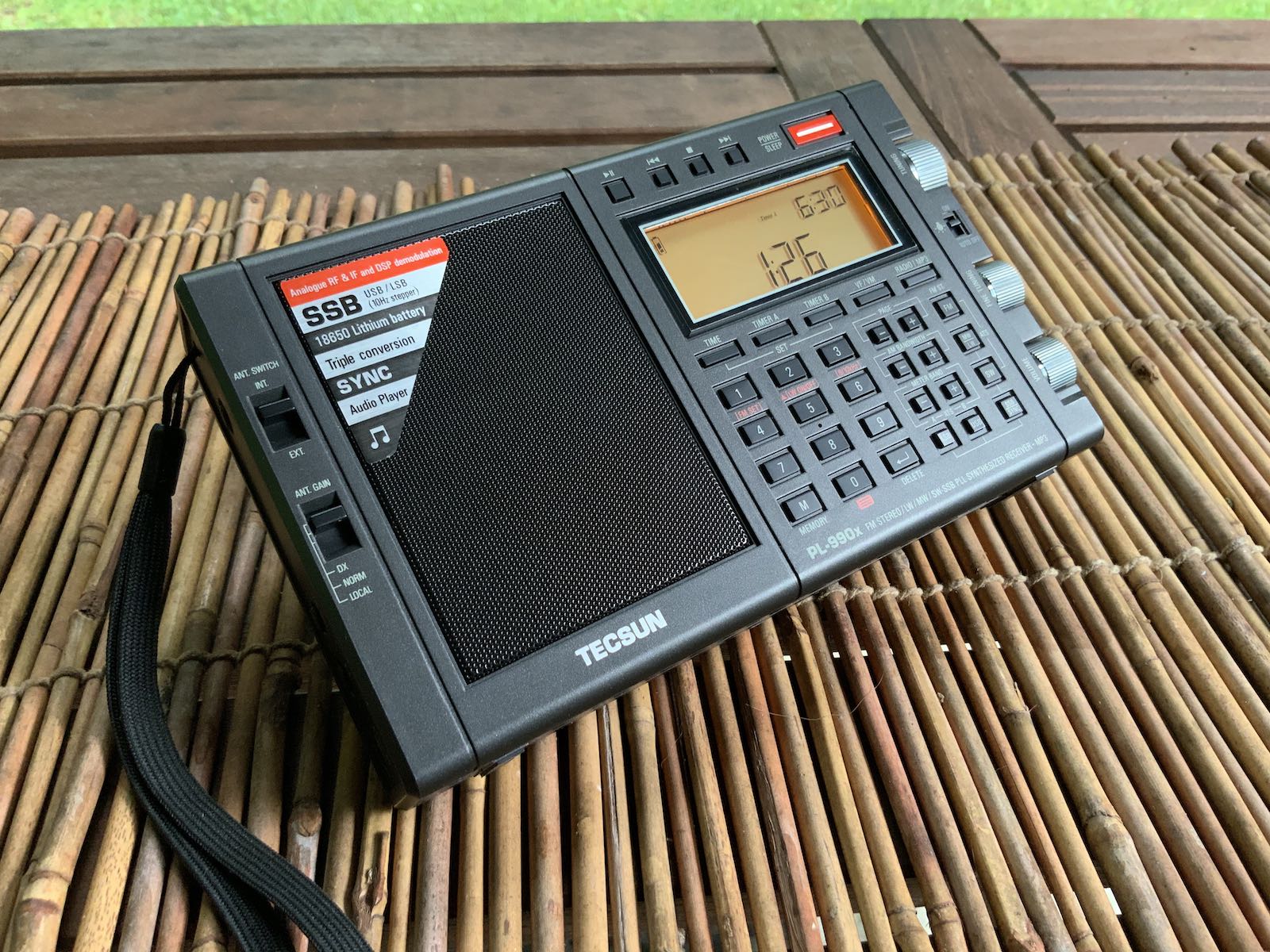
I also mentioned in the last video that the audio sounds better on the PL-880. I should have qualified that statement a bit better.

In general, yes, the PL-880 audio sounds better because its built-in speaker has slightly better audio fidelity that’s most noticeable when listening to music on the FM band, or a strong local AM station. On shortwave, I feel like I actually prefer the PL-990 audio for all but the strongest stations although I do wish the PL-990 filter could be widened to 9 kHz like the PL-880.

PL-990x (pre-production) vs. PL-990 (production model)
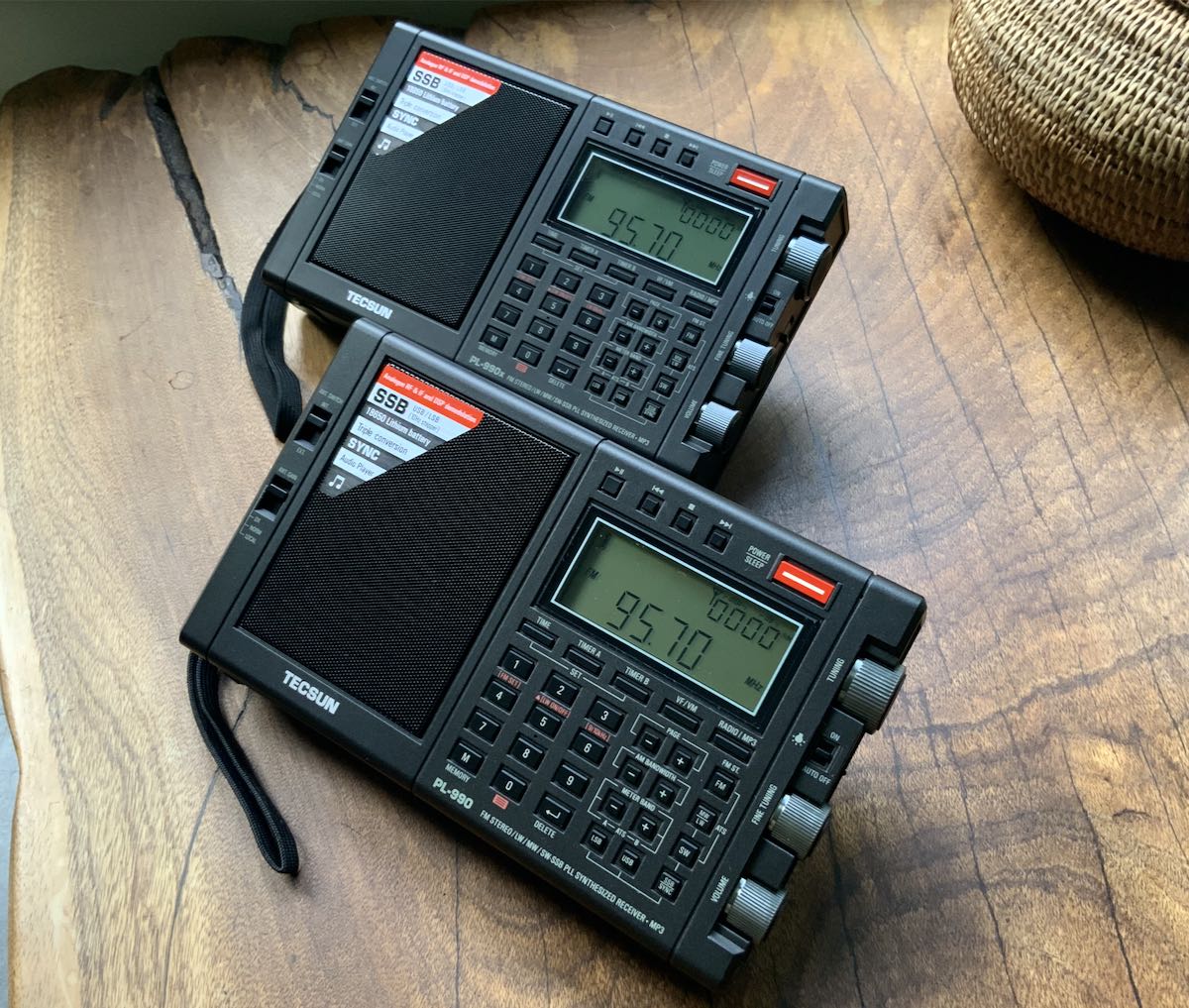
Tecsun Radios Australia reached out and kindly sent me one of their PL-990 production model radios to compare with the PL-990x pre-production model from Anon-Co we’ve been testing up to this point. This has been incredibly helpful as I put together my PL-990 review for the 2021 World Radio TV Handbook.

As I’ve mentioned in previous posts, I feel it can be problematic using a pre-production model radio for review only because there can be differences in quality control when a small number of pre-production units are manufactured compared with a proper first production run (remember this case?).

I’ve only had the production model PL-990 for a few days and most of that time we’ve been dealing with the remnants of hurricane Sally moving through our area dumping torrential rains.

Last night, however, a massive tree fell across our road knocking out power for the better part of 5 hours. This gave me a perfect excuse to start my comparison indoors while rain continued outside.

Based on my comparisons last night, it appears performance is nearly identical between the production and pre-production models. I’ve still more testing to do, but my initial impressions are most positive. Very happy quality appears to be consistent.

Many thanks again to Tecsun Radios Australia for making this comparison possible.
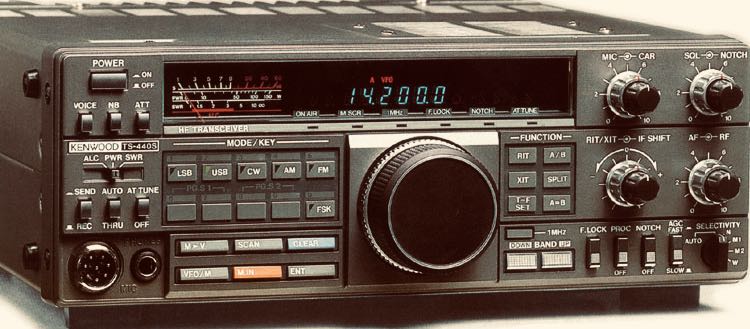
Can you help Bruce identify this shortwave noise?

Many thanks to SWLing Post contributor, Bruce (VE6XTC), who is trying to identify noises he’s hearing on the HF bands. Perhaps readers can help.

By request, Bruce has provided me with two recordings via his Kenwood TS-440S:

Recording 1: 7,335 kHz at 0500 UTC on September 13, 2020

Recording 2: 7,405 at 0500 UT on September 13, 2020

Post readers: If you can help Bruce by identifying these HF noises, please comment!

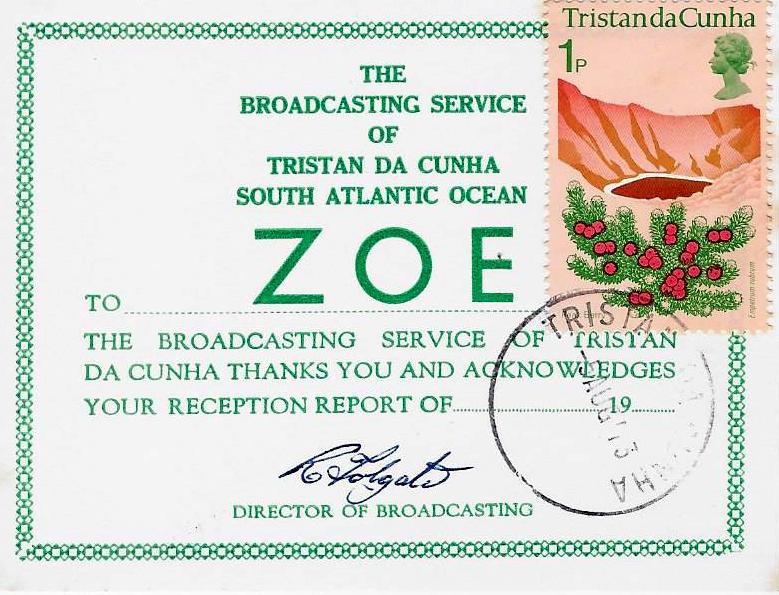
ZOE: More Tristan Da Cuhna QSL cards in the wild–?

Many thanks to SWLing Post contributor, Dan Robinson, who shares the following guest post:


SWLing Post readers may recall the story we published last year about the appearance of a rare QSL card from Tristan da Cunha. ZOE Tristan was for decades one of the most sought after stations — it used 3,290 kHz and had a power of 40 watts.

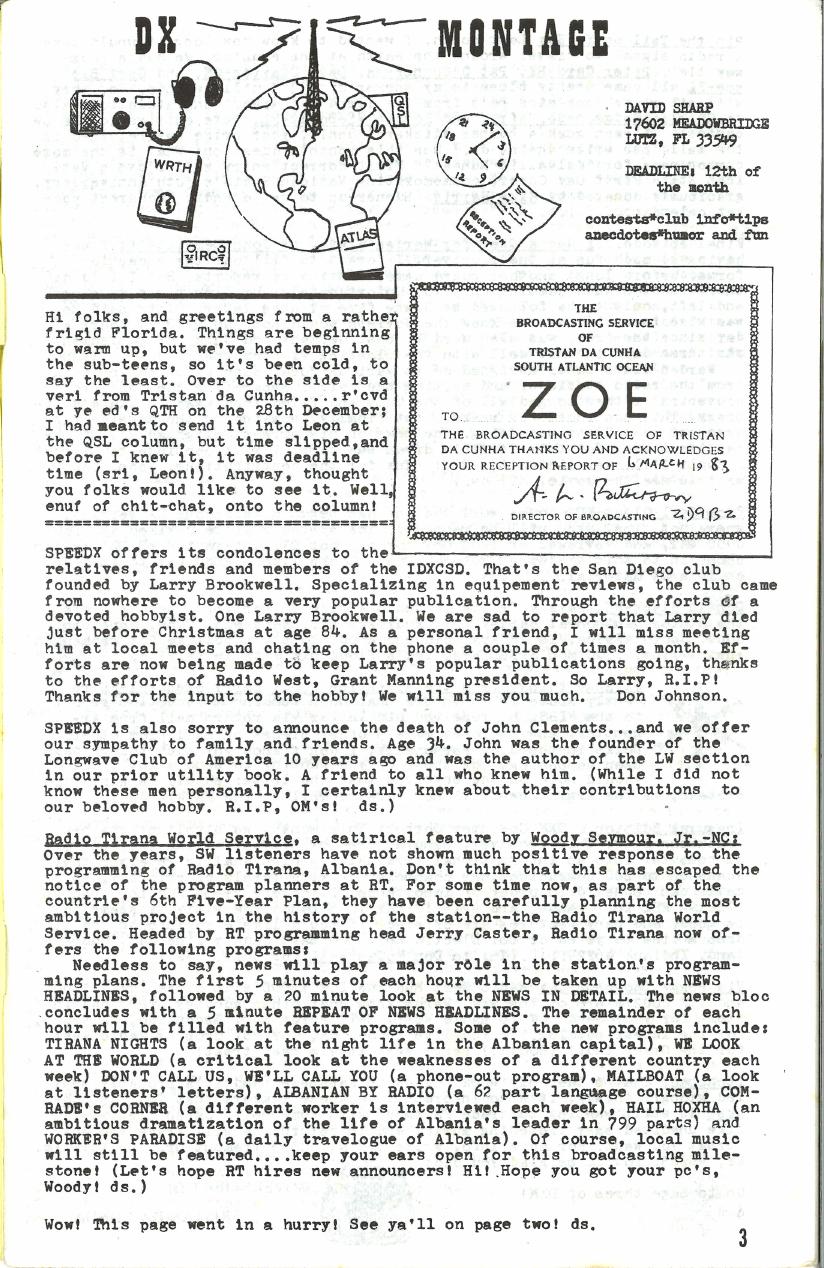
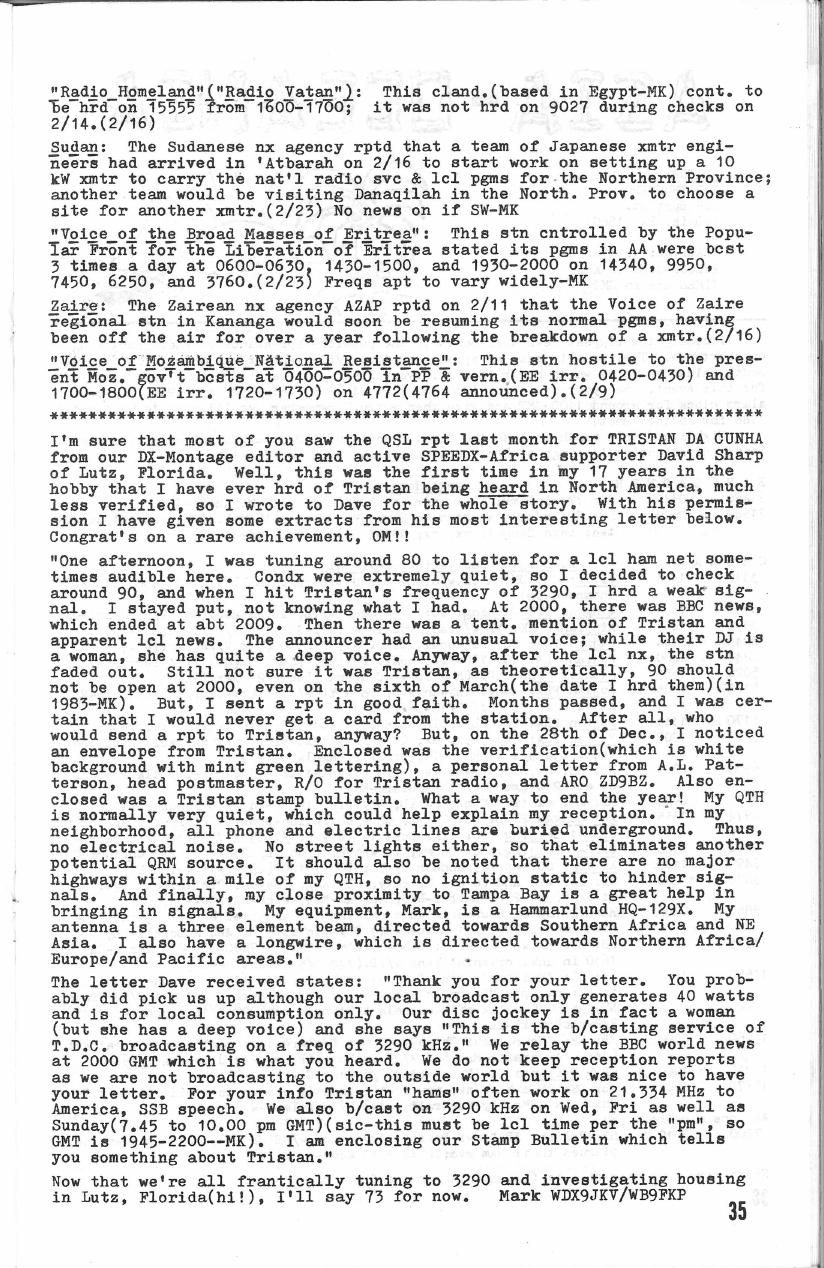
Recently, I received correspondence from a former editor of the old SPEEDX club bulletin who provided copies of two pages from the bulletin from decades ago. These pages make clear that the QSL I obtained in an Ebay auction was not the card that Dave Sharp received:

Dave was, at one point, editor of the DX Montage section of SPEEDX. As can be seen, the ZOE card that he received was signed by a A.L. Patterson while the one I obtained through auction contained a different signer consistent with a QSL received by South African DX’er Eddie de Lange in 1973. However, the card I received was NOT the one pictured in a story about Tristan published in 2010 — the postmark date is different.

That story noted that three DX’ers from South Africa “did manage to receive and QSL ZOE Radio Tristan – Ray Cader, Gerry Wood and Eddie de Lange were among a handful of fortunate Radio Tristan QSL recipients. I am aware of only two other verifications – UK DX’er Anthony Pearce received a QSL in 1973 and Florida DX’er David Sharp received a verification in 1983.”

Since Dave Sharp noted that his QSL collection was unfortunately lost, the ZOE card I obtained through the eBay auction in 2019 was most likely one received by others in the South African group or possibly by the UK DX’er noted in the 2010 story about Tristan.

The headline out of all of this is that it’s quite possible that other Tristan QSLs are floating around out there.

– Dan Robinson


Wow! Thank you for sharing this follow-up story, Dan!

Readers: Please comment if you have a Tristan Da Cuhna QSL card in your collection! These are rare indeed!

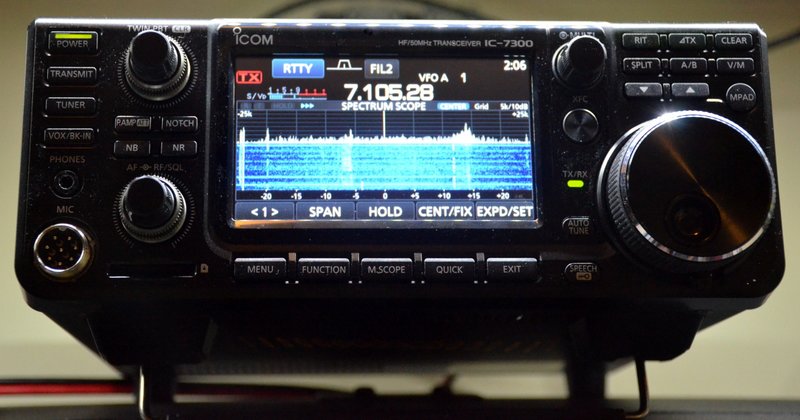
Disabling transmit on the Icom IC-7300 or Kenwood TS-590 series transceivers?

Many thanks to SWLing Post contributor, Muthu, who writes with the following inquiry after reading our Xiegu G90 review:

Very nice review. I have a question.

I’m preparing for a restricted ham license in Hong Kong and may try transmitting for a couple of months. However, in the long run I plan to use the rig just as a receiver mainly for shortwave broadcast listening once I return back to India next year.

I’m considering Icom IC-7300 or an almost new Kenwood TS 590-S[…].

You said that there is no way to completely disable the transmitter on the Xiegu G90. Is there a way to completely disable transmit on the Icom IC-7300 or Kenwood TS-590?

Thank you for your question, Muthu. My hope is that SWLing Post readers who own the IC-7300 and/or TS-590 series transceivers can confirm.

I only had the IC-7300 on loan a few weeks during my evaluation/review period. While I feel like I recall the ability to disable transmit (or perhaps lower the output power to 0 watts), I’m not sure if that also applies to the internal ATU. I have no clue if this is possible with the TS-590S as I’ve never spent meaningful time with this fine transceiver.

Post readers: If you own either of these transceivers and can you confirm if transmit can be disabled on the IC-7300 or TS-590? Please feel free to comment!

Paul Walker to speak about DXing in remote Alaska

Many thanks to SWLing Post contributor, Paul Walker, who writes:

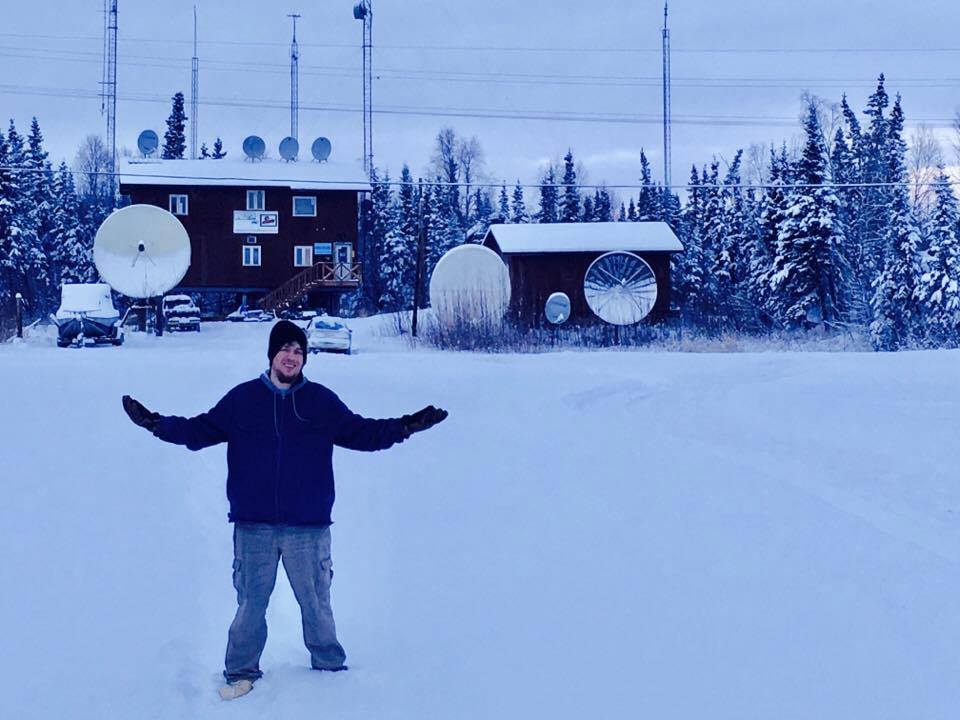
I’ve been asked by a ham radio club to do a presentation on DXing in rural central Alaska. I spent about 16 months in Galena, back in 2016 and 2017 while working as the program director for a public/community radio station.

It was a very unique situation with some special considerations one might not have to deal with elsewhere. I spent a lot of time and money experimenting there and had some pretty amazing results.

I will also briefly discuss what it was like as a radio broadcaster in Alaska and the technical challenges we faced in the course of doing business every day.

The presentation will be done using the Zoom smartphone app and website. You don’t need to have or enable the camera on your phone or computer to participate and there will also be options to simply dial in and listen by phone as well for those who don’t want to use the computer or have a smart phone.

The presentation will be on Friday October 30th at 8pm eastern time. Pre registration is required but its very simple and easy. I’d love to have you there. Please spread the word to any ham clubs, dxing clubs, email lists, facebook groups or messages boards.

Register in advance for the meeting:
https://us02web.zoom.us/meeting/register/tZItcuGhpz8tEtHwAmriwdCX7Sv-coWdSNt2

Longtime Post readers might recall Paul’s photos and recordings from Galena, Alaska–click here to read through the archives.

Anon-Co publishes pricing and availability of Tecsun PL-990x packages

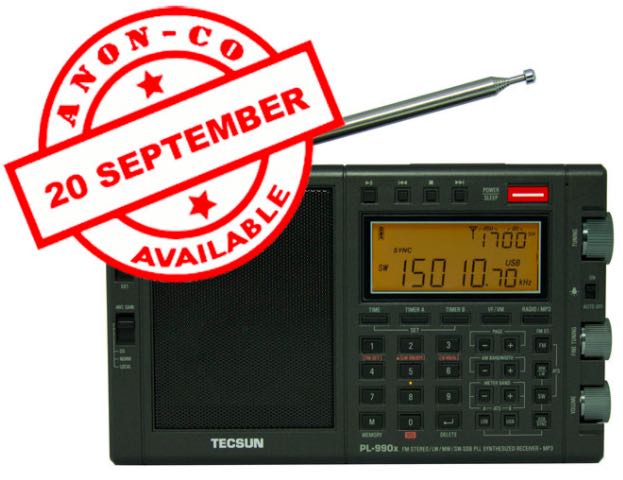
Anon-Co has just posted pricing and availability of the Tecsun PL-990x:

The PL-990x package like the pre-production unit I received costs $235 US shipped free via the postal service or via FedEx for an additional $9.00.

This package includes the Tecsun PL-990x, Tecsun EP-20 stereo earphones, 16GB microSD card, Tecsun AN-03L wire antenna, protective carrying pouch, charging cable, USB wall charger, radio amateur world map, and an English manual.

Click here to view the product page.

In October, Anon-Co will also start shipping a PL-990x package that comes in a hardcover case and an ICR-100 recorder. This version will be $283.00 US.

Win an MFJ-8100K shortwave receiver kit!

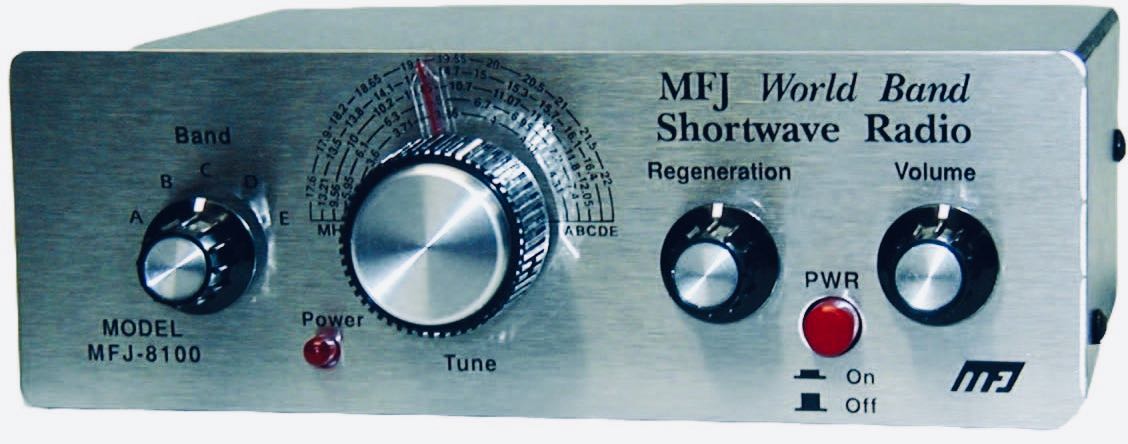
After posting Ron’s note about the MFK-8100K receiver kit, I touched base with MFJ and they have kindly donated a new 8100K kit to us for an SWLing Post giveaway. Thanks, MFJ!

This giveaway is open to anyone, anywhere. MFJ will ship it directly to you if there are no Covid-19 shipping restrictions to your country.

Here’s how to enter the giveaway…

Simply comment on this post and tell us about your favorite kit that you’ve built. This can be your first kit, your last kit, or anything in between. Don’t just give us a model name, tell us what made it a fun or special project.

If you’ve never built a kit, but are eager to do so, tell us why you would like to build the MFJ-8100K! Do you have a soldering iron?

We simply want to make sure a kit builder or want-to-be kit builder gets this prize! We’d even invite you to share a short post about building the MFJ-8100 (no obligation–only if you wish).

Details

We will pick a winner at random from the valid comments in this post on Wednesday, September 23, 2020 at 16:00 UTC.

This means you must enter a valid email address in the appropriate comments field (not within the comment text itself) so that we can contact you.

Of course, the SWLing Post doesn’t sell or share emails–never have, never will–this is only so we can contact you to obtain your shipping address if you win. Feel free to use a throw-away email address if you wish.

This is all about taking us on a great kit-building nostalgia trip, so have fun!

Click here to comment with your kit story and enter the giveaway.

Many thanks again to MFJ Enterprises for sponsoring this contest!