Category Archives: Shortwave Radio

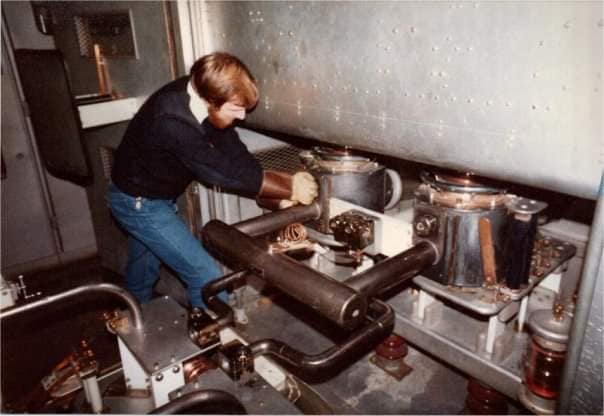
Example of a manual wavechange at BBC Skelton A Transmitter

By Michael Whitfield, CC BY-SA 2.0

Many thanks to SWLing Post contributor, Dave Porter (G4OYX), who shares the following:

Here’s Steve Gale in the late 80’s or early 90’s starting a wavechange on a Marconi BD272 250 kW sender at SKA.

There were eventually 11 of these senders at the BBC Skelton A site.

The first pic is the Final RF amplifier output stage with the 15/17 MHz coil being in situ. It sits between the two anodes of the output tubes.

Below the anode coil sits the coupling coil and it is on a motorised deck, that can be moved backwards and forwards on power to couple up to the required power output.

Steve is just starting the band change as he is wearing the leather gauntlets because after a transmission the coils are very hot.

Both the anode and coupling coils will be removed and replaced by those for the next required frequency.

A fifteen minute period was allocated by the BBC WS Schedule Department to accomplish a band change though two of us could do them in about eight minutes if pushed!

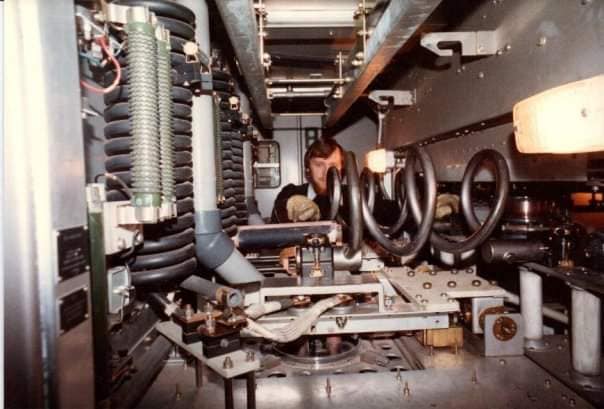
The picture below shows Steve starting to remove one of the pair of the 3-turn 40 kW Penultimate stage to Final stage coupling coils, again he is wearing the gauntlets. A different coil will be used for the next band.

The three turn coil covered 9, 11 and 15 MHz.

All those senders have gone now at Skelton.

Two are still in use at Woofferton and some in Singapore.

Thanks so much for sharing this glimpse into a working shortwave radio transmitting station, Dave! There’s nothing QRP about those transmitters and I bet those coils got incredibly hot!

Radio Waves: Clandestines, FCC’s New Logo, WNYC Vision, and RAC Membership Renewal Procedures

Radio Waves:  Stories Making Waves in the World of Radio

Because I keep my ear to the waves, as well as receive many tips from others who do the same, I find myself privy to radio-related stories that might interest SWLing Post readers.  To that end: Welcome to the SWLing Post’s Radio Waves, a collection of links to interesting stories making waves in the world of radio. Enjoy!

Many thanks to SWLing Post contributors Ron, Andrea Borgnino, and Tracy Wood for the following tips:


Clandestine: Under false flags (Nils Schiffhauer – DK8OK)

Non-official radio stations always attracted shortwave listeners who call them “clandestines”, follwing a mixture of mis-understanding and romanticism. The range of this class of stations is remarkably wide. Nowadays, the majority of them is renting time from major transmission centres like Nauen/Germany, Issoudun/France or Toshkent/Uzbekistan.

As all media, they are put into service to influence people and to sell something by propaganda. The difference between an official broadcaster, like Voice of America, and a “clandestine” like North Korea Reform Radio is not palpable – both are financed by the U.S. Congress.

With most broadcasters transmitting on a scale between facts (“white” – nearly only the BBC) and sheer disinformation (“black”), clandestines are placed on the darker third of this range. The separation between “clandestine” and “official” is rather artificial. There simply is no difference between e.g. the official World Harvest Radio and the clandestine Voice of Wilderness, both religious brodcasters, funded by Cornerstone Ministries International/USA – to take just two religious stations.

Today’s activity of clandestines is concentrated on Africa and Asia with especially taking countries like North Korea, China, Eritrea and Sudan into focus.[]

FCC Adopts a New Official Seal in Anticipation of Relocation (ARRL News)

In anticipation of its upcoming move, the FCC has adopted a new FCC seal. The redesigned seal is the product of an agency-wide contest that solicited proposals from employees and contractors. The winning design, submitted by Umasankar Arumugam, was selected by a vote of the agency’s employees and contractors.

The revised design incorporates several elements: communications technologies currently transforming our world; four stars on the outer seal border, drawing from the legacy of the predecessor Federal Radio Commission seal; 18 stars on the shield, recognizing the current number of bureaus and offices; and the eagle and shield, identifying the FCC as a federal government agency.[]

1937 Vision: WNYC, The Flagship Station of a Non-Commercial Cultural Network (WNYC)

The notion of WNYC becoming the flagship station of a non-commercial network of cultural stations was first publicly articulated by Mayor La Guardia at the launching of the station’s new WPA-built transmitter facility in Greenpoint, Brooklyn on October 31, 1937. La Guardia envisioned a non-commercial/educational radio network connected via shortwave rather than expensive landlines leased by AT&T, but the FCC prohibited interstation communication by means other than wire when wire is available. At the ceremony La Guardia sharply criticized the FCC prohibition: “That is just as nonsensical and as unreasonable as to say that one isn’t permitted to fly from here to Chicago because there are railroads going from here to Chicago. Of course, all this is very good for the New York Telephone Company, but it is not so hot for us.”[]

New RAC membership renewal procedures (RAC via Southgate ARC)

On behalf of Radio Amateurs of Canada, I would like to thank you for your continued support of Amateur Radio in Canada and internationally.

Your membership has helped RAC in its two primary objectives: to support and promote Amateur Radio in Canada and internationally; and to provide valuable programs and services to RAC members (see below).

As a result of the COVID-19 global pandemic, the RAC Head Office in Ottawa has been closed temporarily and we are no longer able to send out membership renewal notices by mail and we will be sending out email notices instead.

We would appreciate it if you would please watch for these messages in your inbox and also in your junk folders – this is especially true if you have Outlook or Hotmail email addresses.

In addition, you can assist us by checking to see when your membership will expire by logging on to the RAC website and going to the “My Membership” webpage (https://www.rac.ca/my-membership/). You can also find it on the mailing label of the paper version of The Canadian Amateur magazine or by calling the RAC office as described below.

If you need to renew your membership you can do so by using one of the following options:

  • Online:  by completing the online renewal form (or by clicking on the “Join Radio Amateurs of Canada” logo on the top right of the RAC website). Payments must be made by credit card or by PayPal.
  • By phone:  by calling 877-273-8304 from 10 am to 4 pm EST/EDT, Monday through Friday (except statutory holidays). You may pay by credit card or you may send a cheque for the appropriate amount to the RAC head office.
  • By mail:  if you prefer to have your renewal form processed via standard mail, you can download an application for your region from the Membership Renewals webpage and mail it to the RAC Office.

73, Glenn MacDonell, VE3XRA
RAC President


Do you enjoy the SWLing Post?

Please consider supporting us via Patreon or our Coffee Fund!

Your support makes articles like this one possible. Thank you!

My Replacement Stand Journey for the Grundig G6 Aviator


Guest Post by Troy Riedel

I’ve mentioned here in the past that I am an astronomy hobbyist first, and an SWL hobbyist second (call SWL my cloudy nights hobby).

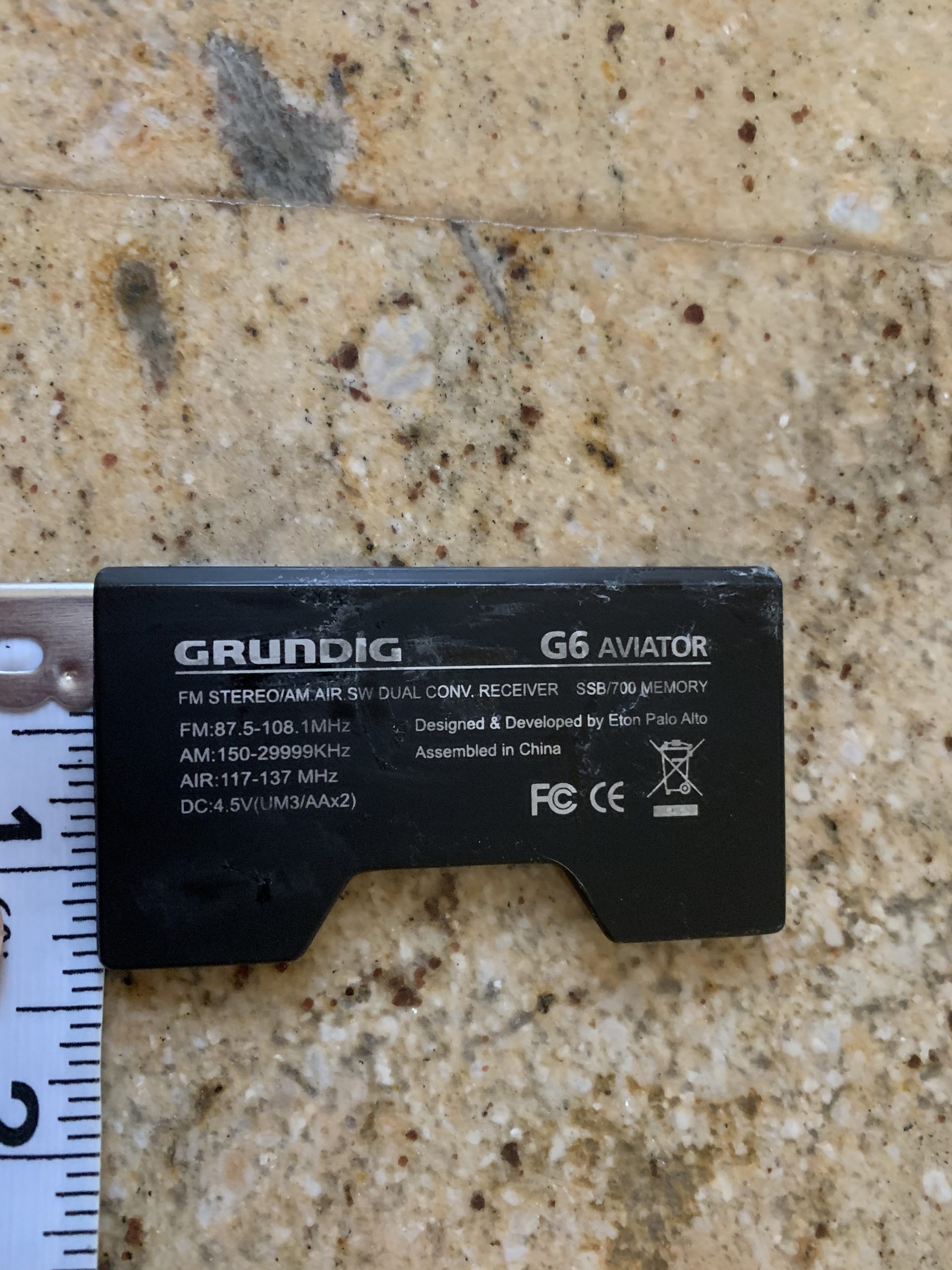
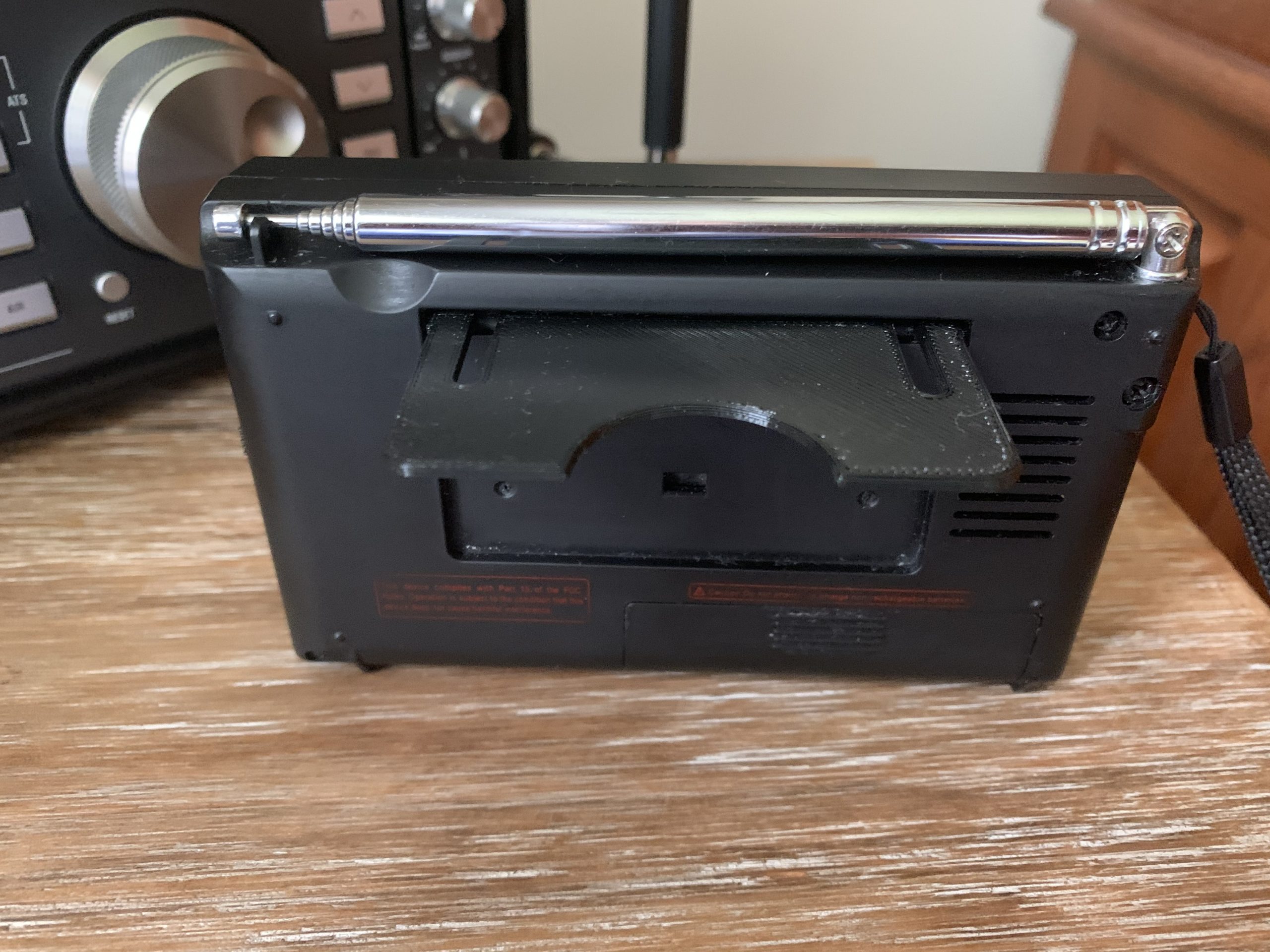
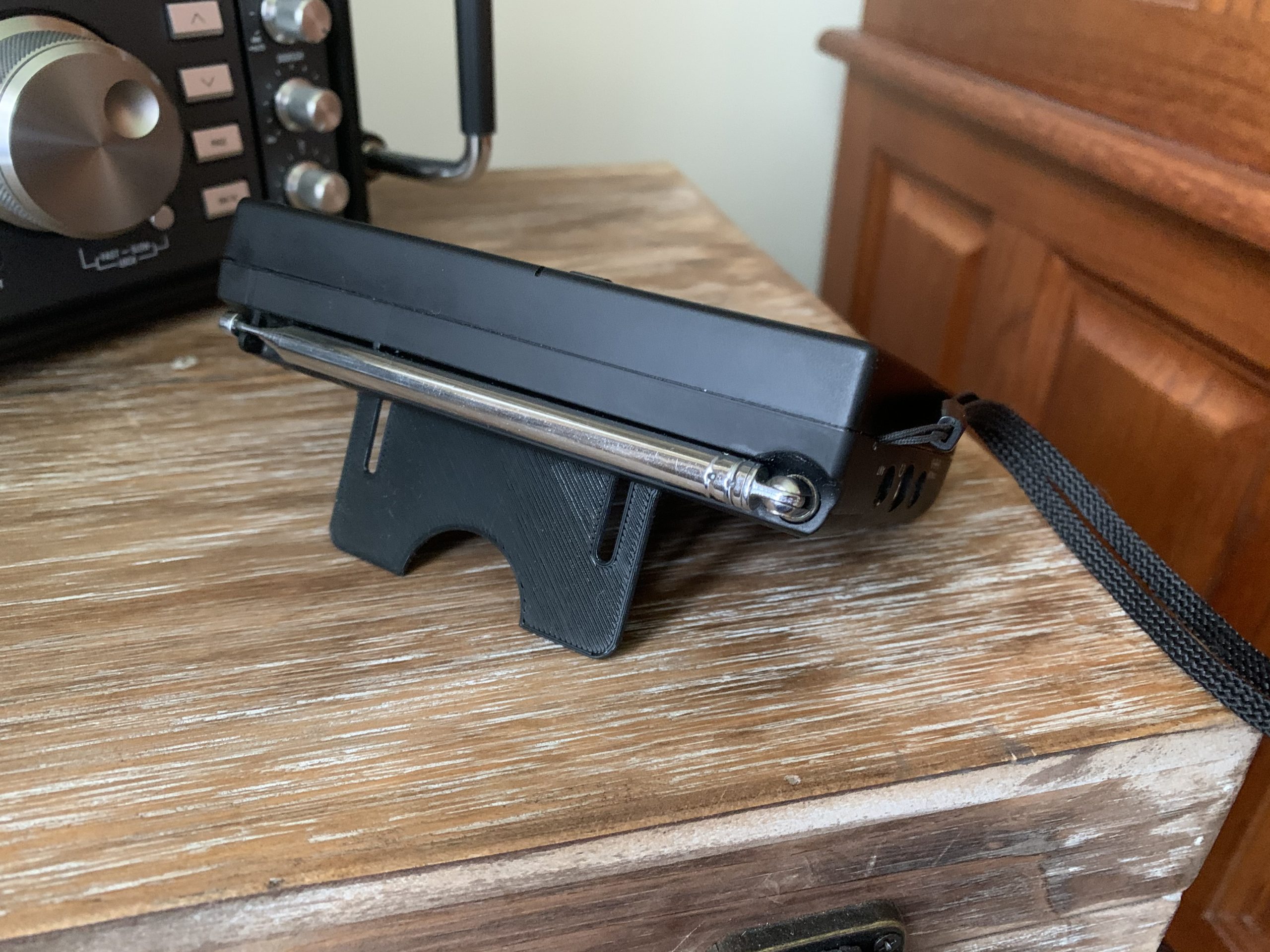
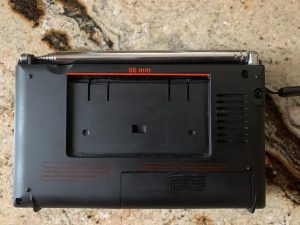
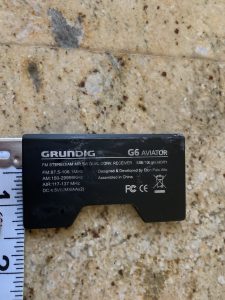
A couple of years ago my Grundig G6 suffered from the troublesome “sticky” body that afflicts all of the Grundig/Eton radios of that era.  I used the recommended cleaning agent as has been posted here (Purple Power) to remove the sticky residue.  It worked great – but I discovered one must be very careful using this cleaner.  Why?  Excess cleaner seeped into the crevices where the radio stand mounts, was not fully removed/dried, and the cleaner “ate” the nubs off that hold the radio stand in place.  The result: a broken radio stand!  Right Photo: you’ll see glue residue smeared on the broken stand – where I tried to make & glue new nubs and failed miserably.

Through my astronomy hobby, I discovered someone (Joel) who 3D prints some astronomical accessories.  After ordering & receiving three quality products, we established a friendly rapport.  I asked him if he knew of anyone who 3D printed and commercially sold radio stands.

He replied “No” – and frankly he wasn’t quite sure what I was referring to – but he essentially conveyed “if you supply me a photo and dimensions, I will gladly print one that you can try”.  Great news!

After supplying him a photo and supplying dimensions, Joel printed off a stand plus a spare and shipped it to me.  Unfortunately, it did not fit … the side nubs were simply too small.

I wrote-off the encounter as having been worth the nominal cost & effort.  But Joel was not ready to write this off!  He asked for more details re: why it didn’t fit (we designed the stand about .25mm too thin – a small tolerance but significant in that the stand simply would not fit – the nubs were too small at the thickness that was printed).  We consulted, both made recommendations, then Joel promptly 3D printed another stand (v.2) and mailed it to me.

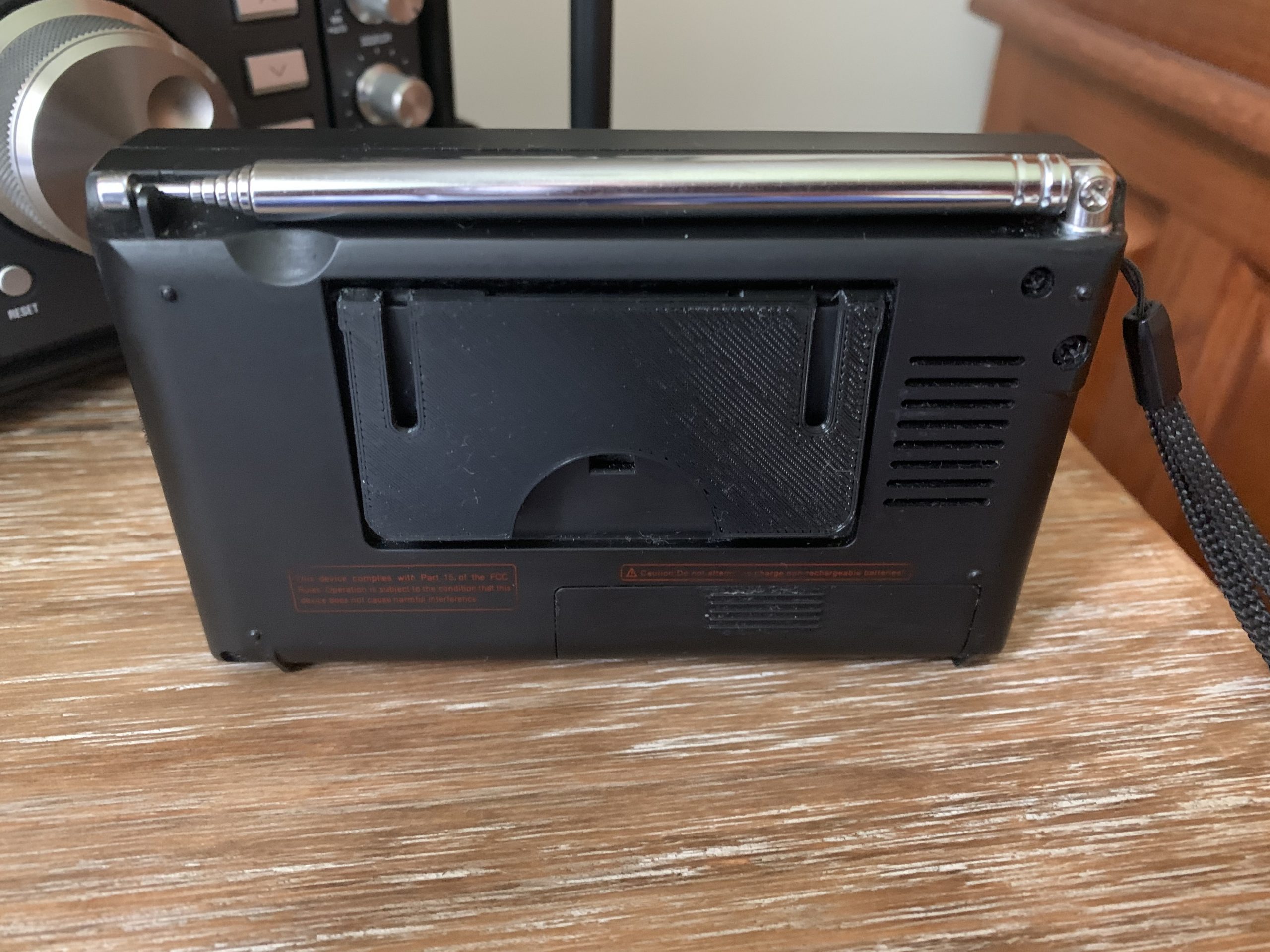
The end result: it fits perfectly – works perfectly.  I now have a replacement G6 stand and I feel my little Grundig Aviator Buzz Aldrin Edition (note the astronomy connection) was now, once again, whole!
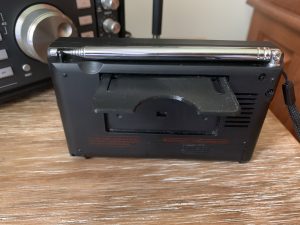
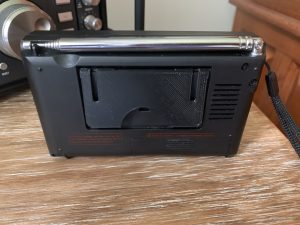
 

For those who’ve replaced radio stands before, the biggest obstacle is *not* breaking it when you try to insert it into the back of the radio.  A tried and true trick is to freeze the replacement stand, so it contracts very slightly (by the mm), and then insert it into the body of the radio.  The great thing about this stand: it is designed with a cut-out on each side.  This cut-out allows the stand to ever-so-slightly flex (better – and probably more safely – than the freezing trick). This design allowed me to safely and rather effortlessly insert the stand without fear of breaking it.  And the stand’s thickness is quite capable of supporting the weight of the radio (note: the plastic of the 3D printed stand is not quite as hard as the OEM stand but it is still more than capable of supporting the radio’s weight).
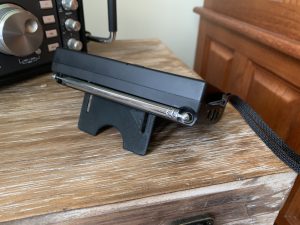
I’m sharing this because Joel has added the G6 stand to his little BuckeyeStargazer Web Store , for $10 – what a great deal for us suffering G6 folks with broken stands.

At this time, the Buckeye Stargazer only offers the G6 stand.  But, who knows?  Before I came along, he didn’t offer any stand.  You might be able to cajole Joel into prototyping another stand?  For that – you’d have to contact him directly to see if he were receptive to more experimentation.

So, thanks again to the Buckeye Stargazer!  It’s always nice to tie my two hobbies together: astronomy & shortwave radio.

Spectres of Shortwave: Amanda Dawn Christie’s film about RCI Sackville now streaming

IMPORTANT UPDATE – Amanda Dawn Christie notes:

“Unfortunately [this video] was never supposed to be public – it was an accident on my part. The film will be viewable soon though, for seven days. May 26 to June 1. It is being hosted by a gallery in Montreal. That upload was only a test for them, and should never have been public. I was in a hurry, trying to get it uploaded before I packed my hard drives before I moved and I guess I didn’t check all the settings. Sorry about that. I appreciate the enthusiasm though.”

SWLing Post friend and filmmaker, Amanda Dawn Christie, has just uploaded a version of her film Spectres of Shortwave to Vimeo where it can be viewed free of charge:

Click here to watch on Vimeo.

Pete seeks rechargeable battery pack options for his Wellbrook loop antenna

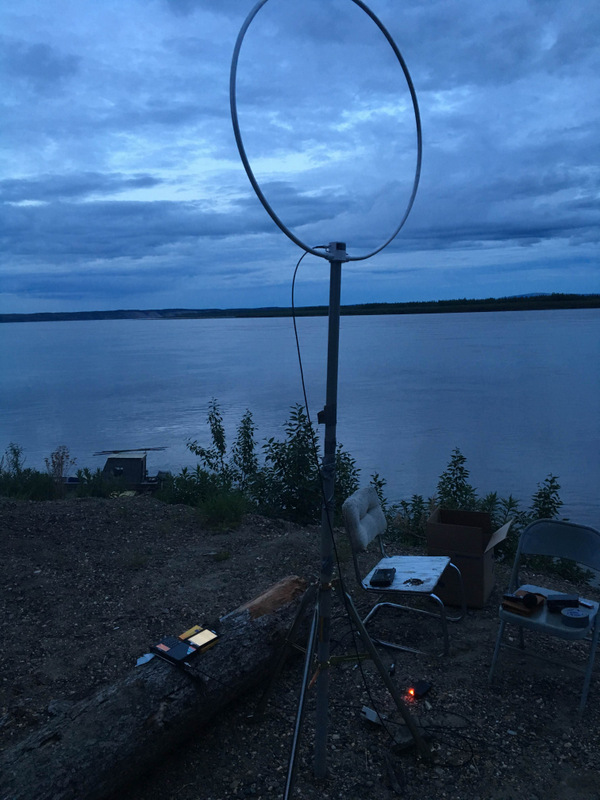
Paul Walker’s battery-powered Wellbrook antenna in remote Alaska.

Many thanks to SWLing Post contributor, Pete Jernakoff, who writes:

[…]I’m hopeful that one of your readers might be able to suggest a solution to my problem.

I have an older Wellbrook Communications active loop antenna that is powered by a 12 v AC-to-DC, center pin negative, plug-in power supply (Stancor AC Adapter, was supplied with the antenna).

I’d like to power the antenna from a rechargeable battery in order to make the antenna portable and to eliminate any noise that might be emanating from said power supply (which, as an aside, runs very warm when in operation).

My problem is that I cannot find any rechargeable batteries (lithium ion preferred) with a center pin negative output. All of the ones that I can find online have center pin positive outputs (such as the TalentCell 12V/6000mAh rechargeable battery that I’ve purchased to power my other, more recently produced, Wellbrook Communications active loop antenna whose amp needs a center pin *positive* input).

Thanks in advance for consideration of my request. Btw, love your blog! I’ve been an avid reader of it for quite some time now.

Post readers: If you have any suggestions for Pete, please comment with any relevant links to help him make the purchase. I’m guessing Pete isn’t interested in re-soldering a coaxial plug for negative tip polarity at this point.

By the way, I used a photo of Paul Walker’s Wellbrook at the top of this post because I recall that when he lived in Alaska, he powered his Wellbrook loop with a rechargeable pack (and during the winter, I also recall he struggled to keep it warm enough to provide power for any length of time!). Perhaps Paul can comment.

I’m so glad you enjoy the SWLing Post, Pete!

Ted inherits two vintage receivers and a 1959 UK Receiving License

Many thanks to SWLing Post contributor, Ted Lampert, who writes:

I was given some old radios belonging to a family member who passed a few years back.

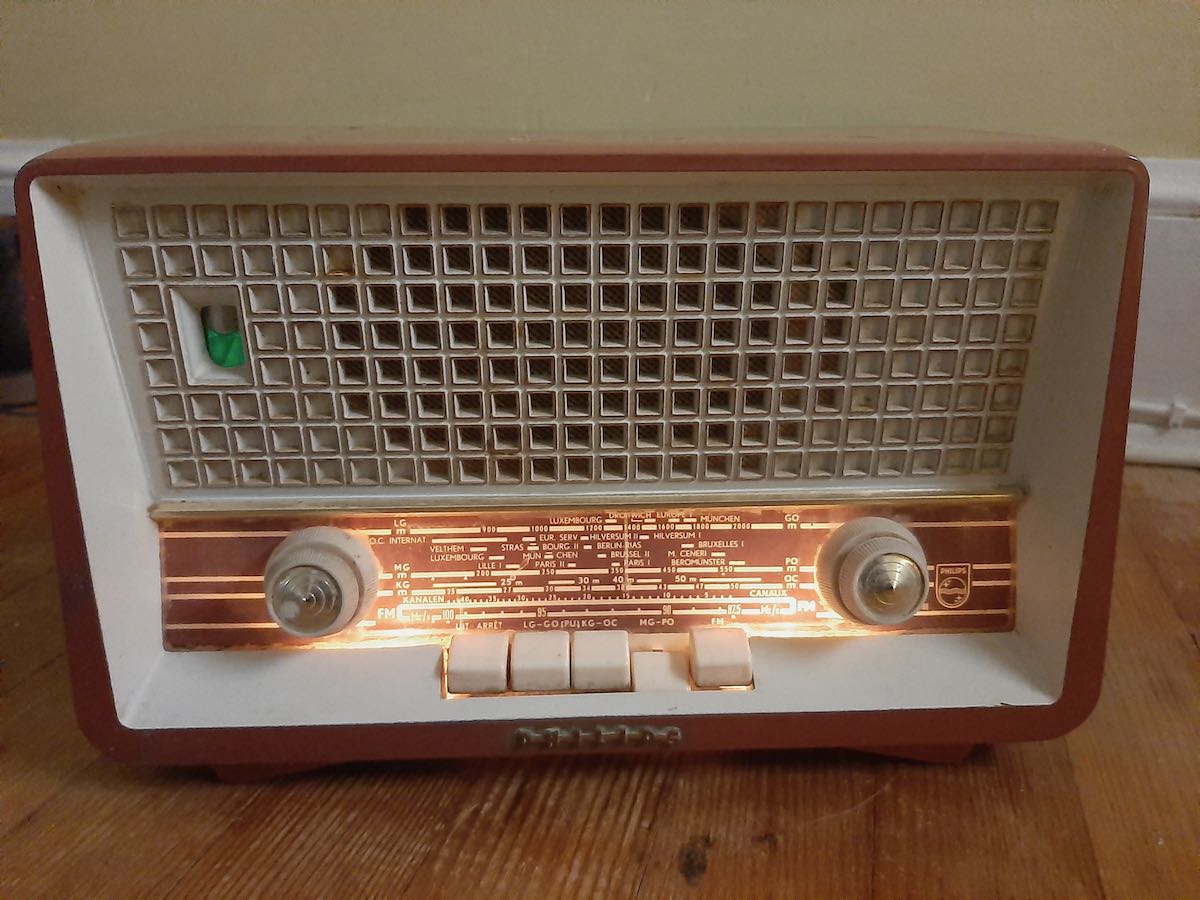
A couple of them really sweet, a Philco 46-420, and a Philips B3X82U (see photo above).

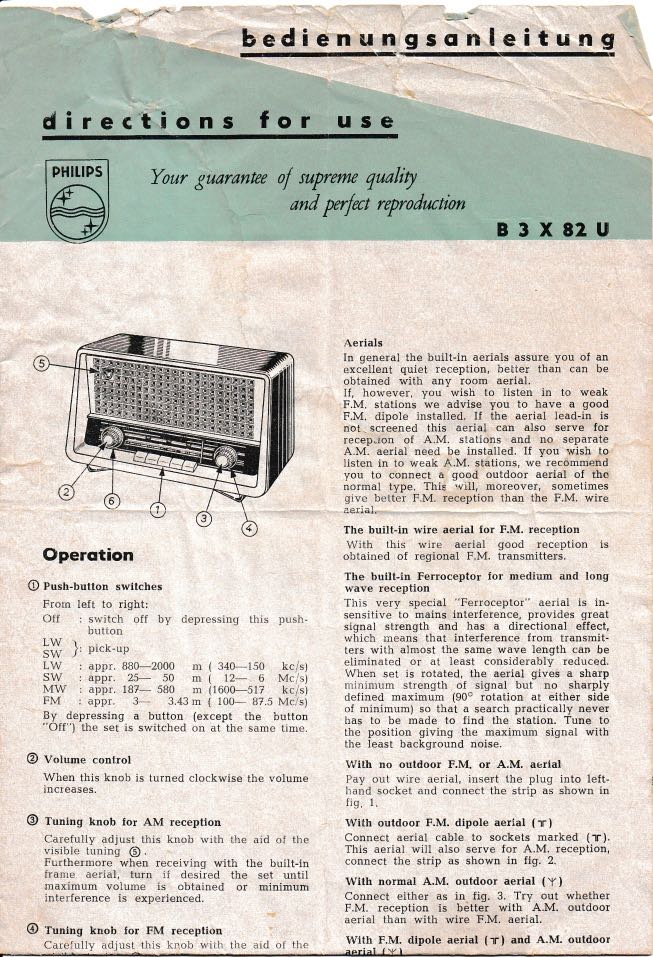
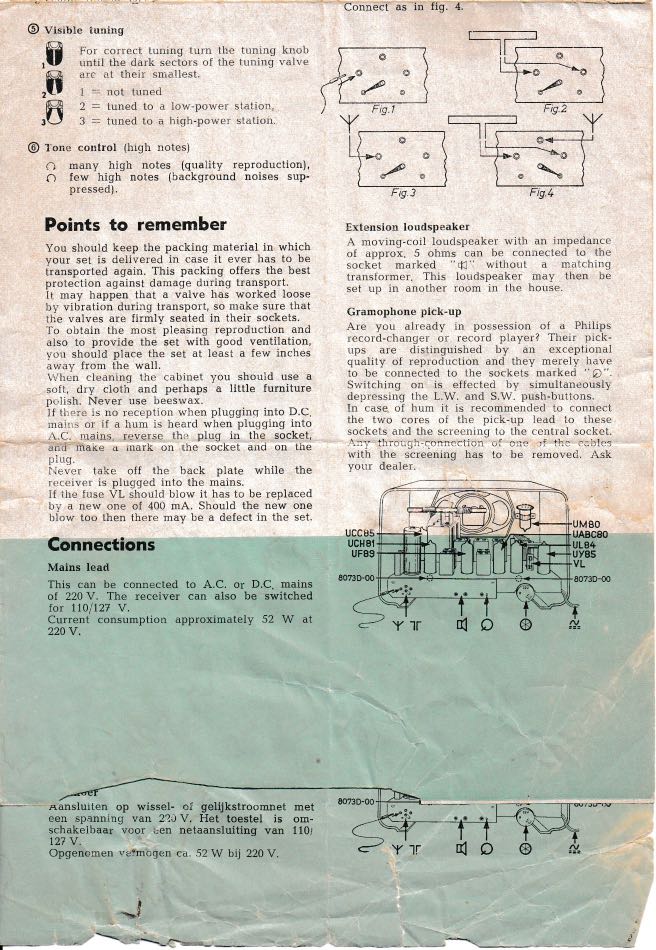
Included was an envelope with some papers in it. One was the instruction booklet for the Phillips B3X82U, in multiple languages:

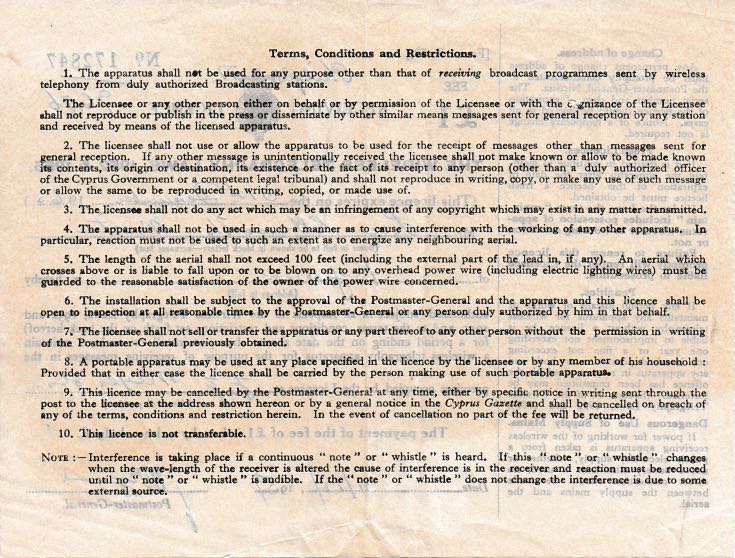
Another was a receiving license.

Without outing him too much, the original owner did government work and was stationed overseas quite a bit. The license looks like it was good for 1960, and I’m guessing you went to the post office to get it. It references the wireless telegraphy laws 1952 & 1955. Have you seen one of these before and do you know much about these receiving licenses?

The Philips is the radio I believe would have been probably what he got this license for since it says Philips at the top of it.

[…]Anyway, going through stuff recently, saw the license and started wondering about it.

Keep up the good work, seeing almost daily new articles on your site played a big part in keeping me inspired to get my own license, not a receiving one, but an amateur. Got general on the first try back in the fall of last year!

First of all, congratulations on snagging your General license last year!  Well done!

Both the Philips and Philco are gorgeous receivers! What treasures! Ted, you had mentioned elsewhere in your message that you plan to recap them and I’m very pleased to hear this.

Like you, I was not aware of that receiving licenses were issued in the UK at the time. Perhaps this was implemented during or after WWII and was simply a requirement during the Cold War?

My hope is that a knowledgeable SWLing Post reader can shed some light on the Receiving License. Please comment with details!


Do you enjoy the SWLing Post?

Please consider supporting us via Patreon or our Coffee Fund!

Your support makes articles like this one possible. Thank you!