Category Archives: Shortwave Radio

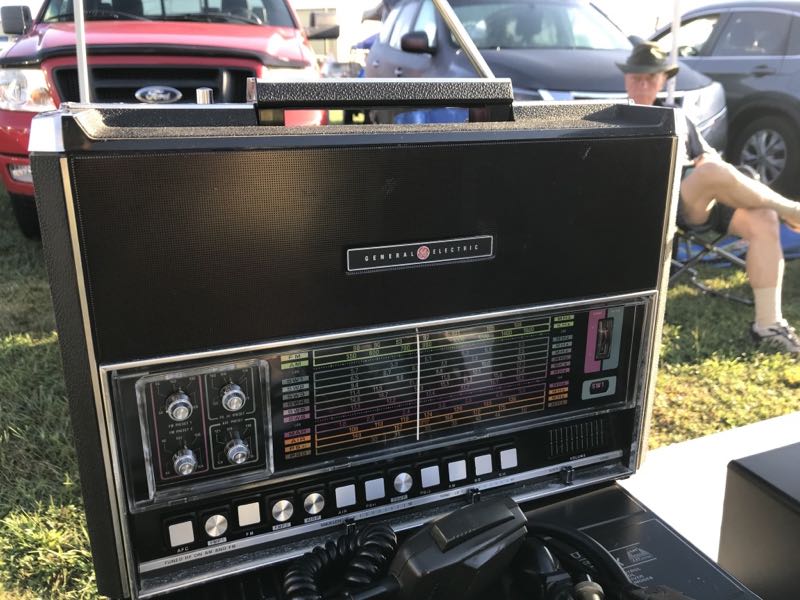
A photo tour of the 2019 Shelby Hamfest

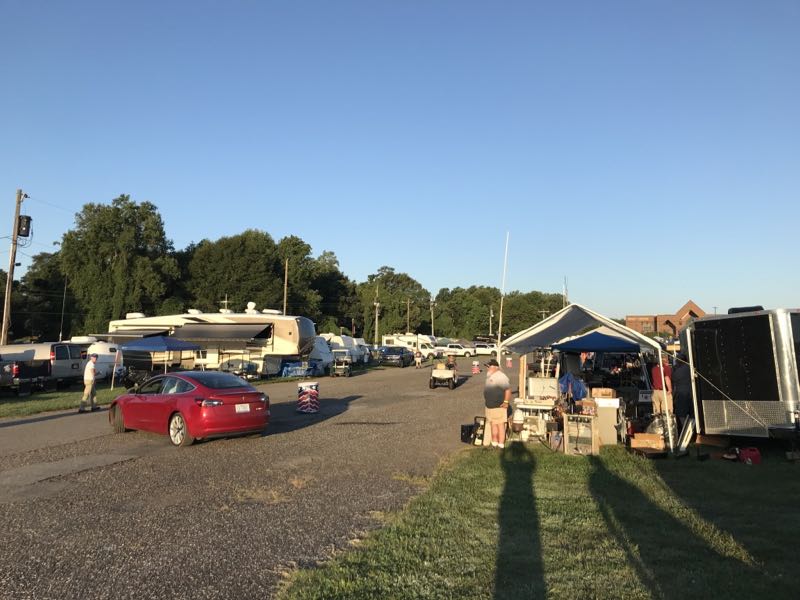
My Labor Day weekend was free of travel this year, so I was able to make another pilgrimage to the Shelby (North Carolina) hamfest with my good buddy, Vlado (N3CZ).

The Shelby Hamfest–referred to, locally, as “The Grand-Daddy of them All”–has long been regarded as one of the largest outdoor hamfests in the southeast US. This is the fourth year I’ve made a concerted effort to publish a photo tour of the event.

Weather was ideal for the hamfest–clear skies, sunshine and a dry weekend. No doubt, this was one of the reasons I believe the hamfest was well attended.

Shelby Photo Gallery

Click on the thumbnails below to enlarge or comment on the photos:

Note that if you’re viewing this post via our email newsletter, the embedded gallery (above) might not be viewable. Click here to view via web browser.


Do you enjoy the SWLing Post?

Please consider supporting us via Patreon or our Coffee Fund!

Your support makes articles like this one possible. Thank you!

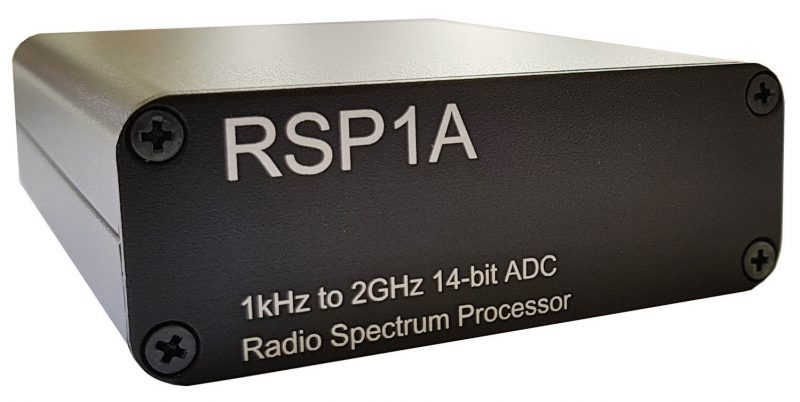
Last call for SDRplay RSP/RSP1a metal cases

Many thanks to Mike Ladd of SDRplay who shared the following note on the SDRplay Facebook page:

Just a heads up. The RSP1/RSP1a metal case upgrade are almost all gone. I will not be re-releasing this case. Grab them now while you can.

Click here to purchase on eBay.

Click here to view on Amazon (affiliate link).

Radio Free Europe “set to restart in Hungary”

(Source: Budapest Business Journal)

Radio Free Europe/Radio Liberty, the U.S. government-funded organization that broadcasts news and analysis to countries in Eastern Europe, Central Asia and the Middle East “where a free press is banned or not fully established,” is set to restart in Hungary, following recent relaunches in Bulgaria and Romania.

During the Cold War, Radio Free Europe – whose motto is “Free Media in Unfree Societies” – was broadcast to Soviet satellite countries. After the fall of the Berlin Wall, it wound up the service in Hungary in 1993, considering the collapse of communism to be mission accomplished, recalls a report in The New York Times (NYT) dated September 6.

The article comments that the move to relaunch the service by the U.S. Agency for Global Media, an independent federal agency, reflects Hungary’s drift away from a free and open government under Prime Minister Viktor Orbán[…]

“We’ve done our homework, and we know this has broad backing, and we’re preparing to move forward,” the agency’s chief, John Lansing, is cited as saying. He adds that the service’s initial budget could run up to USD 750,000, and that a bureau would be established in Hungary. He expects a soft launch of the service in May 2020, with a hard launch one year from now.[…]

Continue reading the full article at the Budapest Business Journal.

Note: I seriously doubt “restarting” RFE for Hungary would include any shortwave radio broadcasts. I suspect this would equate to their website and streaming media.

“North Korea Resumes DRM Broadcasts”

(Source: Radio World via Michael Bird)

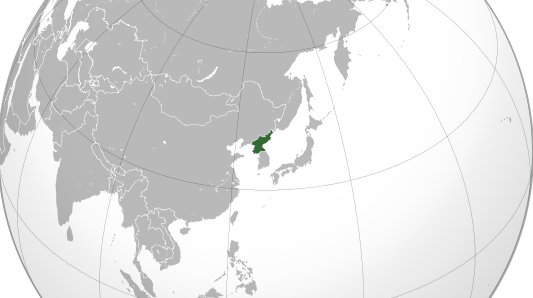
North Korea has returned to digital radio broadcasting after an absence of nearly two years.

The latest Digital Radio Mondiale (DRM) shortwave transmissions began mid August. The country has had periodic DRM broadcasts for many years.

It appears unclear at this time however whether the current series of transmissions will soon end or be the start of a regular service.

Thus far, all of the latest test transmissions have taken place on 3560 kHz, which is actually allocated for amateur radio use.

According to radio enthusiasts in the region, the signal has been clear and very audible.[…]

Click here to read the full article at Radio World.

Guest Post: Brazil’s newly-formed “15.61 Crew”

Many thanks to SWLing Post contributor, Martin Butera, who shares the following announcement for a new radio enthusiast group in Brazil:


The new 15 point 61 Crew

São Paulo is the largest city in Brazil, the Americas, and the seventh largest in the world, with a population of 11,300,000.


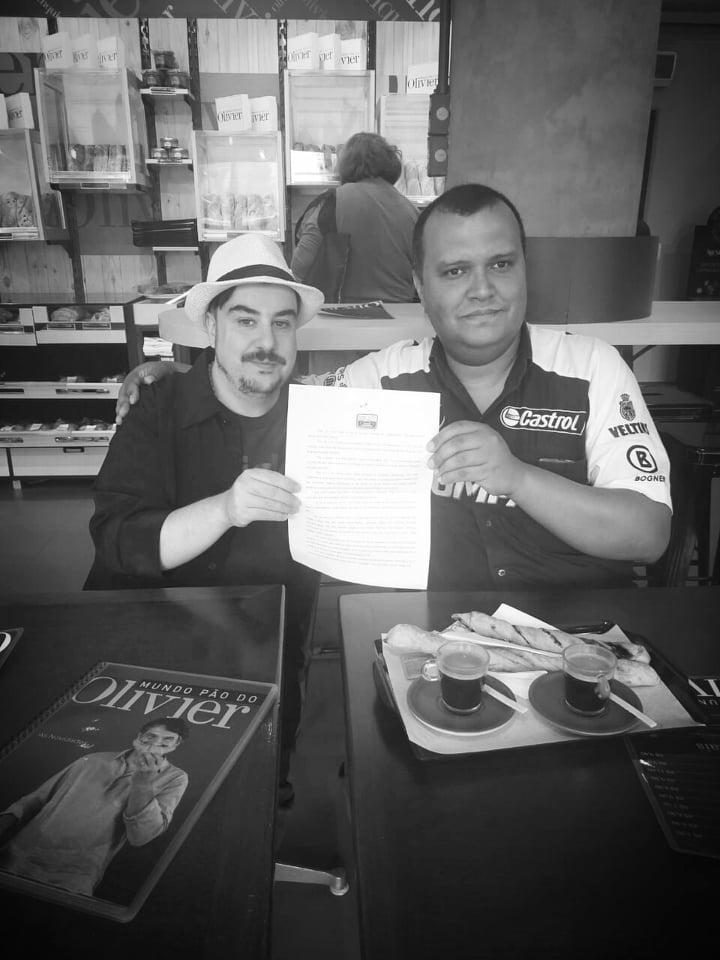
This was the stage for the meeting between Ivan Dias da Silva Junior (a recognized Brazilian radio listener with more than 27 years of experience and founder of the Regional DX) and his colleague, Martin Butera (a renowned amateur radio operator (LU9EFO – PT2ZDX), with 29 years of experience and currently a correspondent journalist for the British Dx Club, covering information from South America for the radio newsletter “Communication”).
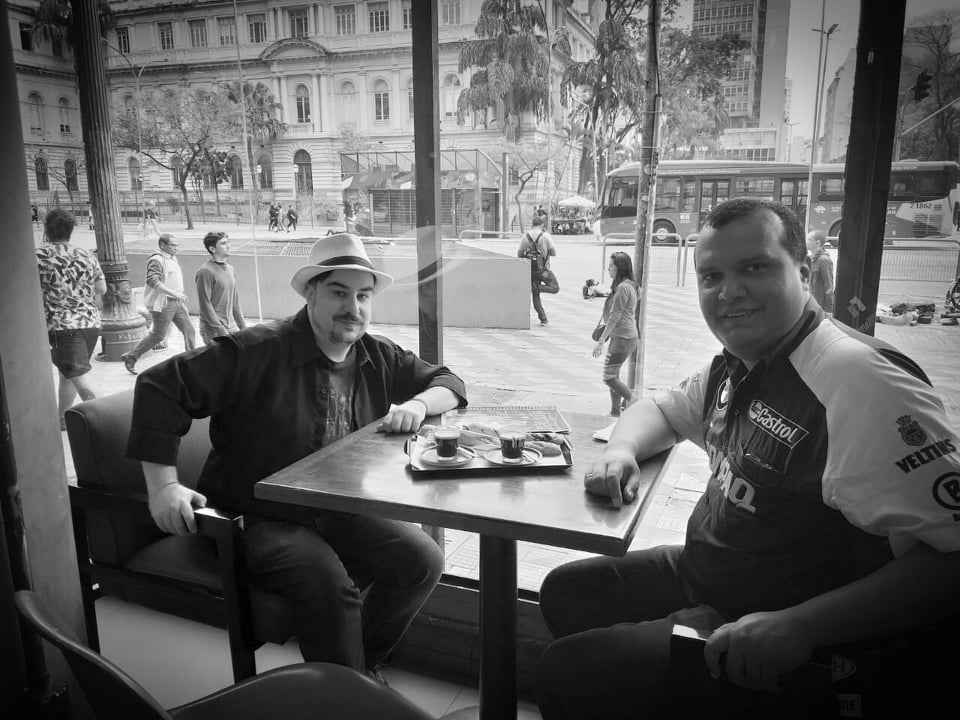
The place of the meeting was not an accidental: we met in a noted coffee bar in the Republic Square–an iconic meeting point in São Paulo. Republic Square is located in the city center and is one of the most visited places in Brazil.

We founded the 15 point  61 Crew in São Paulo, on September 3, 2019.

The 15 point  61 Crew is not a DX club, nor a formal registered organization. We are just an informal group who like DXing.

What is the meaning behind our name? The number 15 is the dialing code of Sorocaba and  61 is the Brasília code, joining the two cities where the Crew founders are based–a distance of more than 900 km (Brazil is a huge country!).

The 15.61 Crew doesn’t have political or religious objectives. Our main objective is DXing, with an emphasis on organizing related activities: mainly DXcamps to be held in distant and exotic places, and bringing a new panorama of what is shared about DXing in our country.

We don’t have any kind of administration positions. The 15.61 Crew members are and always will be in equals.

To be a member of 15.61 Crew you just need to be active in our hobby, share information, write items, go with us to DXcamps, develop technical projects, etc.
As we aren’t a DXing club or organization, we will not have a website nor social media. We will share micro-books, especially about our activities through existing media, like the SWLing Post by our friend, Thomas Witherspoon, and by ourselves, because at the moment we are members of other radio related bulletin boards.

Our communication will be through an email address and a Paypal account for those who want to help us to continue developing our activities and also provide feedback on other projects (such as sharing content with other websites, thus creating a virtual collaboration for all).

For this purpose, we are currently developing several projects, such as a 15.61 Crew certificate program and different materials, such as caps, shirts, mugs, etc.

The 15.61 Crew members believe that there are so much things to be heard in the ether and we are prepared for it.

Ivan Dias da Silva Junior & Martin Butera

(15.61 Crew founders)

São Paulo, September 3, 2019


Thank you for sharing this Martin! I hope the 15.61 Crew enjoys some great success and champions a dynamic DX community! If you’re interested in joining this South American crew, contact Martin Butera.

EDXC conference featured on Andorra TV

The EDXC conference was held in Andorra this year and I wish I could have attended. When I lived in Europe, Andorra was one of those destinations always on my bucket list in no small part due to my affinity for Radio Andorra.

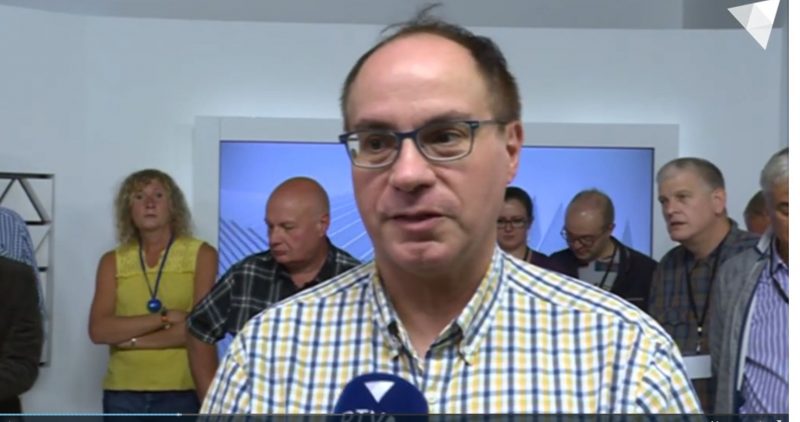
EDXC attendees–many are regulars here on the SWLing Post–were treated to a hands-on tour of RTVA and even featured in the news. Check out the following video:

Click here to watch the video at the RTVA website.

Hat tip to Kim Elliott for sharing this!

History of the Armed Forces Radio Service

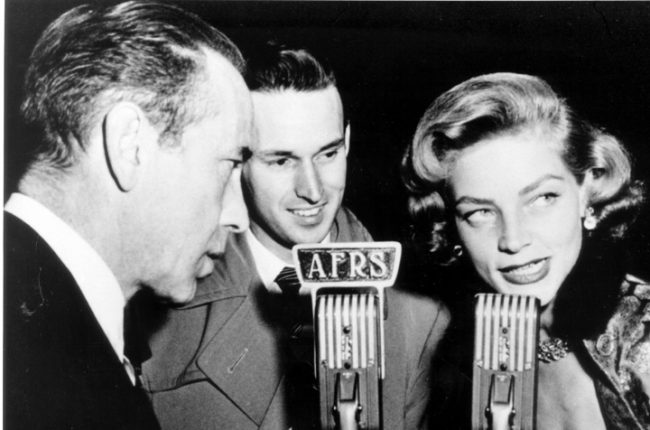
Humphrey Bogart and Lauren Bacall being interviewed by the Armed Forces Radio Service (Source: Wikipedia)

Many thanks to SWLing Post contributor, Ron, who shares this article from Radio World:

We can’t fully appreciate the importance of news from home to those who served in World War II. In the Pacific campaigns, G.I.s, sailors and Marines fought bloody island-hopping battles; as each island was cleared, garrison troops and hospitals moved in and carried on their own war against mosquitoes, isolation and boredom. The island fighters were fortunate if dated mail caught up with them before they moved on to the next target. Timely personal-level communications were pretty much absent.

Radio programming from America was available but only on shortwave. And shortwave radios were not generally available. The fortunate few had been issued “Buddy Kits” that included a radio, a small PA system and a record player for discs sent by mail. But for most there was no way to receive short-lived information such as news and sports. They were left with enemy radio propaganda such as Japan’s “Orphan Ann/Annie” (aka one of several Tokyo Roses) and the “Zero Hour” program.

No wonder that the idea of having a local island radio station doing “live from home” was so fiercely supported. Enlightened commanders saw the idea as a terrific morale-builder. The only problem was how to pull it off.

A solution, not uniquely, came from within the ranks. It started with the work of some bored but talented soldiers in the Panama Canal Zone who in 1940 built a couple of 50 W transmitters and put them on the air without authorization, labeling them “PCAN” and “PCAC.”

In Alaska, 7,500 miles northwest of Panama City, what started as programming through a loudspeaker system became a bootleg radio operation at Kodiak. Coming on the air in January 1942 and calling itself “KODK,” it delivered a whopping 15 watts to the troops. Sources with hindsight later said that the Armed Forces Radio Service (“AFRS”) was born here, when one of its progenitors visited the Alaska operations and “came up with the idea.”[…]

Click here to continue reading the full article at Radio World.