Category Archives: Shortwave Radio

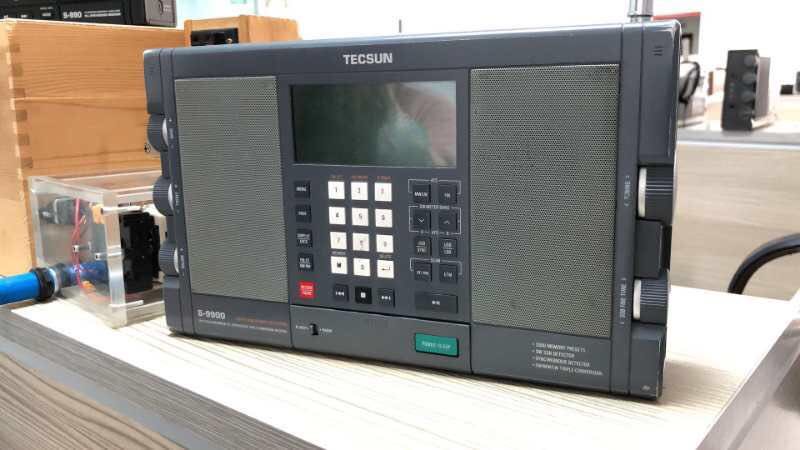
The Tecsun S-9900: A new high-performance shortwave portable?

[Update: Please check out this post about the Tecsun S-9900.]

[Update: Also see this post that includes an image of a Tecsun PL-990. I will try to confirm if one or both of these radios may indeed be produced this year.]

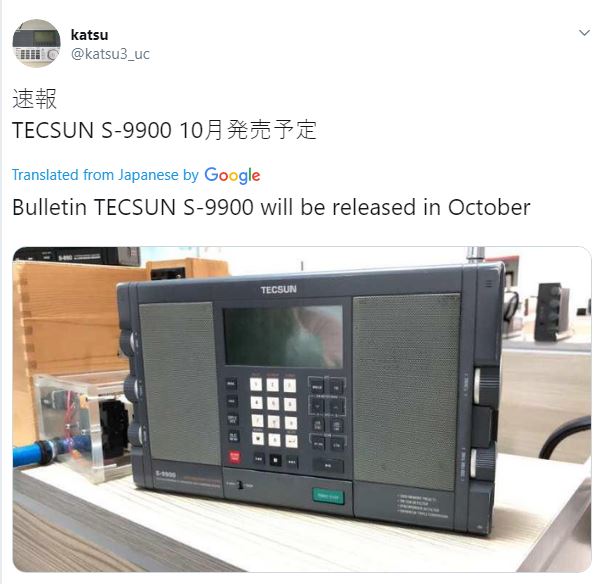
Many thanks to SWLing Post contributor and producer, Scott Gamble, who notes the following tweet from @katsu3_uc on Twitter:

Shortly after publishing this photo, Katsu added the following message (this translation via Google Translate):

“I apologize apparently I have put a photo of the prototype stage. However, it seems that there will be no doubt that a new model will be released from TECSUN at the 70th anniversary of the People’s Republic of China, so we will tweet from time to time if there is final information.”

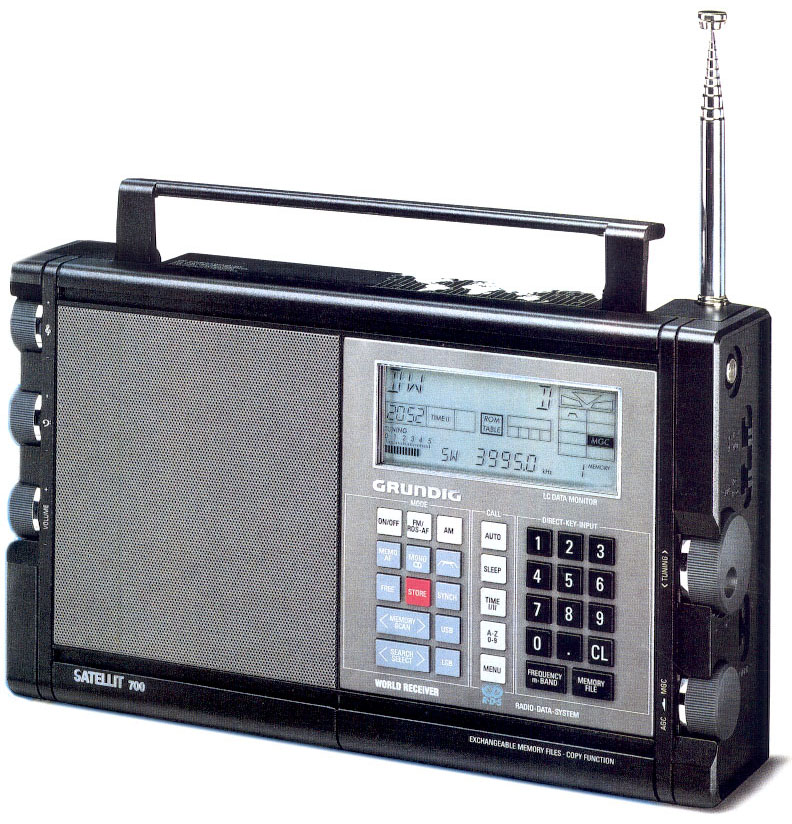
This radio prototype looks a lot like the classic Grundig Satellit 700:

I’ve known for some time that Tecsun has been working on a “high-performance” shortwave receiver and that it would be released by end of year. If this is it, they’re ahead of schedule!

Rest assured, I’ll be checking out this receiver as soon as it’s available! Check out @katsu3_uc on Twitter and, of course, we’ll post updates here on the SWLing Post. Simply follow/bookmark the tag: Tecsun S-9900


Do you enjoy the SWLing Post?

Please consider supporting us via Patreon or our Coffee Fund!

Your support makes articles like this one possible. Thank you!

Hamvention Highlights: The QRP Labs QSX 10 watt, general coverage, low-cost HF transceiver kit

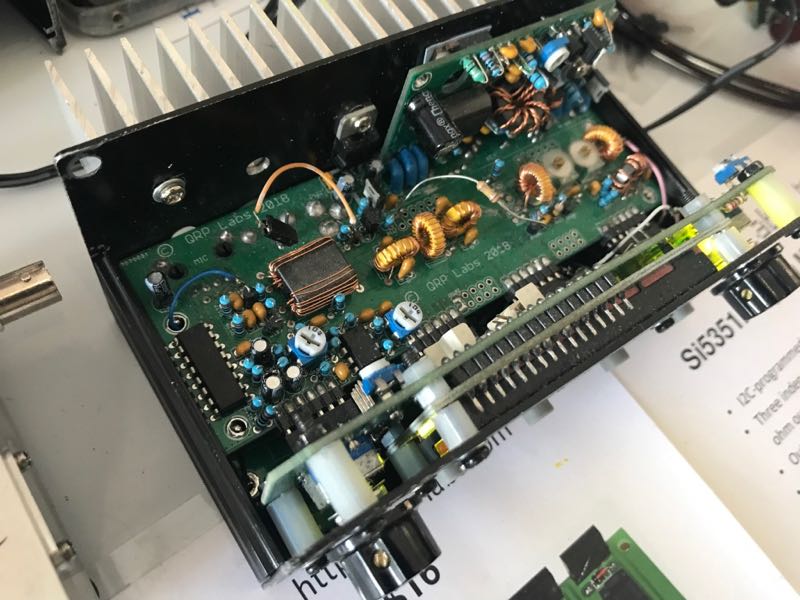
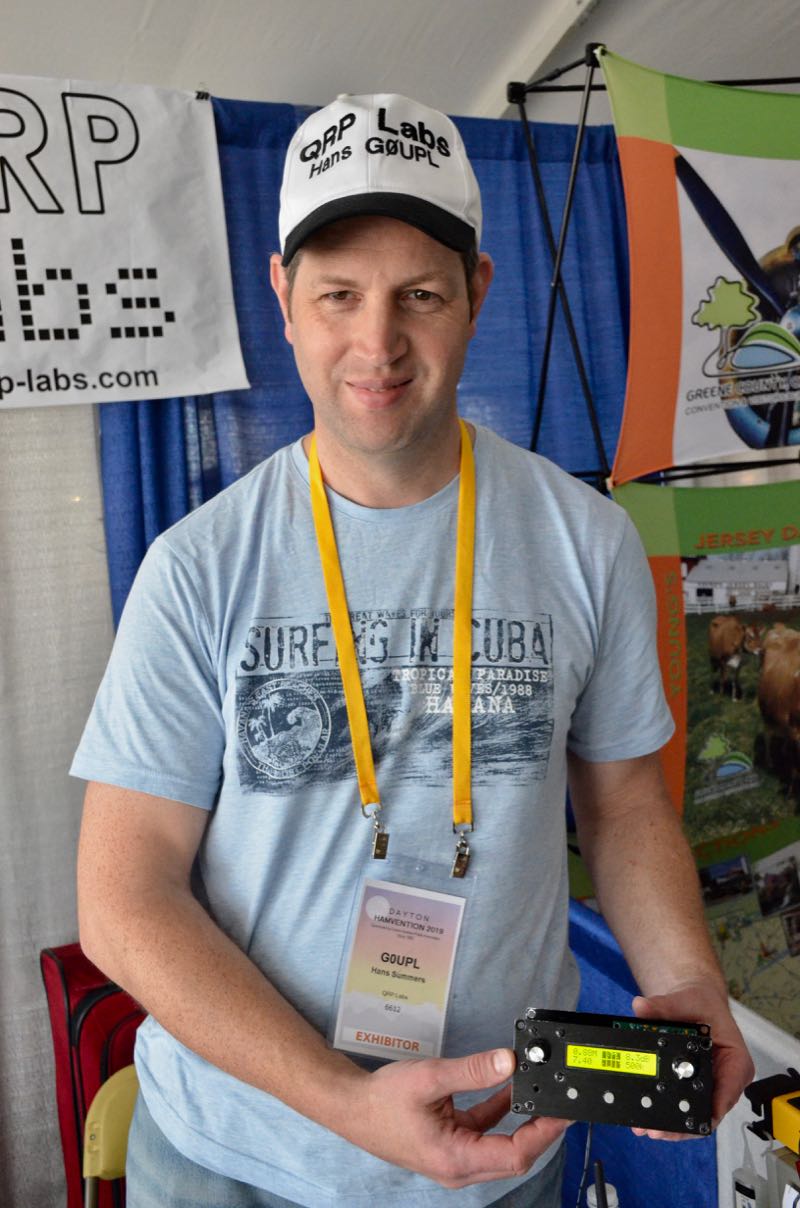
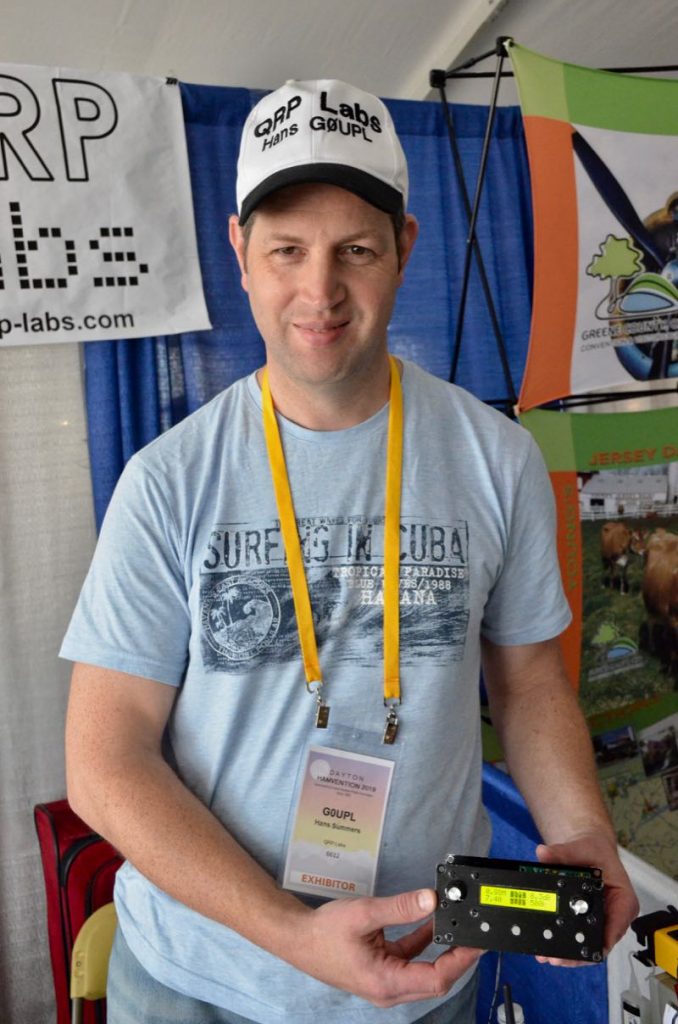
Hans (G0UPL) of QRP Labs holding a QSX transceiver prototype at the 2019 Hamvention

Each year at the Dayton Hamvention I enjoy checking out the latest radio products and services. This year (2019) I found an exceptional number of innovations and will share these in Hamvention Highlights posts. If you would like to check out 2019 Hamvention Highlights as I publish them, bookmark this tag: 2019 Hamvention Highlights

The QRP Labs QSX Transceiver

Hans (G0UPL) of QRP Labs was, without a doubt, one of the most popular guys at the 2019 Hamvention — especially within the QRP community. In fact, at the Four Days In May (FDIM) vendors’ night his table was so busy I didn’t bother trying to force my way through the crowd to speak with him.

As luck would have it, our own table for ETOW was directly across from QRP Labs table at the the Greene County Fairgrounds so, in the end, I spent some quality time with Hans over the course of the Hamvention.

I’ll also make prediction: if the 10 band QSX transceiver delivers what it promises, it will be a serious disruptor in the ham radio transceiver world! This is a good thing. Why?

The QSX is a feature-packed, all-mode, high-performance, affordable, QRP transceiver.
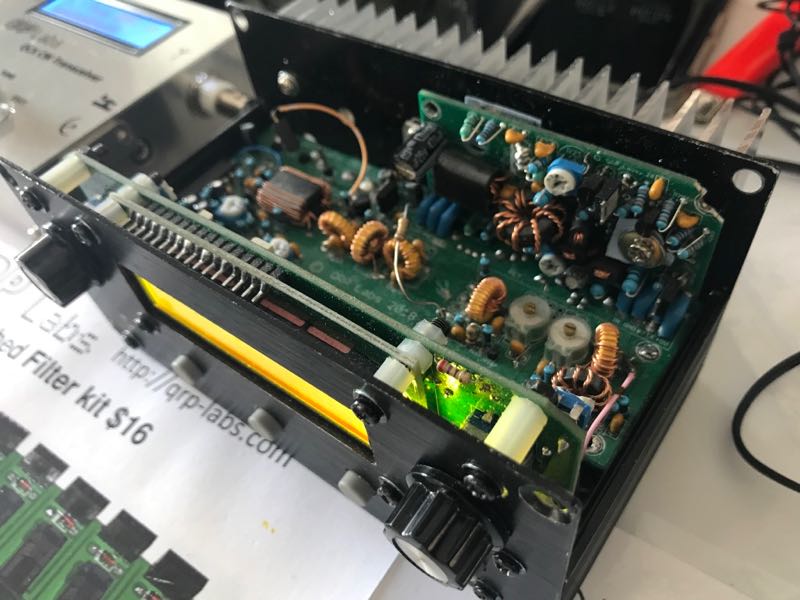
The QSX will have a 24-bit Analog to Digital Converter (ADC) and a 24-bit Digital to Analog Converter (DAC). It will be a fully stand-alone unit and, since it’s an SDR and sports robust DSP, when connected to your PC, it will be recognized as a high-performance sound card. This equates to nearly native digital mode integration without the need for an external sound card interface.
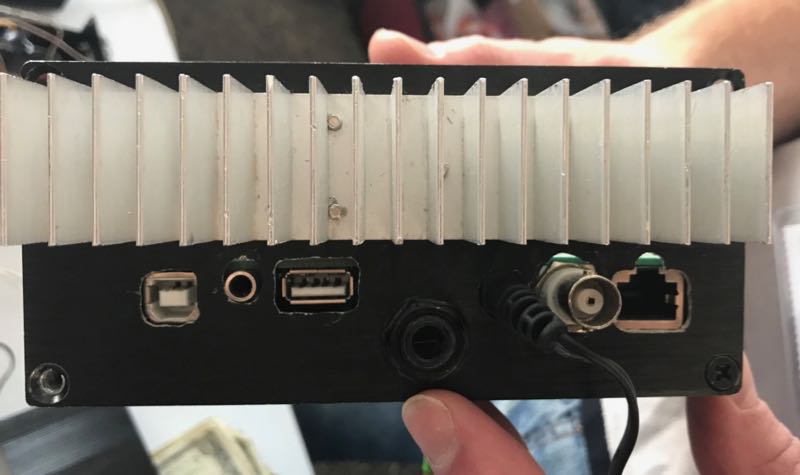
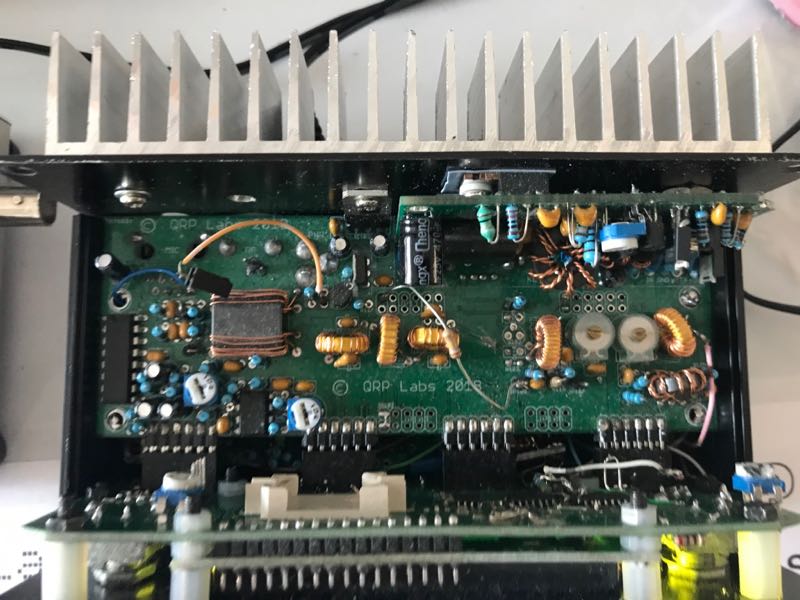
The QSX Prototype Back Panel

The QSX Transceiver will be a through-hole kit with the surface-mounted components pre-installed on the circuit boards. This means the kit should be accessible to anyone with soldering skills.
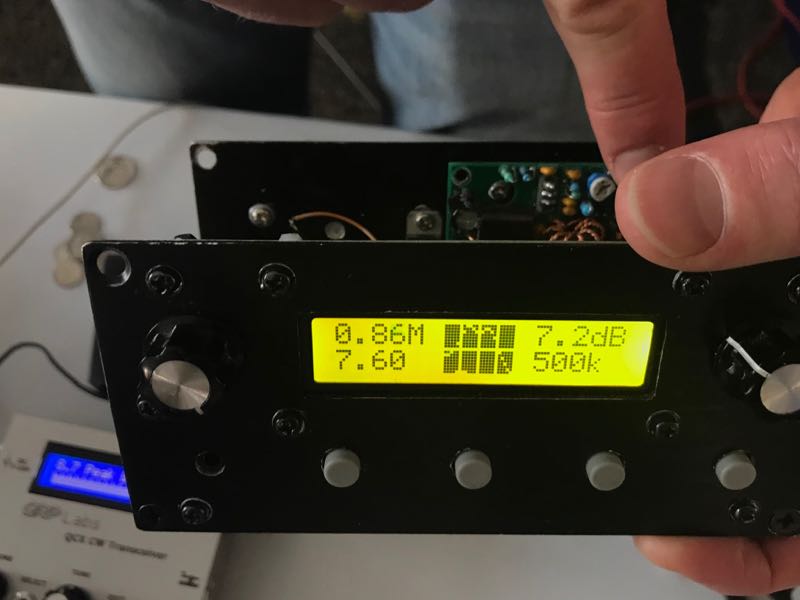
Hans has even managed to include a mini spectrum display on the front backlit LCD panel.

The price? Around $150 US in total for the transceiver kit, 10 band filter module and enclosure. Unbelievable!

If Hans can pull this off — and I feel pretty confident he can — the QSX will set a new bar for QRP transceiver pricing and performance.

If you’d like more details about the QSX transceiver, check out the following resources sent to me by SWLing Post contributor, Pete Eaton:

The 10 band QSX will sport a general coverage receiver and although though the modes supported currently don’t include AM, Hans plans to add AM for at least reception purposes. This could make for a high-performance stand-alone SDR field radio for HF broadcast listening.

Of course, I also see the QSX transceiver as an accessible entry radio for new ham radio operators who are nervous about forking out $800+ for a new HF transceiver.

I will certainly grab the 10 band QSX transceiver kit when it becomes available and review it here on the SWLing Post. Stay tuned!

If you would like to follow other Hamvention Highlights, bookmark the tag: 2019 Hamvention Highlights


Do you enjoy the SWLing Post?

Please consider supporting us via Patreon or our Coffee Fund!

Your support makes articles like this one possible. Thank you!

Mali shortwave relay site back on the air with CRI

(Source: Radio World)

China Radio International Recommits to Africa

Mali relay site near Bamako is back on air diffusing China Radio’s shortwave signal. The site carries CRI’s shortwave broadcasts for more than 20 frequency hours a day to Africa. The move has also benefited Mali’s own shortwave transmissions, which were reportedly suffering from weak signals and poor modulation. “The reactivation of the facility is in contrast to the shuttering of other shortwave sites on the continent, such as the Sentech facility in Meyerton, South Africa,” writes Hans Johnson.

Click here to read the full article at Radio World.

Radio travel: Rob enjoys a shortwave-capable rental car in Namibia

Many thanks to SWLing Post contributor, Rob Gray, who writes:

I recently returned back from a three-month trip in Africa (Namibia, South Africa, and Morocco) and had a couple of shortwave-related items that you might be interested in.

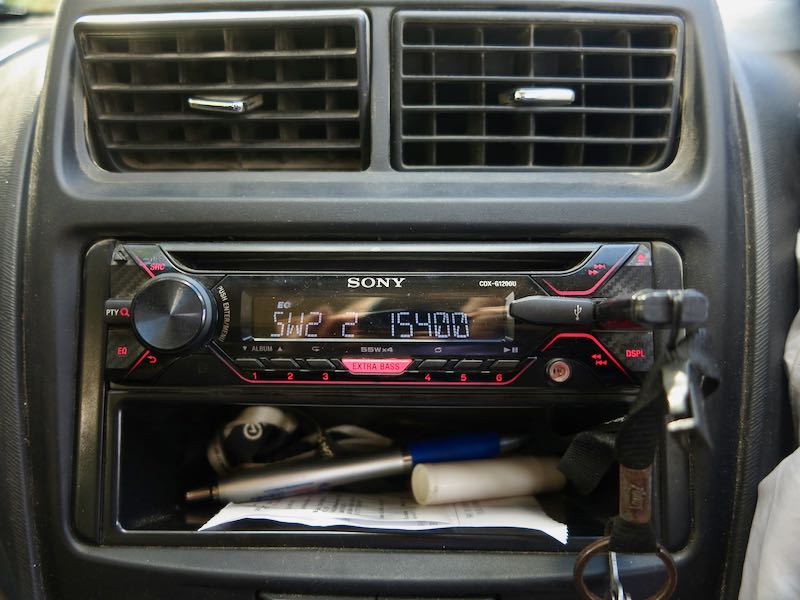
The rental car in Namibia had shortwave capabilities in the in-dash radio! The rental company was oblivious to the option when I mentioned it as a huge perk, I really don’t think they understood or cared. The radio was a Sony CDX-G1200U, and while I find this radio for sale in North America, I don’t see any mention of shortwave. I suspect shortwave is either an option for foreign markets (at least Namibia in this case), or possibly activated via a modification or firmware upgrade. Perhaps any shortwave enthusiasts travelling to other regions of the world might keep an eye out for this model.

There were two ‘bands’, low (SW1) included some of the tropical bands up to 41 meters, and high (SW2) covered 31 meters through about 19 MHz or so. Decent coverage for casual mobile listening.

I found the performance of the radio quite satisfactory in Namibia, the BBC came in very well in the mornings and evenings. There was a little more on shortwave during the day in English, Channel Africa, etc., but the BBC was by far the best offering for listening.

Another equipment data point from around the world, this time in Morocco.

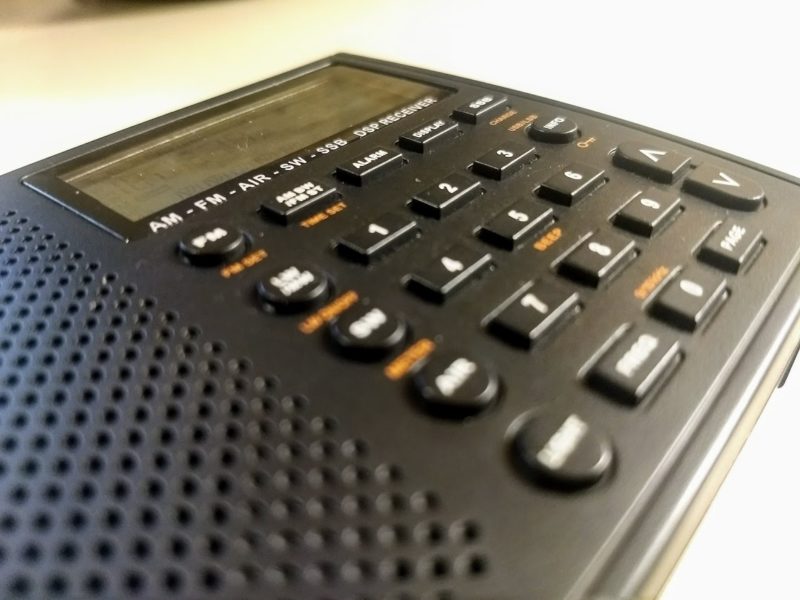
Several vendors in the Medina’s sold various radios (of questionable quality). The photo [above] was taken in Tetouan (which isn’t a touristy area) in March, but I did note similar for sale in Fez.

Brilliant, Rob! It sounds like you’ve visited some gorgeous parts of the world in your travels. I imagine on the long stretches of rural roads in Namibia, you could enjoy a proper low-noise environment for shortwave listening as long as the car itself didn’t produce RFI!

Post readers: Have you driven a car recently that sported a shortwave radio capabilities?  Please comment!

Hamvention Highlights: Affordable diversity reception with the SDRplay RSPduo

Each year at the Dayton Hamvention I enjoy checking out the latest radio products and services. This year (2019) I found an exceptional number of innovations and will share these in Hamvention Highlights posts. If you would like to check out 2019 Hamvention Highlights as I publish them, bookmark this tag: 2019 Hamvention Highlights

Diversity reception with the SDRplay RSPduo

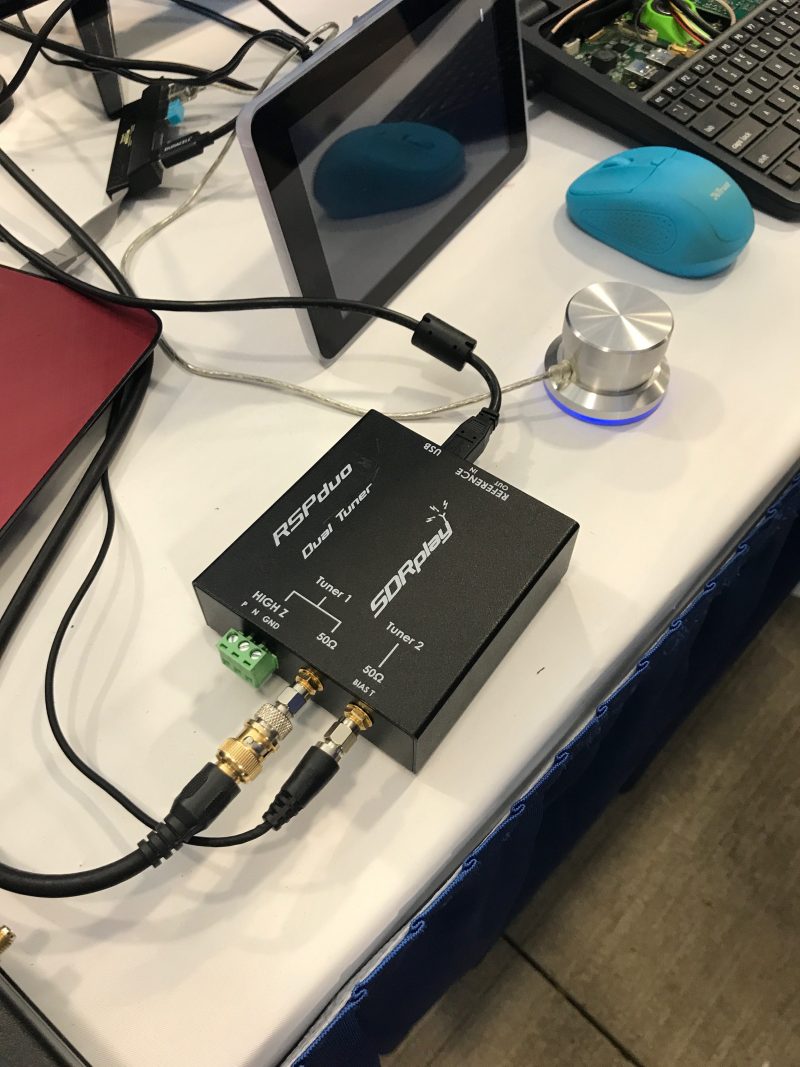
Last year, during the 2018 Hamvention, SDRplay announced the RSPduo, a 14bit dual-tuner SDR. We posted a review of the RSPduo on the SWLing Post.

At the time, SDRplay mentioned that the RSPduo could eventually be used for diversity reception.

Diversity reception is the ability to combine or select two signals, from two (or more) antenna sources, that have been modulated with identical information-bearing signals, but which may vary in their fading/noise characteristics at any given instant.

In short, diversity reception gives one a powerful tool to mitigate fading and noise, and to improve a signal’s overall integrity.

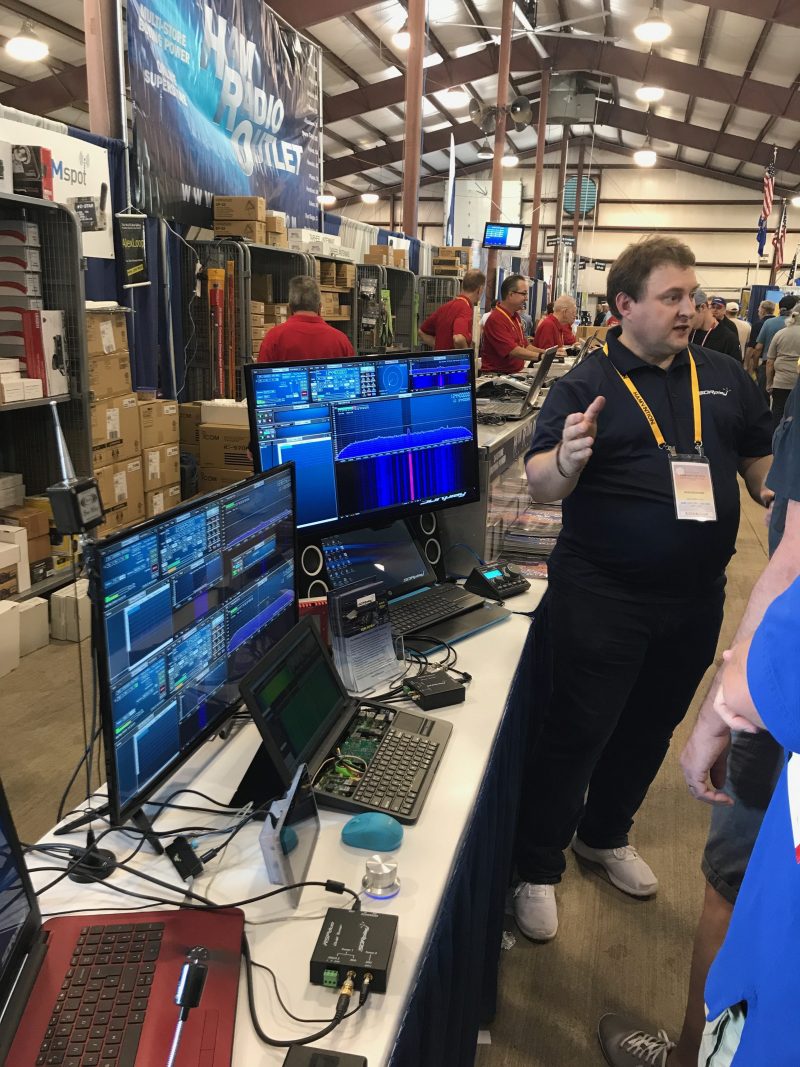
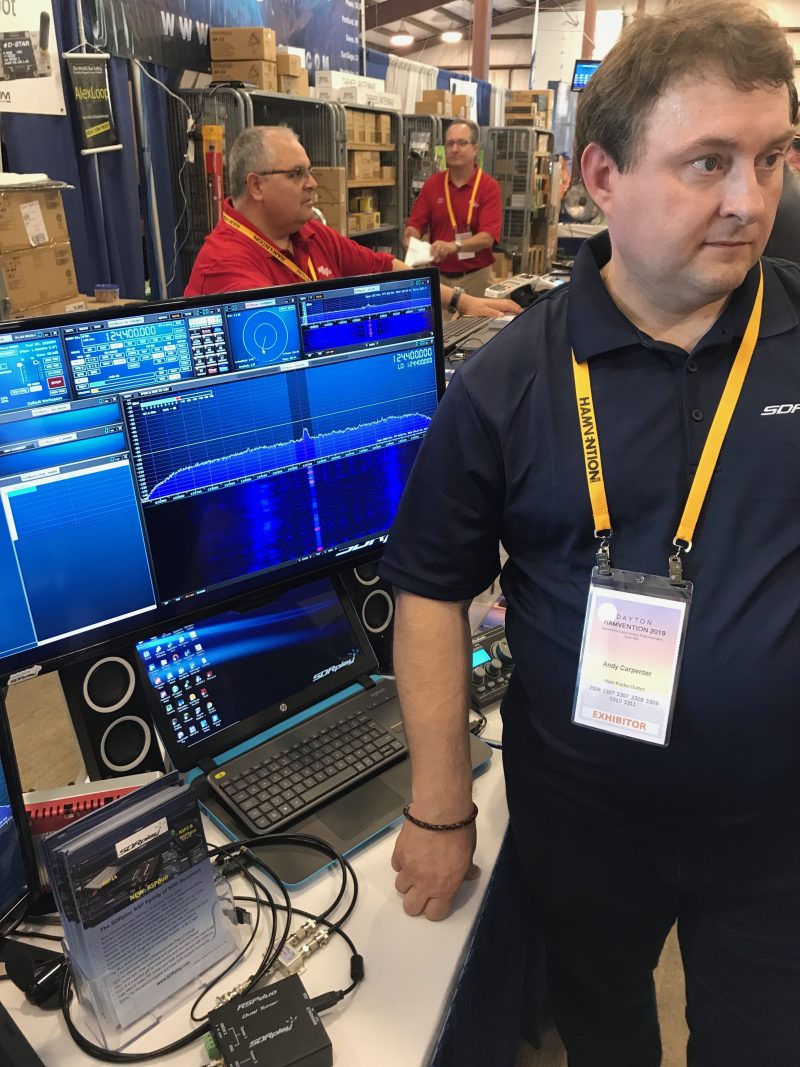
Andy and Mike with SDRplay demonstrated SDRuno’s diversity reception functionality and noted that it will soon roll out as a free upgrade to SDRuno, SDRplay’s open SDR application.

I should note here that the SDRplay booth at the 2019 Hamvention was incredibly busy—no doubt, because the RSPduo must be one of the least expensive, most accessible, ways to experiment with diversity reception. Case in point: the new Elecraft K4D transceiver will support diversity reception, but the price is about $4,700 US; the RSPduo can be purchased for $280 US.

Based on the demonstration, this feature will be quite easy to use and I love how it has been implemented in the SDRuno GUI (graphical user interface).

To learn more about the RSPduo, check out SDRplay’s website or read our review. Of course, when SDRplay releases the diversity reception upgrade to SDRuno, we will make an announcement!

If you would like to follow other Hamvention Highlights, bookmark the tag: 2019 Hamvention Highlights

Hamvention Highlights: The Ten-Tec Model 588+ OMNI VII+

Each year at the Dayton Hamvention I enjoy checking out the latest radio products and services. This year (2019) I found an exceptional number of innovations and will share these in Hamvention Highlights posts. If you would like to check out 2019 Hamvention Highlights as I publish them, bookmark this tag: 2019 Hamvention Highlights

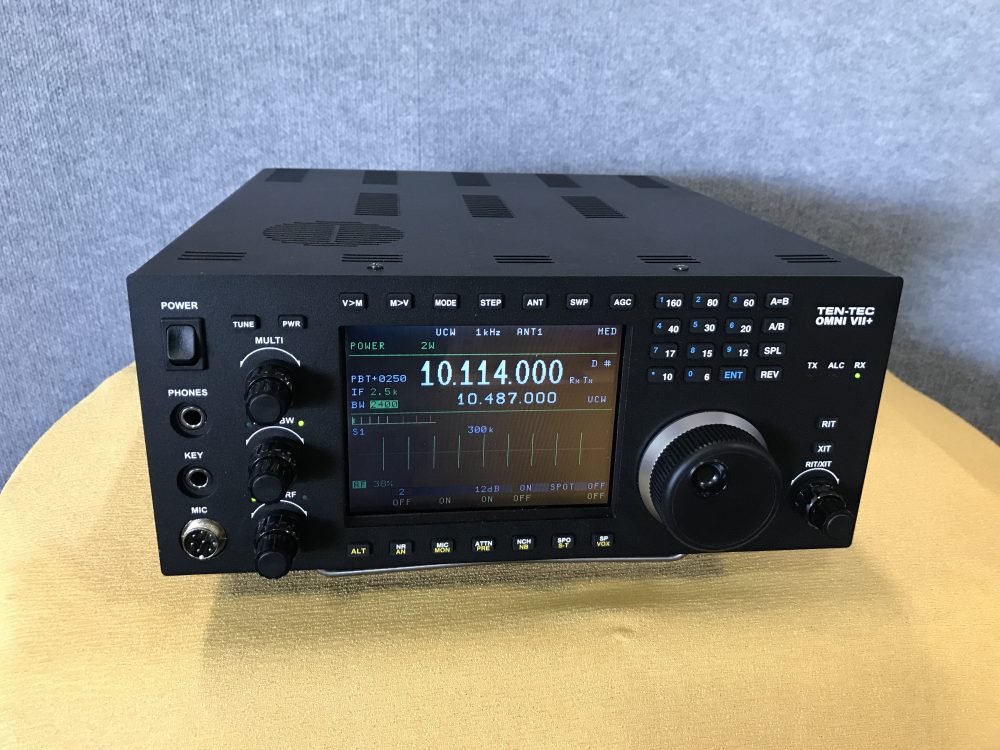
The Ten-Tec OMNI VII+

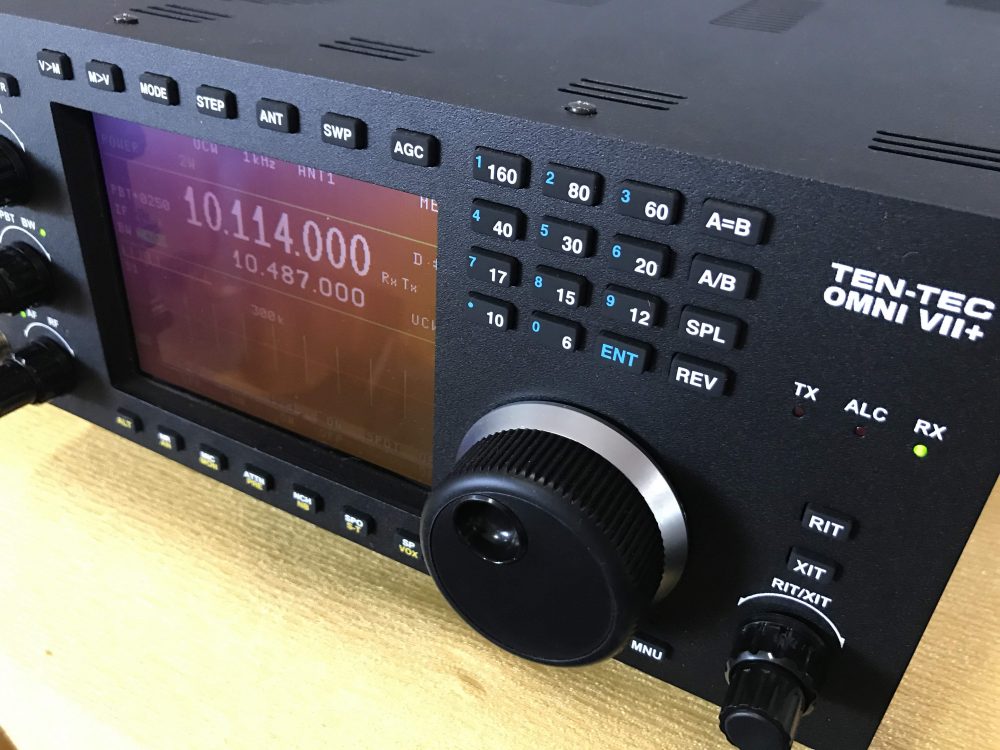
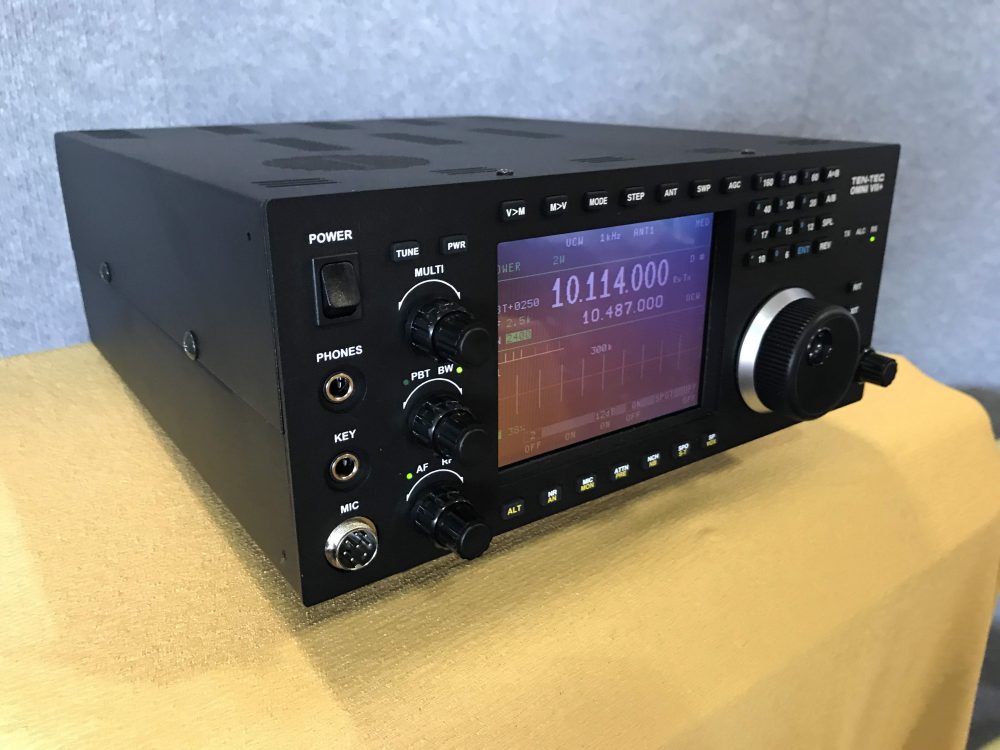
The Ten-Tec OMNI VII+

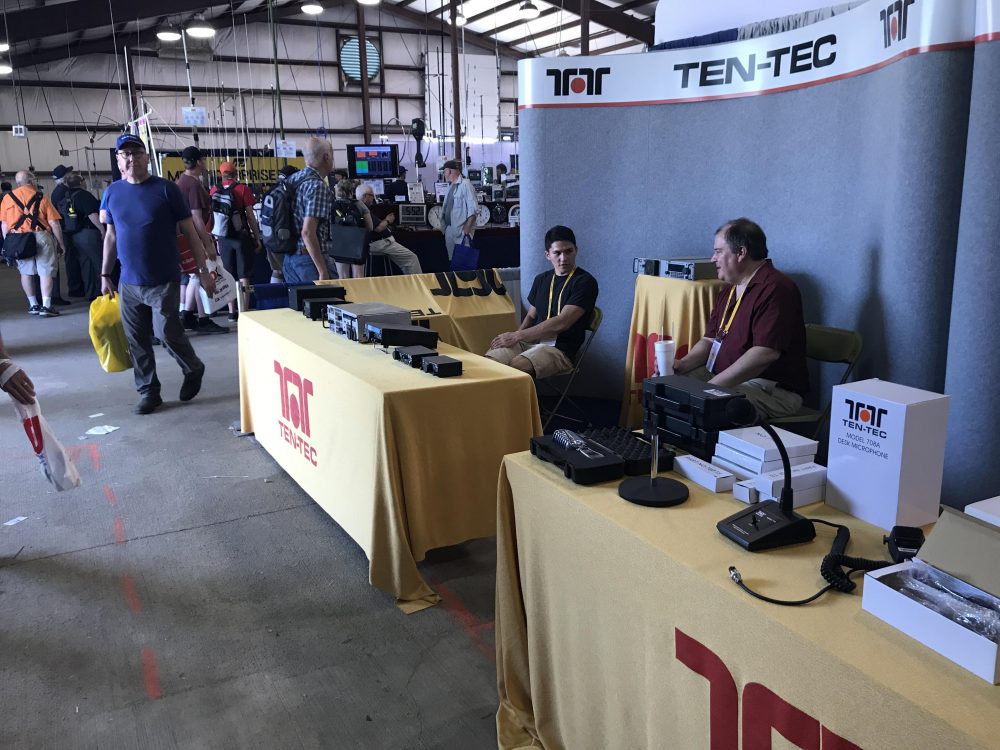
The Ten-Tec booth had more activity this year than I’ve seen in many years. The company is certainly showing signs of entering proper production again and innovating.

According to the T-T representative I spoke with at Hamvention, the company’s focus is on improving/upgrading many of their legacy products like the Eagle, Argonaut, 100 Watt Amplifier,  and the OMNI VII. Iterative improvements will eventually be made to the full product line. Upgraded gear will have an added “plus” to the model name.

Ten-Tec’s featured model at Hamvention was the OMNI VII+—their flagship transceiver.

According to the Ten-Tec website, pricing starts at $2,699 US ($3,078 US configured with an internal ATU) and there are a number of units in stock, ready to ship.

The new OMNI VII+ Features (via the Ten-Tec website):

  • NEW! the 588+ has an All aluminum front face, side feet and side carry handle.
  • NEW! dedicated rear panel pan adapter output jack
  • HF 6 Transmit coverage on 6 through 160 meters, 100 watts output, even on 6. General coverage receives from 500 kHz to 30 MHz continuous plus 48 to 54 MHz. SSB, CW, AM, FM, Digital modes. Dual VFOs with SPLIT and REVERSE functions.
  • Full function Color Screen STN transmissive color LCD display with CFL backlight, 320 240 pixels.
  • Legendary QSK CW includes adjustable rise and decay times. User adjustable at the touch of a knob for hard or soft keying according to your taste. Built-in keyer can be used in Curtis A or B modes, adjustable 5 63 WPM.
  • 17 selectable transmit bandwidths from 1000 4000 Hz. DSP generated to give your SSB audio a well-rounded sound tailored to your voice characteristics. A low-frequency roll off provides further control.
  • RX EQ and TX EQ in 6 dB octave filters selectable in 1 dB steps from high pitched at minus 20 dB to essentially flat response at 0 dB to bassy at plus 20 dB.
  • DSP Noise Reduction, automatic notch, and manual notch reduces interference from undesired carriers and random noise. Manual notch range 20 4000 Hz center, 10 300 Hz width, gt 50 dB rejection.
  • Band Sweep gives you a snapshot of the entire band in seconds. Find the pileups or scout for a clear spot automatically without touching the tuning knob.
  • Broad range Auto Tuner identical tuner as used in the ORION II, matches most antennas up to 10 1 SWR HF only. 100 Tune Memories. Order your OMNI VII with or without this option.
  • Three antenna connectors Two SO 239 transceiver outputs, plus a third SO 239 connector for auxiliary receive only antenna. Antenna switching is front panel selectable.
  • Updates by Flash ROM Serial port interface for local rig control via PC and for Flash ROM updates available via the Internet. Commands are a superset of those used for the Jupiter. To obtain the very latest version of the OMNI VII, visit our firmware download the software below. Connect the radio to a serial port on your PC and you are up to date in a flash. Easy!
  • Quad band-stacking registers and 100 memories
  • Optional Model 302R remote encoder keypad works with the OMNI VII. Plug it in and control selected features sitting back in your easy chair.
  • Aluminum chassis construction and steel outer case makes the rig an easy traveler at only 5 inches H x 12 inches W x 14.75 inches D. Weighs just 14 pounds
  • 8 pin mic connector
  • 70 MHz IF up conversion
  • 455 kHz 2nd IF with Collins Mechanical filters

One of the unique features of the OMNI VII+ is that it sports Collins mechanical filters—likely the only modern transceiver that can make this claim.

I’m happy to see that Ten-Tec is innovating and manufacturing again. Certainly a highlight from the 2019 Hamvention!

If you would like to follow other Hamvention Highlights, bookmark the tag: 2019 Hamvention Highlights

Click here to check out the Ten-Tec website.


Do you enjoy the SWLing Post?

Please consider supporting us via Patreon or our Coffee Fund!

Your support makes articles like this one possible. Thank you!

 

Hamvention Highlights: The Palstar TR-30A EMP, an EMP-hardened HF transceiver

Each year at the Dayton Hamvention I enjoy checking out the latest radio products and services. This year (2019) I found an exceptional number of innovations and will share these in Hamvention Highlights posts. If you would like to check out 2019 Hamvention Highlights as I publish them, bookmark this tag: 2019 Hamvention Highlights

And now for our first highlight…

The Palstar TR-30A EMP

I’ve long been a fan of Palstar, a US company known for their fine antenna tuners and the classic R30 series HF receiver.

At the 2013 Dayton Hamvention, Palstar showcased a prototype HF transceiver called the TR-30. I posted a note about this at the time on my ham radio blog, QRPer.com. The TR-30 never seemed to make it to the market, but that’s not surprising considering the Elecraft KX3 and a number of other QRP transceivers were released the following year.

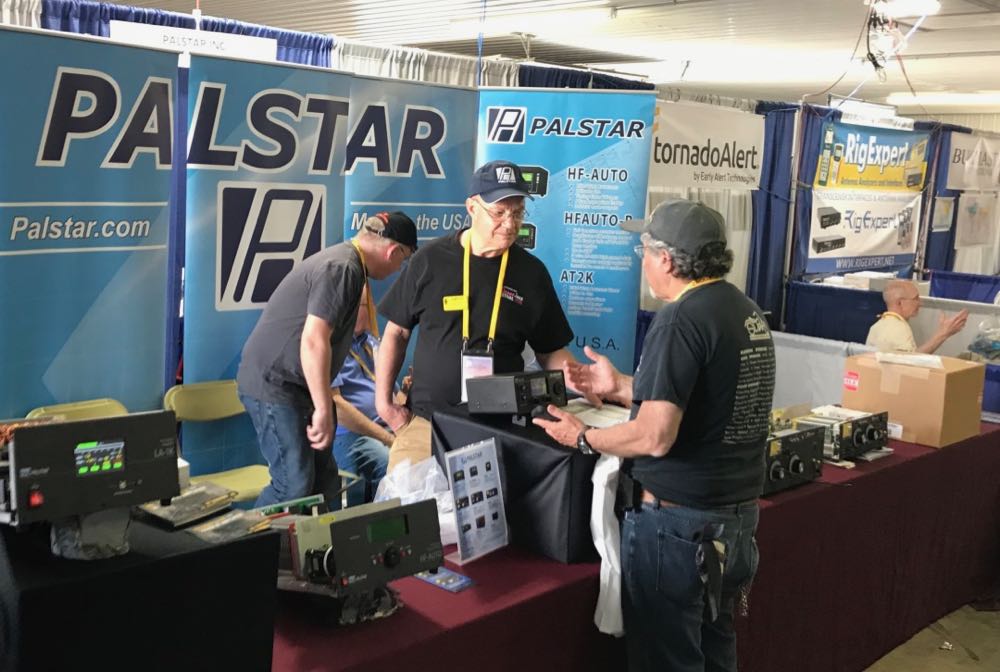
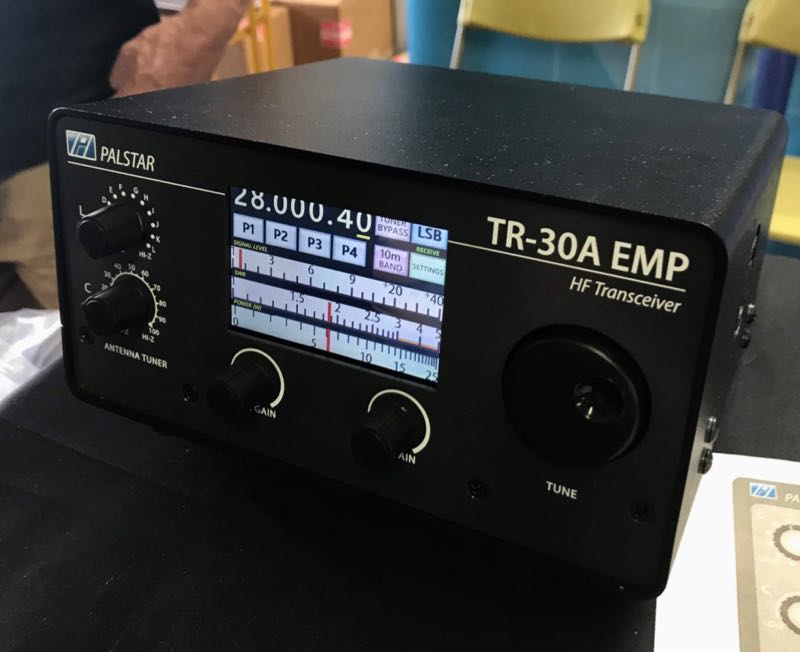
This year when I approached the Palstar booth, I found a new prototype transceiver: the Palstar TR-30A EMP.

This TR-30 iteration will, without a doubt, have a unique place in the radio market since it has been designed to withstand electromagnetic pulses (EMPs). To be clear, I know of no other transceivers on the ham radio market that are EMP hardened.

Post readers might recall a primer we published about how to protect your gear from EMP pulses (click here to read).  I believe taking some simple precautions to protect gear from natural or man-made EMPs is simply a sound practice. In fact, I keep one complete rig stored in an EMP-proof container as described in our primer.

The Palstar TR-30A EMP requires no external EMP shielding or special handling/storage. It will be natively EMP-proof, even while hooked up to an antenna and without an RF ground attached.

I spoke with Paul Hrivnak (N8PH), President and CEO of Palstar, at Hamvention and he shared a few details about the Palstar TR-30A EMP:

  • The transceiver will be general coverage and will be able to operate on all of the HF ham radio bands.
  • It will have a very simple set of functions–at this point, he doesn’t even plan to have dual VFOs.
  • The output power will be 20 watts.
  • The front panel controls will be very simple and intuitive.

The TR-30A EMP’s unique internal antenna tuner will–if I understand it correctly–be able to match pretty much any load.  It will have manual controls, but will be digitally controlled. Paul said that the ATU is being designed so that a satisfactory match can be found for any make-shift field antenna. I can’t wait to check it out for myself because I hold Palstar in high regard when it comes to antenna tuners.

Of course, from the ground up, the TR-30A EMP will be hardened against EMPs.

He hopes the Palstar TR-30A EMP will be in production by the end of 2019 and retail for $1,100 – 1,200 US.

Of course, I will post any news and updates about the Palstar TR-30A EMP here on the SWLing Post. I will also plan to review and evaluate the transceiver when it hits the market.

If you would like to follow product updates, please bookmark the tag: Palstar TR-30A EMP

If you would like to follow other Hamvention Highlights, bookmark the tag: 2019 Hamvention Highlights

Click here to check out Palstar’s website.


Do you enjoy the SWLing Post?

Please consider supporting us via Patreon or our Coffee Fund!

Your support makes articles like this one possible. Thank you!