Category Archives: Shortwave Radio

Vatican Radio’s Brazilian Portuguese language programming returns

Many thanks to SWLing Post contributor, David Iurescia (LW4DAF), who shares the following news via Zenit.org:

“The Brazilian program of Vatican Radio-Vatican News resumes its short-wave transmissions in the Amazon region,” announced the portal of Vatican News in Brazilian today, Monday, July 15, 2019, given the proximity of the holding of the Synod for Amazonia (October 6-27, on the theme: “New Ways for the Church and For An Integral Ecology.”

“For over 61 years, Brazil has been listening to the Pope’s voice through Vatican Radio. On August 1, after a period of absence, the Brazilian program of the papal station will return to Amazonia in short wave,” announced the same source.

And it adds: “Thus Vatican Radio-Vatican News shows its attention to an important region of Brazil, for which the radio is its main means of communication. The Pope’s voice will be listened to again on radio by more than 25 million people, who live in this lung of the planet. The decision to broadcast in short wave responds to the geographic reality of Amazonia.”

Vatican News recalls: “Created in March of 1958, twenty-seven years after the foundation of Vatican Radio, on February 12, 1931, the Brazilian program has followed seven pontificates, from Pius XII to Francis. At present, the Brazilians of Vatican Radio-Vatican News offer a wide gamut of daily programs in a multi-media style through different platforms: radio, Web and social networks.”

It also recalled: “On the occasion of the 50th anniversary, in March 2008, Benedict XVI expressed his gratitude to the said program for the inestimable service of proclaiming the Gospel and promoting communion between the Church and the people of Brazil.”
Click here to read the full article at Zenit.org.

LZ1AQ Evaluates Impact of the Height Above the Ground on Mag Loop Performance

Source: LZ1AQ

Many thanks to SWLing Post contributor, Harald Kuhl (DL1AX), who shares the following article on LZ1AQ’s website:

Published on: 2018/11/20, Rev. 1.0 July 2018, Rev. 1.1 Nov 2018

Author: Chavdar Levkov LZ1AQ

Setup

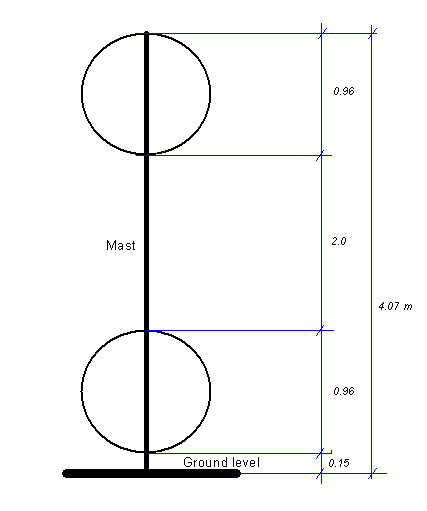
Two identical small loops were placed one above the other according to Fig.1. One of the loops is very low – almost on the ground. The other one is placed at height which usually is used by the loop users. Two AAA-1C wideband active antenna amplifiers were used. Their gain difference was not more than 0.3 dB. The feeder was FTP cable each 20 m long. No cable baluns were used. The outputs were connected through two way antenna switch to a SD RX (Perseus). I used a measurement technique described in – A Periodic Switching Technique to Compare Receiving Antenna Performance in the Presence of Strong Fading. This is a precise method to compare two receiving antennas with real sky wave signals and the resolution can be less than a decibel. The idea is to switch periodically between two antennas and to estimate their difference on a calibrated graphic strength meter of a SD radio.[…]

Click here to read the full article.

I’ve often assumed height had little effect on the performance of an HF loop antenna–this evaluation seems to support that theory. Thanks for sharing this, Harald!

From the Shortwave Radio Audio Archive: VOA and BBC on the anniversary of moon landing

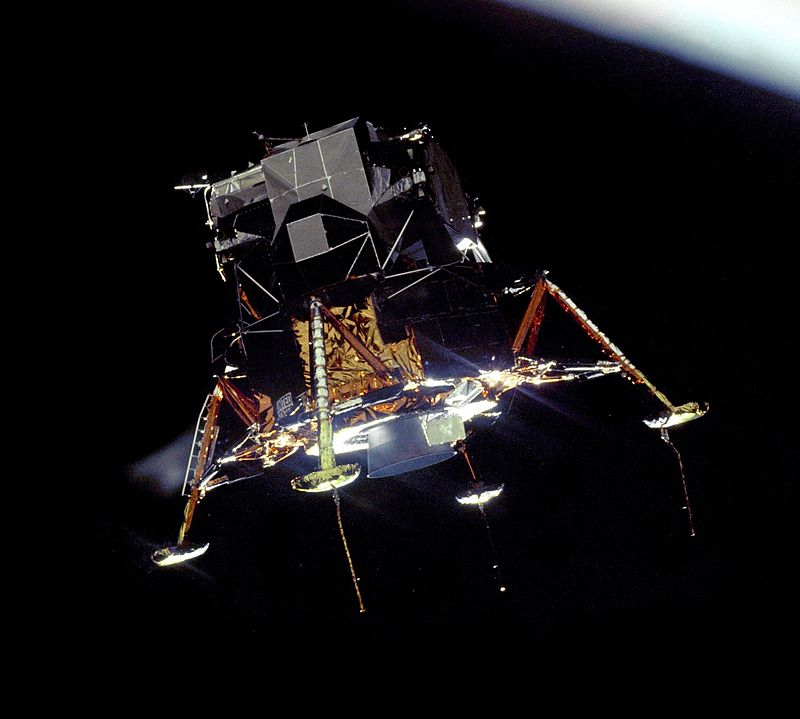
Eagle in lunar orbit photographed from Columbia. (Image: NASA)

There are a hundreds of fascinating off-air radio recordings in our Shortwave Radio Audio Archive.

One of our frequent contributors, Tom Laskowski, has digitally converted numerous magnetic tape recordings from his personal collection to share with the archive. Tom made the following recording of the Voice of America on July 20, 1979 at 0500 UTC on the 31 meter band.

Tom notes:

The first 4:30 is from a VOA newscast that aired before the main part of the program.

The main recording was presented on the 10th anniversary of the Apollo 11 moon landing. I enjoy listening to this every year on the landing anniversary.

I’ve enjoyed listening to this 10th anniversary presentation as we, today, celebrate the 50th anniversary of the moon landing::

Click here to download this recording.

[Update:] Tom also shares another recording that marks this anniversary:

I thought this might be [another] appropriate file to upload considering we are  marking the 50th anniversary of Apollo 11. I recorded this program thirty years ago on July 20, 1989 [5.975 MHz at 0400 UTC] the 20th anniversary of the Apollo 11 moon landing. Omnibus takes a look back at the historic Apollo mission and how and why it happened:

Click here to download the recording.

Thank you so much for sharing this, Tom!

Readers: Note that you can subscribe to the Shortwave Radio Audio Archive as a podcast via iTunes or by using the following RSS feed: http://shortwavearchive.com/archive?format=rss You can also listen via TuneIn.

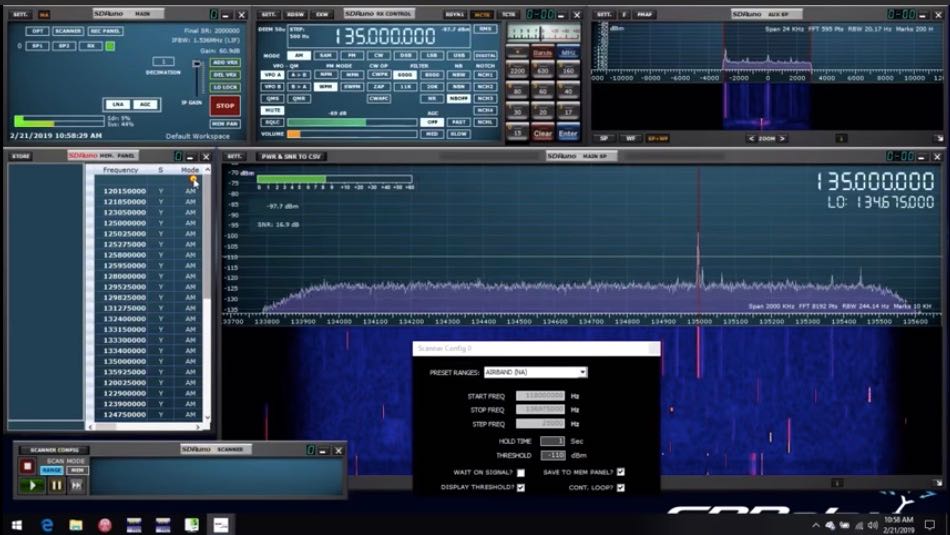
Mike’s expanding collection of SDRplay tutorial videos

Besides making great receivers, one of the things I love about SDRplay is their focus on providing user documentation and tutorials. We’ve mentioned before that SDRplay’s Mike Ladd (KD2KOG) actively creates tutorial videos exploring a number of SDRplay topics. To date, he’s produced over 20 videos–!

If you own an SDRplay product, I’d strongly recommend checking out Mike’s video list even if you feel you’re already a pro user. The videos are easy to follow and are chock-full of SDRuno tips and tricks.

I’ve pasted the latest links to the Mike’s videos below but I would encourage you to check the SDRplay YouTube channel (link below) and this page for the latest episodes as they are regularly updated.

From the SDRplay Ham Guides page:

As SDRplay RSPs get used for more and more receiver applications, we felt we didn’t want to lose sight of the large number of people who love short wave listening and HF ham radio, so we have created “Ham Guides” as a place where we focus on providing tuition and help for all aspects of receiving radio signals at 30MHz and below. This includes set up and use of SDRuno, and tips and techniques on key related topics such as decoding, propagation and antennas.

The SDRplay Ham Guides YouTube channel can be found here, at  www.youtube.com/c/SDRplayHamGuides 

SDRplay Ham Guides complements the main SDRplay YouTube channel and all the documentation available via https://www.sdrplay.com/downloads/and the searchable resources in our Applications and Support Catalogue: https://www.sdrplay.com/apps-catalogue/

If you have ideas for what you’d like to see more of, then add your comments to the videos or email me at [email protected]

  1. This is the first video of many to follow. Showing basic operation of SDRuno using a RSP1a SDR.https://youtu.be/ngv60EWiJ3U
  2. Minimum requirements for running SDRuno.https://youtu.be/Rn3tuiIOvmM
  3. Virtual audio cable basics in SDRuno.https://youtu.be/ZF86cK5vukY
  4. Shaping the sound of shortwave broadcast stations using SDRuno.https://youtu.be/smvfCGx6zO8
  5. Using SDRuno’s built in software notch filters.https://youtu.be/5K92dG2sedw
  6. SDRuno basics, MultiPSKhttps://youtu.be/tnqfJhsvGFA
  7. SDRuno basics, Import the free EiBi HF databasehttps://youtu.be/ZJlfxaudaNI
  8. SDRuno basics, The EX CONTROL panel part 1.https://youtu.be/1XdBqXcyuzw
  9. SDRuno basics, The EX CONTROL panel part 2.https://youtu.be/H0RJVy4u5Ro
  10. SDRuno basics, My HF frequency lists part 1.https://youtu.be/KiNjsvKHVeU
  11. SDRuno basics, My HF frequency lists part 2.https://youtu.be/Rx3B-6h_CIw
  12. SDRuno basic, Decoding WEFAX using Black Cat HF Weather Fax decoder.https://youtu.be/juTdBpTDVp0
  13. SDRuno basics, Removing wide band noise.https://youtu.be/_GtozskwFAY
  14. SDRuno basics, CSV user list browser.https://youtu.be/1vu5fAjdRHw
  15. SDRuno basics, RSPduo, dual tuner mode, listening and decoding signalshttps://youtu.be/1vu5fAjdRHw
  16. SDRuno basic, VRX-Virtual receivershttps://youtu.be/ndUPm6Nccb8
  17. Why I chose a loop.https://youtu.be/XesvzZG-Mi8
  18. SDRuno basics, decoding CTCSS/DCS toneshttps://youtu.be/PM3WOMF7_eM
  19. SDRplay user support options and resourceshttps://youtu.be/nXnrBaoKKjs
  20. RSRduo with dual W6LVP loops Part 1https://youtu.be/w5SrDtUxhQU
  21. RSRduo with dual W6LVP loops Part 2https://youtu.be/ikUymHFkCcY

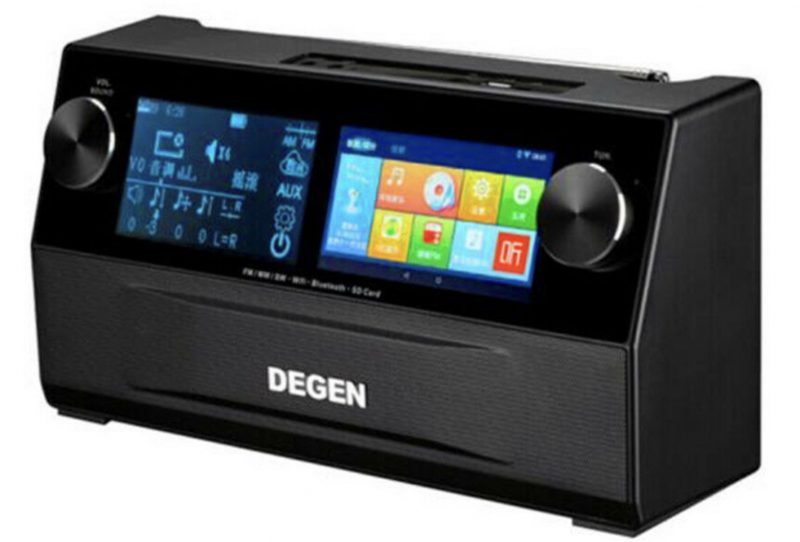
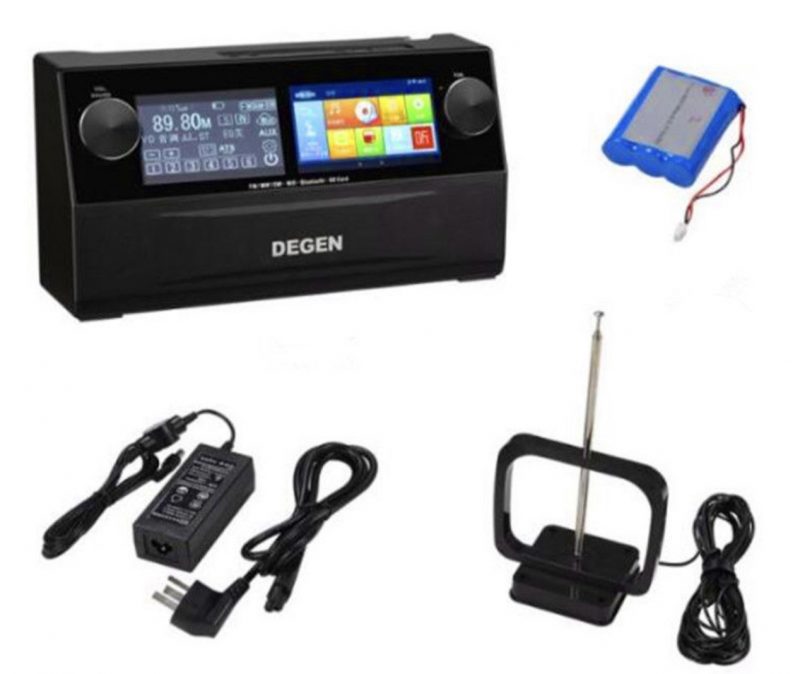
The Degen DE1108: a new multimedia device with shortwave radio

Many thanks to SWLing Post contributor, Magdiel Cruz, who shares a link to the new Degen DE1108.

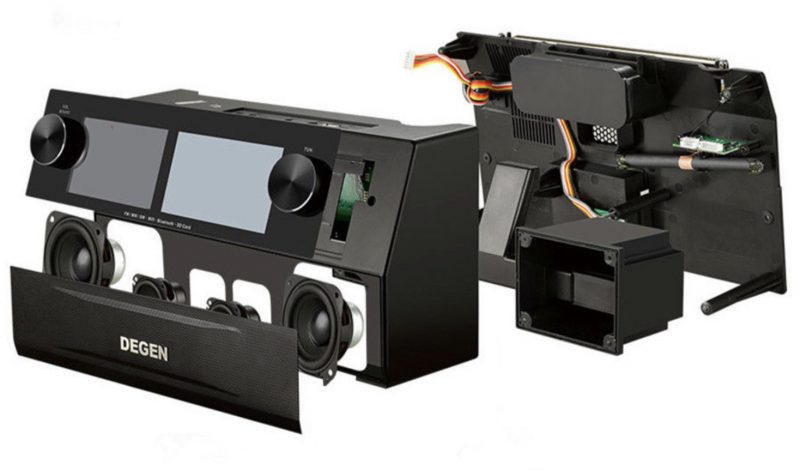
Perhaps “radio” doesn’t really describe this multimedia device, but it does feature shortwave, MW, LW, and FM reception along with the following features:

  • Dual touch screens
  • WiFi radio (at least, I believe it does based on the description)
  • Video playback via WiFi
  • SD Card and USB playback (supports WAV, APE, FLAC, MP3)
  • WIFI+ Bluetooth
  • AUX input
  • Custom audio

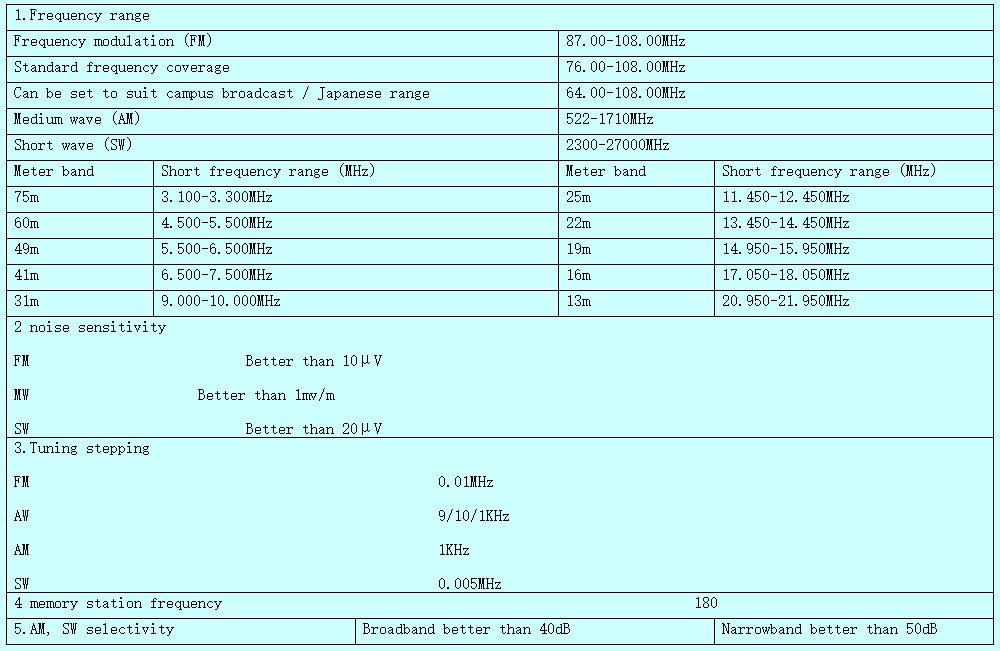
Here are some of the receiver specs (click to enlarge):

In truth, the translated product description on eBay is a bit humorous, but I suspect most of it is a machine translation from Chinese and has yet to be properly edited.

Obviously, this is not a standard portable or tabletop radio–I feel like it’s more of a multimedia device that also happens to receive shortwave. I doubt this will be a benchmark receiver, although I could be proven wrong.

Degen DE1108

The price is a hefty $449 US shipped on eBay. It’s also available on AliExpress for the same amount.

Thanks for the tip, Magdiel! Of course we’ll post updates as we learn more about the DE1108.

Click here to view on eBay.


Do you enjoy the SWLing Post?

Please consider supporting us via Patreon or our Coffee Fund!

Your support makes articles like this one possible. Thank you!

“Father Knows Best” episode features shortwave radio

Many thanks to SWLing Post contributor, Dave Zantow (N9EWO), who notes the following episode of “Father Knows Best” (link below) features shortwave radio. Dave also points out that the website streaming this episode can be somewhat slow to load, but is very watchable.

Click here to view on Shout Factory TV.

Thanks for the tip, Dave!

Using amplified loop antennas with portable radios?

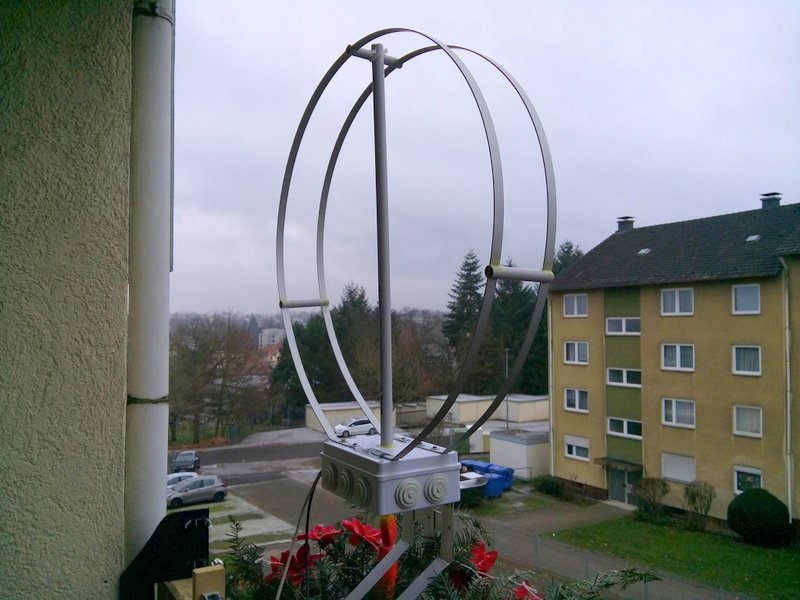
SWLing Post contributor, Klaus Boecker, sports a homebrew magnetic loop antenna on his balcony in Germany.

Many thanks to SWLing Post contributor, Marty, who writes:

I have a question about loop antennas; specifically which type is “better,” passive magnetic loops or active electric loops?

I know, “It depends.”–?

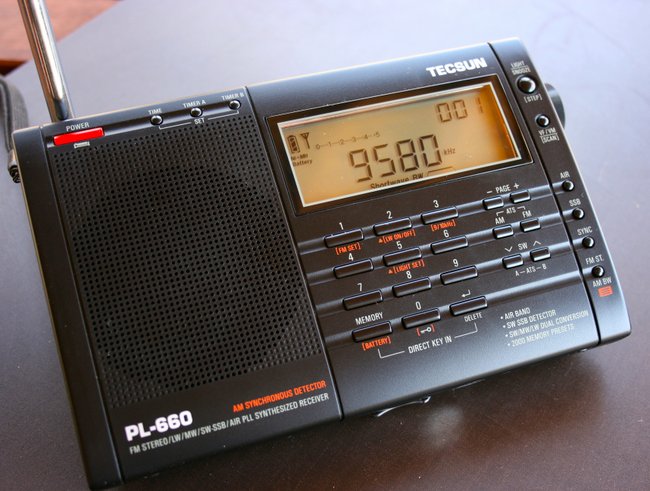
I live in a ground-floor apartment, with a small porch, lots of RFI and restrictions against visible antennas. Also there are no trees within 75 ft of my porch, which faces on a parking lot. My radio is a Tecsun PL-660, which works okay inside with my 10-ft bare wire antenna hidden on the porch.

With a loop antenna, I’d like to mount the antenna on the porch at night and have a remote tuner/control inside because it’s very hot n humid here in Louisiana even after dark.

No doubt there are a number of magnetic loop antennas that could serve you well in your situation, Marty.

To answer your first question, though, you should search for a wideband amplified loop antenna since you’re only concerned with receiving.

Passive loops are great antennas on the shortwave bands–and easy to build–but they best serve ham radio operators who wish to transmit. Passive loops typically have a very narrow bandwidth that requires the operator to constantly tune the antenna when they tune the radio a few kHz. Most amplified wideband loops need no separate tuning mechanism.

Last year, I posted an article about choosing the right loop antenna for situations like yours where one has limited installation options.

Click here to read : Shortwave antenna options for apartments, flats and condos

Portables and amplified loops?

I do hesitate to encourage you to invest in an amplified loop antenna when your only receiver is a Tecsun PL-660. Some portables don’t handle amplified antennas well–they can easily overload and I imagine you can even damage the front end of the receiver.

I’m well aware, however, that there are a number of readers here who do couple their portable radio to an amplified loop. I have connected a number of portables to large wire antennas and found they could easily handle the extra gain, so I imagine an amplified loop would perform as well; the Sony ICF-SW7600GR, Tecsun S-8800, and Sangean ATS-909X come to mind.

But the PL-660 is a hot little receiver even with the built-in telescopic antenna–I’m not sure if amplification would help or hinder.

Please share your experience

This is where I hope the amazing SWLing Post community can pitch in and help us out here!

Does anyone here regularly connect their PL-660 to an amplified loop antenna? If so, what model of antenna are you using? Are there other portables out there that you regularly connect to amplified loops? Please share your notes, thoughts and experience in the comments section.

Thank you in advance!


Do you enjoy the SWLing Post?

Please consider supporting us via Patreon or our Coffee Fund!

Your support makes articles like this one possible. Thank you!