Category Archives: Shortwave Radio

How to listen to Hurricane Watch Net frequencies

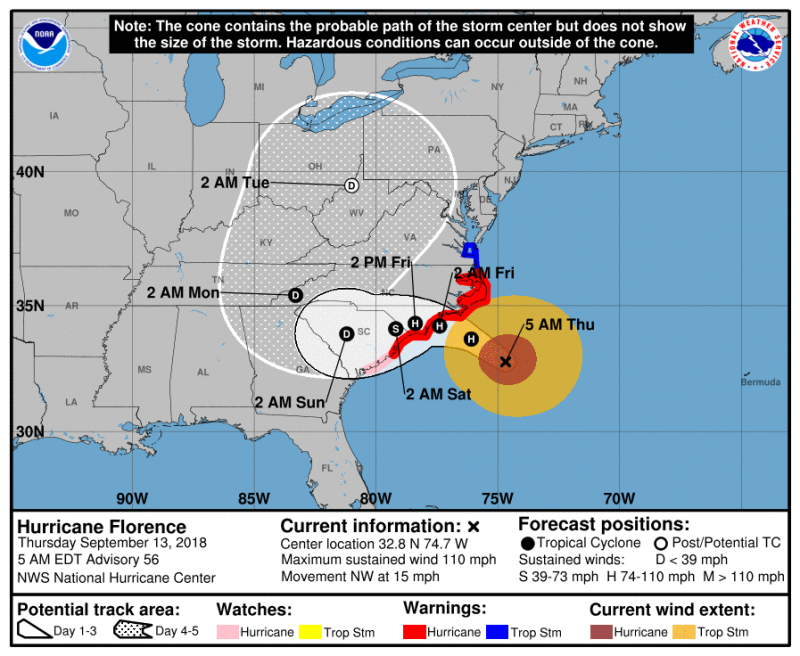
As Hurricane Florence starts to make landfall today, it is expected to have a serious impact on coastal South Carolina and North Carolina. Florence is currently a category 2 hurricane, but they expect wind speeds to diminish quickly upon landfall. No doubt, we’ll remember Florence for the tremendous amount of rainfall she packs–there will be significant flooding in her path.

A few readers have asked about frequencies to monitor as the storm approaches.

Hurricane Watch Net (HWN)
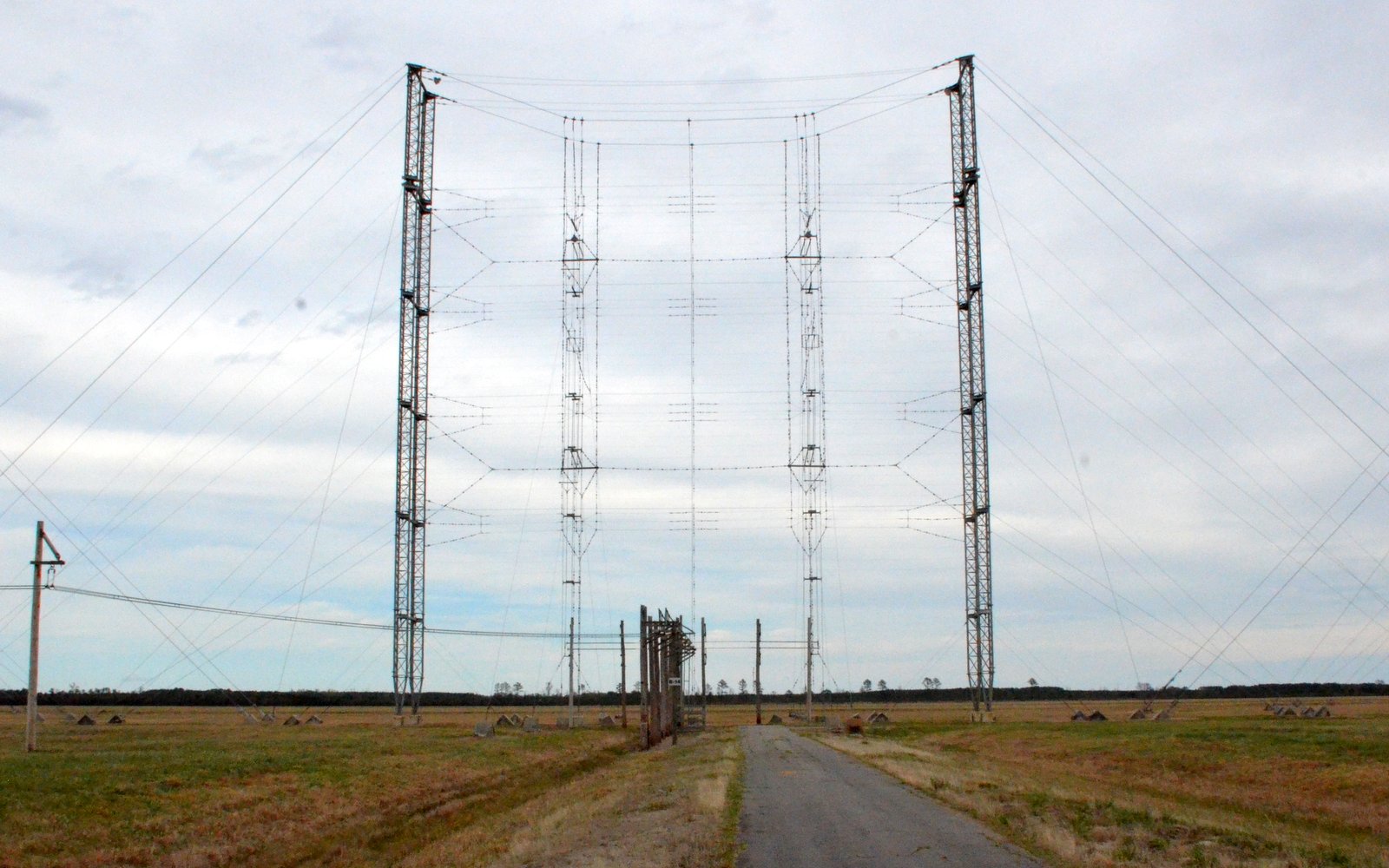
hwn-hurricane-watch-netThe Hurricane Watch Net is a group of amateur radio operators who are trained and organized “to provide essential communications support to the National Hurricane Center during times of Hurricane emergencies.” The HWN focuses on “ground truth” observations (much like SkyWarn nets).

The Hurricane Watch Net is activated when a hurricane is within 300 statute miles of expected land-fall. The HWN covers the Caribbean, Central America, Eastern Mexico, Eastern Canada, and all US Coastal States.

The HWN operates in both English and Spanish, and is active on 14.325 MHz (upper sideband) during the day and 7.268 MHz (lower sideband) at night. The HWN is known to operate on both frequencies if propagation allows.

Please keep HWN frequencies clear

If you’re an amateur radio operator, please avoid using 14.325 MHz and 7.268 MHz anytime the HWN has been activated.

Monitoring hurricane frequencies
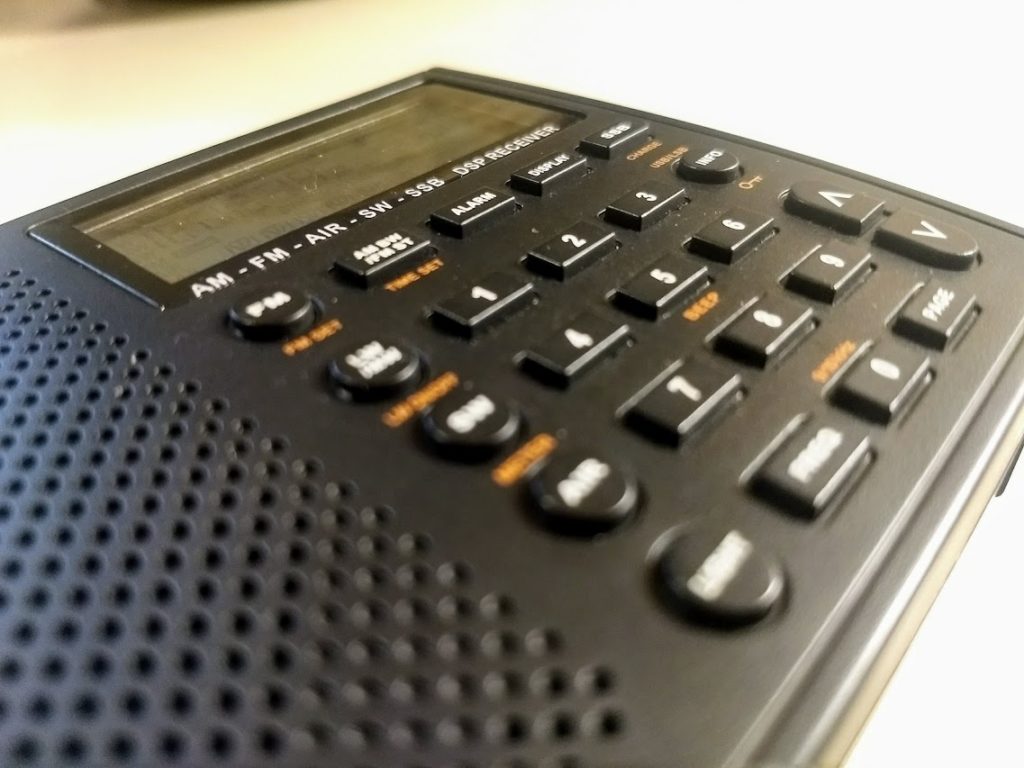
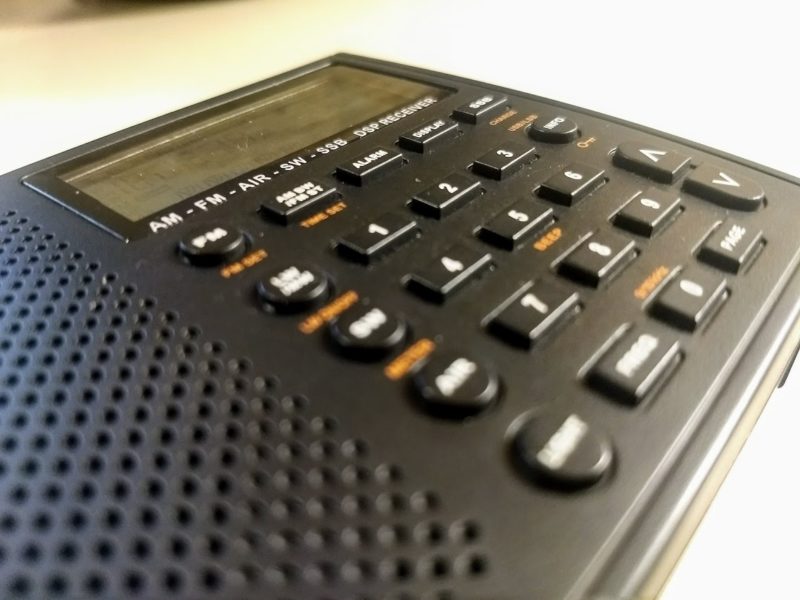
If you have a shortwave radio with a BFO/SSB mode–and you live within the propagation footprint–you can monitor the Hurricane Watch Net.

Note that you’ll need to use upper sideband on 14.325 MHz and lower sideband on 7.268 MHz.

You can also monitor the Hurricane Watch Net via a number of WebSDRs on the KiwiSDR network and even potentially via the U Twente WebSDR in the Netherlands (although a WebSDR in North America would be preferable).

Click here to view the Hurricane Watch Net website.
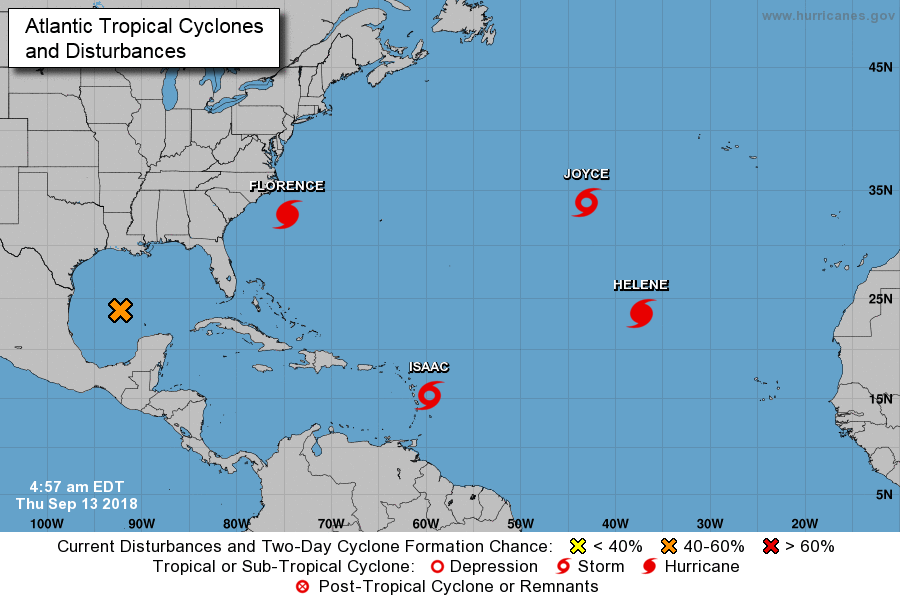
At time of posting, there are a number of tropical storms in the Atlantic. If you live in an area prone to hurricanes, tropical storms and other natural disasters, please keep an emergency kit fully-stocked and at the ready. Click here for some ideas about building your own simple kit.
Marketplace: “Time may be up for timekeeping radio stations”

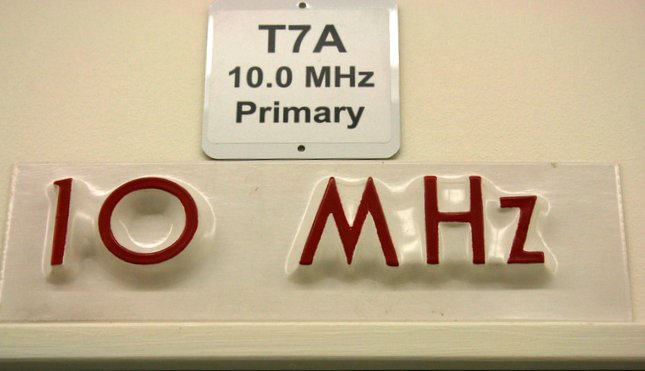
Photo taken in 2014 of the sign above WWV’s primary 10 MHz transmitter.

(Source: Marketplace via Richard Cuff)

The Trump administration wants to shut down two shortwave radio stations that broadcast time signals from the nation’s master clock.

The administration’s budget proposal would eliminate nearly $27 million in funding from the National Institute of Standards and Technology for the two stations. WWV, based in Fort Collins, Colorado, has been transmitting one rock-steady pulse per second for more than 80 years. Its sister station, Hawaii’s WWVH, has been extending the time signal across the Pacific for nearly 70 years. WWV is also the world’s longest continuously-broadcasting radio station. (NIST doesn’t stream the stations online because signals are often delayed as they stream over the internet. But you can hear the stations by calling (303) 499-7111 for WWV or (808) 335-4363 for WWVH . There are also online recordings of the stations’ gentle announcements.)[…]

Click here to read the full story and listen to the program audio.

If you feel strongly about keeping the atomic clock signals on the air, I urge you to contact your local representatives,and sign this White House petition.

Radio Deal: Eton Field BT on Amazon

Many thanks to SWLing Post reader, Christian, who writes:

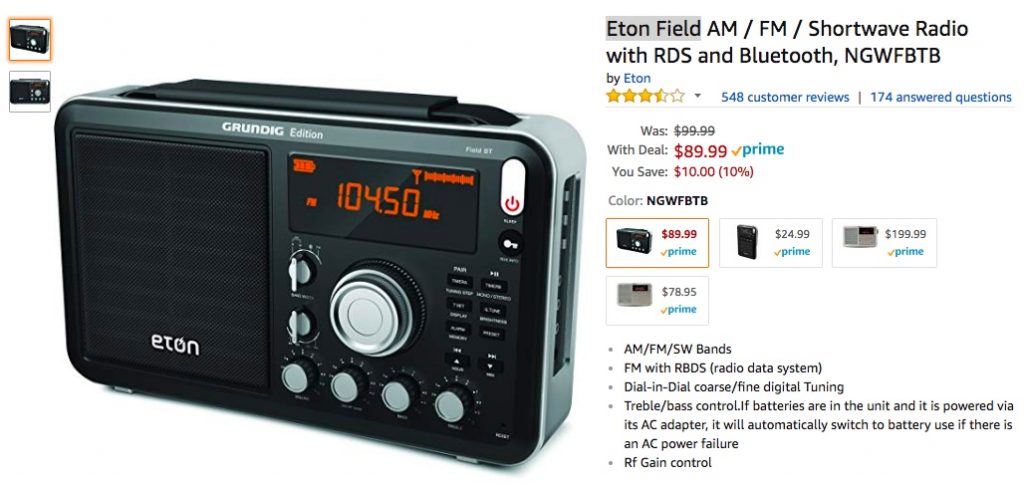
Hi Thomas. Just thought you should know that Amazon has lowered the price of the Eton Field BT to $89.99 shipped. For how long this will be the price I don’t know. This is only $5 more than the lowest price I’ve ever seen for the Field on Amazon. I just bought one and thought I’d share.

Thanks for the tip, Christian!

Click here to view on Amazon.com (affiliate link).

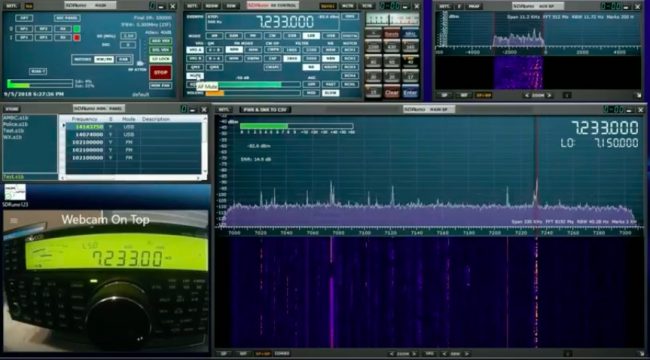
SDRplay Video: More Panadapter Tips & Tricks

Many thanks to Jon Hudson with SDRplay who shares the following on the SDRplay Facebook page:

We have released a new YouTube video which covers some items that have been asked about by our users. First up we talk about synchronizing VFO A and VFO B between SDRuno and the rig. This leads into a discussion of using the band switches in SDRuno and use of the LO LOCK button.

Then we cover how to use an RSPduo as a panadapter and a couple of configurations that can be used to expand ease of use and flexibility.

See the video here:

Click here to view on YouTube.

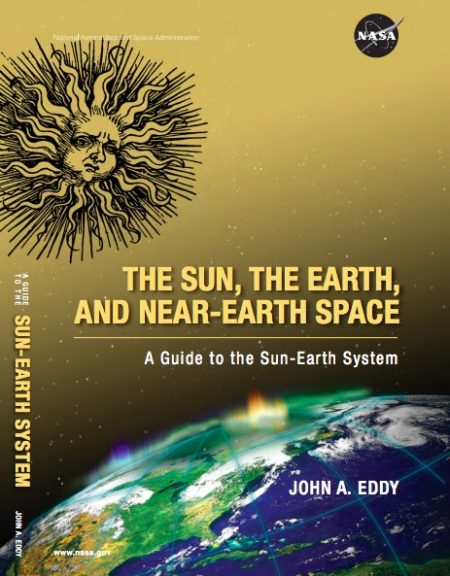
A free book (PDF) on sun-earth interaction

Many thanks to SWLing Post contributor, Eric (WD8RIF), who writes:

This came in the most recent ARRL Contest newsletter:

The Sun, The Earth, and Near-Earth Space: A Guide to the Sun-Earth System by J. A. Eddy is a readable and accessible textbook that explains the dynamics of the Sun and its interaction with the Earth’s ionosphere. It’s available as a free download, courtesy of NASA and the International Living with a Star Program. Anyone using the ionosphere as a medium for radio wave transmission and wants to better understand propagation should find this book of interest. (Ward, N0AX)

Thank you for the stellar tip, Eric!

FCC Audio Programming Inquiry: Implications for HF Broadcasting

Many thanks to Bennett Z. Kobb, Kim Andrew Elliott, and Christopher Rumbaugh for authoring “Comments of the High Frequency Parties” that is now filed with the FCC.

Update: please also check out this FAQ.

Here’s the introduction:

The Public Notice in MB Docket 18-227 requests comment on “whether laws, regulations,
regulatory practices or demonstrated marketplace practices pose a barrier to competitive
entry into the marketplace for the delivery of audio programming … [and] concerning the
extent to which any such laws, regulations or marketplace practices affect entry barriers for
entrepreneurs and other small businesses in the marketplace for the delivery of audio
programming.”

The Commission’s Rules do pose barriers to entry and unnecessarily restrict the licensing
and delivery of programming by International Broadcast Stations.

These rules originated in a period when the government utilized or countenanced privately owned, high-frequency (HF, 3-30 MHz) broadcasters as voices against foreign adversaries.
The rules prohibit stations directed primarily to U.S. audiences. They impose detailed
language, announcement, advertising and record keeping practices, require monitoring of
foreign market particulars, and mandate a minimum DSB transmission power level that is
excessive for domestic service and textual and image content.

These and certain other obsolete restrictions are overdue for review and revision or deletion.[…]

Click here to download and read the full document as a PDF.

Click here to check out the FAQ regarding the HF Broadcasting Filing.

Radio in the field: SWLing on the coast of the St. Lawrence river

Yesterday, the weather was gorgeous here in Québec, thus a prime opportunity to find a beach, start a new book and, of course, play radio!

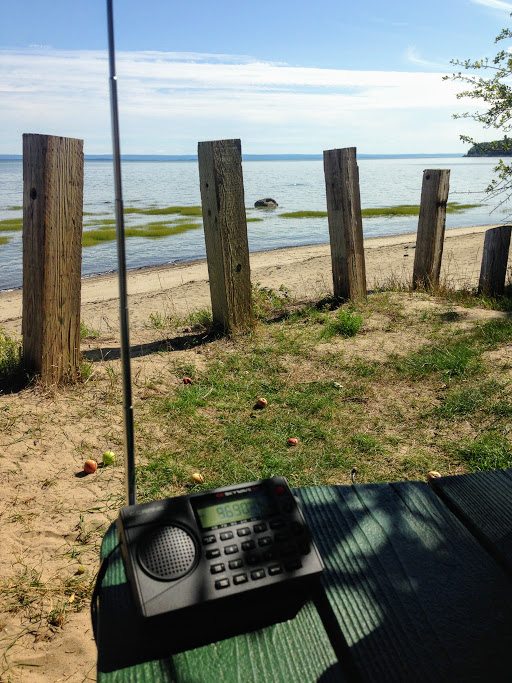
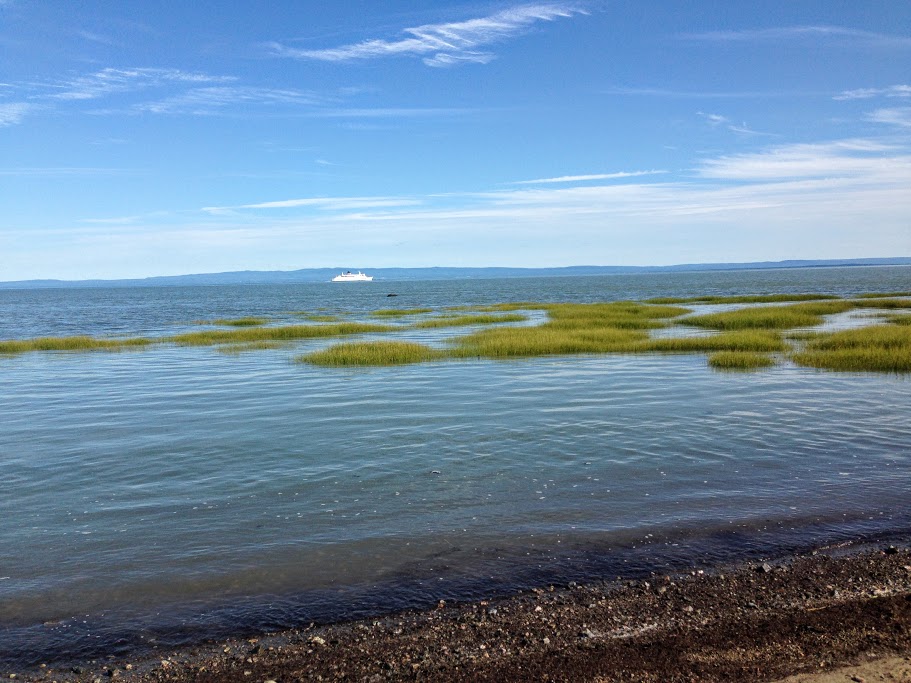
I found a fantastic spot on the north bank of the St. Lawrence river near Baie-St-Paul, Québec. There were only a few folks at the beach, so it was all very peaceful.

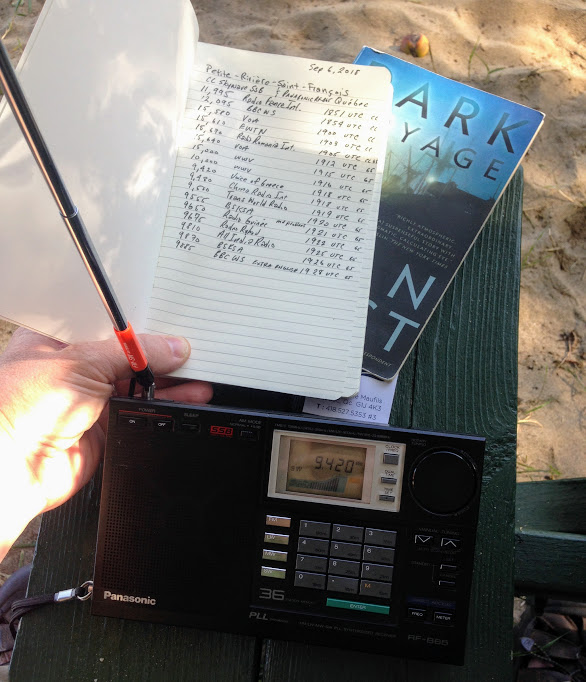
I found a picnic table perched on the edge of the beach shaded by an apple tree–a perfect spot to relax, play radio and start a new book: Dark Voyage by Alan Furst.

I brought two portables: the C. Crane CC Skywave SSB and the recently acquired Panasonic RF-B65.

I had not checked to see if propagation was good, but tuning to WWV on 10 MHz and 15 MHz confirmed that signals were travelling. In fact, as I started tuning around–first with the CC Skywave SSB, then with the Panasonic RF-B65–I discovered some of the best propagation I’ve experienced in ages!

I did a relatively quick scan covering the 31 through 19 meter bands. Some signals were absolutely booming in.

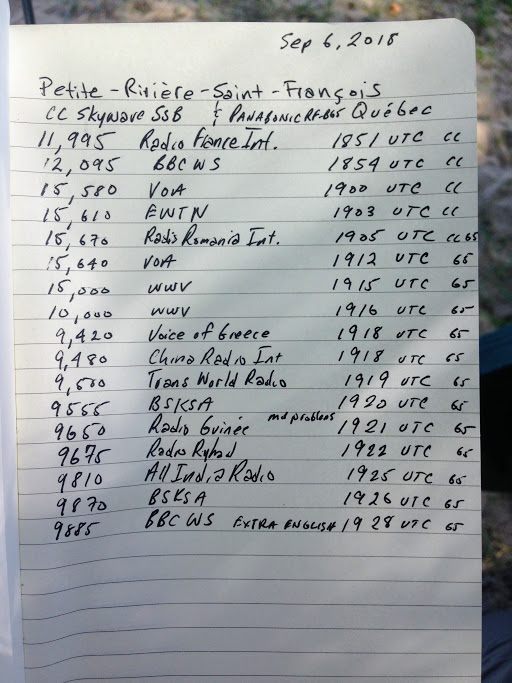
I jotted down some of the broadcast details on a make-shift log and recorded a few videos.

Note that after making the first video, I discovered I had limited space on my phone, so most of the clips are quite short:

The Voice of America

Click here to view on YouTube.

Radio France International

Click here to view on YouTube.

Radio Guinée

Click here to view on YouTube.

BBC World Service Extra English

Click here to view on YouTube.

Here are the stations I logged in the clear:

All in all it was a brilliant afternoon and the short band scan reminded me that there is still so much content to be found on the shortwaves.

You just need a little propagation, and some time to listen and explore!

Post readers: Have you snagged any elusive DX recently?  Please comment!

Do you enjoy the SWLing Post?

Please consider supporting us via Patreon or our Coffee Fund!

Your support makes articles like this one possible. Thank you!