Shortwave listening and everything radio including reviews, broadcasting, ham radio, field operation, DXing, maker kits, travel, emergency gear, events, and more
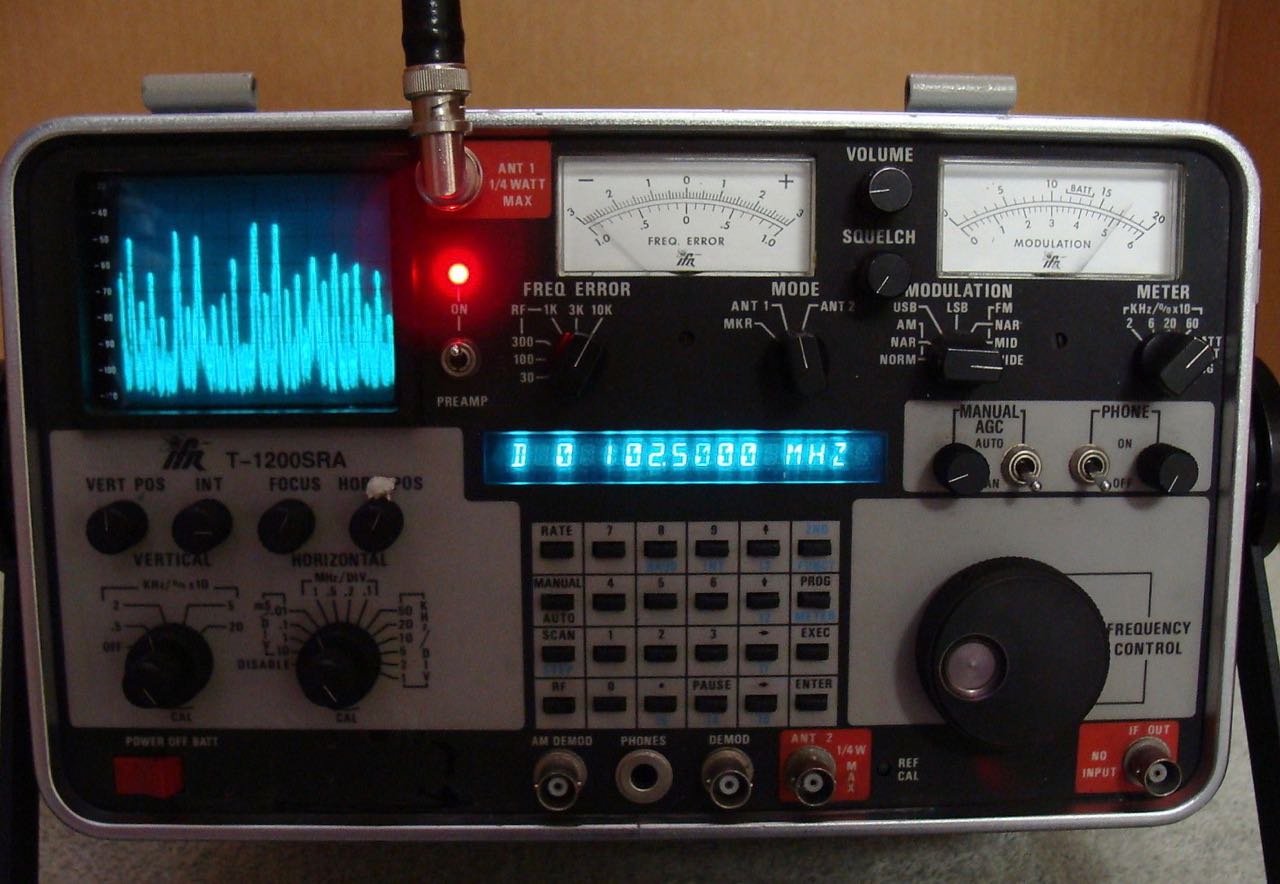
Some claim these were used by the FCC for surveillance. I can believe that as IFR is a professional manufacturer of commercial radio test equipment. I have their 500A service monitor.
Beautiful receiver, but this one is way overpriced. They usually start around a grand or so with a “Make Offer” contingency. One was sold in December for $481.
Thank you for sharing this, Mario! Knowing the IFR is essentially a piece of test equipment, I’m very curious how it might compare with a similarly-priced tabletop (broadcast) radio.
Like a lot of shortwave radio listeners, since I was a kid, I’ve enjoyed tuning my radio to parts of the world where events are unfolding. There’s something tangible–something that is transportive–when you listen to a news coming directly from the source, on air and originating from halfway across the planet.
I believe, listening to government broadcasters, you get a much better picture of what is actually happening. For example, sometimes the broadcaster devotes the whole news hour to an important event, or (perhaps even more telling!) doesn’t mention anything at all! The Voice of Turkey comes to mind as a recent example.
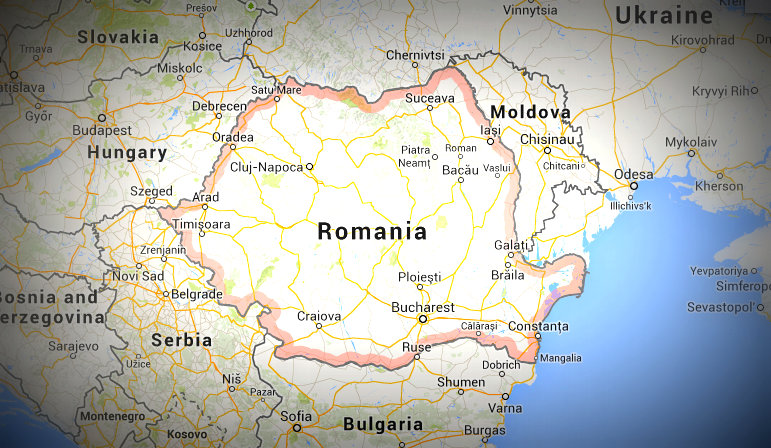
Yesterday evening, I tuned to Radio Romania International–one of my favorite little international broadcasters.
I was happy to hear that RRI at least featured the protest as their very first news item.
This recording was made on 5,960 kHz starting at 0100 UTC on February 06, 2017. Receiver used was a WinRadio Excalibur with a large horizontal delta loop antenna here in North Carolina. The following recording includes a few minutes of the RRI interval signal. Enjoy:
Many thanks to SWLing Post contributor, Mario Filippi (N2HUN), who writes:
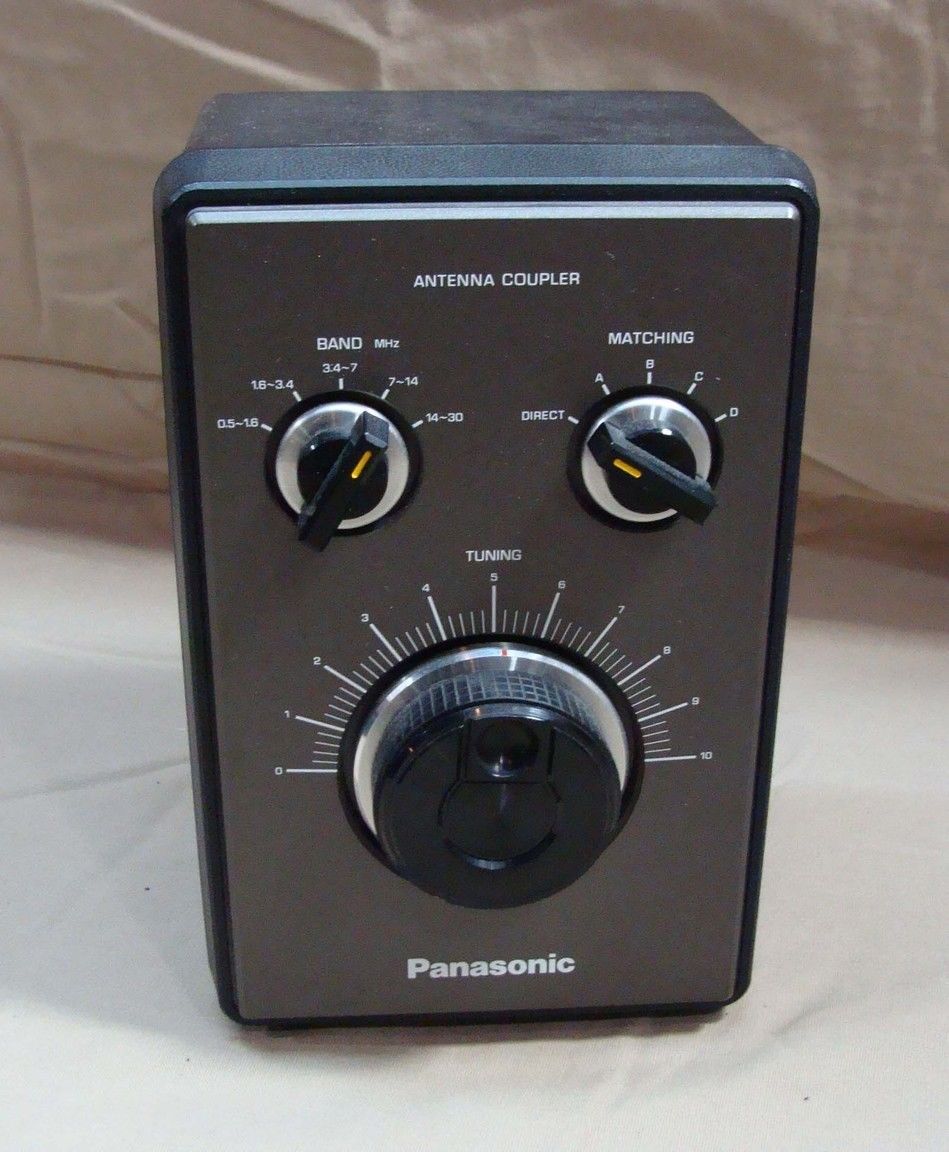
This antenna coupler was the companion for the RF-2200, they come up once in a while on eBay. Just some radio memorabilia/trivia to store away in the SWL file of brain hihi.
Thank you, Mario! Until last year or so, I wasn’t aware the RF-220 had a matching coupler. I’m sure radio collectors would jump on one of these in good condition. It’s a lot to pay for a simple coupler, though this seller appears to accept best offers.
The great thing about eBay is if you’re looking for something rare and are willing to pay for it, the world is your oyster.
On the other hand, there’s exactly what Mario implies: many of us find eBay to be an amazing resource for discovering rare radio items, tucking them away in the dark recesses of our radio brains, which then helps us spot them when they pop up at local hamfests, swap meets, yard sales or thrift stores!
Many thanks to SWLing Post contributor, Dan Robinson, who shares the following review:
Comparing the CountyComm GP5-SSB and Tecsun PL-365
County Comm GP-5/SSB and Tecsun PL-365: a couple of years ago, I obtained a GP-5/SSB from Universal and have enjoyed using the radio. It’s extremely sensitive, often bringing in signals in the middle of my house here in Maryland, and is fun to use, provided the auto-tune is done to insert frequencies so you don’t have to use the thumb wheel too much.
I have often thought that the next logical upgrade for this radio would be to add a small keypad to allow direct frequency selection, but perhaps that is not in the cards. The County Comm is basically the Tecsun PL-365, but the actual Tecsun version has not been available for the most part from major sellers, even from Anon-Co in Hong Kong, or Universal. You can still find some PL-365’s from certain Ebay sellers. Last year I obtained two from a Hong Kong seller. Both were NIB, and arrived within about a week or so of purchase.
What I noticed immediately is that the PL-365 has a different kind of exterior surface, more rubberized than the County Comm. I was curious about any differences in performance that might be obvious. Recently, I took both outside for a very basic comparison — not scientific by any means, but I think it shows something that I have noticed.
Both share the characteristics of extreme directionality, and sensitivity to touch — sensitivity increases markedly when they are hand-held, decreases noticeably when they are left standing on their own, or angled. I have noticed this when using them at the beach. If I am recording a station, and leave the radio alone for a few minutes, I return to find reception degraded quite a bit, because they were not being held.
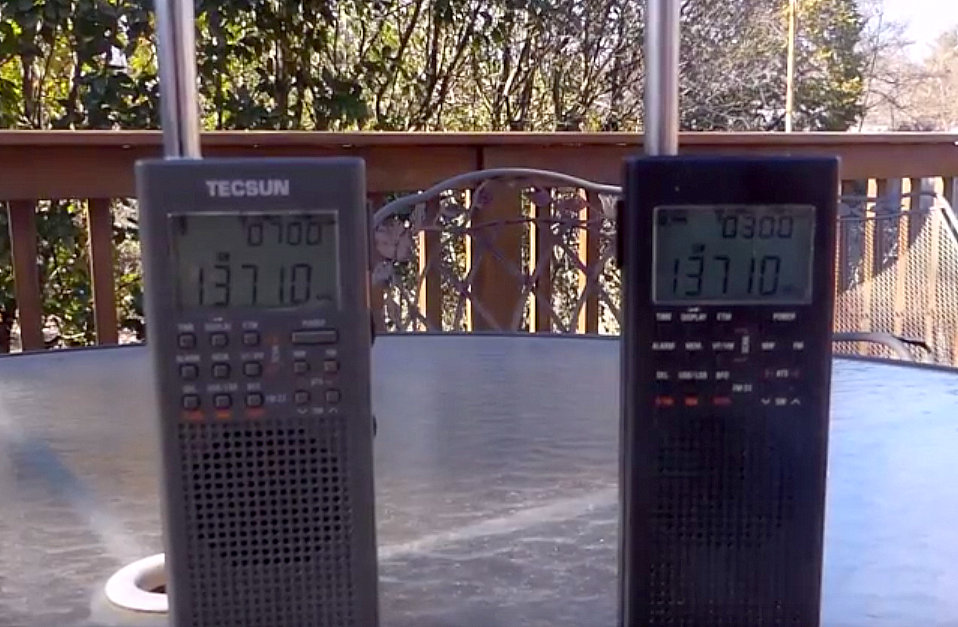
In my very basic comparison, I had both receivers next to each other on a backyard table, both antennas fully extended, full batteries on both. While on some frequencies, at least initially, it seems little difference can be heard, on others there is what seems to be greater clarity and signal separation on the PL-365.
I noticed this from the start on 13.710 where the County Comm appears to be noisier than the PL-365, and on the portions later in the video when both are tuned to 11.820 (de-tuned to 11,818) Saudi Arabia, and to 11.945 khz.
Apologies for the length of the video. It’s hard to draw any conclusions based on this comparison, and I intend to do some additional tests with both my PL-365s and will report back on any findings, but I thought this would be of interest to those of you out there with these fine little radios.
Thank you for this review and comparison, Dan. I’m often asked if there is any difference in performance to justify the extra costs typically associated with the PL-365. I can now share this video and your review–potential owners to draw their own conclusions.
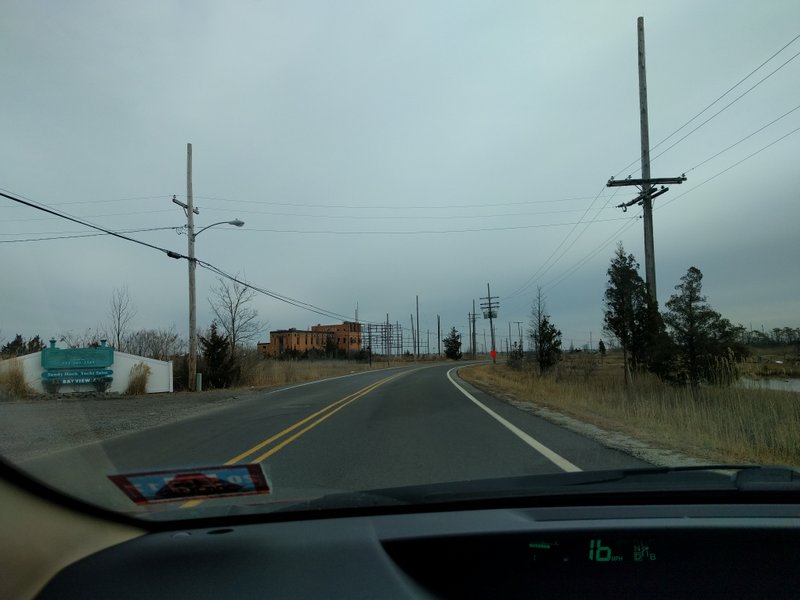
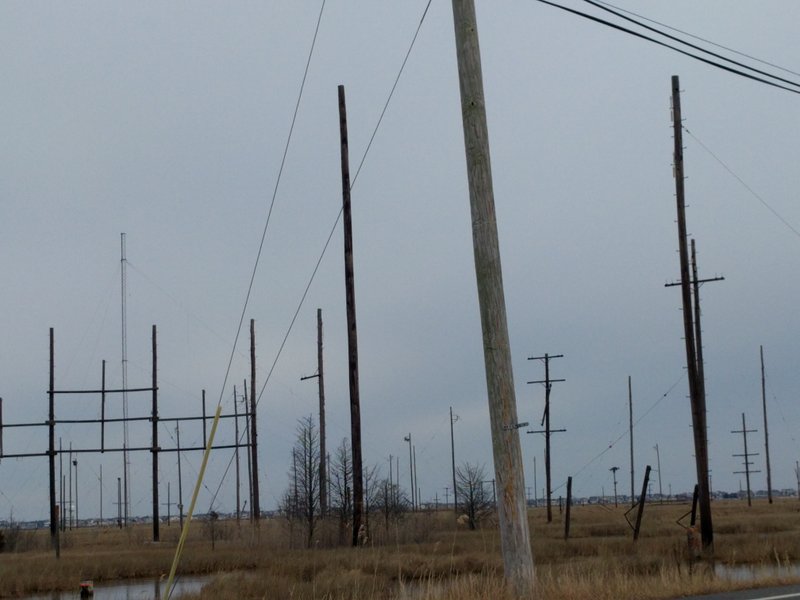
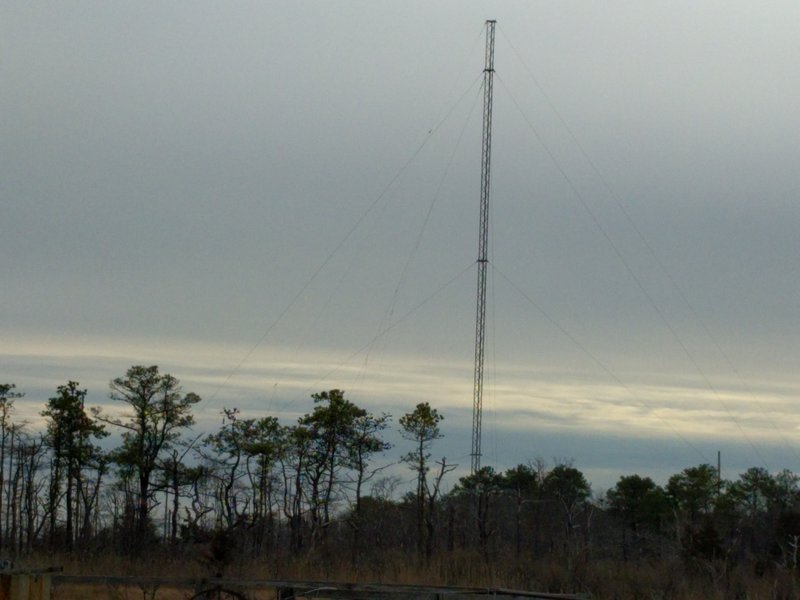
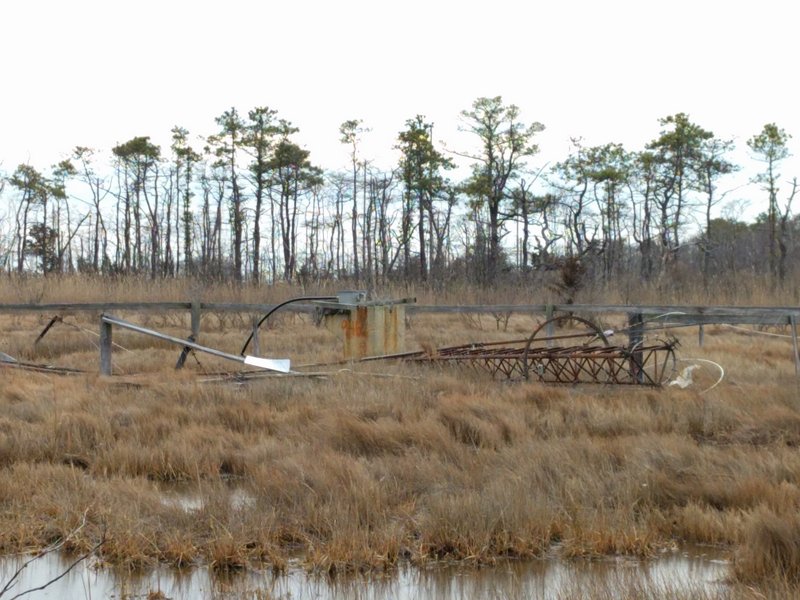
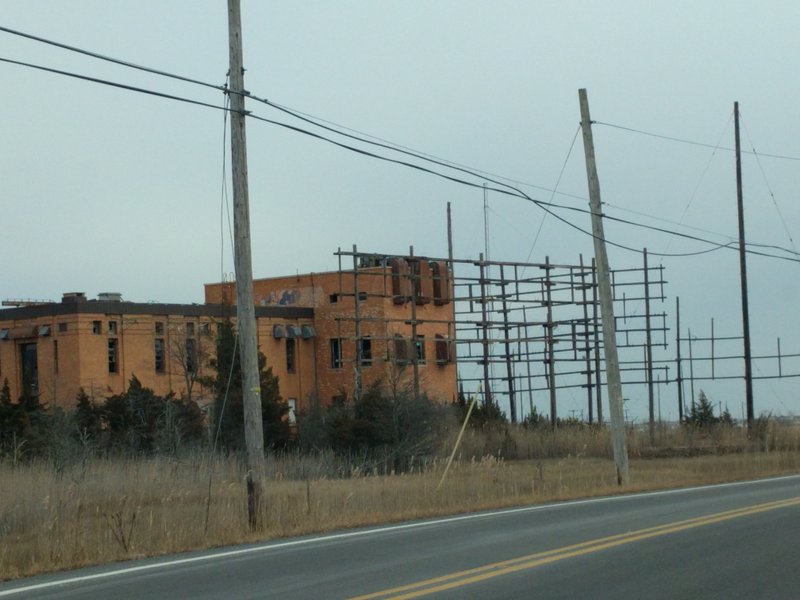
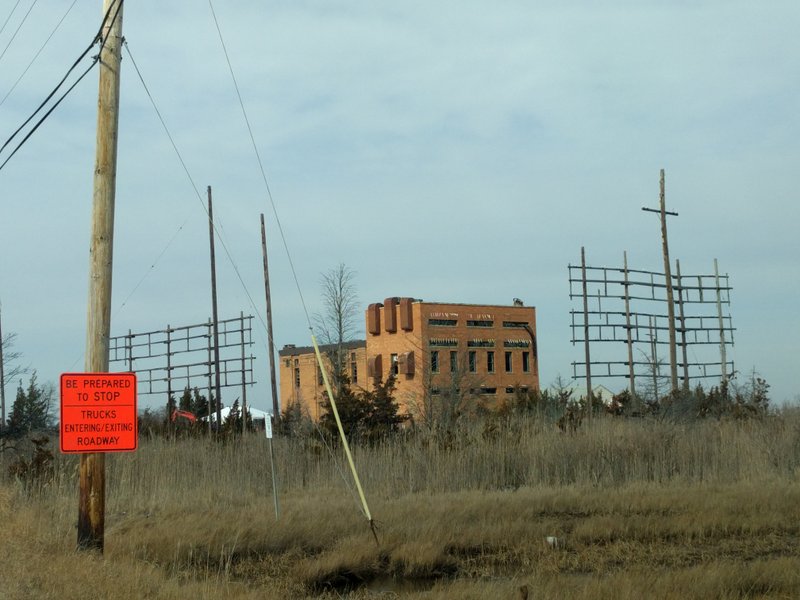
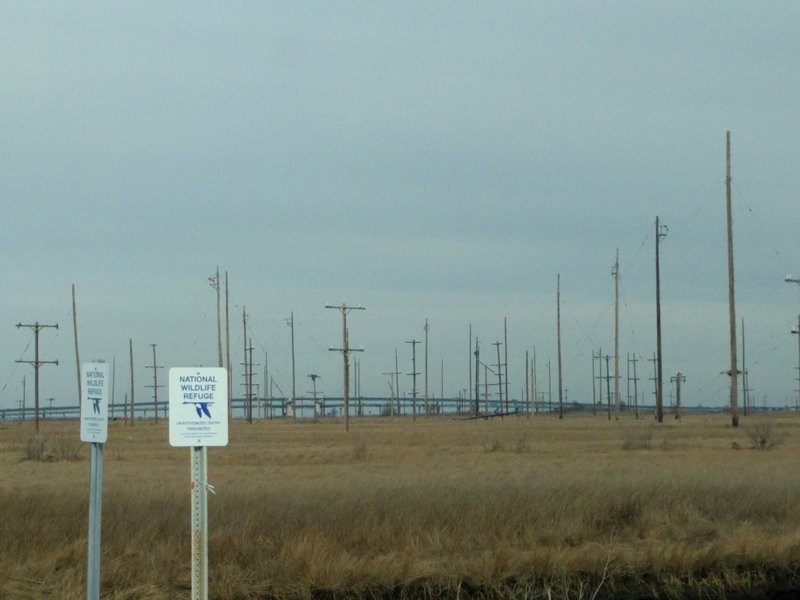
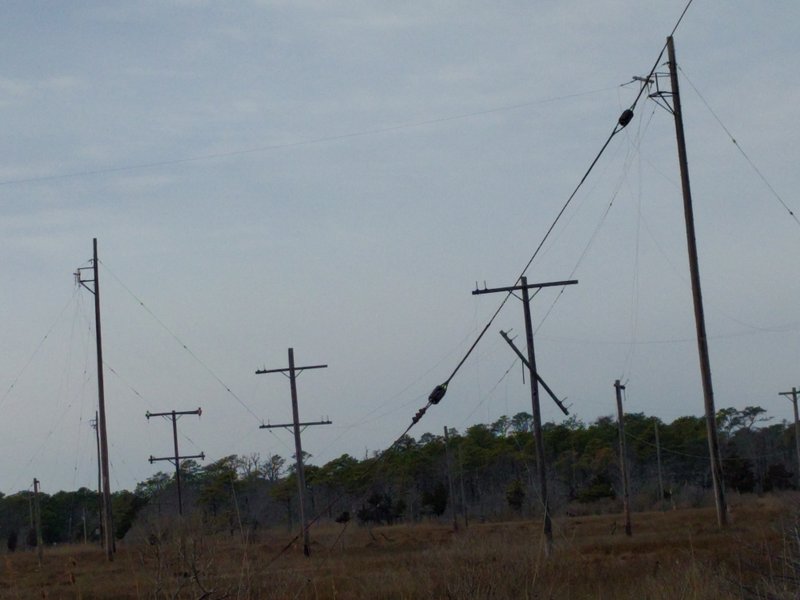
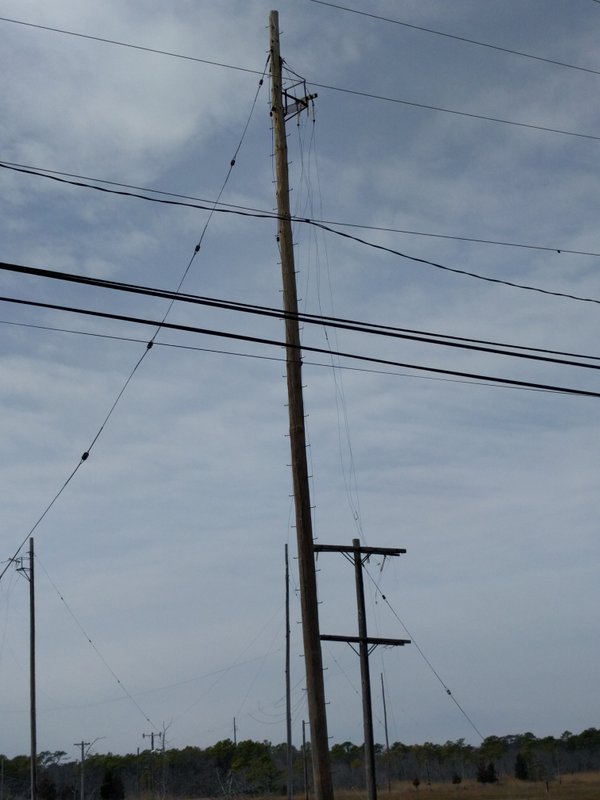
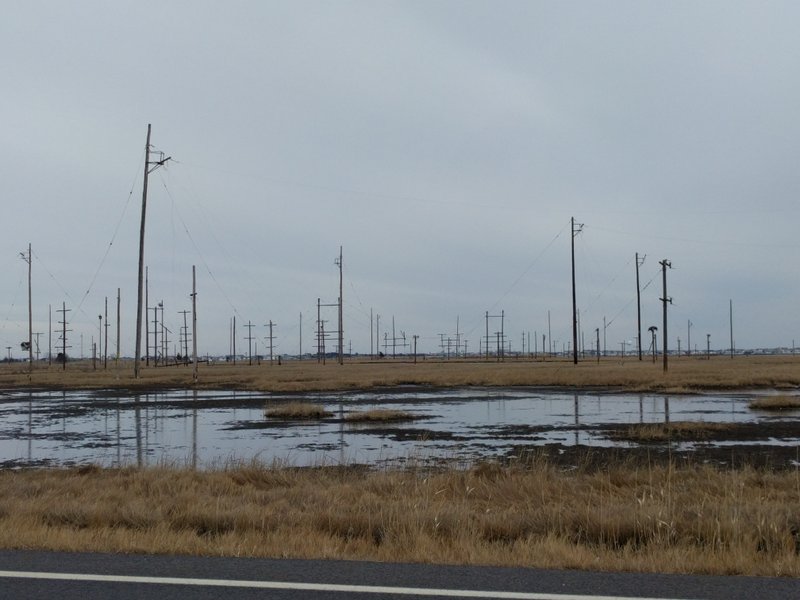
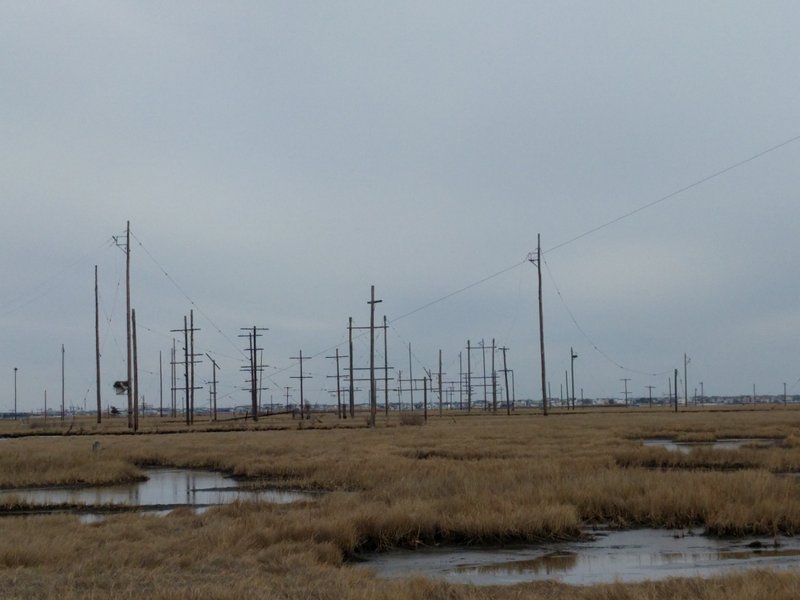
As we mentioned last month, the remnants of WOO at Good Luck Point are slated to be removed soon. Many thanks to our intrepid SWLing Post contributor, Dennis Dura, who shares the following excellent photos he took at Good Luck Point yesterday. Dennis notes:
I finally got to the site [Saturday] afternoon.
All the towers are still there!
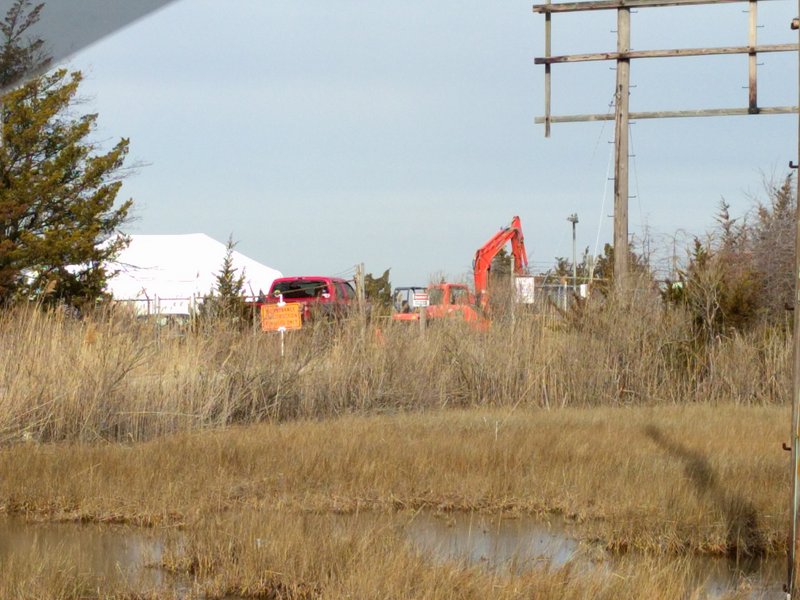
There was some construction next to the old AT&T building, but zero work on the poles…Who knows for how long though? So if anyone wants to visit they should do it soon.
Here’s all the pictures I shot. They start with my entry on Bayview Avenue heading east then back out again.
Thank you so much for sharing your excellent photos, Dennis! Since I don’t live near Good Luck Point, I appreciate the virtual tour through your photos!
A little more than seven weeks after the United States officially entered World War II, a live, 15-minute shortwave radio broadcast was transmitted into Germany from a small studio in New York City on February 1, 1942.
It was introduced by the American patriotic song “The Battle Hymn of the Republic.” Then, announcer William Harlan Hale’s voice could be heard saying: “We bring you Voices from America. Today, and daily from now on, we shall speak to you about America and the war. The news may be good for us. The news may be bad. But we shall tell you the truth.”
That was the very first broadcast from what, 75 years later, is now the Washington-headquartered Voice of America.
By the end of the war, VOA was broadcasting in 40 languages, with programming consisting of music, news and commentary.
Since then, VOA has grown into a multimedia international broadcasting service, with programming and content in 47 languages on multiple platforms, including radio, television and mobile.
On that first broadcast, announcer Hale’s words set the standard for future programs.
?And since 1976, his words have carried the weight of the VOA Charter, which by law requires VOA to “serve as a consistently reliable and authoritative source of news.” What’s more, it says VOA news must “be accurate, objective and comprehensive.”
“It’s been 75 years since we first began broadcasting objective news and information around the world,” said VOA Director Amanda Bennett. “And now, I think what we do here is more important than ever.”
Over the years, VOA correspondents and freelance reporters in many parts of the world have been on the scene to cover major world events.
In 1989, VOA East European correspondent Jolyon Naegele reported on demonstrations in Czechoslovakia and the fall of the communist government. Later that year, on the other side of the world, VOA increased programming and added staff to its Beijing bureau to cover the student-led demonstrations in Tiananmen Square. Beijing Bureau chief Al Pessin was expelled from China for his reporting.
Today, VOA broadcasts news and other programming through 2,500 television and radio affiliates around the world. At the same time, it provides content for mobile devices and interacts with audiences through social media.
As of 2016, VOA’s weekly audience across all platforms averaged more than 236 million people worldwide.