Category Archives: Shortwave Radio

Outback workers fight closure of ABC’s shortwave service

Many thanks to SWLing Post contributors Phil Brennan and London Shortwave for sharing the following story from The Guardian (my comments follow):

‘It’s essential’: outback workers fight ABC decision to ditch shortwave radio

For some living and working in Australia’s outback, shortwave radio is the only way they can listen to the ABC – and their main daily contact with the rest of the world. But the ABC will end the service in two weeks

“People that live out in contracting camps or mustering stock camps or outstations, and even a lot of the people who live in the bush on cattle stations, spend probably 100% of their waking hours out on the land and have very minimal contact with other human beings,” says Tracey Hayes, the chief executive of the Northern Territory Cattlemen’s Association.

“You can imagine how isolating that would be without having access to the outside world via radio during the day while you’re out in the workplace. But I don’t think they took that into consideration.”

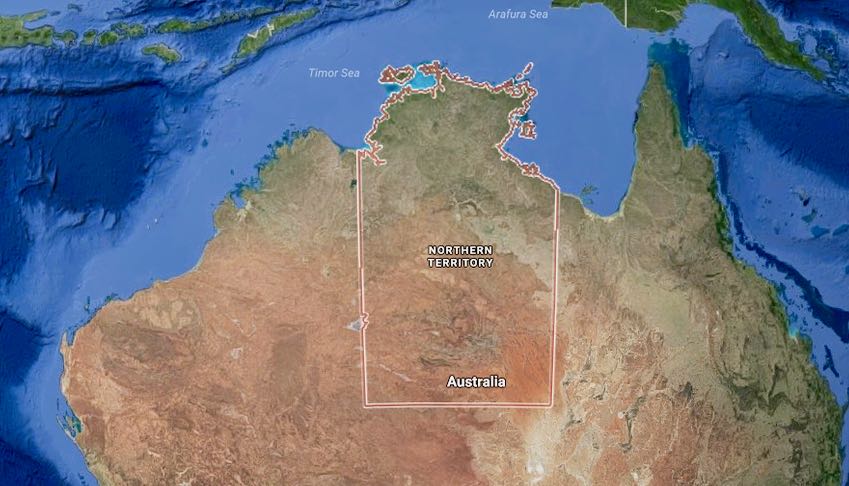
Hayes is referring to a recent announcement by the ABC that, at the end of January, it would terminate its shortwave radio service, which broadcasts to the NT, Papua New Guinea and some parts of the Pacific region.

[…]For some people living and working in the outback, shortwave is the only way they can listen to the ABC.

AM and FM bands don’t have the geographic reach across the sparsely populated territory and online streaming and Vast satellite radio is largely only available at home, close to the required infrastructure.

But as essential as the service’s supporters say it is, they are few in number. And so the ABC decided in early December it would reinvest the $1.2m into bringing digital radio to Darwin and Hobart.

Hayes has spent her life on cattle stations. She suggests the ABC decision-makers on the east coast have little understanding of the isolation of outback living and how big a role the ABC can play in people’s mental and emotional wellbeing.

“It’s essential, to keep feeling mentally stimulated and feeling like you’re in touch with the world and the rest of the community, to listen to our national broadcaster,” she says, and accuses the ABC of “loftiness” in dismissing their reliance on shortwave.

Michael Mason, the ABC’s director of radio, said in December the broadcaster would service the “limited audience” of shortwave radio “through modern technology” instead.

Hayes says that technology is of little help to people who aren’t in an office or home, and she questions the fairness of the ABC sacrificing their only remote mobile service in order to give city-dwellers yet another way of tuning in.

“When I live in Darwin I enjoy listening to the radio via the broadcast app, I can hear it in my car, we don’t really need another one,” she says.

“I’d certainly like to see the provision of resources go to people to people who are already disadvantaged.”

[…]The ABC has largely dismissed the backlash, with the managing director, Michelle Guthrie, claiming just a handful of complaints had been made and many of them were from ham radio enthusiasts.

[…]ABC local radio is the official national emergency broadcaster and all Australians are instructed to tune in during events such as bushfires, floods and cyclones. Ranger services told the ABC’s Country Hour they relied on it during long remote trips, rather than secondhand reports over HF radio.

But the ABC has sought to reassure people emergency alerts and weather updates can still be heard, via the Bureau of Meteorology and the rural flying doctors service’s HF broadcasts. It’s also urged people to tune into VHF radio, primarily used by mariners.

“It’s not just about picking up the weather, it’s about picking up a lot more than that,” says Jay Mohr-Bell, a cattle station manager 100km southwest of Katherine.

“They’re discounting the value of everything else that’s being picked up – even just a bit of local news. You listen to a show like the Country Hour and it’s info you wouldn’t get anywhere else.”

Mohr-Bell claims he and others in the Katherine region approached the ABC a few years ago about moving local radio to the AM band so they could pick it up more often. He says the ABC refused at the time, specifically citing the shortwave service as a reason it was unnecessary.

“It just goes to show it’s a decision that was made and they don’t care about the consequences and it’s done and dusted,” he says.

[…]“You should be left in no doubt that the ABC has failed to adequately or properly assess the needs of Territorians who see shortwave as their only option.”

Mohr notes there are lower level ABC staff, including rural reporters, who understand the importance of the service, but there’s nothing they can do. It’s the final nail in the coffin for him.

“Once they shut this down for us out here, we’ve got no relevance with the ABC. We won’t be continuing to support them at all.”

The ABC did not respond to questions.

Click here to read the full story on The Guardian.

The closure of the Northern Territory shortwave service reminds me very much of Radio Canada International’s closure in 2012. With the number of other quality international broadcasters on shortwave (The BBC, DW, Radio Australia, RFI, Radio Japan, etc.) and with the cuts to RCI’s programming from previous years, in comparison RCI wasn’t a big a player on the international scene.

However, the CBC North Quebec Service–which was relayed from the RCI Sackville site on 9,625 kHz shortwave–covered a vast broadcast footprint into the northern reaches of Canada. The North Quebec relay could be heard in remote First Nations communities scattered across Labrador, Quebec, Nunavut, Iqaluit, and even into the Northwest Territories. Many of these communities are only accessible by air or sea. The CBC replaced the service with FM relays, but of course the reach of an FM site in no way compares to that of a shortwave service.

Fortunately, some remote communities in Labrador and possibly further west can still receive the CKZN shortwave relay from St. John’s Newfoundland. At 1,000 watts of power, however, it has a less reliable reach than the North Quebec Service did for so many decades.

It’s easy to turn a blind eye to communities with which you simply have no connection. I would never fault a commercial broadcaster from pulling the plug when they have no viable audience to cover the costs of sponsoring their content.

When you have a public broadcaster like the ABC–which is funded in part by taxpayers from remote, rural communities–I believe the needs of the full audience must be taken into consideration and must be taken…well…seriously.

The ABC should revisit their published Diversity and Inclusion statement which specifically points out providing quality, diverse content in audience-accessible forms.

1.2 million dollars–while a lot of money to most of us–is a drop in the bucket when compared with other items in the Australian budget.

In reality? It sounds like the ABC isn’t even prepared to acknowledge the needs of their rural audiences, let alone address them.
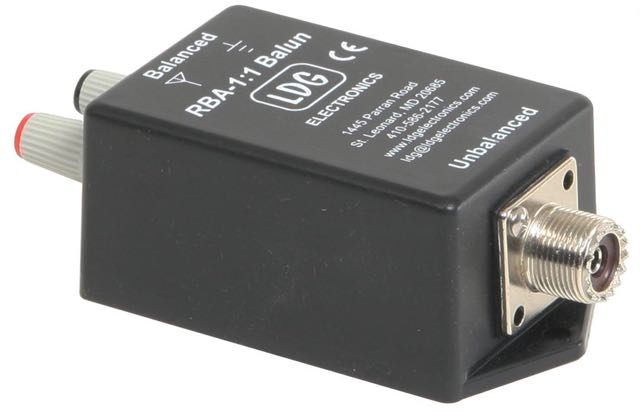
Southgate ARC: What Is a Balun and How to Make One Cheaply

(Source: Southgate ARC)

Ham Radio – What Is a Balun and How to Make One Cheaply

A Balun is a transformer which allows coaxial cable, which is an unbalanced lead to be connected to a balanced load, for example a resonant aerial.

The 1:1 balun is often called a choke balun, it works by eliminating Radio Frequency currents flowing on the outside of your coaxial cable, this is important because it prevents the pattern of the dipole becoming distorted and prevents the braid of the coaxial cable radiating.

Connecting coax to your resonant dipole which can be configured in a V shape or in a sloping fashion, however serious power loss and feeder radiation can occur without the use of a balun transformer. No one wants to induce Radio Frequency currents into Television receivers or Broadcast equipment as it may result in disputes with neighbours and could possibly lead to your station having to close down. Try to keep the centre of your aerial away from buildings as it may induce Radio currents into the mains wiring.

Building a choke is not difficult all you need is some plastic pipe available from many Do It Yourself outlets and warehouses. I use a length of about 1 foot of plastic pipe and 21 feet of coaxial cable, the length of the pipe and diameter is chosen because it works well if using R-G-5-8 coax the ends of the pipe can be sealed after placing a SO-239 connector for your coaxial lead. I use two bolts and solder tags at the other end of the pipe to connect the ends of the dipole to the choke.

When wrapping your coax around the pipe don’t use too much force as it may damage the inner braid and space the turns away from each other by a millimetre or two. R-G-2-1-3 coax around 21 feet used with 5 inch pipe will handle 400 watts pf power. Wire ties can be used to hold the turns together along the length of the pipe. Using these measurements your choke will cover all of the ham radio bands from 1.8 Megahertz through to 28 Megahertz and will keep the radiation pattern.

Using a dummy load connected to the choke and transmitting 100 watts from my transmitter indicated an S.W.R. readings of around 1.5 to 1 at 3.5 Megahertz when testing 28 Megahertz the S.W.R. reading came down to 1.1 to 1 which is an excellent match. Using the choke as it should be at the feed point of a dipole cut for 40 metres give an S.W.R. reading of 1.2 to 1. The highest reading was 1.5 to 1 when using 18 Megahertz but the rest of the High frequency bands gave me very acceptable matching.

By
John Allsopp G4YDM
https://g4ydm.blogspot.co.uk/

Article Source:
http://EzineArticles.com/expert/John_Allsopp/1925417

Article Source:
http://EzineArticles.com/9615600

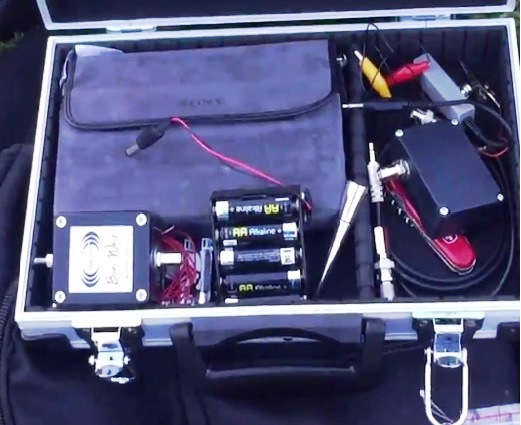
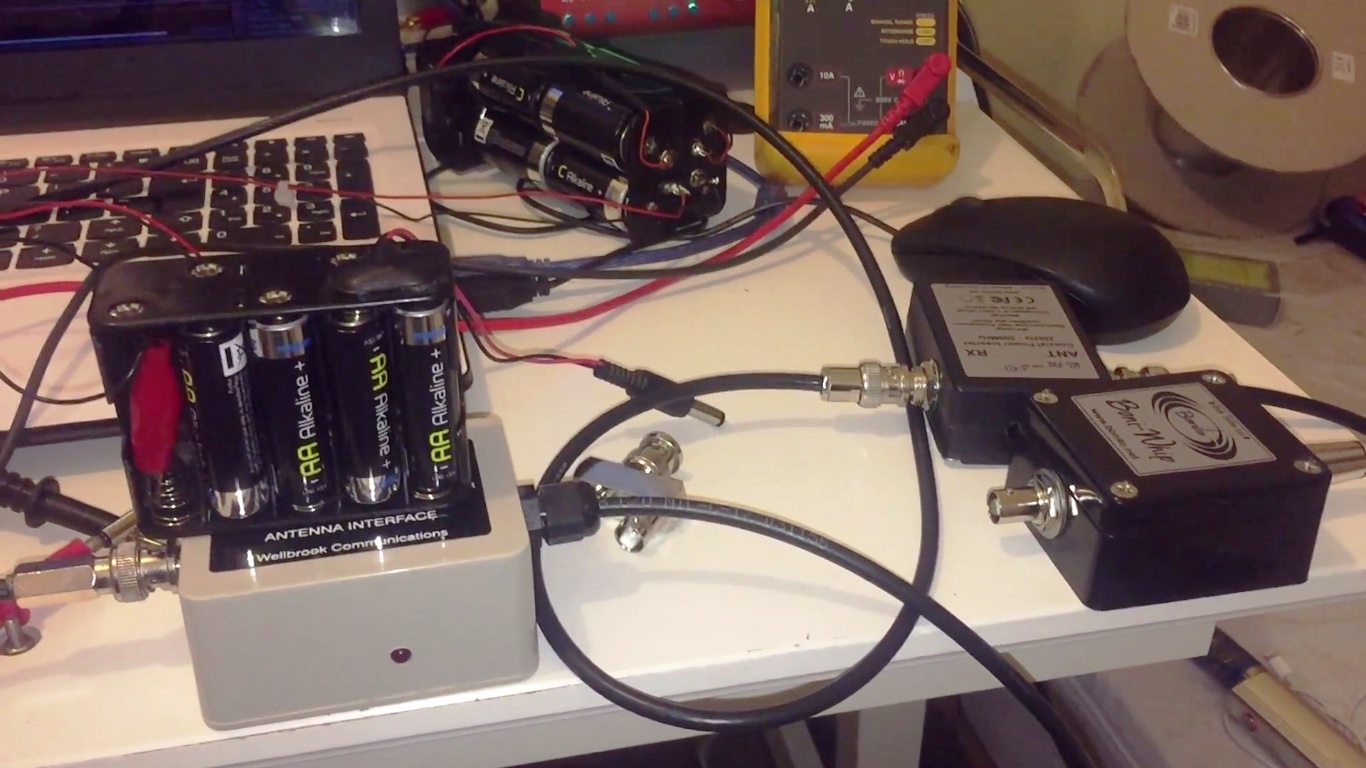
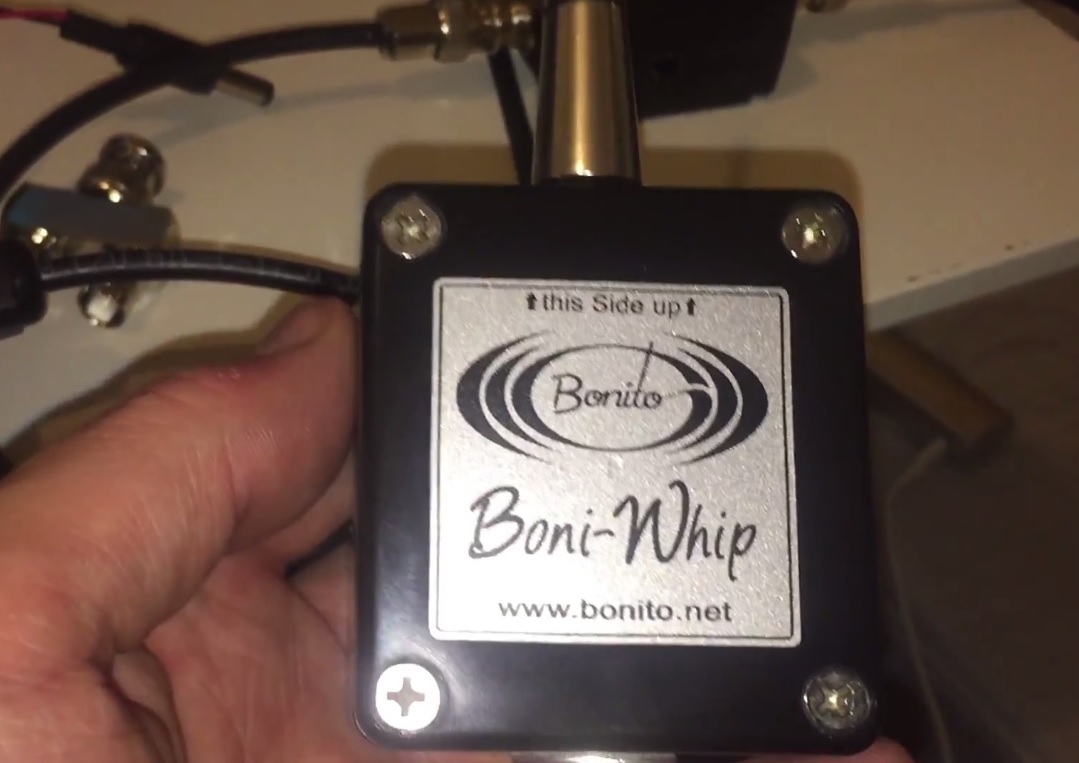
Urban DXing: testing the Bonito Boni whip against a 30 metre longwire & the Wellbrook ALA15030

Hi there, if like me, you live in an urban environment, chances are QRM is having a negative impact on the quality of the signals you’re receiving at home. The presence of electrical noise makes antenna choice very important, particuarly if you’re planning to spend more than a few £££s on something more sophisticated than a length of wire. Recently I was considering the the purchase of a second compact antenna, for use at home in my shack and out and about on DXpeditions. I already had the excellent Wellbrook ALA1530 H field antenna, but at more than £250, it’s very costly and thus it seemed rather extravagent to buy a second one, if I could find something with similar performance for less expense. Space is at a premium at home and of course I take much of my equipment out on DXpeditions, so the Bonito Boni whip active antenna appeared to be an ideal choice. A wideband active antenna (from 20 kHz to 300 MHz) operating from 12 to 15V DC, with a very compact form-factor definitely ticked all the boxes. Furthermore, with reasonable second and third order intercept points of +55 and +32.5 dBm respectively, the Boni whip, on paper at least, looked like a pretty good buy at around £100.


Now, clearly, an E field antenna such as the Boni whip is not going to match the SNR provided by the H field Wellbrook ALA1530 in a noisy, urban environment. I have uploaded a few reception videos to my YouTube channel to demonstrate this, making a direct comparison of the two. However, what about the performance of the whip versus a simple longwire in an urban environment? Is there a delta in performance? The value proposition of the whip is primarliy in it’s performance, coupled with portability I suppose, but that must be considered a secondary requirement. The whip might be 10 or 15 times more expensive than a reel of cheap equipment wire, but will the reception justify the cost delta?!

Text links follow directly below, with embedded videos thereafter; you will find 3 reception videos comparing the whip and a 30 metre longwire, on shortwave and one each for LW and MW. At the end of each video there’s a section with the Wellbrook loop, just to calibrate where the longwire and whip are in terms of a much more effective H field antenna. The result? Well, there’s not much to separate the longwire and Boni whip, except on LW, where the whip prevails. A friend told me recently, if reception is rubbish at home under a blanket of QRM, don’t blame the antenna, the noise is the real problem. He was right. So, the next tests are to be undertaken out in the field, where the whip has a real chance to shine. I’m rooting for it because to have an antenna that performs as well as, or close to my loop out in the woods, yet can be packed away into a small case would be brilliant. Thanks for reading/watching/listening.


Clint Gouveia is the author of this post and a regular contributor to the SWLing Post. Clint actively publishes videos of his shortwave radio excursions on his YouTube channel: Oxford Shortwave Log. Clint is based in Oxfordshire, England.

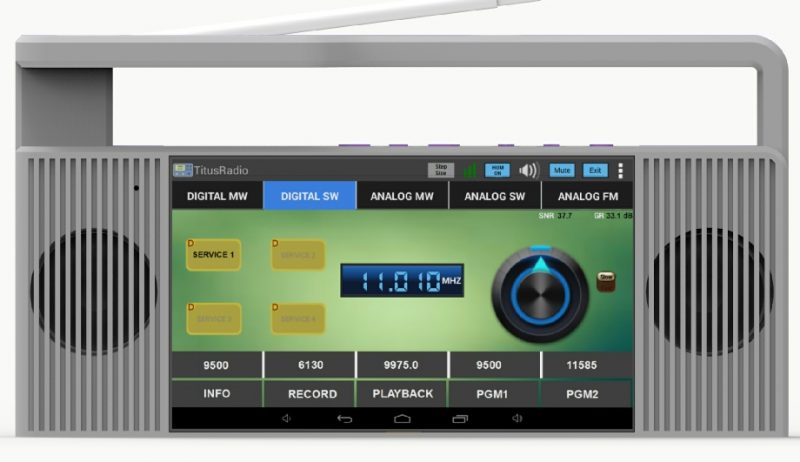
PantronX Titus II update

Many thanks to Mike at PantronX who has provided the following update on the Titus II portable SDR:

As you can imagine the response to Titus has almost been overwhelming! Pre-orders far exceeded our imagination and excitement from broadcasters has been very loud. DRM and digital broadcasting seems to be reinvigorated with Titus in 2017. I think we really broke the price barrier that most everyone has been dreaming of and provided the flexibility
that has held back the cause.

As posted on http://hfcc.org/delivery/receivers.phtml

‘Update on availability received from PantronX: “We have been overwhelmed with the response to Titus with orders and request – coupled with an early Chinese New Year that the pre-production date has slipped a bit. Please be patient as we work with our suppliers and add more functions.” ‘

We are doing all we can to push – Chinese New Year is a crazy time – the factories are shut down for 3 to 4 weeks and as you can imagine the stress prior to and the performance after.

Hopefully in the next couple of weeks our http://titusradio.com/ website will undergo a much needed update. So much to do – but we are making good headway.

Thank you, Mike! I’ve had a number of readers asking about progress on the Titus II, so I appreciate the update!

Tecsun PL-880: Richard shares winter DXing notes

Many thanks to SWLing Post contributor, Richard Langley, who lives in New Brunswick, Canada, and sent the following update earlier this month:

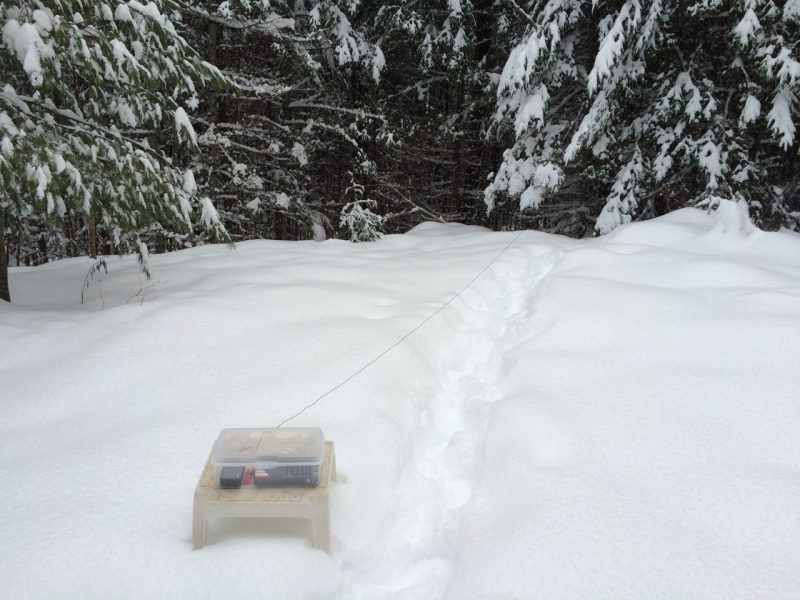
I often go outdoors to escape the RFI generated in and around the house, which can be even worse during the holidays with all the LED Christmas displays.

Trouble is, the snow is getting a bit deep for the trek to the back of the cleared part of my yard.

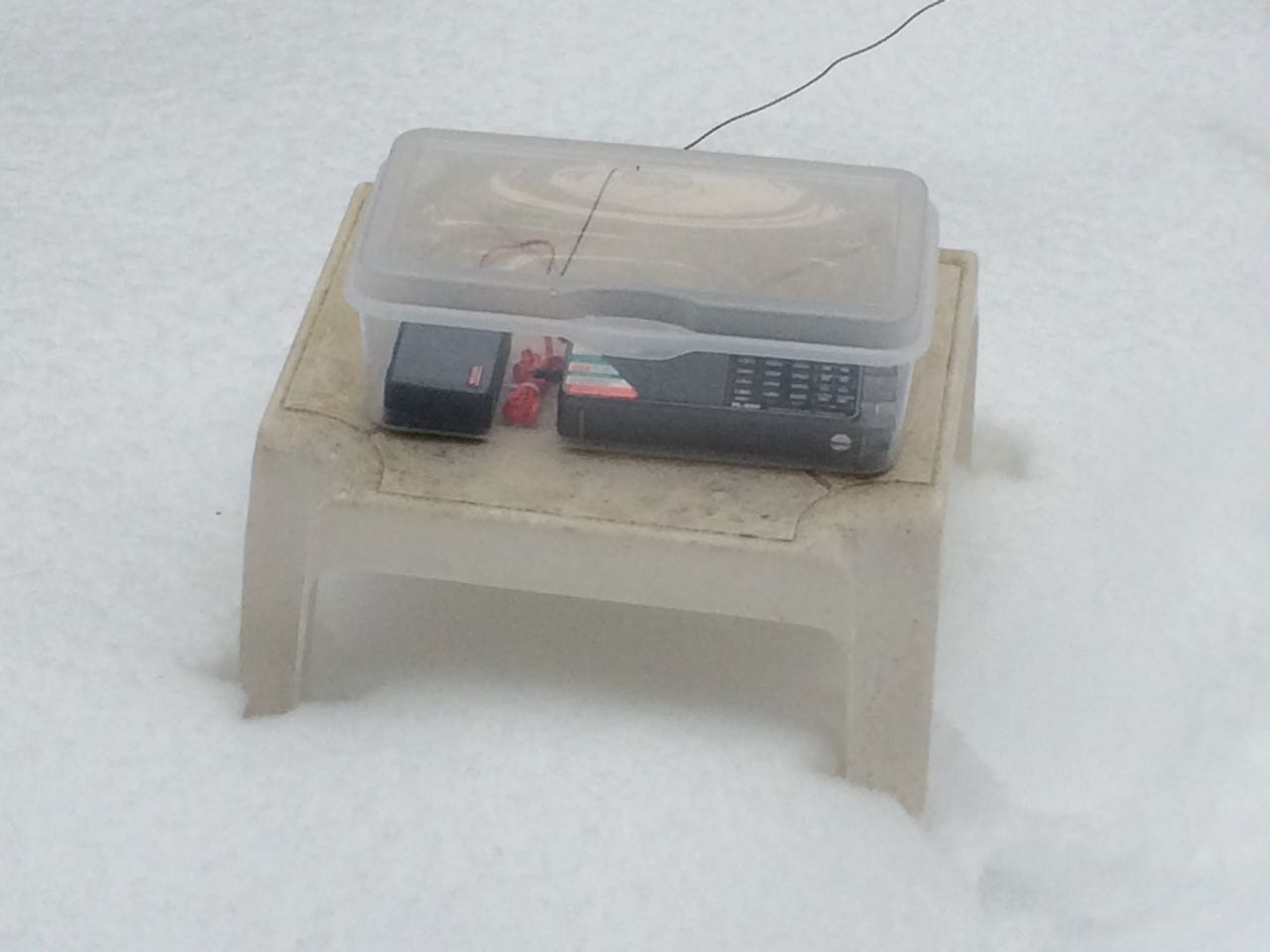
The attached photos show my setup on New Year’s Day to record Stephen Cooper’s DigiDX program over WRMI.

One thing about DXing and SWLing outside in the winter is that the knobs on the Tecsun PL-880 can become stiff to turn if it’s too cold and the battery doesn’t last as long as when it’s warm outside. Best approach is to go out with a fully charged battery, tune to a particular frequency and record the audio for later playback.

[…]I’ve also noted on a couple of occasions that the Tecsun will shut itself off after a few hours in really cold weather (around -20°C). And it’s not that the battery power is exhausted. I can turn it back on manually and it shows plenty of battery capacity remaining.

Thanks for sharing your notes, Richard! It certainly looks like a winter wonderland at your home. I like how you’ve made such a lightweight, portable station that protects the PL-880 from moisture.

Paul Walker also uses the PL-880 extensively in Galena, Alaska–in some very cold temps as well. Perhaps we can compare notes.

Post readers: What radios do you use outdoors in winter conditions? Please feel free to share your experiences!

By the way: I should offer my sincere apologies for sharing beautiful winter wonderland scenes while many of our dear readers in Australia are coping with a sweltering heatwave! 🙂 Perhaps we should also be sharing notes about high temp outdoor DXing!?

Shortwave Relays This Weekend

(Source: Tom Taylor)

Relays this Weekend

Hamurger Lokal Radio via Shortwave Station Göhren, Germany with 1KW to Western Europe:
6190 KHz Every Saturday 07.00 to 11.00 UTC
7265 KHz Every Saturday 11.00 to 16.00 UTC
9485 KHz Every Sunday 10.00 to 13.00 UTC
Contact email: [email protected]

NEXT WEEK Radio City via:
IRRS to Europe on 7290 KHz (every 3rd Friday) between 19.00 to 20.00 UTC
IRRS to Europe on 9510 KHz (every Saturday) between 09.00 to 10.00 UTC
Challenger Radio to Northern Italy on 1368 KHz every Saturdays from 20.00 UTC onwards
Radio Merkurs on 1485 KHz Every Saturday between 20.00 onwards
Contact email: [email protected]
A comment: IRRS has been noted on a Sunday on 9880 kHz instead of 9510 kHz, in order to avaoid co-channel
interference from a domestic Chinese station. This may perhaps also apply to Saturday transmissions.

European Music Radio Transmissions via;
WBCQ to Central & North America on 7490 KHz on 14th January between 22.00 to 23.00 UTC
KBC to Western Europe on 6045 KHz on 15th January between 09.00 to 10.00 UTC
Shortwave Station Göhren on 9485 KHz on 15th January between 09.00 to 10.00 UTC
Channel 292 on 6070 KHz on 15th January between 14.00 to 15.00 UTC
Contact email: [email protected]

EMR Internet Repeats on 15th January 2017:
EMR will repeat this months Transmissions via two streams running at the following Times:16.00, 18.00, 20.00 UTC
http://nednl.net:8000/emr.m3u will be on 96 kbps /44 KHz stereo for normal listening
http://nednl.net:8000/emr24.m3u will be 24 kbps / 22 KHz mono will be especially for low bandwidth like mobile phones.
( at 17.00, 19.00 & 21.00 UTC are recordings from the 15th of January 1978 with AJ’s DX & Roger Tate’s mail box )

KBC via:
Media Broadcast to America on 6145 KHz Every Sunday between 00.00 to 01.00
Contact email: [email protected]

Hobart Radio via:
Channel 292 to Western Europe on 6070 KHz Sundays between 21.00 to 21.30 UTC
WRMI to Americas, Asia/Pacific on 9955 KHz Sunday between 03.30 to 04.00 UTC
WRMI to Americas, Asia/Pacific on 9955 KHz Tuesday between 22.30 to 23.00 UTC
WBCQ to North America on 5130 KHz Mondays 03.30 to 04.00 UTC
Contact email: [email protected]


For outside the listening area please try the Twente/Netherlands Web RX at http://websdr.ewi.utwente.nl:8901/

You can also hear many European free and alternative stations via the Internet at: http://laut.fm/jukebox

Radio Channel 292 Transmission schedules on 6070 KHz (on the air every day):
http://www.channel292.de/schedule-for-bookings/

Radio Mi Amigo Transmission schedules:
www.radiomiamigo.es/shortwave

Good Listening!
73s

Nova Spaceline shortwave broadcasts to Antarctica

The following information was first shared with me by SWLing Post contributor, Harald Kuhl. As I looked for more details, I discovered the following note in the excellent CIDX Messenger:

From Alan Roe of Teddington, UK, here is information on new transmissions targeting
Antarctica:

According to posting on “Shortwave Airtime” Facebook page:

“Spaceline Ltd and Radio Nova News are to start transmissions to Antarctica for campaign for access of information to the Bulgarian Antractic base. Shortwave is the only media that can reach directly Antarctida at the distance of 13.000 km. Transmissions will start on 1’st of January, 01.00 – 02.00 UTC daily on frequency 11600 kHz. For more information visit www.spaceline.bg”

I couldn’t find any more information at either the Spaceline website or the Radio Nova news
website at https://nova.bg/

However, I received today the following reply (below) from Spaceline:

Hello Alan,

The information on the Facebook page is correct, and Space Line will start the transmissions of Nova News to Antarctica very soon.It was been planned to start the project on January the 1’st, but due to some logistic problems with the base, is postponed for middle or the end of January this year, but there was a test transmission on January the 1st 2017 on 11600 kHz. After the test it appeared that here may be a frequency change from the announced one, due to some propagation anomalies.

The retransmission of Radio Nova News on shortwave is a common project between Nova, Spaceline Ltd. and Bulgarian Antarctic Institute, for reaching the scientists in Bulgarian Antarctic Base on South Shetland Island with fresh news information feed about the social life in Bulgaria.

Stay tuned to the shortwave.airtime FB page for more information about the project.
Best Regards,
Ventsislav Georgiev
Manager R&D
SpaceLine Ltd. | www.spaceline.bg
Mob : +359 888 554 297
E-mail: [email protected]
James Baucher blvd 71, Fl. 6, Office 5,
1407 Sofia , BULGARIA

Thank you Harald and Alan for the tip!