Category Archives: Shortwave Radio

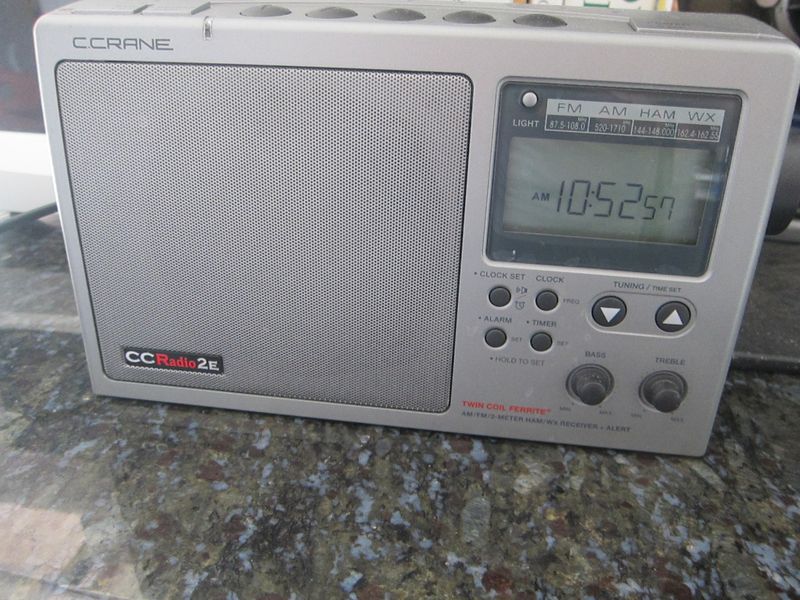
Jeff finds a solution for sticky preset buttons on the CC-Radio 2E

CCradio 2e

Jeff, over at the Herculodge blog, recently posted that the preset #2 button on his C.Crane CC-Radio 2E had become so sticky, it was almost to the point of not being functional.

One of his readers suggested that he use Deoxit spray to remedy the sticky button and it worked!

Deoxit is amazing stuff and something I suggest any radio enthusiast keep handy. Years ago, I had an Icom IC-735 I thought needed a new power button;I had to press and hold the button for the power to turn on. I searched for a replacement botton for weeks. When I reached out to a friend who is an electronics technician, he suggested that I open the chassis and try spraying the button with Deoxit.

I did, and it worked beautifully.

Deoxit is not the cheapest contact cleaner around, but it is the brand I trust the most. It comes in both a spray and liquid form.

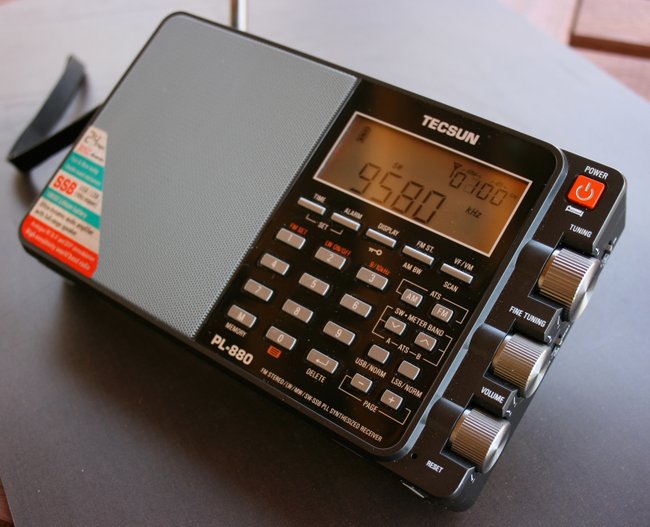
Tecsun PL-880: Evans notes signal meter and other discrepencies

PL-880 (1)

SWLing Post reader, Evans (in Greece) writes:

I would like your opinion regarding two strange points we noticed in two different Tecsun PL-880 models, which a friend and I have recently purchased. In particular:

  1. The signal meter is supposed to measure up to 99dBu (my Tecsun PL-390 s-meter goes indeed up to 95-97dBu for very strong amateur signals in my area included mine in mw zone). The point is that for both devices (both of which have 8820 firmware) the signal meter does not exceed 85 dBu and in particular my Tecsun PL-880 signal meter does not goes over 70dBu (ie. even lower measurement). Why this behaviour?

  2. Another strange point is that my friend’s Tecsun receiver displays for a “quiet” frequency (mw) a noise level of about 10-12dBu, while my Tecsun device shows only 2-3dBu noise (same frequency in the same spot!). We both tried the threshold muting adjustment (key 9) and this worked a bit but with minor results in sensitivity, especially for my Tecsun PL-880 receiver. Is it possible to adjust the noise level so that it can be 10-12dBu instead of being only 2-3dBu and hence better sensitivity? And is it possible to adjust the maximum signal level (99dBu instead of 85dBu or even worse 70dBu for my device)?

  3. I have noticed that the hidden feature regarding the external mw antenna didn’t work in my case, even though I did resets an tried many times. I pressume, hence, that maybe Tecsun disabled this hidden feature. Is there any modification available to “add something” into the radio hardware in order to be able to listen mw/lw frequences with external antenna and thus, increase sensitivity?

Many thanks for your questions, Evans. Since my PL-880 is a first production run unit, I’m hoping readers who’ve recently purchased the Tecsun PL-880 might comment.

I suspect Tecsun engineers give little thought to calibrating the S meters. I’m very curious if there is a hidden feature to do this, but I’m guessing this is limited only to those who can program the DSP functionality of the chip inside.

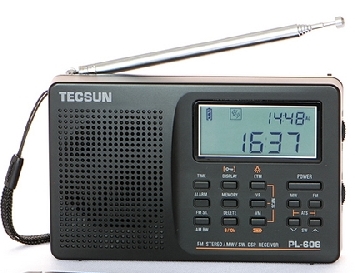
Tecsun cautions against using Lithium AA cells in the PL-606

TecsunPL-606

SWling Post reader, Philip Dickinson, recently contacted me with the following question:

“I have just bought a Tecsun 606 which takes two AA batteries which I think are normally rated at 1.2 volts. I have just ordered some lithium ion AA and notice that they are 3.7 volts. Can I use them?”

I replied to Philip that I’m pretty sure I’ve used lithiums in my PL-380 and/or PL-310ET without experiencing any problems. I know I’ve certainly used lithiums in several other receivers. [Update: I’ve always used Energizer and Duracell 1.5 V Lithium AA batteries–not 3.6V AA batteries.]

As I was about to post his question here on the Post, Philip sent another message:

“I found Tecsun’s email address and they rule out the 3.7 volt lithiums. Good job I checked.”

Wow–indeed, I’m glad you checked as well!

I had searched the PL-606 owner’s manual (PDF), but found no reference for voltage tolerances. Now I’m curious if other Tecsun receivers would have difficulty handling the higher lithium voltage.

Please comment if you have insight!

[UPDATE: Please check out this follow-up post and primer on Lithium batteries.]

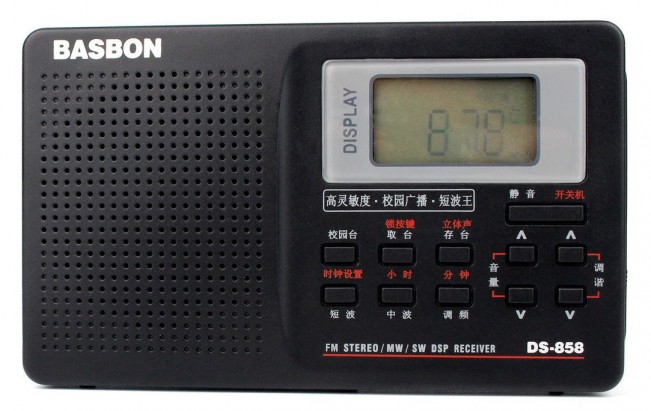
Guy’s review of the Basbon DS-858

Babson-Shortwave

SWLing Post contributor, Guy Atkins, writes:

My “bargain bin” $13.99 portable Basbon DSP receiver arrived yesterday from China while I was out of town. That was fortunate for the little radio, as my absence allowed it another day of life (in one piece) on planet earth.

The good: the radio’s case is surprisingly solid and of good quality. To hold the receiver you’d think you had a $50+ portable in your hands. The smallish and very basic LCD display (cleverly labeled “DISPLAY” for those who don’t catch on too quickly) looks crude however, and gives forewarning that crude performance awaits.

The so-so: strong, local FM signals sound intelligible but with lots of tinny audio and some distortion. Strong AM signals (which happen to be near or coincide with North America’s 10 KHz channel spacing) are adequate.

The bad & ugly: Once you get past the puzzling multiple button presses to get past the clock display into shortwave operation, the noises and hisses coming from the speaker will make you wish you’d left well enough alone! Strong SW signals audible on Kaito’s $17.99 low-end (and analog) WRX-911 are simply a noisy, tone-covered mess on the Basbon receiver.

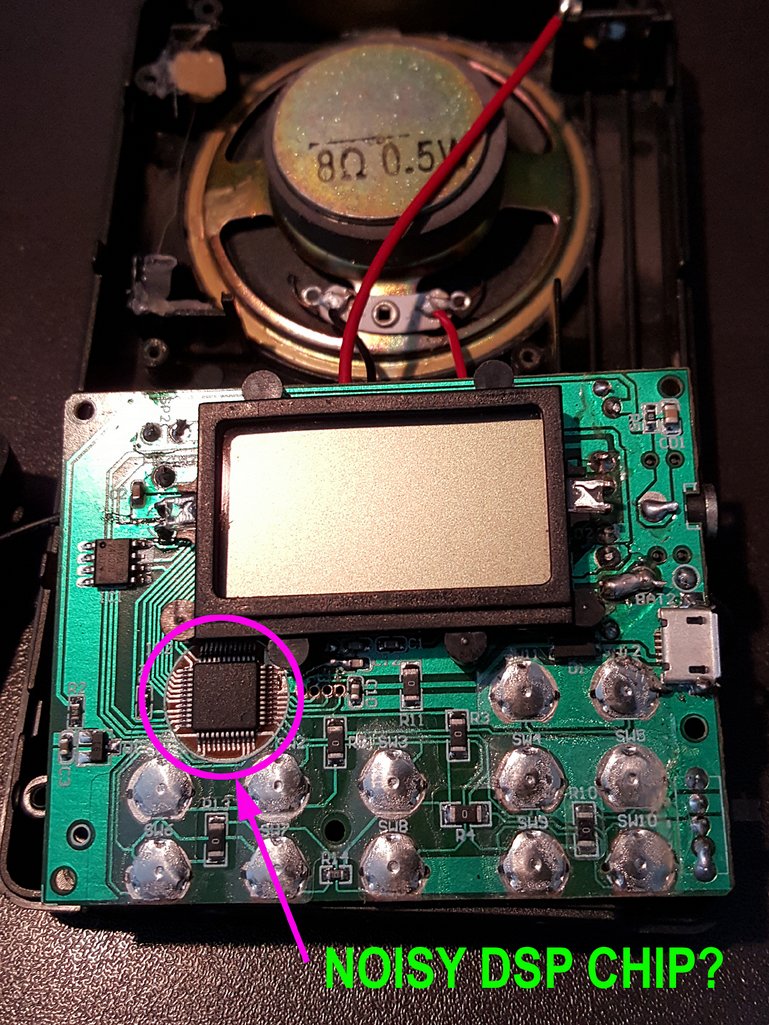
I was curious if the digital hash and noise was the result of an unshielded DSP chip, so I opened up the receiver. These two pictures show both sides of the primitive PCB:

Basbon_PCB_front

After removal of TEN (!) little silver screws holding the PCB board in place I could remove and flip it over. The square, multi-lead chip to the lower left of the LCD display is unmarked, and is presumably the DSP IC. I was contemplating making a small grounded metal shield to cover the chip, but as I moved the Basbon radio’s internals on my workbench the array of case buttons literally fell apart.

That’s the end of THAT idea! I have more interesting radio projects to spend my time on.

Thanks so much, Guy! While I’m a little sad the Basbon DSP radio performed so poorly, at $13 I suppose we can’t be terribly surprised. My Basbon DS-858 is yet to arrive–it took the seller 10 days to ship it and now it’s on the ePacket journey from China. Once received, my expectations will be adjusted accordingly.

In truth, like Guy, I often jump on radio deals like this in the off chance they may perform well for their price. Most of the time, though, I feel like I’m taking a bullet for SWLing Post readers–!  (Ha ha!) Giving an honest assessment of a poor radio keeps anyone else from wasting their money.

Many thanks, Guy, for digging into the Basbon and for sharing your review with us!

Hamfest find: Griffin Technology PowerMate Controller

GriffinPOwermateUSB

A few weeks ago, I attended the WCARS hamfest in near Waynesville, North Carolina. I walked out of that hamfest carrying way more goods than I had intended to purchase (more on that in a future post–!).

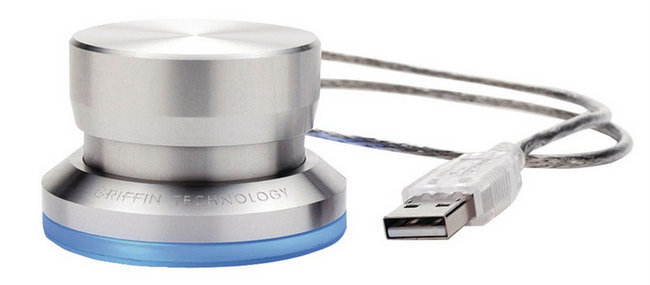
One of the best bargains I found was a Griffin Technology NA16029 PowerMate USB Multimedia Controller. The seller is a friend; he was trying (and succeeding) to push off a lot of his gear on me. We were actually in reverse price negotiations at one point–as he kept discounting prices, I was trying to raise them.

Knowing I’m an avid SDR guy, he insisted I give this Griffin Powermate controller a go.  I purchased it for $5 after I believe he had offered it for free (yes, the results of reverse negotiations).

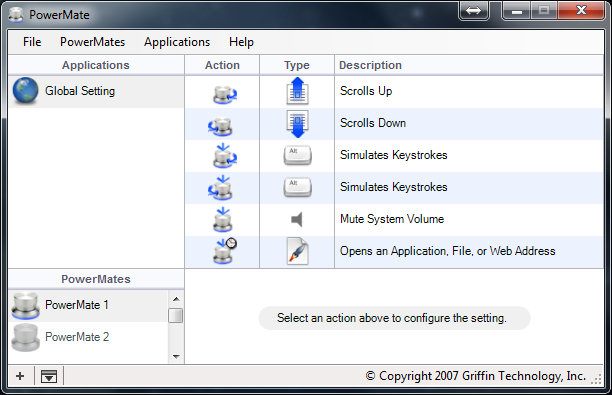
I took the controller home assuming it would be cumbersome to interface with my SDRs–what a poor assumption I had made! It was a breeze: simply install the driver, and launch its associated application. The software makes it very easy to associate PowerMate controller actions with keystrokes and other PC functions.

PowerMate 8132015 54232 PM

There are a surprising amount of functions this simple knob performs:

  • Rotate clockwise and counter clockwise
  • Press down and rotate clockwise and counter clockwise
  • Press down once
  • Press down and hold

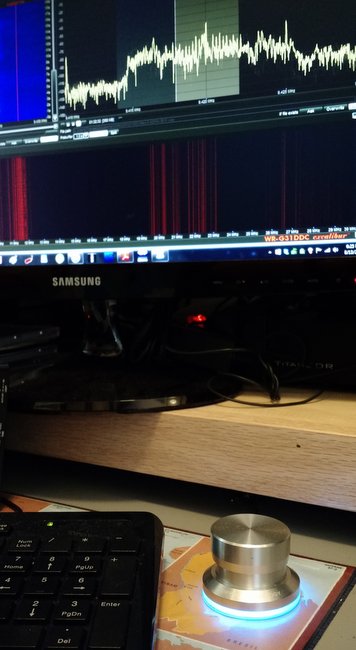
I set up the PowerMate to control my WinRadio Excalibur as follows:

  • Press and hold launches the WinRadio Excalibur application
  • Rotating the knob tunes up and down
  • Pressing down and rotating increases and decreases bandwidth
  • Pressing once toggles the volume mute

PowerMate-ExcaliburThe PowerMate is a brilliant piece of kit!

It has enhanced my user experience with the Excalibur. Soon, I’ll set it up to work with my Elad FDM-S2, and SDRplay RSP.

The PowerMate software allows you to set up multiple configurations, so it’s easy to call up a configuration based on the SDR being used (since mine have unique hotkeys).

The good news is a new PowerMate is only about $32 via Amazon.com.

I’m quite tempted, in fact, to buy a second unit to use with my laptop and to serve as a spare.

While looking up PowerMate pricing, I noticed more complex multimedia controllers on Amazon; I’m curious if any Post readers have experience with other models.

Seems to be a very affordable way to enhance your SDR user experience.

Click here to view the PowerMate on Amazon: http://amzn.to/1MmyxkC

DSP noise may come from clock and data line harmonics

ATS-405-9580kHz

In response to our review of the Sangean ATS-405–which noted DSP noises on 800 and 1600 kHz–SWLing Post reader, Steve Yothment, comments:

“Yes, modern radios usually have a micro communicating with the DSP IC through I2C communications.

The inter-IC communications includes a clock and data line. The clock for I2C is typically 400 kHz nowadays. Harmonics from this clock line are probably the source of the interference.

The manufacturer should have designed the product to ensure that this interference does not occur. It may be that they resolved it at one time but with limited manufacturing quality and component substitutions that often occur in mass production, the problem is occurring now even though it may have looked OK earlier in development. At least, that is my experience with such things. (I used to design car radios for the Panasonic Company.)

You can learn more about the I2C bus at https://en.wikipedia.org/wiki/I%C2%B2C.

Many thanks for your comments, Steve! I recall a similar metronomic sound on another DSP-based radio, but can’t remember which model. I need to dig through my reviews as I’m sure I noted this. I believe checking 400, 800 and 1600 kHz will become a standard checklist item when I review DSP-based radios.

Winner of the Virtual Radio Challenge III

AT_-_Franconia_Ridge

Dennis Blanchard (K1YPP), author of Three Hundred Zeroes: Lessons of the Heart on the Appalachian Trail, recently contacted me from the road, en route to another lengthy trail in Vermont.

Before this latest hiking expedition, Dennis spent many hours pouring over the Virtual Radio Challenge III entries, looking up weights and specifications of radio gear and accessories…And the upshot?  He’s chosen a winner of our Reader Challenge.

Again, in summary, a participant’s goal was to find the best and most portable radio gear to receive shortwave, AM (medium wave), FM, and NOAA weather to support a long through-hike on the Appalachian Trail, to plan each day’s hike, and to make accommodations for frequent spring and summer thunderstorms (as well as occasional spring snow or sleet)…all for a budget of $300 US. [Read full details of the Challenge by clicking here.]

This year, Universal Radio rewarded–and has already dispatched!–a brand new CountyComm GP5/SSB portable receiver to the winning entrant.

Below are Dennis’ comments, along with those of the Challenge winner.


Dennis Blanchard (K1YPP) writes:

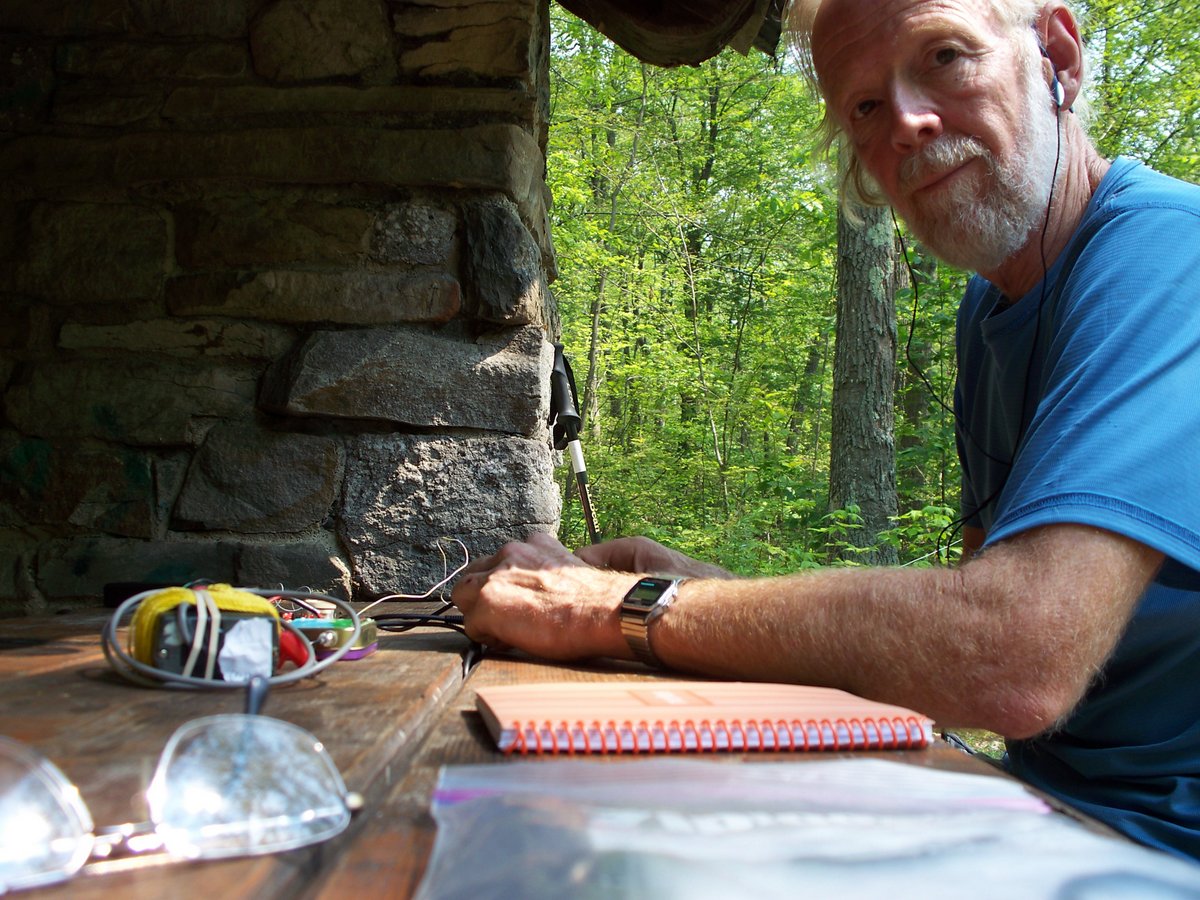
“This photo was taken in NJ. Shortly after I took these photos, and walked down the trail about a 100 feet, a bear came over to check the table to see if I had left anything.” (Photo: K1YPP)

Dennis Blanchard operating a portable radio on the Appalachian Trail. (Photo: K1YPP)

I’ve just spent about five hours going over the entries. There are several that are very good…indeed, Challenge participants obviously put lots of thought into their entries.

It was really tough to decide, but I had to go with most practical.

Weight is a big consideration for me, and that leaves out solar panels, hand crank generators, and the like.

What most don’t realize is that the AT has a nickname: “The Long Green Tunnel.” This eliminates solar panels because there is little sun to be had, as you’re in the shade most of the time. By the time you get to camp it is usually too late in the day for any charging, and wearing a panel just doesn’t do any good because of the shade (and weight).

Not only is weight an issue, so is space in the pack…hikers need all the room they can get for food, and in the cooler weather, heavy clothes.

Anyway, out of five finalists, I would have to go with Eric McFadden (WD8RIF).

Eric’s winning entry

So, what did Eric choose?  The following is Eric’s winning entry, beginning with his radio choice and following with a clear, practical explanation for it:
CC-Skywave-1

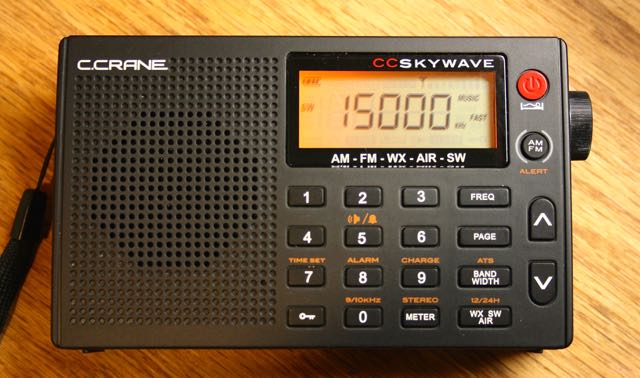
C.Crane CC Skywave, AM/FM/SW/Air/WX, $89.95 at Universal Radio
Sangean-ant-20-roll-up-antenna

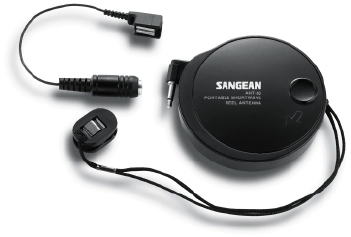
Sangean ANT-60 Roll-Up 23′ Antenna, $12.95 at Universal Radio
Energizer-Ultimate-Lithium-Cells

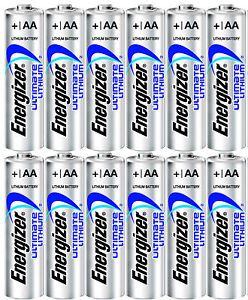
Energizer L91 Ultimate Lithium Cells, AA, 12-pack, $17.45 at Amazon

“The C.Crane Skywave is small (4.75″ x 3″ x 1.1″); light (5.5oz); power-stingy (30mA with headphones); and receives AM, FM, SW, NOAA Weather, and VHF Aviation.The Skywave runs on two AA cells, and comes with a case and CC Earbuds.

The Energizer L91 Ultimate Lithium AA cells provide 1.5v at approximately 3000m Ah, weigh 1/3 that of an alkaline AA cell, and last several times longer than an alkaline cell.

The Sangean ANT-60 would be tossed over a handy tree-limb and clipped to the Skywave’s whip antenna when the Skywave’s built-in 16″ whip isn’t quite adequate for listening to a shortwave broadcast station.

The purchase price of the Skywave, six pairs of Ultimate Lithium AA cells, and ANT-60 would be about $121 plus shipping, well under the $300 limit. The entire station should be small enough and light enough for easy carry in a backpack. If the twelve Ultimate Lithium AA cells don’t last the entire hike, enough of the budgeted $300 remains to purchase more cells (either Ultimate Lithium or alkaline, as available) along the route.”

To this sensible explanation, Eric adds:
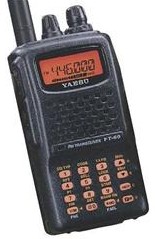
Yaesu-FT-60R“Being a ham radio operator, I’d want to have a ham rig along, too. While I’d love to be able to operate HF CW along the AT, my Elecraft KX3 is too large and heavy to carry that far. However, my current Yaesu FT-60R 2m/70cm HT and Diamond SRH77CA whip should travel nicely clipped to a backpack strap and would serve as a back-up receiver for NOAA Weather and be available for pedestrian-mobile QSOs (chats) and calls for help, if needed.

In order to save weight and not have to hassle with charging batteries, I’d leave the NiMH pack at home and carry the FBA-25 six-cell AA holder and stuff it with additional Energizer Ultimate Lithium cells in order to save weight.

Since the C.Crane Skywave already meets all the requirements of the Virtual Challenge, and since I already own the HT, battery holder, and antenna, I won’t consider the cost of the HT, antenna, and batteries as part of the challenge.”

About Eric’s entry, Dennis notes:

Eric’s solution is small, lightweight, and does everything needed. He speculates that he would also bring along his Yaesu FT-60R, but didn’t feel he could include it because of cost. Curious, I looked it up on Amazon; should he take it along, this addition would still keep his total well under the $300.00 limit.

This would provide Eric with two receivers, [the ability to enjoy] ham radio communications, and not much weight to haul. He includes the AA Lithiums, and I have to say that, without a doubt, these are the finest hiking batteries out there: they’re light, last forever, and are readily obtainable. I only had to change mine out once on the entire, six-month AT hike, and I was on the air a lot.

Several of the other entries were winners also great; I basically had to use a dartboard to pick a winner.  Good thinkers out there, especially considering none of them have actually ever done a hike of this magnitude.


Congrats, Eric! Thanks, Dennis!  And more to come…

Congratulations to Eric McFadden for such a well thought-through entry!

I must say, I don’t envy Dennis in making this selection: it was obviously a challenging  process on his end, too, and I’m glad I didn’t have to make it!

Dennis informed me that he plans to post and comment on some of his favorite entries in a few weeks, once he completes this latest multi-week hike. We will, of course, post his comments along with the finalist entries.

Note that when I originally received the reader inquiry which prompted the idea behind this Reader Challenge, the CC Skywave had not yet entered the market. Yet several of you chose it as your sidekick for the Appalachian Trail; clearly, clever minds think alike. Obviously, a radio that would function well on the Appalachian Trail would also be a great radio for your BOB (“bug out bag”), go kit or emergency supplies.

Thanks again to Dennis Blanchard, our intrepid judge, thanks to Universal Radio for the great prize, and many, many thanks to all our Reader Challenge participants, who made this process even more exciting and challenging! Meanwhile, don’t worry if you didn’t win the CountyComm GP5/SSB this time; we’ll soon have another opportunity to win one of these handy rigs in a completely different–and fun!–way.