Category Archives: Vintage Radio

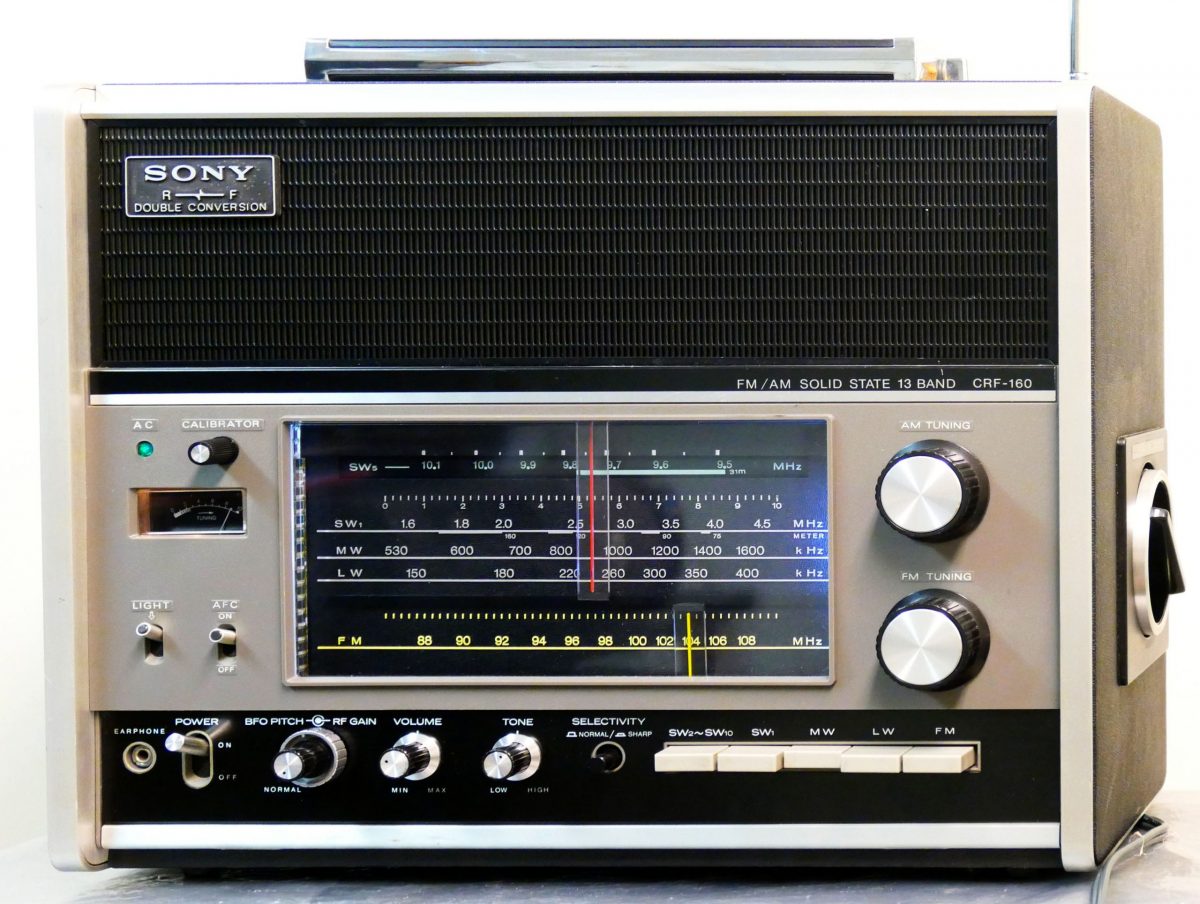
Vlado restores Mike’s vintage Sony CRF-160

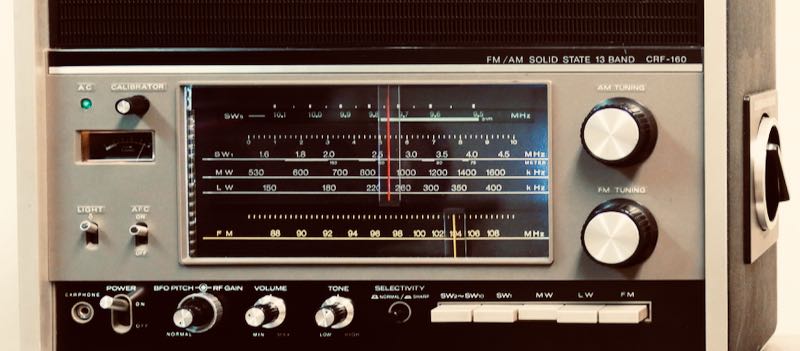
Sony CRF-160 Dial

Many thanks to SWLing Post contributor, Michael Schuster, who shares the following guest post:


Vlado works his magic on my Sony CRF-160

by Michael Schuster

Back in the 1970’s my grandfather gifted this solid-state portable to me as it was more than he needed. It was the first “real” radio I can remember owning, and it initiated my habit of scanning the dials into the wee hours of the morning. I began my serious SWLing using this set as it had excellent sensitivity, dual conversion design, big booming audio, and generous bandspread tuning for each major SW broadcast band.

One of the best-known SWL programs at the time was Happy Station on Radio Nederland, and I have distinct memories of listening in our back yard one summer afternoon when the show came up on the African Service over the Madagascar relay. My family was astonished at the program coming from so far away and even more so when Tom Meijer happened to read my letter over the air during the mailbag segment!

Fast forward many years (and two moves) later, it sat on a shelf until, trying it out again, I was dismayed to find both slide rule tuning dials, and the rotary drum band selector, to be frozen in place. And so there it sat until….

In a few online forums I kept hearing about a magician named Vlado at Ham Radio Repair. He specializes in restoring old sets, and has the courage and curiosity to tackle just about anything. Thinking this might be my last chance to bring this fossil back to life, and armed with a scanned copy of the service manual downloaded from the Radio Museum web site (the Internet is a marvelous thing) I began a several months’ long email exchange with Vlado entitled “Would you be willing to work on…”

He is chronically swamped with sets to work on, and has little room to store pending jobs, but was more than willing to have a look. Several months, and one pandemic later, we touched base again and I arranged to ship this monster off to him. Vlado is especially interested in the stories behind old hardware, so I shared its history with him as it adds that extra “human factor”.

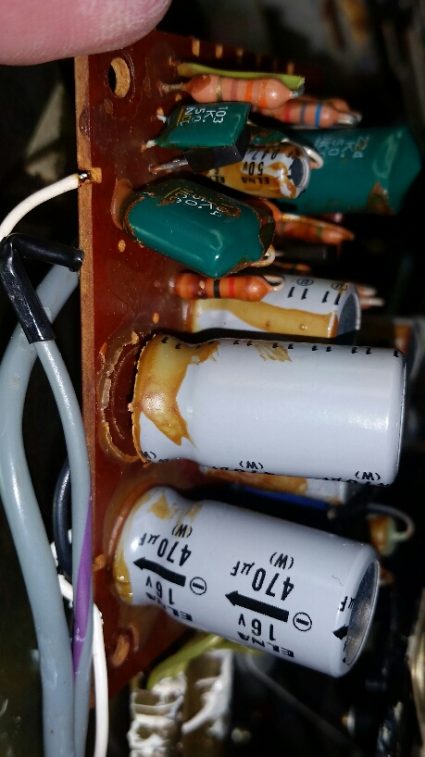
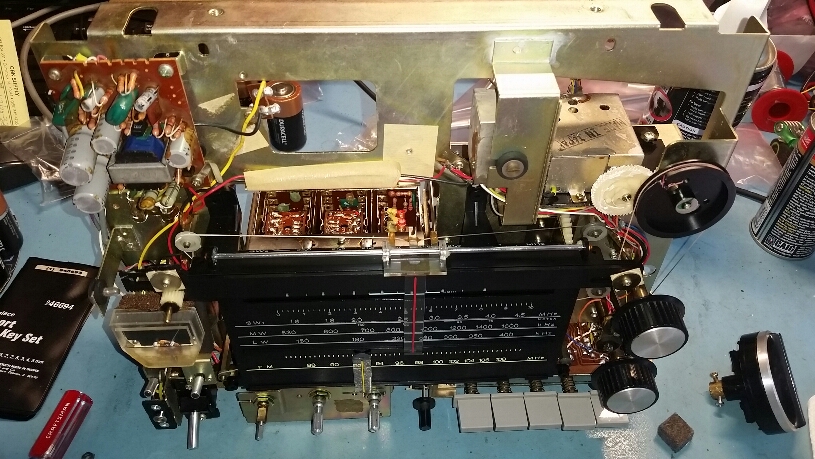
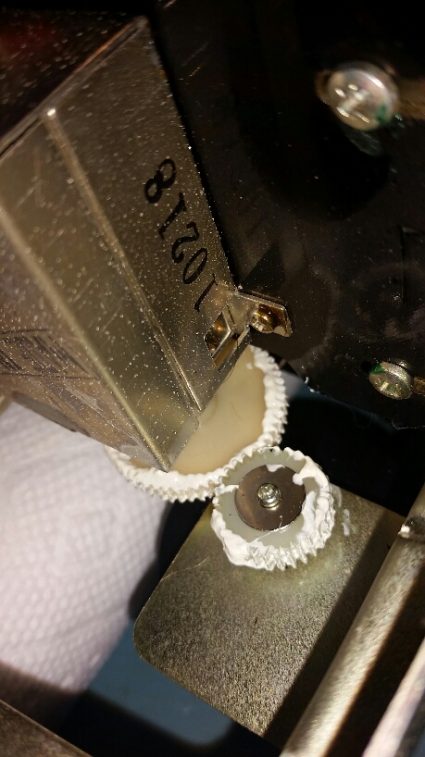
The radio is in great shape as he noted, but needed a total rework of the tuning dials and drum selector. He also replaced all of the electrolytic capacitors (most were leaking as pictured), replaced some tiny light bulbs with LED’s, and realigned all of the circuits for maximum performance.

Unpacking and trying out the restored set was a true blast and somewhat miraculous. It performs just as I remember and now sits on the shelf, this time in use rather than in storage, booming its audio across my basement work room.

Now this set will probably outlive me as it did my grandfather; hopefully it will end up in the hands of an appreciative recipient for the next generation of radio enthusiasts.


Thank you for sharing this repair story, Mike. I visited Vlado’s home a few weeks ago and saw the box labeled “Sony CRF-160” in-line to be repaired. As Vlado worked on it, he sent me a couple of photos, too, because I believe it was the first time he had ever worked on this particular Sony model. It is certainly a gorgeous radio–wow! And I do love your philosophy as it’s the one I adopt too: keep vintage radios alive and working beyond our generation. 

Vlado is truly the most capable ham radio repair guy technician/engineer you’ll ever meet. He’s also as honest as the day is long. If you have a vintage or late-model solid-state radio that needs repair or restoration, contact him.

Click here to check out Vlado’s website HamRadio.repair.

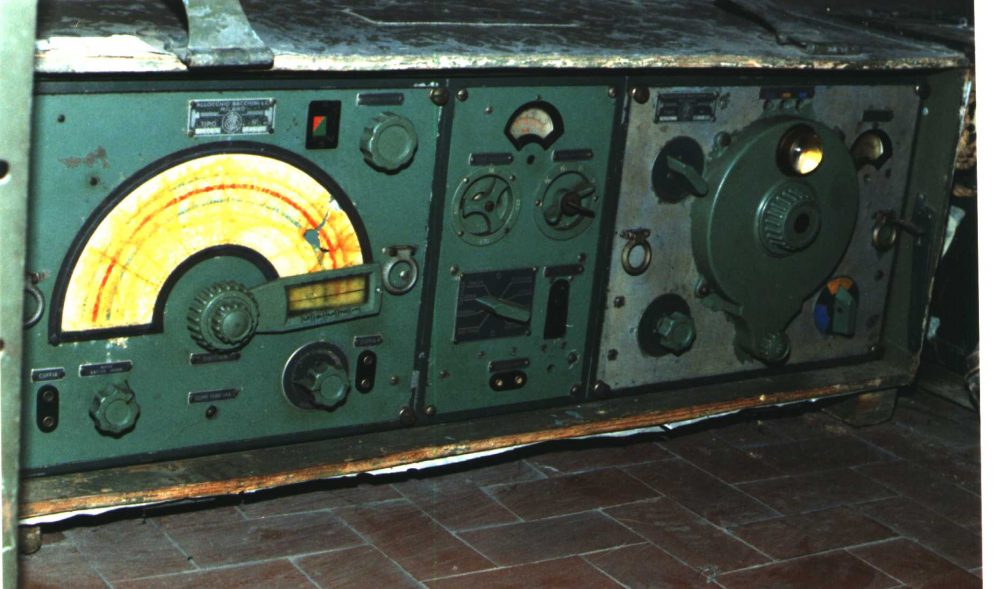
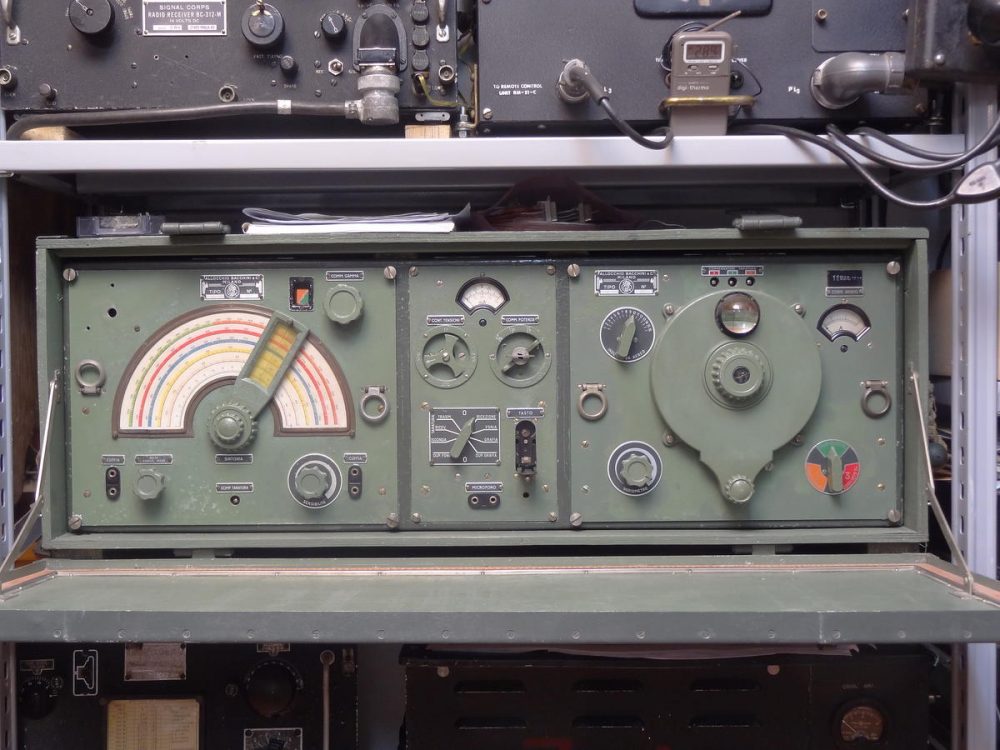
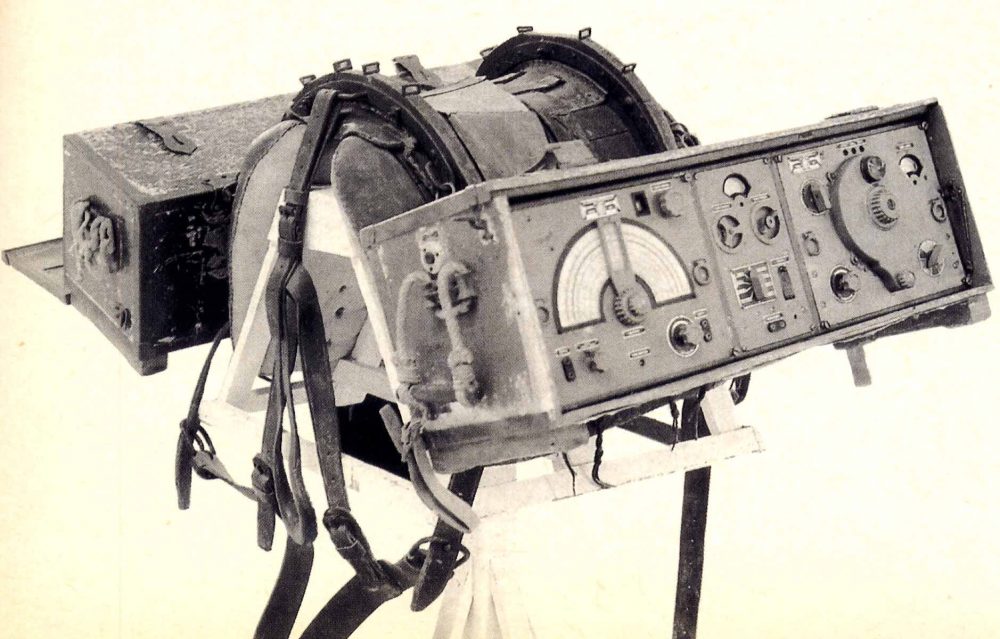
The Allocchio Bacchini RF4D: That mystery radio from “The Last Man on Earth”

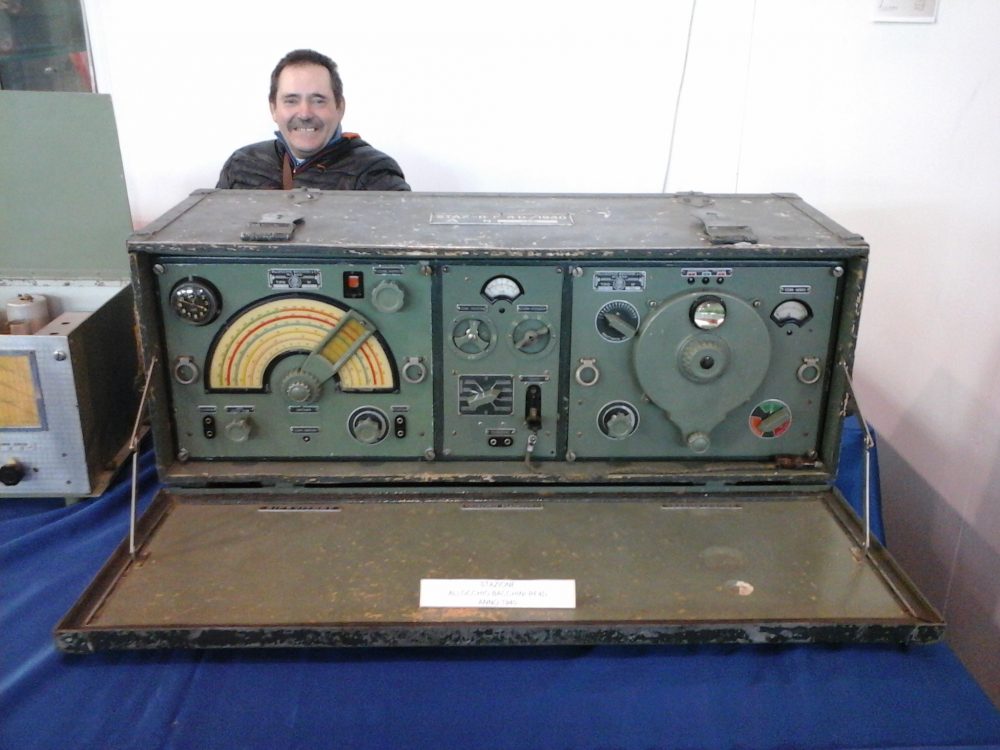
Many thanks to SWLing Post contributor, Andrew, who correctly identified the radio Ed spotted in The Last Man On Earth as the Allocchio Bacchini RF4D. Andrew shared the following notes and links:

That radio is an Allocchio Bacchini RF4D (see photo below from this site):

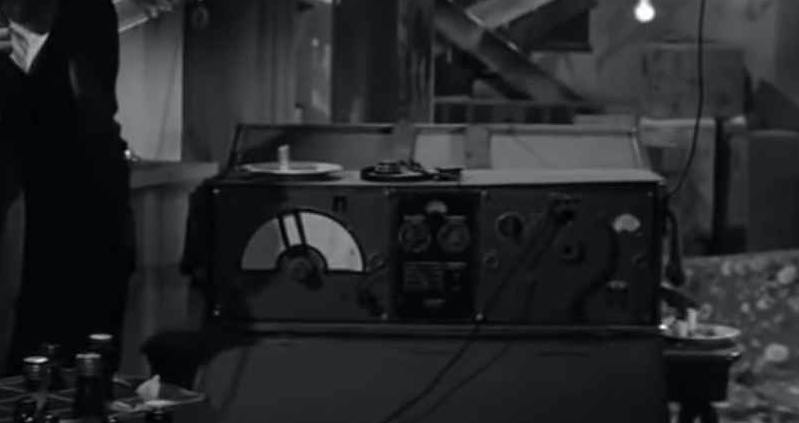
Here’s a snippet from an Italian movie showing the same rig:

Another pic and notes can be seen scrolling down this page:

Year : 1940
TX Frequency Range : 1,270 – 4,300 kHz in 3 bands
RX Frequency range : 220 – 4,400 kHz in 5 bands
Facilities : CW and RT
Receiver Circuit (Valves) : Superhet. 7 tubes type 6RV (same as RF 4)
Transmitter Circuit (Valves): MO(P C05), PA (2x P CO5) Mod.(3x 6RV)
RF Output : 25 W
Aerial : Dipole
Power supply : 12 V storage batteries. Mains for battery charger.

And here you’ll find the shack of an Italian ham which shows an RF4D:

Photo: I5HGM

Further info and schematics can be found here.

Wow! Thank you so much, Andrew! I would love someday to operate an original RF4D.  What a fascinating WWII era radio. Thank you again for all of the details!

Post readers: I’m very curious if anyone here owns or has owned an RF4D.  Please comment!

Help Ed identify this mystery radio in “The Last Man on Earth”

Many thanks to SWLing Post contributor, Ed, who writes:

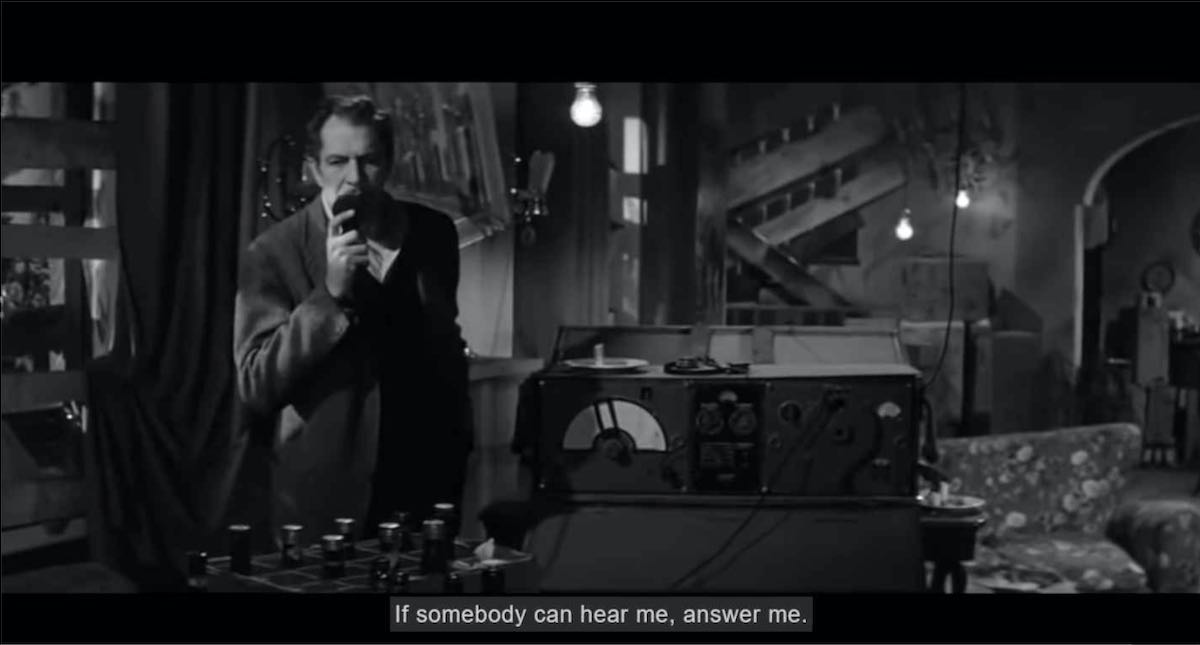
Recently I’ve been watching some pandemic-themed movies and found “The Last Man on Earth”, a pretty good 1964 post-apocalyptic science fiction horror film (which was remade in 1971 and 2007 with different titles.) In this film, the main character (well played by Vincent
Price) uses an HF transceiver in a fruitless effort to find other survivors of a global plague. It was shot in Italy, and the transceiver doesn’t look like any American radio I’ve ever seen. Perhaps some of your SWLing Post readers can identify it?

BTW: SWLing Post readers might also be interested in knowing this film can be downloaded for free from The Internet Archive.  https://archive.org/details/lastmanonearth-1964

What do you say, SWLing Post Community? Is this radio a fabricated stage prop, or a real model?  Please comment!

In the meantime, I’ll add this post to our ever growing archive of radios in film!

Listener Post: Mike Stutzer’s love of radio began with a Hallicrafters S-120

Photo: Universal Radio

Many thanks to SWLing Post contributor, Mike Stutzer, who recently shared the following listener post:

I started SWLing as a teenager. My favorite uncle gave me a Hallicrafters S-120.

My dad hung a longwire under an eave and through a casement window frame into my bedroom. I marveled at all the AM international stations broadcasting in English, listening to everything from BBC cricket coverage on Saturday morning to hysterically unbelievable Albanian political news coverage.

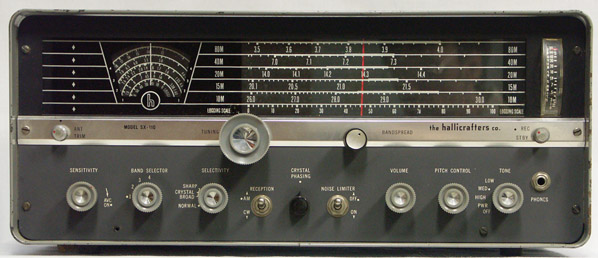
After college I could afford something better, so I upgraded to a “boat anchor” Hallicrafters SX 110. It had a useful crystal filter to improve selectivity, but it was still nigh on impossible to decipher a Ham on SSB.

Photo: Universal Radio

Many decades later I bought a house on a steep foothill. Realizing that it was a perfect QTH for a Ham station, I got licensed and now am President of the local ARC. Here is a loving look at the original SWL receiver that got me hooked.

Prof. Mike

Boulder, CO

Thank you for sharing this, Mike!

Mike’s radio story is the latest in our multi-year series called Listener Posts, where I place all of your personal radio histories. Feel free to submit your own by contacting me.

Radio history videos are a serious benefit of Social Distancing!

Many thanks to SWLing Post contributor, Bill Hemphill (WD9EQD), who shares the following guest post:


Benefits to Social Distancing

I have discovered that there is a positive side effect of social distancing.  With so many organizations using Zoom and other video methods for their meeting, the volume of great videos to watch has drastically increased, with most of it residing on YouTube.  Also everyone is sharing video links that they have found with other.

For example, the New Jersey Antique Radio Club (NJARC) has, for some time, posted their monthly meetings on their YouTube channel.  They have very enjoyable presentations.  Last night was their virtual monthly meeting for June and they had a great talk by Prof. Joe Jesson on “What You Did Not Know About the RCA AR88.”

I am a fairly new member to NJARC and must recommend them to others.  They are a very active group and are currently having Zoom conferences weekly between the members.  They also host the RADIO TECHNOLOGY MUSEUM at the InfoAge Technology Center.

Link to NJARC:

http://www.njarc.org/

Link to NJARC YouTube channel:

https://www.youtube.com/user/njarc/

Link to the Radio Technology Museum:

http://www.rtm.ar88.net/

Last week, I received an email from Mark  Erdle (AE2EA) referring to some videos by the Antique Wireless Museum which is hosted by the Antique Wireless Association (AWA).  From his email:

The Radios (and Filming) of “Across the Pacific”  presented by AWA member Brian Harrison.  Brian served as the radio consultant for the 3-hour PBS documentary “Across the Pacific”, which tells the story of the early days of Pan American Airways and of Hugo C. Leuteritz, a RCA radio engineer who helped make Pan Am’s expansion across the oceans possible with radio communication and navigation systems. Brian explains how he worked to insure that this documentary portrayed the pioneering work of Hugo Leuteritz as accurately as possible. Much of the early radio equipment that Pan American used was custom made for Pan Am, and is quite rare today, but Brian hunted it down.


In addition to Brian’s video, you can also see Tom Perera’s updated presentation of “Phil Weingarten’s Fabulous Fakes” which was originally presented at the 2007 AWA conference:

Link to AWA:  https://antiquewireless.org/homepage/

Link to AWA You-Tube Channel:  https://www.youtube.com/channel/UCX55peBhzeX1qps_VYXdLBA

Here are some other videos that people have passed along to me that I have found enjoyable.  Most of these are radio-oriented and I have omitted the many cat videos:


Thank you for sharing these links and videos, Bill! I’ve been watching Phil Weingarten’s Fabulous Fakes this morning–what a fascinating bit of history!

Post readers: Have you discovered videos and sites while social distancing (a.k.a. Social DXing)? Please comment and share your links!

Radio Waves: Radio Stations in the Movies, Opposition to ABC Budget Cuts, Numbers Stations, and Student Repairs Vintage Radios

Radio Waves:  Stories Making Waves in the World of Radio

Because I keep my ear to the waves, as well as receive many tips from others who do the same, I find myself privy to radio-related stories that might interest SWLing Post readers.  To that end: Welcome to the SWLing Post’s Radio Waves, a collection of links to interesting stories making waves in the world of radio. Enjoy!

Many thanks to SWLing Post contributors Tracy Wood, Michael Bird, and David Shannon for the following tips:


How accurately have radio stations been portrayed in TV and movies? Alan Cross rates them (Global News)

Over the last century, radio stations have been the subject and the setting for a number of TV shows and movies. This, for better or worse, is how the general public perceives how real-life radio works. I’ve rated this selection of radio-centric shows and scenes through the years.

1. WKRP in Cincinnati (1978-1982)

Authenticity Rating: 3/5

Every time people of a certain age hear that I work in radio, they inevitably ask “Is it anything like WKRP?” The answer is both yes and no.

The show’s creator, Hugh Wilson, did come from a radio background, serving time as a sales rep at WQXI, a top 40 station in Atlanta, so he was certainly well qualified. His characters were slight caricatures of the real thing: the general manager who was often clueless about what was happening with his station; the harried program director; the burnout morning man; the trippy nighttime DJ; the sleazy salesperson; the squirrely newsman; the naive copywriter; and the receptionist who secretly runs the place. I’ve worked with each of those people multiple times.

The show was groundbreaking in its use of music. Up until WKRP came along, no one used real music in the soundtrack. It was all stock stuff, soundalike material made up by studio players. But viewers of WKRP heard actual songs from bands they recognized — something that eventually created endless licensing headaches when it came to syndication and issuing the show on DVD. That remains the reason why the show isn’t streamed anywhere. (Hugh Wilson explains the music issues here.)[]

Australians overwhelmingly oppose ABC budget cuts (ABC Friends National)

According to a new survey, 76% of Australians oppose any further cuts to the ABC’s budget and 49% believe it should get more Federal Government funding

The findings of a Roy Morgan national opinion poll serve as a warning to the Government that voters have had enough of budget cuts to the national broadcaster. Successive Governments have reduced ABC funding by a total of $783 million since 2014.

Read the survey here [PDF].

The survey shows Australians overwhelmingly turn to the ABC in times of crisis, underlining the national broadcaster’s critical role in the bushfire crisis and the COVID-19 pandemic. ABC Friends commissioned the opinion poll, which was carried out by the independent research group, Roy Morgan.[]

What is number station and story behind it? (US Updates)

Fictional novels about number stations have been created in the minds of most people. Many people think of the number station as a ghostly, creepy, mysterious or supernatural symbolic message. But are the messages fictional novel about numbers stations  at the number station really mysterious? In today’s discussion we will know what number station is and why somebody finds it fictional novel about number station?

We all listen to the radio more or less. There are basically two types of radio listeners, such as FM radio stations and radio stations broadcast from the Internet. There are also radio stations of other frequencies and their different names. Such as high frequency or shortwave, extra high frequency, ultra high frequency limit through which there is also satellite signal and police scanner report.

Amateur radio, pelagic and air stir are also included in these frequencies. Today we will learn about high frequency i.e. shortwave radio station which is also known as fictional about number station. This number is used to send symbolic messages to various intelligence agencies and the military. This number station has been in found since the First World War and has been the center of attraction for many years. For many years some of journalists have tried to decipher the mystery of this number station.[]

Coronavirus: Student repairs vintage radios during lockdown (BBC)

A teenager who restores and repairs old radios says he loves the “unexplained charm” and history of the wireless.

Diogo Martins, from Oadby, Leicestershire, has been able to spend more time on his hobby during the coronavirus lockdown and has added to his collection of vintage radios.

“Without a doubt many of these radios have a family history where families have gathered around to listen to music and information, and it’s that history which I find so endearing,” he said.

The 19-year-old electrical engineering student said in restoring them he is “continuing their legacy”.

Video journalist: Harris Millar


Do you enjoy the SWLing Post?

Please consider supporting us via Patreon or our Coffee Fund!

Your support makes articles like this one possible. Thank you!

The Yaesu FT-70G: Where the FT line met Milcom

Earlier today, I stumbled upon a very unique transceiver in Universal Radio archives: the Yaesu FT-70G.

Here’s the description from Universal:

The Yaesu FT-70G is a portable HF transceiver covering 2 to 30 MHz transmit. Receive is from 500 kHz to 30 MHz. Frequency selection is via BCD switches to 100 Hz. There is a clarifier for fine tuning. Optional FNB-70 NiCad Battery. Please note that the optional 10F-2.4DL filter is required for LSB opeation.

The Yaesu FT-70F is similar, but is a channelized fixed version offering up to 11 frequencies.

Two hours ago, I was not aware that the FT-70G existed.  Now? I want one!

I’m a real sucker for vintage rugged field radio gear, so I never discovered the FT-70G until today. Turns out, they’re relatively rare. A little light research reveals that it’s a highly-desired transceiver in the world of HF Packers–those radio enthusiast who like “manpack” commercial and military gear.

The FT-70G has a distinct military look and feel with the BCD switches to change frequency, rugged toggle switches, chassis extensions to protect the front panel, and attached screw-on connector caps.

What’s really surprising is that the FT-70G has a general coverage receiver (500 kHz to 30 MHz). Admittedly, it would not be fun band-scanning with those BCD switches…but still!

This website has a number of photos. They also have a product description likely from the original Yaesu/Vertex Standard FT-70G description:

“The FT-70 series HF field portable manpack transceivers are designed to provide reliable communications under rugged conditions in the military and commercial environment. The frequency synthesized, all solid-state circuitry and die-cast anodized aluminum enclosure and battery pack make a highly portable, weatherproof station. Flexible operation for optimum communications under a wide range of propagation conditions are assured by SSB (USB, LSB), semi break-in CW, AM, or audio interfaced Data modes. All controls, antenna, and interface ports are available and selectable via the front panel for maximum effectiveness and ergonomics in field, base, and manpack applications. The companion antenna tuner FC-70 is compatible with walking manpack, field portable, or base configurations. The highly effective vertical tripod mount antenna system YA-70 is deployed and stowed easily and quickly, pulling double duty by converting to manpack whip while on manuevers. High quality handset YH-70 provides communications privacy and clarity.”

Again, check out the excellent photos of the full manpack kit.

As I researched pricing, I discovered this FT-70R with accompanying FC-70M antenna tuner on eBay right now with only 6 hours left of bidding:

At time of posting, the bids are at $520. I fear this will soar well above my comfort level before bidding ends. (Like I need another field radio anyway, right?)

Post readers: Please comment if you’re familiar with the FT-70G and especially if you’ve ever owned one.  I’d love to hear about your experience with this unique rig.