The Straits Times: “Western radio broadcasters tuning out”

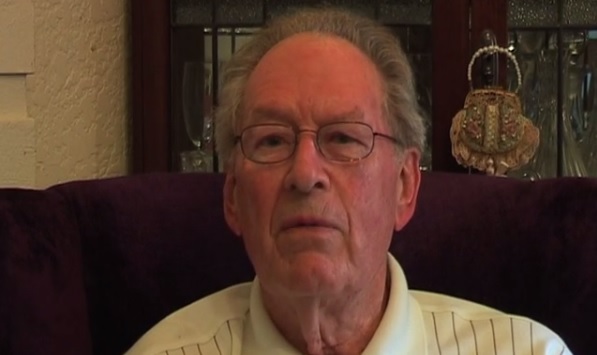
Many thanks to SWLing Post reader, Richard Cuff, for sharing this article from The Straits Times which interviews our friend Victor Goonetilleke. This is one of the first articles I’ve seen in the international press which gives a listener’s perspective on recent cuts to shortwave broadcasting.
Analog Radio Dial(Source: The Straits Times)

For 67-year-old Victor Goonetilleke, sitting with his headphones on in his house in the lush green Sri Lankan countryside, June 30 was the end of an era.

Voice of America’s (VOA) short-wave broadcasts to Asia abruptly went off the air, raising howls of protest from many of the US government-funded broadcaster’s listeners across the region.

But as the broadcasts had already been greatly diminished, this was not a surprise. The big Western radio broadcasters have gradually ceded the political “soft power” space they once dominated to a new heavyweight: China Radio International (CRI).

In recent years, Radio Canada International and Radio Netherlands Worldwide have shut down while the British Broadcasting Corporation (BBC) and VOA have cut back on their range of languages and hours of programming. Now, the VOA has left Asia.

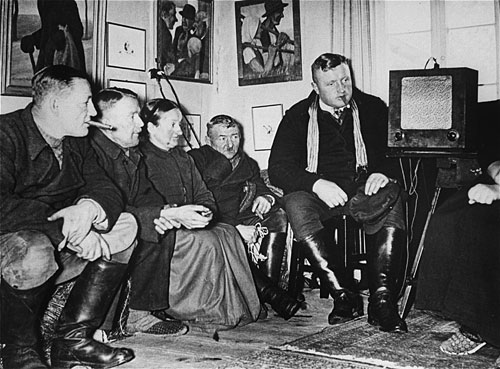
Mr Goonetilleke is not just an avid radio listener. He professionally monitors radio frequencies for the VOA. He is also a former veteran radio correspondent with Radio Netherlands for 24 years in an era when short-wave radio broadcasts from the likes of the BBC, VOA, Radio Netherlands, and Deutsche Welle were often lifelines to other worlds for hundreds of millions especially in times of conflict and misery.

The BBC now broadcasts in 29 languages across the planet, down from a peak of 69 in the 1970s. CRI broadcasts in 65, up from a reported 43 in 2006. Some programmes are run by local FM stations.

These days, Mr Goonetilleke can listen to four hours of CRI broadcasts in Sinhala and Tamil daily, compared with 30 minutes each on BBC.

CRI’s Tamil language broadcast is one of its oldest, run by fluent Tamil speaker Zhu Juanhua, a Shanghai native better known by her tens of thousands of listeners as Kalaiarasi.

According to the CRI website, it has 3,165 listener clubs around the planet, including CRI netizens’ clubs.
[Continue reading…]


Pirate Radio Recordings: Generation Wild 100

RadioListeningFamilyFor your listening pleasure: one hour, eleven minutes of the pirate radio station, Generation Wild 100.

Generation Wild 100 started broadcasting around 2:00 UTC this morning on 6,925 kHz in the upper sideband. As you’ll hear in the recording, their signal here in eastern North America was very strong, even drowning out most of the ever-present summer static crashes.

I had never heard Generation Wild 100 before; this was a new pirate logging for me. After hearing their intro, I expected they’d play trance, techno, or punk rock…Not so. GW100 played a mix of, um, lounge music. I chuckled to hear their high-energy bumpers segue into smooth jazz.

Proves yet again that with pirates, you’ll never know what to expect. I love it!

Click here to download the full recording of Generation Wild 100, or simply listen via the embedded player below:

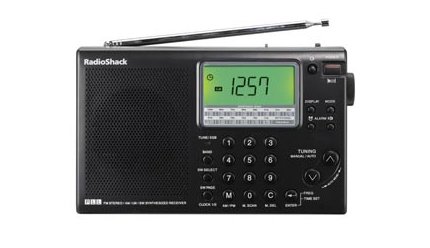
Grab a Radio Shack DX-402 for $24 and change

RadioShack-ShortwaveI just noticed that Blinq.com has the RadioShack DX-402 (Sangean ATS-505 re-badge) for $27.09 shipped.  If you use the offer code WEEKEND10 it will take an additional 10% off at checkout for a total of $24.62 shipped.

This is an excellent price, even for an open box deal. Last time the price was $27, they sold out of stock rather quickly. Click here to grab one while it’s still available!


A chat with Peter Homfray

Peter-HomfrayOn the topic of Radio Australia, Jonathan Marks writes:

“It doesn’t seem like 10 years ago that I sat down with Peter Homfray to discuss the early days of Radio Australia. What a truly fascinating person.”

A Chat with Peter Homfray from Jonathan Marks on Vimeo.

“The Gutting of Radio Australia”

ABC-Radio-Australia(Source: Inside Story)

We’re sitting on the grass in the village of Matangi on the island of Futuna. This is one of the more isolated communities in Vanuatu, a small group of houses on a small island at the southeastern extreme of the archipelago.

“We rely a lot on Radio Australia when there’s a cyclone coming,” says Miranda, a member of the island’s Community Disaster Committee. “We have no telephone on this side of the island and we often can’t hear Radio Vanuatu.”

As Australia debates budgets, debt and deficits, we rarely hear the views of communities affected by planned cuts. Whether it’s the size of the aid budget or the resourcing of the international services of the Australian Broadcasting Corporation, or ABC, our neighbours have little input into decisions that affect their lives.

The latest blow is the planned redundancy of eighty staff from ABC International following the Abbott government’s decision to take Australia Network television away from the ABC. Revoking the $250 million TV contract – with just ninety days’ notice – has had an impact well beyond television. Given the integration of TV, radio and online services within ABC International, the decision affects not only Australia Network but also the other international services providing crucial information to the islands region.

Continue reading at: http://inside.org.au/the-gutting-of-radio-australia/#sthash.4cwXhev9.dpuf

View other posts related to Radio Australia cuts by bookmarking the tag RA Cuts.

VOA and RFA via homemade radios in North Korea

FlagNorthKoreaMany thanks to SWLing Post reader, Anil, for sharing this article regarding the importance and inspiration radio provides to many North Koreans. This comes from our favorite North Korea independent news site, NK News.

Here’s a quote from the article from a North Korean defector known as “Park”:

“I have been listening to the North Korea Reform Radio and other outside radios since 13 years ago,” he said.

Using this homemade radio, Park could access VOA, RFA, NKRR, VOP, RFC and ONK over the past five years.

“Frankly, the ideological education in North Korea is so strong that many people including myself could not believe the content of the outside world radio,” he said of his first experience listening with the device. “I was once certain that this radio signal was sent by someone who was trying to deceive us.

“But this radio played strong role in motivating me to escape North Korea. My friends and I used to regularly listened to NKRR and other radio programs inside the underground hideout.

“Many told me to quit listening to those radio signals and start making money for myself, but with the help of this radio, I finally decided to escape the North.”

Read the full article, including a description and photos of Park’s homemade radio at NK News.

In addition, note that North Korea is the theme of this year’s San Fransisco Hackathon.

To follow other posts about North Korea, please note the tag: North Korea

Shortwave Radio Recordings: Pirate Joe via WBCQ

SX-99-Dial

For your listening pleasure: one hour of Pirate Joe.

My good friend–and SWLing Post reader–Mike Hansgen recently apprised me that WHVW’s Pirate Joe show is being relayed on WBCQ here in North America in the afternoons. Last week I recorded Pirate Joe starting at 3:00 PM (EDT). Propagation was not in our favor, so the signal strength is low, but the program is still enjoyable.

If you’d like more info about Pirate Joe, follow this link.

Click here to download as an MP3, or simply listen via the embedded player below: