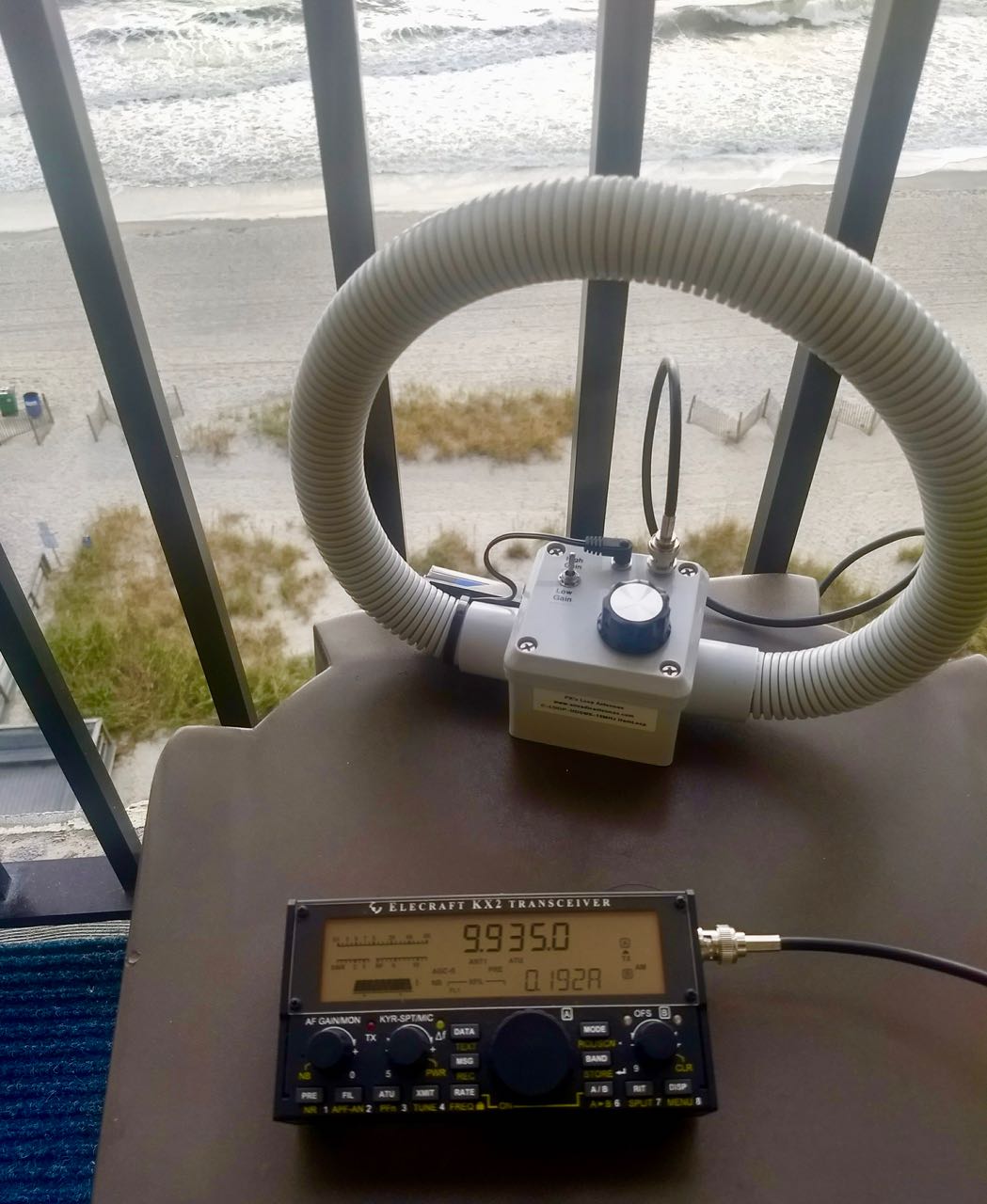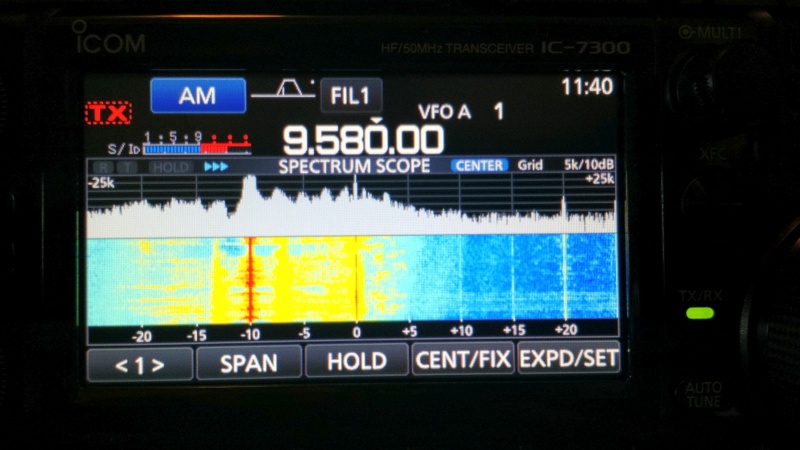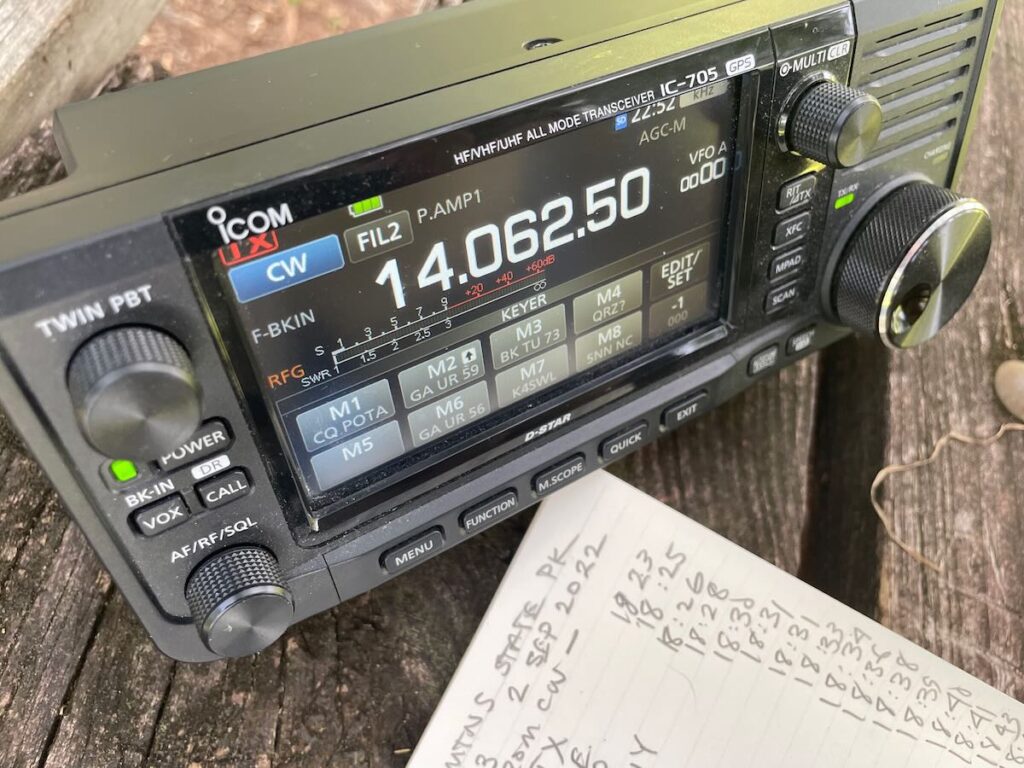
Do you use a general coverage transceiver as your primary shortwave radio?

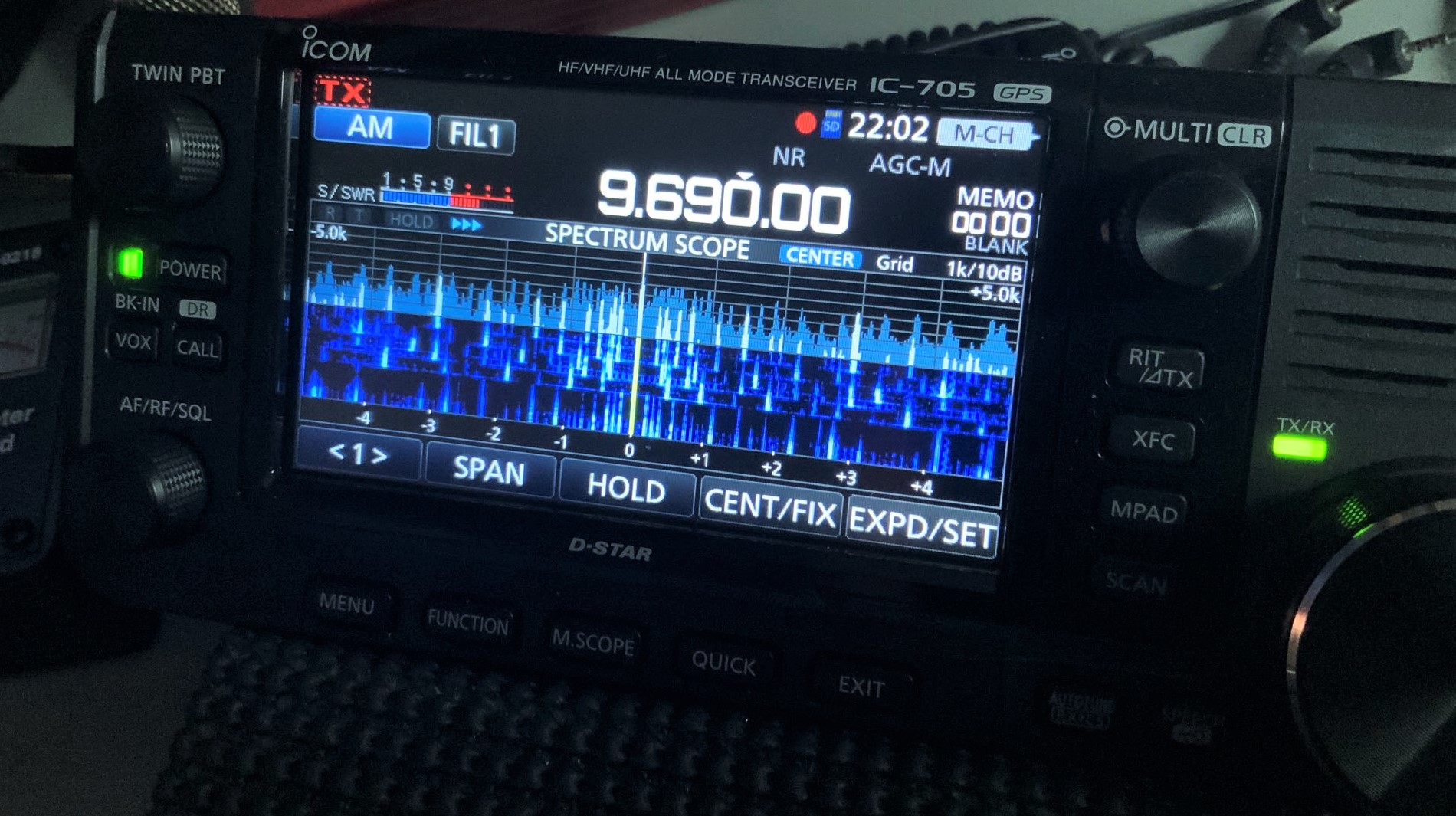
If you’ve been reading the SWLing Post for long, you’ll know that I think the Icom IC-705 is a brilliant radio for shortwave, mediumwave and even FM DXing. I mention this in my IC-705 review.

Indeed, I realize that I may even use the IC-705 as much as I use some of my excellent computer-connected SDRSs (Software Defined Radios). The IC-705 is actually an SDR, too, just one that is self-contained, stand-alone, and powered by a rechargeable battery. It’s just so convenient and easy to use–plus it has very useful built-in recording/playback functions.

I also use my Elecraft KX2 for SWLing–although not designed for broadcast band listening, it does a pretty amazing job especially if your primary goal is weak-signal work. Elecraft attenuated the mediumwave band on purpose, thus MW DXing with the KX2 is not feasible.

Do you use general coverage transceivers for SWLing?

Truth is, modern general coverage transceivers tend to be based on SDR architecture these days, thus incredibly capable and versatile as a broadcast band receivers.

I’m curious: do you primarily use a general coverage transceiver for SWLing? If so, why and which make/model? Please comment! If you prefer a dedicated receiver over a general coverage transceiver, please consider sharing your thoughts as well!

13dka Reviews: The new 2022 “Belka” (generation 3) general coverage receiver

The new 2022 “Belka” (generation 3) general coverage receiver

by 13dka

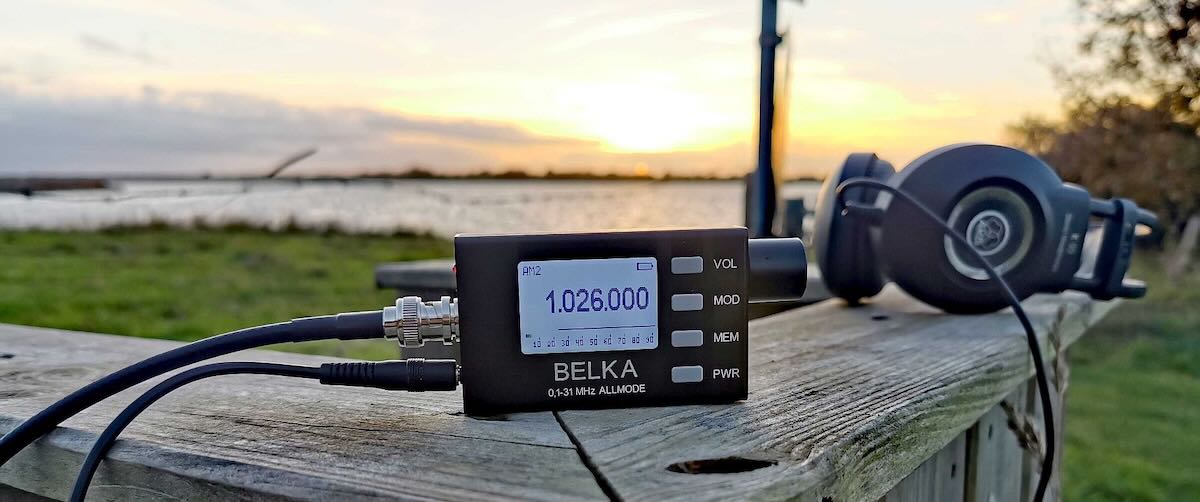
Since its introduction in 2019, the super-tiny Belka (back then called “Belka DSP”) shortwave receiver sure gained an enthusiastic followership among SWLs and hams. The main reason for this is certainly the way how the Belka is incredibly small yet playing in a different league than the various consumer grade, Chinese mass-production radios, particularly the DSP-based ultraportables: The Belka is an all-mode shortwave communications receiver with a completely different (direct conversion SDR) architecture, developed and produced by a radio enthusiast (Alex, EU1ME) in a small mom&pop shop in Belarus.

In case you’ve never heard about it amidst all the buzz about more popular brands, here’s the skinny:

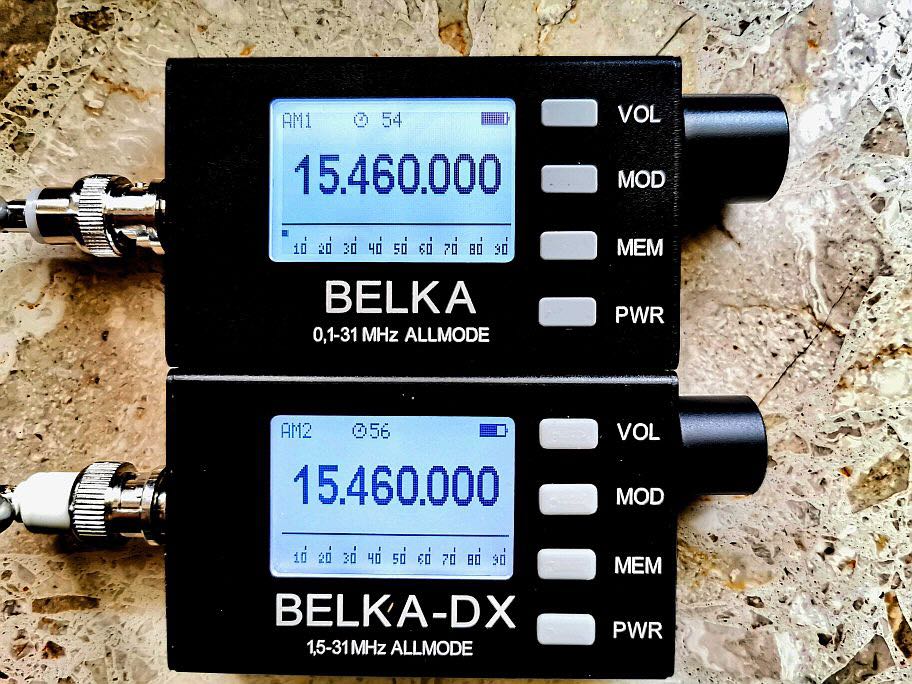
The Belka offers true allmode (including NFM and CW) reception with a proper 400 Hz CW filter and individual settings for the low and high filter slopes for AM, FM and SSB. It has an AM sync detector and comes with a 0.5ppm TCXO-controlled local oscillator for absolutely spot-on, calibration-free frequency precision and stability, which makes SSB or ECSS reception of broadcast stations a pure joy. The second iteration “Belka DX” brought a slightly extended coverage down to 1.5 MHz and an I/Q output for panadapter display and/or processing via your favorite SDR software.

All Belkas are quiet and very sensitive radios with a surprisingly robust front end, the filters are better and its AGC works like you’d expect it from a communications receiver, without the artifacts and distortion the DSP radios are infamous for, and of course smooth, non-“muting” tuning in variable steps down to 10Hz.

The Belkas have no built-in speaker (available as option tho) but really excellent audio on headphones and external speakers and they actually give my Icom IC-705 a run for its money in terms of reception quality, and they do that for up to 24 hours on a single charge of the internal Li-Ion battery. This stunning feature set is crowned by the best performance on a telescopic whip antenna ever – the Belkas have a high-impedance (>10 kOhm) antenna input optimized for this whip and taking it on a walk is (really!) like having a big rig with a big antenna in tow…

Despite all this goodness setting the Belka(s) quite fundamentally apart from most (if not all) current and former, even much higher priced portables and simultaneously putting it solidly into pricey tabletop territory, it hasn’t put Tecsun et al out of business for a couple of reasons: One reason is that it can only be obtained from Alex in Belarus, which is now often assumed to be impossible (it isn’t, more on that later). Another reason is that it doesn’t try to compete with aforementioned multiband radios from China, so there is no FM broadcast band and – until now – no AM BC band, but most owners and potential buyers particularly in the US really wished it had at least the latter. Well, Alex obviously heard us! After the Belka DSP and the Belka DX, the new Belka is just called “Belka”, so in order to avoid any ambiguity I’m going to refer to this model as “Belka 2022”.

What’s new?

The most prominent addition to the Belka 2022 is the extended 0.1-31 MHz coverage, the previous version only started receiving at 1.5 MHz. With LW and MW included, its “pseudosynchronous” detector (as featured in venerable radios from Harris, Racal or Drake), the great filtering and the great frequency precision for hassle-free ECSS reception are promising that the “squirrel” is now an ultra-ultraportable companion for MW DXers as well.

Continue reading

Like a bit of Lute?

Good day to all SWLing post readers, Fastradioburst23 here letting you know of our next episode of Imaginary Stations via WRMI on shortwave this weekend.

This Sunday 30th October 2022 on 9395 kHz from 2200 utc there will be another transmission of WREN, this time it’s music of a Renaissance style, so turn back the hands of time and tune in.

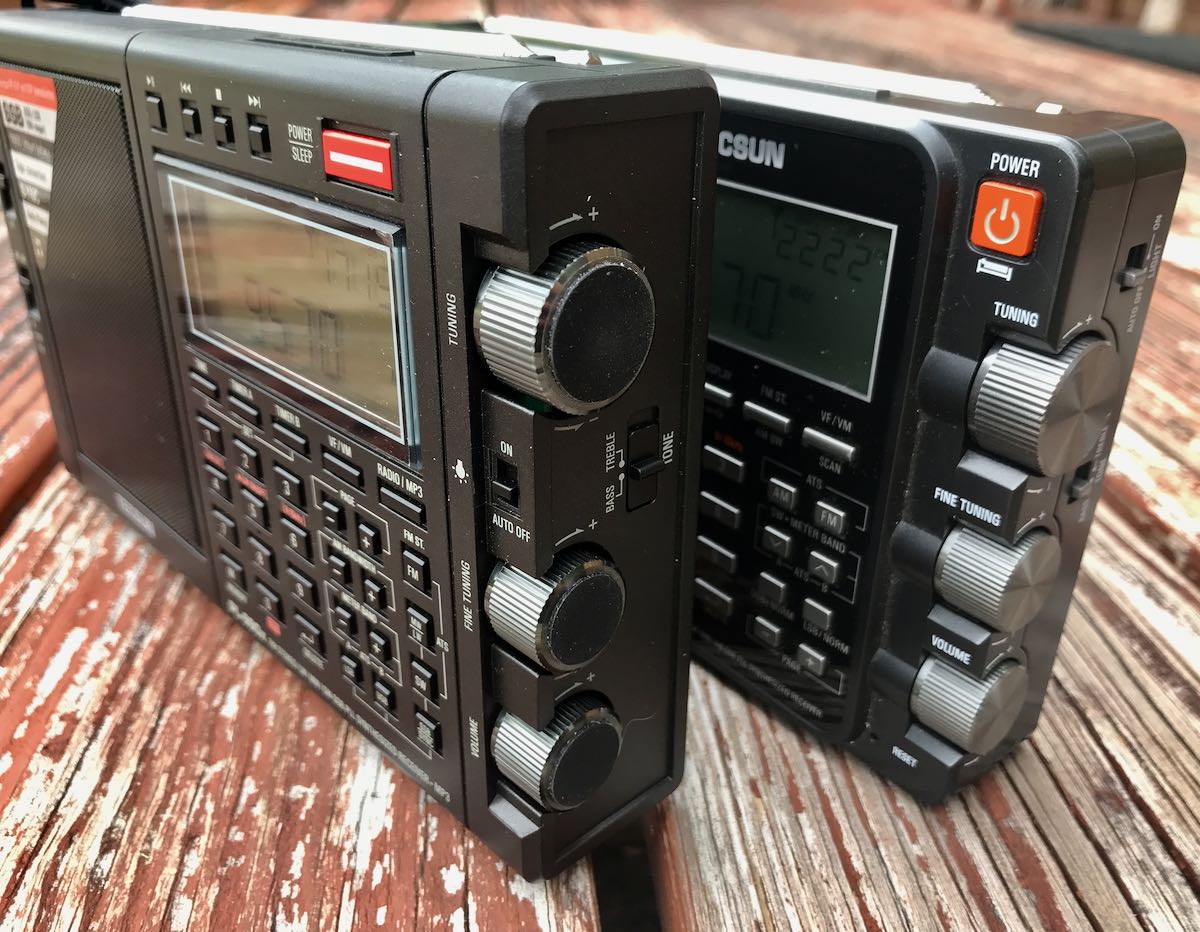
Which radio? How to avoid analysis paralysis…

I’ve been running the SWLing Post for fourteen years (!!!) and during that time I’d say that one of the top three questions I receive is a variation of “Which radio is better?” followed by a list of radio makes and models.

Sometimes that question is easy to answer because the reader is new to the world of shortwave, they only have two choices, and one is an obvious winner.

In truth, though, that’s very rare.

Most of the time–and I’m speaking from having received hundreds of these questions–I’m asked to choose between a list of radios that the reader has thoroughly researched, uncovering radios DXers and enthusiasts consider to be the best in price class.

They’ve already read numerous reviews, created spreadsheets comparing features/specifications, and they’ve weighed all of the pros and cons by price class.

But they can’t decide.

Analysis paralysis
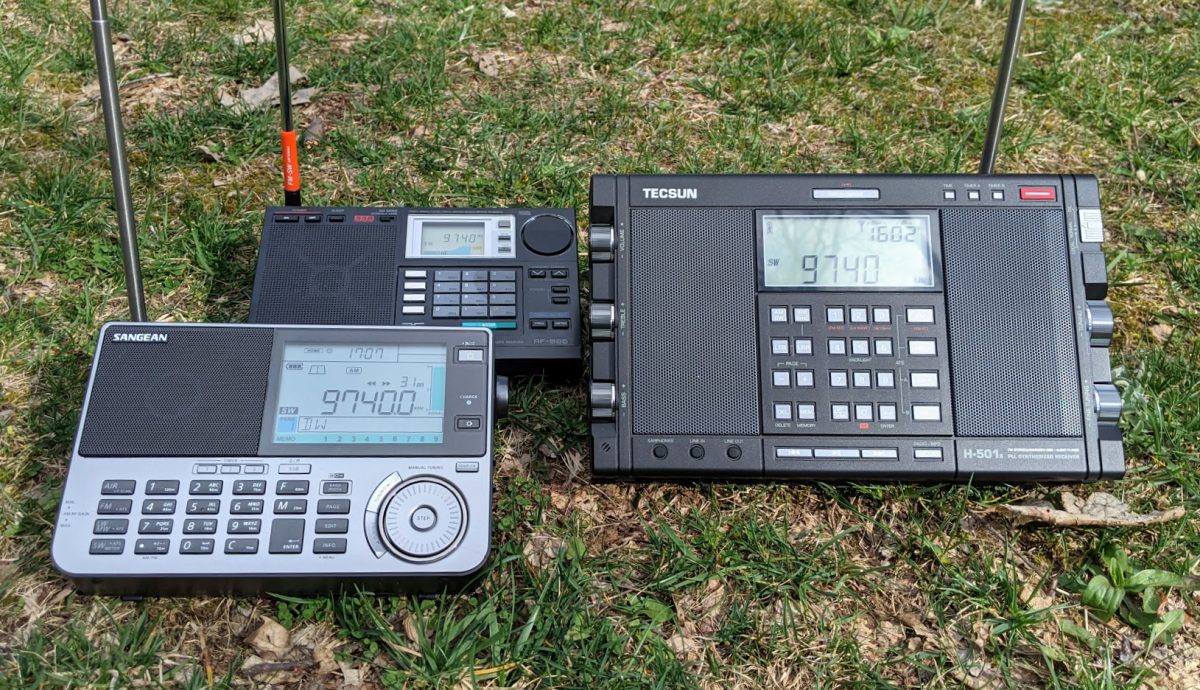
We’ve all been there, right?

We’re ready to invest a bit of money in a new radio and there are many good options, but there’s no one stand-out…no “perfect” radio with everything we seek.

It’s a slippery slope.  We start our research with some obvious choices. We can’t decide which is best, so we broaden our research, we take deeper and deeper dives, but the more we research, the more confused we become.

Sound familiar? (Trust me: you’re not alone.)

I remember receiving an email once from someone with a list of two dozen sub $150 radios on a multi-tab spreadsheet.They had every feature and specification listed for comparison. They wanted to know which of these radios was “the best.”

I can’t answer this questions for a very good reason.

It’s all about personal preference
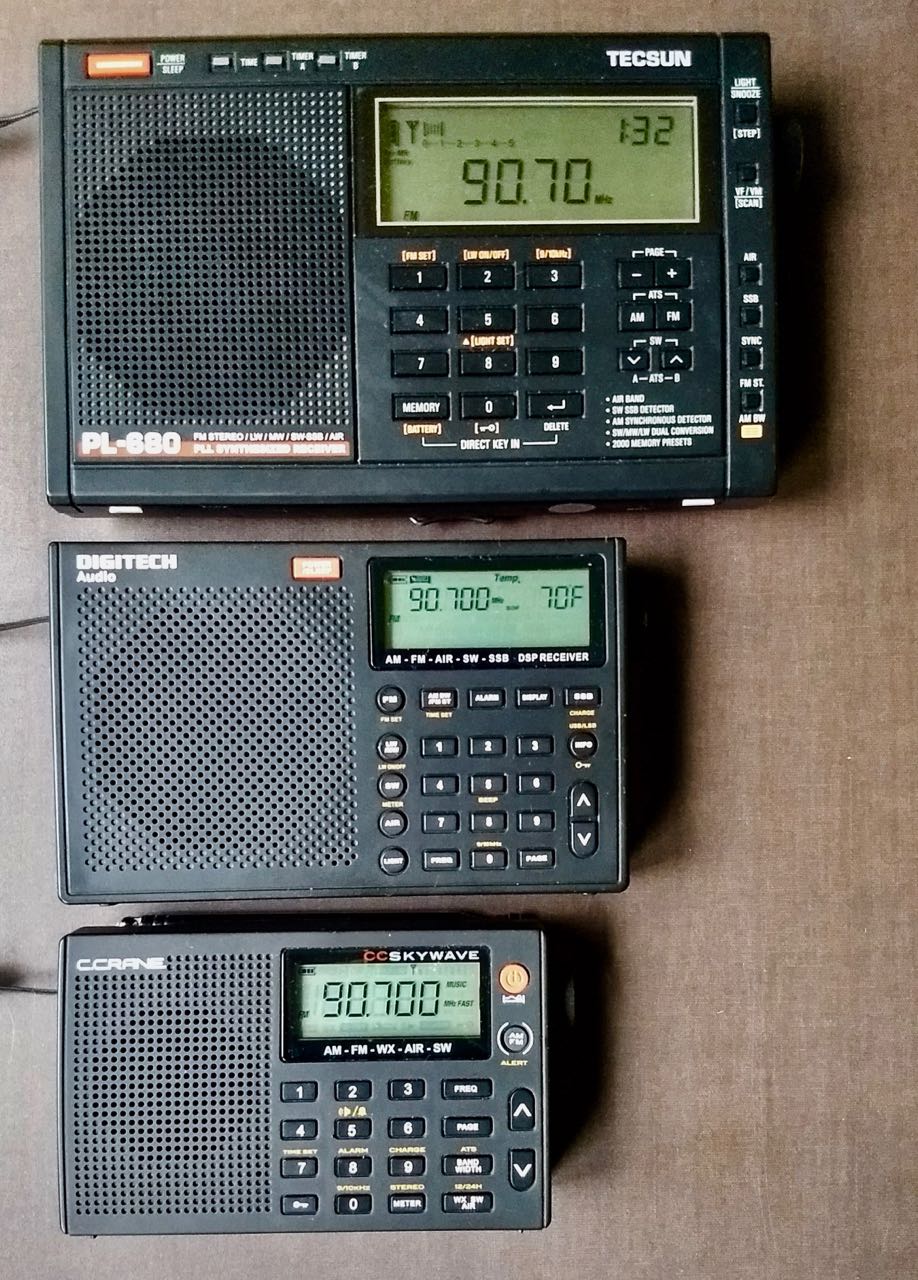
My favorite radio from a list of twenty four will likely not be your favorite radio.

Enjoyment of a radio has everything to do with you as the radio’s operator.

Ask yourself, “What’s my main goal–?”:

  • DXing?
  • Weak signal work?
  • Band-scanning?
  • Pirate Radio hunting?
  • Travel?
  • Emergency communications?
  • Casual broadcast listening?
  • Digital mode decoding?
  • Scanning?
  • Mediumwave DXing?

Look at your options with this goal being given the priority.

A rather simple way to avoid analysis paralysis
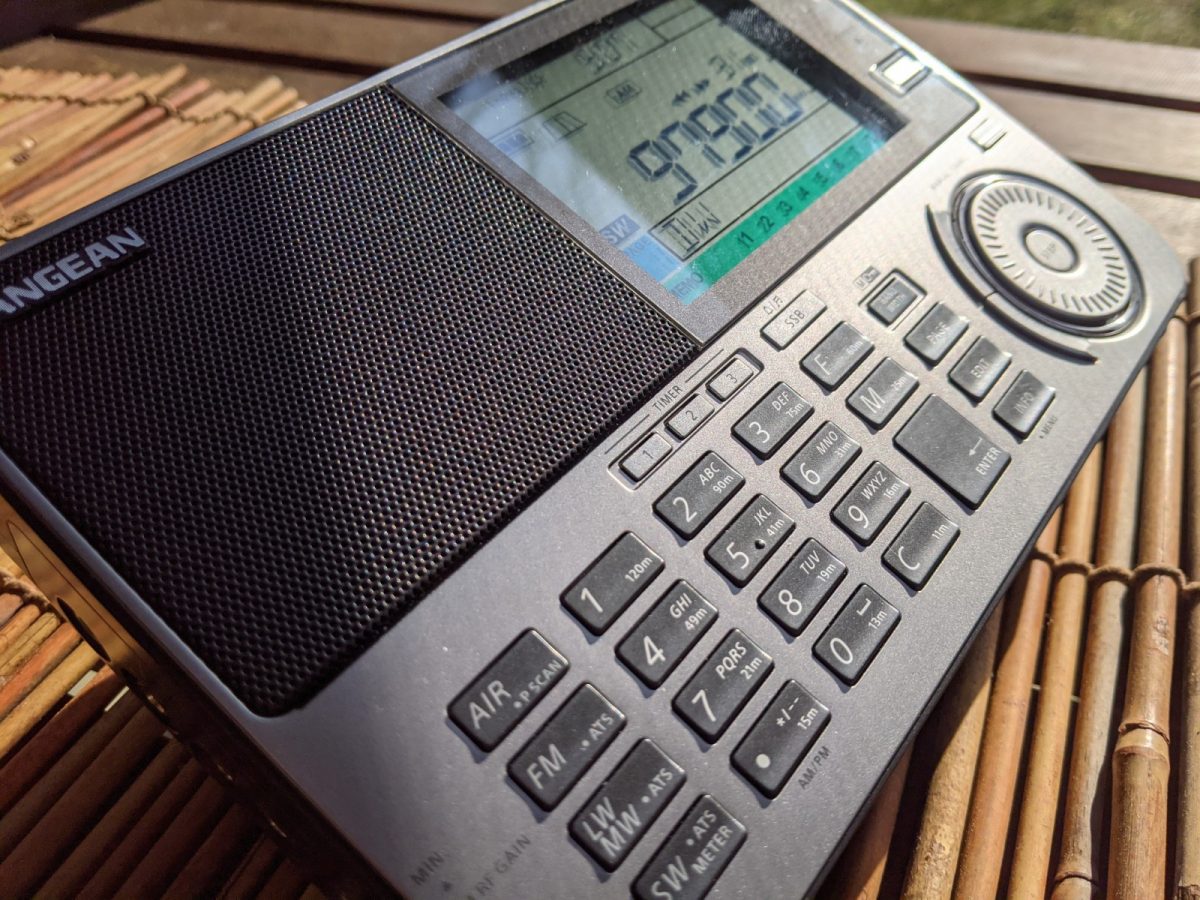
If you’ve thoroughly researched multiple options, the likelihood is that overall performance between the models is comparable. Sure, some models might have better AGC, better sync, finer tuning, a better encoder, or better sensitivity, etc. but the overall performance package is similar else there’d be no difficult decision to make.

My advice is to pick the radio that you believe you’d enjoy the most.

  • Do you like the display and large encoder on one? Does it look like the sort of radio you could cuddle up to late into a cold winter evening? Go for it!
  • Do you like the compact size and features of one? Does it look like a radio you could pack away for an international flight then use on a mini DXpedition in a foreign country? Grab it!
  • Do you like the comments you’ve read about the robust audio and speaker of a particular model? Pull the trigger!

I’ve been communicating with a reader over the past few days that is stuck in analysis paralysis. No doubt, this is what prompted this post.

Here’s what I told him this morning:

All of the models we’ve discussed are good ones and have overall excellent performance. I would simply pick the one you think you would enjoy using the most.

[Keep in mind that] DXing is a skill.

A skilled DXer can accomplish a lot with almost any radio! It’s easy to fall in the trap of options overload. Just find a good deal on a radio you think you would enjoy and go for it! 

I suppose another way of stating it would be if you believe you’re stuck in analysis paralysis, follow your heart instead of your head.

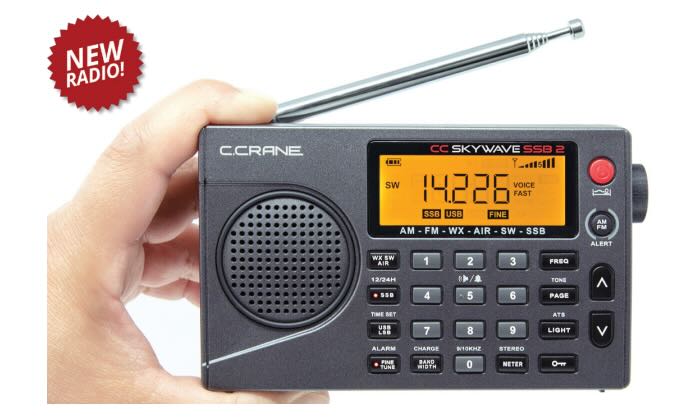
C.Crane’s new CC Skywave SSB 2

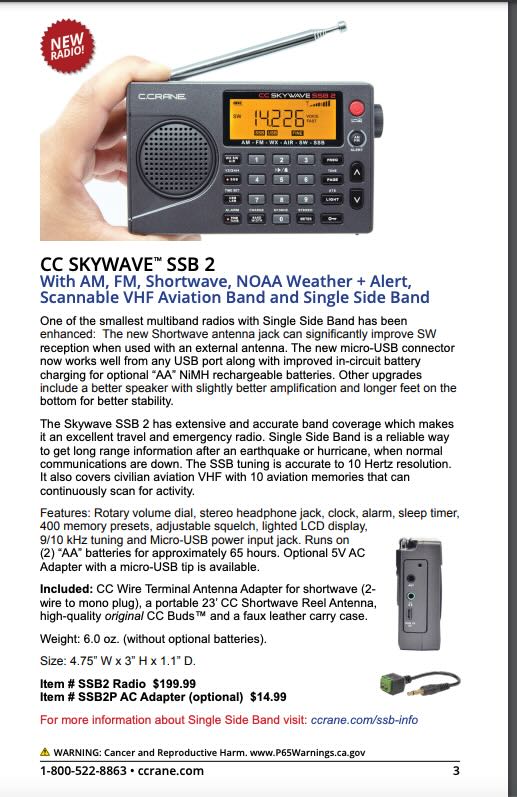
If, like me, you received your latest C.Crane catalog, you’ve no doubt noticed the new C.Crane CC Skywave SSB 2 on page 3.

The CC Skywave SSB is one of my favorite all-time travel portables. I love it for its versatility, frequency coverage, and overall performance. Click here to read my review.

Version 2 of the Skywave SSB includes the following upgrades per C.Crane:

The new The Skywave SSB 2 has several improvements: The new Shortwave antenna jack can significantly improve SW reception when used with an external antenna. The new micro-USB connector now works well from any USB port along with improved in-circuit battery charging for optional “AA” NiMH rechargeable batteries. Other upgrades include a higher quality speaker along with slightly more audio amplification. Longer feet on the bottom of the radio for better stability.

All of these are welcome iterative upgrades. I especially love any improvement to the built-in speaker–travel portables are small, so any speaker improvements are most welcome.

Here’s the full copy from their catalog:

We will plan to review the Skywave SSB 2, of course! Stay tuned!

Click here to check out the CC Skywave SSB 2 on C.Crane’s website.

Sometimes the right tools lead to agreeable results

By Jock Elliott, KB2GOM

Listening to the HF ham bands can be a lot of fun. All you need is a shortwave receiver capable of receiving single sideband (SSB) transmissions and a chart of the amateur bands. You can find downloadable PDF charts of the United States Amateur Radio Band Plan here or a detailed explanation of the band plan here.

Tuning around to hear what people are talking about can be enlightening.  You might hear hams chatting about ham radio equipment, house repair projects, religious discussions, news and views or the state of the country, disaster response communications, or almost anything.

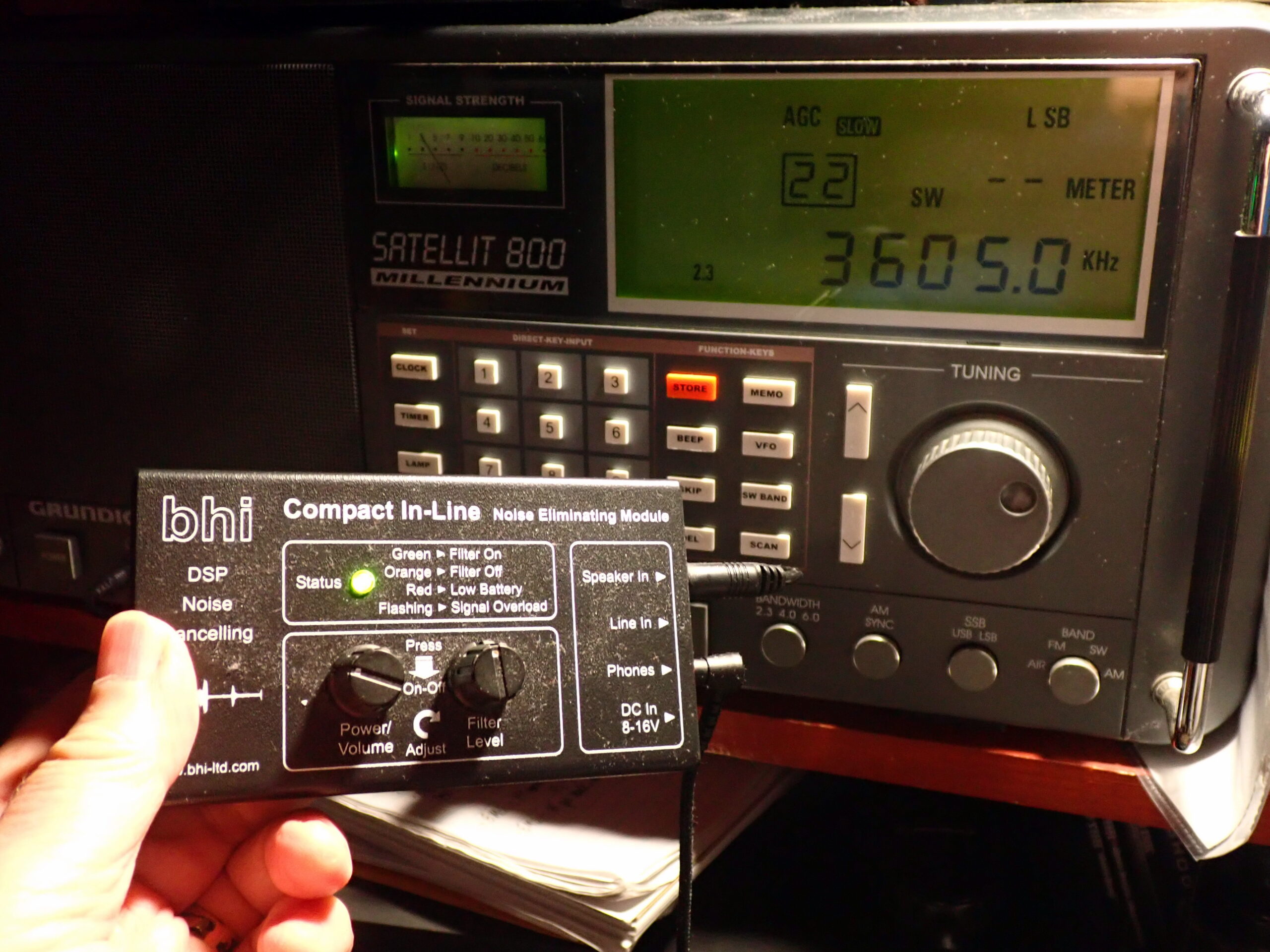
Recently I was tuning through the 80 meter ham band when, at 3605 LSB, I encountered a group having a conversation. I couldn’t tell if this group had a formal “Net” name, but I did get the impression that they met regularly in the early morning on that frequency, so I made a note to revisit the frequency.

Yesterday, I did so. With the horizontal room loop hooked to my Grundig Satellit 800, all I could hear was noise. The same with the whip antenna on the Satellit 800.

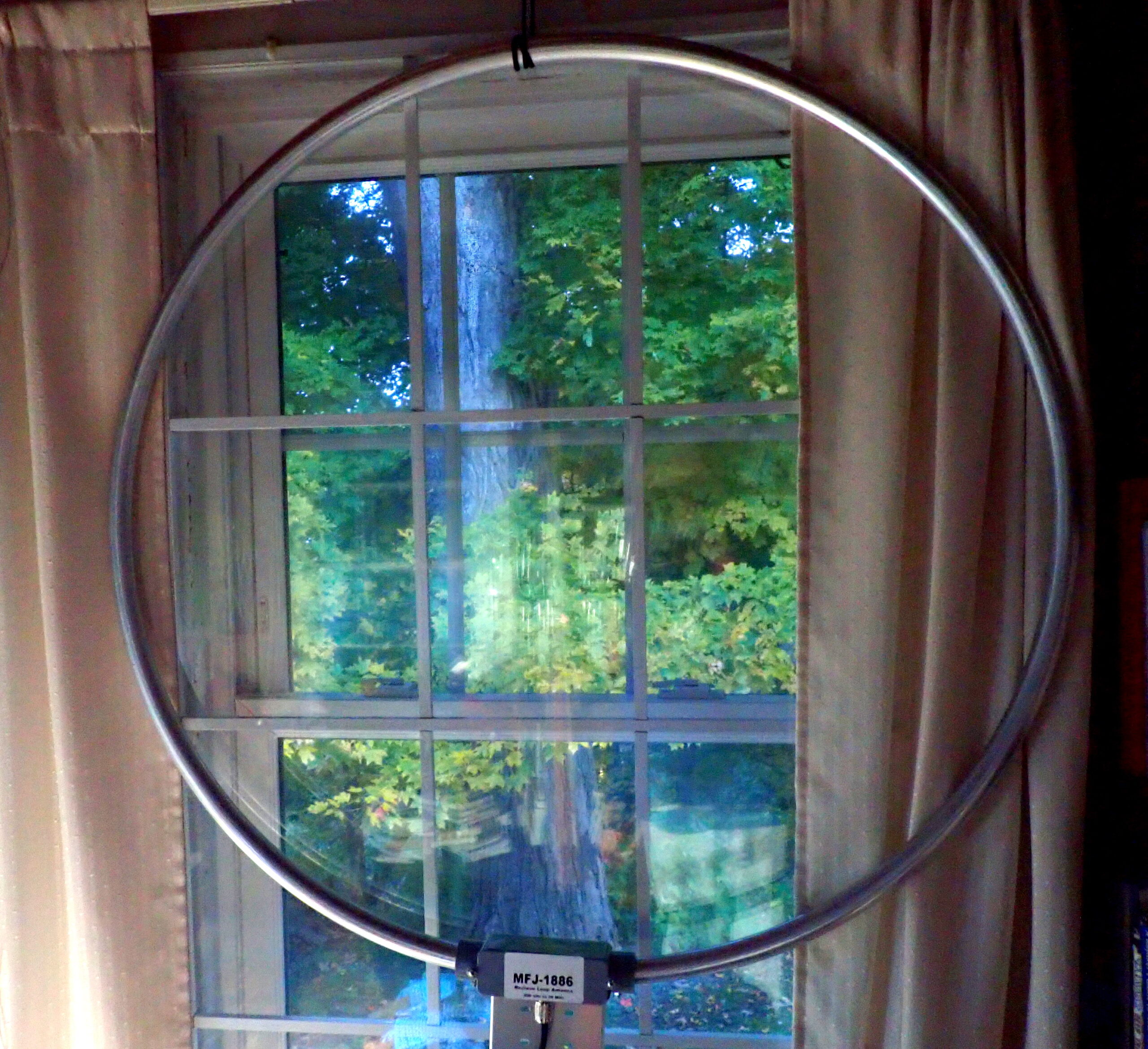
But when I engaged the MFJ 1886 loop antenna I could clearly hear the group talking above the noise . . . but the noise was still pretty bad. So I tried bringing the MFJ 1045C active preselector online, to no avail. The 1045C did not make the conversation easier to hear.

The noise was like a hum, not a nice gentle hum like a bumble bee flying by; no this was a nasty, raspy hum, like a circular saw trying to get purchase on a particularly tough piece of wood. Listening to the chat group on 80 meters with that noise under it would be tiring on the ears.

Soooo, what to do? Then I plugged in the BHI Compact In-line Noise Eliminating Module into the headphone socket of the Satellit 800 and then plug headphones into the BHI device.

Turning on the BHI module, I adjusted the level of noise reduction, and – tah dah! – the noise just melted away. I could hear the conversation clearly, and all that was left of the noise was the trickling water sound that is an artifact of the noise reduction algorithm.

Sometimes, the right gear just works.

New Icom IC-705 Firmware Update (version 1.30)

Many thanks to SWLing Post contributor, Uli Zehndbauer, who notes that Icom has released a new firmware update for the IC-705.

Here are the details/notes about this firmware version from Icom:


Changes from Version 1.27

    • – Displays the Receiving (or Transmitting) route icon (RF or TM: Terminal mode) on the RX History Log and QSO Log
    • – Displays the Receiving (or Transmitting) route icon (RF or TM: Terminal mode) to the chunk information in the QSO audio file
    • – Displays the Receiving route icon (TM: Terminal mode) to the following screens;
      • RX HISTORY screen
      • GPS POSITION (RX) screen
      • QSO audio, PLAY FILES screen
      • QSO audio, FILE INFORMATION screen
    • – Improves the WLAN access point list so that you can delete the connected or saved access points
    • – Improves the CI-V command 1F 01 (DV transmit call sign) so you can set only the “UR” call sign without the other call signs.

Click here to download the firmware from the Icom website.

If you’re not familiar with the Icom IC-705, check out this review from 13dka and this one from me originally published in The Spectrum Monitor. The IC-705 is a benchmark ham radio transceiver and MW/shortwave/FM DX receiver.