Shortwave listening and everything radio including reviews, broadcasting, ham radio, field operation, DXing, maker kits, travel, emergency gear, events, and more
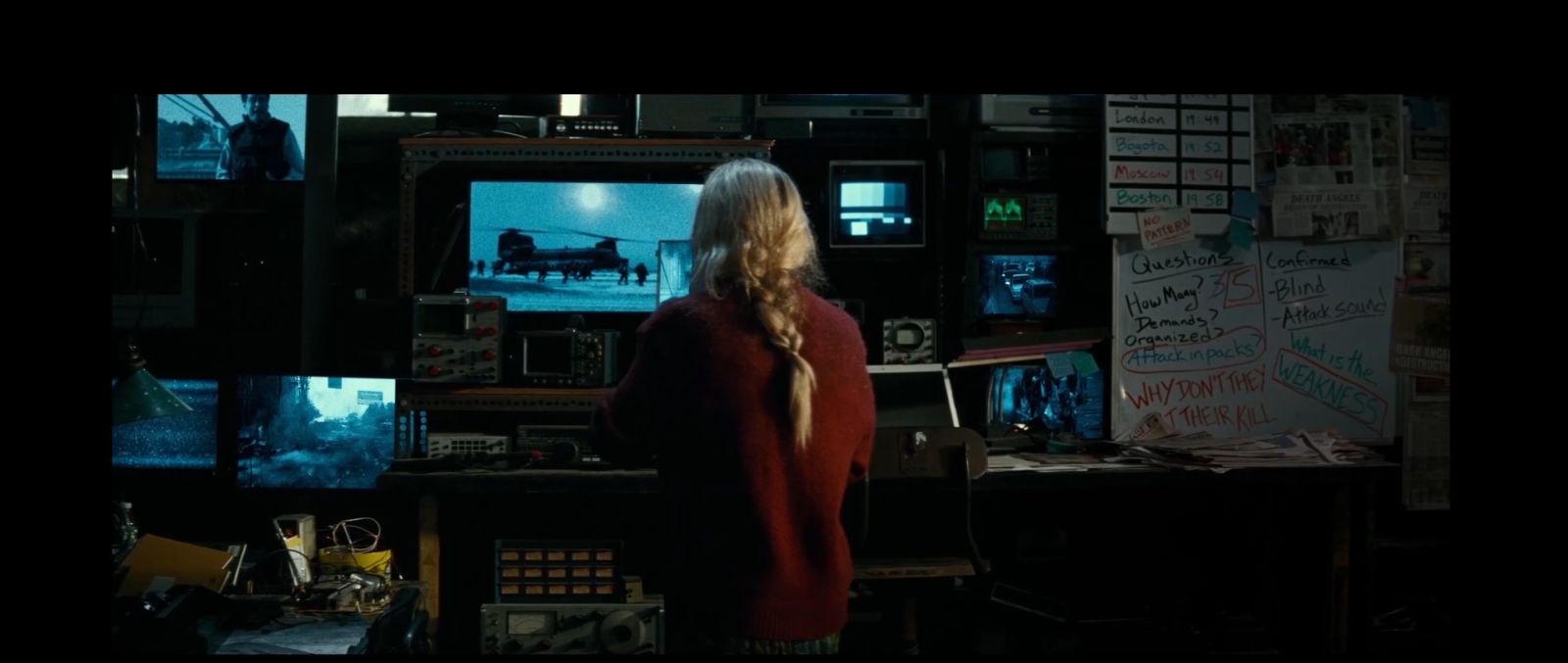
“So the father’s basically setting up all these different safeguards to keep the family safe. So he set up basically, for all intents and purposes, a war room down in the basement of their house that’s underground. Underground is a lot safer than above ground because you make less noise.
[…]He’s basically, over the years, collected TVs and radios and all these different things that he can try to make contact, try to get information – obviously no volume on any of them. The TVs are actually a security network where he’s put up cameras all over the farm, so he can see where everyone is at all time.”
There are probably more radio pictures elsewhere.
Thanks for sharing, William! Looking through some of the screen shots, I do see at least one transceiver (image at top of page) but I can’t make out the model or manufacturer. I also see a number of scopes. I’m sure there are many more radios in this film!
The author [Dr. Simon Keens] is head of sales and marketing for the Ampegon Group.
TURGI, SWITZERLAND — There are many innovative ways the industry can use shortwave broadcasting to provide secure data transmission and high-speed communications.
The modern world increasingly requires available real-time secure communications between centralized locations and often to many receivers in unknown locations thousands of kilometers away.
[…]Information transfer via the internet or via fiber optic cable was once the reference. However, the use of such technology means that the information is only delivered to fixed points. In addition, the use of third-party infrastructures provides a security risk and increases transport cost.
Today, near-instant communication to unknown, remote receivers using shortwave is being developed as a new secure means of communications without the need for external providers, delivering signals directly to multiple, or even mobile, destinations regardless of fixed infrastructure. Messages may be dispatched much faster, thus for situations where time is critical, each additional second could be profitable and even save lives.[…]
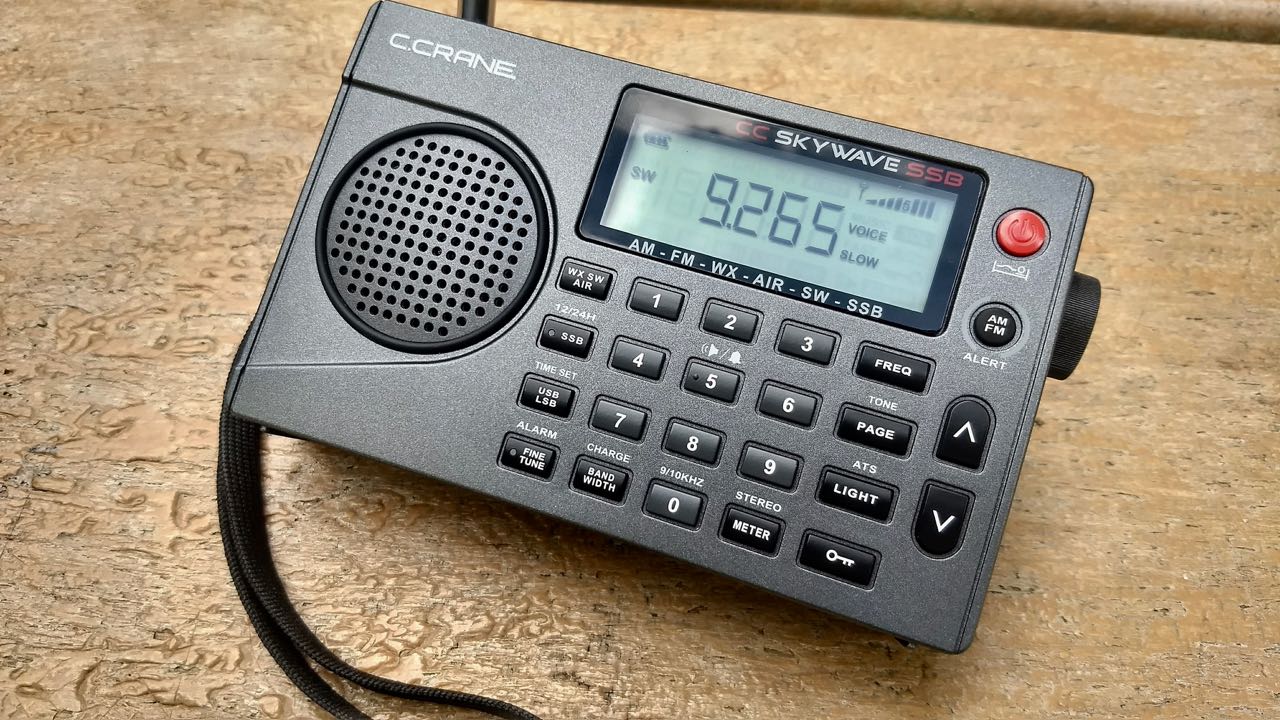
As I stated in my review, the Skywave SSB is an impressive little receiver when DSP noises and birdies aren’t an issue. My Beta unit is a lot of fun to put on the air and has become my go-to “Swiss Army Knife” travel radio.
I will be testing an early second production unit of the CC Skywave SSB later this year and will post my evaluation here on the Post.
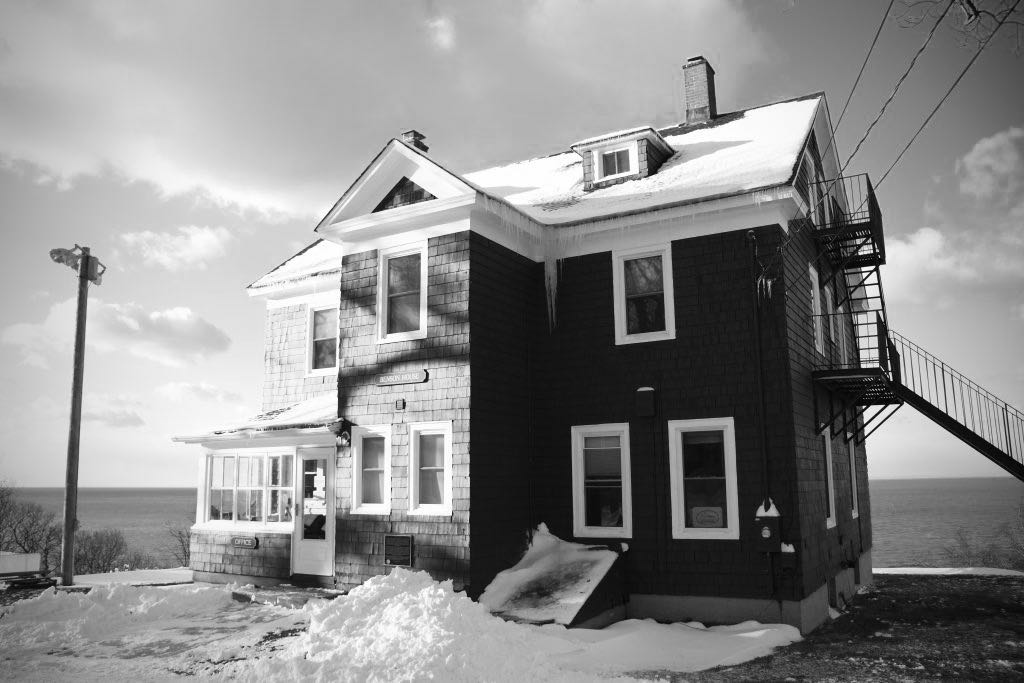
A house on the bluffs at Camp DeWolfe in Wading River, covertly used as an FBI radio transmission station during World War II to gather military intelligence, has been added to the state and national registers of historic places.
FBI radio operators impersonating German agents used the Wading River Radio Station to communicate with the German intelligence service, according to the site’s registration form with the National Register of Historic Places.
Information covertly gathered by agents at the radio station was critical to inspiring the United States’ development of an atomic bomb.
The station was also involved in the Operation “Bodyguard,” which used counterintelligence to confuse and mislead the Nazi government about the upcoming Allied invasion of Europe.
The radio station operated from 1942 to 1945.
[…]In January 1942, FBI engineers installed radio equipment in the house, hid a large antenna in the woods, and built a diesel-powered generator using an automobile engine to avoid local suspicion about electricity consumption at the house, which was far greater than what was then the norm due to the radio operations. An FBI agent assigned to manage the operation moved in with his family — and two or three radio operators. The first floor was maintained as the agent’s family home, while the second and third floors were used for the FBI operation, according to the national register registration narrative. They remained there for the duration of the war.
[…]The FBI had been looking for a spot to locate the transmission station for the spying operation and were attracted by the home’s cliffside location and the site’s remoteness. According to the national register registration document:
“By January 1942 [an FBI radio engineer] had stumbled upon the Owen House located in the tiny fishing and farming hamlet of Wading River, New York. Located eighty miles east of New York on Long Island’s North Fork the spacious three story building sat on a cliff bordered on one side by Long Island Sound and acres of dense trees on the other three sides, and the only approach to the station was a bumpy, rutted quarter mile path. Even by today’s standards the house is not easy to find. In 1942 it would have been nearly impossible.”
An FBI agent’s inquiry took the Owen family by surprise. They were sworn to secrecy.[…]
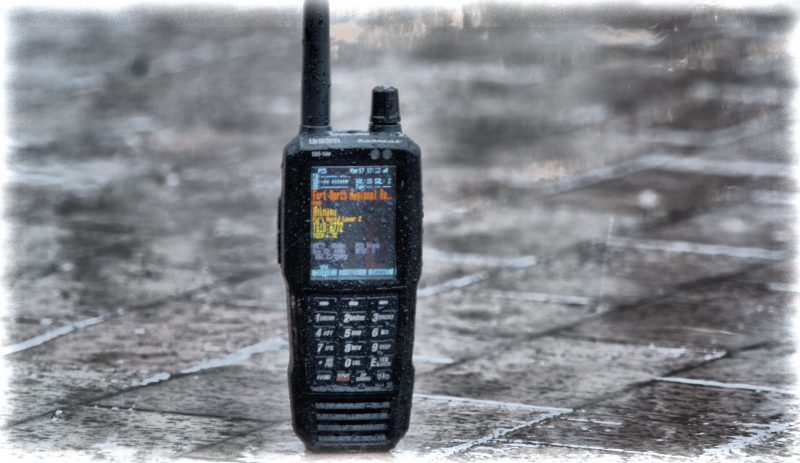
Uniden creates another first with the SDS100 True I/Q Scanner, the first scanner to incorporate Software Defined Radio technology to provide incredible digital performance in even the most challenging RF environments. The SDS100’s digital performance is better than any other scanner in both simulcast and weak-signal environments.
The SDS100 is also the first scanner that allows you to decide what to display, where, and in what color. Custom fields put the information important to you right where you need it.
And, one more first, the SDS100 meets JIS4 (IPX4) standards for water resistance.
Slated for release in 2nd Quarter, 2018, the SDS100 carries an MSRP of $699*.
Of course, the SDS100 also includes all the advanced features you’ve come to expect from a Uniden scanner, including:
Customizable Color Display
Trunktracker X
APCO P25 Phase I and II
Motorola, EDACS, and LTR Trunking
MotoTRBO Capacity + and Connect +**
DMR Tier III**
Hytera XPT**
Single-Channel DMR**
NXDN 4800 and 9600**
EDACS ProVoice**
Location-Based Scanning
USA/Canada Radio Database
ZIP Code Selection for Easy Setup
Close Call™ RF Capture with Do Not Disturb
8 GB microSD
Soft Keys for Intellegent UI
Recording, Playback, and Replay
Temporary Avoid
Fire Tone-Out Alert
System Analysis and Discovery
CTCSS/DCS/NAC/RAN/Color Code Decoding
S.A.M.E. Weather Alert
Enhanced Dynamic Memory
Preemptive Trunking Priority
Fully Customizable Scanning with your own Favorites Lists
Backlit Keypad
Channel Volume Offset
PC Programming and Control
USB Connectivity and Charging
Weekly Database Updates
Free Sentinel Software keeps the SDS100 database and memory up to date
“[The SDS100] actually is bit smaller than the 436 and if the performance is like they say (see attached picture), then this could be a very exciting scanner indeed!!”
Yes indeed! I have the Uniden BCD436HP and love it. It’s such a simple handheld scanner to operate and there’s no real need to “program” it as it will automatically load relevant frequencies based on GPS coordinates or a postal/zip code. This looks like a significant upgrade and I love the fact it’s water resistant. Of course, MSRP is projected to be $699 US–not a small investment.
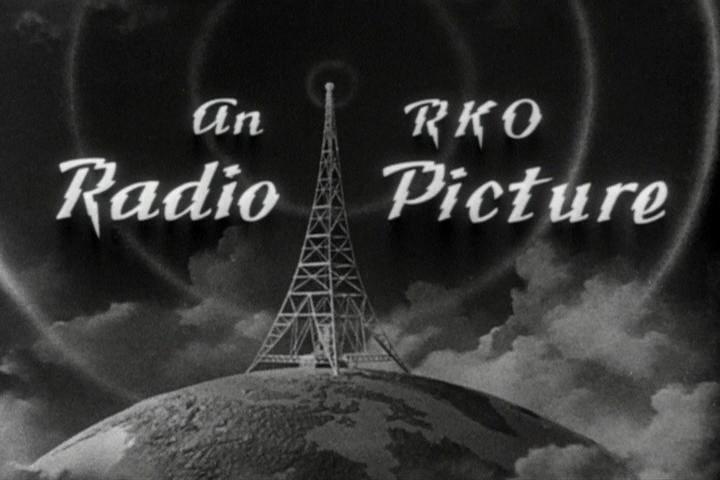
Made during WWII by RKO Radio Pictures, AIR WAVES gives a brief history of the radio, and shows the development of the technology as it progressed from a crystal set novelty to an indispensable part of American life. Radio City Music Hall and the Rockefeller Center are seen at the 2:00 mark, with the largest radio studios in the world. At 2:30, the NBC studios are seen and at 3:10 a demonstration is made of how sound effects are made using cellophane, wooden blocks, and rubber spheres. At 4:10, a studio is seen with actors rehearsing their lines, and an engineer working with the actors to make sure everything is technically okay. At 5:41, announcers Milton Cross is seen with Jack Costello and Calvin Keach. “Twin gods of radio broadcasting are the clock and the conference…” says the narrator, and at 6:00 you’ll see the discussions that lead up to the broadcast of any network show on radio (and today, on TV). At 7:15, records are played on the air, scripts are produced on steno and mimeograph machines, and all sorted… The music library is seen at 7:48 with sheet music laid out. At 8:06, all stations are notified of the latest information with the new program and a dress rehearsal undertaken. The stopwatch commands the attention of everyone, and the program is finally on the air at the 9:10 mark.
At 10:00, the film dramatically shifts to show December 7th in Hawaii, and speaks about the work of NBC to sell war bonds and promote national defense and “do its share unflinchingly”. The war effort is shown with men and women working on the air to help people working “at war” and boosting their morale. Lowell Thomas is shown at the 11:30 mark, keeping the public informed of the latest developments.
Thanks for the tip, Mike! It’s truly amazing to see the amount of effort that went into live radio broadcasts.
David, AA6YQ, author of DXLab – ‘Better DXing Through (Free) Software’, posted the following: ‘Jupiter Research Foundation Amateur Radio Club (JRFARC) has integrated an HF transceiver with an autonomous ocean-going drone. Our mission is to deploy a ham radio station that roams the world’s oceans while providing an opportunity for amateur radio operators everywhere to make contacts with rare locations.’
“We sent this new Voyager out to the open ocean on its way to California on January 15th, 2018 as a passenger on the JRF HUMPACs mission. As they search for ‘missing’ humpback whales, JRF’s pilots will guide HF Voyager to sections of the Equatorial North Pacific that are not normally available to ham operators. The station will use FT8 and PSK-31 on the 20 meter band as its primary operating modes. You may also find it using WSPR in times of poor propagation.”
The club plans to give a certificate of recognition to operators world-wide that have a confirmed contact with the HF Voyager. In the future we hope to collaborate with Amateur Radio organizations and publishers to sponsor operating events and contests for HF Voyager contact milestones.
Gridsquare collectors, maritime operating fans, Islands on the Air participants, and all other hams interested in this unique opportunity to make a contact with an autonomous roving maritime station should find this to be an exciting new aspect of their favorite hobby.
I think this is a pretty fascinating project–especially if the system can withstand the rigors of ocean travel and can be tracked and picked up later for replacement and upgrades.
I had never spent much time on the HF digital modes until last year when I caught the FT8 bug. While FT8 lacks some of the social nuances of, say SSB voice and CW, it is a fascinating mode that seems to defy HF propagation rules. It’s certainly an accessible way to work HF stations across the globe with a very modest setup. I think it’s an ideal pairing for a project like the HF Voyager.
Even if you don’t have a ham radio license, with an HF receiver and a free PC application, you can receive/decode FT8 contacts from across the globe.

Upcoming full release of the 2017-2018 film “A quiet place”