Shortwave listening and everything radio including reviews, broadcasting, ham radio, field operation, DXing, maker kits, travel, emergency gear, events, and more
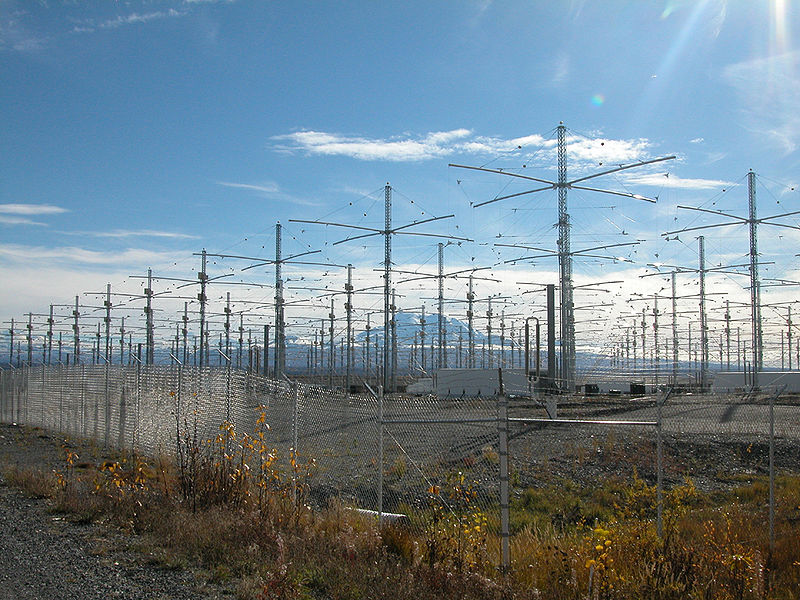
The next HAARP open house will occur on 19 August 2017 and include round-trip bus transportation from Fairbanks for $45 which will help bring costs down for individuals, particularly for those from out of town.
(Flyer attached, though I am not aware of an official press release yet but updates will be posted at http://www.gi.alaska.edu/haarp)
Throughout the day there will be talks by Geophysical Institute researchers on-site about the HAARP facility and research, and other research topics pursued at the UAF Geophysical Institute. As in the previous year, tours of the main transmitter array, control center, and power generation plant will be offered throughout the day. Hams and radio enthusiasts are encouraged to bring their equipment for photo opportunities or even to make contacts from the site.
Any SWLing Post readers/contributors plan to attend the open house? If so, we’d love to share your photos! Please contact me if interested!
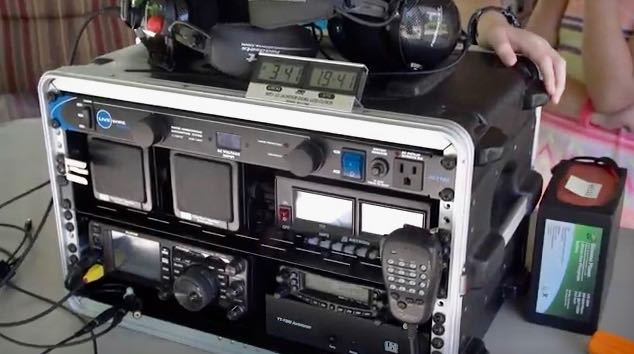
Young radio amateurs Zechariah WX4TVJ, Faith Hannah AE4FH, Hope KM4IPF and Grace KM4TXT have released a video about their Go Box
Many people have asked us to make a detailed video about our Go Box, so we decided to make one. We show you what is in the Go Box and how we installed all of the equipment. There is also some funny stuff in the video, too!
These girls do an amazing job with the video–bravo!
I love this setup. While I typically pack very lightly for portable radio work, building a system like this makes for very quick deployment when you require a full 100 watt system with multiple radios and multiple accessories. Radio clubs could easily put systems like this together for events like Field Day or Emergency Comms. It’s grab-and-go at its best!
Of course, a field DXpedition/SWLing station could also be easily built into this portable system. In fact, I bet an SDR with computer, keyboard, and monitor could be mounted and accommodated in this space.
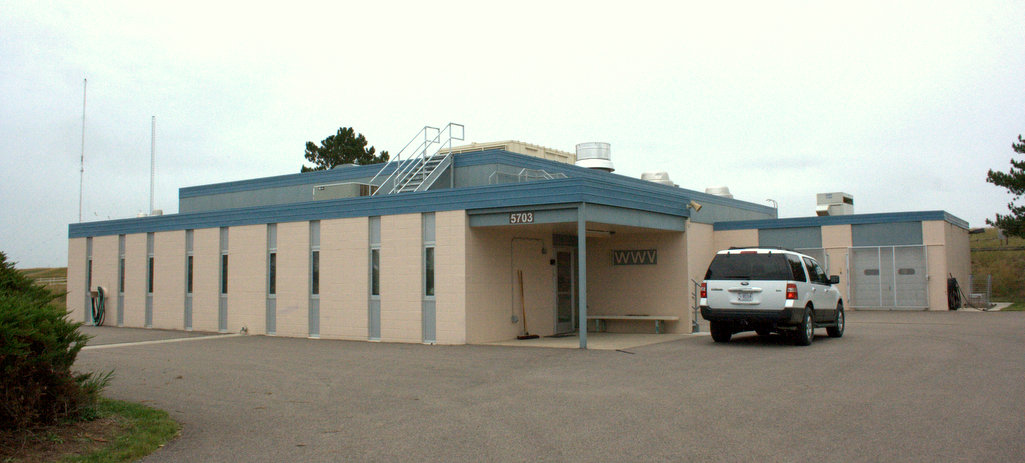
WWV’s transmitter building in Fort Collins, Colorado (2014)
(Source: WWV)
Current 25 MHz Broadcast Specifications
As of 2042 UTC 7 July 2017 the 25 MHz broadcast is now on a turnstile antenna with circular polarization and will remain in this configuration until after the solar eclipse on 21 Aug 2017. Signal reports are requested.
Schedule: typically continuous. As an experimental broadcast, the 25 MHz signal may be interrupted or suspended without notice.
Many thanks to SWLing Post contributor, Cap Tux, who writes:
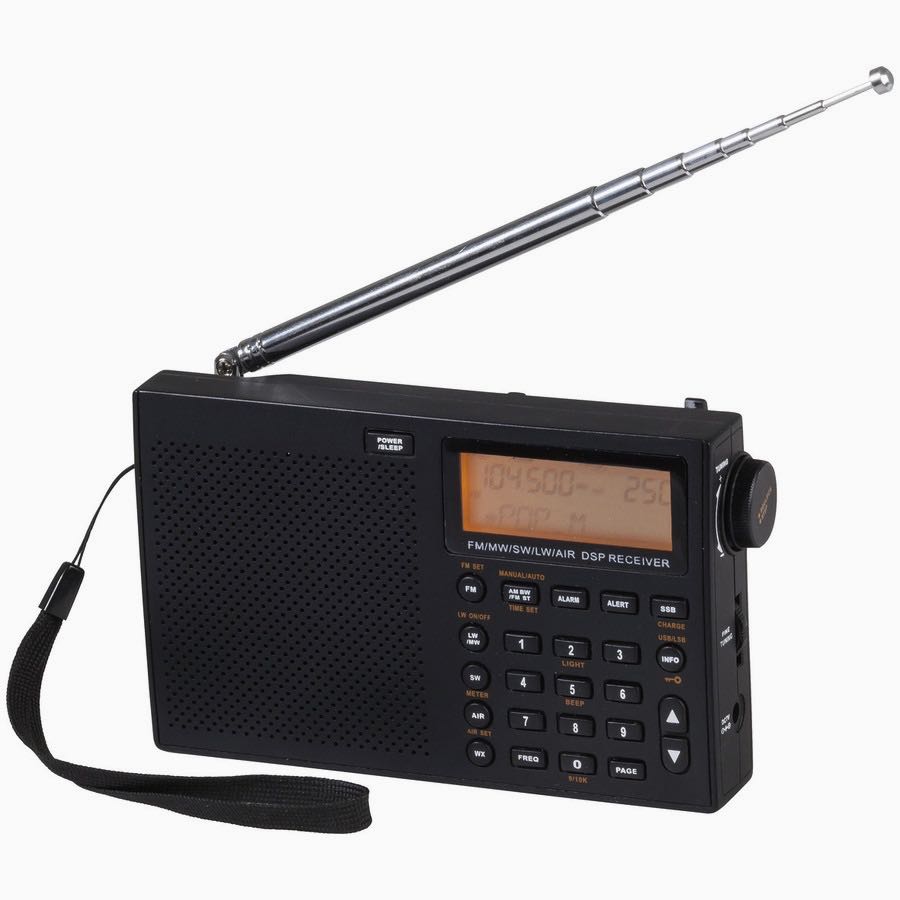
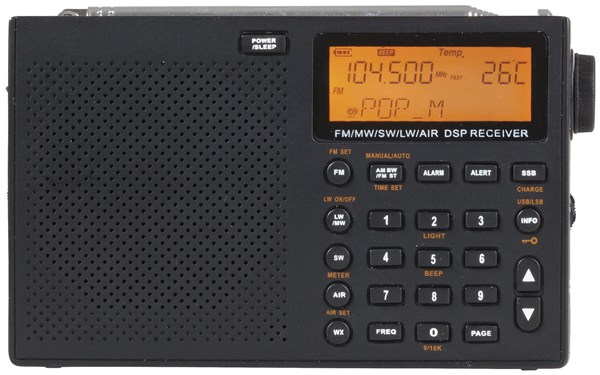
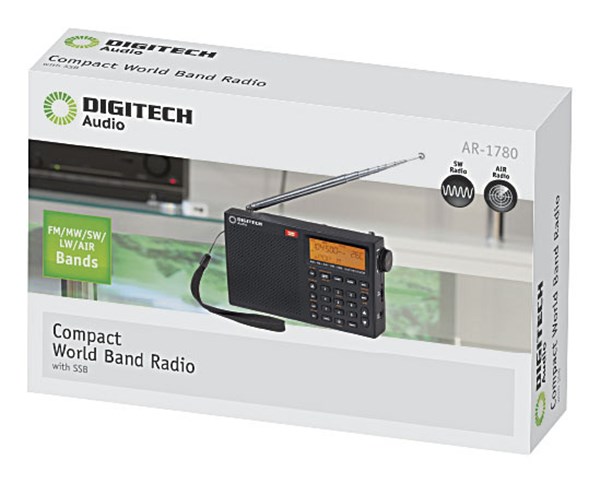
This radio seems to have recently been released in Oz, no idea of its performance on SSB et al. but seems to do everything the C.Crane Skywave does. Heavy on batteries though at 4 x AA and nearly twice as heavy with similar dimensions to the Skywave, not major if it performs well and has good battery life.
Apparently the AR-1780 uses the SiLabs DSP chipset going by comments on Radio Reference. Also has RDS, Temp, the keypad layout looks similar to a Eton G3.
Taken from Jaycar’s website site:
This is a very compact world band radio, covering the most popular frequencies. It features rapid digital tuning, 1000 memory presets, and an easy to read display. Single Sideband Modulation (SSB) is used to listen in on 27MHz CB radio, short wave amateur radio and morse code. The large internal speaker provides clear audio, and you can connect your favourite set of headphones for personal listening. Powerful enough to receive what you want, and compact enough to take wherever you want.
Features:
– FM/MW/SW/LW/AIR Bands
– Single Side Band (SSB)
– Telescopic Antenna
– 3.5mm socket for external antenna
– Selectable Bandwidth: 1 – 6kHz
Specifications:
Radio Bands:
FM 87.5 – 108MHz
MW 522 – 1620kHz / 520 – 1710 kHz
SW 1711 – 29,999kHz
LW 150 – 450kHz
AIR 118 – 137kHz
Batteries: 4 x AA (not included)
Weight: 253g (Excluding Batteries)
Dimensions: 150(W) x 95(H) x 30(D)mm
Many thanks for the tip, Cap!
This looks like a full-featured portable. As mentioned, it certainly resembles the Grundig G3 in many respects.
If the AR-1780 performs well, it’ll be a very welcome addition to the Australia and New Zealand markets.
Please contact me if you’ve purchased the AR-1780 and would like to write a guest post/review. I’m very curious how well this portable stacks up against other portables especially in terms of overall sensitivity/selectivity and noise floor.
From the Isle of Music, July 16-22
This week, our special guest is Juan Carlos Bonet, director of Leyendas.com, one of Cuba’s most entertaining show bands and a nominee in Cubadisco 2017 for their album Sabroseando. Fans of groups like Rumbavana and artists like Juan Pablo Torres will especially appreciate this group. As always, we’ll have plenty of great music.
Four opportunities to listen on shortwave:
1. For Eastern Europe but audible well beyond the target area in all directions with 100Kw, Sunday 1500-1600 UTC on SpaceLine, 9400 KHz, from Kostinbrod, Bulgaria (1800-1900 MSK)
2. For the Americas and parts of Europe, Tuesday 0000-0100 UTC on WBCQ, 7490 KHz from Monticello, ME, USA (Monday 8-9PM EDT in the US)
3 & 4. For Europe and sometimes beyond, Tuesday 1900-2000 UTC and Saturday 1200-1300 on Channel 292, 6070 KHz from Rohrbach, Germany. From the Isle of Music is not available for listening on demand but some broadcasts can be heard online during the time of the broadcast using Web SDRs or the WBCQ website (during their broadcast) if you are not receiving the radio signal.
Episode 21 of Uncle Bill’s Melting Pot, a musical variety program that features everything from everywhere EXCEPT music that you are probably familiar with, will air on WBCQ the Planet, 7490 KHz, Thursday, July 20 from 2300-2330 UTC (7:00pm-7:30pm EDT in the Americas). This week, we’ll have some laughs, but we’ll also wander through Switzerland, Haiti and Argentina.
One fits in a car (well, most vehicles anyway) and another easily slides into a small daypack; which antenna is best for DXing on-the-go? The ALA1530LNP and Boni Whip are at opposite ends of the portability scale (as well as the price scale).
I’ve written about the ALA1530LNP in the pages of the SWLing Post before, where I compared it against another Wellbrook loop antenna on extremely weak medium wave signals. The ALA1530LNP currently costs $413 USD including shipping to the Seattle USA area where I live.
More recently I’ve been intrigued by UK Oxford Shortwave Log’s (YouTube) excellent videos demonstrating the DXing prowess of the very compact, highly portable Bonito Boni Whip antenna. Through a Bonito USA dealer I was able to purchase the Boni Whip at an attractive $99 USD price (plus $11 shipping).
So, is it fair to compare “apples and oranges”? Maybe not, but it was fun and interesting nonetheless to take both antennas to the countryside to find out how they perform head-to-head in a portable situation. My destination was a small forested campground, in a valley east of this beautiful Mount Rainier, Washington scene:
In mid-July, Tipsoo Lake near Mt. Rainier is still surrounded by snow.
Over the course of three days I compared the two antennas with these receivers:
Eton E1XM
Sangean ATS-909X
Elad FDM-S2
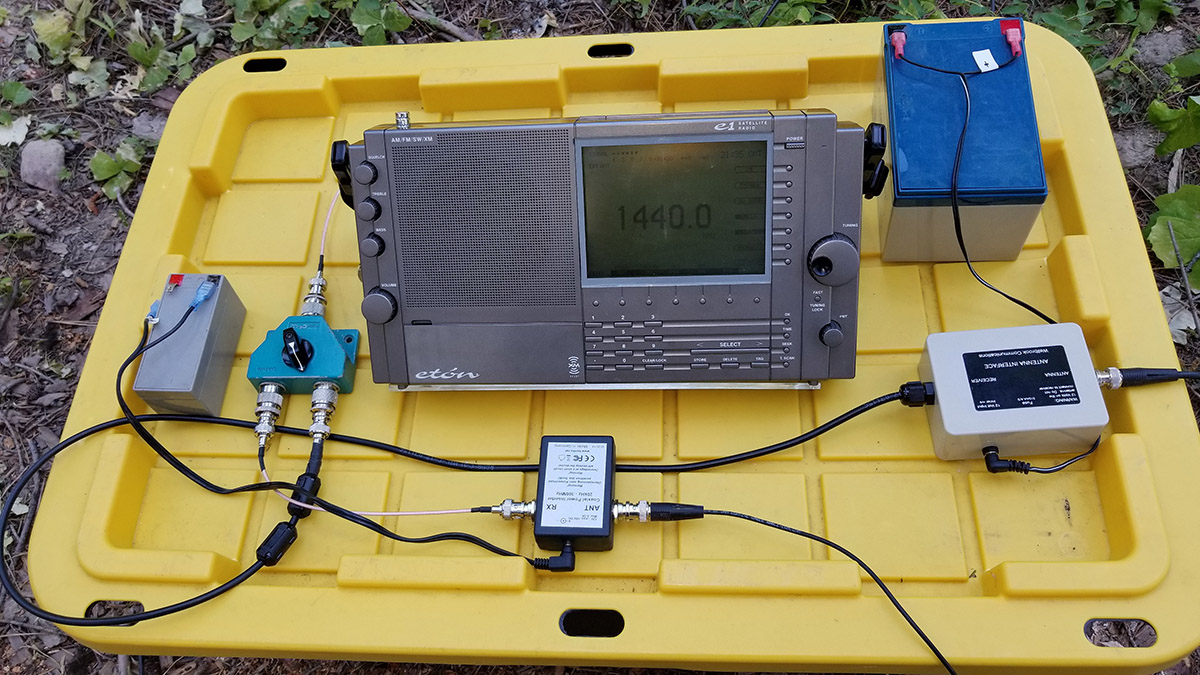
I set up the E1XM and ATS-909X receivers on a portable tote box with the antennas powered by SLA gel cell batteries and using a two-way antenna switch for instant comparisons.
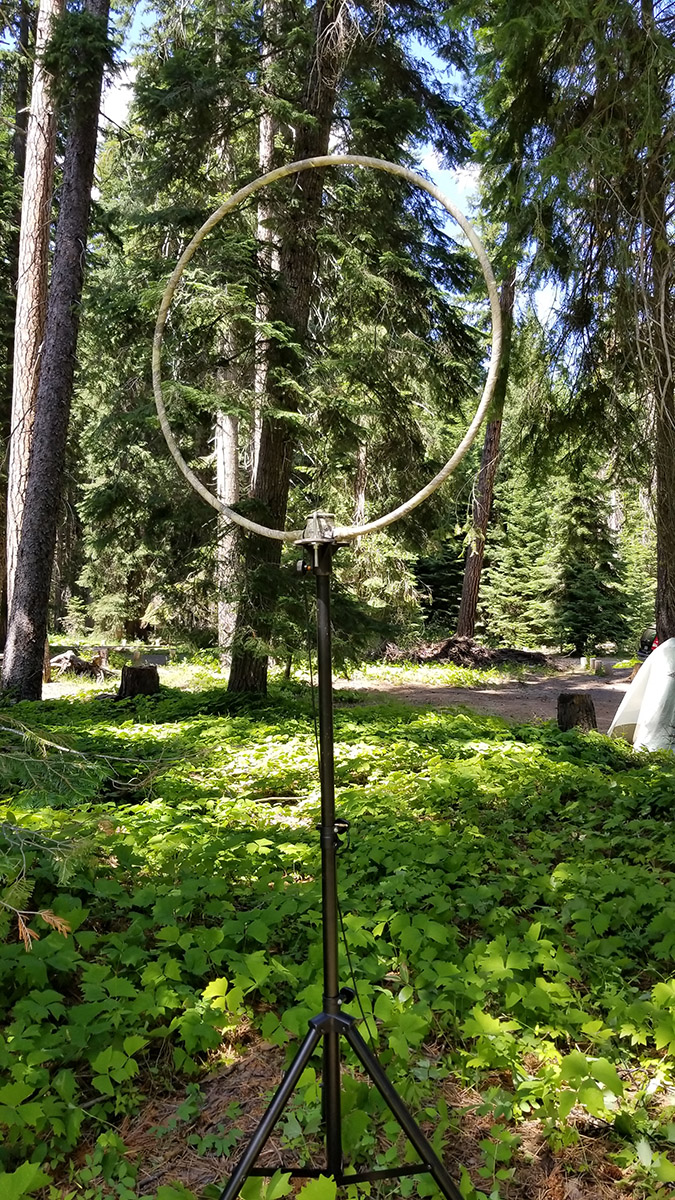
Each antenna was mounted on its own “pro” speaker stand and separated 60 feet from each other. The antennas were connected to receivers by equal 100 foot lengths of RG-58 coax cable, and were over 80 feet away from my laptop computer (the only noise source in the area).
In keeping with the uber-portable theme of the Bonito antenna, I used a very compact 1.2Ah SLA gel cell battery for its power injector (junction box). Since the antenna consumes a mere 45 ma. of current, this small rechargeable battery will power the Boni Whip for many, many hours.
The Wellbrook ALA1530LNP requires a still reasonable 200 ma., and I brought along a much larger battery to power it.
Below are a selection of 30-second medium wave and shortwave recordings, each one of them beginning with the Boni Whip and switching to the ALA1530LNP midway through the recording.
Boni Whip vs ALA1530LNP – E1XM Receiver
660 kHz
870 kHz
1660 kHz
3330 kHz, CHU Canada
4960 kHz, VOA Sao Tome
9535 kHz, R. Algerienne
11600 kHz, Denge Kurdistan
11760 kHz, R. Havana Cuba
EDIT 7/14/2017: 11905 kHz, Reach Beyond Radio, Kununurra WA Australia (tentative; listen for the Aussie-accented weather forecast at the end of the Wellbrook loop portion. This catch was at 03:48 UTC, which matches up with the brief English language broadcast in Reach Beyond’s schedule for 11905 kHz. This catch does not appear to be China National Radio as I first thought.)
Boni Whip vs ALA1530LNP – Elad FDM-S2
These 30-second videos are from the Elad SDR’s FDM-SW2 software. As above, the first half of each recording is the Bonito antenna followed by the Wellbrook loop. If you maximize the playback of a video to full screen you can read the signal-to-noise ratio (SNR) change (“Delta”) as the antenna is switched to the ALA1530LNP.
The compact Boni Whip is a unique commercial design of “mini whip” antenna, pioneered by Roelof Bakker, PA0RDT some years ago. As with all these compact e-field antennas they can be a significant “noise sponge”, collecting any RFI or interference in the area. This is especially true if the coax shield is not grounded. Despite using twoBryant/Bowers design of RF chokes in series, the Boni Whip’s reception was degraded by RFI emitted from my laptop over 80 feet from the antennas. The RFI was quite a bit worse without any RF chokes in-line. You’ll note though that even the Wellbrook loop received some interference from the laptop on the higher shortwave frequencies.
Observations. On medium wave (E1XM examples) the directionality of the Wellbrook loop could be noted on one, maybe two of the three recordings. This can be a benefit–or not–depending on your goal. (I did not rotate the Wellbrook loop to null or peak any specific MW signals.) The omni-directional Boni Whip would not be the antenna of choice for a hard-core medium wave DXer; however, it is extremely compact and lightweight for camping and travel if you will be DXing or SWLing on shortwave also. The Wellbrook though is highly regarded as a medium wave DX antenna, especially when used with a rotor to take advantage of its sharp broadside nulls.
I didn’t test the Boni Whip on long wave, but Oxford Shortwave Log and others report it does very well on LF. I tried the antenna on FM frequencies against the Eton and Sangean’s telescopic whip antennas but in every case the reception was worse on the Boni Whip.
As I expected on shortwave, the ALA1530LNP greatly outperformed the Boni Whip on some signals. On others, reception was extremely comparable! The 3330 kHz CHU recording surprised me with the neck-and-neck reception. At this tropical band frequency there may have been some directionality to the signal, and the loop may not have been oriented optimally. The 4960 VOA reception was also very close.
I was disappointed, but not surprised at the RFI pickup of the Boni Whip when using my laptop and the Elad SDR receiver. The two RF chokes tamed the spikes and hash a bit, but removal was far from complete. The Wellbrook wasn’t always “clean” in this regard though.
Final notes. I think the Boni Whip is an extremely high value in a “jack of all trades” very portable antenna. Like Oxford Shortwave Log and others, I find this active antenna’s noise level to be extremely low, helping its sensitivity reveal weak DX signals in a surprising fashion. I would not hesitate to use this antenna away from noise sources when traveling with a non-computerized receiver. Well done, Bonito!
Is the Wellbrook ALA1530LNP worth four times the Boni Whip’s USA price? To the serious DXer who has no room for large passive antennas (Beverages, phased delta loops, DKAZ, etc.), the 1-meter diameter Wellbrook is clearly in a class of its own. By the way, the US Dollar to UK Pound ratio has improved in recent months, so the Wellbrook is an improved value for USA radio hobbyists now.
Truly this was an “apples to oranges” comparison, but I thoroughly enjoyed using both models. I welcome your comments, particularly if you also own both of these fine antennas.
Guy Atkins is a Sr. Graphic Designer for T-Mobile and lives near Seattle, Washington. He’s a regular contributor to the SWLing Post.
International radio remains the most reliable, robust source of information for people in some nations
North Korea is rated as the second most censored county in the world after Eritrea, according to the Committee to Protect Journalists.
North Koreans who are caught accessing information not approved and disseminated by the government can be sent to brutal prison camps for extended terms, or face execution.
Yet such is the human hunger for reliable outside information, that many North Koreans brave these risks by tuning into international radio and cross-border TV broadcasts wherever practical.
Many also watch banned South Korean TV programs on black market DVDs, SD cards, and USB sticks; plus computers and mobile phones smuggled in from China. (South Korean movies and soap operas are hugely popular in the North, according to the New York Times.)
The conclusions they draw from this content are subsequently shared with other North Koreans by word-of-mouth; despite the fact that such sharers can get in serious trouble with the Kim Jong-Un regime.