Shortwave listening and everything radio including reviews, broadcasting, ham radio, field operation, DXing, maker kits, travel, emergency gear, events, and more
International radio remains the most reliable, robust source of information for people in some nations
North Korea is rated as the second most censored county in the world after Eritrea, according to the Committee to Protect Journalists.
North Koreans who are caught accessing information not approved and disseminated by the government can be sent to brutal prison camps for extended terms, or face execution.
Yet such is the human hunger for reliable outside information, that many North Koreans brave these risks by tuning into international radio and cross-border TV broadcasts wherever practical.
Many also watch banned South Korean TV programs on black market DVDs, SD cards, and USB sticks; plus computers and mobile phones smuggled in from China. (South Korean movies and soap operas are hugely popular in the North, according to the New York Times.)
The conclusions they draw from this content are subsequently shared with other North Koreans by word-of-mouth; despite the fact that such sharers can get in serious trouble with the Kim Jong-Un regime.
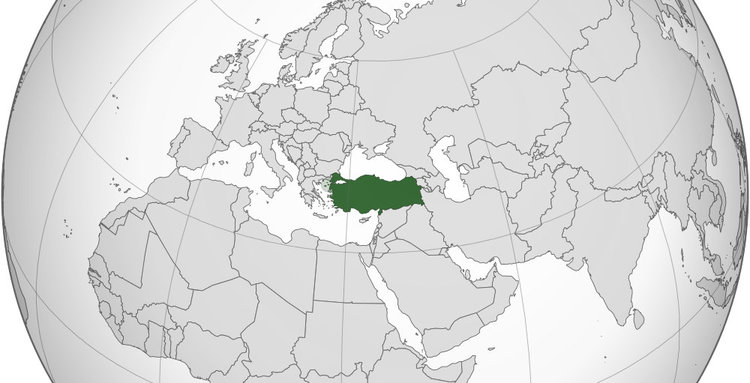
Many thanks to SWLing Post contributor, David Iurescia (LW4DAF), who shares the following news via TRT World:
Turkey’s cabinet appointed Eren, who had served as deputy director general of TRT for four years.
Turkish President Recep Tayyip Erdogan on Monday approved the appointment of Ibrahim Eren as the 17th director general (DG) of public broadcaster Turkish Radio and Television (TRT).
Turkey’s cabinet appointed Eren, who had been serving as deputy DG of TRT for four years and had established the country’s first international English-language news channel, TRT World.
“It’s an honour that I’m appointed as the director general to one of the most prestigious media institutions that has a 53-year history. I will, God willing, work hard to achieve success as the DG. I am committed to working even harder in this new role compared to when I was the deputy DG, serving under the roof of the same institution, ” Eren said.[…]
Noise interference is the menace of all wireless broadcast communications services
Background noise interference is degrading the quality of broadcast reception, two-way communications, mobile cellphone services and every other form of wireless communications used today at an alarming rate.
The FCC and the ITU agree that the DC to 60 GHz+ wide-spectrum background noise floor is increasing as more and more unregulated electronic devices are used by more consumers in more ways every day.
While it is true that large numbers of these devices have been in use for some time, the question becomes: What can we do to lower the noise floor now that the floodgates of unregulated devices have been open for so long? Is this an impossible task? I believe the answer is an emphatic “no.”[…]
Hello Thomas, the broadcasting schedule of VORW Radio International has changed somewhat so I would like to provide an updated schedule for your readers!
Each broadcast features a mixture of my commentary and listener requested music. It’s the listeners who choose the playlist in every show, so you are guaranteed to hear a great variety of music! Hope you can tune in!
Thursday 2200 UTC – 9955 kHz – WRMI 100 kW – South America
Friday 0000 UTC (Thu 8 PM Eastern) – 9395 kHz – WRMI 100 kW – North America
Friday 0000 UTC – 9455 kHz – WRMI 100 kW – Central America
Friday 0000 UTC – 7730 kHz – WRMI 100 kW – Western North America
Friday 0000 UTC – 7490 kHz – WBCQ 50 kW – North America
Sunday 2000 UTC – 9395 kHz – WRMI 100 kW – North America
Sunday 2200 UTC – 7490 kHz – WBCQ 50 kW – North America
Questions, comments, reception reports and music requests may be sent to [email protected]
Reception reports will receive a QSL!
Thanks for the update John and keep up the good work!
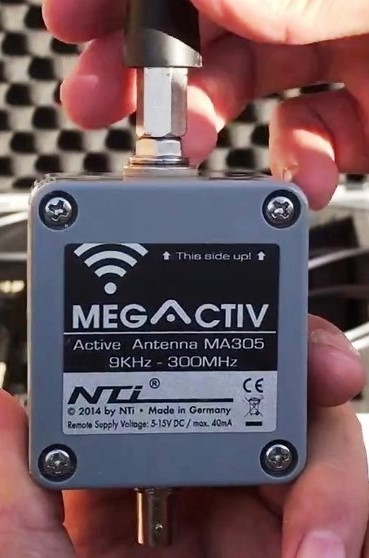
Hi there, you might remember my post from last month focussing on the Bonito MegActive MA305 E-field antenna, kindly supplied to me for testing, by Bonito themselves. That post was essentially a report on my experiences travelling to Crete with the MA305, navigating through security at London Gatwick and Heraklion airports (mostly with relative ease), but more importantly, how well it worked with the equally excellent Eton Satellit portable receiver. Whilst in Crete I managed to copy a number of personal firsts, including CRI on 7295 kHz, via their relay in Bamako, Mali, The Voice of Beibu Radio on 5050 kHz, Nanning, XSL ‘Slot Machine’ on 6251 kHz USB, Ichihara, Japan, S32 ‘The Squeaky Wheel’ on 3828 kHz and NHK World Radio Japan, 11910 kHz. I also copied RTM Wai/Limbang FM on 11665 kHz from Kajang, Myanmar Radio on 5985 kHz and AIR Bhopal on 4810 kHz, amongst others – all of which I would certainly consider to be difficult catches in Europe.
The USB-powered MegActive MA305 is perfect for DXing on the move…
Despite excellent all-round results from the ultra-portable USB powered MA305, there was one signal I copied, which more than any other, demonstrated the DXing credentials of this antenna; Radio Tarma from Peru on 4775 kHz. With a TX power of 1 kW, this is a very difficult station to hear in Western Europe, even with a longwire. To catch this station in Crete, with a 22 cm antenna was incredible and it was at that point during my trip that I realised E-field antennas really can work superbly well for hard-core DXers on the move.
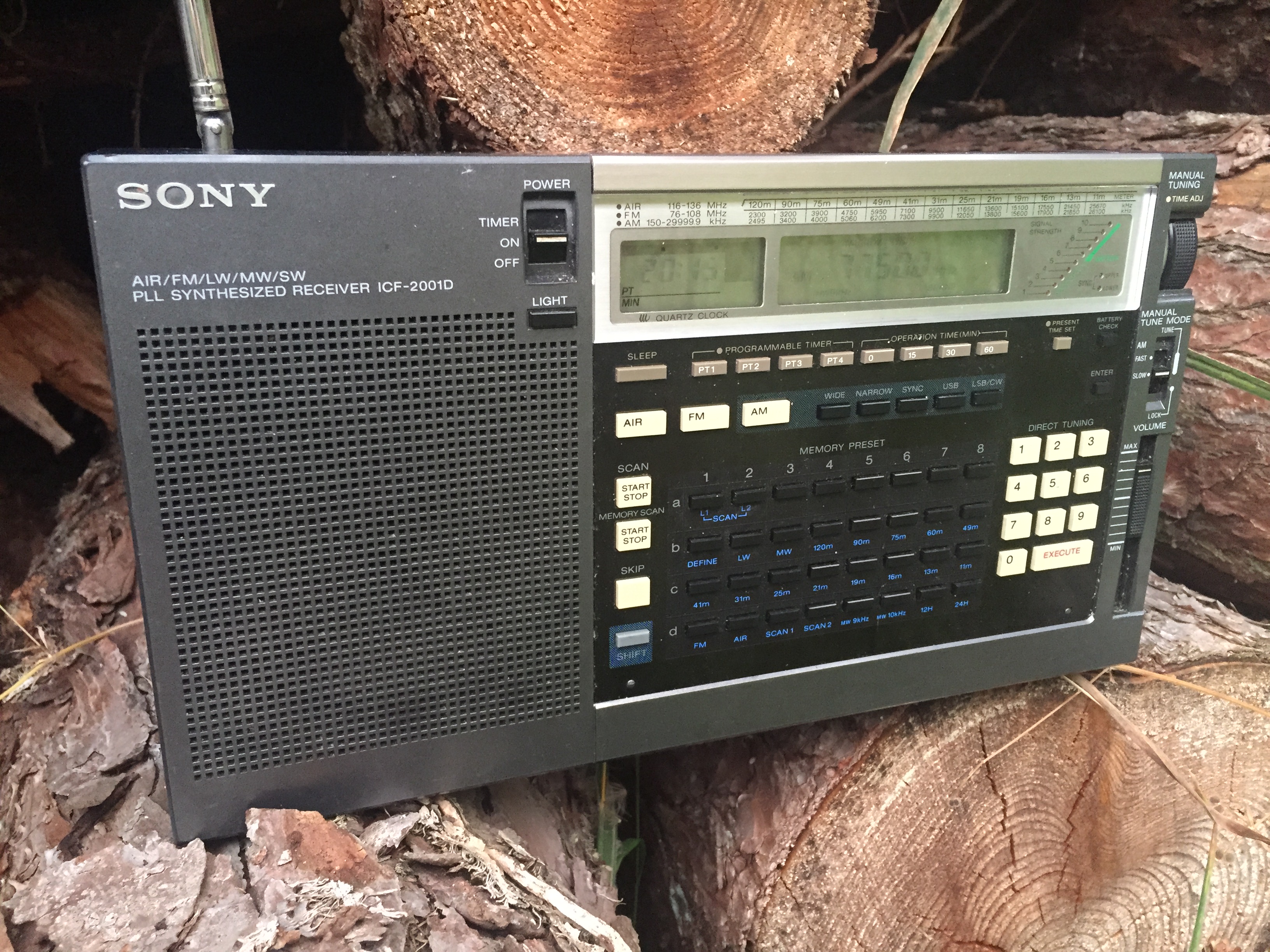
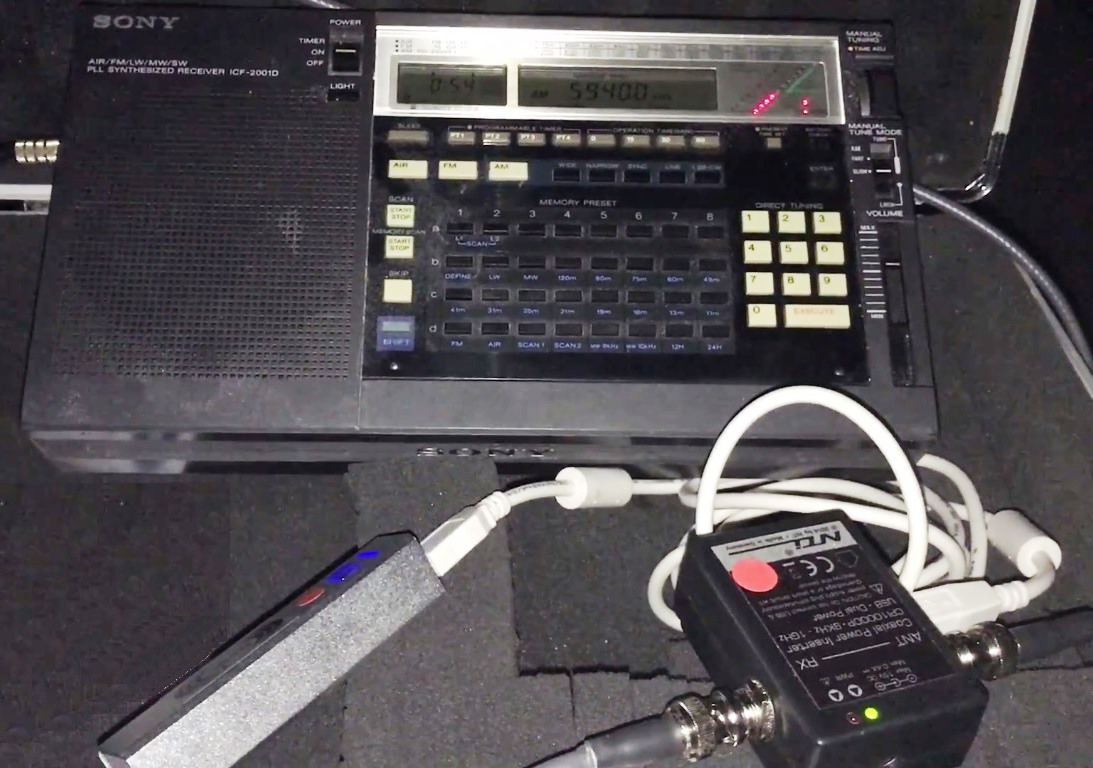
Upon my return to Oxford, I immediately started thinking about a DXpedition to the local woods I use for what I consider serious DXing. For obvious reasons, E-field antennas require an electrically quiet environment to ensure maximum SNR performance. In noisy environments, these types of antennas amplify the signal of interest and the background ‘electro-smog’, thus increasing signal levels but critically, not signal-to-noise. Fortunately, the Oxfordshire wood I have been using for a couple of years is only a 10 minute drive from my QTH as I sort of live in the countryside anyway and the QRM levels there are just about zero. Now, given that this was essentially an experiment to determine the best possible performance from the MA305, I decided to use my best portable radio. It was quite tempting to pack up the Elad FDM DUO which running on a home-brew battery pack has proven itself to be my best (pseudo) portable radio. However, this is supposed to be a real-world test and in this type of scenario, DXpeditions with the Bonito antenna are much more likely to be undertaken with a portable radio. For these reasons I decided to conduct the test with the venerable Sony ICF-2001D. Having proven to be a superb receiver over many, many dxpeditions (check out the evidence on my YouTube Channel Oxford Shortwave Log) and still regarded by DXers as one of the best ever portable radios – possibly the best – it was the obvious choice.
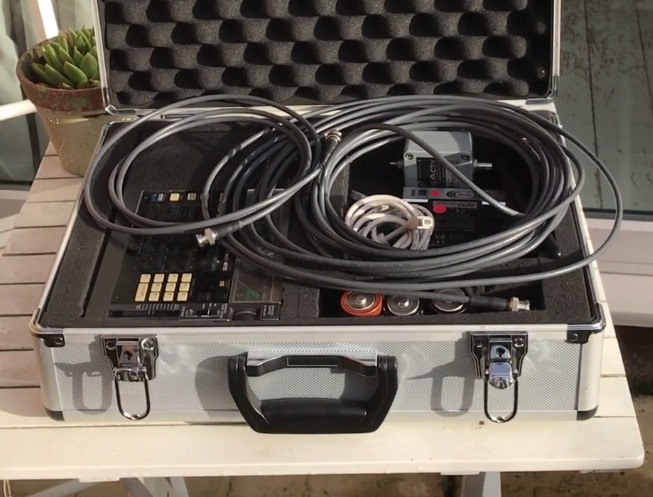
My portable DXing kit comprising the Bonito MegActive MA305 antenna and the Sony ICF-2001D…a bit of a legend in DXing circles…
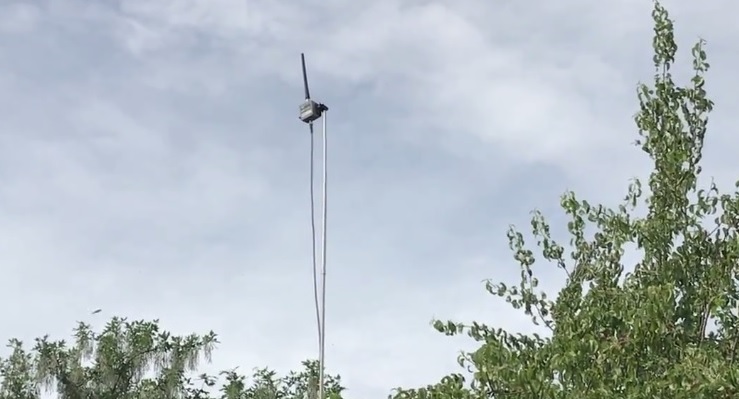
I ventured out in early June around 23:00 hrs BST (22:00 hrs UTC), parked the car on the edge of the wood and proceeded to set up my cheap camera tripod, slightly modified to accept a 2 metre-long stainless steel tube, into which a slightly thinner 1 metre tube was mounted, topped off with my partially disassembled ‘Selfie Stick’ – which made it back from Crete lol. The antenna was set up in less than 5 minutes and approximately 4 metres above the ground – much quicker and easier than de-spooling 100 metres of wire! With fresh batteries in the Sony and the MA305 powered up using the USB power brick supplied by Bonito, I was ready to start listening. Almost immediately I heard and recorded a personal first; Lao National Radio, Laos, signing on 6130 kHz, with an excellent signal. Hearing them in the UK was only made possible by the annual two week shut down of the PBS Xizang transmitter in Lhasa, Tibet, but hey, I’ll take it. A brilliant start to my listening session.
Over the next two hours I was amazed at what could be heard using this 22 cm amplified antenna. Bearing in mind I have spent many hours at the woods previously, listening via various 100 metre longwires and a 200 metre Beverage, my expectations were, I thought, realistic in that the MA305 coupled to the Sony would catch some very good DX. However, I did believe there might be an absence of at least some of the more exotic low power stations on the Tropical Band – afterall the MA305 is a very short antenna. Clearly I was wrong, because what transpired during the session surpassed anything I thought possible with this set-up. A list of reception videos follows below and further below, a selection of embedded videos. Some of the entries on this list simply stunned me at the time. Rádio Educação Rural for starters is such an incredibly difficult signal to hear in Europe, even with a very large antenna. Thus, to hear them on an ultra-compact set-up felt very special. Radio Mali is another station that is very difficult to catch with any modulation, except on a large antenna and yet there they were – at the first time of trying. Similarly, Rádio Nacional de Angola and Alcaravan Radio are exotics that at best deliver very weak audio – and most of the time no audio. Furthermore, the signals from Emisoras Pio XII, Myanmar Radio and Rádio Clube do Pará were verging on what I would call superb…I’d never heard anything like it previously except via 100 (or more) metres of wire.
The ICF-2001D and MegActive MA305 Rádio Educação Rural transmitter site in Tefé, Brazil
So what’s next? Well it would certainly be an interesting experiment to compare the performance of the MegActive antenna with the Wellbrook ALA1530 active loop in a similar environment. I have used the Wellbrook on DXpeditions several times, with often excellent results, however, it’s not designed to be portable and if SNR performance could be demonstrated as similar between these two products, given a very favourable price delta, the Bonito antenna would add up to be a very compelling purchase decision. More on that to come. In the meantime, thank you very much for reading/watching/listening and I wish you all excellent DX.
Please click on the links below for the reception videos on the Oxford Shortwave Log YouTube channel.
Selected embedded reception videos from the list above:
Clint Gouveia is the author of this post and a regular contributor to the SWLing Post. Clint actively publishes videos of his shortwave radio excursions on his YouTube channel: Oxford Shortwave Log. Clint is based in Oxfordshire, England.
Many thanks to SWLing Post contributor, Paul Walker, who forwarded a message from The Bulgarian DX blog which notes that Médi 1 Radio (Radio Méditerranée) has stopped broadcasting on shortwave:
“MOROCCO According to Jean-Michel Aubier France and a mail sent by Abdellah El-Atmami from transmitting station Nador, Radio Medi 1 (Mediterranee) has stopped shortwaves forever: 24 hours on 9575 NAD 250 kW / 110 deg to NoAf Arabic/French”
I’ll miss Médi 1 Radio on shortwave because they always broadcast a splendid variety of music. Sure, I’ll probably listen to them over WiFi radio, but it’s just not the same–I love the way music sounds over the shortwaves.
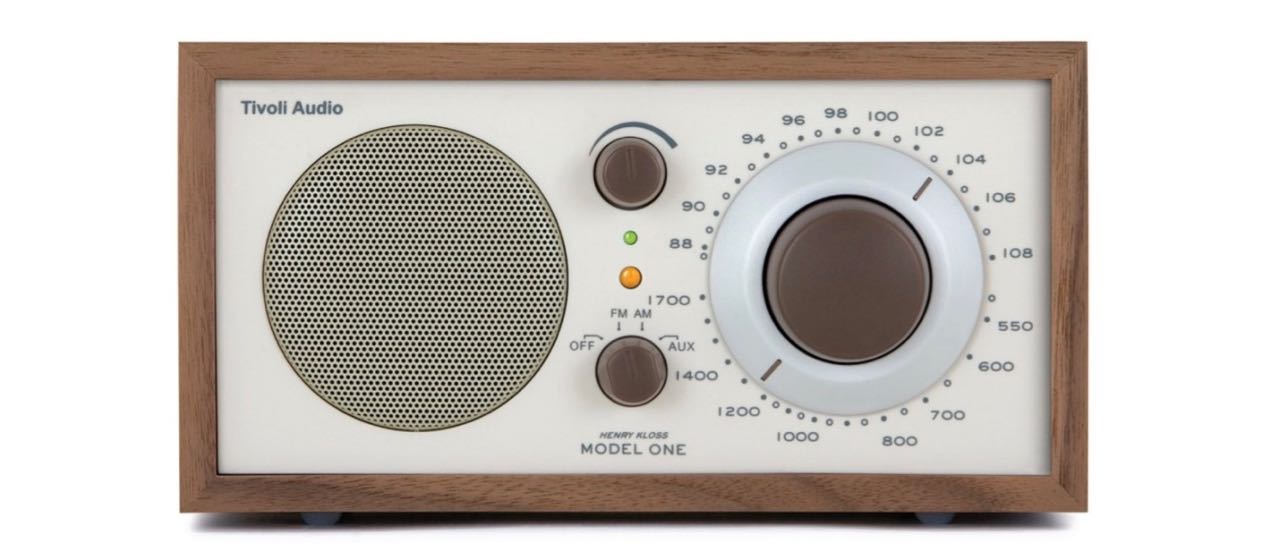
My personal pick is the Tivoli Model One which goes on sale at 3:15 PM EDT today.
Today is Amazon’s “Prime Day” summer sale.
If you’re an Amazon Prime member, you might follow some of the deals that are being posted. This morning, I spent a little time picking out my favorites from all upcoming deals; ones that might interest SWLing Post readers.
I did not see a single shortwave portable in the upcoming deals, but there are other radios. Note that Prime Day pricing is only available while the deal is active or unless it sells out. Until an upcoming deals is officially posted, the sales price cannot be viewed, you’ll simply need to note the product url and return when it’s activated.
I’ve posted links to upcoming deals and current (pre-sale) pricing. I’ve also noted when these items go on sale today. I saw nothing that I personally plan to jump on. If I didn’t already have a Tivoli Model One, I would follow it closely.
In my opinion, this is the Tivoli Model One is the deal to watch. I’ve owned the Tivoli Model One–it has excellent audio fidelity, smooth analog tuning, excellent FM and AM reception and overall brilliant build quality. It’s worth every bit of $99, so if Amazon discounts it further, it’ll certainly be a good deal.
The Prime Day sale will discount this price further starting at 3:15 PM EDT today.
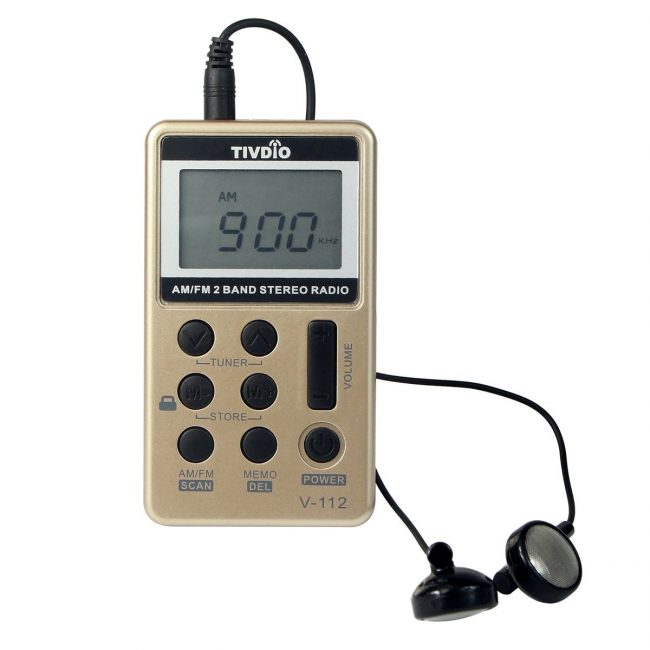
This unit is currently priced at $23.99 US. I have no clue if this AM/FM portable has any good performance characteristics. I encourage you to read the reviews prior to purchasing.
The Prime Day sale will discount this price further starting at 4:35 PM EDT today.
This unit is currently priced at $39.99 US. Again, I have no idea if this is a quality recorder or not, but it receives a four star review from Amazon customers (take those with a grain of salt as well). Still, it has line-in recording and could be an inexpensive way to record radio in the field. It appears the line-in jack is the standard 1/8″ variety.
The Prime Day sale will discount this price further starting at 8:00 PM EDT today.
Feel free to post other relevant deals in the comments section of this post. Again, these prices are only available during the sale window and while supplies last.