Many thanks to SWLing Post contributor, Dennis Dura, who shares a link to the following video from Shepparton News on YouTube:
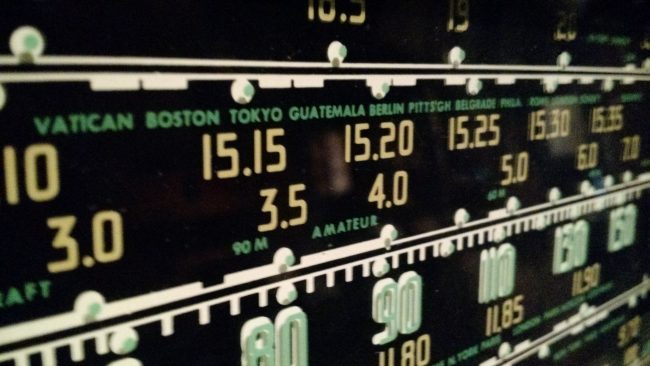
The Tecsun S-8800 tuned to Radio Guinea
Yesterday, while comparing the new Tecsun S-8800 with the PL-880 and ICF-SW7600GR (on the tail gate of my truck) I tuned to Radio Guinea and was instantly reminded why I love music over shortwave.
Here’s a clip I kept rather short for fear that YouTube might note the off-air music and pull the video for copyright infringement (happens all the time). I shot this with my mobile phone, so you can’t hear the bass notes:
Click here to view on YouTube.
Some of my favorite stations for music over the shortwaves are the Voice of Greece, Radio Guinea, Radio Havana Cuba, All India Radio, Radio Romania International, Medi 1 and Zanzibar Broadcasting Corp. Not to mention all of the private broadcasters like WRMI, The Mighty KBC and Bill Tilford’s productions!
Of course, there are so many more stations that play wonderful music! I keep a copy of Alan Roe’s music guide handy!
Though it’s still early days with the S-8800, I can say that it does a fine job reproducing music in full fidelity. Receiver-wise, it mops the floor with my S350DL.
Yaesu VX-3R: Monitoring ATC over a cup of coffee
While I have a number of amateur radio handheld radios, one of my favorites is the recently-discontinued Yaesu VX-3R.
Saturday morning, I took my father to the his local regional airport’s café (KHKY). It’s a frequent stop when I’m in town visiting.
While sipping coffee, talking with friends and watching GA aircraft land and take off, I tuned to the airport’s tower. It was a pretty busy morning air traffic-wise and it was fun to monitor communications from our table with a view of the runway.
While the little VX-3R lacks the power output of larger HTs, and doesn’t include digital modes like D-Star or DMR, it is dual-band (2M/70cm) and its wideband receiver covers the shortwave, FM and MW broadcast bands in a pinch. Best of all, the VX-3R is amazingly portable.
I take the VX-3R everywhere in my compact EDC (Everyday Carry) pack:
I’ve used this little radio while traveling (hitting local repeaters and even simplex), I’ve monitored live air support during a local forest fire, and, on a moment’s notice, even caught an ARISS contact.
This week, I decided it might make sense to purchase another VX-3R to carry in the glove compartment of my truck. Since I already know my way around this radio, and since I already have the software and programming cable through RT Systems--it seems to make sense.
I checked the price at Universal Radio only to find the following notice:
AVAILABILITY UPDATE:
This model is being discontinued. We expect one more shipment in late February which will fill our back-orders. We are not accepting additional orders at this time.
DX Engineering, Ham Radio Outlet and GigaParts also show no stock.
I feel like $139 was a bargain for this versatile amateur HT.
Late last night, a “New Open Box” unit appeared on eBay for $119 shipped. The seller had 100% positive feedback, so I snagged it.
If you’re interested in the VX-3R, your best bet will be to check with radio retailers like Universal Radio and Ham Radio Outlet for used/demo units.
Of course, you might also follow a VX-3R search on eBay.
Post readers: Any other VX-3R owners in our community? Any other fans of monitoring ATC/aviation traffic?
RadioWorld: Radio Pakistan Begins DRM+ Transition
(Source: RadioWorld via Dan Robinson)
The move from AM and FM transmitters to DRM+ technology is currently underway in Pakistan, according to a recent report from Radio Pakistan.
With DRM technology, Radio Pakistan will be able to air three channels from a single transmitter, as well as provide listeners with access to text services.[…]
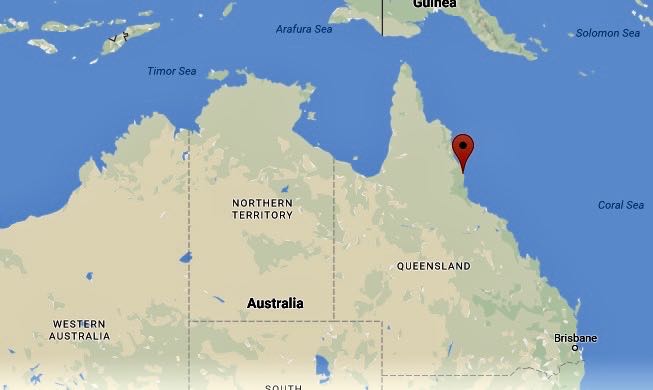
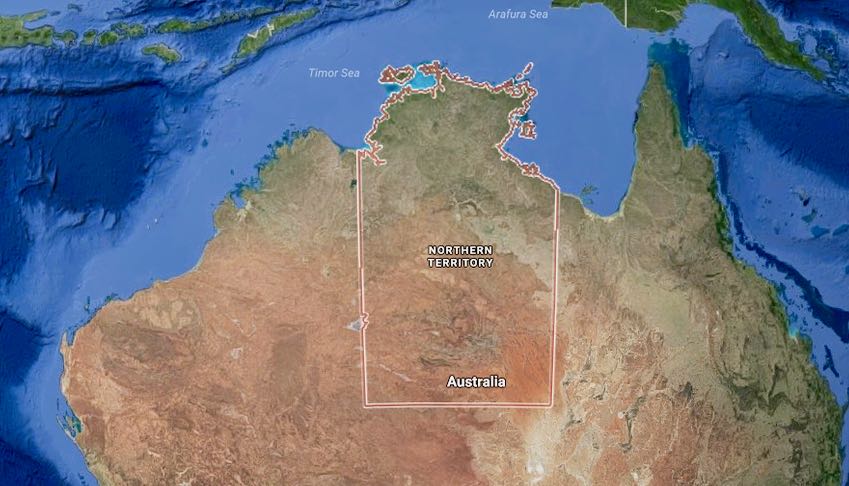
Continued public support for restoration of ABC shortwave services
Many thanks to SWLing Post contributor, Troy Riedel, who shares the following from a Tecsun Radios Australia press release:
Public support has been steadily increasing in favour of the #saveshortwave campaign.
Opposition leader Bill Shorten has written to the Prime Minister to ask him to step in urgently to stop the ABC from carrying out their plan to cut shortwave transmission today, 31st January 2017, saying:“I am deeply concerned that the ABC took this decision without satisfactory consultation with affected listeners, community representatives and emergency service workers and agencies.”
The alternative solutions that the ABC have offered in the place of shortwave transmission are simply not practical for many listeners. In areas beyond signal reception, as many of the affected areas are, both AM and FM radio services are not available, and the equipment needed to receive radio services via satellite on the Viewer Access Satellite Television (VAST) is expensive and impractical for on-the-move reception.
The latest statement from the ABC promised that they would “supply (donate) a VAST satellite system to all Royal Flying Doctor Service bases, and 4WD Radio club bases in the affected region, allowing them to rebroadcast emergency or warning messages as required.” The issue is, however, that The Royal Flying Doctor’s shortwave broadcasts are not designed to cover the same geographical area as the ABC’s dedicated shortwave broadcasts, leading to a potential shortfall in range and availability.
Another key factor is that farmers, stockmen and the like in remote areas have listened in to shortwave broadcasts for 100 years or more – this is a hard-wired habit. How is information about the transition going to be provided to them if not by the only medium that they use?
Jay Mohr-Bell works on a cattle station outside of Katherine, and knows only too well about this:
“The ABC fails to understand that their audience who listens to local ABC via shortwave do not favour this service, this is their only available service,” he said in a statement to Guardian Australia, “essentially the ABC is closing down the shortwave service and replacing it with nothing.”
Alongside important concerns regarding access to emergency announcements, residents are also sadly losing their ability to listen to live radio and music, which is important from a community and integrational perspective.
Federal minister Nigel Scullion said “there was no need for the ABC to make this decision with no notice or community consultation.”
The ABC issued a statement yesterday to say it was “deeply committed to rural and regional Australia and the one-third of Australians who live outside of the capital cities.” From what we can see however, their actions seem to demonstrate otherwise.
We now have proof that our voices are being heard by the ABC and the Australia Government. We invite you to write to your local MP to tell them once and for all how much you value the shortwave service. Alternatively, the Northern Territory Cattlemen’s Association have drafted an email found here that you can sign and send to the Secretary of the Senate Enquiry.
Lets rally together one final time to #saveshortwave
This Australia-based radio retailer is not the only one behind a campaign to restore shortwave services, senator Nick Xenophon says he will introduce legislation to Parliament to force the ABC to reinstate its shortwave radio service.
CC Skywave Sale: $63.88 at Cabelas
Many thanks to SWLing Post contributor, Rich Kuzma, who writes:
I’m a long time reader, and wanted to share this amazing deal I just stumbled across and maybe you would like to pass down to your readers.
Cabela’s is a national chain and I’ve never seen a price this low on the Skywave. I’m also not sure how long the sale or stock will last.
Click here to view this deal at Cabelas.
Thanks again for all the great work on your blog!
Thank you for for sharing this deal, Rich, and thank you for the kind comments!
This is the best deal I’ve ever seen on the CC Skywave, too.
Regular SWLing Post readers know the Skywave is one of my favorite travel radios.
Note that Cabelas does typically charge $10.95 for shipping. If you purchase more than $99 of gear, shipping is free. If you have a Cabelas store near you, the Skywave can be shipped for free for pickup.
Tecsun S-8800: Unboxing, photos, and initial impressions
UPDATE: Click here to read our full Tecsun S-8800 review.
Yesterday, I received a Tecsun S-8800 from Anon-Co in Hong Kong.

I like opening radio boxes to find a cardboard insert like this one. It protects the radio and has so much less waste and individual cardboard bits inside.
As I always do when a new radio comes on the scene, I requested to purchase an early release of the Tecsun S-8800 radio for review months ago. But this time, my contact at the Chinese distributor Anon-Co, Anna, insisted on sending us one “as a gift for the Chinese New Year of the Rooster.”
Because I’ve worked with Anna at Anon-Co for at least a decade, having purchased numerous radios for review and as gifts for family and friends, this was difficult to refuse. I decided there was no need to do so. Each time I do an in-depth review and note shortcomings or deficiencies in the radios I’ve purchased from Anon-Co, Anna immediately passes my feedback and criticisms directly to the manufacturer’s engineers. I believe this feedback loop between customers, reviewers and manufacturers leads to improved product iterations. Of course, sometimes the negatives can be so problematic, manufacturers simply drop the product line and move on (remember the Tecsun R-2010D? Case in point). So, while there are a number of other eBay retailers in China that distribute Tecsun radios, I prefer Anon-Co for these reasons.
Thank you, Anna!
Manufacturers and retailers who send me products for review know that we radio geeks have fairly high expectations of our gear, and will therefore hold them to exacting standards. I’m not the least among these. While I endeavor to be realistic, understanding producers’ limitations and the need for product growth, I also try to keep my reviews as objective as I can, and accommodate my own and others’ particular requirements and preferences.
So In the spirit of full disclosure, I must note that I’m not as avid a user of large portables like the S-8800 (or the Grundig GS350DL, S450DLX, or the C.Crane CCRadio-SW).
Personally I prefer smaller, full-featured travel-friendly portables, or else larger tabletop models. Radios with a form factor like the Tecsun S-8800 are an “in-between” product in my world, thus I rarely use them.
That said, every month I receive questions from readers looking for this very “large portable” form factor. Some hobbyists enjoy a radio that’s easy to operate, featuring simple controls, robust audio, and dedicated external antenna connections. For these listeners, a large tuning knob and generous display are more important than things like SSB and synchronous detection.
In other words, they want a broadcast receiver. Some have literally asked for a modern version of the venerable Panasonic RF-2200 (which I admittedly love, an exception to the rule of my avoidance of large portables). In terms of aesthetics, it’s impossible to live up the legendary solid-state RF-2200, in my opinion…kind of like comparing a modern muscle car with the 1960s original from which it copies its design.
The S-8800, and its many predecessors, were certainly influenced by the RF-2200’s popular design & form factor: large speaker on the left, large tuning knob, wide-spaced knobs, and a generous display. Like the RF-2200, it has a durable, adjustable woven carry strap. 
The S-8800 ships with the accessories in the photo below: an IR remote control, two rechargeable cells, an RF adapter, and a USB charging cable.

Note the charging cable is only a cable; the S-8800 doesn’t ship with a wall-wart type charger. If you’re like me, you probably have a handful of USB chargers scattered around your home that you could use for the purpose of charging this radio. And if you don’t, you can also use any free USB port on your PC to charge it.
USB chargers are cheap and well-known to spew RFI. I doubt you’ll enjoy listening to shortwave or mediumwave/AM while charging the S-8800’s internal cells. It doesn’t appear the S-8800 was designed for listening while plugged in; Tecsun clearly wants you to charge it and then listen, off battery power. The latter is my preference for listening anyway, but it may put off some potential S-8800 owners.
The display is easy to read from any angle, and it’s also easy to view in bright sunlight. In low light, you’ll be pleased with the backlight function.
On the right side of the S-8800, you’ll find an internal/external antenna switch, a DX/local switch, RCA type stereo line-out ports (covered in the photo above) and a stereo headphone jack.
On the back, you’ll find a mini USB port for charging, an antenna port for a radiator and ground wire, as well as an FM antenna port. 
The battery cover is predictably located at the bottom of the back panel and––a first for any shortwave radio I’ve reviewed––accommodates two (supplied) 3.7V Li-Ion (internally) rechargeable cells.
The right side panel has no connections or controls.
I must admit…the Tecsun S-8800 has some front panel controls I really appreciate. Most notably, it has a dedicated AM bandwidth selector and fine tuning control. I also like the dedicated treble and bass controls which can also be found on its predecessors’ front panels.
Over the next week, I’ll be evaluating the performance of the S-8800. I plan to post blind audio samples as I’ve done in the past, comparing the S-8800 to other portables: likely the PL-880 and the ICF-7600GR, PL-660 or PL-680. Please be patient, however, as making these recordings takes time as I like to make sure each radio has a true representative sample and fair shot at showcasing performance.
What about those initial impressions? Yes, I must say I do like the package of the S-8800 better than its predecessors. I like the dedicated IR remote control, the many antenna connections, and, so far, the audio fidelity from the built-in speaker. Makes for a nice package.
But, ultimately, the proof is in the pudding: let’s put the S-8800 on the air and compare it with some benchmarks!
Follow Tecsun S-8800 posts by bookmarking the tag: S-8800