Shortwave listening and everything radio including reviews, broadcasting, ham radio, field operation, DXing, maker kits, travel, emergency gear, events, and more
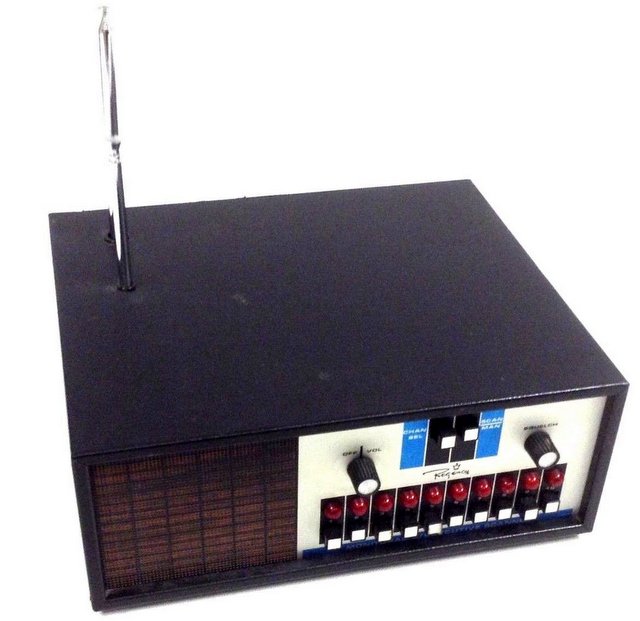
I was not at all familiar with this ham band receiver, Dan. I like the unique analog two digit log/frequency display below the main dial. Looks to be pretty clean, though the seller notes that this is an estate item and has not been tested. A buyer would have to assume the cord and, most likely, a few capacitors will have to be replaced.
ABC International will increase its investment in media services for Chinese, Indonesian and Pacific audiences to offer more comprehensive coverage for regional audiences. These new initiatives, the result of a strategic review, mean ABC International will be better positioned to deliver a greater range of content in these areas.
The changes mean ABC International will create eight new positions to lead content areas and improve editorial and workflow priorities. However, ABC International has also made the decision to end foreign language services in French, Khmer, Vietnamese and Burmese, which are currently single-person operations.
The recommendations from the strategic review and the decision to close some services will fund this reinvestment across the network. ABC International will build on key relationships with China, Indonesia and the Pacific with increased investment in services including:
For Chinese audiences: an additional Mandarin language site allowing ABC International to deliver a full Chinese news service, for Chinese audiences across the region and Australia, complementing the AustraliaPlus .cn cultural exchange portal.
For Bahasa Indonesian audiences: two new roles will be created, a new Content Maker and a Senior Producer, to improve ABC International’s capacity to extend Indonesian language content.
For Pacific audiences: the creation of a new Senior Producer Pacific position focussed on enhancing content for Pacific audiences. This new role will also manage and schedule the Radio Australia Services and the Pacific and Tok-Pisin service that has a distinct value in reaching PNG audiences.
Two other new Content Maker roles will be created, one with a focus on telling Pacific stories to audiences in that region and a second position to tailor English content on Australian life for all platforms.
ABC International Chief Executive Officer Lynley Marshall said the changes to these services would benefit the wider audience base in the region.
“These changes are the result of careful consideration and commitment to our services in the region as we approach 2020,” she said.
“The ABC has a long history with the Pacific nations while Indonesian and Chinese audiences comprise a growing audience base, both across our region and here in Australia.
“ABC International is determined to uphold the highest standards in international media services including our expanding digital and social media services. These changes represent ABC International’s commitment to delivering compelling content to key audiences.”
The closure of the Vietnamese, Khmer and Burmese language services will become effective on 2 December 2016, while the French service will continue until arrangements with France Television end in February 2017. The closures will affect six positions and a staff consultation process will begin shortly.
For more information
Nick Leys
Media Manager, Corporate Affairs
03 9626 1417 [email protected]
Hamurger Lokal Radio via Shortwave Station Göhren, Germany with 1KW to Western Europe:
6190 KHz Every Saturday 07.00 to 11.00 UTC
7265 KHz Every Saturday 11.00 to 16.00 UTC
9485 KHz Every Sunday 10.00 to 13.00 UTC
Contact email: [email protected]
European Music Radio via:
WBCQ to Central & North America on 7490 KHz on 19th November between 22.00 to 23.00 UTC
Contact email: [email protected]
Internet Repeats on 20th November 2016:
EMR will repeat this months Transmissions via two streams running at the following Times:16.00, 18.00, 20.00 UTC http://nednl.net:8000/emr.m3u will be on 96 kbps /44 KHz stereo for normal listening http://nednl.net:8000/emr24.m3u will be 24 kbps / 22 KHz mono will be especially for low bandwidth like mobile phones.
Radio City via:
IRRS to Europe on 9510 KHz (every Saturday) between 09.00 to 10.00 UTC
IRRS to Europe on 7290 KHz (every 3rd Friday) between 19.00 to 20.00 UTC
Challenger Radio to Northern Italy on 1368 KHz every Saturdays from 20.00 UTC onwards
Radio Merkurs on 1485 KHz Every Saturday between 20.00 onwards
Contact email: [email protected]
KBC via:
Media Broadcast to America on 6145 KHz Every Sunday between 00.00 to 01.00
Contact email: [email protected]
Hobart Radio via:
Channel 292 to Western Europe on 6070 KHz Sundays between 21.00 to 21.30 UTC
WRMI to Americas, Asia/Pacific on 9955 KHz Sunday between 03.30 to 04.00 UTC
WRMI to Americas, Asia/Pacific on 9955 KHz Tuesday between 22.30 to 23.00 UTC
WBCQ to North America on 5130 KHz Mondays 03.30 to 04.00 UTC
Unique Radio to North Australia Fridays at 08.00 & 14.00 UTC
Unique Radio to North Australia Saturdays at 07.30 & 14.30 UTC
Contact email: [email protected]
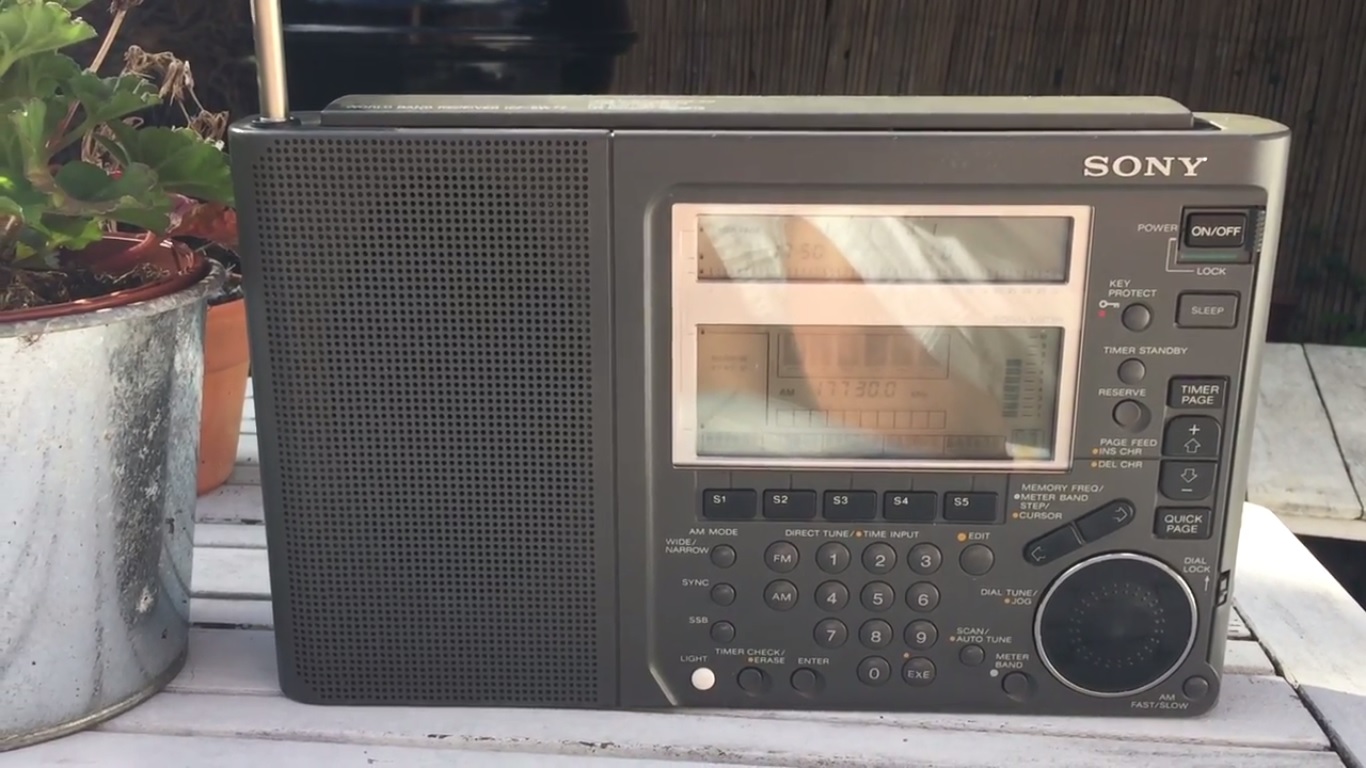
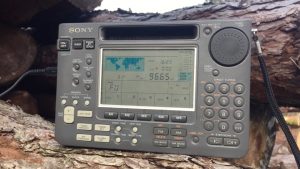
Hi there, after conducting a total of 14 reception tests comparing these two vintage – but excellent portable shortwave radios, there was a clear winner – the ICF-2001D. Interestingly, the second half of the testing identified yet another example of synchronous detection lock dropping out on the ICF-SW77 (during reception of Radio CANDIP, Democratic Republic of the Congo on 5066.4 kHz). Generally, however, and despite a fairly narrow performance margin, the ICF-2001D managed to deliver clearer audio across 5 of the remaining 6 reception tests, giving a final score of 9 to 3 in it’s favour. However, despite the clear win, there is no doubt in my mind at all that the ICF-SW77 is still a great portable receiver and in my humble opinion, remains one of the best ever made.
I believe this comparison test reveals the only likely remaining contender to the top-spot in portable shortwave receivers to be the Eton E1/E1XM. Originally to be marketed as the ‘Satellit 900’ (that never happened) and following a decade of development, involving RL Drake, it was finally introduced in 1995 – and then out of production within a few years. Fortunately, a couple of months ago, I managed to snag one in excellent condition on eBay, for a reasonable price. Now, these radios are not without issues, including, but not limited to; sticky rubber exterior casing, malfunctioning display, failing function keys and general all-round fragility. Not exactly what I would be looking for in a rugged, well-performing portable for my DXpeditions. However, as someone who is always exploring ways to ‘push the performance envelope’ and the obvious potential benefits of passband tuning, an allegedly superior synchronous detection circuit, 4 audio bandwidth filters and tuning resolution down to 10 Hz, the E1 was impossible for me to ignore. Thus, at some point in the near future, I will perform a similar comparison test with the Sony ICF-2001D and the Eton E1. Whichever camp you might be in, I hope you’ll enjoy the reception videos and find the results/conclusions informative.
For now, wishing you all excellent DX.
The Eton E1; possibly the best portable shortwave receiver of all time?
Clint Gouveia is the author of this post and a regular contributor to the SWLing Post. Clint actively publishes videos of his shortwave radio excursions on his YouTube channel: Oxford Shortwave Log. Clint is based in Oxfordshire, England.
Many thanks to SWLing Post contributor, Troy Riedel, who shares the following guest post:
Review: DoxyTronics Portable HF Magnetic Loop 8020CA
-by Troy Riedel
Before I purchased the DoxyTronics 8020CA antenna, I emailed the owner/manufacturer and asked if he felt this antenna would be a good choice with the radios that I own. He promptly and courteously answered my question and I purchased the antenna on September 30th. I received the antenna approximately 6-days after I ordered it.
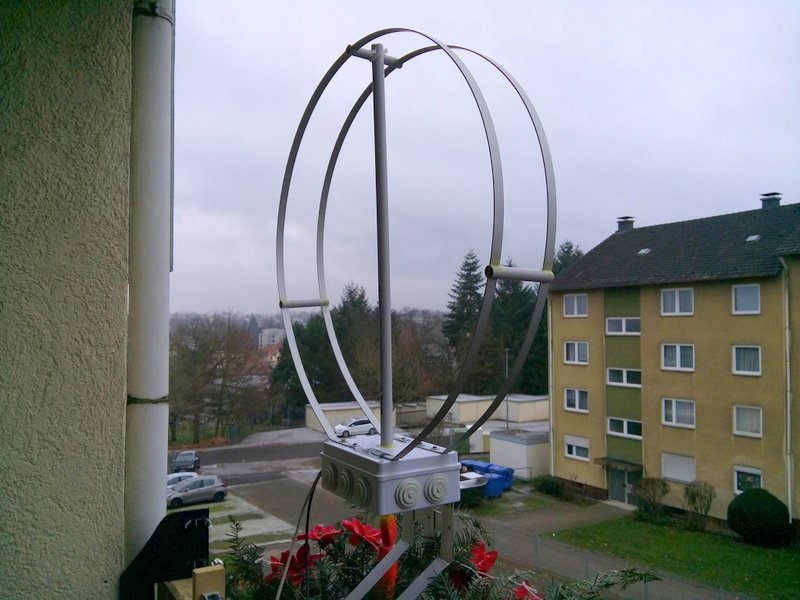
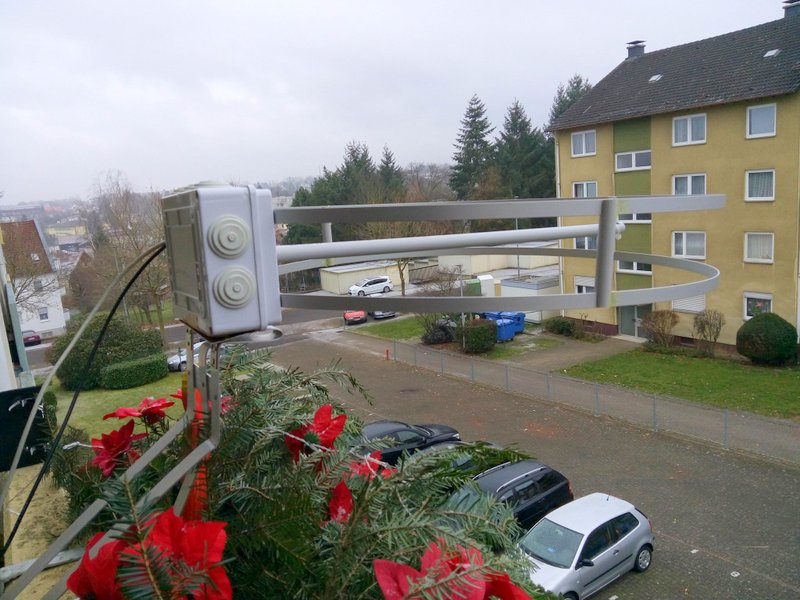
The DoxyTronics 8020CA magnetic loop antenna
I have been evaluating the antenna for 5-6 weeks mostly on my Grundig Satellit 750 and my Grundig G3. I have used other portables but the two aforementioned Grundigs were the radios I used most.
The antenna control box has a ¼-20 hole on the bottom so it can be mounted to a video camera tripod. The assembled antenna weighs 3 lbs. I tried using a light duty DSLR tripod that I own, however that was nowhere near sturdy enough. I had to use a heavier duty tripod (Ravelli AVT) that I use for astronomical purposes. This Ravelli has a weight capacity of 16 lbs and it easily supported the antenna. I’m confident a much smaller and lighter duty tripod than the Ravelli could be used, I simply don’t own anything in-between as my astronomical binoculars and binocular telescopes weigh 5 – 14 lbs.
The 8020CA Antenna consists of a large tuning knob and control box. The control box has switch settings of 3-5 Mhz and 5-15 Mhz. In testing, I found that I could “tune” up to 17.840 MHz. No batteries are needed to operate.
The antenna worked equally well with all of the “portable” radios that I tested (I am a SWL’er, not a ham).
I can summarize the antenna’s performance as this: it is not a magic elixir that will allow you to capture signals too faint to recognize without the antenna attached, but it definitely enhances the signal and “stabilizes” it to the point where the level of the signal remains relatively constant (less peaks & troughs in signal strength).
Hopefully you can hear what I have summarized and concluded. I have included a two and one-half minute recording of the following:
Radio: Grundig Satellit 750 Recorder: RadioShack 140-214 Freq: 7.310 MHz BW: Wide Broadcaster: Radio Romania International Date of Recording: 15NOV2016 Time: 2309 – 2313 UTC
00:00 – 00:30: 8020CA Antenna Attached 00:30 – 01:00: Radio’s Whip Antenna 01:00 – 01:30: 8020CA Antenna Attached 01:30 – 02:00: Radio’s Whip Antenna 02:00 – 02:30: This last 30-second segment is with the 8020CA attached, however I am panning the Ravelli tripod 360-degrees in the horizontal. You will hopefully notice that there is a “sweet spot” where the signal and reception is the best of the entire 2:30 recording. I had set-up the antenna and I completed a quick, test recording of Radio Romania. But conditions changed slightly and the best signal during the recoding was approximately 50-60-degrees away from where the best reception was earlier. This is a positive for the antenna: you can pan the tripod head where the antenna sits to null and/or find the best signal.
Note: this is my first shortwave and radio-related review I have ever done. I have done many astronomical reviews – where I have much more experience – so please be kind towards this first attempt.
No worries, Troy! We’re kind and appreciative here–especially since guest posts are all about sharing our experiences and experimentation!
I must say, the DoxyTronics loop is doing a fine job mitigating the local QRM/interference that is easily heard when only the telescopic whip is being used. I’m also impressed that a passive loop this modest in size has so much gain without amplification.
In addition, Mike Terry, posted a link to this Leading Article from The Times which focuses on the BBC expansion. This content is behind a paywall (though you can register to read two free items per week) but here is an excerpt from the conclusion that I found particularly interesting:
“The radio may seem an irrelevance in the age of the internet but it is the most intimate of the so-called mainstream media and as such poses a challenge to authoritarian rule. Radios are cheap, ubiquitous and can whisper truths under the bedcovers. There is nothing that dictators hate more than direct access to the ears of their subjects.”
Indeed.
Please support this website by adding us to your whitelist in your ad blocker. Ads are what helps us bring you premium content! Thank you!