Shortwave listening and everything radio including reviews, broadcasting, ham radio, field operation, DXing, maker kits, travel, emergency gear, events, and more
Many thanks to SWLing Post contributor, Nick Booras, who writes:
Hello Thomas
I recently got a new Icom 9500 and have made several in depth videos on it for my YouTube channel including multiple direct comparisons to other premium receivers.
The United States has begun work on the deployment of a new long-range over-the-horizon radar system for the United States Air Force, which will be placed on the Pacific island of Palau.
The sensor station, known as the Tactical Mobile Over-the-Horizon Radar, or TACMOR, will be set up on the highly strategic island of Palau. The sensor station intends to improve the situational awareness of US and allied forces operating in the region in the air and maritime domain.
The Department of Defense announced on December 28 that it had granted Gilbane’s Federal business a $118.4 million contract to develop the structural foundation of a new US Air Force radar station to be built in the Republic of Palau.
Gilbane Federal will build reinforced concrete pads and other foundational components as part of the firm-fixed-price contract to set up the Tactical Mobile Over-the-Horizon Radar system, the Department of Defense said.
The Naval Facilities Engineering Systems Command Pacific acts as the contracting activity for what is known as the TACMOR infrastructure project. The work is anticipated to be finished by June 2026. [Continue reading…]
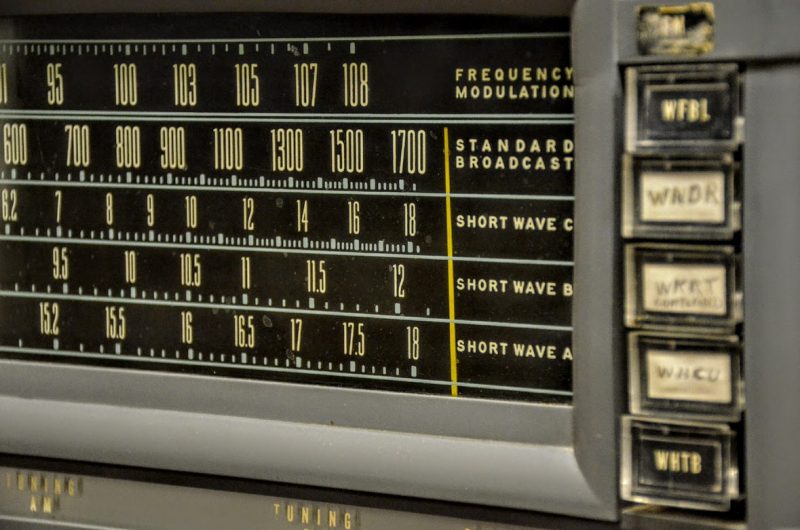
Radio receiver is one such gadget that people have been using for many generations. After the invention of radio communication by Guglielmo Marconi in 1895, the first radio receiver was also invented by Marconi. A radio receiver is an electronic device that can only receive radio signals and can convert the radio signals to audio and sound. A radio receiver can receive radio signals of various frequencies by tuning to a particular frequency. These frequencies are of two types – Amplitude Modulation (AM) and Frequency Modulation (FM). A radio receiver capable of receiving any analog audio on AM/FM frequency is called analog radio receiver and for many years people were using analog radio receivers.
Since the invention of analog radio by Marconi in 1895, many companies started manufacturing radio receivers. First came the De Forest RJ6 in 1916, and later many analog radio receivers like Sony TR-63 (1957), and H.H. Scott 350 (1961) came in the market, and they were the first analog radio receivers of that kind. After the emergence of digital electronics and digital radio transmission, digital radio receivers started to capture the market – receivers capable of receiving Digital Audio Broadcasting (DAB) – digital radio transmission. In 2003, Pure launched the PocketDAB 1000 and It was the world’s first pocket digital radio capable of playing DAB radio stations. However, radio receivers became diversifying when internet technology was implemented in them, which made it possible for the companies to introduce internet radio receivers. An internet radio receiver can be either an app of a computer or can be a standalone receiver, connected to the internet to receive internet radio stations. Kerbango internet radio receiver from 3com was the first standalone internet radio receiver of 21th century. This change in the technology of radio receivers even went beyond internet radio – after the arrival of Software Defined Radio (SDR).
Many thanks to SWLing Post contributor, Alan Roe, who shares his B-22 (version 2) season guide to music on shortwave. Alan provides this amazing resource as a free PDF download:
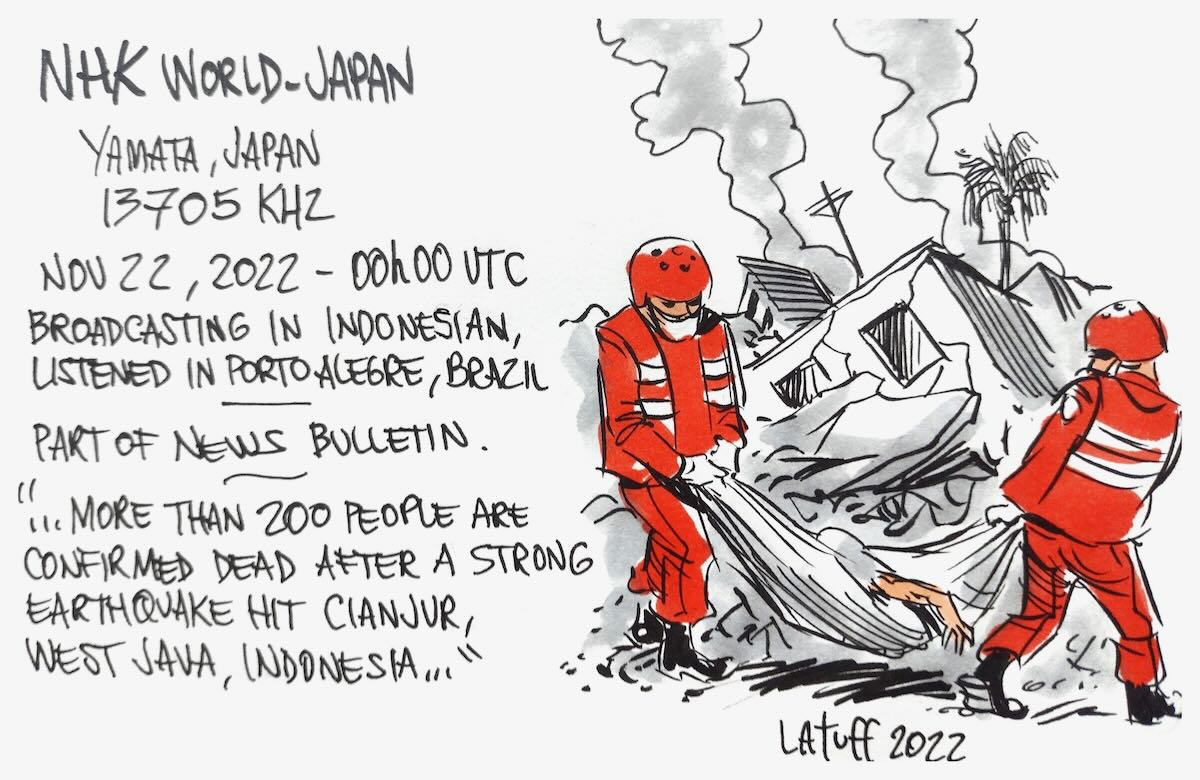
Many thanks to SWLing Post contributor and noted political cartoonist, Carlos Latuff, who shares his radio log art of a recent Voice of Korea broadcast.
Carlos’ goal is to vividly illustrate the broadcaster’s message in his own unique artistic style and is not a reflection of his own beliefs or those of the SWLing Post. His objective is for his artwork to add historical context and put a visual with the news, reporting, and/or–as is often the case–propaganda:
Carlos notes:
Part of Voice of Korea’s news bulletin, broadcasted in English from Kujang, DPRK, and listened in Porto Alegre, Brazil. Shortwave frequency of 12015 kHz.
Press statement of Kim Yo Jong, Deputy Department Director of the Central Committee of the Workers’ Party of Korea stating, among other things, that “they (South Korea govt) are the ‘faithful dog’ and stooge of the United States” and “a stray dog gnawing at a bone given by the United States.”
I tuned the 7,390 kHz frequency of Radio New Zealand at 14:10 UTC on November 16 on the 4 receivers. I used the narrow and wide filter on each receiver.
I state that a storm was in progress in the area, the afternoon signal was very discontinuous with a difference on the 3 different antennas.
Surprising the result of the internal cross loops which I use a lot when there are thunderstorms in the area to listen to anyway; their behavior is definitely very good despite being inside my shack.
The Mini Whip is excellent on long and medium waves but gets worse above 7 MHz. In fact I only use this antenna for medium and long waves.
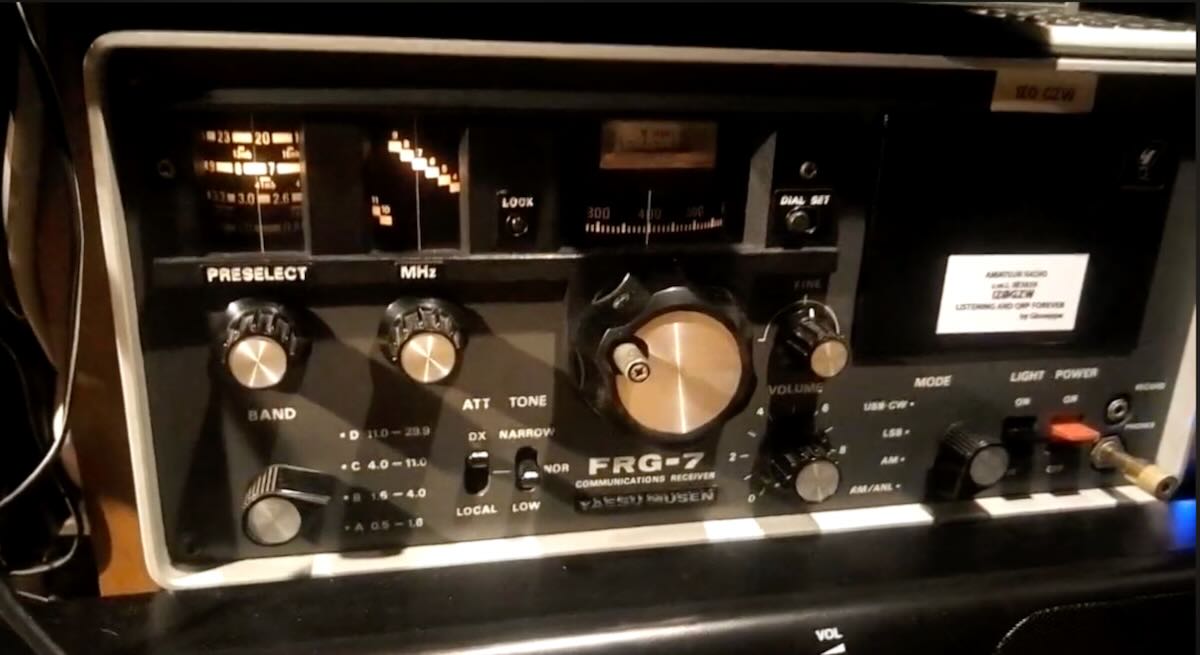
A good signal also from the external naval vertical of 8 meters with a “soft” listening on the Yaesu FRG-8800.
Judge dear friends your comments are welcome!
I wanted to compare these 4 “glories” that have accompanied most of my life and that I still consider excellent.
Attached the link tot he video on my Youtube channel:
I wish everyone a good listening …
73. Giuseppe Morlè iz0gzw.
Thank you so much for sharing this, Giuseppe! We love your videos and demonstrations especially since they so often involve antennas that you have home brewed. Your cross loop antenna is truly amazing!
Radio Waves: Stories Making Waves in the World of Radio
Welcome to the SWLing Post’sRadio Waves, a collection of links to interesting stories making waves in the world of radio. Enjoy!
AU2JCB Special Event Station (Nov 25 – Dec 13, 2022)
Many thanks to SWLing Post contributor, Datta, who shares the following announcement:
AU2JCB is a special event call-sign to commemorate the birth date (30 NOV) & to pay homage & to tell about the great INDIAN scientist Acharya JAGADISH CHANDRA BOSE who is recognized as the “Father of Wireless Communication” by the scientific community of our world &IEEE.
I, VU2DSI, have been operating with this call sign for the last 17 years since 2005 & operate AU2JCB from 25 NOV 2022 to 13 DEC 2022.
The Details of operation —-
Period: 25 NOV 2022 to 13 DEC 2022
Frequencies:
10 M: 28545, 28510,28490
21 M: 21235, 21310, 21350
20M: 4210, 14250, 14310
40 M: 7040, 7150
80 M: 3710
6M in FM mode 50800, 51500
10 M: 29700
Preferably the operation will be on higher bands according to propagation conditions.
QSL— Direct to VU2DSI, “SURABHI” MEHERABAD. AHMEDNAGAR.414006. INDIA.
FOR DX STATIONS PLEASE SEND 2IRC’s—–IF POSSIBLE— as many many DX stations are requesting QSL’s.
I will appreciate the GOOD number of used postal stamps instead of IRC as I love collecting stamps.
About
Aacharya J.C.Bose is well known as the “Father of Wireless Communication”.
Acharya Bose’s demonstration in 1895 & 1897 predates all.
Bose transmitted wireless signals to a distance of a mile. Popova in Russia was still trying remote signaling at this time & the first wireless experiment by Marconi was not successful until May 1897.
Bose is a pioneer in microwave optics technology.
Bose’s invention of 1-centimeter to 5 millimeters radio waves is being used in radars, satellite communication& remote sensing.
Bose’s concepts from his original 1897 papers are now incorporated into a new 1.3 mm multi-beam receiver on the NRAO (National Radio Observatory) 12 Meter Telescope.
Bose anticipated the use of P-type& N-type semiconductors & hence 60 years ahead of his time. Bose developed the use of GALENA crystals for making receivers.
In Bose’s presentation to the Royal Institution in London in January 1897, he speculated on the existence of electromagnetic radiation from the sun. This radiation from the sun was not detected until 1942.
My Dad and I took a road trip to tour the 1 MW FM community tower in Crestwood, MO, serving the entire St. Louis metro area combining 10 FM radio signals into two antenna systems.
Special thanks to the Audacy engineers who allowed us to take a peek at their (very clean!) transmitter rooms and equipment!
3ZZZ breaches community radio broadcast rules in its coverage on Ukraine (ACMA)
The Australian Communications and Media Authority (ACMA) has found Melbourne-based community broadcaster 3ZZZ in breach of community broadcasting rules in its coverage of the invasion of Ukraine by Russia. Continue reading →
Please support this website by adding us to your whitelist in your ad blocker. Ads are what helps us bring you premium content! Thank you!

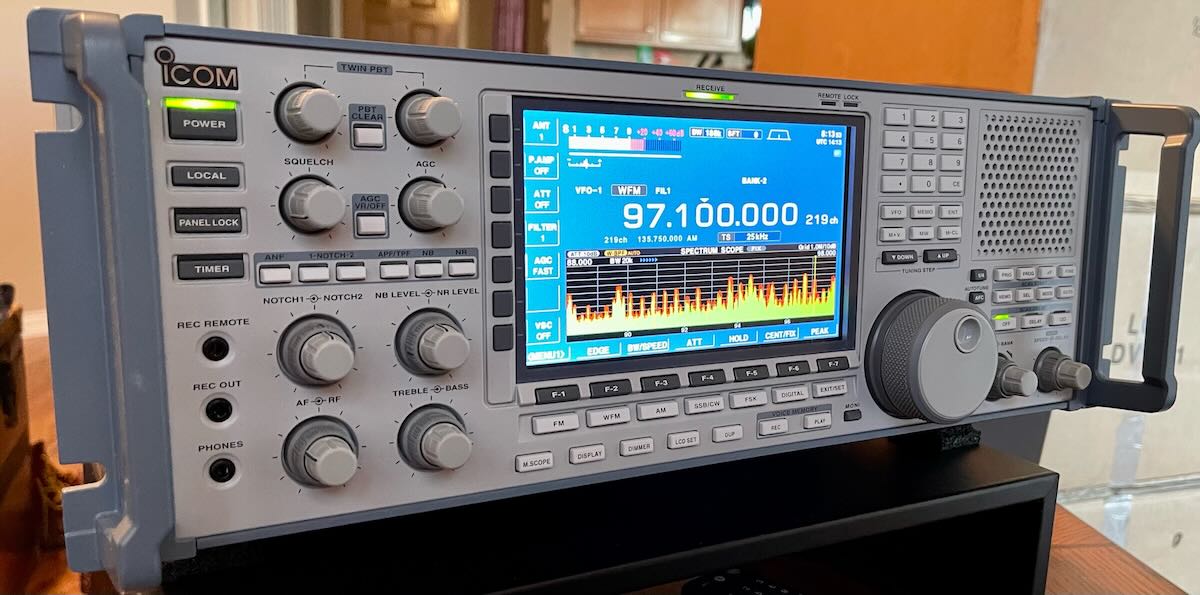 Many thanks to SWLing Post contributor, Nick Booras, who writes:
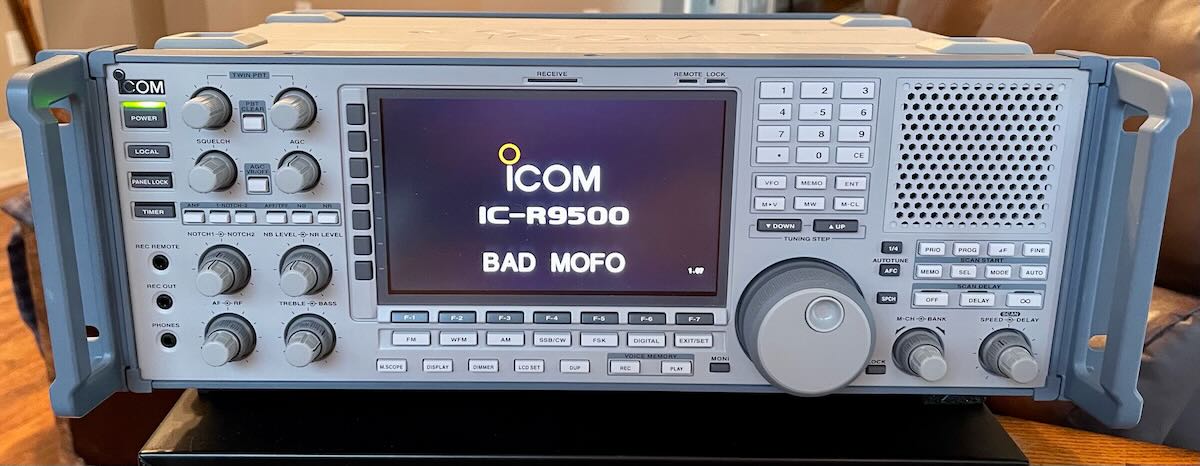 Thank you for sharing this, Nick. The IC-R9500 is an impressive receiver indeed!