Monthly Archives: October 2020

Icom IC-705 Blind Receiver Test #2

Icom IC-705

Test #2: 40 meters CW

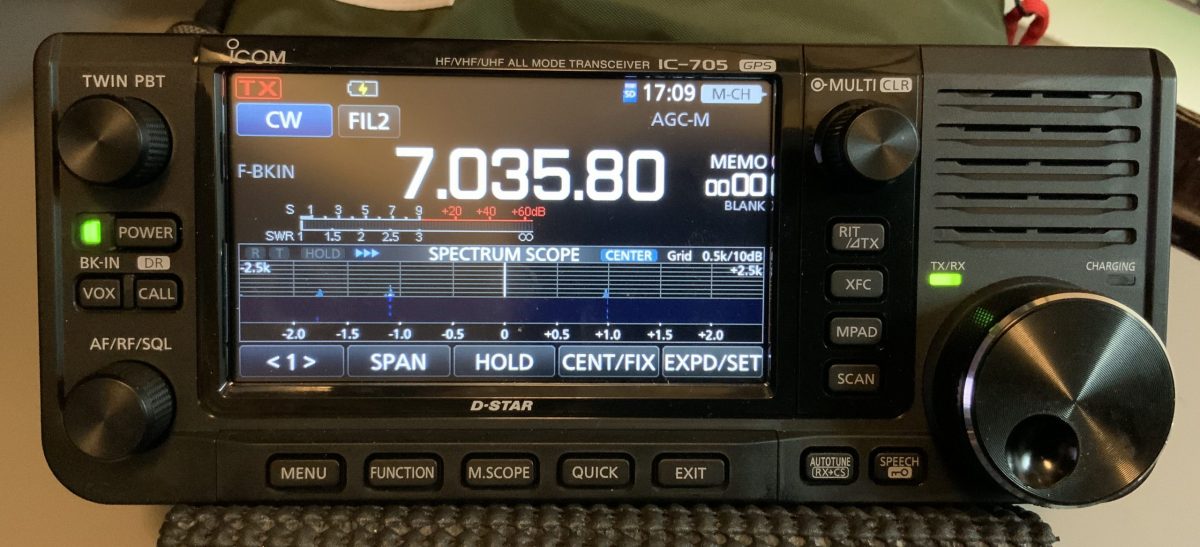
In this second test (click here for #1) we’ll listen to the Icom IC-705, and one other comparable radio, tuned to a 40 meter CW station. Each recording is roughly the same length (2 minutes).

I’ve done my best to match these radios in terms of audio and receiver settings, but it’s certainly not perfect–these are essentially real world, not laboratory conditions. Indeed, making these recordings comparable in CW is incredibly challenging as the mode is so incredibly narrow and challenging to zero beat with radios that can tuned so precisely.

Notes:

  • Both radios are using the same antenna via my ELAD ASA15 Antenna Splitter Amplifier
  • Both radios are set to the same bandwidth: 0.5 kHz
  • I’ve tried to match AGC settings on all radios
  • Both radios have different audio EQ characteristics–not all are fully adjustable
  • Both have separate recording devices and are not matched perfectly in terms of audio levels. In other words, you may need to adjust your volume a bit to compare.

My advice would be to focus on aspects like signal intelligibility, selectivity and signal to noise.

Please listen to each recording, then kindly answer and submit the survey below. Thank you!

Radio A

Radio B

Survey

Participate in our Icom IC-705 Blind Receiver Test #1

I’ve been asked by a number of readers to do a blind audio/receiver test of the new Icom IC-705 transceiver. I’m happy to say I’ve started the process today.

Instead of publishing one long survey with multiple types of recordings (AM, SSB, CW, etc.) as I’ve done in the past, I’ve decided to create a post for each test. This will make the process of completing the survey much easier. Additionally, it won’t require that you respond to each test in order to submit your pick.

Test #1: 40 meters SSB

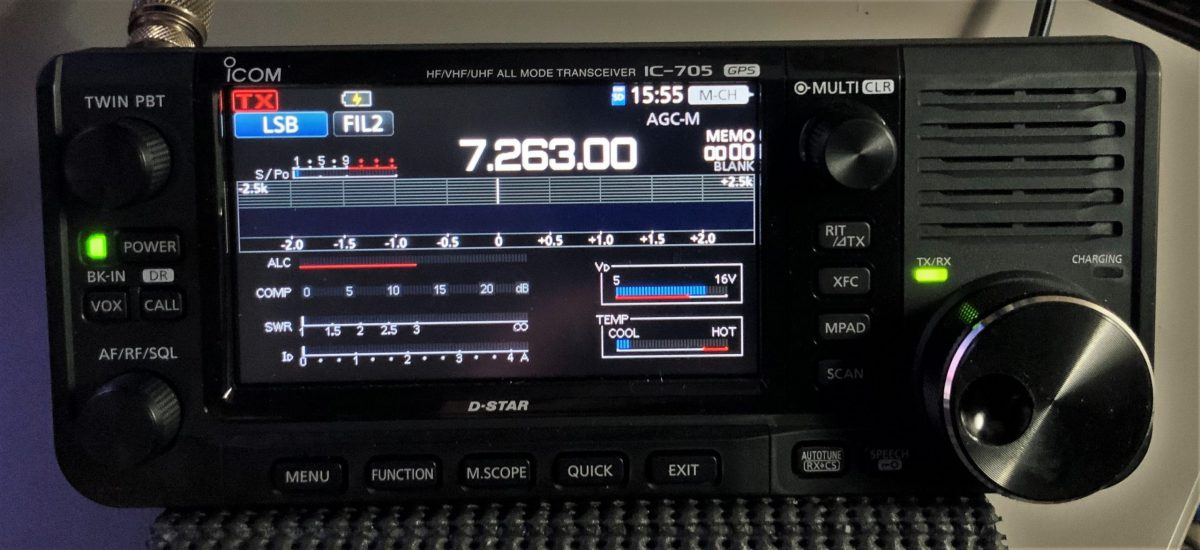
In this first test we’ll listen to the IC-705, and two other radios, tuned to a weak 40 meter station in lower sideband (LSB) mode. Specifically, this is ham radio operator W3JPH activating Shikellamy State Park in Pennsylvania for the Parks On The Air program. I like this test because it includes a weak station calling CQ and both weak and strong stations replying. There are also adjacent signals which (in some recordings) bleed over into the audio. Each recording is roughly the same length (5 minutes).

I’ve done my best to match these radios in terms of audio and receiver settings, but it’s certainly not perfect–these are essentially real world, not laboratory conditions.

Notes:

  • All radios are using the same antenna via my ELAD ASA15 Antenna Splitter Amplifier
  • All radios are set to the same bandwidth: 2.4 kHz
  • I’ve tried to match AGC settings on all radios
  • All three radios have different audio EQ characteristics–not all are fully adjustable
  • All three have separate recording devices and are not matched perfectly in terms of audio levels. In other words, you may need to adjust your volume a bit to compare.

My advice would be to focus on aspects like signal intelligibility, selectivity and signal to noise.

Please listen to each recording, then kindly answer and submit the survey below. Thank you!

Radio A

Radio B

Radio C

Survey

Any off-air recordings of the Happy Station Show with Eddy Startz?

Eddy Startz (Source: Radio Netherlands Archives)

I was recently contacted by Shortwave Radio Audio Archive subscriber, Geoff Gilham, who asked: “Do you know if any recordings of Edward Startz exist?

That’s a very good question, because unfortunately, we have no off-air recordings of Eddy  Startz in the archive at present. Startz had a very long tenure at RNW retiring from the Happy Station at the end of 1969, so there must be recordings out there.

Post readers: If you have off-air recordings of Eddy Startz on The Happy Station Show, please comment or contact me. We’d love to add them to the archive! Many thanks!

Tecsun PL-990 Hidden Feature: Toggling ferrite bar and telescopic whip antenna on MW & LW bands

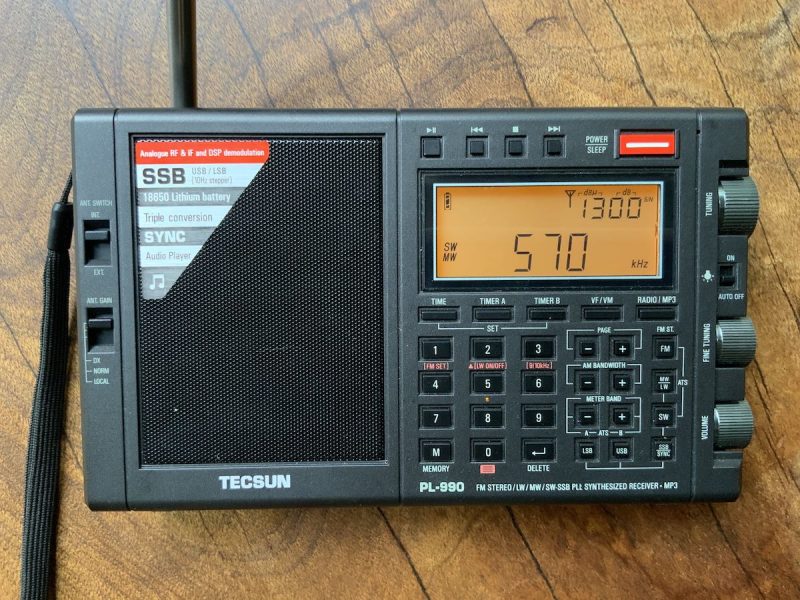
Many thanks to Anna at Anon-Co who recently shared an interesting “hidden feature” of the Tecsun PL-990 which allows the user to toggle between the internal ferrite antenna and telescoping whip antenna while on either the mediumwave or logwave bands.

Procedure:

1) Turn on the radio and then select either the MW or LW frequency band.

2) Press and hold the [ 3 ] key for about 2 seconds.

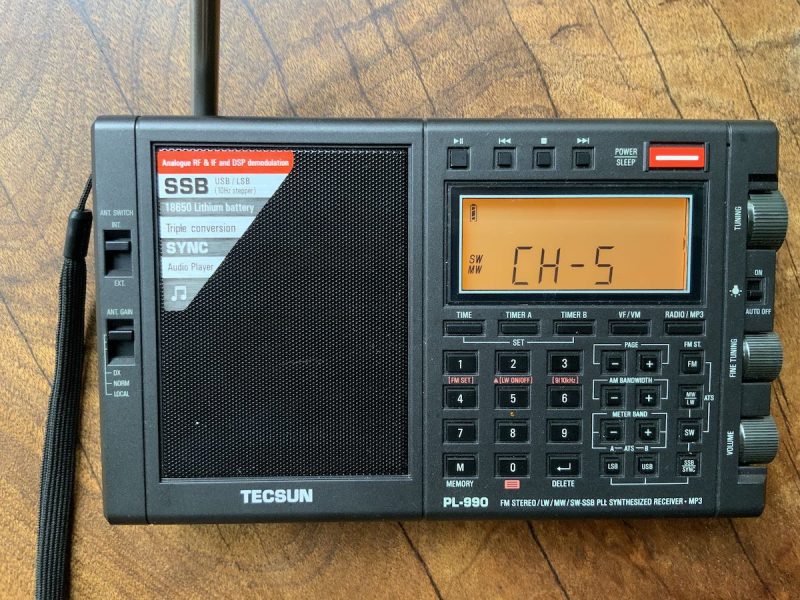
When the display shows “CH-5” (actually an “S” which stands for shortwave telescopic antenna) the radio is now set to MW/LW reception using the telescopic whip antenna.

The display will show MW (or LW) and SW on the left side of the screen.

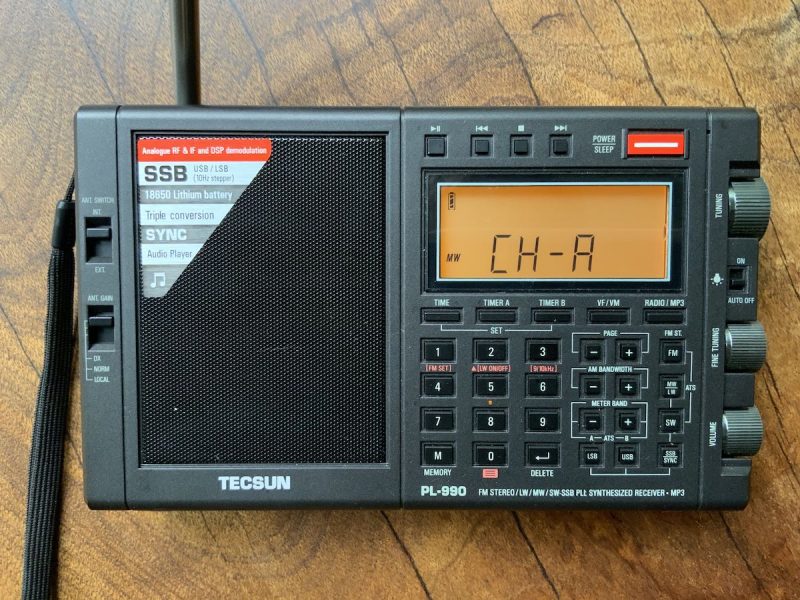
3) Press and hold the [ 3 ] key for about 2 seconds.

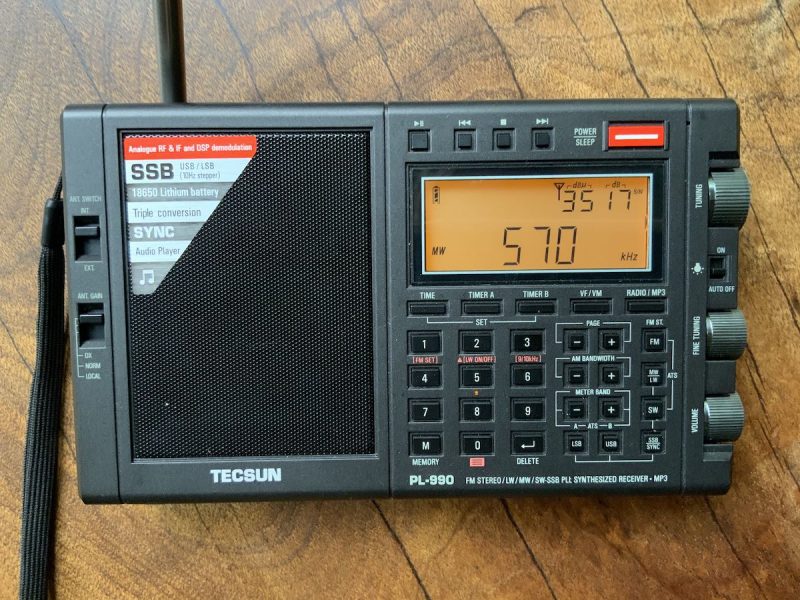
When the display shows “CH-A” (“A” stands for “AM”) the radio is now set to MW/LW reception using the internal ferrite antenna once again.

The display will also show only MW (or LW) on the left side of the screen.

Pressing and holding the [ 3] key essentially toggles between these two antenna settings.

I’ve actually found that, indoors, using the whip antenna on mediumwave has been more effective at mitigating RFI with strong local stations. The ferrite bar antenna has more gain, of course, but for locals it’s not necessarily needed.

Many thanks, Anna, for sharing this tip!

RSGB Convention is live Saturday, October 10, 2020 until 17:00 BST

I’ve been watching some of the RSGB Convention programs this morning. There are a number of fascinating topics now and this afternoon (UK time).

There are actually two simultaneous video streams with different topics each hour. I’ve embedded both below.

Click here to check out the program.

Stream 1

Stream 2

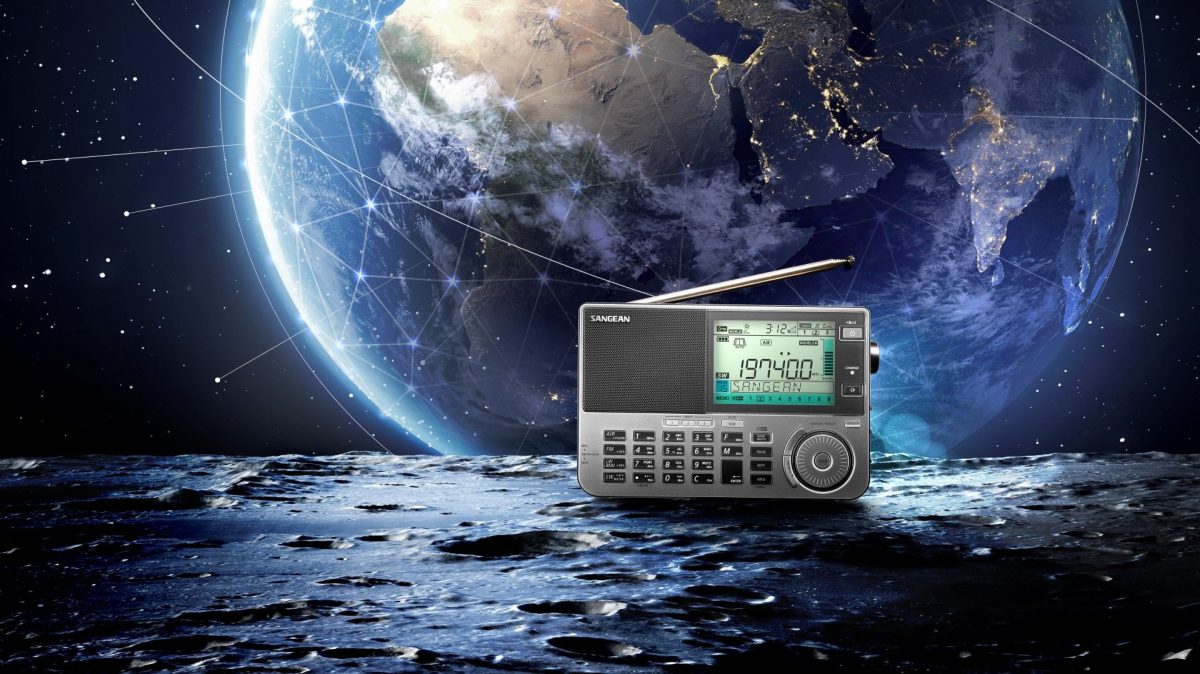
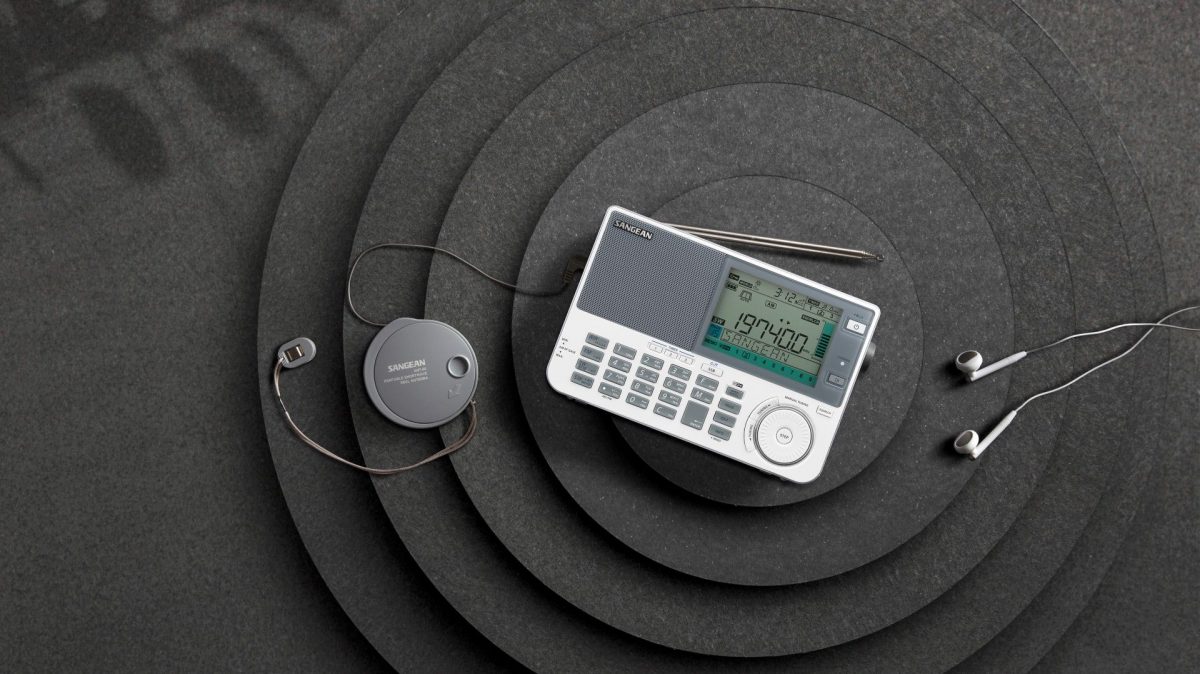
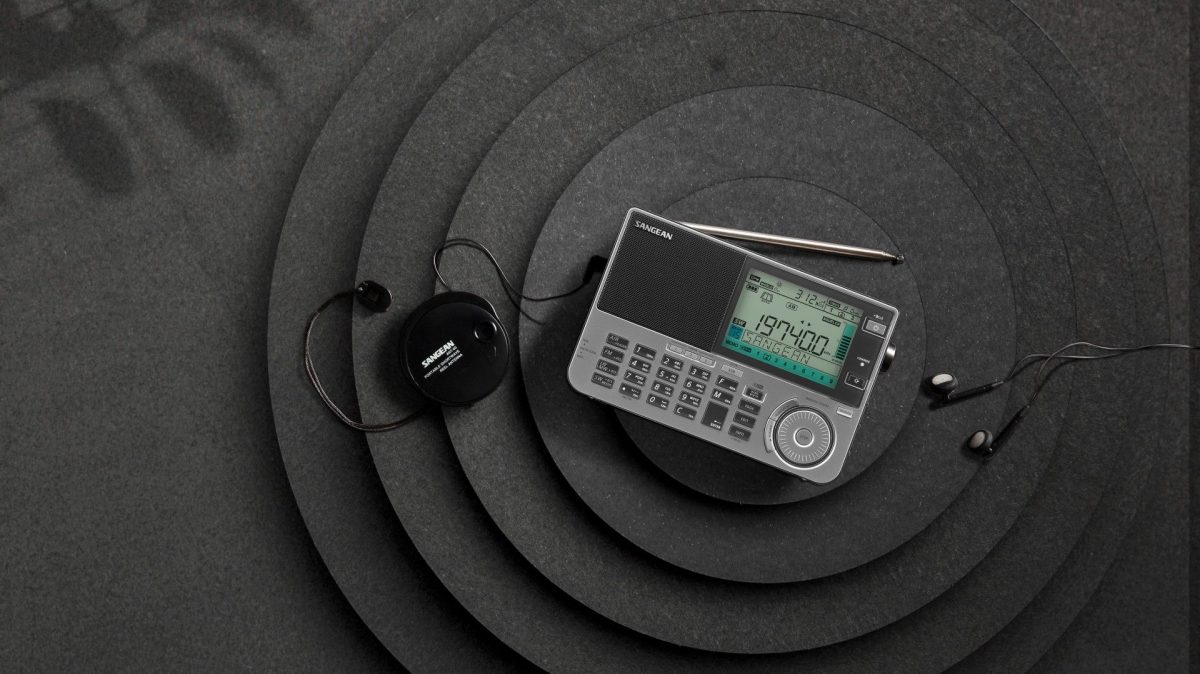
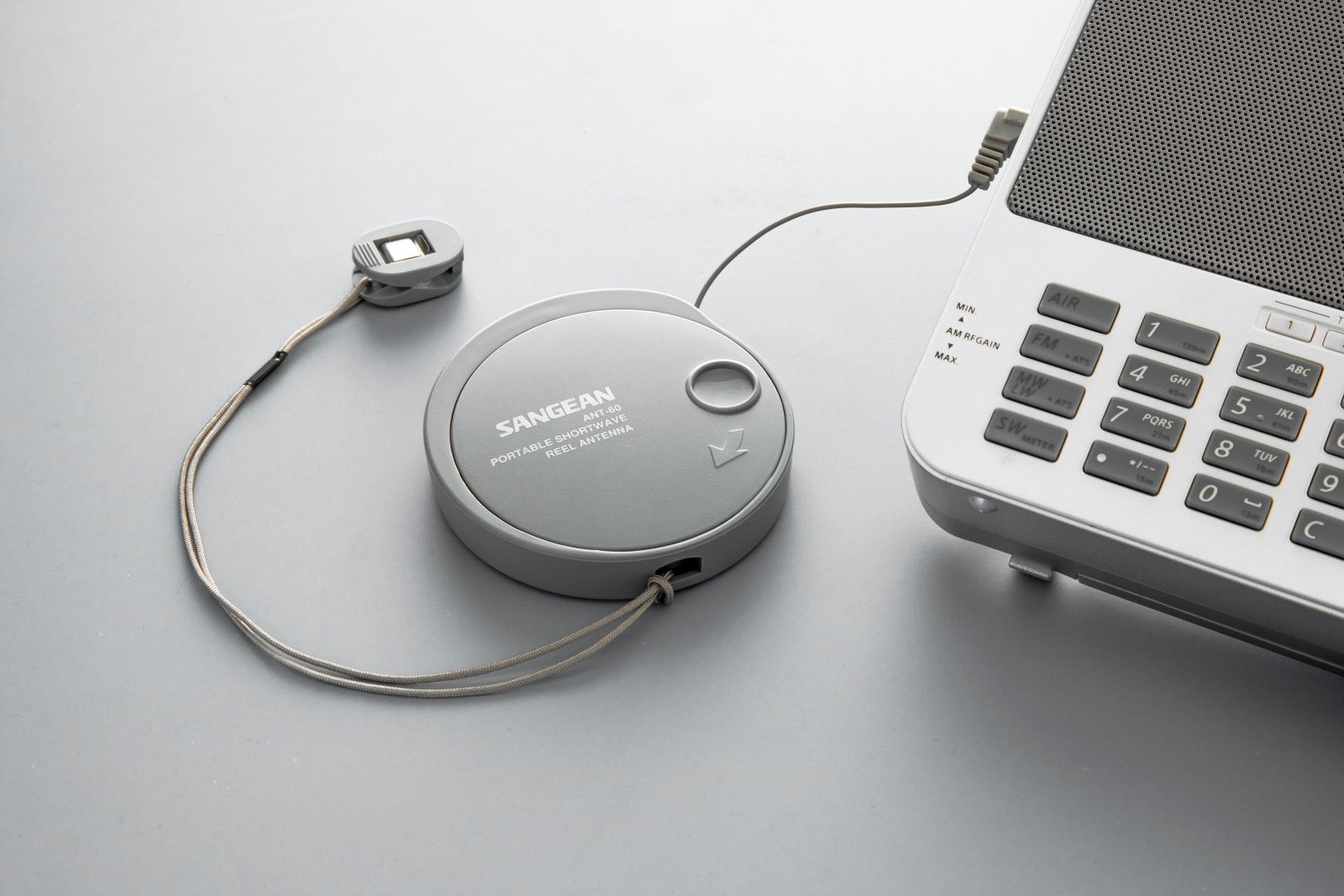
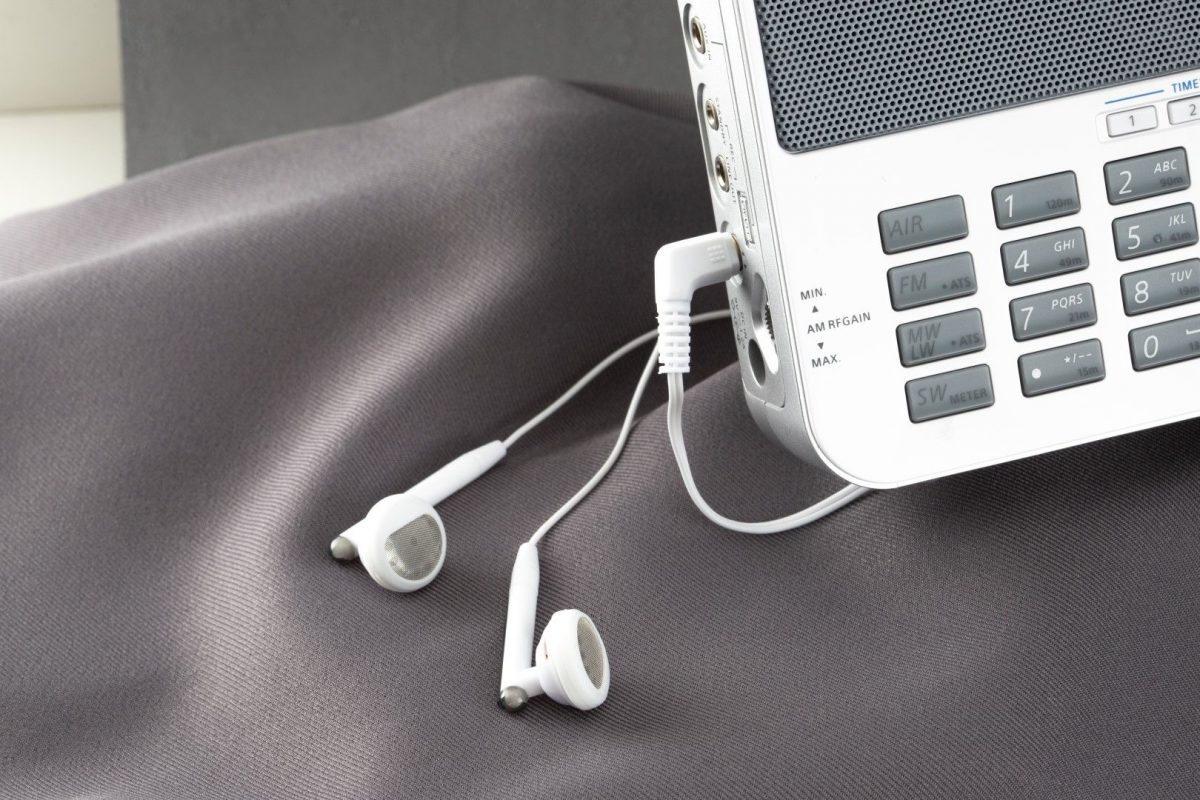
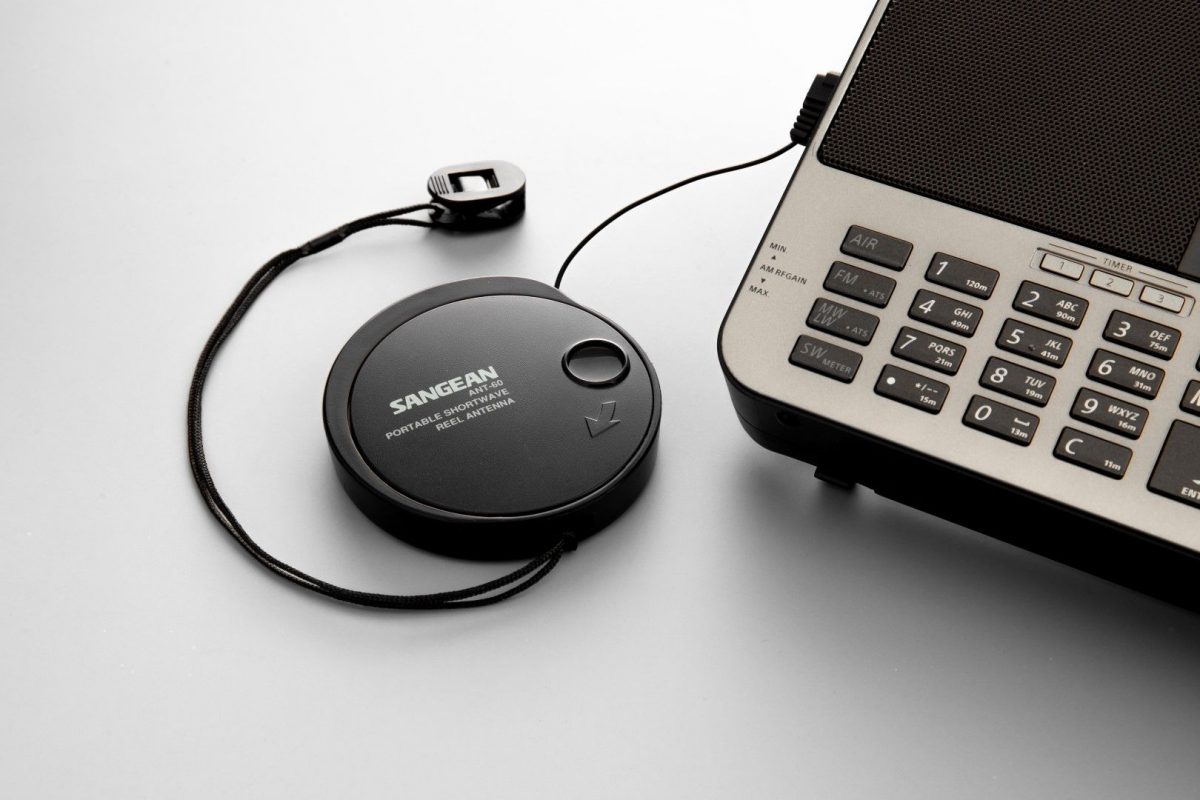
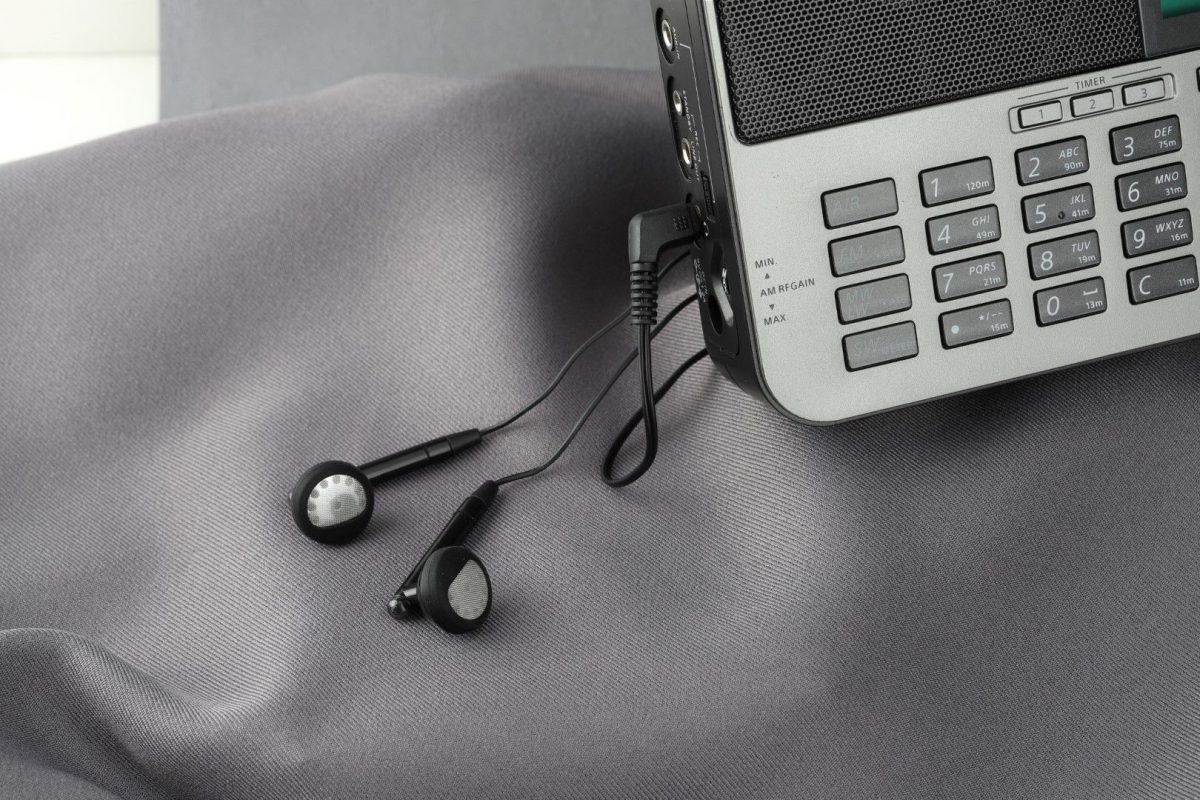
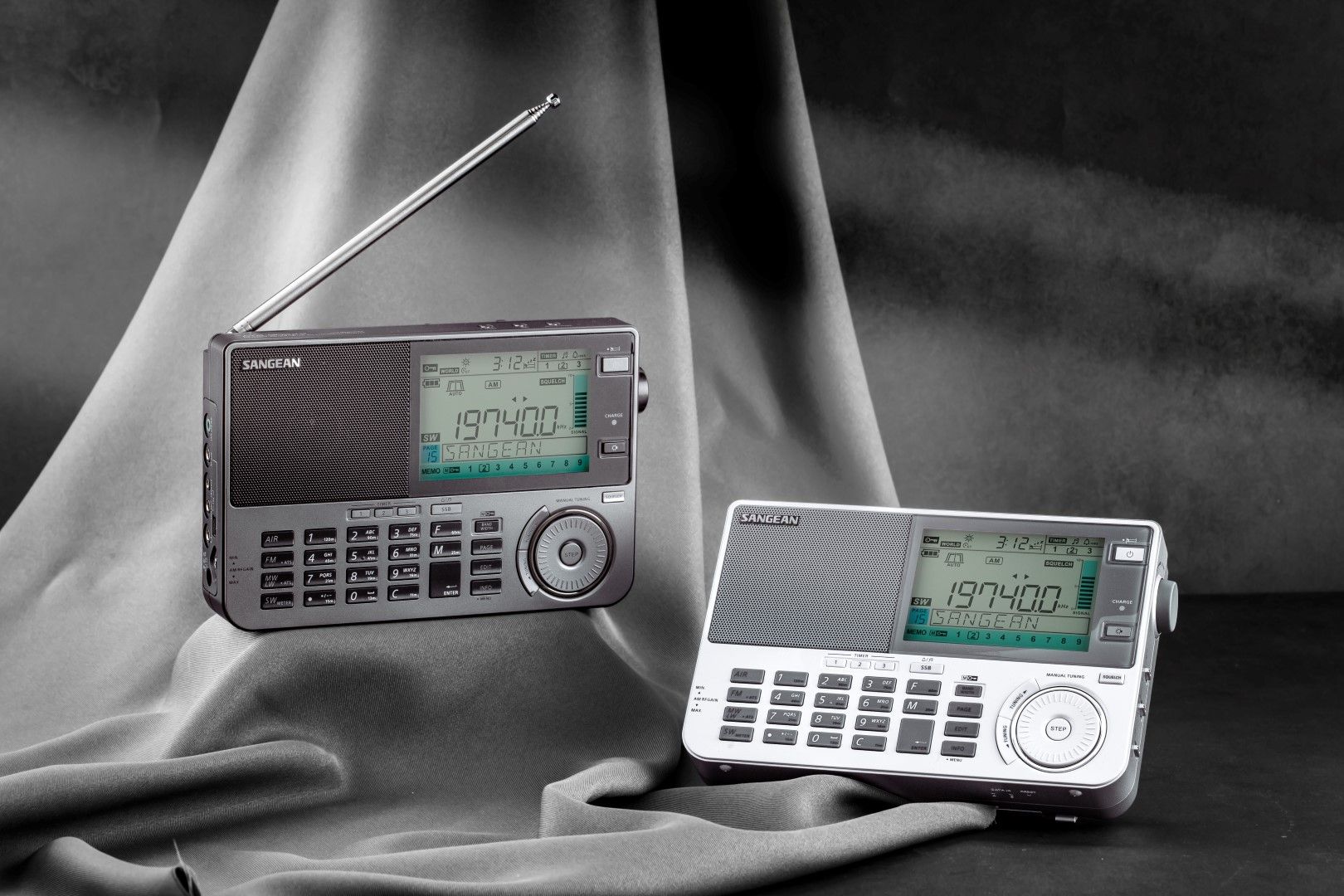
Sangean ATS-909X2: Pricing (Europe), Photos, and Product Details

Many thanks to SWLing Post contributor, Armin Sander, who shares a link to the Sangean Europe website where they’ve posted details about the upcoming Sangean ATS-909X2 (click here to read our previous post about this model).

Sangean Europe has announced the price as €329.00 with two color options of “white” and “black.” The “black” model almost appears steel or light charcoal in color based on the product images.

They are taking pre-orders with an expected delivery of December 15, 2020.

They also posted the following product description and list of features::

The Discover 909X is the perfect world band radio to roam the globe with. The world is brought together via radio since a long time; enjoy it with the Discover 909X. Never forget your favorite radio stations because of the alpha-numeric memory system. The built-in 3″ speaker lets you conveniently listen anywhere. You can also listen to the Discover 909X using the 3.5mm headphone jack and the included earbuds. It provides performance and features generally found in the more expensive table top communication receivers into a very compact and stylish package. For the monitoring professional who’s on the go, the Discover 909X is the ideal choice! Featuring wide-band AM/FM coverage from long wave, medium wave, short wave. The DSP comes as standard (Digital Signal Processing) with the unit and includes a number of features which can significantly enhance reception through improved interference rejection. For everyday portable operation, use four “AA” batteries (not included). For operation from your home, choose the supplied AC-AC power adapter.

** 10 New Improved Features **

1. Air band
2. FM Soft mute
3. RDS PTY and RT
4. MENU and INFO setting
5. Auto Bandwidth Control
6. Bigger LCD
7. 3 times the preset quantity
8. Dimmer LCD back light and fade IN/OUT
9. 10Hz tuning step of SSB
10. Smart charger (single battery detection)

Photos


Thank you again for the tip, Armin! We’ll continue to post updates as they become available.

Click here to check out the Sangean ATS-909X2 at Sangean Europe. 

Radio Waves: NAB and DRM Compete for US Digital, 1937 Radio School, iPhone over AM Radio, and “War of the Waves”

Radio Waves:  Stories Making Waves in the World of Radio

Because I keep my ear to the waves, as well as receive many tips from others who do the same, I find myself privy to radio-related stories that might interest SWLing Post readers.  To that end: Welcome to the SWLing Post’s Radio Waves, a collection of links to interesting stories making waves in the world of radio. Enjoy!

Many thanks to SWLing Post contributors Alan, Paul, Bruce Hardie, Josh Shepherd, and Paul Evans for the following tips:


NAB, DRM Spar Over AM Digital for U.S. (Radio World)

Digital Radio Mondiale says its technology deserves to be tested in the United States

The Federal Communications Commission has been hearing from the National Association of Broadcasters and other interested parties about whether to allow AM band stations to turn on all-digital transmission, and under what parameters.

In addition to publicly filed comments, the NAB, which supports the idea, has made presentations to FCC staff about certain specifics — including whether the FCC should allow Digital Radio Mondiale to be tested in this country. NAB says it should not.[]

Remote learning isn’t new: Radio instruction in the 1937 polio epidemic (The Conversation)

A UNICEF survey found that 94% of countries implemented some form of remote learning when COVID-19 closed schools last spring, including in the United States.

This is not the first time education has been disrupted in the U.S. – nor the first time that educators have harnessed remote learning. In 1937, the Chicago school system used radio to teach children during a polio outbreak, demonstrating how technology can be used in a time of crisis.

[…]In 1937, a severe polio epidemic hit the U.S. At the time, this contagious virus had no cure, and it crippled or paralyzed some of those it infected. Across the country, playgrounds and pools closed, and children were banned from movie theaters and other public spaces. Chicago had a record 109 cases in August, prompting the Board of Health to postpone the start of school for three weeks.

This delay sparked the first large-scale “radio school” experiment through a highly innovative – though largely untested – program. Some 315,000 children in grades 3 through 8 continued their education at home, receiving lessons on the radio.

By the late 1930s, radio had become a popular source of news and entertainment. Over 80% of U.S. households owned at least one radio, though fewer were found in homes in the southern U.S., in rural areas and among people of color.

In Chicago, teachers collaborated with principals to create on-air lessons for each grade, with oversight from experts in each subject. Seven local radio stations donated air time. September 13 marked the first day of school.

Local papers printed class schedules each morning. Social studies and science classes were slated for Mondays, Wednesdays and Fridays; Tuesdays, Thursdays and Saturdays were devoted to English and math. The on-air school day began with announcements and gym. Classes were short – just 15 minutes – providing simple, broad questions and assigning homework.

The objective was to be “entertaining yet informative.” Curriculum planners incorporated an engaging commercial broadcasting style into the lessons. Two principals monitored each broadcast, providing feedback to teachers on content, articulation, vocabulary and general performance. When schools reopened, students would submit their work and take tests to show mastery of the material.

Sixteen teachers answered phone calls from parents at the school district’s central office. After the phone bank logged more than 1,000 calls on the first day, they brought five more teachers on board.[]

Listening to an iPhone with AM Radio (Hackaday)

Electronic devices can be surprisingly leaky, often spraying out information for anyone close by to receive. [Docter Cube] has found another such leak, this time with the speakers in iPhones. While repairing an old AM radio and listening to a podcast on his iPhone, he discovered that the radio was receiving audio the from his iPhone when tuned to 950-970kHz.

[Docter Cube] states that he was able to receive the audio signal up to 20 feet away. A number of people responded to the tweet with video and test results from different phones. It appears that iPhones 7 to 10 are affected, and there is at least one report for a Motorola Android phone. The amplifier circuit of the speaker appears to be the most likely culprit, with some reports saying that the volume setting had a big impact. With the short range the security risk should be minor, although we would be interested to see the results of testing with higher gain antennas. It is also likely that the emission levels still fall within FCC Part 15 limits.[]

“War of the Waves: Radio and Resistance during World War II.” (American Economic Journal: Applied Economics)

Abstract: We analyze the role of the media in coordinating and mobilizing insurgency against an authoritarian regime, in the context of the Nazi-fascist occupation of Italy during WWII. We study the effect of BBC radio on the intensity of internal resistance. By exploiting variations in monthly sunspot activity that affect the sky-wave propagation of BBC broadcasting toward Italy, we show that BBC radio had a strong impact on political violence. We provide further evidence to document that BBC radio played an important role in coordinating resistance activities but had no lasting role in motivating the population against the Nazi-fascist regime.

You can find a pre-print at: https://www.econstor.eu/bitstream/10419/202840/1/1016161859.pdf.


Do you enjoy the SWLing Post?

Please consider supporting us via Patreon or our Coffee Fund!

Your support makes articles like this one possible. Thank you!