Author Archives: Thomas

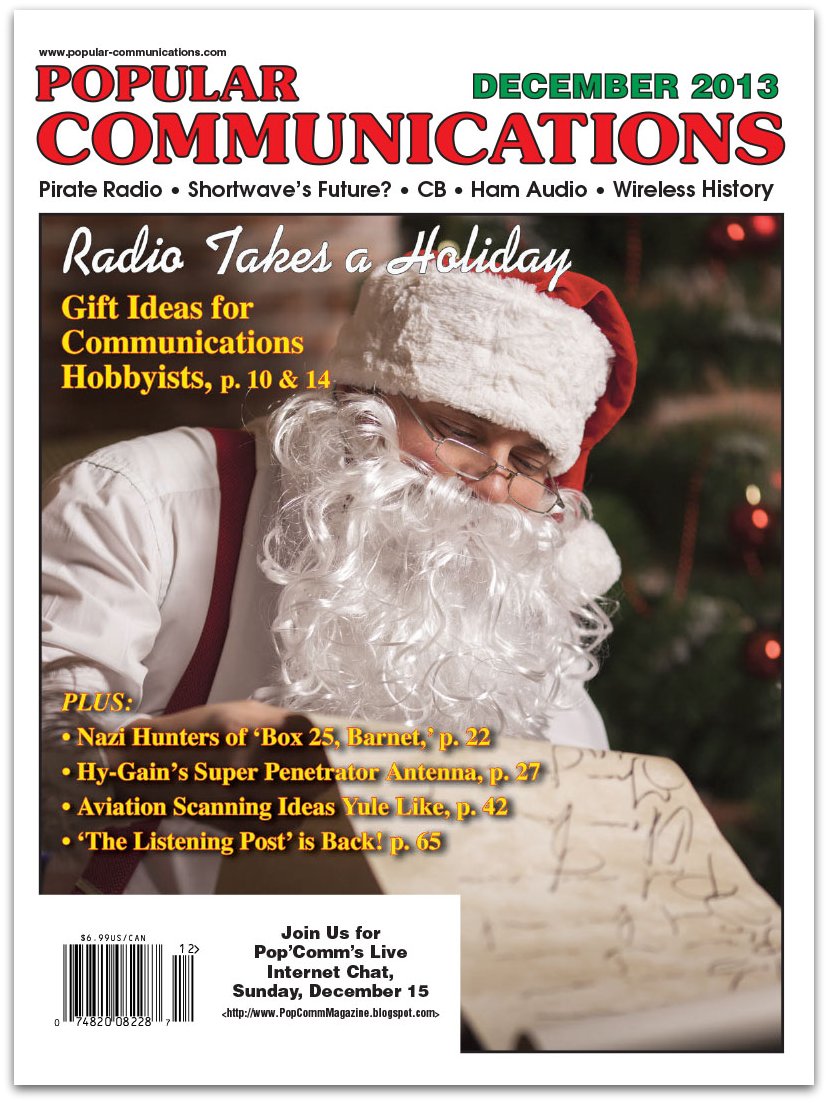
Popular Communications: free download of November and December 2013 issues

2013_12_pc_coverMany thanks to SWLing Post reader Lynn Kelly who writes:

“Anyone, subscriber or not, can get a free copy of the November and December Popular Communications to download as a PDF on the Popular Communications site.

Lynn also mentions that many Pop Comm subscribers may not have received these two issues due to printing problems–thus you should download these while they’re still available.

Simply go to the Popular Communications website to download your copies (download by clicking on the November and December front covers).

For your convenience, here are direct links to download the November 2013 and December 2013 issues.

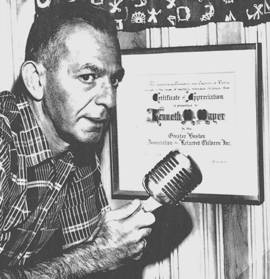
Can you help Bill find a Kenny Mayer aircheck?

(Photo source: http://www.qsl.net/wb1gfh/mayer.html)

(Photo source: http://www.qsl.net/wb1gfh/mayer.html)

SWLing Post reader, Bill Albert, writes:

“I am trying to find an “air check” of Kenny Mayer, a well-known Boston late-night radio show host (now deceased) during the 1960’s and 1970’s. His show aired from 12-2AM Mondays, so it was one of the few interesting things one could listen to at that hour. He would play bits from classic old comedy albums (e.g., Bill Cosby and Bob Newhart in their stand-up days), and he’d ad-lib the sponsors’ advertisement spots himself. He was really a character, and his voice had a very unique cadence and intonation. I did manage to find one clip from a 1966 show featuring a routine entitled “The Great Society Affair”—a parody of the wedding of President Johnson’s daughter. God, how long ago that was!! Different world. There was also a bit by Godfrey Cambridge, and a number of Kenny’s home-made commercials. However, I’ve since lost that clip, and in any case I played and replayed it to exhaustion. If anyone has another “air check” of Kenny’s show, I would love to get a copy.”

If anyone has a lead for Bill, please comment!

If you’d like to read more about Ken Mayer, Bill suggests this article.

[Update: When I posted this request a few hours ago, I mistakenly posted the photo and information for Kenny Meyer instead of Kenny Mayer. Both of these gentlemen were prominent figures in the Boston broadcasting scene around the same time period (hence my confusion!).]

Russia “quietly” ends longwave services

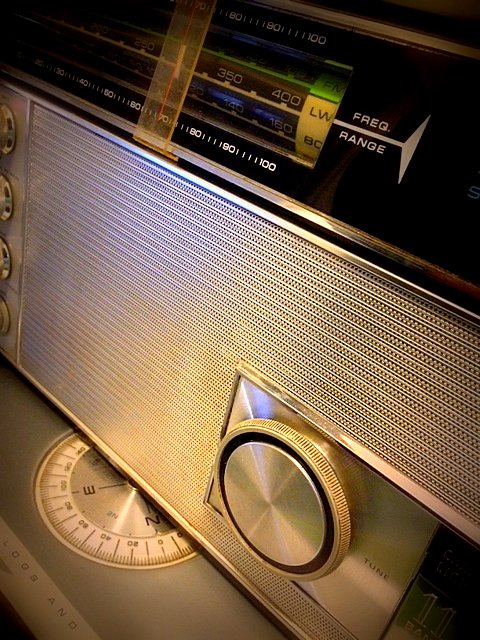
Zenith Transoceanic tuned to shortwaveThe BBC reports that Russia has “quietly switched off nearly all of its long-wave transmitters, ending almost nine decades of broadcasting – as cost finally catches up on the medium.” Read the full story on the BBC News.

Not a huge surprise as many countries are pulling the plug on longwave, despite the medium’s large local broadcasting footprint. It does make one wonder if VOR shortwave could also be pulled with little fanfare or warning.

Indeed, check out Jonathan Marks’ comments on the changes at the (former) Voice of Russia which we’ve mentioned has at least, administratively, been liquidated and consolidated.

I can tell you that for those of us in North America, VOR is now a much harder catch on shortwave–a very strange shift from the ubiquity of the broadcaster’s signal in past decades.

But if you want to hear frank, public comments about how these changes are affecting the staff of VOR, just bookmark and listen to From Moscow With Love. Hosts Vasily and Natasha happily march to their own beat and comment openly to listener inquiries.

TuneIn adds the Shortwave Radio Audio Archive

IMG_0135
I’m pleased to announce that TuneIn Radio has added our Shortwave Radio Audio Archive (SRAA) podcast as a new Internet streaming broadcaster.

For those of you not familiar, TuneIn’s website and mobile apps offer the user the ability to listen to streaming audio of thousands of radio networks and radio stations worldwide, including AM, FM, HD, LP, digital, Internet stations and podcasts. Check out this post from 2012 where we review TuneIn.

TuneInLogoWhy stream shortwave radio recordings?

While most international broadcasters can be streamed directly via TuneIn or via the broadcaster’s website, listening to the shortwave archive will make your computer, smart phone or Wi-Fi radio sound like a proper shortwave radio–you’ll hear all of the noises, fading, ionosounders and things that go “bump” over the ether.

So if you like the low-fi sonic texture of shortwave radio (ahem, I do!) add the Shortwave Radio Audio Archive to your favorites on TuneIn Radio.

Chorus 4: The DSP chip that supports AM, FM, DAB, DAB+, HD Radio and DRM

FrontierSiliconThe London-based digital solutions company, Frontier Silicon, has announced a new DSP radio chip that offers a wide array of available modes and is even DRM ready.

I have seen no specifications for this chip yet, and do not know if it covers the shortwave radio spectrum.

Still, this might be the perfect chip to allow radio manufactures to design an inexpensive, fully digital product in countries where digital platforms are gaining strength (anywhere from the UK to India, for example).

Many thanks to Rob De Santos for apprising me of this. I’ll post the specifications when they become available. Read the full press release below:


(Source: Frontier Silicon Press Release)

Chorus 4 a single-chip solution, integrating four previously separate chips

London, 17th December 2013

Frontier Silicon announces details of Chorus 4, its next generation digital radio chip. Chorus 4 is a single-chip solution, which integrates four previously separate chips to deliver significant cost and energy consumption savings.

Chorus 4 is the fourth generation chip from Frontier Silicon. The chip is designed to encourage the continued advance of digital radio around the world by supporting all major global digital radio standards. Chorus 4 provides solutions for multiple devices, including consumer radios, the automotive aftermarket and, for the first time, smartphones and tablets. The company’s previous solutions have already powered over 20 million digital radios worldwide.

The key features and benefits of Chorus 4 are:

  • Low cost, single chip solution: integration of RF front-end, baseband, application processor and DAC (“four chips in one”) delivers significant cost savings which enable high quality, entry-level price point digital radios
  • Ultra-low power consumption – one month’s listening for 5-6 hours a day on a portable radio with four D cell batteries (comparable to FM performance)
  • Multiple solutions for portable and table-top radios, smart-device docks, wireless speakers, hand-held receivers, sound-bars and audio systems
  • Automotive aftermarket – solutions for head units, integrated convertors and low cost adapters
  • Smart devices – enables digital radio solutions for mobile phones and tablets
  • Bluetooth connectivity – connecting smart devices and digital radios to enable hybrid radio (with interactivity and additional content delivered via IP), music streaming and remote control
  • Integrated service guides – new software will enable listeners to select stations from a single list of digital and analogue stations regardless of platform
  • Multiple radio standards – including support for AM, FM, DAB, DAB+, HD Radio and DRM

Digital Tick compliant – Chorus 4 solutions meet all technology requirements of the UK minimum specifications for both domestic and automotive digital radio devices.
Frontier Silicon CEO, Anthony Sethill, said

“Chorus 4 represents a step change for the digital radio market. After ten years of development on this and previous solutions, we now have our fourth generation chip – an integrated, single chip offering enhanced functionality, lower cost and significantly greater energy efficiency. Chorus 4 will power multiple devices, including low cost automotive adapters and devices with Bluetooth connectivity. For the first time, digital radio in mass deployment smartphones will become a viable proposition. As a multi-standard chip, Chorus 4 will address emerging opportunities around the world. I look forward to working closely with broadcasters, transmission operators and device manufacturing partners to address these exciting opportunities.”

About Frontier Silicon Limited

Frontier Silicon is the world’s leading supplier of integrated circuits and modules for digital radio and connected audio products. Frontier Silicon is part of the Toumaz Group, a pioneer in low-power wireless semiconductor and software technologies for the consumer audio and wireless healthcare markets.

The group is headquartered in London, England, with design centres in Oxford, Cambridge, Hong Kong and Romania. The company also has sales and technical support teams in Hong Kong, China and Japan.

Frontier Silicon’s audio products offer solutions for DAB/DAB+, Internet radio and connected audio – from silicon through software to production-ready platform designs.

Customers supplied by Frontier Silicon include Argon, Bang & Olufsen, Bose, Bush, Denon, Dual, Geneva, Goodmans, Grundig, Hama, harman/kardon, Hitachi, JVC, Magic Box, NAD, Onkyo, Panasonic, Philips, Pinell, Pioneer, Pure, Revo, Roberts, Ruark Audio, Sangean, Sanyo, Sharp, Sony, TEAC, TechniSat, Tivoli Audio and Yamaha.

Frontier Silicon is a trademark or registered trademark of Frontier Silicon Ltd.

Listener Post: Allen Willie

Analog Radio DialAllen Willie’s radio story is the latest in a new series called Listener Posts, where I will place all of your personal radio histories.

If you would like to add your story to the mix, simply send your story by email!

In the meantime, many thanks to Allen for sharing his personal radio history:


Allen Willie, VOPC1AA

I first discovered radio DXing during the summer of 1968 at the age of 13 while living on the family farm at Lacombe, Alberta. It was the evening of June 17th to be exact.

What would become a life long passion was about to unfold. While sitting at the kitchen table I began to tune the Crosley model table top AM – FM radio sitting nearby with curiosity ultimately hearing signals that seemed weaker and not local in nature.

crosley radio logo

The first signal that I came upon had the following message:
It’s 8:00 PM Mountain Standard Time, This is 5-60 KMON Great Falls, Montana” followed by network news. From that moment forward I was hooked on long distance radio reception . My radio DXing passion would have it’s spark lit that very night.

During the rest of that evening and over the coming months, I would continue to log many AM stations from the western United States and Canada including stations that are now no longer in existence, have changed callsigns, or have transferred to FM.

kkhilogoA few of the stations that I logged the first few nights included 1550 – KKHI San Francisco, 1330 – KUPL Portland , Oregon, 1360 – KMO Tacoma, Washington & 1600 – KLAK Lakewood, Colorado.

Over those initial years while still living and working on the farm I would develop an interest in other modes of radio DXing including Shortwave and TV as well.
I first had the opportunity to tune the Shortwave bands on a Zenith Trans-Oceanic tube model receiver during Sunday visits with my aunt and uncle. In later years that radio would eventually become mine.

After leaving the farm in 1974 and beginning a working career with Canada Post, I was able to eventually advance in their management ranks to Zone Postmaster and have the opportunity to reside and DX in several different communities within the province of Alberta. During that period of time my main receiver in use was a Realistic DX – 300.
Within Alberta, my favorite location for radio reception from amongst the many places I had lived and worked was Beaverlodge, Alberta situated about 300 miles northwest of Edmonton. It was great for long distance reception there with hardly any local stations close by to cause interference.
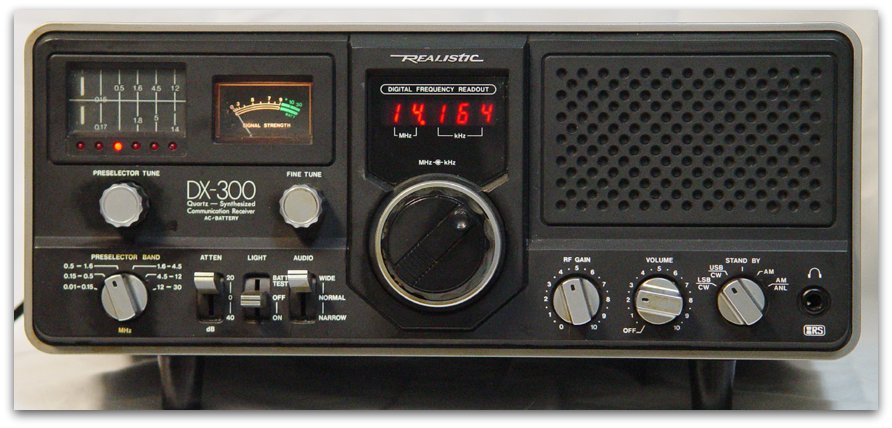
(Source: Universal Radio)

During the eighties I discovered the wonderful world of QSL cards and sent reception reports to many AM , FM , Shortwave and TV DX stations as well.
Later as the nineties came along, I also became a reception monitoring reporter for several of the Shortwave stations by sending reception reports on an ongoing basis to them. My favorite was Radio Beijing, now known as China Radio International. In appreciation the staff of the station sent many souvenirs , QSL cards and reading materials in return over those years for my efforts.

Additionally I had always had the wish to work in radio someday. That opportunity presented itself in 1992 after retirement from the postal service. I had the good fortune to get on board with an AM and FM station locally in Red Deer, Alberta which gave me a real sense of what working in radio was like.
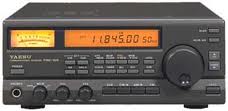
FRG100During the mid nineties I would acquire another receiver for DXing , the Yaesu FRG-100.
Carrying on with the radio interest I also set up a few different internet radio stations online through Live 365. Today , one of those stations still remains in operation serving up 24 hour classic country music.

After being diagnosed with Multiple Sclerosis in 1999, I found it much harder as time went on to deal with the harsher climate in Alberta, the minus forty degree and plus thirty degree extremes in temperature were having an adverse effect on my day to day mobility and general well being.

Through consultations with my medical specialist, the thought was that a change to a more temperate climate might be of help for my ongoing symptoms. During that time period I had also been engaged in online conversations with a very nice couple who lived in Newfoundland.

Broom Point Fishing Premises, Gros Morne National Park (Source: Newfoundland Tourism, Flickr)

We eventually became good friends and have been for several years now.
They too had also suggested that Newfoundland’s milder climate could be of benefit to my health . Eventually a move to Newfoundland was in the works by September of 2002.
At that point my whole world was about to change for the better, medically speaking as well as radio DXing wise.

A double bonus came my way making that move to Newfoundland . After about a year and a half I could notice a significant difference in how I felt still dealing with the MS and what can I say about the radio DXing? Absolutely fantastic!

In all the years residing in Alberta I had heard many USA and Canada stations on the AM dial, however only a handful of countries. Since moving to Newfoundland I have now logged over 100 countries on the AM Broadcast band.

Over the years I was also involved in Ham Radio Band DXing as I competed in many of the SWL sections of Amateur radio contests as well as trying to log each country on each of the various amateur radio bands.
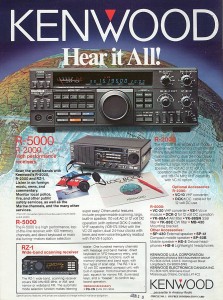
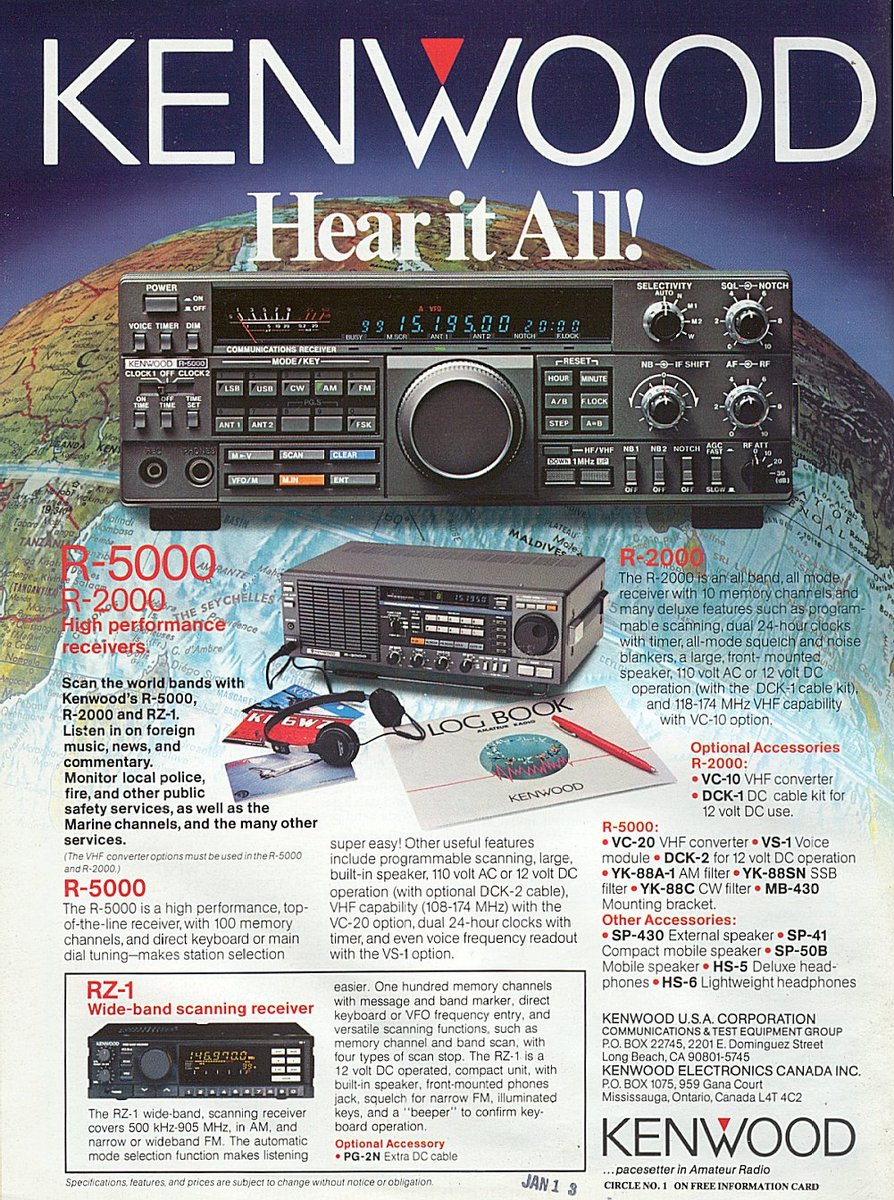
Kenwood-R-5000AdvertDuring the mid 2000’s I would attain another receiver for DXing, namely the Kenwood R-5000.

In 2008 the radio world would discover a new interest presented to DXers as Ultralight Radio DXing had it’s early beginnings thanks to veteran DXers, John Bryant, Gary DeBock , Robert Ross and others.

I had submitted some logs of what I was hearing to various sites after aquiring an Ultralight radio and the the Ultralight Radio Committee had noticed my logs posted online and asked me if I would like to share what I had heard with their group members as well. The rest is history as I have also been an avid Ultralight Radio Medium Wave DXer for the past 6 years.

There was also a stretch of time when I had tried to eventually hear and log a radio signal from each and every independent nation of the world just for fun using a combined mixture of numerous modes of radio i.e ham, AM, Shortwave etc. I accomplished that feat twice in fact, by 2006 and again just prior to 2013 .

While living in the tiny community of Bristol’s Hope, Newfoundland from 2011 onward, I was able to have my longest radio antenna in service ever, a 1200 foot longwire in place. The location was great for Trans- Atlantic reception as it was in a bit of a remote area with little or no man made interference and noise. Living directly above and practically over the water at a higher point helped for better reception as well.

Another move was in the works recently this year as we had to vacate our rental premises in Bristol’s Hope due to an eventual house sale

With potential residences taken up quickly due to recent economic prosperity in Newfoundland during the past year or so, it was much harder to find another place to live.

Luck shining upon us, we finally found a residence in Carbonear, but had to wait a month to move in. Meanwhile some folks in Northen Bay, Newfoundland offered their house to us temporarily for that month during the wait.

With the temporary move to Northen Bay , that circumstance opened up the possibility for a Medium Wave Dxpedition there for the month. It was my first attempt at a DXpedition and I enjoyed the experience very much.

Another new chapter of my radio DXing has now begun living in Carbonear.
That is my forty seven years in a nutshell involved in the wonderful hobby of radio and DXing.

Allen Willie VOPC1AA
Carbonear, Newfoundland, Canada


Many thanks, Allen, for sharing your story.  I’m so happy to hear that Newfoundland and DXing have both been good “medicine” for you!

If you would like to learn more about the hobby of Ultralight DXing, join the Yahoo Ultralight DX Group.

Readers: Please click here to read our growing collection of Listener Posts, and please consider submitting your own story!