
Category Archives: Accessories

Holiday Deals: C.Crane Black Friday Sale

This morning, I received an email from C.Crane with a link to their Black Friday Sale:

bf-2016-category

Admittedly, I was a little underwhelmed when I discovered the sale only included four items: a stereo Bluetooth speaker, LED spotlight, headphones and ear buds:
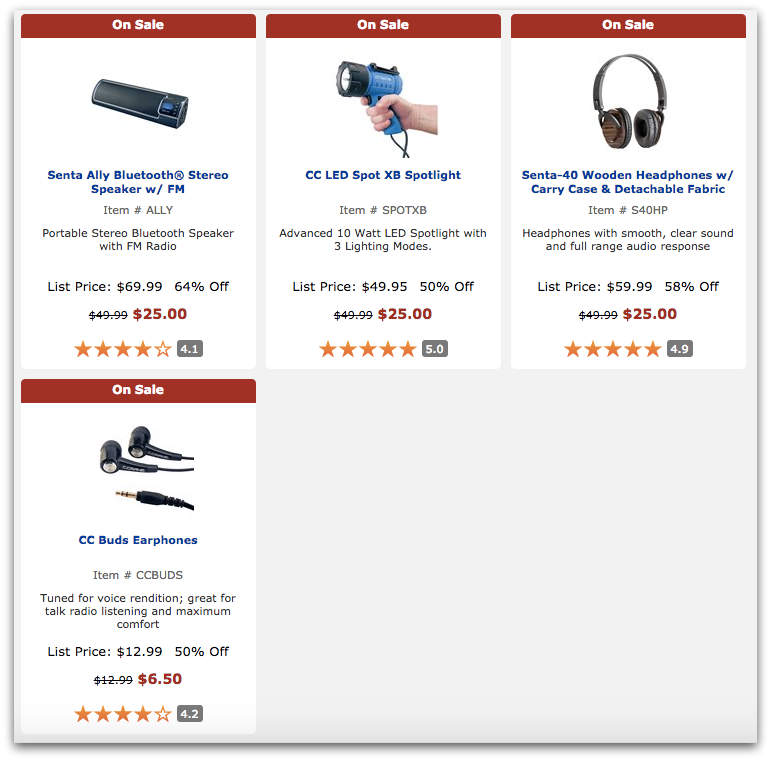
ccrane-blackfriday

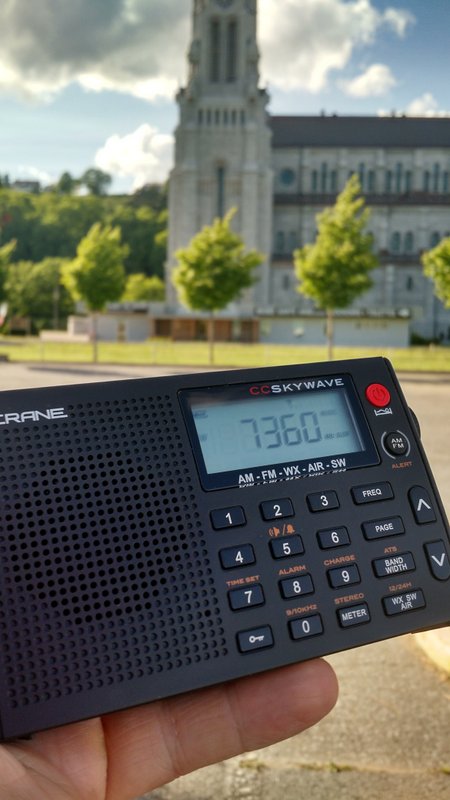
I was hoping they’d include their excellent CC Skywave in the sale, but it doesn’t seem they plan to include any radios at this point.

Admittedly, I’m tempted by their Senta-40 Wooden Headphones–$25 is a great price. If you have a set of the Senta-40s, please comment–perhaps I should grab a set?
Click here to view the C.Crane Black Friday specials.

Hermitshell Protective Travel Case for CC Skywave

CC-Skywave-Midwinter-Antarctica

Many thanks to SWLing Post contributor, Jim (W4FJT), who writes:

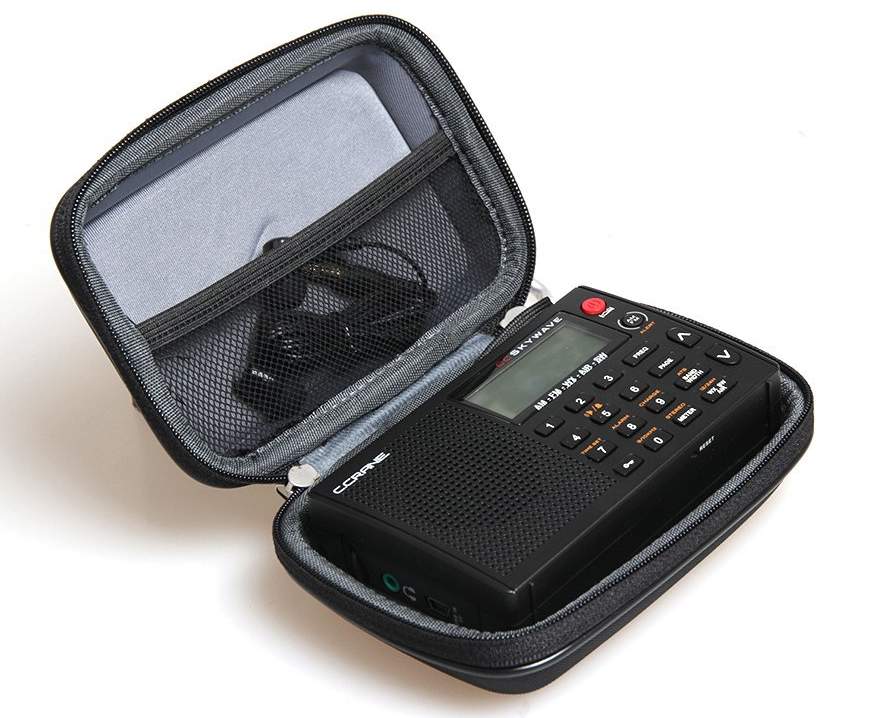
I was surfing Amazon.com and saw this hard shell case made specifically for the Skywave and thought this might be of interest to the travelers out there:

ccskywavecase

Click here to view on Amazon.com.

Thank you, Jim! I might grab on of these for my CC Skywave since I do travel with it a lot and am not a big fan of the included soft case.

The price is $14.99 shipped, which is pretty reasonable. I do note that while the 3rd party vendor claims the item is in stock, delivery seems to be out a few weeks. Perhaps this ships directly from China?

Have any Post readers purchased this hard shell case? Please comment.
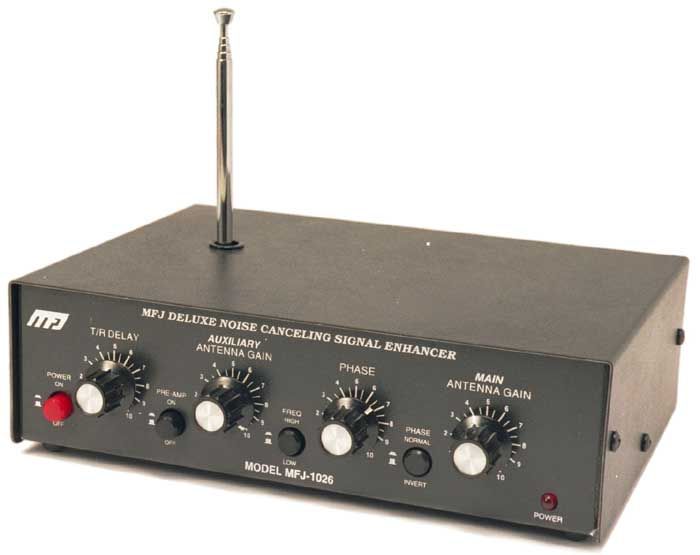
Dave’s review of the MFJ-1026/1025 and regulated AC adapter recommendations

mfj-1026

Many thanks to SWLing Post contributor, Dave Zantow (N9EWO), who shares the following reply to TomL’s post More Anti-Noise Ideas:

My VERY NOISY Sony CRT TV has gone to the great electronics recycling bin in the sky thank goodness. But I still have a MFJ-1026 here and need to use it when the neighborhood gets noisy. Intermittent power line noise is the main issue these days for me.

[Note that] my Monitoring Times review from April 2007 on the MFJ-1026 (and 1025 model without the preamp, but is best to have it) is still available here :

http://www.monitoringtimes.com/mtrevu0407.pdf

(is also linked on my web page, with many other of our other favorite ones : http://webpages.charter.net/n9ewo2/links.html )

jameco-ac-adapterI still power it with a analog REGULATED Jameco 170245 12 volt (1 amp) ac adapter.

Last batch I purchased a few years ago were still 100% clean and analog regulation. As I have covered in the past, SOME of Jameco excellent REGULATED AC adapters have gone to using switching regulator devices inside (and these no longer clean for any radio use).

Click here to view the170245 12 volt AC adapter on Jameco.

DX Engineering is about to come out with a improved version of the premium priced NCC-1, called the NCC-2. Mid late November Delivery ?? Never had our hands on one the pricey NCC-1 critters as the MFJ gets the job done for us (let alone affording it).

https://www.dxengineering.com/parts/dxe-ncc-1

https://www.dxengineering.com/parts/dxe-ncc-2

You make an excellent point: it’s important to power your noise-canceling device with a quality, clean, regulated AC adapter.

Thank you for sharing the links to your review and the AC adapter recommendations, Dave!
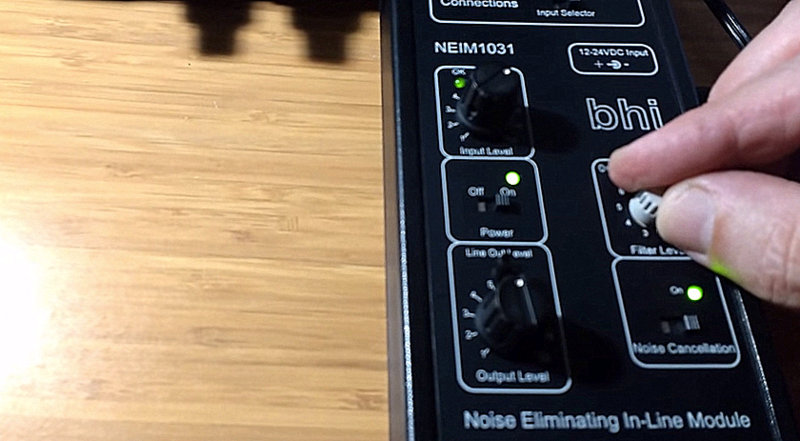
Phil demonstrates the BHI NEIM1031 Noise Eliminating In-Line Module

bhi-dsp

Many thanks to SWLing Post contributor, Phil Brennan, who writes:

[Recently] one of your contributors mentioned that he purchased a BHI DSP unit at a discounted price. I purchased one (a different model to the one in the previous post) some months ago before I headed away travelling.

The post reminded me that I had made a small video demonstrating the DSP unit on my FRG7. The video shows me tuning the DSP on a broadcast of Voice of the People on 3912 khz. While QRM at my place isn’t too bad, it’s still present and the DSP does aid in clearing up a signal.

https://youtu.be/prIPxMmcHQc

Voice of the People is usually jammed by the DPRK and the DSP also assists in reducing the roar of the jammer. Of course one can go to far with DSP and the audio can suffer from that underwater sound.

Thank you, Phil! The FRG-7 is an ideal receiver for something like the BHI module since it precedes on-board DSP. The great thing about an in-line module, of course, is that it can be used with a variety of receivers.
Click here to view the BHI NEIM1031 MKII on BHI’s website.

Marco recommends KB6IBB SWL Logger for Mac OS

SWL-Log1

Many thanks to SWLing Post contributor, Marco, who writes:

Great blog! I am an SWLer (have been inactive for some time but I am back again, mainly when I travel) and I really love it.

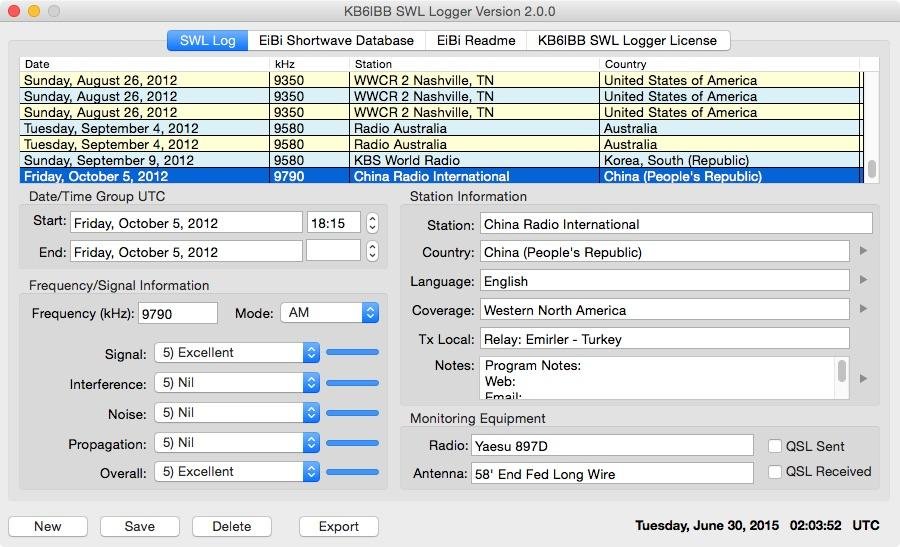
I am a Mac user and have now found a great, free SWL logging application: KB6IBB SWL Logger.

I suggest you give SWL Logger a try. It works really well and it’s free. The QSL part is lacking, but the rest is well done.

Thanks again for the hard work!

Thank you, Marco, for your recommendation!
Experience with Heros Technology Ltd UK VLF Up-Converter?

VLF-LF-Upconverter

Many thanks to SWLing Post reader, Michael Vitale, who (several weeks ago–!) asked:

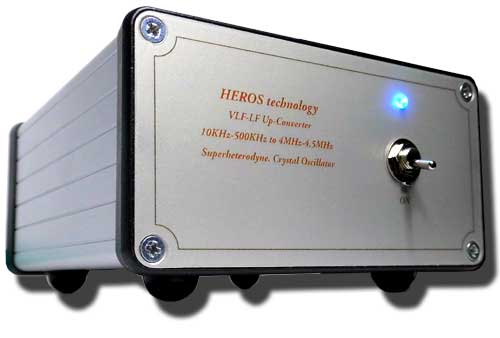
Has anyone ever dealt with the equipment from Heros Technology Ltd UK specifically their VLF converters models 350-400? Their claim is these converters will work with any receiver (SW) on the market past or present.

Click here to view the video introduction to the VLF-LF Up-Converter.

I, personally, have no experience with VLF/LF up-converters, so I’m hoping someone else can help Michael.  Please comment!
Guest Post: Communications Service Monitors – A Radio Hobbyist’s Perspective

SX-99-Dial-Nar

Many thanks to SWLing Post contributor, Mario Filippi (N2HUN) for the following guest post:


Communications Service Monitors – A Radio Hobbyist’s Perspective

Mario Filippi, N2HUN

(All photos courtesy of author)

Over the past few decades I lusted after a communications service monitor for my radio hobby but prices were always prohibitive; several thousands of dollars for a new model and tens of thousands for high-end ones. Not being a working professional in the communications field made it difficult to justify purchasing a piece of equipment whose price tag rivaled a down payment on a house. So, fast forward a few decades later and now life and times have fortunately changed for the better; the house is paid for, the job is secure, the income is finally steady, life is good financially, and to boot many of these older service monitors manufactured by Ramsey, Motorola, Wavetek, IFR/Aerotek, Cushman etc., are currently being sold on the pre-owned market at a fraction of their original decades-ago hefty prices. These service monitors are finally in financial reach of electronics hobbyists who will find many uses for these former electronic workhorses that toiled many years in the industry and now, in their golden years are being retired and becoming available for a second life via reuse/reincarnation/repurposing/reinvention.

Work of Art: Author’s Ramsey COM3 Service Monitor

Work of Art: Author’s Ramsey COM3 Service Monitor

So what exactly is a communications service monitor, or “service monitor” as the folks in the trade refer to? Well it is an instrument for servicing AM and FM radio equipment, although some units also have the ability to service SSB equipment. The service monitor is basically a highly accurate and precise receiver and low-power signal generator all in one allowing a technician (or electronics hobbyist) to perform service, repair, or alignment of radio equipment. Most of us have had the experience of owning a malfunctioning radio whether it is an AM or FM broadcast radio, two-way radio such as a CB (Citizen’s Band) radio, pager, or a ham radio transceiver, and that is where a service monitor proves its value and utility because now you, the hobbyist, can perform the work yourself.

My Friend’s Ramsey COM3010 Service Monitor, Big Brother of the COM3

My Friend’s Ramsey COM3010 Service Monitor, Big Brother of the COM3

As a radio enthusiast (shortwave, ham radio, satellite communications) for over half a century, I’ve definitely owned more radios than shoes; everything from AM, FM, shortwave receivers to CB radios to ham transceivers, all in different stages of health and vintage. For years I relied on standalone RF signal generators, audio generators, frequency counters, and CTCSS decoders to aid in rehabbing, troubleshooting, and aligning each of the many units that paraded past my radio shack. Then one day a friend showed me his service monitor, the Ramsey COM3010, another venerable workhorse still in production, and it was a defining moment; the time had come to invest in one.

Aligning a Uniden President Washington CB Radio Prior to Owning a Service Monitor

Aligning a Uniden President Washington CB Radio Prior to Owning a Service Monitor

My Ramsey COM3, purchased second-hand from an Internet auction site for $400.00 is a no frills, basic unit without the features found in more sophisticated service monitors having built-in oscilloscopes, spectrum analyzers, frequency sweeping ability, and frequency scanning ability. The COM3 was in production from the late 1980’s to around 2003 at a price of around $2500 (ca. 1989) and was considered a workhorse in its time, weighed 13 pounds with the internal battery, and was easily luggable from site to site. It covers from 100 KHz to 999.999 MHz and has become an invaluable tool in my radio shack for measuring a transmitter’s operating frequency and deviation, measuring receiver sensitivity, S meter calibration, and checking CTCSS tones on my two way VHF/UHF radios. My unit evidently had an easy former life as the only needs were to replace the internal battery, perform an external cleaning, check transmitter and receiver accuracy and check accuracy of the internal audio generator. Interestingly, Ramsey Electronics (www.ramseytest.com) still services and calibrates COM3s.

Vintage Tempo One Transceiver Restoration Was Made Easier with the COM3 on the Bench

Vintage Tempo One Transceiver Restoration Was Made Easier with the COM3 on the Bench

So, if you’ve been dreaming of owning your own communications service monitor either as a hobbyist or small repair radio shop proprietor then start looking as there are plenty of used units out there; you’ll pay top dollar when buying from a commercial vendor but at least you’ll get some form of warranty. If instead you travel the same road I did, via an Internet auction site, there’s lots more risk involved, but the plus is you’ll save big if you do your homework by checking past auctions, seller feedback scores, and determining what price the market is bearing by looking at the winning bids. In closing, the COM3 owner’s manual is available on line by doing a simple search, and a review of the Ramsey COM3 by Larry Antonuk which appeared in the August 1989 issue of 73 Amateur Radio Magazine is also available as a free download.


Mario, thank you for another brilliant guest post! I always learn something new from your articles. By the way: I have that same Nye Viking straight key–it obviously pairs beautifully with the Tempo One!
