Category Archives: AM

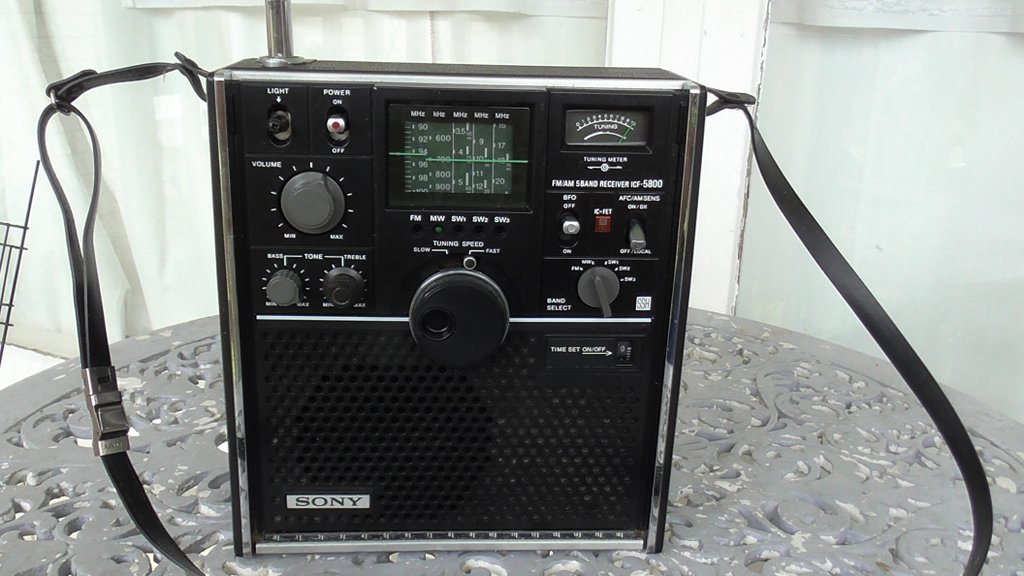
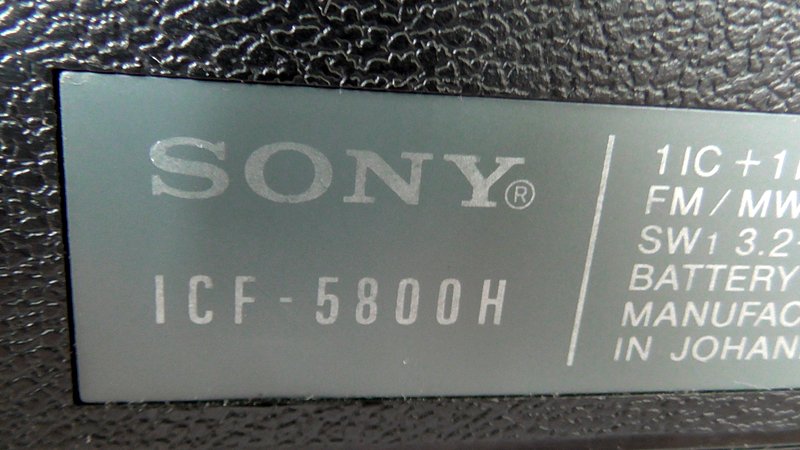
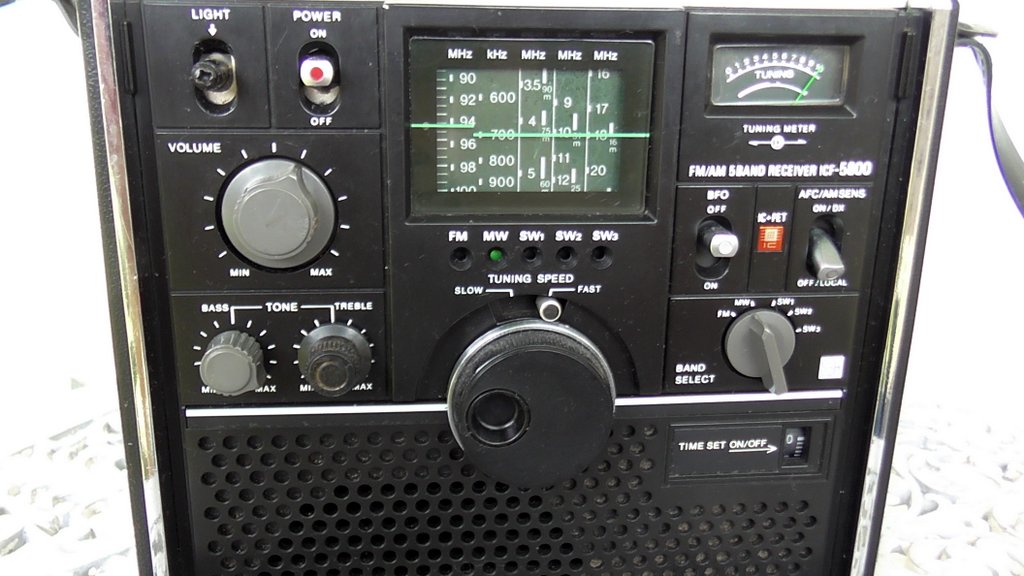
James’ restored Sony ICF-5800H

Sony Vintage radio ICF 5800H 001

SWLing Post contributor, James Patterson, has recently restored a Sony ICF-5800H. James sent me a few photos and I decided to post them here.

Sony Vintage radio ICF 5800H 003

I absolutely love the design of Japanese analog radios from this era. They have signal meters, large backlit dials, carry straps, and proper large controls–buttons, switches and knobs–that can even be operated when wearing gloves in the winter.

Sony Vintage radio ICF 5800H 002 (1)

Great receiver you have there, James!

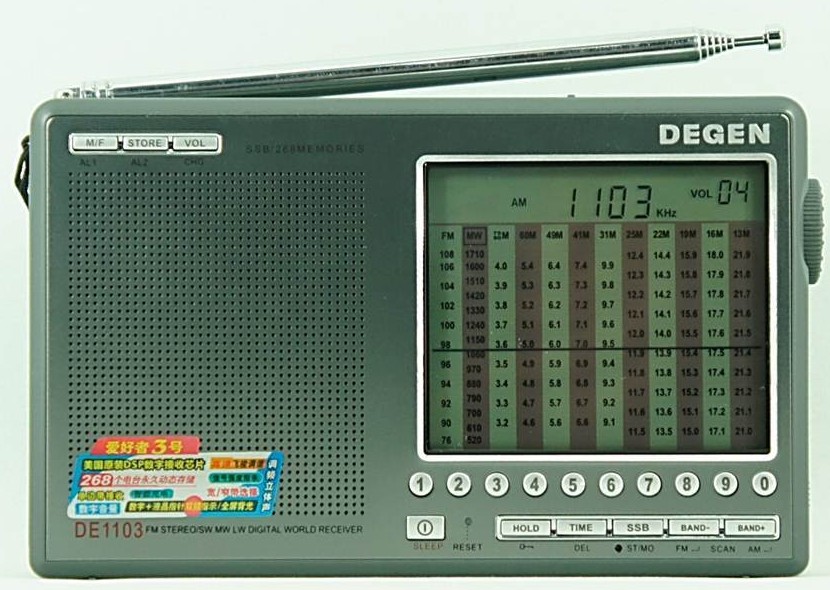
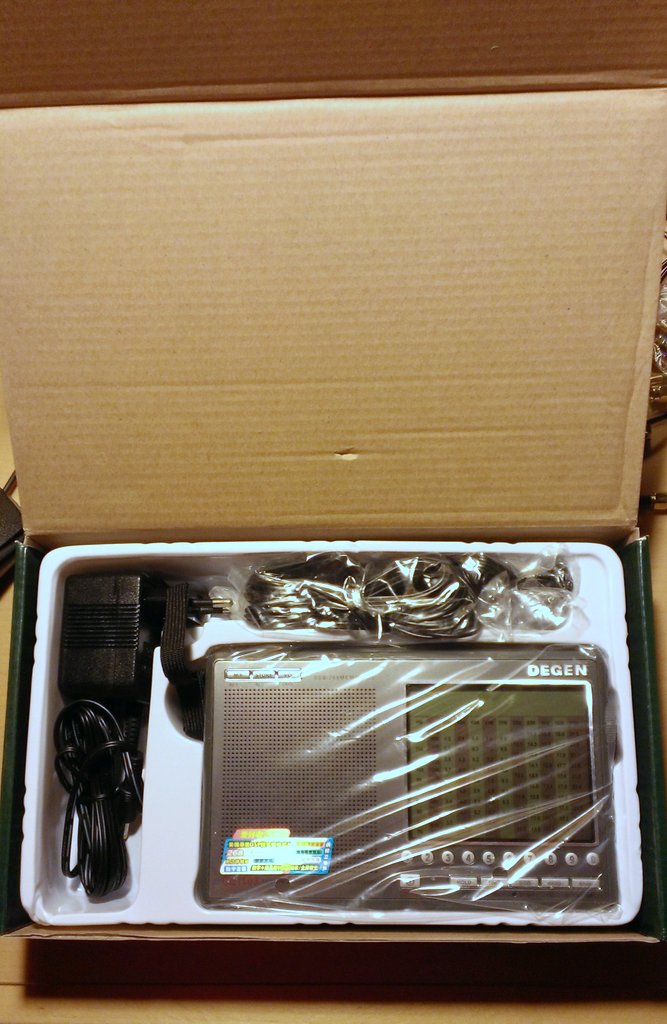
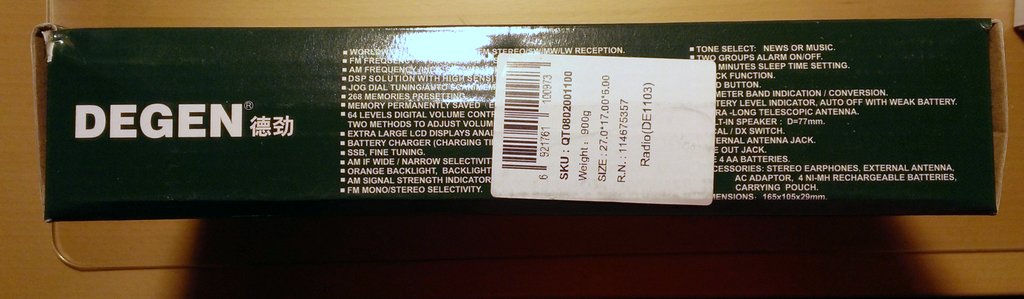
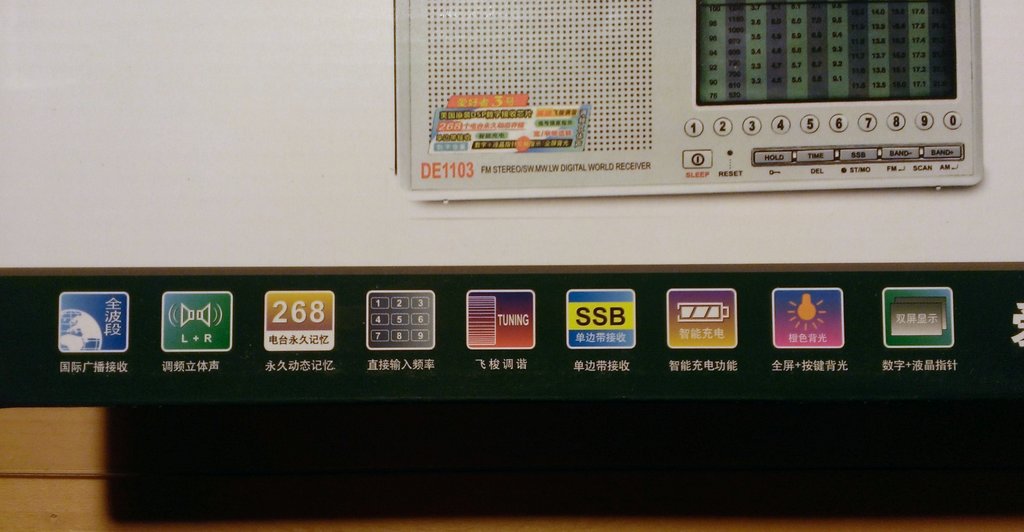
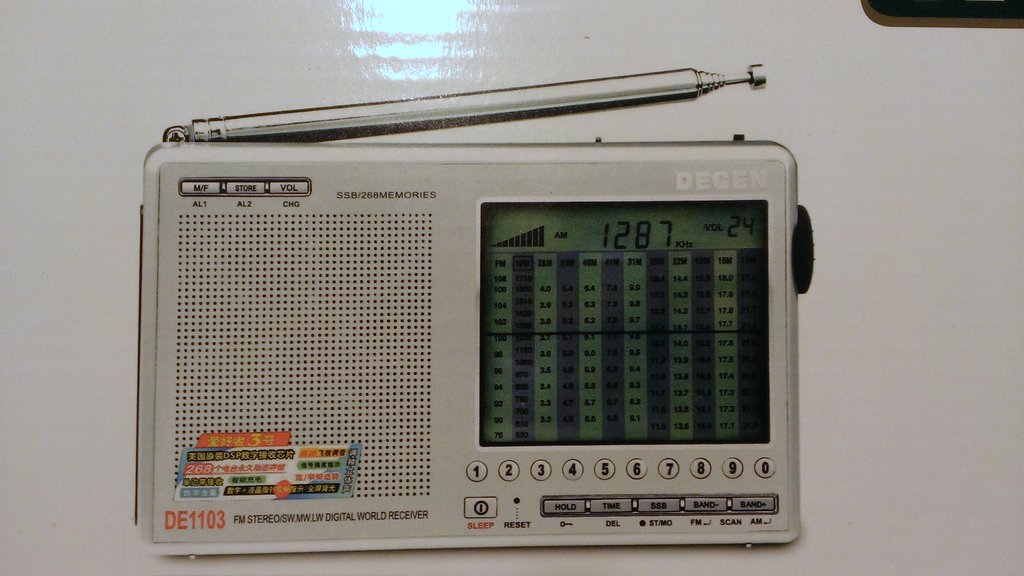
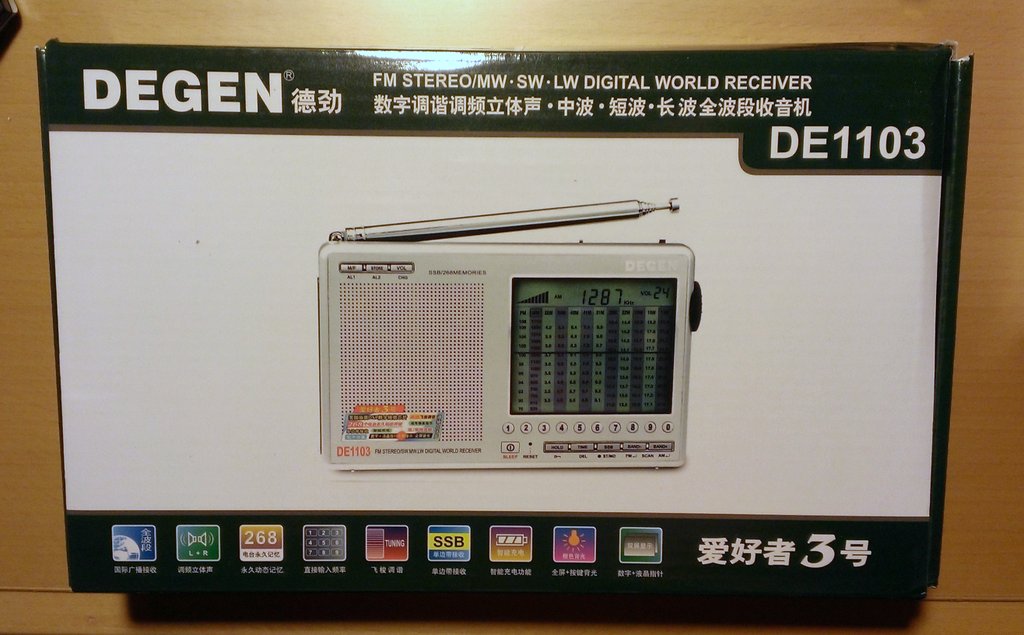
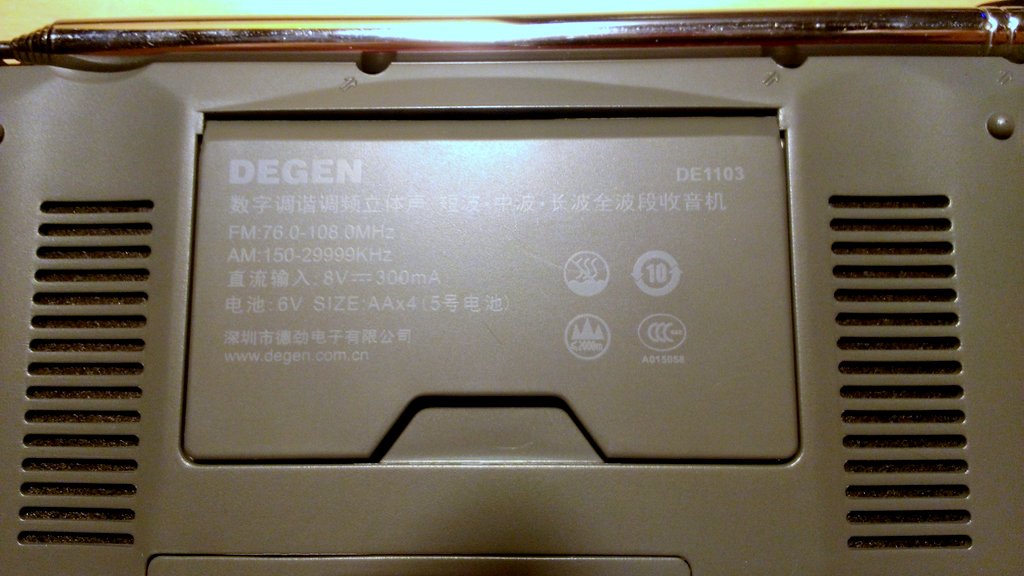
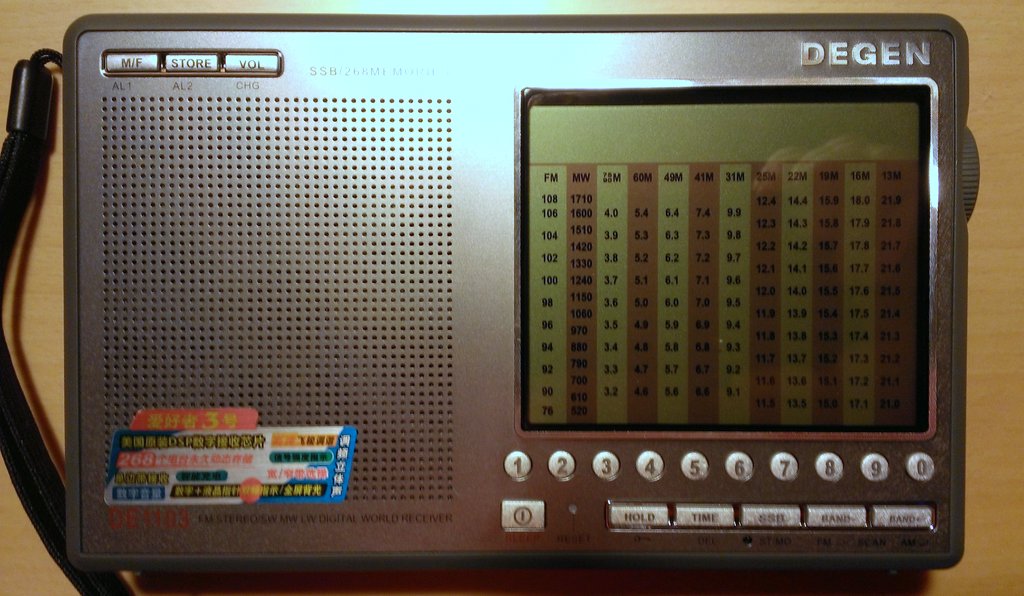
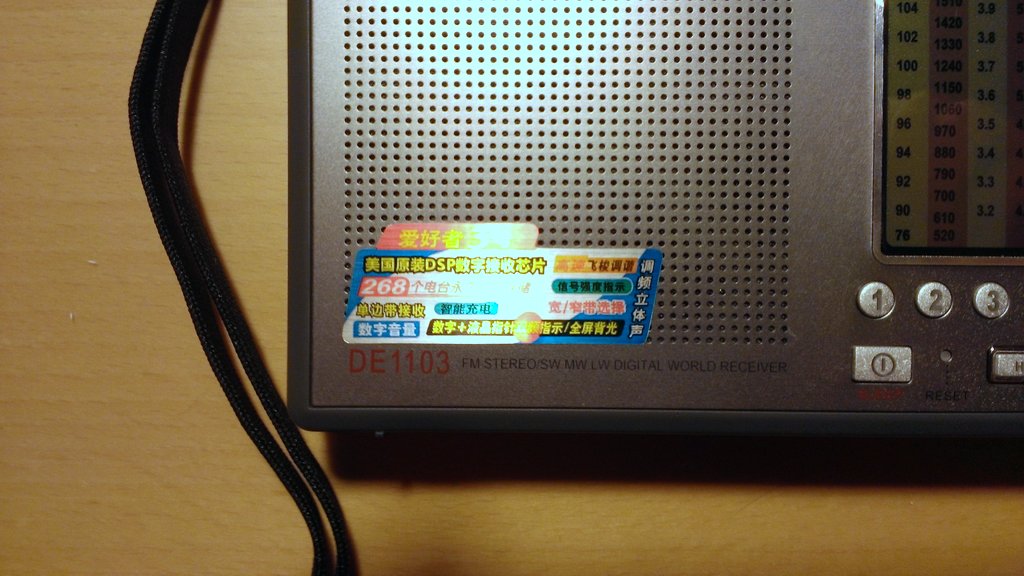
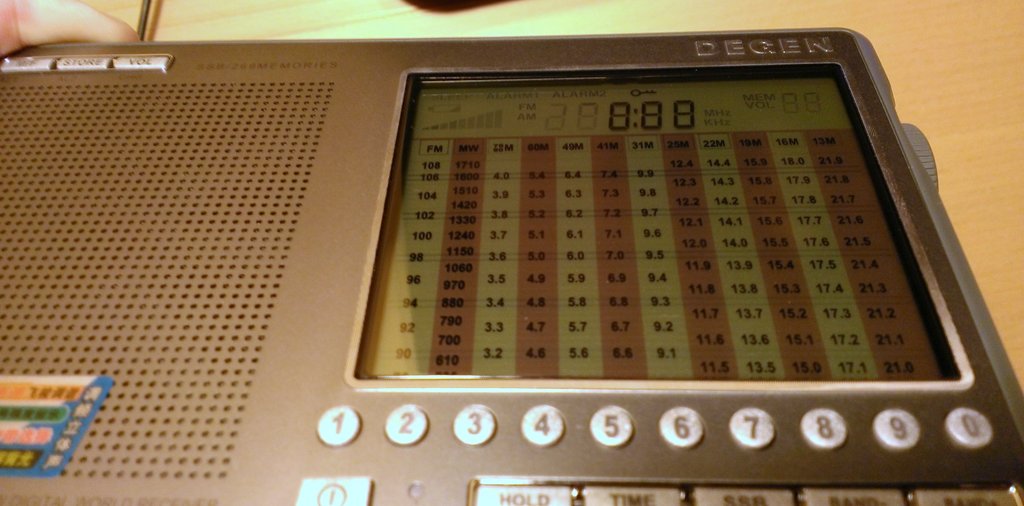
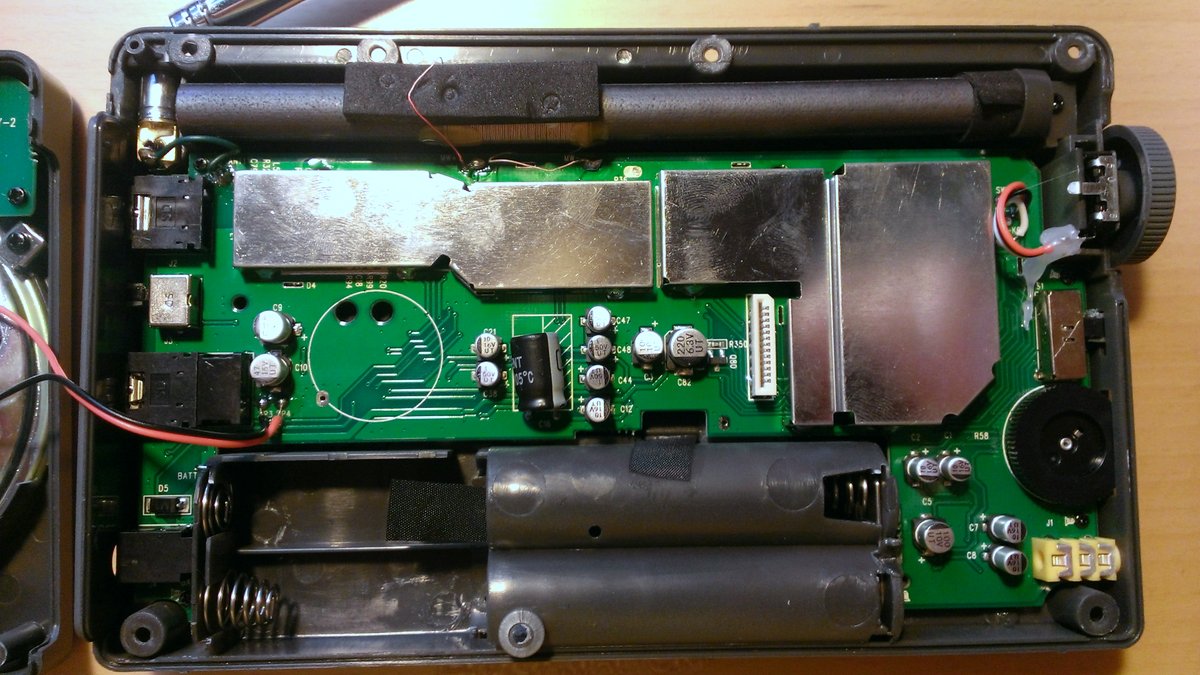
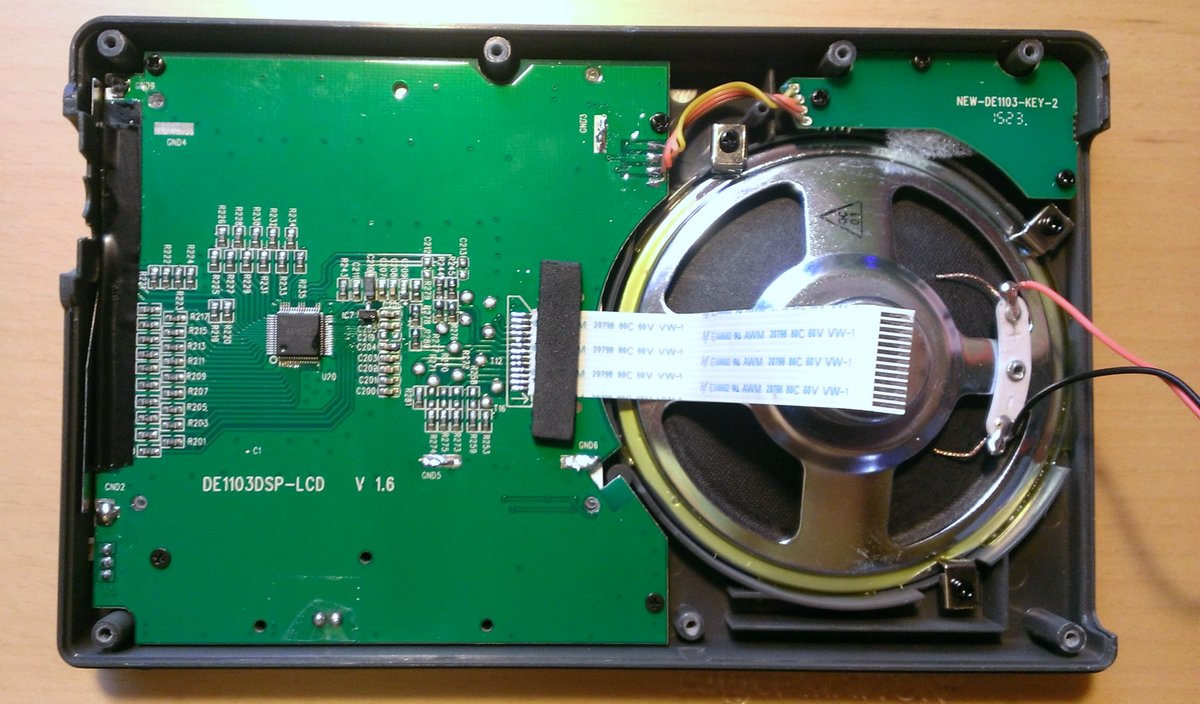
Andi provides detailed info and photos of the new Degen DE1103 DSP

de1103-dsp

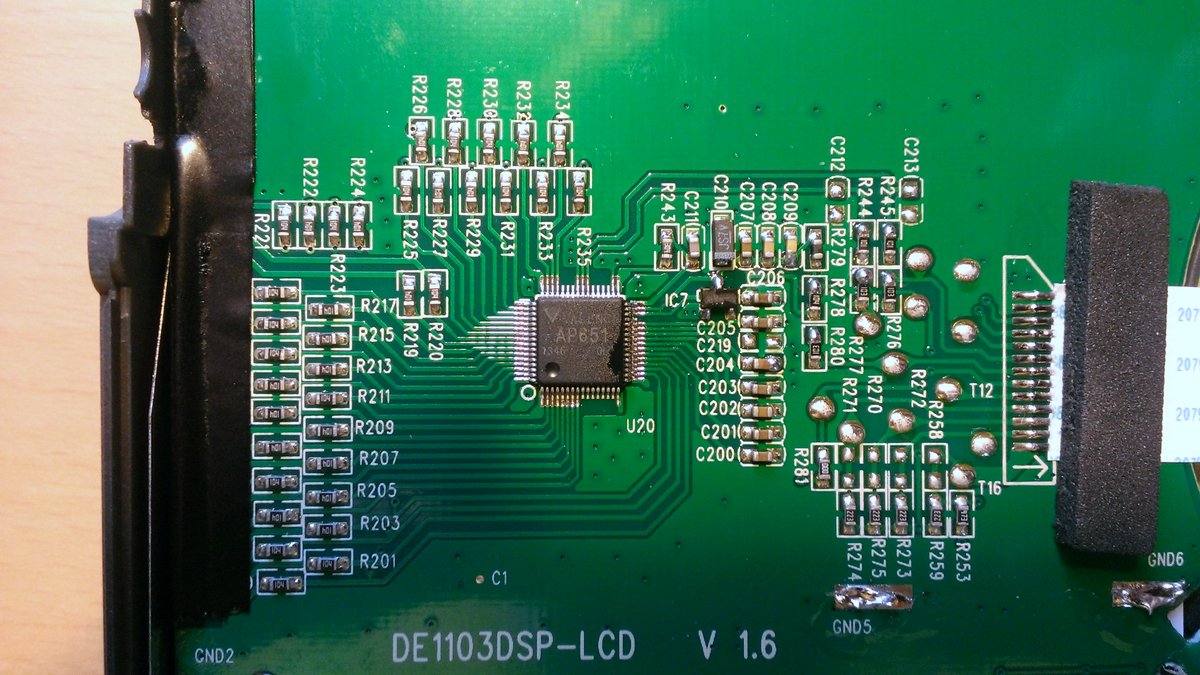
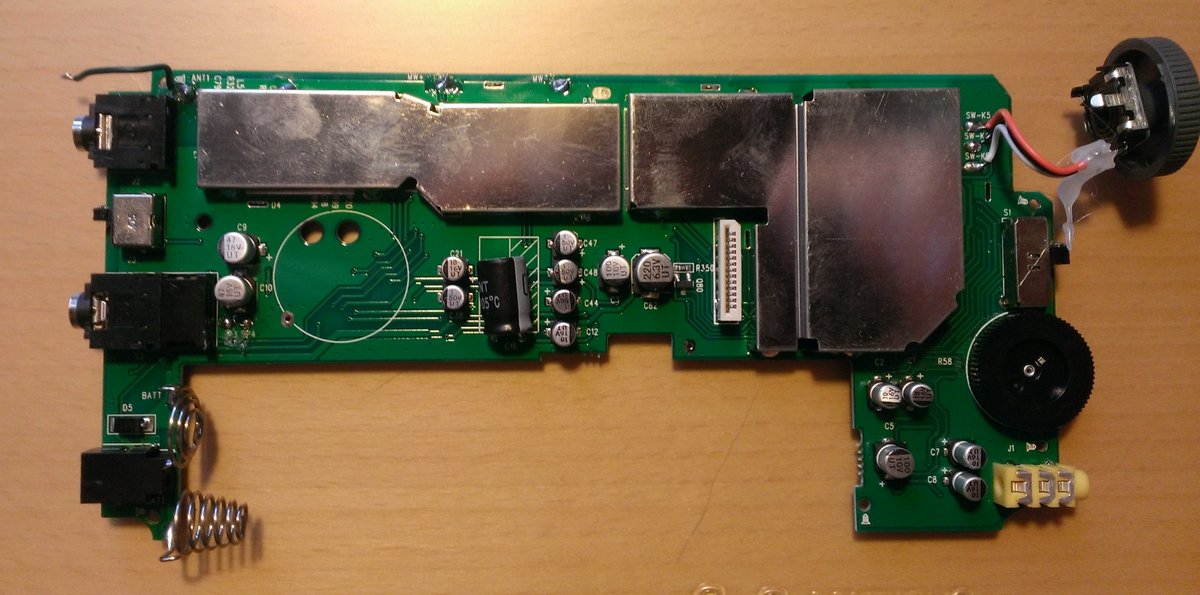
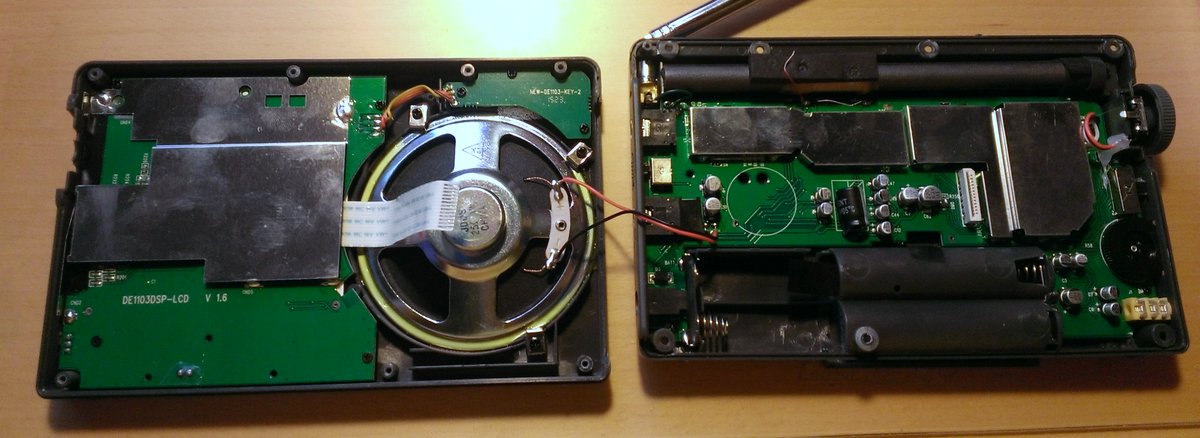
Regarding the new DSP version of the Degen DE1103, SWLing Post contributor, Andi_84, writes:

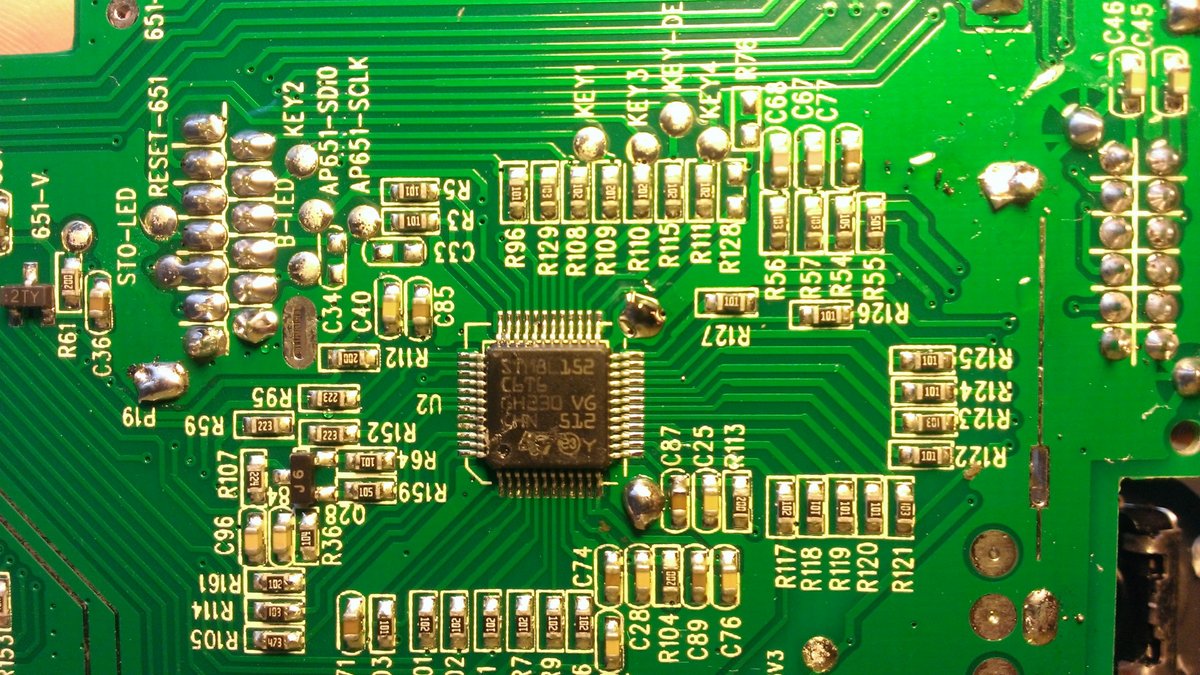
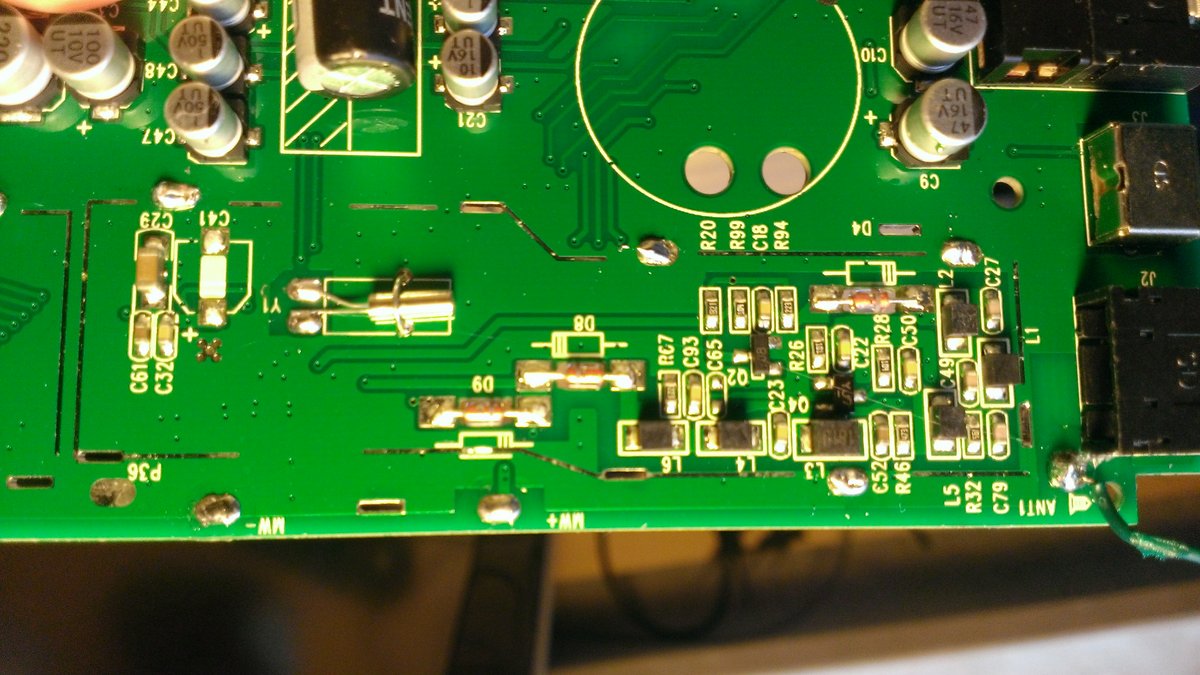
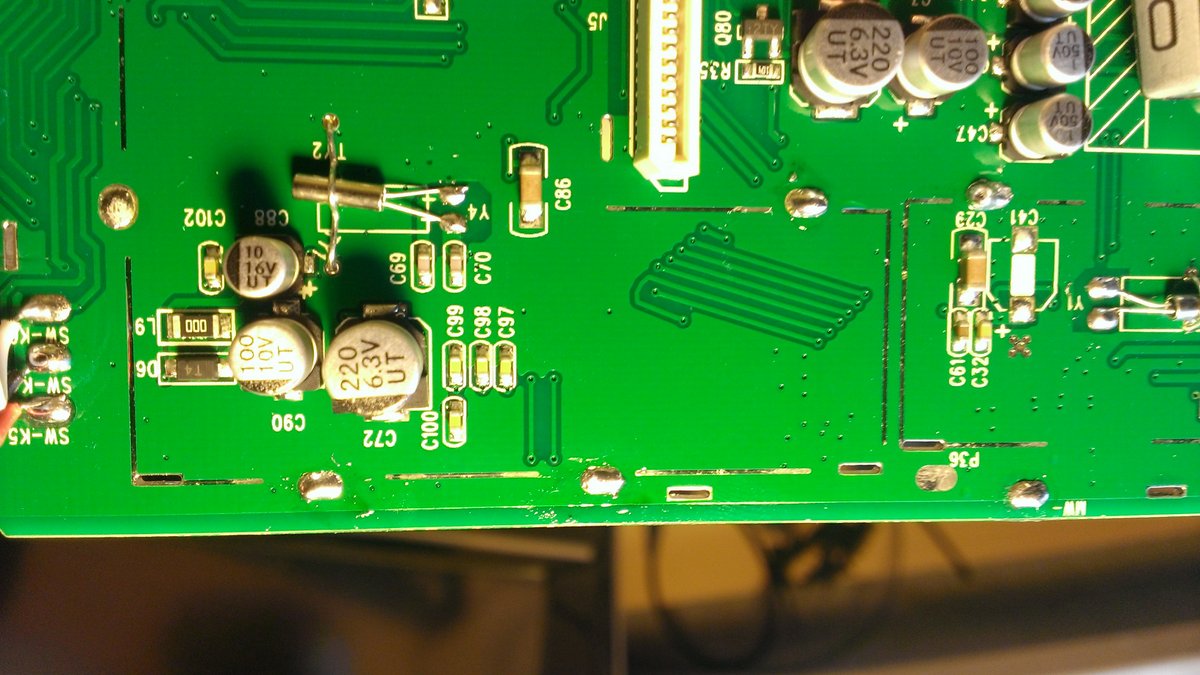
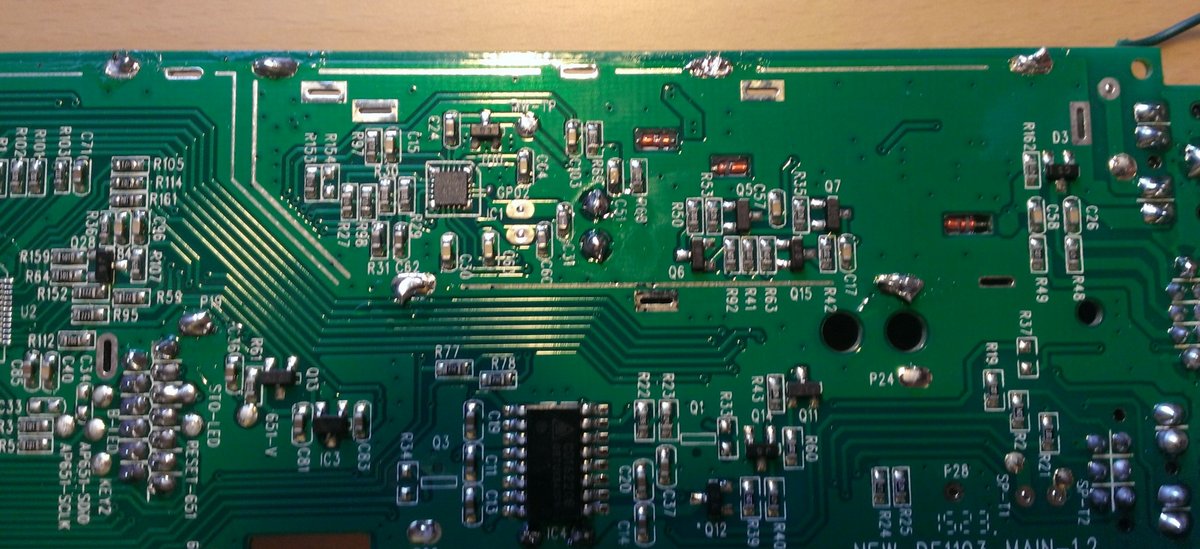
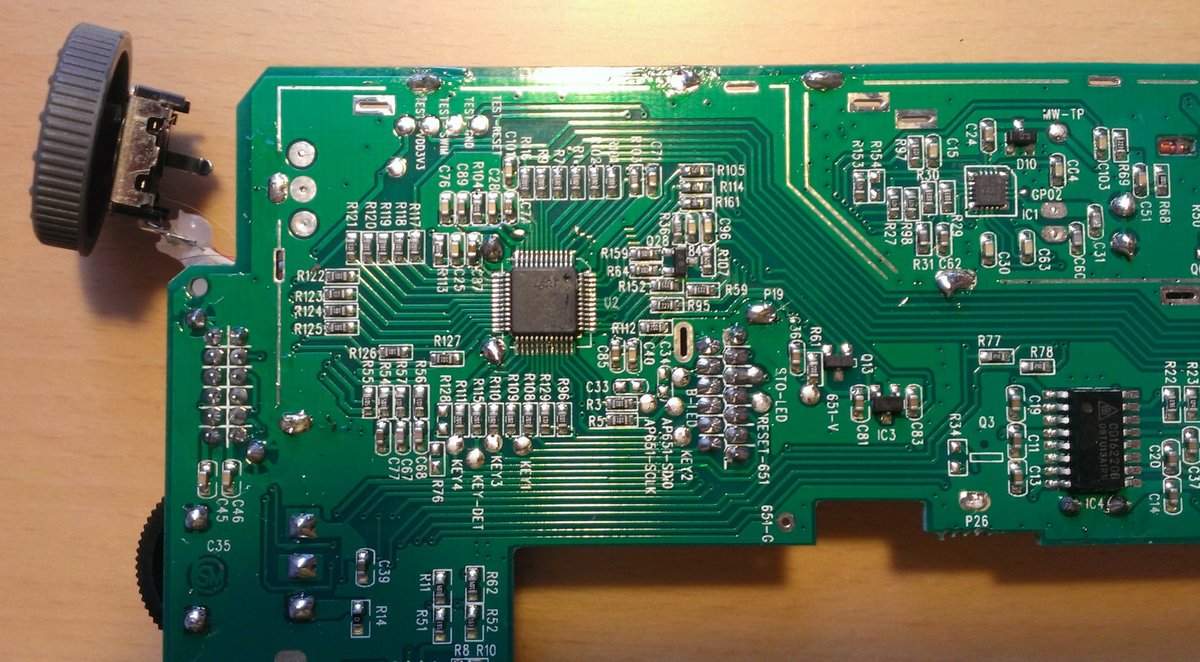
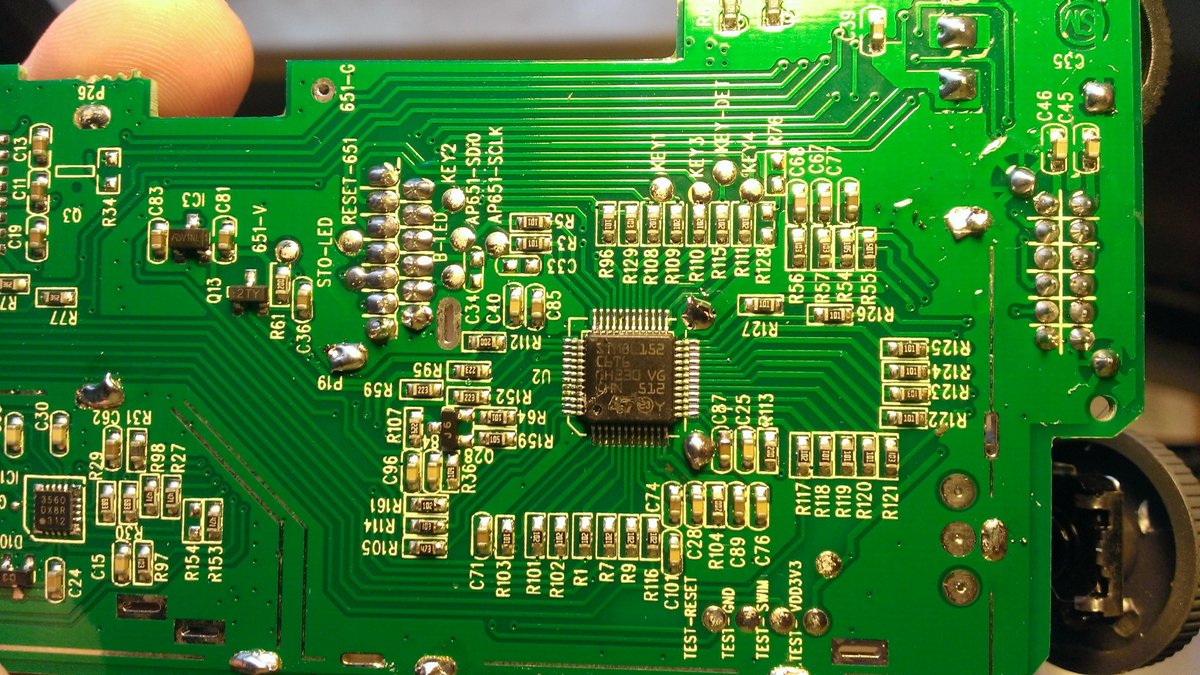
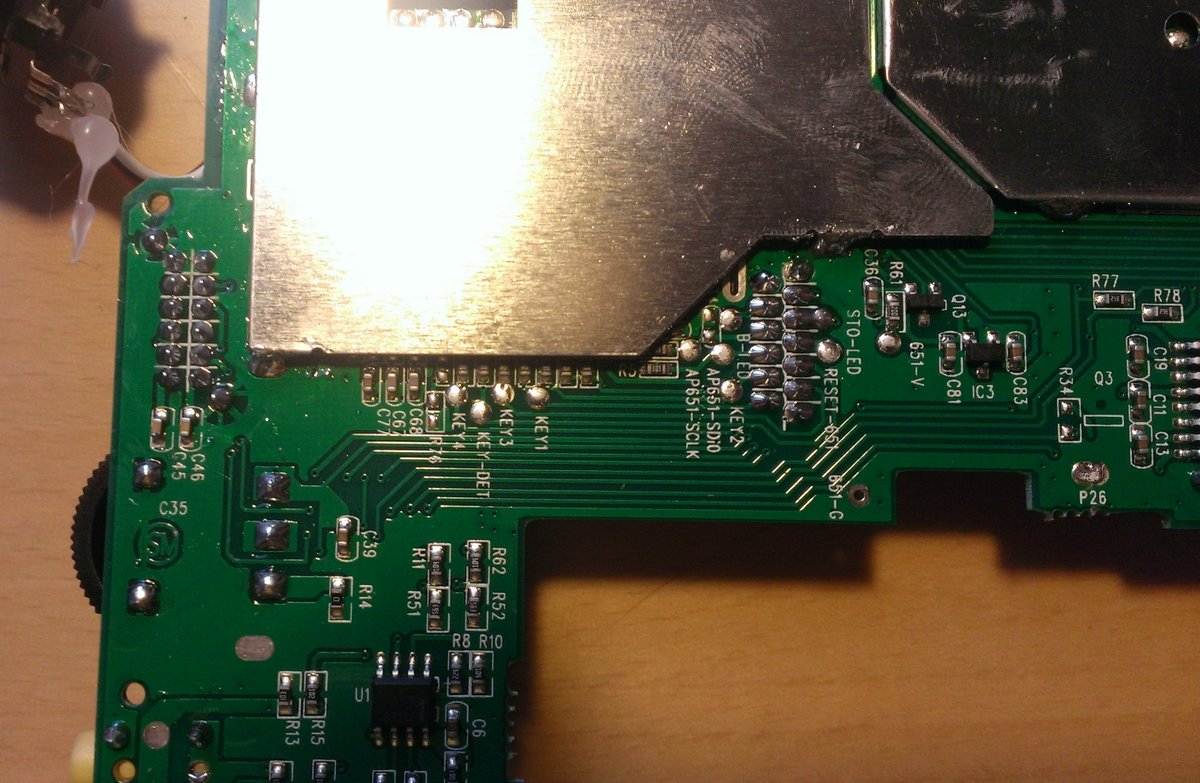
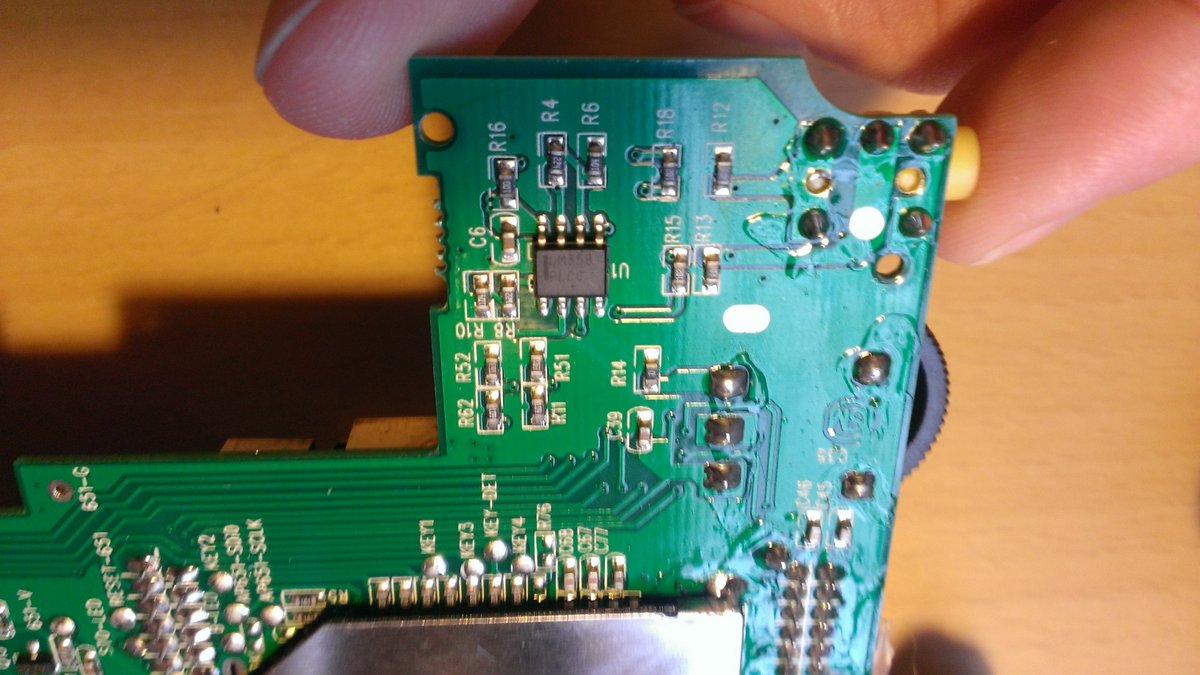
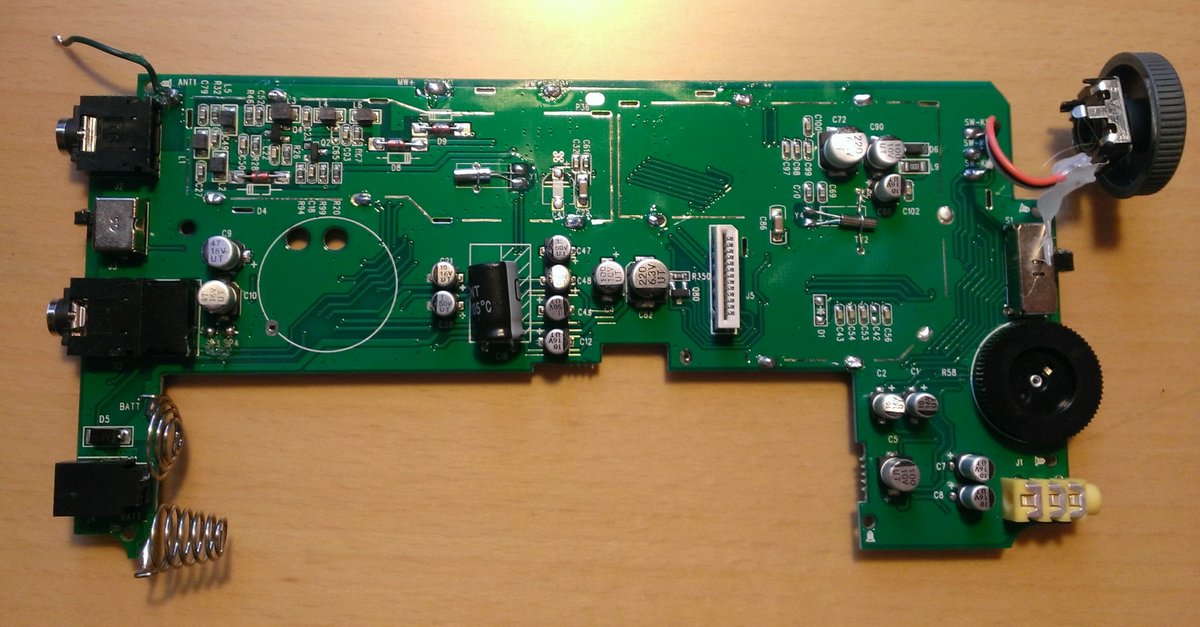
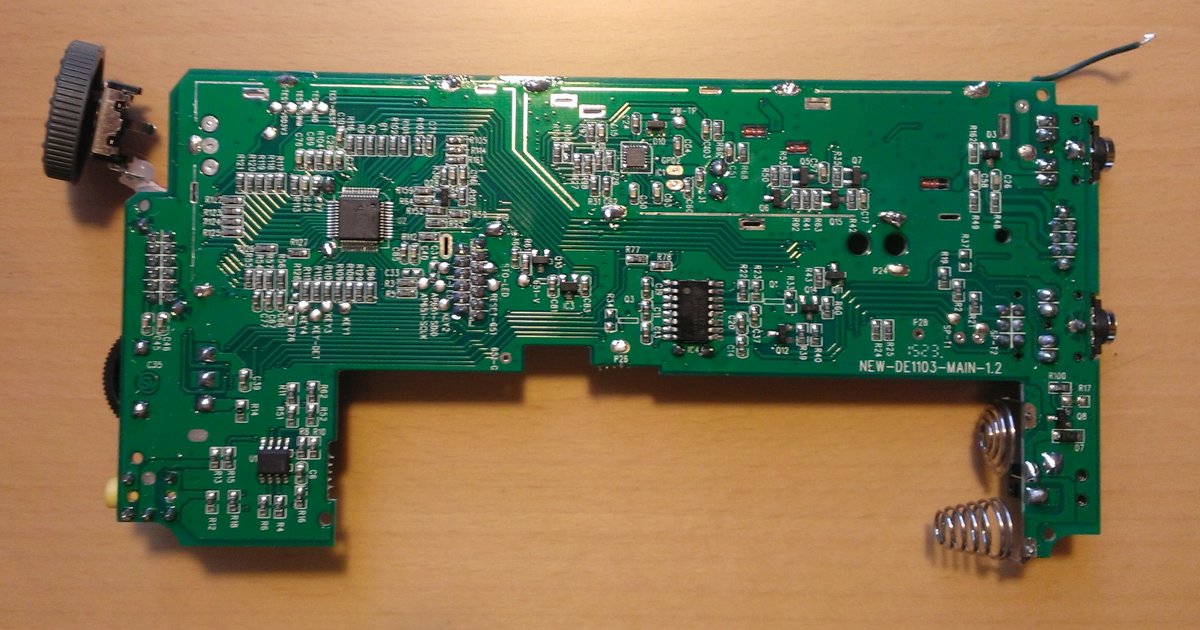
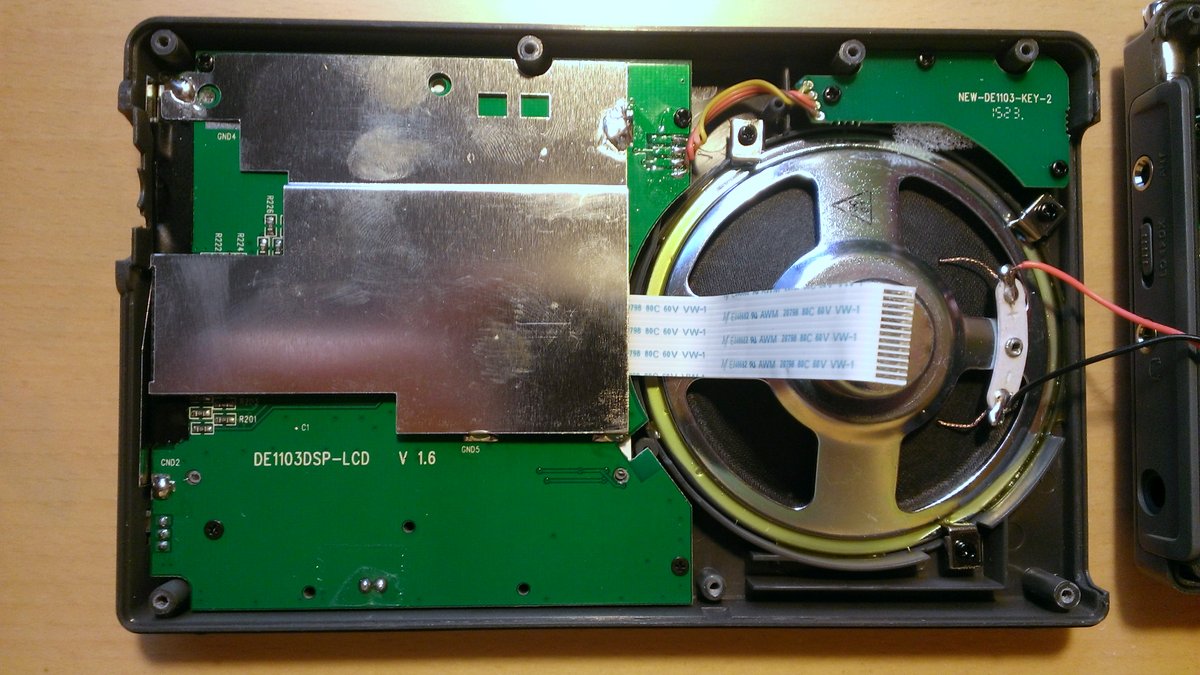
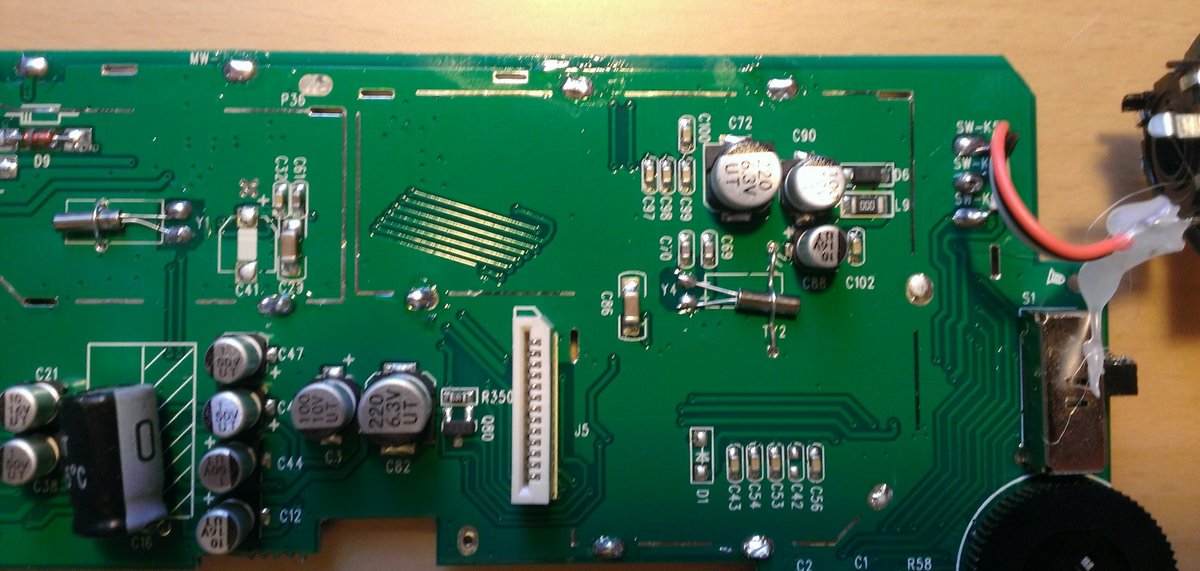
I’ve opened [my Degen DE1103] and checked the semiconductors inside.

It’s definitely based on a Silicon Labs chip (Si4735-D60).

1) Display PCB
Valence Tech AP651 “LCD AND KEYBOARD CONTROLLER”: http://www.valencetech.com/products.php?prodID=ap651&type=ics
Datasheet: http://www.valencetech.com/doc/AP651/DS_AP651-Rev0.1.02.pdf

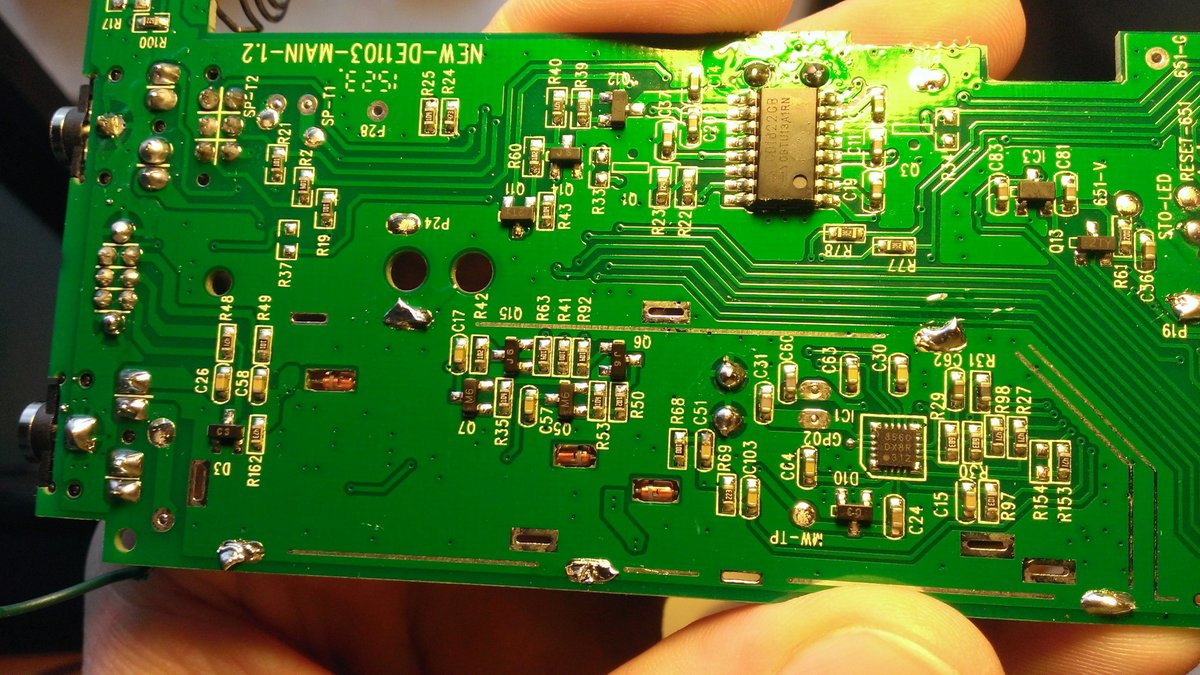
2) Main PCB

a) Silicon Labs Si4735-D60 “AM/FM/SW/LW Radio Receiver IC”: http://www.silabs.com/products/audio/fm-am-receiver/Pages/si473435.aspx
-> Chip is even capable of RDS, but it’s unfortunately not implemented in the DE1103
And, FM range covers down to 64MHz, while the DE1103 goes only down to 76MHz
Datasheet: https://www.silabs.com/Support%20Documents/TechnicalDocs/Si4730-31-34-35-D60.pdf

b) ST Micro STM8L152C6T6 “Ultra-low-power 8-bit MCU with 32 Kbytes Flash, 16 MHz CPU, integrated EEPROM”
Datasheet: http://www.st.com/st-web-ui/static/active/en/resource/technical/document/datasheet/CD00240181.pdf

c) China Hua Jing Electronics CD1622CB “110mw X 2 Dual-channel audio power amplifier”
-> Looks like a “chinese version” of the Sony CXA1622M
Datasheet: http://www.datasheet.hk/view_download.php?id=1039877&file=0024%5Ccd1622cb_203207.pdf

d) LM358 “Low-Power, Dual-Operational Amplifiers”
Datasheet: http://www.ti.com/lit/ds/symlink/lm158-n.pdf

Photos

The following photos are courtesy of Andi_84. Please click the image to enlarge.

External and unboxing

WP_20151111_007 WP_20151111_006 WP_20151111_004 WP_20151111_003 WP_20151111_002 WP_20151111_001 WP_20151111_020 WP_20151111_019 WP_20151111_018 WP_20151111_014 WP_20151111_012 WP_20151111_009 WP_20151111_008 WP_20151111_027 WP_20151111_025 WP_20151111_024 WP_20151111_023 WP_20151111_022 WP_20151111_021
Internal and circuit board

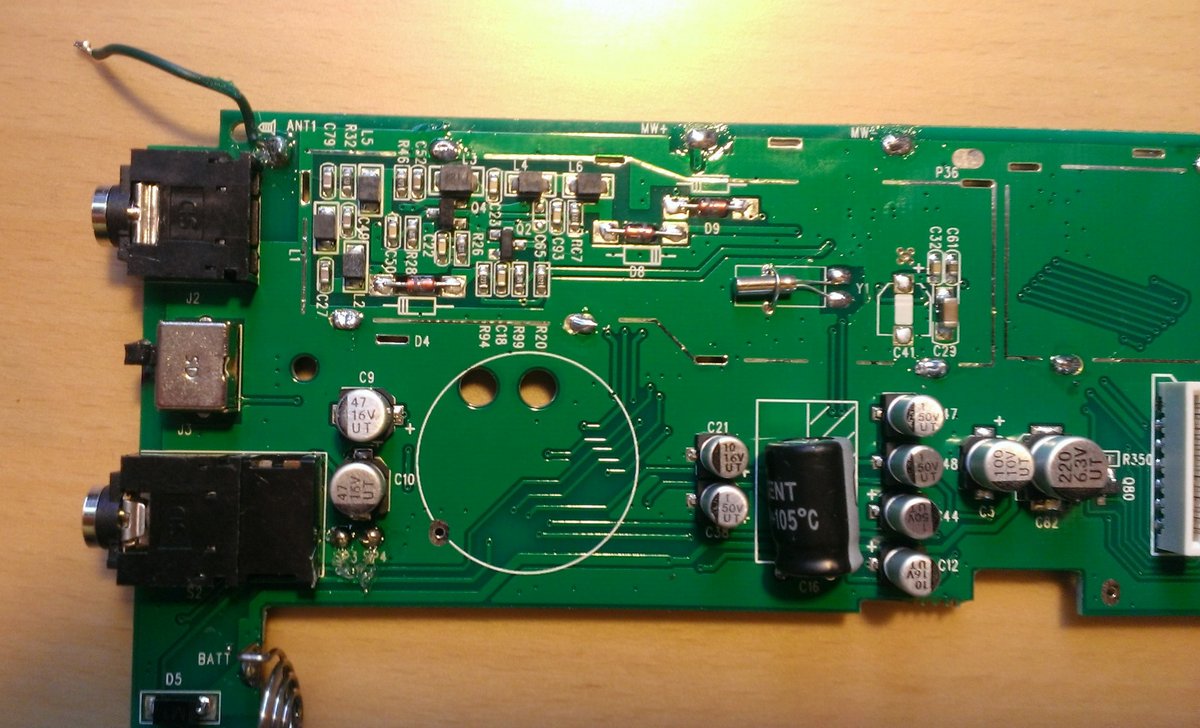
WP_20151114_033 WP_20151114_034 WP_20151114_035 WP_20151114_036 WP_20151114_026 WP_20151114_027 WP_20151114_029 WP_20151114_030 WP_20151114_031 WP_20151114_014 WP_20151114_015 WP_20151114_016 WP_20151114_018 WP_20151114_019 WP_20151114_020 WP_20151114_024 WP_20151114_003 WP_20151114_005 WP_20151114_006 WP_20151114_011 WP_20151114_012 WP_20151114_013 WP_20151114_002
Many thanks, Andi!  These photos are excellent and certainly give us more insight into the new Degen DE1103 design.

I’m very curious how this new DE1103 compares with other DSP portables on the market.

The Tecsun S-8800: A new receiver in the works

Tecsun-BCL3000-001

SWLing Post contributor, OWL, writes:

It seems that Tecsun has a new large portable in line.

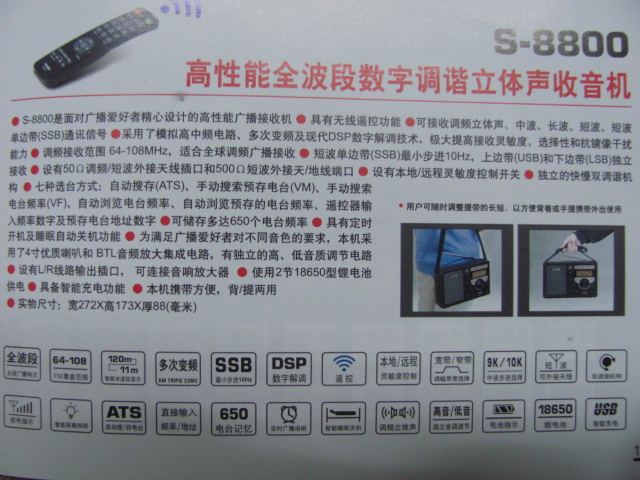
Someone posted a photo of a new Tecsun product catalogue which shows a new model S8800.

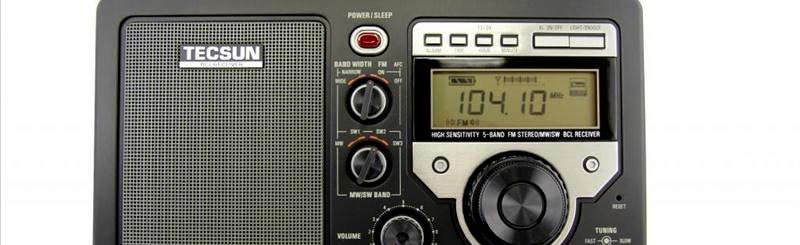
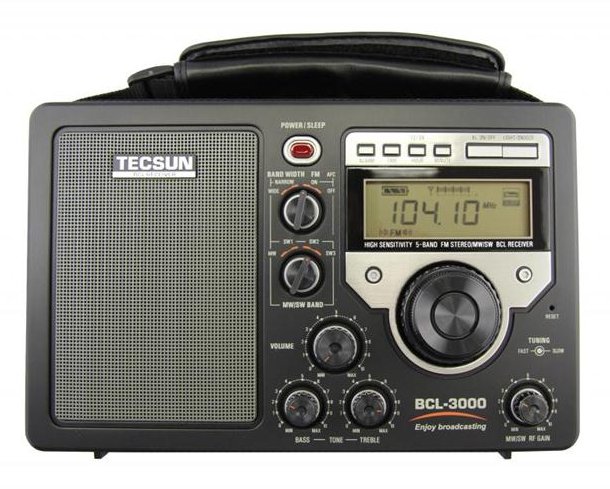
The Tecsun BCL-3000 for comparison.

The Tecsun BCL-3000 for comparison.

Apparently it uses the housing of BCL3000 [see above] and is multiple conversion (so a PL880 inside?), DSP based with separate LSB/USB and 10Hz minimum tuning step, and comes with a remote control (for direct frequency input?). Two 18650 batteries are used.

Tecsun-S8800-Catalog-2

Photo source: http://bbs.tecsun.com.cn/ via OWL. Click to enlarge.

Tecsun-S8800-Catalog

Photo source: http://bbs.tecsun.com.cn/ via OWL. Click to enlarge.

[Here’s a] link to the post in Tecsun’s web forum:

http://bbs.tecsun.com.cn/0002.asp?open=730351

Many thanks for sharing this find, OWL! This is a very curious development from Tecsun.

I can imagine why Tecsun is re-using the BCL-3000 (a.k.a. Grundig S350DL) body–not only is it roomy inside, but it’s proven to be a popular large portable form factor over the years. Of course, since this is an existing chassis design, design/development costs will be minimal.  If Tecsun is including a remote, I’m sure OWL is correct: it’ll aid with direct frequency entry. The S-8800 will be the first portable shortwave radio with remote control I’ve seen in many years.

If audio is anything like its predecessors, I would expect rich fidelity from the built-in speaker. In terms of performance, though? This is a completely different receiver than the single-conversion BCL-3000, so only time will tell.

Travel discovery: the Telefunken Superheterodyn Caprice 5451W

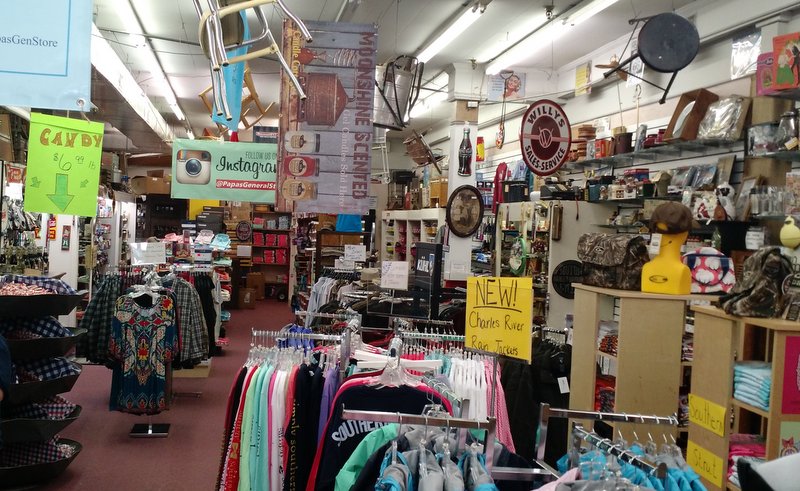
I’ve been traveling along the coast of South Carolina this week, and on Thursday, I found myself in the historic town of Conway, South Carolina. I parked downtown and strolled into the past via Papa’s General Store, a small local store with a lot of merchandise––and a lot of charm.

IMG_20151112_141930198

While browsing a display of antiques, I happened to notice a vintage radio perched on a high shelf. Here’s what caught my eye:

IMG_20151112_140636237_TOP

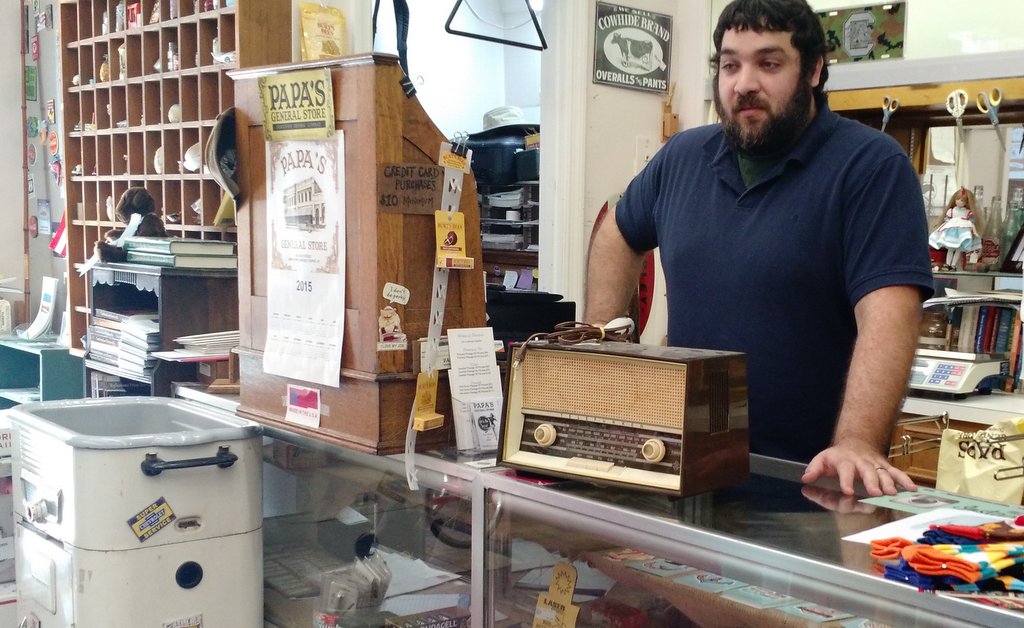
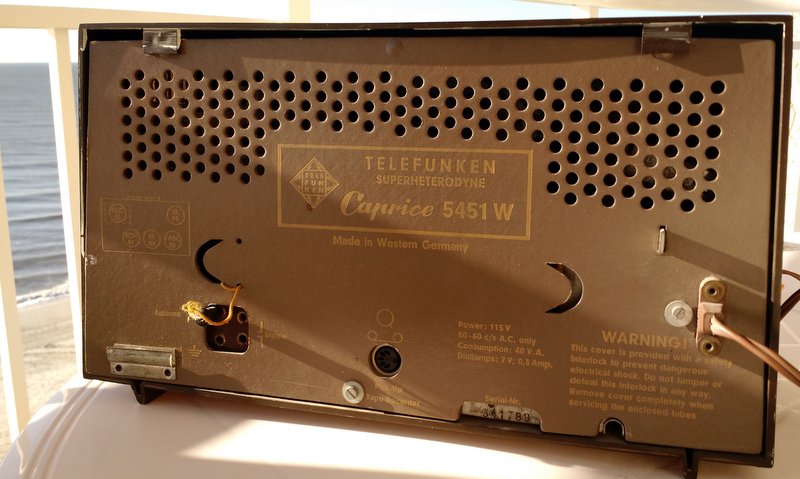
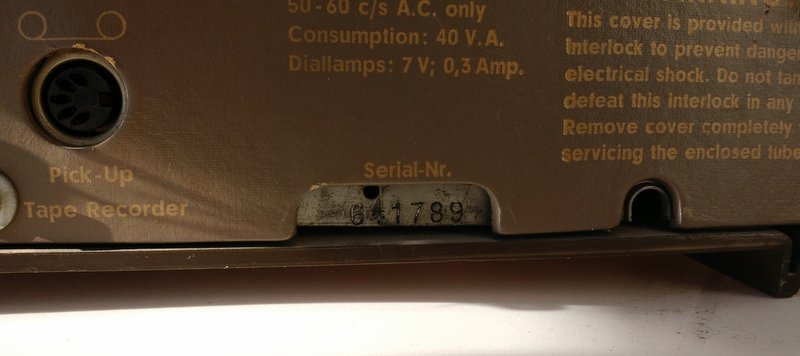
I asked, was the radio was for sale? And, indeed, it was. One of the sales clerks pulled it from the shelf, dusted off the top, and read the price: $74. I noted that it was a West German Telefunken receiver.  I asked the clerk, Chris,  if it worked, and he confirmed that it did; it belonged to his uncle, who had clearly taken very good care of it.

Chris allowed me to plug it in, turn it on, and tune in a couple of local stations…The Telefunken produced beautiful audio without even the slightest hint of a hum. Chris was pleased that I appreciated the radio, and sincerely wanted me to take it home, so he lowered the price a bit further.  I agreed, and purchased it without hesitation. Just couldn’t help it…

That's Chris behind the counter.

Chris behind the counter with his uncle’s classic Telefunken.

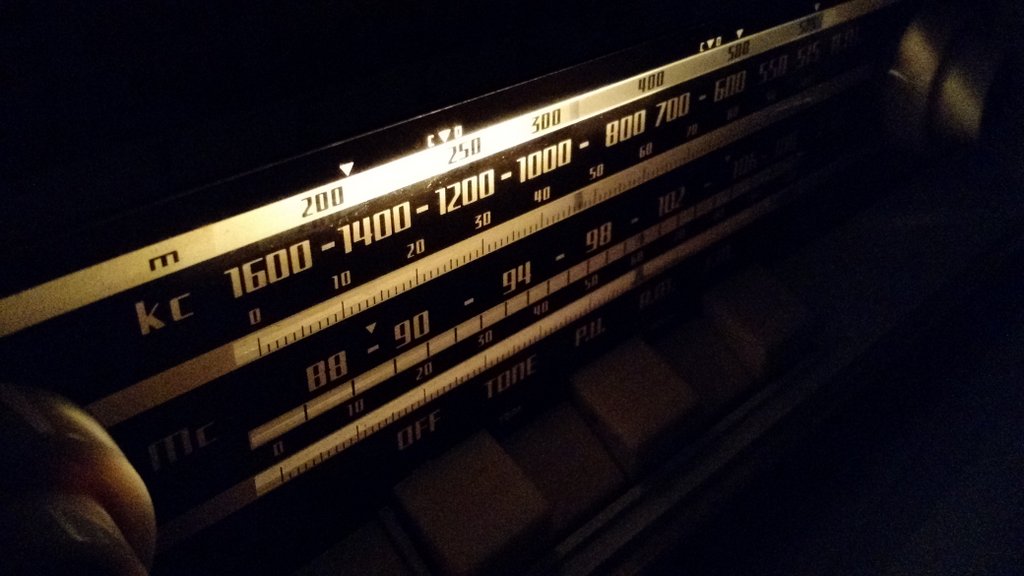
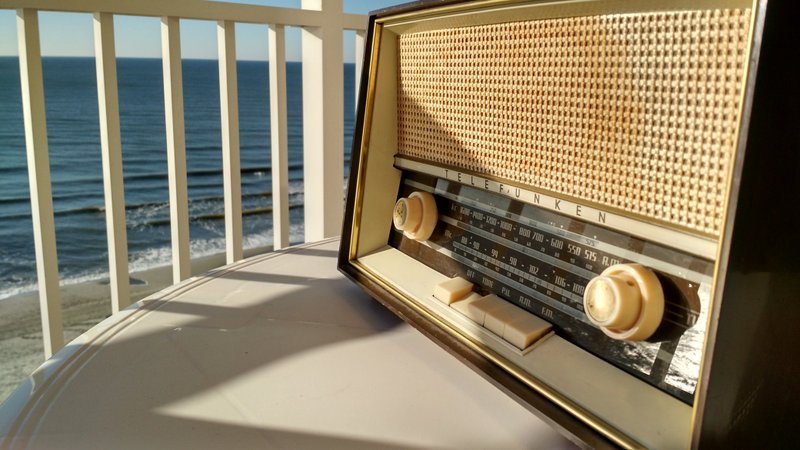
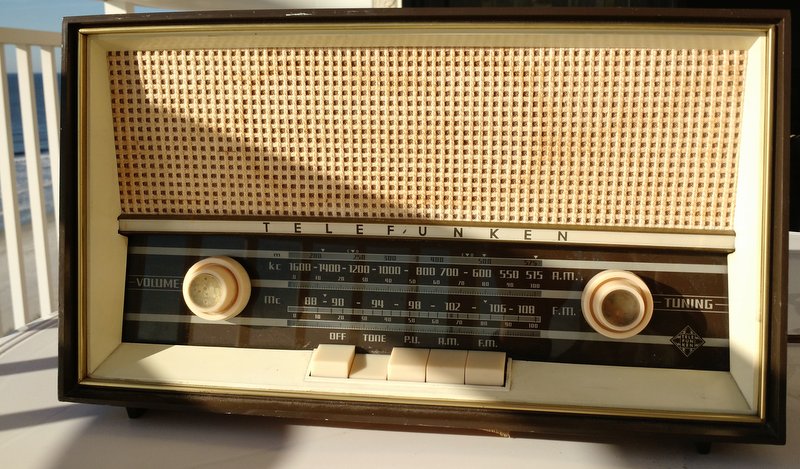
The Telefunken Superheterodyn Caprice 5451W covers the AM/mediumwave band and FM. It’s a tube radio produced in the early 1960s in West Germany, and is now the only tube-based radio I own that covers the FM band.

IMG_20151112_195818546_TOP

Of course, I was very eager to get the Telefunken on the air, so that afternoon I headed to our balcony overlooking the Atlantic, tuned around a bit on the mediumwave band…and was simply amazed at all it could receive.  I picked up my smart phone, and with it made a very short recording of the Cuban station, Radio Reloj, on 820 kHz:

My smart phone’s microphone doesn’t begin to do the Telefunken’s rich audio justice, but you can clearly hear Radio Reloj’s ticks and “RR” in Morse Code at the top of the minute (indeed, if you’re listening with headphones, you may also hear crashing waves in the background). Something nearby generated a lot of RFI right on frequency, too , but the rest of the broadcast band had a surprisingly low noise floor.

I also spent some time with the Telefunken on the FM broadcast band; with a simple wire antenna, this worked wonders.

In my humble op, the audio the Telefunken produces is simply beautiful.  And so, I’ve got to add, is this vintage radio. See for yourself.

IMG_20151113_083744302_HDR

IMG_20151113_083645909IMG_20151113_083653301 IMG_20151113_083619896 IMG_20151113_083615824

Reuters: How China exerts soft power through a global radio network

CRI-China-Radio-International

Many thanks to several SWLing Post readers for sharing a link to the following investigative story from Reuters. I’ve included an excerpt below–you can read the full article, and watch a video at Reuters online.

(Source: Reuters)

In August, foreign ministers from 10 nations blasted China for building artificial islands in the disputed South China Sea. As media around the world covered the diplomatic clash, a radio station that serves the most powerful city in America had a distinctive take on the news.

Located outside Washington, D.C., WCRW radio made no mention of China’s provocative island project. Instead, an analyst explained that tensions in the region were due to unnamed “external forces” trying “to insert themselves into this part of the world using false claims.”

Behind WCRW’s coverage is a fact that’s never broadcast: The Chinese government controls much of what airs on the station, which can be heard on Capitol Hill and at the White House.

[…]A typical hour on most stations begins with a short newscast that can toggle between China news and stories about violent crimes in the United States. Besides the overtly political coverage, topics range from global currency fluctuations and Chinese trade missions to celebrity wardrobe analysis and modern parenting challenges.

[G&E president and CEO James Su] declined to describe how he makes money when most of the U.S. stations air virtually no commercials. He also declined to say how he got the money to finance his radio leases and acquisitions.

His stations, Su said, offer the American public an alternative viewpoint on Chinese culture and politics. He has “no way to control” what CRI broadcasts on the stations, he said, nor is he part of any plan to spread Chinese propaganda.

“We are only telling the unfiltered real news to our audience,” he said.

On Oct. 29, WCRW carried a program called “The Hourly News.” Among the top stories: Senior Chinese and U.S. naval commanders planned to speak by video after a U.S. Navy ship passed close by China’s new artificial islands in the South China Sea.

Washington and its allies see the island-building program as a ploy to grab control of strategic sea lanes, and the Navy sail-by was meant to counter China’s territorial claims.

WCRW omitted that side of the story.

The admirals are holding the talks, the announcer said, “amid the tension the U.S. created this week.”

Read the full article at Reuters online…

Guest Post: A Late Summer Visit to Howard Mills’ Radio Restoration

Many thanks to former VOA correspondent and noted DXer, Dan Robinson, for the following guest post:

DSCF7551

A Late Summer Visit to Howard Mills’ Radio Restoration

-Dan Robinson

The end of summer is a wistful time, as we begin to mourn the passage of warm days and anticipate the arrival of autumn.

For those of us in love with shortwave, even in these waning days of HF broadcasting, August brings changes in propagation that herald the approach of improved reception, thoughts of getting antennas in shape, and preparing receivers for the new DX season.

It’s also a time when Hamfests are winding down for the year — for me, it’s still great fun to attend these and see what equipment is available.

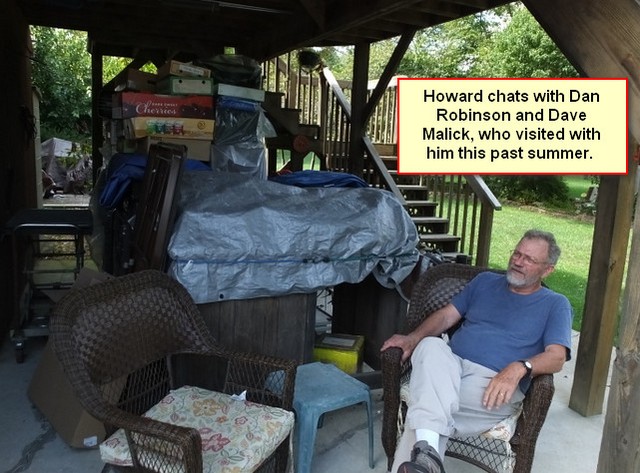
A few months ago, I and fellow Washington, DC area SWL Dave Malick took the opportunity to visit a couple of Hamfests. At one of these, in Berryville, VA, I ran across someone who over the years has become somewhat of a legend in the field of radio restoration — Howard Mills.

Howard lives in rural West Virginia, at a point about equidistant from Harper’s Ferry and Sheperdstown. That’s about an hour or so from DC and the immediate Maryland suburbs. From DC, you drive out Rt 270 to Frederick, Maryland and then up Route 15 and 340.

It’s beautiful country — on the way you pass through small towns, past farms, and in late summer, roadside stands selling huge ears of corn and about every type of vegetable, along with peaches and apples of every type and size.Rack mounted equipment
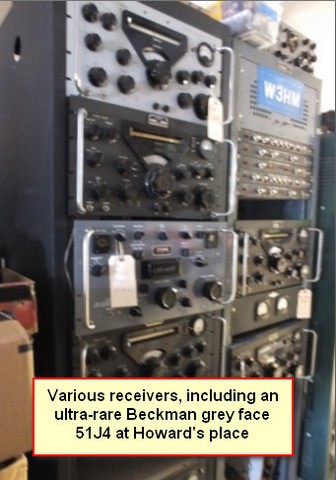
Back in the late 1990’s I first became aware of Howard Mills when I brought my Collins 51J4 to him for refurbishing.   Howard is one of the few persons remaining in this country capable of going through classic tube receivers from top to bottom.

A visit to Howard is an experience everyone should have at least once in a lifetime. Restoration activities take place in the lower/ground level of his home.

Outside there are some amazing antennas, long wires, and beams which support both his amateur radio and receiver activities.

DSCF7558Under a porch, covered in tarps, are some of his latest equipment and parts acquisitions, from thousands of tubes to some of the rarest radios and transmitter items one may ever see.
Howard at his home in WVA

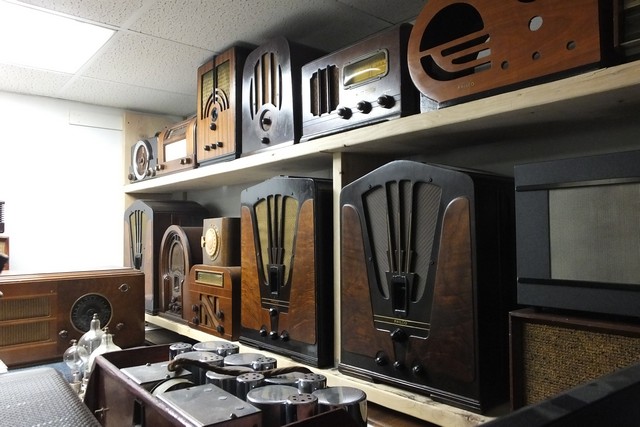
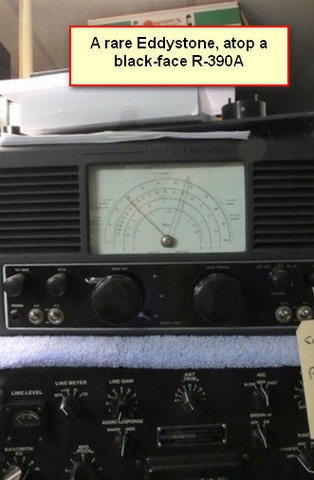
Inside, you find a wonderland of receivers. You name it, Howard has it. In racks, there are specialized Beckman 51J4s, SP-600s, AR-88s and R-390/As, Eddystones, and others. In another room, you see some of the most beautiful, and collectible and valuable, American and foreign-made radios dating back to the earliest days.
Rare Eddystone

On tables in one portion of the basement of Howard’s place, you find several R-390s in various stages of refurbishment. One, he notes (probably among his “keepers” ) was found still new in its original crate (how I would love to have that one!).

On the day Dave and I visited, the purpose was to pick up one of the most beautiful R-390s I have ever seen — a Capehart that was refurbished by Howard in 2007 and placed in a custom cabinet, complete with an easy-left-off top, similar to the HQ-180 design. This black beauty is now sitting in my shack at home.
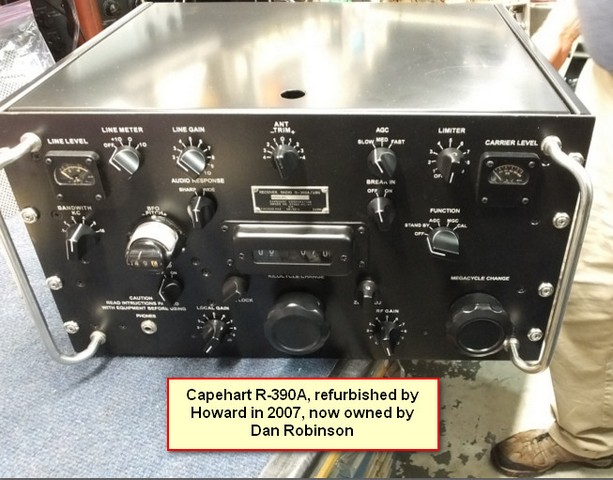
R-390A Capehart

Howard has been at it for many decades, as I said. A conversation with him is a voyage through radio history, punctuated by references to a range of major radio manufacturers. He clearly loves what he does, though one wonders how much longer he will be at it.

Howard emphasizes by the way that his work is in restoring TUBE radios — he doesn’t get into solid state. There are a few well-known receivers in his place — I noticed an ICOM IC-R72 and a JRC NRD-535– but most of what you see are the classics that we have all come to know and love.
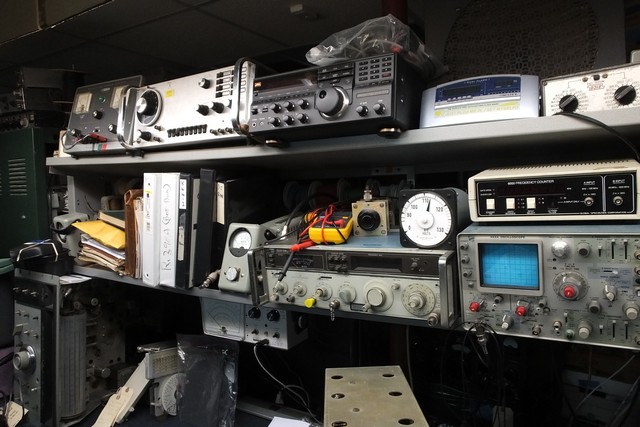
DSCF7529

His primary specialty appears to be the 51J series. A link to him on the Collins site notes that his main focus is on A line equipment, J series, and 32V series, but he is certainly capable on a number of models, including as I saw, HQ-180s and AR-88s (http://www.collinsradio.org/howard-mills/)

I was able to take some photos of Howard’s operation and offer them to SWLing Post readers here. At this point, Howard remains in business. He has had customers from all over the U.S. and I assume around the globe.

For each refurbishing job, Howard provides an extensive print out of every single modification and component replacement he does, along with the results of sensitivity and calibration tests done for each set.

Please do note that Howard makes clear that basically as long as it takes him to refurbish a radio — is as long as it will take.   If you give him one of your radios, you basically agree to it being with him for several months if not longer. He does have a backlog.
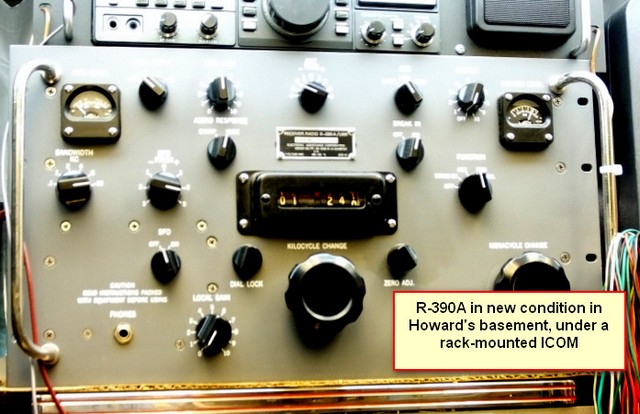
R390A New

Things like sandblasting front panels for R390s (I am not certain to what extent he does this himself or out-sources this particular aspect) also takes time.   And the detail with which he approaches a breakdown of an R390/A, evidenced by the sets I saw in process, is quite extraordinary and time-consuming.

Howard gets mostly superb reviews from those who have used his services. If you look him up on the Internet, and he has time for you to visit, it’s an experience you will always remember, though it’s not that I would suggest a crowd descend on him.

Hope everyone enjoys the photos — I had intended to get this article to Tom much sooner than October. Keep in mind, of course, that though Howard is one of the last to do this kind of work, there are a few others, including Chuck Rippel in Virginia.

We are indeed lucky to have anyone still doing this work. We know they do it not just as a business, but out of a love for this wonderful old equipment.

Photo gallery

This slideshow requires JavaScript.


Many thanks, Dan, for taking us on this virtual tour of Howard Mills’ collection and workshop!

Your Capehart R-390A is absolutely gorgeous; Howard, no doubt, brought it back to mint status through loving, considerate restoration. What a great addition to your collection, Dan.

Thank you, again,  for sharing your guest post.

Bill’s simple Sony SRF-59 passive loop antenna modification

Sony-SRF-59-AM-Loop-Antenna

In reference to our previous posts about the Sony SRF-59 ultralight receiver, SWLing Post reader, Bill Mead, writes:

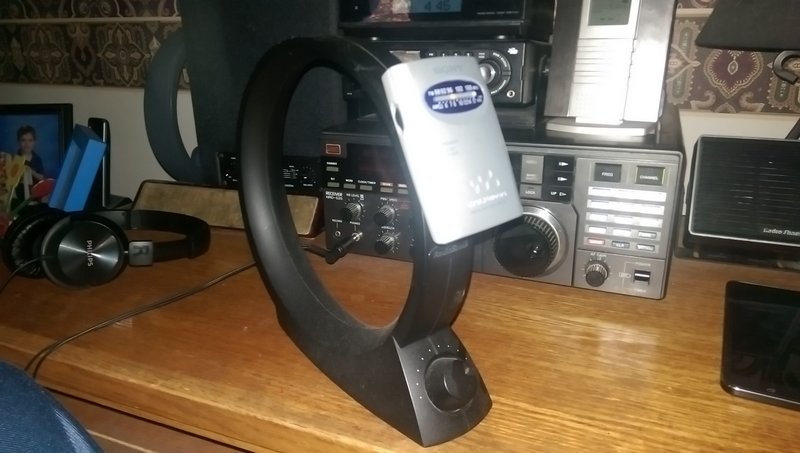
“As someone who doesn’t normally open the backs of radios, this is my mod on my ultralight. All it takes is a bit of electrical tape to hold the belt clip on the loop.”
That is, indeed, a brilliant and simple mod. The SRF-59 inductively couples to the loop antenna, so no soldering is needed; simply tape the belt clip to the loop, making sure the position is convenient for tuning the SRF-59 and the loop’s capacitor.
You can find passive loop antennas ranging from $19 to $50 US. The Grundig AN-200 and the Terk AM Advantage are two models currently on the market. Here are a few places you can check prices:

Grundig AN-200:

Terk AM Advantage: