Category Archives: AM

99% Invisible: “Voices on the Wire”

Radio-Dial-Blurred-Dark

Many of you know that I’m a huge fan of 99% Invisible–a podcast and radio show about “design, architecture & the 99% invisible activity that shapes our world.”

This past week, 99% Invisible’s episode, Voices on the Wire, featured Tony Schwartz, a recording pioneer, and Frank Conrad, a broadcasting pioneer. While not specifically about shortwave radio, you’ll hear how the ether weaved its way through both of their histories.

I should mention that Roman Mars, creator of 99% Invisible, is quite a fan of shortwave radio. Indeed, in the past, he’s featured our friend, David Goren, of Shortwaveology.net.

You can listen to Voices on the Wire and read the show notes on 99% Invisible’s website. Click here to download the episode as an MP3 file, or simply listen via the embedded SoundCloud player below:

Note that the Tony Swartz segment was originally produced by  The Kitchen Sisters, Nikki Silva and Davia Nelson, from their series Lost and Found Sound; the segment on Frank Conrad was originally produced by Radio Diaries.

And, hey…if you happen to be chatting with Roman Mars anytime soon, ask him to do more shows on shortwave radio: a technology I consider to be the ultimate invisible medium!

James’ vintage transistor radio collection

In response to my recent post about the vintage Arvin 68R58 transistor radio, SWLing Post reader, James Patterson, has shared photos of his collection in New Zealand. James has captioned each photo below:


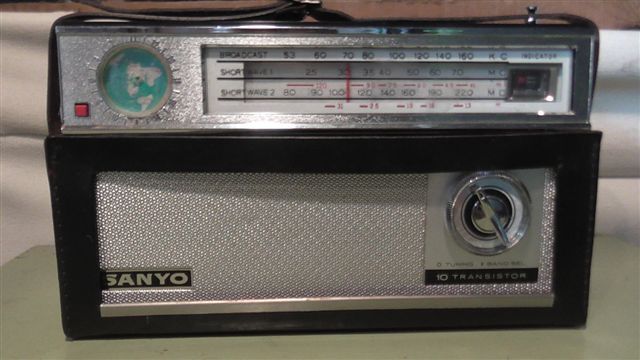
Sanyo

This portable Sanyo was bought at a “Second Hand” shop. It had badly corroded battery connections. I repaired it and it works fine now.

Very early National portable with twin speakers, broadcast [band] and [shortwave. Works very well.

Very early National portable with twin speakers, broadcast [band] and [shortwave. Works very well.

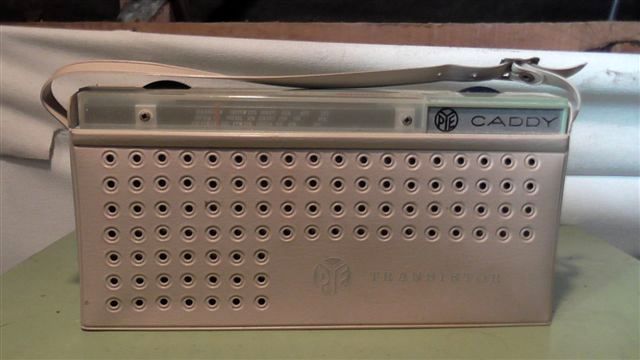
This PYE Caddy was actually made here in New Zealand. I believe the design was from the UK though. It still works very well.

This PYE Caddy was actually made here in New Zealand. I believe the design was from the UK though. It still works very well.

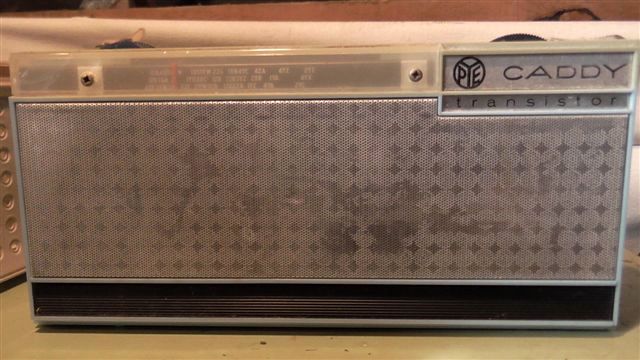
The PYE Caddy without the plastic cover.

The PYE Caddy without the plastic cover.

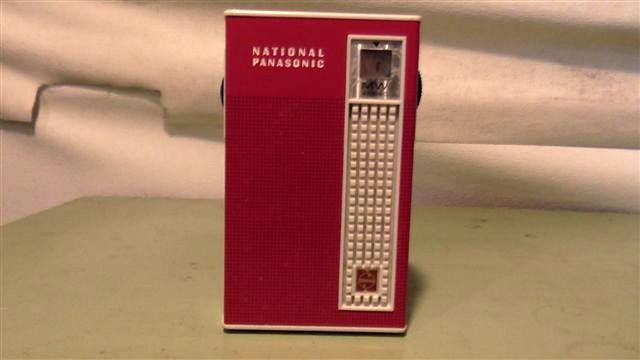
Very popular in their day, the RED National Panasonic pocket AM Transistor 6. Works well.

Very popular in their day, the RED National Panasonic pocket AM Transistor 6. Works well.

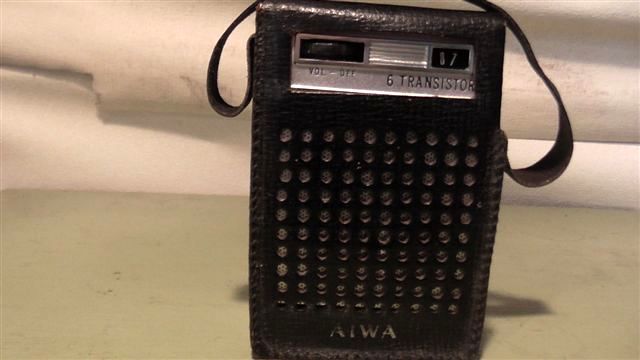
Very early AIWA pocket Transistor 6. Still works well.

Very early AIWA pocket Transistor 6. Still works well.

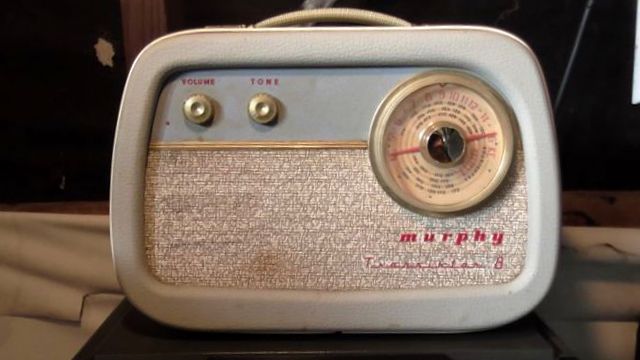
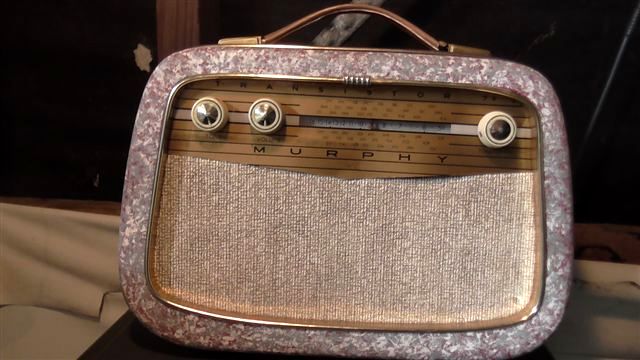
The "Murphy 8" Transistor radio. Broadcast band only. Wooden case in fab condition. Works very well.

The “Murphy 8” Transistor radio. Broadcast band only. Wooden case in fab condition. Works very well.

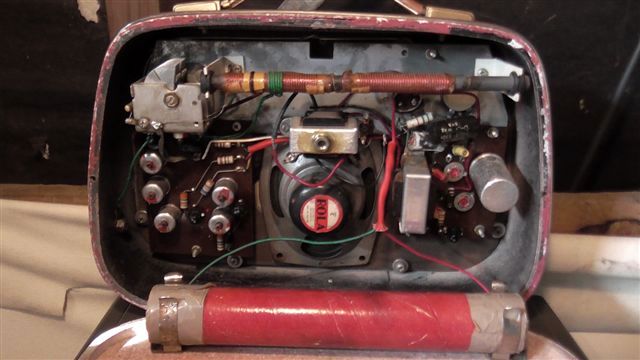
Murphy8-BackOpen

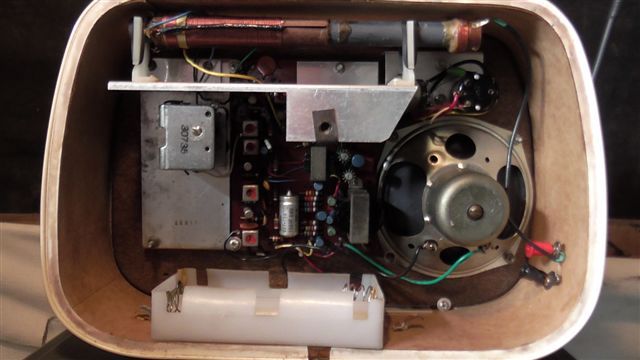
This is the rear view of the “Murphy Transistor 8.” I gave it a new battery holder.

This is a "Murphy Transistor 7+"  Im not sure what the "+" means because it does have only 7 transistors. Very good performer for its age. Wooden case is identical to the previous Murphy 8.

This is a “Murphy Transistor 7+” Im not sure what the “+” means because it does have only 7 transistors. Very good performer for its age. Wooden case is identical to the previous Murphy 8.

This is the rear view of the "Murphy Transistor 7 plus." All very original, and works fine.

This is the rear view of the “Murphy Transistor 7 plus.” All very original, and works fine.

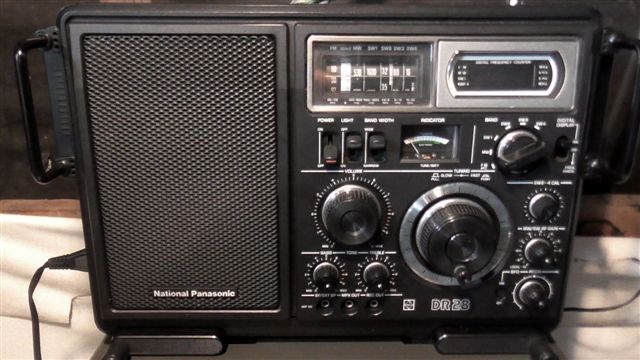
This National Panasonic DR 28 is not part of my early AM Transistor radio collection. It is, however, part of my Short Wave Radio collection.

This National Panasonic DR 28 is not part of my early AM Transistor radio collection. It is, however, part of my shortwave radio collection.


Many thanks, James, for sharing photos from your collection! You certainly have some gems in there. I was not at all familiar with the New Zealand-made PYE Caddy, in fact. I’m curious if other radios were made in New Zealand in the past.

I bet you and I might agree that the Panasonic DR-28 (a.k.a. RF-2800 in North America) hardly feels “vintage,” but at 37 years old it certainly qualifies by most standards–hard to believe. The RF-2800 pops up on eBay quite often and has certainly held its value well. (Click here to search.)

Seeing the DR-28/RF-2800, in fact, is making me lust even more after the venerable Panasonic RF-2200! Alas…so many radios!

Hamvention find: the Arvin 68R58 AM transistor radio

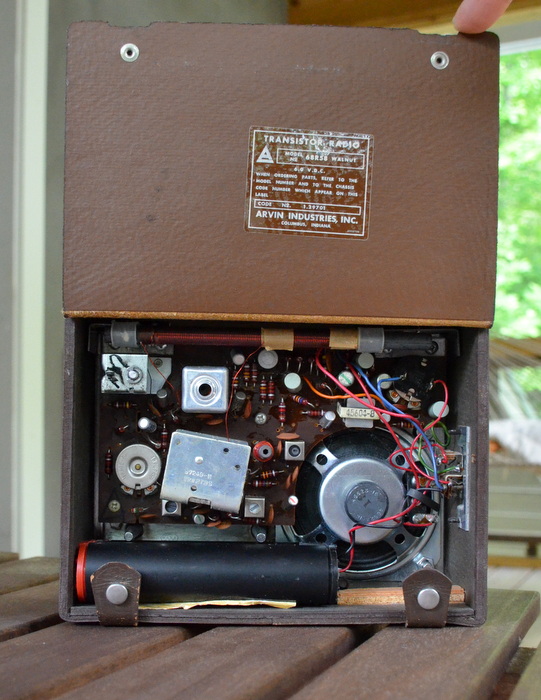
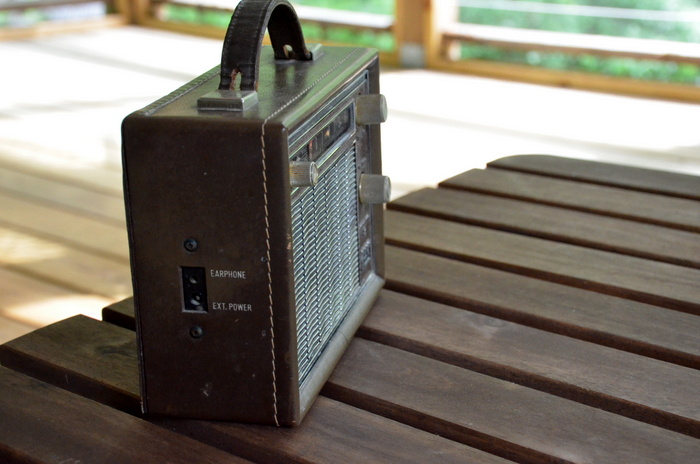
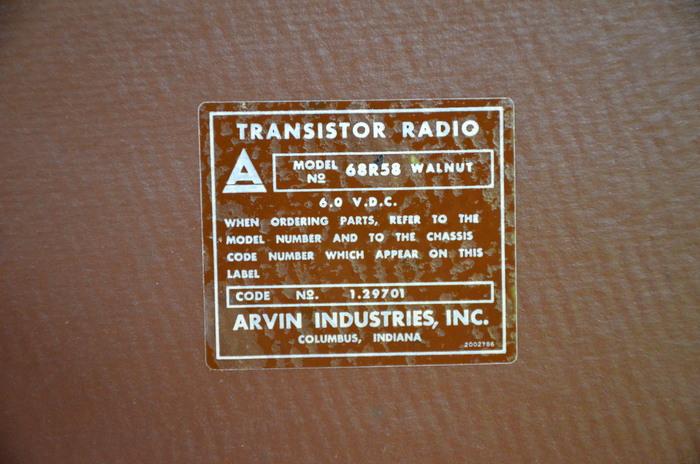
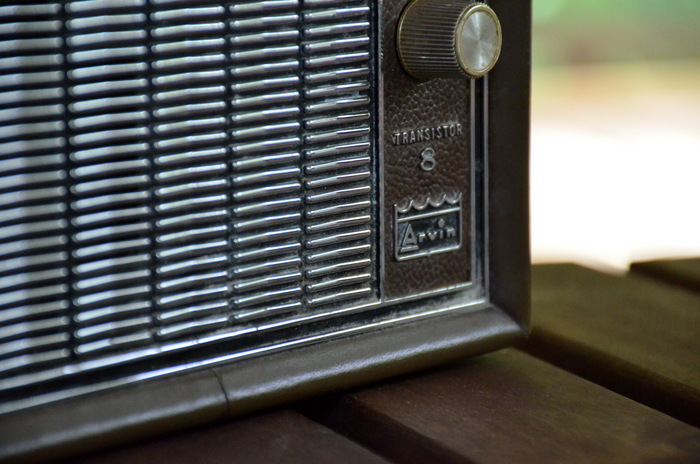
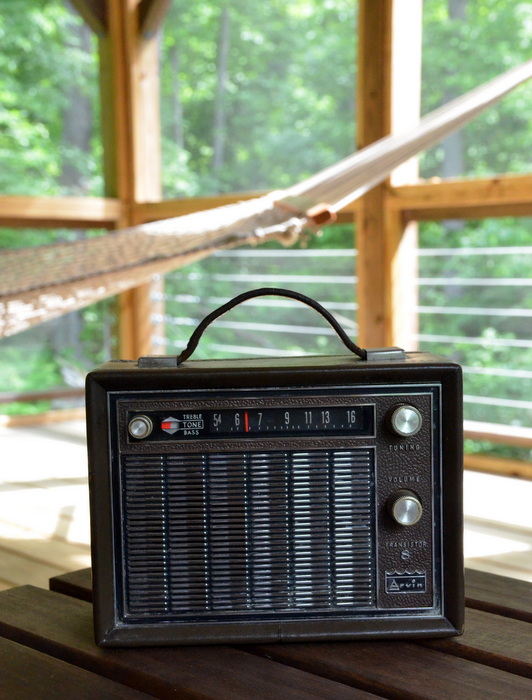
ARVIN-68r58-DSC_1390Though I believe I spent more money at the Dayton Hamvention this year than I have in all previous years, I only purchased one radio: the Arvin 68R58 eight-transistor.

I spent a whopping $5 on the little Arvin in the Hamvention fleamarket. To be fair, the seller sold it for this modest price because he was not sure if the radio worked.  But when I unsnapped the back leather cover, peered inside, and found the works remarkably clean, I suspected it might…

ARVIN-68r58-DSC_1373No original power supply was included, of course, and I was a bit concerned when I saw the somewhat out-of-character plastic battery holder. In the filtered fleamarket light, it appeared to me as if it required proprietary batteries–the holder appeared too small for C cells, and too large for AAs. There was no indication of the type of batteries it used, but since the spec read “6 volts,” I knew I could build a small AA battery holder, if need be.

So, at $5 (I bargained him down from $10, based on the doubt of operation) it was a very low risk purchase, and a potentially a fun project.

ARVIN-68r58-DSC_1385

Back at home, I popped open the battery holder and looked inside…And I discovered the Arvin did, indeed, take four C cells. Simple enough! After inserting fresh batteries, I turned on the radio via the tone pot, and instantly heard beautiful, rich audio.

What I thought would be a project radio ended up being fully functional, and was, moreover, in tip-top shape.

ARVIN-68r58-DSC_1369

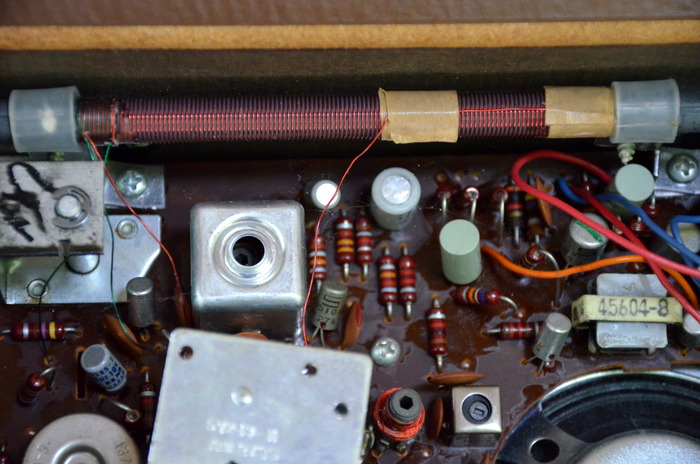
So far, I’ve been very impressed with the Arvin’s AM sensitivity and audio fidelity. No doubt the generous ferrite rod antenna is doing the trick on medium wave.

ARVIN-68r58-DSC_1377

Last night, as I tuned through the AM broadcast band, I was able to null out unwanted stations and noise amazingly well. There is something to be said of transistor radios from this era–let’s just say, they’re classics.

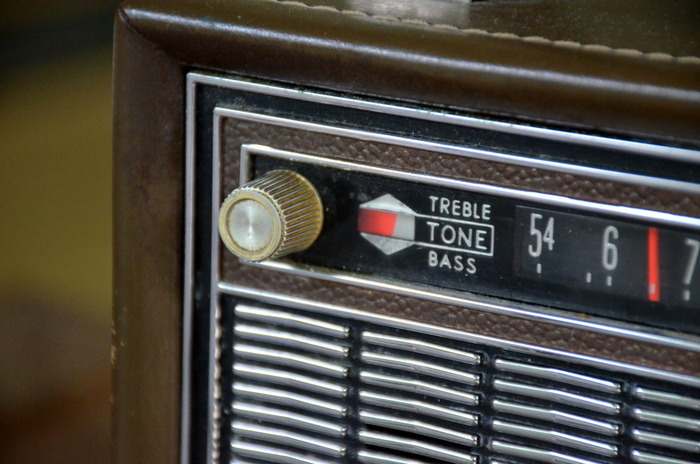
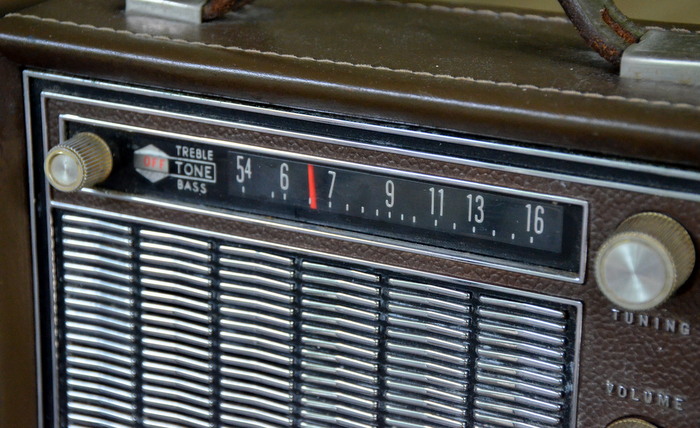
ARVIN-68r58-DSC_1376The Arvin has a simple set of controls: tone, tuning, and volume. There are no filter selections, of course, but I can tell that it’s quite wide; perhaps 8 or 9 kHz.

ARVIN-68r58All in all, I’m very pleased with my little purchase, and the Arvin has become my new (vintage) bedside radio. Last night, I tuned in one of my favorite AM stations on 740 kHz, CFZM in Toronto, Canada.  CFZM (a.k.a. “Zoomer Radio”) is not only a benchmark, but a right of passage for any worthy AM radio in my household. The Arvin passed the Zoomer test with colors flying.

And, yes, it even soothed me to sleep.

ARVIN-68r58-DSC_1387

Now I only need to properly clean and restore the Arvin’s leather chassis and perhaps build a 6V-regulated linear power supply.

ARVIN-68r58-DSC_1378

Next time you pass by a 1960s/70s vintage transistor, grab it! I’m certainly happy I did.

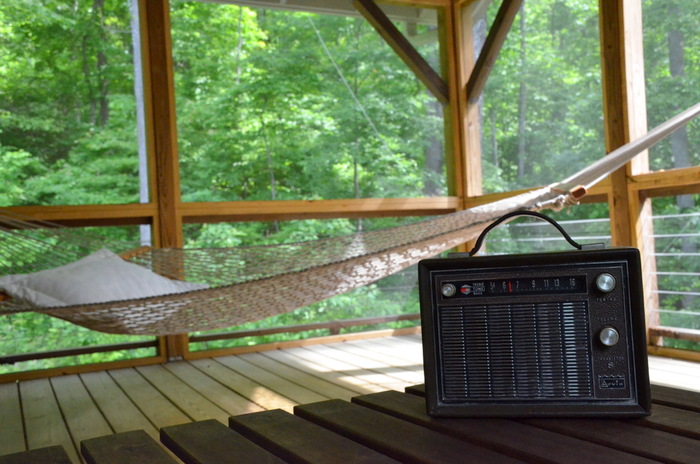
Now, I think I’ll turn on the Arvin, sip some dark beans, and put up my feet in the Pawley’s Island hammock…Cheers! Summer’s on the way.

ARVIN-68r58-DSC_1381Want one of your own? A quick search reveals that the Arvin 68R58 can be found on eBay for quite reasonable prices. Click here to search eBay for an Arvin.

Listening to an AM broadcast station on the BC-348Q

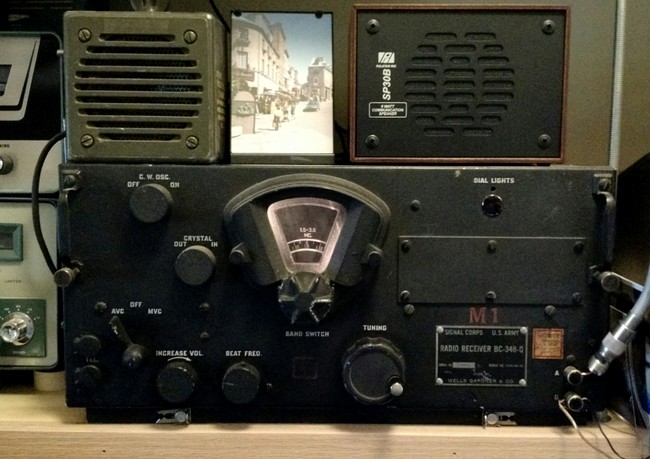
SignalCorps-BC-348Q

I listen to my BC-348Q most days; in fact, it’s my preferred way of receiving my morning dose of Radio Australia on 9,580 kHz. And although you won’t find any medium-wave DXers endorsing this beefy antique rig, the BC-348, with its warm tone, has turned out to be a great shortwave receiver for casual listening.

When the armed forces commissioned the Signal Corps BC348 during WWII, the last thing they wanted was to have on-duty personnel listening to AM broadcast bands during, say, bombing sorties––so they purposefully omitted the medium-wave band. The band selections in the BC-348 are as follows:

  • BC-348-Q-Dial200-500 KC.
  • 1.5-3.5 MC.
  • 3.5-6.0 MC.
  • 6.0-9.5 MC.
  • 9.5-13.5 MC.
  • 13.5-18.0 MC.

But here in the comfort of my radio digs three-quarters of a century after WWII, I recently discovered that this classic “hot war” receiver does, indeed, pick up one of my local AM broadcast stations: WTZQ, and on 1,600 kHz. WTZQ has become one of my favorite stations; it’s one of the few in this region that’s still actually independently owned.  The station’s playlist spans the decades, including, as they say, “everything from Glenn Miller to Steve Miller.” And, since they’re on “1.6 MC” they make the cut on the ‘348’s second-band selection.  How cool is that?

WTZQWTZQ’s station is a good thirty miles from here as the crow flies, so reception usually includes a little static on the wire antenna I’ve connected to the BC-348. Still, you might enjoy this short audio clip of WTZQ via the BC-348Q:

You can stream WTZQ, by the way, via their website. Enjoy!

Community stations provide lifeline of info in post-quake Nepal

Nepal-Earthquake-Map(Source: BBC Monitoring)

Community radio stations in earthquake-hit Nepal have become a crucial provider of information – in fact, the only source in places where newspapers do not reach and internet service does not exist.

Many of the stations are operating from tents after their permanent buildings were destroyed in the 25 April earthquake.

Staff members from these stations have shown tremendous resilience in ensuring that the flow of information does not stop.

[Continue reading…]

Honoring Memorial Day: The White Cliffs of Dover

Dame Vera Lynn

Dame Vera Lynn

Today is Memorial Day, and I’m feeling humbly grateful to all of those who paid the ultimate sacrifice for their country. Since I’ve been reading a lot of WWII history lately, I’ve also been playing a lot of WWII-era music here in my sanctuary to all things radio.

Few songs sum up the yearning sentiment of World War II better than Vera Lynn’s 1942 rendition of “The White Cliffs of Dover.” It’s an iconic song, one that helped British soldiers see beyond the war while mourning its painful toll. It was written in 1941 when England was taking heavy casualties, just before American allies joined the effort.

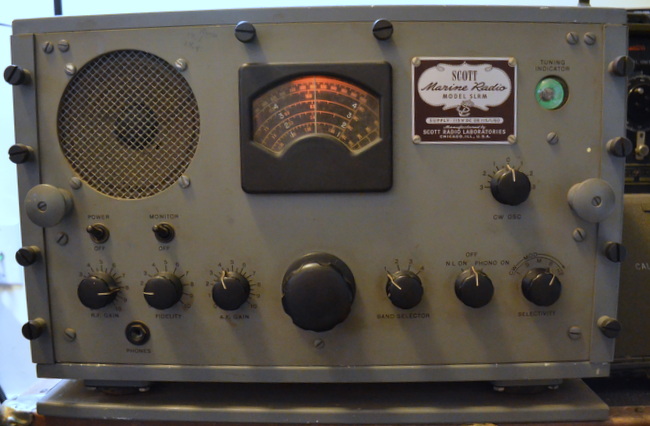
Scott-Marine-Radio-SLR-M

This morning, seeking something with a little authenticity, I played “The White Cliffs of Dover” though my SStran AM transmitter, and listened to it through “Scottie,” my WWII-era Scott Marine radio (above). I made this recording by placing my Zoom H2N recorder directly in front of the Scott’s built-in monitor speaker.

So here you go: a little radio tribute to all of those who fell–on both sides–of that infamous second world war.

And thanks to all who serve and have served in the name of “peace ever after.”

Click here to download the recording as an MP3, or simply listen below:

How to replace a noisy wall power supply

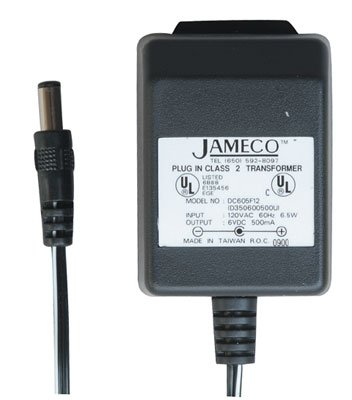
JamecoWallPowerSupplyRegarding noisy switching power supplies, SWLing Post reader, Dan Lewis, comments:

“Google the following: “Jameco linear wall transformer”, and you’ll find a suitable non-switching replacement.

Jameco still has a number of linear transformers in their catalog at reasonable prices. I haven’t bought anything from them in many years but when I dealt with them frequently a number of years back they were always reputable.”

Many thanks for your suggestion, Dan! Jameco is a reliable company and I’ve also been a long-time customer. If you know how to pick the proper power supply for your radio (or any other electronic device) click here to view a list of regulated linear supplies on Jameco’s website. [Also note this follow-up post.]Otherwise, keep reading…

How to find a replacement AC adapter/power supply

When you purchase a replacement power supply, you must make sure that several properties match that of the device it will power, else you could cause damage.

There are four properties you need to match: voltage, rated current, polarity and tip size.

Voltage

Most consumer electronics are powered by and rated for 4.5, 5, 9, 12, or 13.8 volts DC. Of course, there are exceptions. It is important that you match the required voltage exactly. Most radios and electronic devices display their required voltage and voltage tolerance on the unit itself, on the supplied switching power supply, and/or in the owner’s manual.

Rated Current

Like voltage, rated current is usually displayed somewhere on the device, existing power supply or in the owner’s manual. Current is usually indicated in amps (A) or milliamps (mA). Unlike voltage, rated current on your power supply does not have to match the device exactly. You simply need to make sure the power supply meets or exceeds your radio’s required current.

For example, if your radio requires 800 mA (or .8 A) and you find a power supply rated for 500 mA, you should not use it. If you find a power supply rated for 2 amps (or 2000 mA), it exceeds the 800 mA rating, so you’re good to go!

Unlike voltage, your electronic device or radio will only draw the amount of current it needs from the power supply.

Polarity
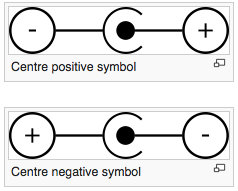
Click here to read more about tip polarity. (Source: WikiPedia)

Click here to read more about tip polarity. (Source: WikiPedia)

You’ll need to determine if your radio requires a plug with a positive or negative tip (a.k.a. center conductor).

Fortunately, manufacturers have long used standard symbols to make polarity obvious (see image).

You’ll typically find a polarity symbol printed on the back of your radio, near the plug-in point, in the owner’s manual or on the back of the existing wall adapter.

Note: Be very careful matching polarity! Some radios and electronic devices are not properly protected against reverse polarity; damaged can occur immediately after supplying voltage with incorrect polarity.

TJamecoWallPowerSupplyip/plug size
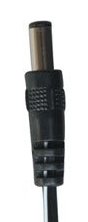
You need to make sure that the inner diameter and outer diameter of a replacement wall adapter will match that of your existing adapter.

This can be the most difficult property to match.

Occasionally, radio manufacturers will actually specify the tip size in their owner’s manual, spec sheets, or on the product page of their website. I’ve even had luck calling manufacturers and asking a technician for the plug size.
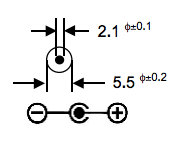
ACAdapterTip

Specification sheets will typically indicate plug dimensions with an illustration.

Otherwise, you can always measure the existing power supply tip (both inner and outer dimensions) using calipers.

Once you have those dimensions, finding the appropriate replacement power supply is quite easy. Indeed, companies like Jameco provide specification sheets (click here for an example) that indicate dimensions for each power supply they sell.

Once you’ve matched the voltage, rated current, polarity and tip size, you can purchase a regulated linear power supply with confidence!

Keep in mind: there are most likely other devices in your home with noisy switching power supplies that could be causing radio interference. Check out my noise trouble shooting section of this article to help identify local sources of radio noise.

Update: check out this follow-up post regarding Jameco power supplies–not all are truly linear regulated.