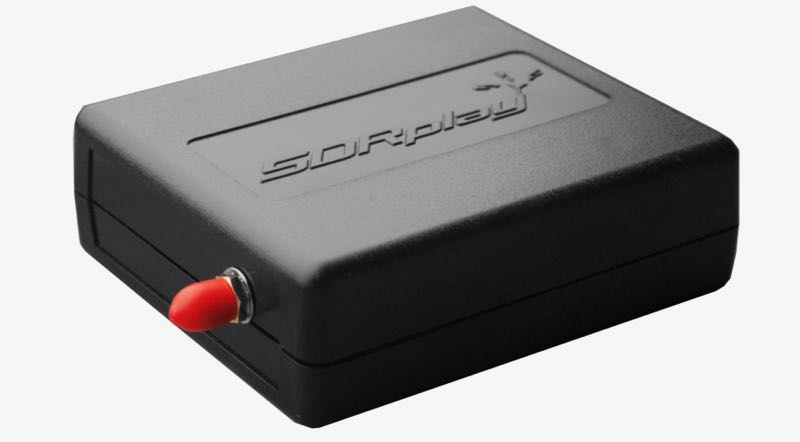
Today, SDRplay, the UK-based manufacturer of affordable software defined receivers, announced a new addition to their product line: the SDRplay RSP-1A.
The RSP1A joins the SDRplay product line of the RSP2 ($169.95 US), and RSP2 Pro ($199.95 US). The new RSP1A will retail for $99.00 US.
But what of this SDR’s performance? In a nutshell: as of today, I’d contend that the RSP1A will simply be the best SDR value on the market. End of story. There is nothing I know in the $99 price bracket that can beat it.
How do I know this? I can make this statement with confidence because I have been involved with real-world testing and evaluation of the RSP1A Alpha, Beta, and production models since May. I took the RSP1A with me to Canada this past summer for field recordings with my laptop, and I’ve also evaluated the RSP at my home. Like a number of other reviewers, I’ve been intimately involved with putting the RSP1A through its paces. And let’s just say I like what I’ve seen.
I actually do quite a bit of Alpha and Beta testing for manufacturers. While it’s time-consuming volunteer work and requires meticulous attention to minor details, it gives me an opportunity to have meaningful positive impact on an upcoming product. Manufacturers that actively involve enthusiasts in their testing phase tend to produce better-quality products on the first run. Better products, of course, mean a better radio market with options for those only now discovering the mystery––and fun––of radio as well as DXing.
Since the RSP1A is essentially iterative agility on behalf of SDRplay, the RSP1A was surprisingly solid even in its early release. And try as I might, there were very few issues I ever needed to report back to the engineering team. SDRplay took each item of feedback seriously, logged it, and followed-up. Over the course of the evaluation period, SDRplay improved their dedicated SDR application SDRuno, as well.
In essence, the RSP1A hardware now in production and shipping has been thoroughly tested and is ripe-and-ready for your radio adventures.
I have not compared the RSP and RSP1A side by side; running two instances of SDRuno on the same PC has been problematic. To my ear, when I’ve tested one after the other, the RSP1A serves up slightly better sensitivity, perhaps due to a slightly lower noise floor. Also the RSP1A frequency stability is much improved over the RSP1.
Specifically, the following upgrades have been made per SDRplay:
- ADC resolution increased to 14-bit native for sample rates below 6 MHz, increasing to 16 bits with decimation
- Enhanced RF pre-selection (greater filter selectivity plus 4 additional sub-bands compared to the original RSP1) for reduced levels of spurious responses
- Improved LNA architecture with variable gain––the RSP1 had just a single gain step
- Improved intermodulation performance
- Performance extended to cover 1kHz to 2 GHz with a single antenna port.
- Bias-T facility
- Improved frequency stability incorporating a 0.5ppm TCXO (software trimmable to 0.01ppm)
- Selectable broadcast AM/FM/DAB notch filters
- RF shielding within the robust plastic casing
Performance
Suffice to say, this budget SDR delivers, and users will be wooed by its stellar performance.
I’ve spent 95% of my evaluation time on the HF and mediumwave bands and I’ve been impressed with the receiver’s sensitivity, selectivity, and AGC control. The audio fidelity is also highly customizable since it’s pumping audio directly through your PC’s system.
I haven’t spent any time above the aviation bands (higher than 140 MHz); I have, however, tested the RSP1A thoroughly on the FM broadcast bands and found it a solid FM performer. Note, too, that SDRuno’s built-in RDS decoder window provides quite a lot of data.
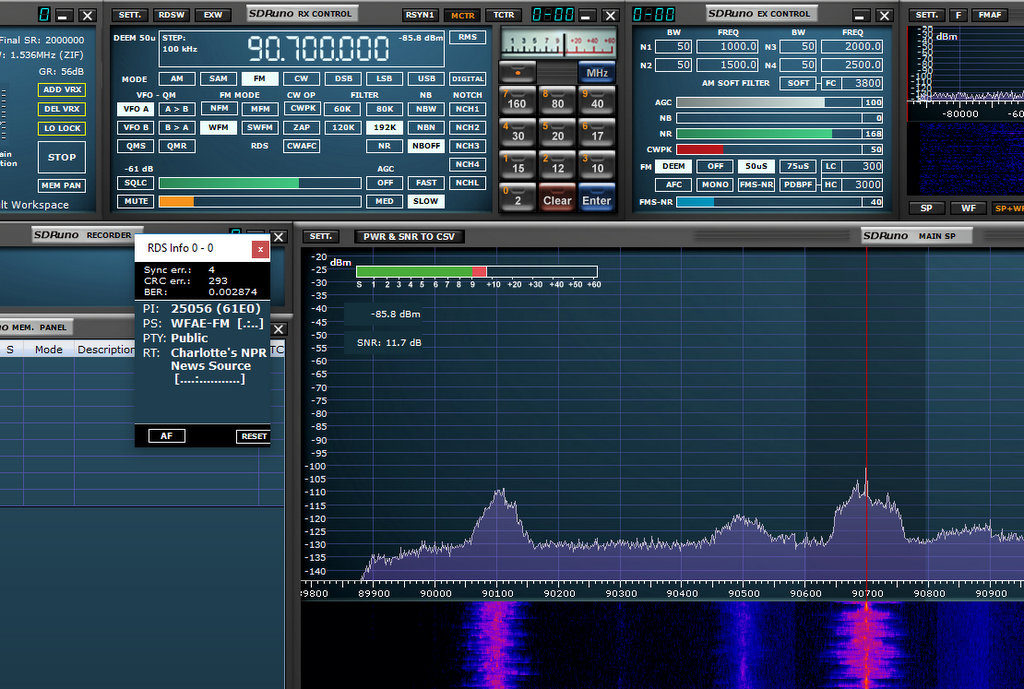
I’m also pleased that I haven’t noticed any front-end overloading––this, despite the fact that during travel, I’ve used it in the vicinity of some powerful broadcasters.
Comparing to benchmarks
I’ve compared the RSP1A to the Elad FDM-S2 ($500), WinRadio Excalibur ($900) and Microtelecom Perseus ($900).
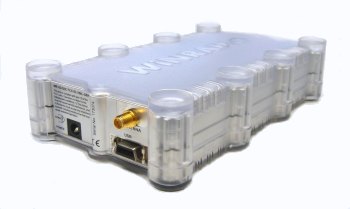
The WinRadio G31DDC “Excalibur”
But let’s be clear, here: this is not an “apples-to-apples” comparison since the RSP1A is a fraction of the cost of the others, and is also a wideband receiver (1 kHz to 2 GHz). The only other SDR I own that has VHF coverage is the FDM-S2, which tops out at 160 MHz.
Pricier HF-focused SDRs have distinct hardware advantages––especially in terms of filtering––that give them an edge over budget wideband SDRs. Still, in my comparisons, the RSP1A holds its own quite well.
Compared to the WinRadio Excalibur, for example, this SDR came fairly close in terms of sensitivity. The WinRadio’s synchronous detector––which I consider to be the best in the business––was indeed more stable than that of the RSP1A. The RSP1A sync lock could falter a bit during a weak signal’s QSB dip compared with the Excalibur.
But again, HF SDRs in the league of the FDM-S2, Excalibur, and Perseus have the luxury of designing receiver architecture around a much smaller portion of the spectrum. If you are a hard-core DXer looking for uncompromised performance on the HF/MW bands, then you should invest in one of these benchmark SDRs. I have, and I’d never give one of them up.
With that said, even though I have these amazing benchmark SDRs at my disposal, I still purchased the original RSP1 (then at $159 US) years ago. Why? For one thing, it’s more portable than the Excalibur or Perseus as it requires no external power supply (like the excellent FDM-S2, the RSP derives its power from the USB data cable). Additionally, I do like to play with frequencies above 50 MHz from time to time. The RSP offers up an all-in-one RF toolbox at a very affordable price. I don’t hesitate to throw the RSP in my pack and take it anywhere I’m travelling. If it gets damaged or lost, I’m only out $99––not $1,000.
Again, RSP1A’s bang-for-buck simply blows my mind.
Side note: I do wish someone would develop an accessory outboard filter box that could be implemented with budget wideband SDRs, thus providing, in a sense, a hardware “upgrade.” Something like the Elad SPF-08 preselector box designed for the FDM-S2
Any cons?
This review has been overwhelmingly positive because, frankly, the RSP1A is challenging to find fault with. Of course, if it carried a price tag of $600-900, I’d be much more critical of its performance as compared with my benchmark receivers in that same price class. I’d fully expect a robust preselector system, a bullet-proof front end, and performance that could match or surpass the benchmarks.
But for just $99? You simply can’t get that kind of hardware for that cost. So SDRplay engineering cleverly pulls every bit of performance out of their receiver by focusing on their SDRuno application, which is optimized for this receiver. And for that reason, it’s in a class by itself.
Admittedly, when SDRplay first introduced their application, SDRuno, I wasn’t the biggest fan. I found it rather quirky and a little cumbersome to use. SDRuno has come a long way, though; SDRplay has continuously improved it, and today, I prefer it to HDSDR and SDR console. SDRuno is much less cumbersome to use than it used to be, and the default window arrangement is pleasing (though I’d still like SDRuno windows to lock and act as one window as I flip through programs on my Win 10 PC). I even prefer SDRuno to Elad’s application in terms of ease of use.
If more AF/IQ recording features are added (virtual receivers, for example) it could even become my application of choice.
The great thing about the SDRplay RSP series, however, is that they’re supported by so many third-party SDR apps. If you don’t like the one you’re using, there are numerous others to chose from. SDRplay takes an affirmative stance that their hardware should be usable on as many platforms with as many applications as possible. Kudos to them.
Here’s a question I know I’ll be asked…
“I just purchased the RSP1. Should I upgrade?”
Good question! As you might guess, my answer is fairly simple and depends on your particular needs:
If you’re happy with the RSP1 and see no real benefit in the RSP1A upgrades above, don’t bother upgrading. Seriously…enjoy what you have! The RSP1 is still a sharp, capable, versatile little SDR and fully supported by SDRplay and its community. I’ve worked some incredible DX with mine over the past few years, and love it.
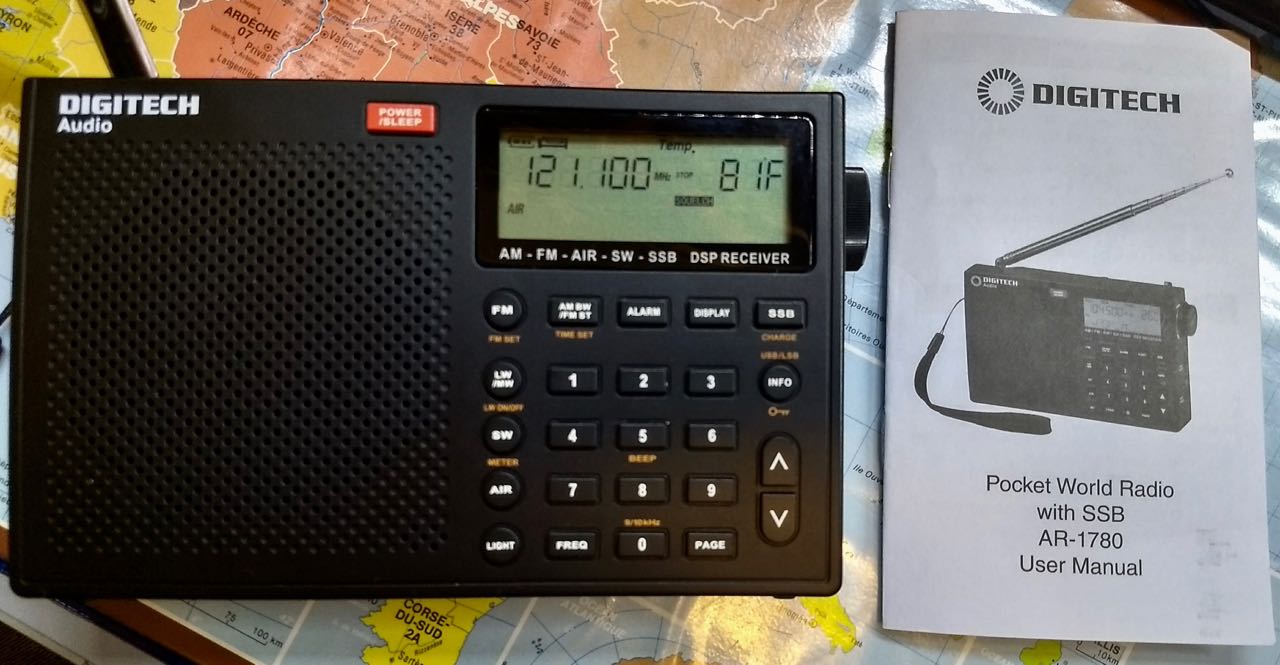
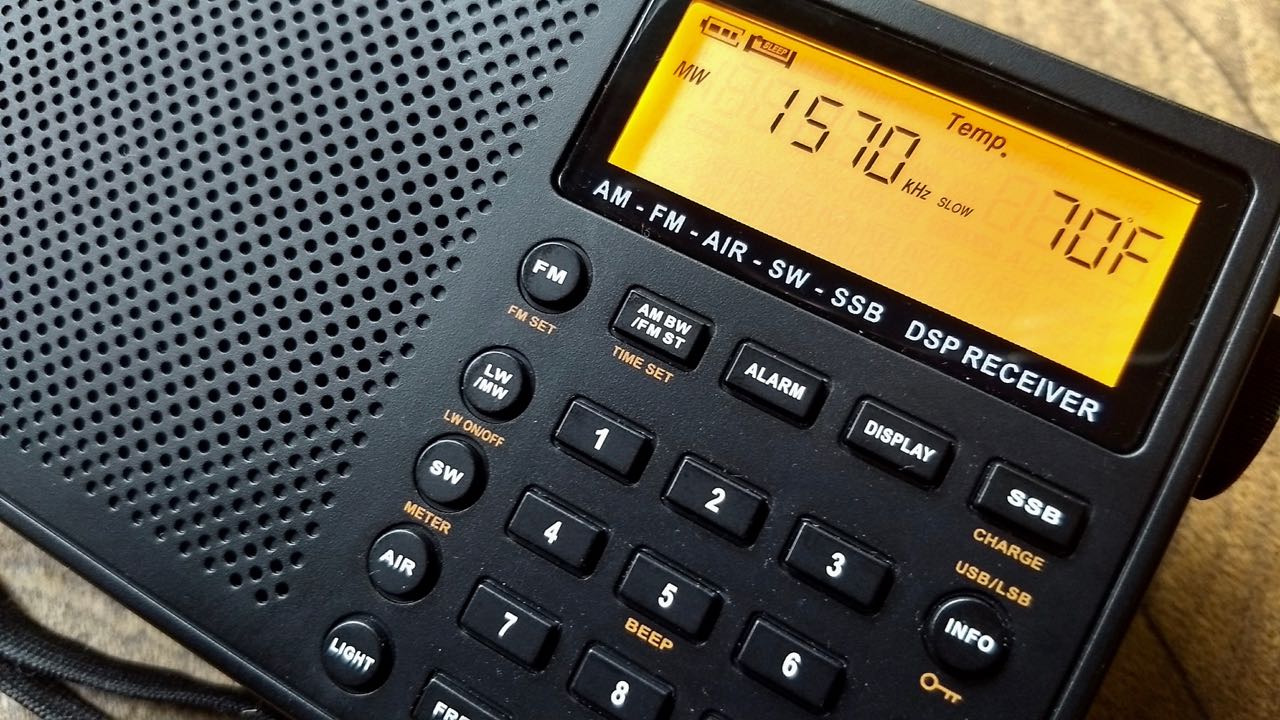
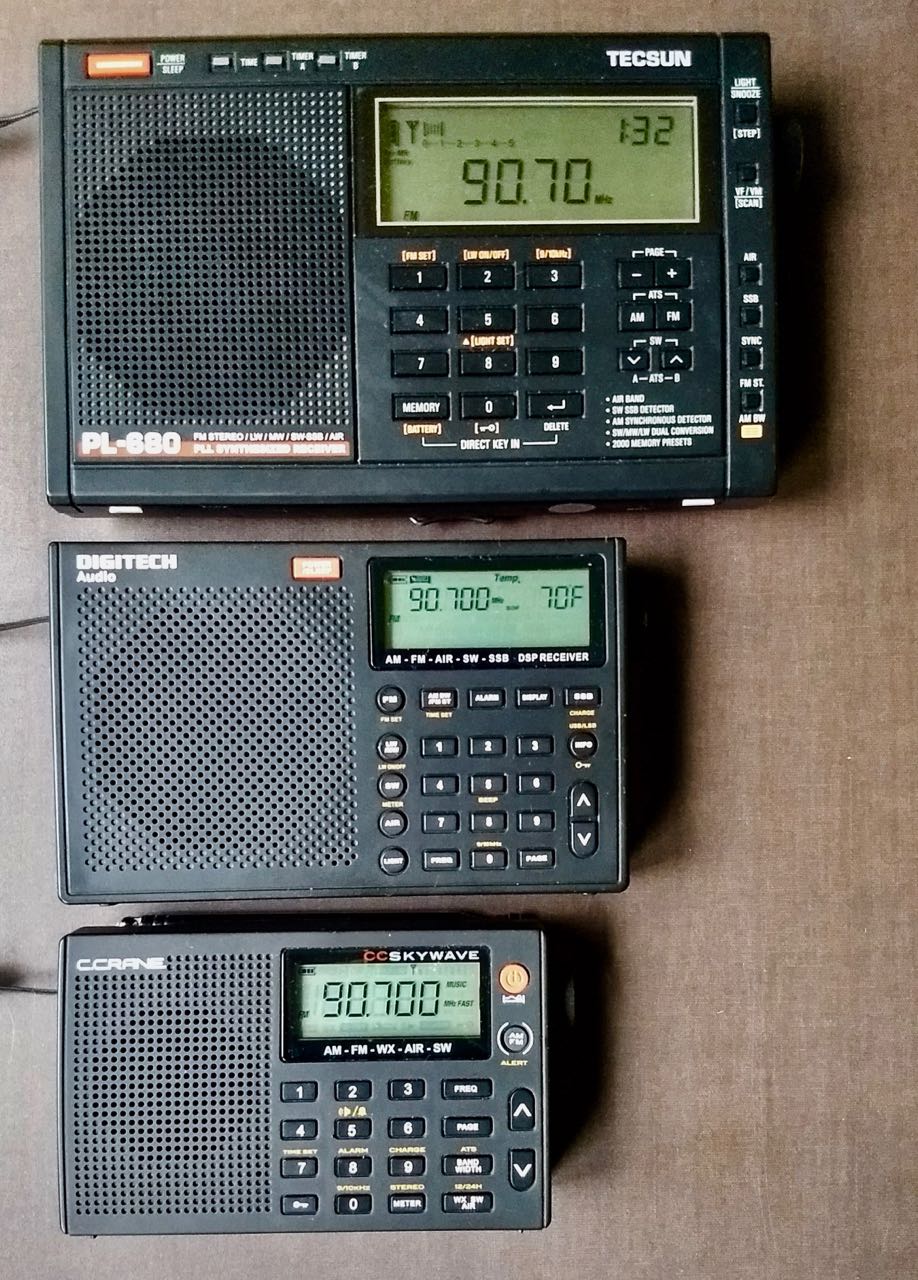
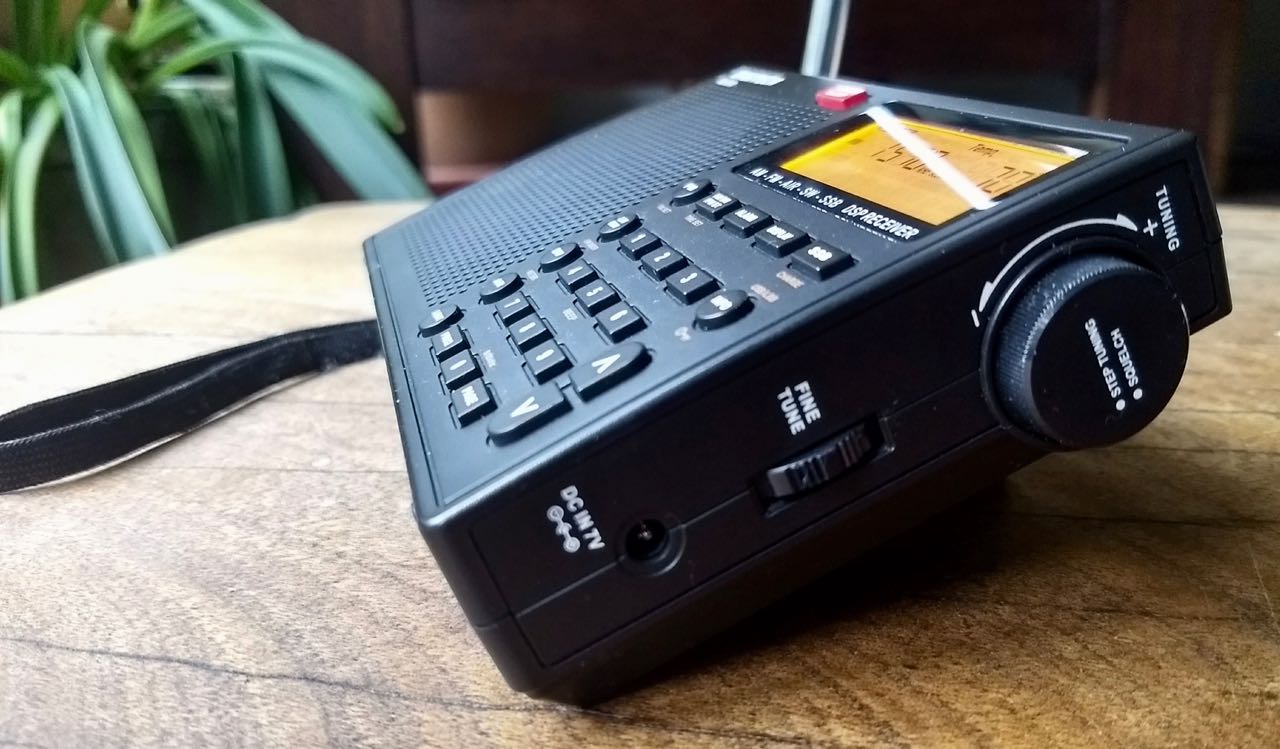
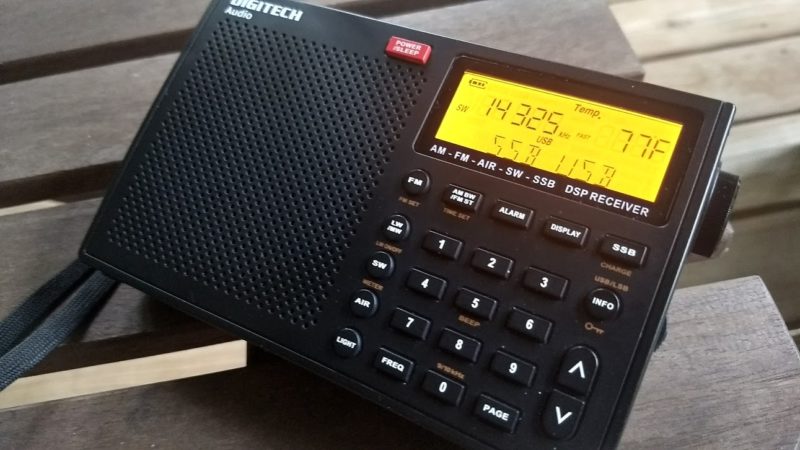
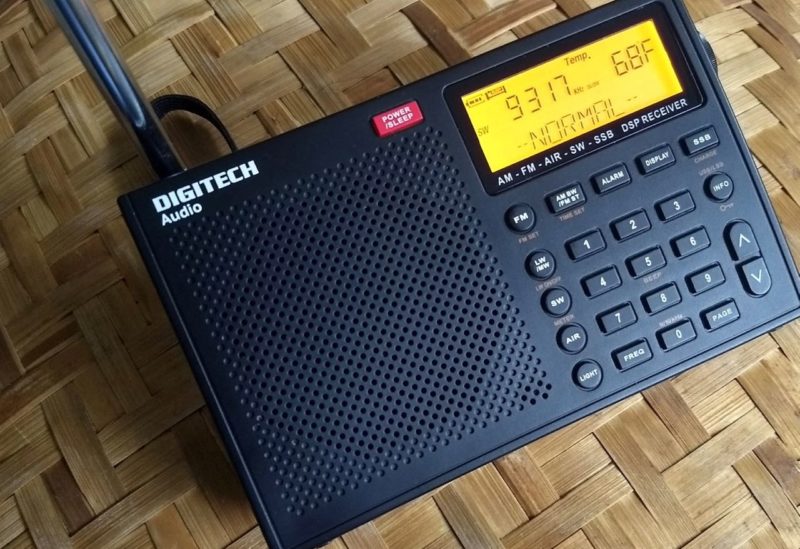
If you like the sound of the RSP1A and would appreciate the upgrades listed above, then go for it! After all, it’s only $99! Consider this: the price is less than that of my recently reviewed Digitech AR-1780 portable and less than the venerable Tecsun PL-660. Even with a modest external antenna, it will perform circles around these rigs.
If you need an excuse to justify the upgrade to the RSP1A, consider doing what I’m planning to do: give your RSP1 to a friend or someone interested in the hobby. Or, donate it to your radio club as a raffle prize. Then too, of course, you can snag a decent price for it by selling it on eBay or QTH.com.
Summary
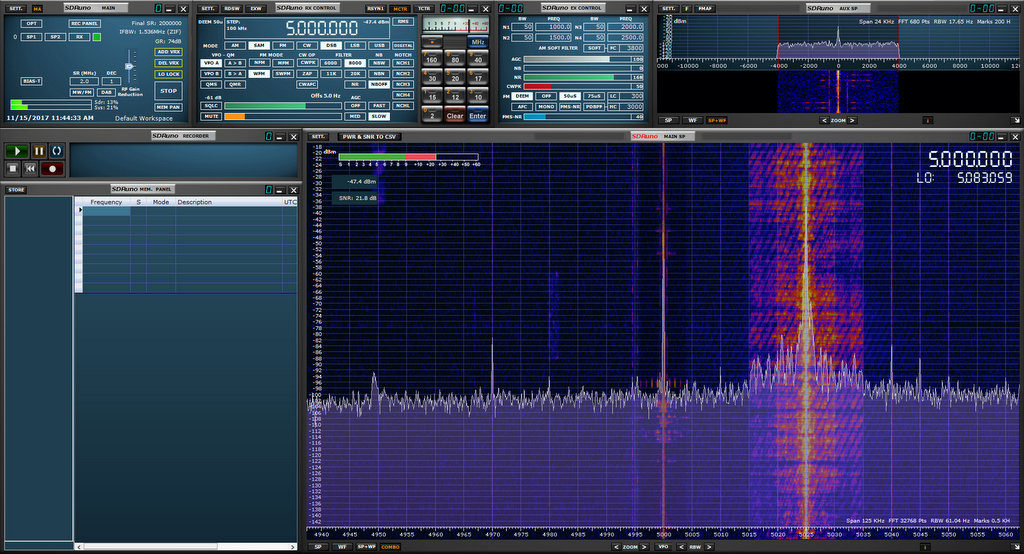
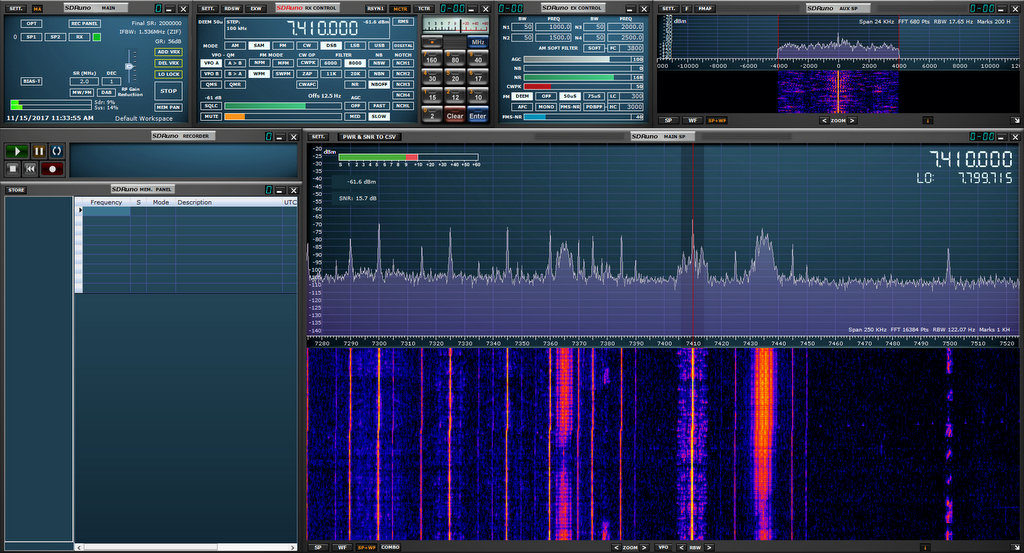
While a little busy, I do enjoy the combined spectrum display option on SDRuno.
If you can’t tell, I’m most impressed with this latest offering from SDRplay. I can recommend it with confidence because you simply can’t beat the performance and features for the price.
If you’re considering the RSP1A as your first SDR, you’ll be happy to know SDRplay’s Mike Ladd has also amassed a healthy number of SDRuno instructional videos on YouTube as well. If you start with the first video, by the end of the series you’ll be adept at using SDRuno. Couldn’t be easier.
Think of it this way: The RSP1A is the sporty-but-affordable compact car of the SDR world. It delivers performance well above its comparatively modest price and is fun to operate. In terms of DX, it gets you from point A to point B very comfortably––and quite affordably!
With just $99, there’s no reason you can’t join the world of SDR––the RSP1A is a very accessible, very intuitive SDR start your exploration of the radio spectrum.
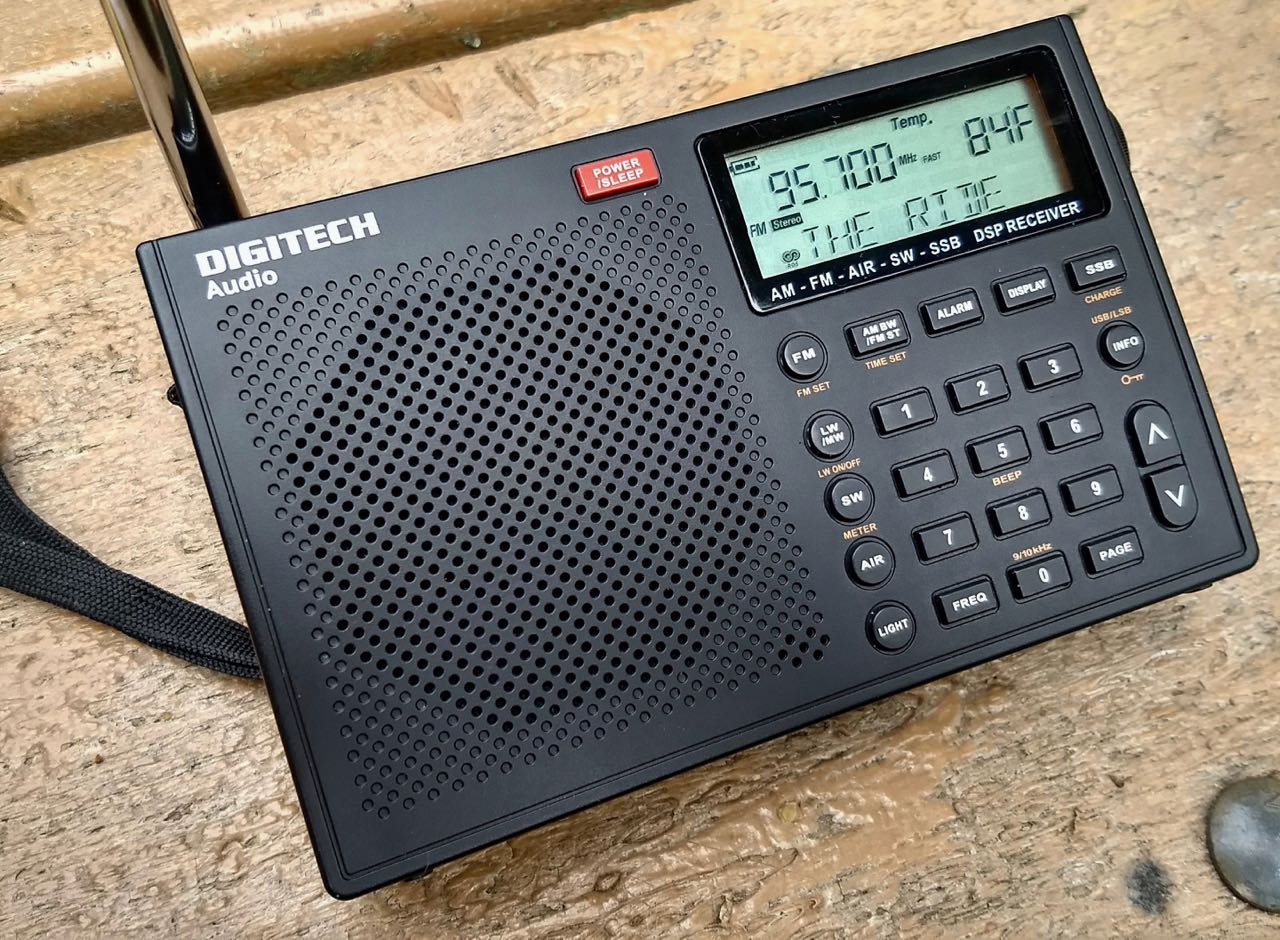


 A few months ago, I was inspired to start writing a radio drama about a number station after reading an article on the SWLing Post about someone working at a number station.