Shortwave listening and everything radio including reviews, broadcasting, ham radio, field operation, DXing, maker kits, travel, emergency gear, events, and more
In a previous guest post, SWLing Post contributor TomL, shared his “Evolving, Morphing, SW Listening Station” where he detailed the many ways he’s trying to fight heavy radio interference at his listening post. The following post is TomL’s update:
More Anti-Noise Ideas
(Continuing the hunt for better reception in a foul RFI environment)
by TomL
I have made the following changes:
Created a prototype mini-loop based on a crossed-parallel idea from VE1ZAC (Jeff).
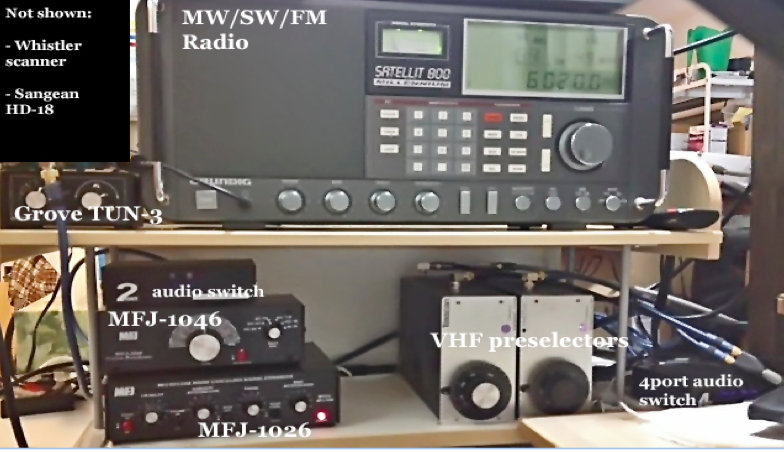
Added 2 preselectors, an old Grove TUN-3 connected to the main loop feed and an MFJ-1046 connected to the ground connection of the balun. Both feeds go into the MFJ-1026.
Added a medium wave noise canceling unit that I have not figured out how to use yet. (Quantum Phaser). The MFJ unit does not work on medium wave without modification.
Purchased from eBay a used Grundig Satellit 800, a somewhat more robust fixed-station receiver to replace my aging Sony ICF-2010.
Other non-related (not shown): Whistler digital scanner + UHF over-the-air TV + FM broadcasts + an AM/FM HD digital radio + high pass filters from MiniCircuits.com – (audio from all these sources is passed to an existing high fidelity stereo power amp and NHT Super One speakers on the computer desk for near-field monitoring). Associated antennas are also hidden on the outside deck (shhhhh!).
Large charge card balance!!
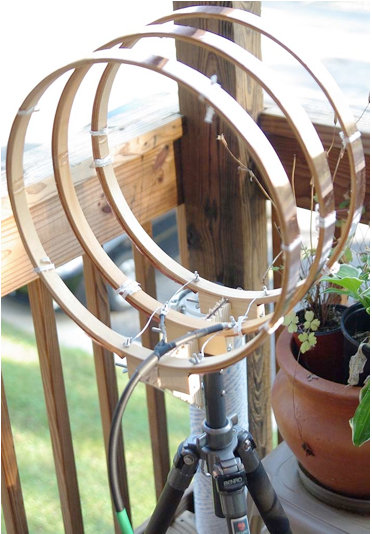
So, here are some pics for the crossed-parallel loop. VE1ZAC web site has all the references if you want to explore further or google him. Mine is purely a prototype and not finished. And should eventually be placed on a rotor (but how to keep my Nazi-like condo association from finding out?!?!?!?).
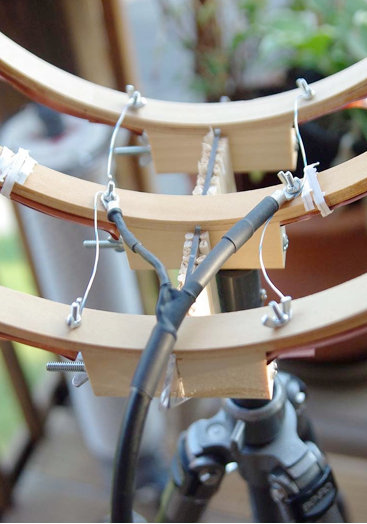
It is three 14 inch quilters hoops from Joann Stores plus some 1-inch copper strips cut from a small 2 meter roll of thin copper from eBay. Then, it is wired in parallel with silver-plated aviation wire on each side with a feed in the middle. Not an optimal placement of the feed, (should go straight down along the pipe). Will fix things up whenever I get some more time.
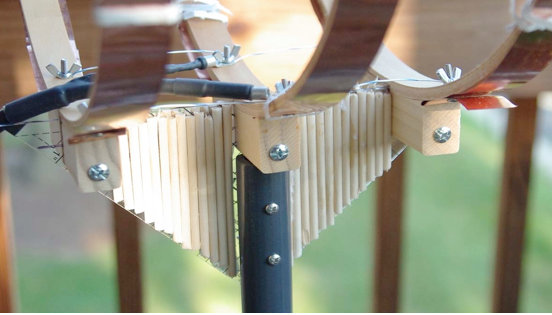
Seems to be an efficient way to prototype small loops. It is now mounted on a short ¾” inside diameter PVC pipe into a cheap plastic sand-filled deck-umbrella stand. Loops are light and somewhat flimsy, so I mounted the three loops on a plastic triangle ruler and dowel sticks glued to the sides for some extra strength. Good enough for now.
The EF-SWL balun is also in an experimental configuration. Since I read somewhere that loop antennas have a very low impedance at the feed point (like, 10 ohms or lower), I thought I might try a balun that is meant to lower the impedance and mount it backwards. I don’t have a picture of it but the SO-239 output is facing the loop and the screw terminals are facing the direction of the radio. My feeble brain thinks since it is a passive device of coils on ferrite, it should work bidirectionally for receive only applications like this. It seems to work but I have the excuse that I really don’t know what I am doing! 🙂
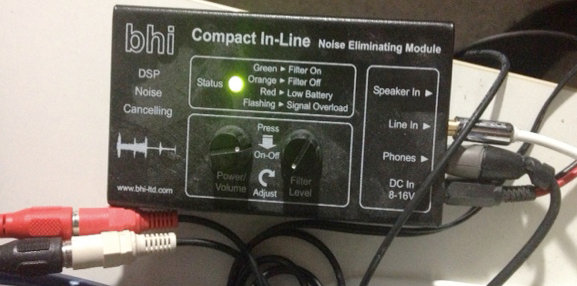
BHI unit in action.
The BHI DSP filter is useful in some circumstances but I find it fatiguing to listen to. The audio from the Sattelit 800 is so nice, I mostly like it without the DSP. The DSP narrows the bandwidth significantly, somewhere around 4 kHz or less from my hearing. I like that the Grundig has two tone controls. And it also has a stable SSB and on very strong signals with clear audio, I like to listen with SSB lower or upper sideband. But the DSP is useful at times for hash-like noisy signals; it is not quite as good on buzzing noise and I wish the Satellit 800 had a noise blanker, but that would have been a more costly purchase, like a Drake R8A.
So, in a nutshell, I have a discovery about noise here: it is all around me and ubiquitous, like the air I breathe!
I find it hard to null and also worry about peaking a station signal at the same time. However, I do have a lower noise floor with the experimental loop sitting outdoors, especially on medium wave (the Wellbrook amp + loop works great on the lower frequencies – am able to get eight different medium wave stations carrying Major League Baseball games at night – it would be nine to get WFAN for the New York Mets but the local Chicago Cubs station covers the adjacent frequency with horrible digital hash! ***Bleeping*** digital junk!).
Also, the signal level is noticeably lower using the loop. Then, add in the effect of the MFJ Noise Canceling unit, the usable signal gets even weaker.
The bottom line is, I can now finally enjoy listening to many SW broadcasts, BUT only the strongest signals. Anything else is still hopelessly lost in the noise. So, gains are limited.
On the other hand, and something else I learned by doing is that, any 1 or 2 dB signal/noise ratio improvement will help with the final audio output in the end product. Using low-noise amps, loops, noise canceler, preselectors, grounded connections, ground isolators at the input of every receiver, high quality stereo amplifier and speakers, tone controls, SSB vs. AM Sync, weird antenna configurations, etc, etc. It all helps in the end to some degree.
Tinkering is an art that involves a lot of thinking/doing iterations! And high quality parts must be used all along the chain or it could degrade the signal.
Below are some audio samples, not very well recorded, but can give some idea of the incremental improvement with each enhancement (turn up the volume). NOTE: other people may get better or worse results depending upon individual situations, type of antennas used, etc, etc.
Recording 1: R. Marti. First 10 seconds an indoor antenna with no noise reduction, second 10 seconds the outdoor loop without the MFJ-1026, the third 10 seconds with the MFJ-1026, then switched off and on to hear the difference.
Recording 2: R. Marti. MFJ -1026 is ON. Last 15 seconds is SSB, very thin sounding. Really only good for strongest signals. I liked the AM Sync better (Satellit 800 is really a Drake SW8 in disguise with a quality AM Sync). But, SSB can sound excellent with very clear voices with a steady and strong signal (The Satellit 800 does NOT have IF-shift or a BFO to fine tune an SSB reception, so the station must be exactly transmitting on the kHz mark, which most are nowadays).
Recording 3: R. Marti. MFJ-1026 is ON. Last 20 seconds you hear me switch in the two audio switches and the BHI DSP is on its lowest setting. Narrower and clearer with some reduction of background noise. I find I only like going up to about 4 on the DSP dial, after that the audio fidelity starts getting more choppy with digital artifacts that sound like dripping water. I tend to like higher fidelity. One nice thing about the BHI DSP is a faux-stereo that helps a little with voice intelligibility by helping the brain naturally filter the noise. Faux-stereo is ON even when the noise reduction circuit is manually turned off (power must be on and bandwidth still sounds narrowed).
Recording 4: R. Nacional Brazilia. First without MFJ-1026, then ON, then OFF, then ON, then with the BHI kicked for the last 20 seconds.
Recording 5: Greece. Switching the MFJ-1026 on and off every 5 seconds. In this particular case, the signal was weak and fading a lot. The MFJ OFF was also weaker than with it turned ON. That is interesting behavior, usually it is opposite. It pays to play with the settings a little. At other times, and less frequently, the MFJ unit turned OFF sometimes sounds better than with it ON and tuned for less noise. Go figure!
After all the tweaking is done, and I cannot get any more performance out of this, I will probably have to move to a nice, quiet neighborhood and setup a nice antenna farm!!
In the meantime, I do enjoy listening to the stronger stations from North America, Cuba, Brazil, Europe, and Australia with less noise than before.
73’s
TomL from NOIZEY Illinoiz
Once again, Tom, thanks for sharing your RFI elimination journey!
I love how you take on this noisy problem by experimenting and seeing it more as a challenge than an obstacle to enjoying your hobby. Great job!
Many thanks to SWLing Post contributor, Troy Riedel, who writes:
I don’t have a “shack”, but I wanted to take the time to share with you my “listening post”. But first, let me start from the beginning.
I’d call myself an amateur astronomer first – and a Shortwave Listener (SWL’er) second (I have never been a Ham Operator).
I started my astronomy hobby as a young kid who was enthralled by the Apollo Missions. I was also fascinated by weather & I learned how to make short-term 12-36 hour forecasts by making cloud observations, following the barometric pressure trend & noting changes in wind direction. I am still an amateur astronomer (a very expensive endeavor). I was able to pursue my childhood interest in weather and I became an Aviation Weather Forecaster in the military (I also instructed synoptic meteorology in the military at the schoolhouse). I promoted myself out of meteorological jobs in my Service but I was able to transition to a deployable job that allowed me to visit 50 countries. I retired with slightly over 30-years served.
When I was a kid, a buddy had a shortwave radio but we could never hear anything (we had no clue). I had an Electro-Brand EB2100 5-band radio that had AM/FM, Police, Fire, Aviation & NOAA (if I recall). We heard transmissions on that EB2100! I didn’t truly discover shortwave until the early 1990s. My first shortwave radio was a Panda 2006 (I challenge readers to look-up that model in the 1994 Passport to World Band Radio). I liked shortwave so much, I sold the Panda to help finance my next radio. I pre-ordered & subsequently received one of the first Gru?ndig Yacht Boy 400s released in the U.S. (I still have the radio & the receipt).
I think, for a SWL’er, I have a decent collection of shortwave radios & antennae:
Grundig Yacht Boy 400
Grundig G6 Aviator Buzz Aldrin Ed.
Grundig G3 Globe Traveler
Tecsun PL-390
Sony ICF-7600GR
Tecsun PL-365
Grundig Satellit 750
Grundig G2000A Porsche
RadioShack 140-214 Digital Recorder
AMECO TPA Active Antenna
Crane Twin-Coil Ferrite Antenna
DoxyTronics 8020A Passive Antenna
Kaito KA35 Active Loop Proximate Antenna
NASA PA30 Wideband Passive Antenna
A Helical/Slinky Antenna
RadioShack 20-280 Active Antenna
Sony AN-LP1 Active Magnetic Loop Antenna
Tecsun AN-200 AM Passive Antenna
Terk Advantage AM-1000 Passive Antenna
TG34 Active Magnetic LoopAntenna
Yo-Yo Antennas & various Longwires
Extended AM Ferrite Rod for PL-365/360
Slinky, ST3 Scanner Antenna (EB2100 on top of the wall unit library)
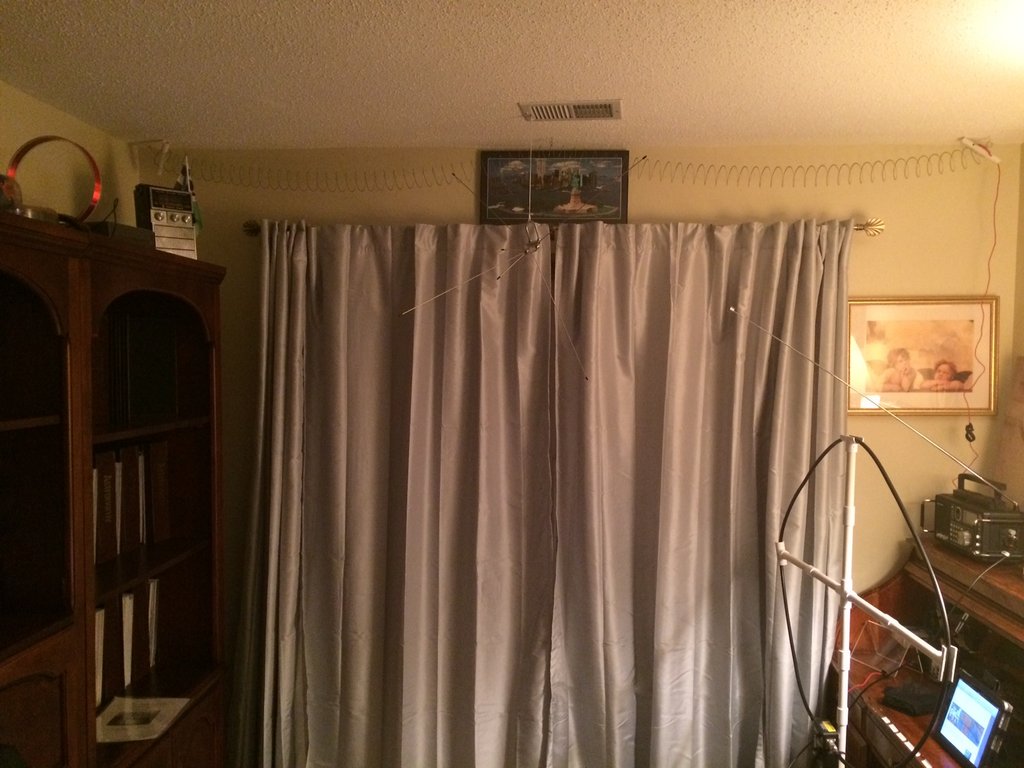
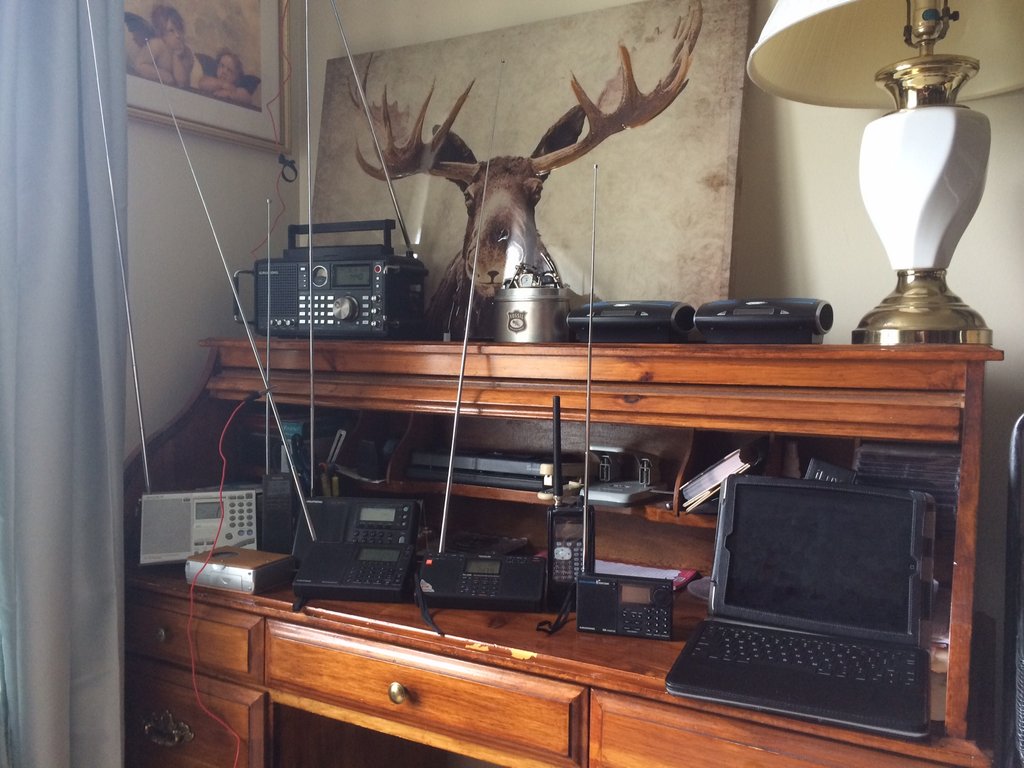
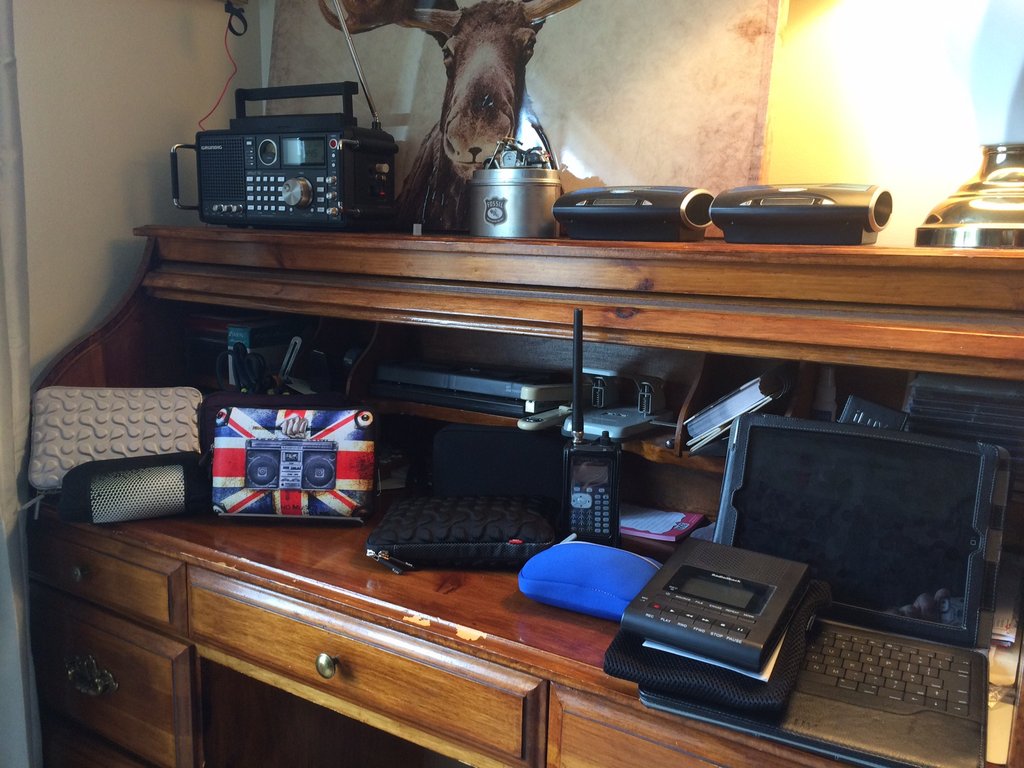
Okay, so what is my “listening post”? It’s a sitting room attached to my master bedroom. I have a roll-top desk. A slinky antenna stretched across one side of the room above the window. And an ST3 “Sputnik” Scanner Antenna hung in front of the window (for my RadioShack Pro-651). I use an old-school iPad 1st Gen next to my radios because I found that it emits virtually no RF compared to my iMac, MacBook Air, and MacBook Pros. Besides using the iPad Gen 1 as an Internet reference, it’s also loaded with every one of my radio & antennae manuals, nearly every copy of Passport to World Band Radio, and many Spectrum Monitor issues. If I cannot find a pdf version of a manual, I use my document scanner to create my own pdf’s.
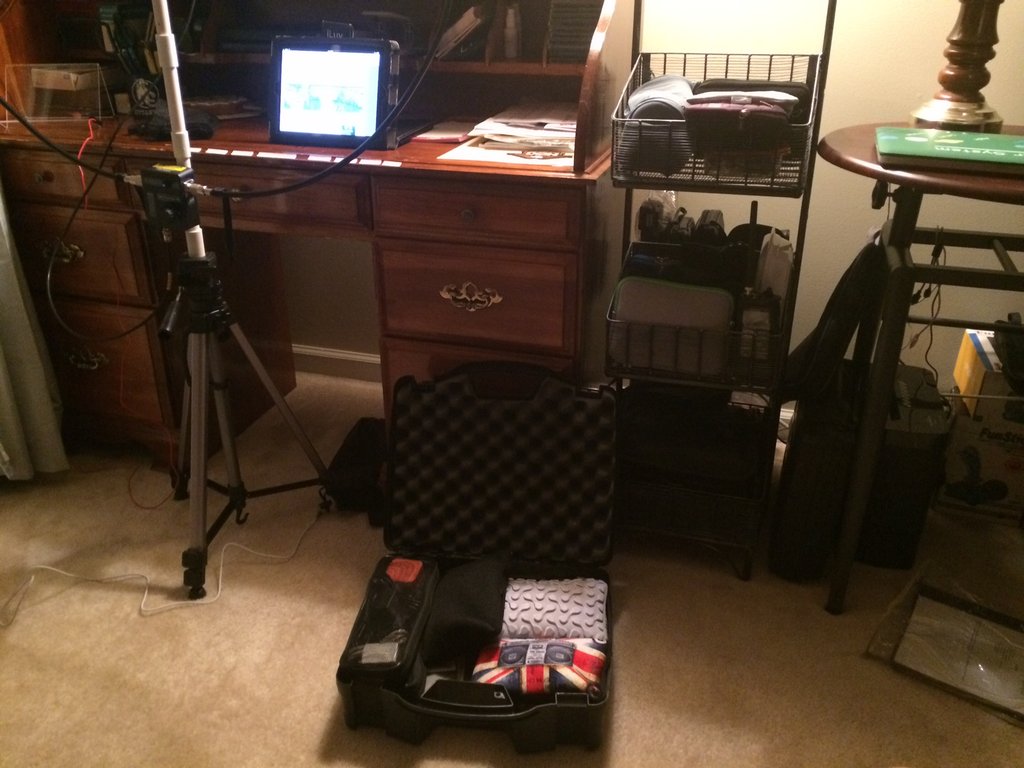
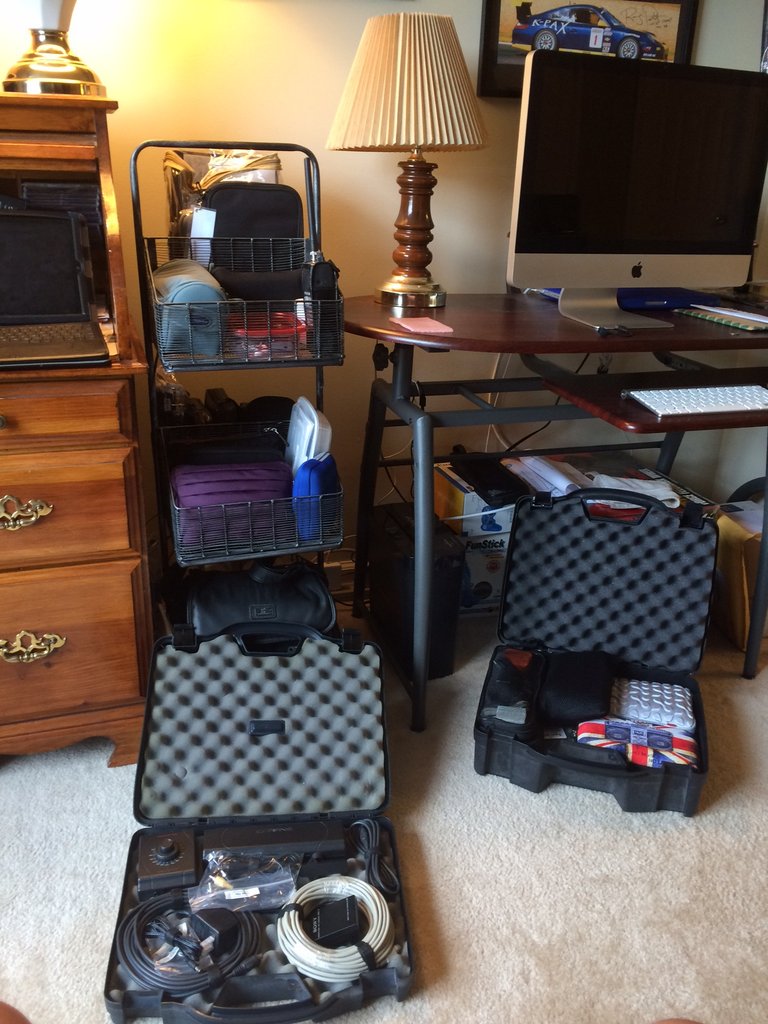
Typical set-up (the metal basket bin is completely filled with radios, antennae, adapters, etc., all in their own cases)
Having my listening post essentially in the master bedroom causes conflict because my wife must get up early & drive 60-miles to work thus I am kicked-out and banished downstairs fairly early each night … while carrying a radio or two with me if I wish to continue listening. Nearly all of my shortwave listening occurs before 8:30 P.M.
I have all of my radios and antennae neatly organized in padded bags & cases within an arms reach of my roll-top. Since everything is organized in its own case, I can easily grab whatever combination I want if I were to travel (or go outside, or go downstairs when my wife kicks-me-out of my listening post).
My radios in their padded cases (remember my GPS & Tablet case recommendations many months ago?)
What are my favorites? I typically use the Grundig Satellit 750 the most – mainly because of its size & large intuitive buttons. The direct BNC connections make it quick & easy to transition from one antenna to another. My favorite SW radio feature is Tecsun’s ETM (I wish every radio had it) thus I find myself using the PL-390 & PL-365 especially when out of my listening post. My favorite antenna is the TG34. I find that it greatly enhances the signal with a minimal increase in noise. The Slinky is great in that I can add it to another antenna that I’m using to make a more effective combination (e.g., AMECO TPA with the Slinky & the NASA PA30 with the Slinky on the radio whip work well for me).
The bins and black cases with my gear (those are two Plano Gun Cases … a 2-gun case and a 4-gun case; I have 8 more filled with my astronomy gear but that’s another story).
I think shortwave listening is a great hobby that compliments my amateur astronomy. Why? No matter the clouds, extreme temperatures, etc., I always have something interesting to do. But I do miss the days when the wave bands were crowded with international broadcasters. At least I know that Jupiter, Saturn & the thousands of deep sky objects within grasp of my many telescopes & binoculars will NOT be leaving the sky until long after I leave this planet!
You’ve set up an excellent listening post, Troy! As you well know, I’m a bit of a pack junkie, so I love the fact you have so many padded cases and protective gear for your equipment–no doubt, this is championed by your amateur astronomer half!
SWLing Post readers might recall that, last year, Troy actually put together a shortwave broadcast dedicated to amateur astronomy. We published a full recording of the show on the Shortwave Radio Audio Archive.
Thanks, again, for sharing a tour of your listening post, Troy!
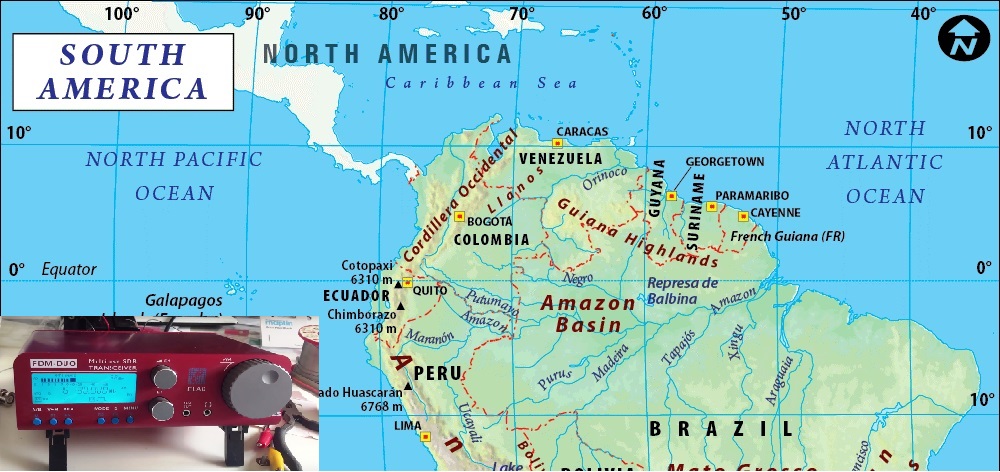
Hi there, I thought I would share a few recent medium wave DX catches from South America. In the past month or so, I’ve managed to record signals from Colombia, Peru, Venezuela and one that I’m particularly happy about – Ecuador, which is rarely reported in Europe. All catches were obtained with my usual indoor home set-up – the brilliant little Elad FDM DUO coupled to the equally brilliant Wellbrook ALA1530 active loop antenna. I have started to take the Elad on DXpeditions now, having constructed a battery pack for it, but the results I’m yielding outdoors are so far mainly with shortwave reception, where the improvement in SNR is quite obvious in the size of the carriers I’m observing and much improved modulation/ audio clarity on the Tropical Band. Hopefully in time, similar results will yield on medium wave. In the meantime, Im very happy with the indoor performance and these catches demonstrate that. There are many more reception videos on my YouTube channel Oxford Shortwave Log, including a large number of signals recorded from North America on medium wave. Direct links follow below and further down, embedded reception videos. Thanks very much for watching, listening and I will you all excellent DX.
Clint Gouveia is the author of this post and a regular contributor to the SWLing Post. Clint actively publishes videos of his shortwave radio excursions on his YouTube channel: Oxford Shortwave Log. Clint is based in Oxfordshire, England.
Recently I have spent a little more time listening out for Tropical Band stations from my shack in Oxford UK, attempting to emulate some of the very nice signals I have previously recorded out on DX’peditions. The obvious problems with this (and they are numerous) include the relatively weak signal strength of many tropical band stations, the ubiquitous blanket of QRM, resulting in generally poor SNR, lack of space for a large antenna……need I go on?! Fortunately, the Elad FDM DUO has proven to be a very senstive and selective receiver, capable of, at times, incredible SNR, coupled with almost limitless signal conditioning options and SSB, SYNC, ECSS etc. Throw the Wellbrook ALA1530 active loop into the mix (not literally!) and you have a very powerful Tropical Band receive set-up. The Wellbrook is able to null most (although not all) QRM in my shack and that really can make the difference between simply observing a carrier and actually hearing audio. Clearly one cannot expect to hear DX at home under heavy QRM as well as you might outdoors, however, the following stations were logged in the past month or so, with respectable signals, with the ALA1530 indoors:
Clint Gouveia is the author of this post and a regular contributor to the SWLing Post. Clint actively publishes videos of his shortwave radio excursions on his YouTube channel: Oxford Shortwave Log. Clint is based in Oxfordshire, England.
Many thanks to SWLing Post contributor, Gary Wise (W4EEY), who shares the following guest post:
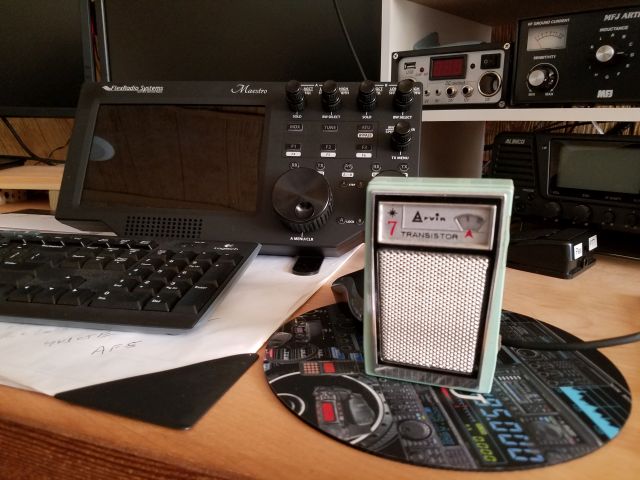
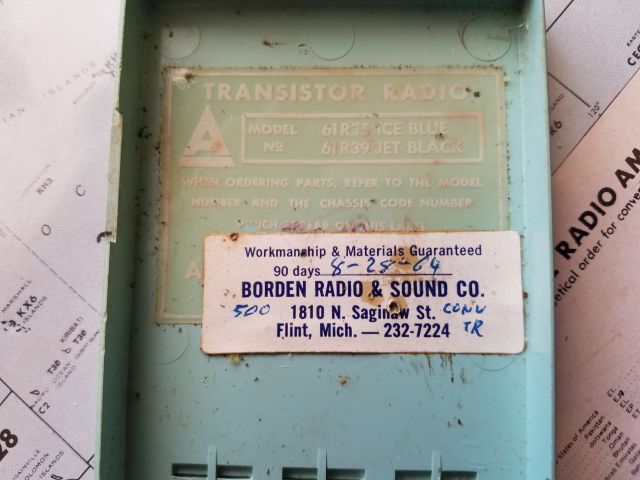
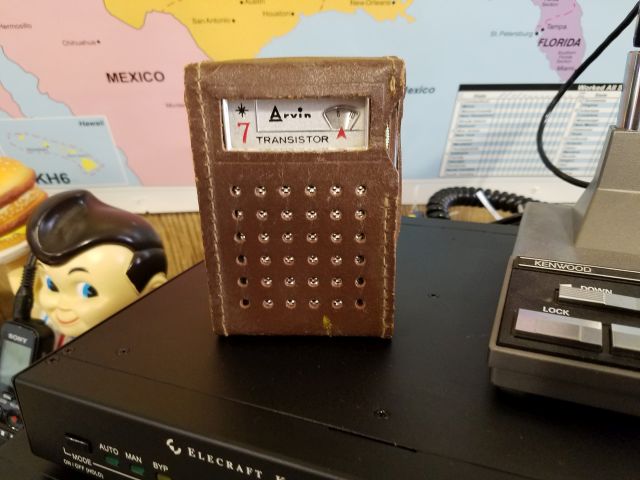
It’s funny how much we radio folks share in common. The recent posts on Arvin radios made me smile because I have an Arvin radio too. An Arvin transistor was my very first radio, and here she is:
This is the Arvin Model 61R35 in Ice Blue (it also came in black). My parents bought it for me in roughly 1962 or 63. It was the first radio that was mine (though we did have an older Crosley tabletop in the living room of our house in Midland, Michigan that we all used). Mine had seven Germanium (!) transistors (as silicon transistors were not yet in wide production in the early 60s).
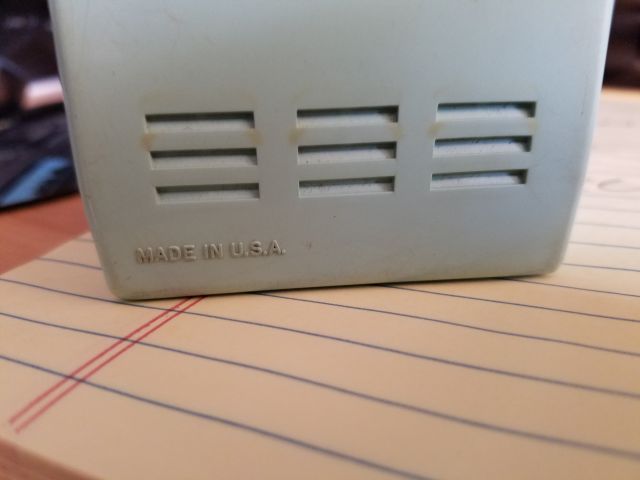
And Made in America! Arvin was an Indiana company as I recall.
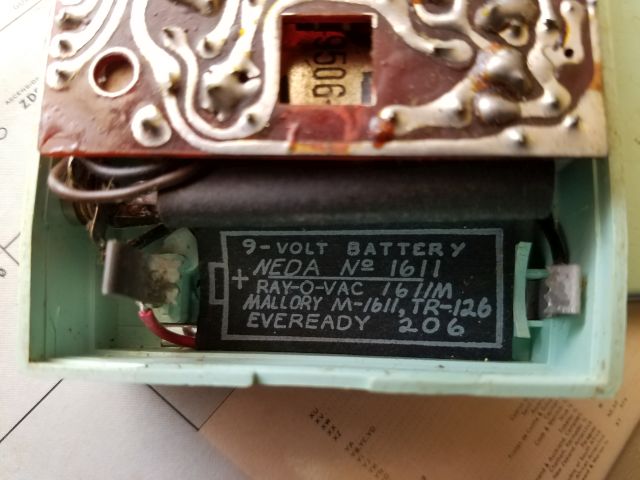
It used a Round 9V battery. They were hard to find even back then, and I expect impossible to find today.
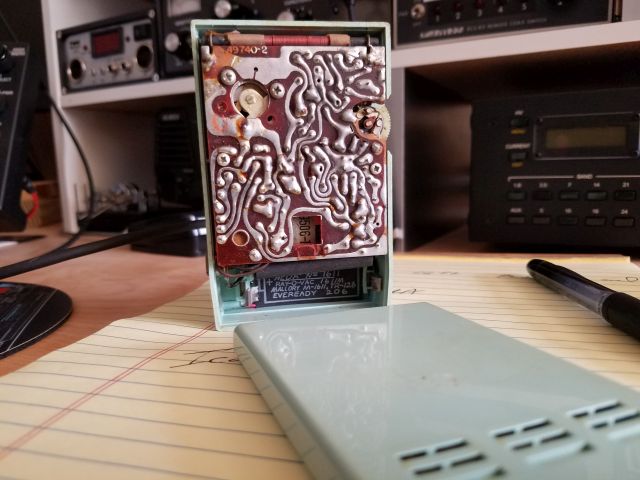
I used to love to put my fingers on the PC board while the radio was on and listen to the buzzes and noise that I could create. Unfortunately, I think this is what killed the radio and required my folks to mail it off to the big city (Flint, Michigan) to have it repaired. No one in my “little” town could fix solid state radios back then.
I was fortunate not to lose this radio in my many moves throughout the years. I display in proudly in my ham shack.
Thanks for the memories!
73,
Gary
W4EEY
And thank you for sharing your memories and the great photos of your Arvin Model 61R35, Gary! What a cute little radio–I’m glad you’ve taken care of it all of these years.
Many thanks to SWLing Post contributor, Gary Wise (W4EEY), for the following review of the RTL-SDR dongle:
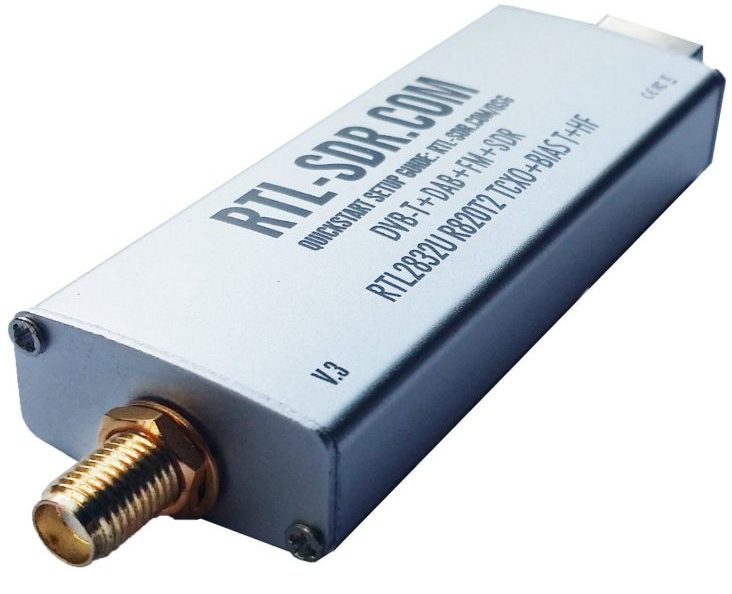
Based on your blog post on the Version 3 release of the RTL-SDR dongle I had to buy one. I ordered mine from Amazon for $25, and it came in two days. I have an earlier version of this unit that was VHF and above only. What intrigued me about the V3 was the possibility of HF reception in the Direct Sampling mode (without an up converter). So I had to try it.
I used the RTL-SDR Quick start guide at RTL-SDR.com/qsg. While I did not see any mention of Version 3, I hoped that the software that was linked would be adequate. As I am using a Windows 7 laptop, I downloaded the Zadig driver installer, along with copies of SDR# and HDSDR.
Getting the dongle going was pretty straightforward. And right away I was receiving VHF and above signals. The I/O driver defaults to Quadrature demodulation and this was what is used to receive VHF. But what about HF?
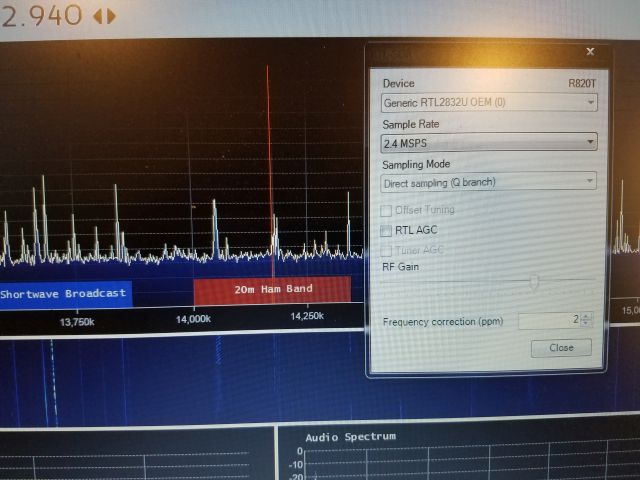
It took me awhile to figure out that you select Direct Sampling in the setup screen for the driver. In SDR# software this is found by clicking on the gear wheel icon.
Under sampling mode select Direct Sampling (Q branch).
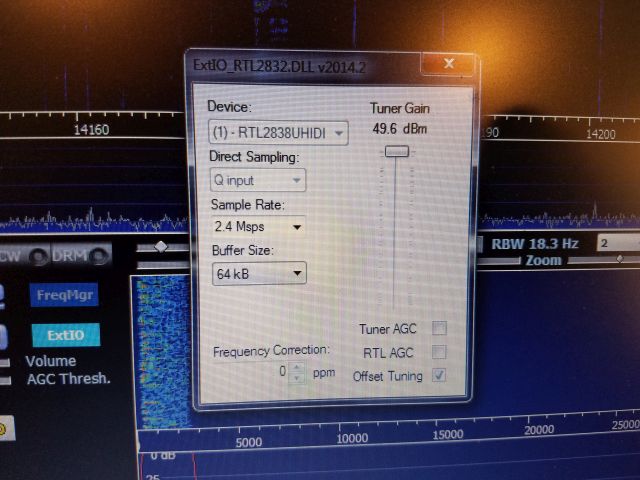
In HDSDR you select the EXTIO icon.
Here you select the Q Input under Direct Sampling.
Note that with both you must use the Q input.
With the telescoping antennas included with the dongle, I received very few signals (of very poor quality). But I had read that the unit can only receive HF with a substantial antenna, so I moved the laptop to my hamshack.
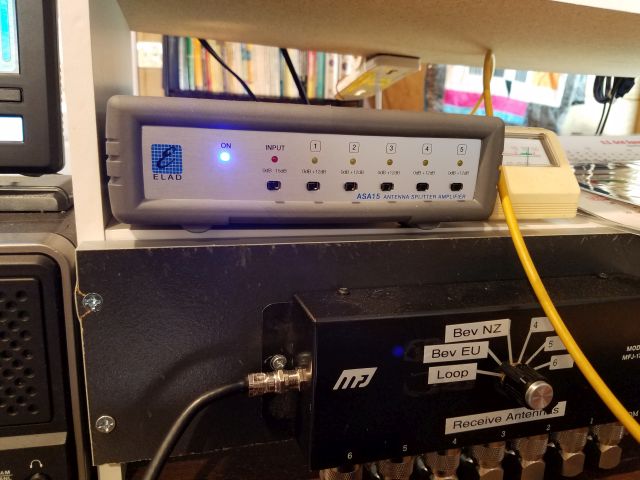
I use an ELAD antenna distribution amplifier for my HF receive antennas.
It was easy to use a spare output from the ELAD ASA15 to drive the antenna input of the RTL-SDR V3.
Wow, what a difference!
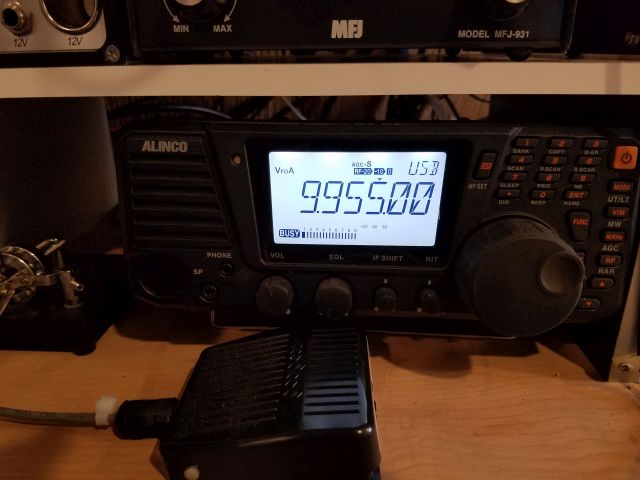
First up was international shortwave. Here’s a shot from my Alinco General Coverage receiver on 9955 kHz this morning using my 260′ beverage antenna (pointed toward Europe). S9 on the Alinco S Meter.
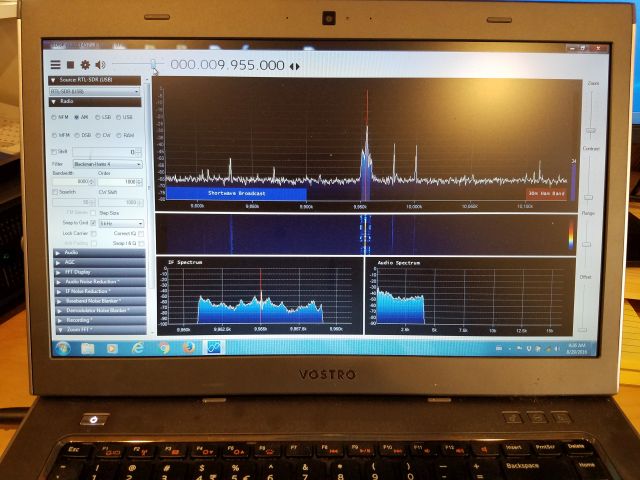
And here’s the same signal on SDR#.
There was a delay in the audio coming from the PC versus from the receiver, but other than that, reception was identical. Audio quality was very good.
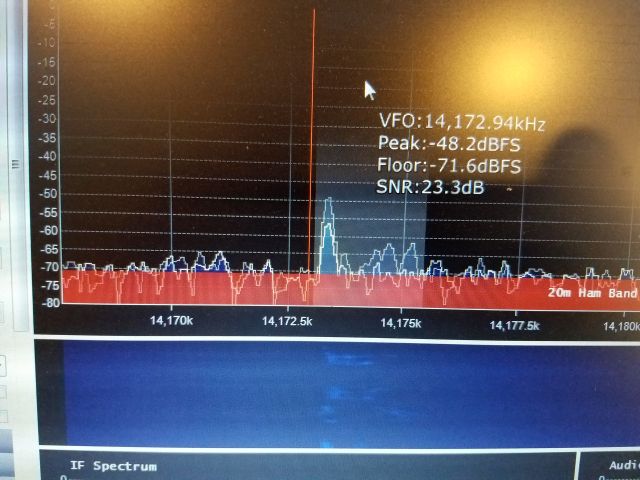
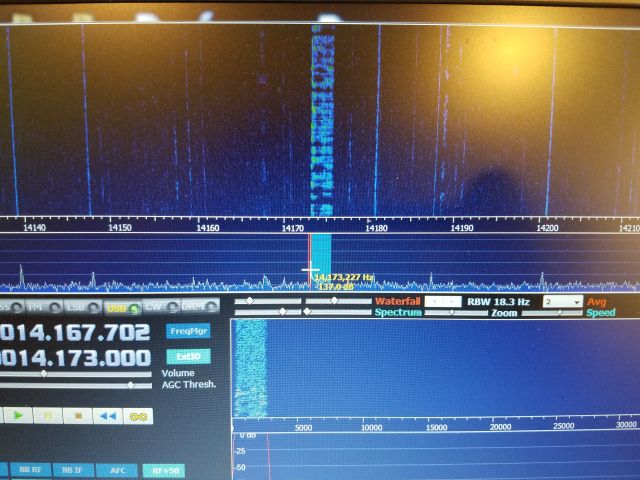
I then moved to the 20M Amateur Radio band. USB audio demodulation.
The little dongle worked! It is not what I would call my first choice in receivers, but it will demodulate AM and SSB just fine.
I did not try it on CW as I ran out of time.
I also tried the HDSDR software, which worked equally as well (but I think I prefer SDR# for ease of use).
All in all, if you have or can put up a good antenna for HF, the little $25 dongle is in, my opinion, worth trying out.
Thank you, Gary, for not only giving a quick evaluation of the RTL-SDR’s HF performance, but for describing how to setup HF reception via SDR# and HDSDR.
Over the years, I’ve gotten probably hundreds of emails from readers who would like to try their hand at SDRs, but were cautious about investing. For many years, a 3rd generation SDR would set you back at least $300-400. At $25 shipped, the RTL-SDR V.3 is an SDR receiver that is accessible to anyone who can afford a fast food meal or a few cups of Starbucks coffee. My how times have changed!
Once I get a few transceiver reviews off of my table, I might do some side-by-side HF comparisons between the RTL-SDR and a few of my other SDRs.
Many thanks to SWLing Post contributor, Gary DeBock, who shares this summary of the July 2016 Rockwork 4 Ocean Cliff DXpedition:
July 2016 Rockwork 4 Ocean Cliff DXpedition
An International Team Gets Full “Exposure” to a Wild New DXing Venue
By Gary DeBock, Puyallup, WA, USA
Introduction
In the previous century the outstanding receivers developed by the Japanese Sony and Panasonic companies introduced many of us to the thrill of shortwave listening as teenagers, and created an unusually dedicated DXer hobby group in Japan, as well. The Japanese MW-DXing group has all along been extremely active in the hobby, although the challenge of English communication has somewhat limited their interaction with other DXing groups.
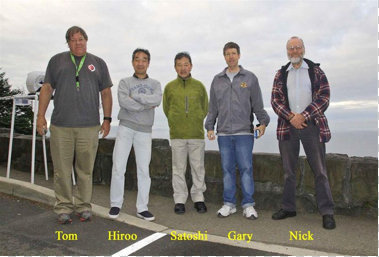
Recently I was highly honored to introduce several modified Ultralight radios to the Japanese DXers, who not only tried these out with great interest, but who also designed and set up modification procedures for Japanese-made equivalents. One of the leaders in this effort was Satoshi Miyauchi, who has already built not only his own 7.5” loopstick Tecsun PL-380 model, but has also built his own 3 inch and 4.25 inch FSL Tecsun PL-380 models as well. When Satoshi-san inquired about the possibility of participating in one of our Rockwork 4 ocean cliff DXpeditions this summer (along with his friend, the famous Japanese MW-DXer Hiroo Nakagawa), I was thrilled to issue the invitation.
The Rockwork 4 turnoff site on Highway 101 is a sweeping ocean view site about 419 feet (158 meters) directly above the Pacific near Manzanita, Oregon. This would be the first time that any international visitors would participate in an ocean cliff DXpedition. Our North American TP-DXing group has always had a great interest in Japanese DX and Japanese DXers, and this would be the first major North American DXpedition to feature MW-DXers from both countries. Canadian Nick Hall-Patch (of Victoria, B.C.) also was highly interested in participating with the Japanese, and as such, our 5-man DXpedition group was composed primarily of DXers from other countries (with only Tom Rothlisberger joining me as repeat American participants).
Although my own DXpedition efforts started on the morning of July 5th, Nick and Tom both joined up for the session on Saturday, July 9th. We all welcomed our Japanese guests (with a joint dinner at the aptly named “Tsunami” restaurant in Wheeler, Oregon) that evening, and prepared for what we hoped would be a very memorable DXing session early the next morning.
Well, it certainly was very memorable—in the worst possible way. A toxic mix of gale force winds and pounding rain was hammering the ocean cliff site as soon as we arrived for antenna setup at 1015 UTC (0315 local time), which was far and away the worst weather that any of us had ever experienced in an outdoor DXpedition. The sensible Japanese had at least brought suitable rain gear for the session, which was more than the careless North Americans had brought. Tom and I ended up thoroughly drenched and shivering as soon as the antennas were set up, while Nick was partially drenched. A single 15 inch FSL antenna was set up on its PVC base and strapped tightly down to the ocean cliff wall with heavy-duty plastic tie wraps, enabling Satoshi, Hiroo and I to track down some New Zealand, Australian and Tahiti DX with our Ultralight radios despite the vicious weather. Tom’s broadband loop supports absolutely refused to stay upright in the gale force winds, and he eventually had no option other than going outside in the nasty weather to hold one of them in the vertical position manually as he recorded DX on his Perseus-SDR. Nick’s active vertical whip was relatively impervious to the vicious weather, but he was drenched from the knees down because of the pounding rain during its early morning setup.
That entire July 10th session was thoroughly miserable for all of us, but both Satoshi and Hiroo showed great optimism and determination throughout the three hour struggle, which made all of us highly motivated to do the same!
Fortunately, DX (and weather) on the next (and final) morning would allow our Japanese and Canadian guests to experience the South Pacific DX propagation that this cliff is famous for providing. Satoshi and Hiroo became quick experts in New Zealand “big gun” stations, and Satoshi had a great thrill when 738-Tahiti pounded in at an S9 level on his homemade 3 inch FSL Tecsun PL-380 portable.
Propagation definitely favored New Zealand throughout the week (in one of the most Kiwi-slanted trips that has ever been observed here). Although we had a near-daily blowtorch signal from 738-Tahiti and occasional reception from 1017-Tonga, Australian signals generally had a rough time in the NZ-slanted conditions. Tom and I both agree that overall propagation was down somewhat from the exceptional conditions we enjoyed last summer (when we enjoyed good reception of stations like 558-6WA and 558-Fiji) but the chance to welcome the Japanese DXers made the experience especially memorable, and their skill and determination was an inspiration to us all. Listed below are the DU loggings made with my Ultralight radio + FSL antenna combos, which performed quite well throughout the vicious weather challenges on July 10th (better than the drenched and shivering DXer that created them, actually). The DU loggings made by the other DXers will no doubt exceed these, but we all had great fun together, and are looking forward to the next joint DXpedition (either here, or in Japan).
531 4KZ (Innisfail, Australia, 10 kW) MIA during Kiwi-slanted propagation on most mornings, it made it through at a modest level with its classic oldies format and interval signal during PI fade at 1209 on 7-5
531 More FM (Alexandra, NZ, 2 kW) Rare low-powered Kiwi station played hard to get, but did show up during a deep PI fade in Kiwi-slanted propagation at 1222 on 7-6. This Kiwi English monolog sounds mostly garbled to me, but the first 5 seconds certainly sounds like “Welcome time to More FM’s blog…” (headphones recommended)
531 PI (Auckland, NZ, 5 kW) Samoan broadcaster dominated on all 7 days with good signals, although 4KZ and More FM did manage to get through at times. This good-level Samoan female speech on 7-5 was typical
567 RNZ (Wellington, NZ, 50 kW) Most of this big gun’s legendary transoceanic signal seems to have been destroyed along with its old tower (during the recent demolition). It showed up weakly on all 7 days, although always inferior in strength to its 675 parallel
576 2RN (Sydney, Australia, 50 kW) Kiwi-slanted propagation hit this RN-network big gun pretty hard, but it did show up with mediocre signals not // 657 at 1237 on 7-8
576 Star (Hamilton, NZ, 2.5 kW) The “Dwarf Star” (ex-The Word) was strong enough with its Christian female vocal music to confirm the parallel with 657 at 1244 on 7-11. The first 12 seconds in the recording are 576-Star, and the last 12 seconds are the 657 parallel
585 Radio Ngati Porou (Ruatoria, NZ, 2 kW) Wispy male speech was received at 1234 on 7-6 sounding like the usual Maori announcer, but the 603 // apparently started a new song right during the parallel check. Signal nosedived thereafter.
594 Rhema (Timaru/ Wanganui, NZ, 5/ 2 kW) Modest level Christian music // 684 at 1250 on 7-6. Usually a little stronger than the 684 parallel, with no sign of Aussie big gun 3WV during the Kiwi-slanted conditions
603 Radio Waatea (Auckland, NZ, 5 kW) Usually the strongest of the Maori network, this vibrant regular plays a mix of Maori and Motown music. Its strongest signal was on the last day (7-11) at 1218
657 Star (Wellington/ Tauranga, NZ, 50/ 10 kW) Christian hymn broadcaster owned the frequency during the Kiwi-slanted conditions, with this good-level music at 1211 on the last day of 7-11
675 RNZ National (Christchurch, NZ, 10 kW) The new kingpin of RNZ network transoceanic strength (after the demise of 567’s old tower), this relay consistently outperformed its 50 kW parallel. This signal at 1257 on 7-8 was typical
684 Rhema (Gisborne, NZ, 5 kW) Christian contemporary music broadcaster with fairly good signals // 594 at 1247 on 7-9; Tony W. says that the tower property has been sold and eviction is forthcoming
702 2BL (Sydney, Australia, 50 kW) Easily pushing 702-Magic aside whenever it showed up, this Oz big gun was the dominant station on both 7-7 and 7-10. The interview format was much different from Magic’s oldie music
702 Magic (Auckland, NZ, 10 kW) Capable of blistering signals when Kiwi propagation was enhanced, this oldie music broadcaster was the only DU on the frequency on 5 of 7 days
738 Radio Polynesie (Mahina, Tahiti, 20 kW) A real blowtorch on most days, this French-language signal at 1233 on 7-9 was the strongest DU recording made during the trip, and seriously tested the crunch resistance of my Ultralight radio
756 RNZ (Auckland, NZ, 10 kW) Pretty good signal with music // 675 at 1212 on 7-8, a good demonstration of the cliff’s ability to cut down splatter from the 750-Portland pest (50 kW and only 70 miles away)
765 Radio Kahungunu (Napier-Hastings, NZ, 2.5 kW) Once again this low-powered Maori network station acted very much like a Kiwi big gun throughout the week. Maori and Motown music is the norm, as in this recording // 603 at 1215 on 7-8
774 Radio Sport (New Plymouth, NZ, 5 kW) Not nearly as strong as its 792 parallel, it was hit hard by Seattle splatter on most mornings, and never came up in strength for a decent recording
783 Access Radio (Wellington, NZ, 10 kW) Multi-cultural station with varied ethnic programming, this apparent Samoan language music and speech was received at 1241 on 7-7
792 Radio Sport (Hamilton, NZ, 5 kW) Fairly strong on most mornings with its network relay of Fox Sports News, the Yankee-accented English owned the frequency on all 7 days (over the MIA Oz big gun 4RN)
828 3GI (Sale, Australia, 10 kW) On a couple of occasions this LR network big gun was just strong enough to confirm the parallel with 774, but most often it was in a ghostly mix with a presumed Radio Trackside (which never came up in strength for a decent recording).
891 5AN (Adelaide, Australia, 50 kW) Another underperforming Oz big gun, it was usually in a threshold-level mix with another DU English station (probably 4TAB).
936 Chinese Voice (Auckland, NZ, 1 kW) A prime target during enhanced Kiwi propagation, this low-powered ethnic station came through with fairly good-level music and Chinese speech during exceptional propagation at 1243 on 7-6
1008 Newstalk ZB (Tauranga, NZ, 10 kW) Getting through the 1010 splatter at a modest level // 1035 at 1220 on 7-7. Generally not as strong as either the 1035 or 1044 parallel
1017 A3Z (Nuku’alofa, Tonga, 10 kW) Rushed antenna setup prior to 1130 on 7-9 paid off with a fairly good-level logging of male speech from this station, the only foreign language DU on the frequency. Since A3Z’s sign off is usually prior to sunrise enhancement at the cliff, the best chance to track it down is during its late Saturday night transmission, when it typically stays on a little later
1035 Newstalk ZB (Wellington, NZ, 20 kW) The flagship relay of this talk radio network had potent signals on most mornings, including this excellent-level discussion concerning NZ real estate at 1222 on 7-8
1044 Newstalk ZB (Dunedin, NZ, 10 kW) Fairly strong on most mornings with the usual call-in talk program and occasional music // 1035. This recording was at 1210 on 7-9
1386 Radio Tarana (Auckland, NZ, 10 kW) Hindu music broadcaster pounded in when Kiwi propagation was enhanced (as in this recording at 1246 on 7-6), otherwise it got lost in splatter
1503 Radio Sport (Wellington/ Christchurch, NZ, 5/ 2,5 kW) Yankee English from the relay of Fox Sports News (// 792) was usually audible on this frequency on all 7 days
73 and Good DX, Gary DeBock (DXing at the Rockwork 4 Ocean Cliff near Manzanita, OR, USA)
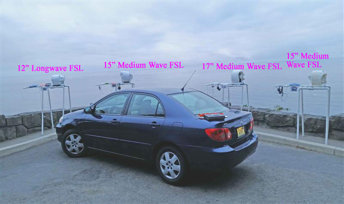
7.5″ loopstick C.Crane Skywave Ultralights (3) +
15″ and 17″ FSL antennas
Report from Tom Rothlisberger
Saturday July 09
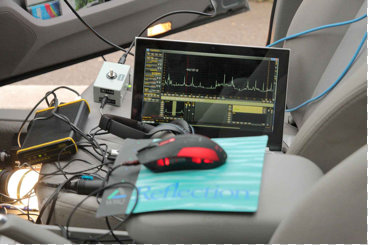
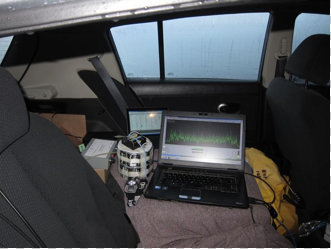
Three of us on the ocean cliffside pullout this morning. It took some time to set up everything as this was a new antenna and configuration for me at the cliffs, and I was planning to experiment with a vactrol for the first time. A major setback occurred when my Win10 notebook refused to recognize the Perseus hardware due to a possibly corrupt driver. To make matters worse I did not bring the backup MSI Wind U100 that I have been using for years with good results. Note to self: always bring backup. I wound up borrowing Nick’s netbook as he did not need it for experiments that morning. So it was 1222 by the time I started recording. Magic 702 was slamming in and 1KW TAB Trackside on 549 was in nicely but briefly. I didn’t think the session was as good as what was experienced last year but everything was working and signals were loud at times, usually briefly, before settling back down into the noise. Little high band action but 1503 Radio Sport was in.
Sunday July 10
Driving rain and gale force winds were making things miserable. My antenna spreaders blew down time after time. For the last 15 minutes of the opening I was holding one up outside by hand, the other secured to the rock wall by heavy straps.
This turned out to be a morning favoring Australia. 1116 4BC was ruling the band with huge signals, I had Aussies on 702 and 936 instead of NZ stations. The ABC News fanfare was heard on 891 on the half hour and there was audio on 1566, 1611 and 1701. This was the only of the three mornings the whole band was in although not very robust like it was last August. IDing signals is still ongoing.
We were all soaked to the bone when it was over, my Gore-Tex jacket was no match for that storm. Distinguished visiting DXers Hiroo-san and Satoshi-san were still smiling at the end. That’s really the important thing, to have fun and overcome adversity. That we heard any stations at all was an added bonus. And we did hear some! We will always remember this morning.
Monday July 11
Another mostly New Zealand morning, decent signals but they would fade back down after a minute or two, and something else would become strong elsewhere on the band, one at a time. This made getting parallels for ID purposes difficult. On several frequencies NZ and Australia signals were fighting it out. It was another low band morning. The TAB Trackside affiliate on 1224 (1 KW) was briefly good but almost nothing heard above it except for occasional audio from Radio Sport 1503. 738 Tahiti was slamming in with meter-bending signals. Satoshi-san and Hiroo-san seemed very pleased as this station is considered rare and exotic DX from Japan.
Overall: 657 Star gets the award for strongest and longest lasting DU signal over the three days, beating last year’s champions 1035 Newstalk ZB and the no longer potent RNZ 567. I had more wire up this year but the signals were really no better. I failed to find a “sweet spot” with the vactrol for reducing splatter from the Portland powerhouses.
Longwave: DX NDBs were practically non-existent. I am wondering if the antenna configuration made it deaf at LW, or if conditions were really that terrible. Only one DX station, 352 KHz “RG” Nikau, Rarotonga, Cook Islands was noted. 531 PI was also exceedingly weak so I suspect the antenna. I will be changing things again at my next visit to the ocean cliffs to ensure I get more LW action.
73, Tom K7WV
Report From Nick Hall-Patch
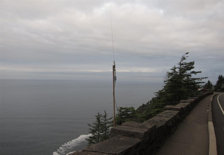
As promised, a logging or two, and a couple of photos:
549 NEW ZEALAND, Napier-Hastings, TAB Trackside Radio. Man talking, sounded like announcing a horse race, becoming fair //828 1220 July 9. (NHP)
594 NEW ZEALAND, Timaru/Wanganui, Star. Light music, poor strength, //909 July 10. (NHP)
693 NEW ZEALAND, Dunedin, Radio Sport. Poor to fair strength, American sport talk //792 1225 July 9 (NHP)
729 NEW ZEALAND, Tokorua, R. New Zealand National. Light Dixieland style mx, poor strength, seemed //675 but slightly offset so hard to say for certain. Only there for a minute or two, 1212 July 9. (NHP)
747 JAPAN, Sapporo, JOIB. Briefly poor and //774, with man in what sounded like Japanese, certainly not DU English, 1136 July 10. (NHP)
774 NEW ZEALAND, New Plymouth, Radio Sport. Fair to good signal, earlier //792 with American sport talk, bit of electrical noise, unusual for this quiet location, 1227 July 9. (NHP)
792 NEW ZEALAND, Hamilton, Radio Sport. American sport talk, fair strength in splatter //774 1224 July 9. (NHP)
828 NEW ZEALAND, Palmerston North, TAB Trackside Radio. Horse race announcer, fading up to good strength with a little splatter, 1223 July 9, earlier ID’ed by //549. (NHP)
Not what I would call listenable, but somewhat identifiable DX, could be a preacher, which might be Vision Radio Network, but several sites on each channel. Not heard on other days, so a bit out of the ordinary. (NHP)
(July 28) It is just like last week that we had been there! All those memories are good to remember, including the very precious “welcoming” weather on 10th morning! It just showed that even for short period of stay, at least TWO sessions might be required …
DXing results are of course something that we really appreciate out of the DXpedition, but simply the fact that we could meet up and DXing together means a lot! And also both Hiroo and me were very much impressed by all of your efforts even in the middle of darkness and especially in the stormy weather. As for us also, it was the worst weather we ever had on the day of DXpedition! So in many ways we could get “first ever” in this joint DXpedition! We hope that we all can meet sometime in the future either at the cliff, Cliff in Japan, or any other location in the world! Thanking you once again for your hospitality, and actual support on equipments that we could use throughout the DXpedition!
Wow! Gary, thanks so much and thanks to all of the team members–Hiroo, Satoshi, Tom and Nick–for sharing your experiences. Though your weather was less than desirable, it appears your DX was quite successful. You’ve so many mediumwave loggings from New Zealand, I’m convinced you were actually in New Zealand! Most impressive!
Most importantly, it sounds like you all enjoyed a little DX fellowship. At the end of the day, that’s what it’s all about. We look forward to future DXpedition reports!



 Well, it certainly was very memorable—in the worst possible way. A toxic mix of gale force winds and pounding rain was hammering the ocean cliff site as soon as we arrived for antenna setup at 1015 UTC (0315 local time), which was far and away the worst weather that any of us had ever experienced in an outdoor DXpedition. The sensible Japanese had at least brought suitable rain gear for the session, which was more than the careless North Americans had brought. Tom and I ended up thoroughly drenched and shivering as soon as the antennas were set up, while Nick was partially drenched. A single 15 inch FSL antenna was set up on its PVC base and strapped tightly down to the ocean cliff wall with heavy-duty plastic tie wraps, enabling Satoshi, Hiroo and I to track down some New Zealand, Australian and Tahiti DX with our Ultralight radios despite the vicious weather. Tom’s broadband loop supports absolutely refused to stay upright in the gale force winds, and he eventually had no option other than going outside in the nasty weather to hold one of them in the vertical position manually as he recorded DX on his Perseus-SDR. Nick’s active vertical whip was relatively impervious to the vicious weather, but he was drenched from the knees down because of the pounding rain during its early morning setup.