Category Archives: Ham Radio

Part 3: SWLing Post shack photos

IMG_9013

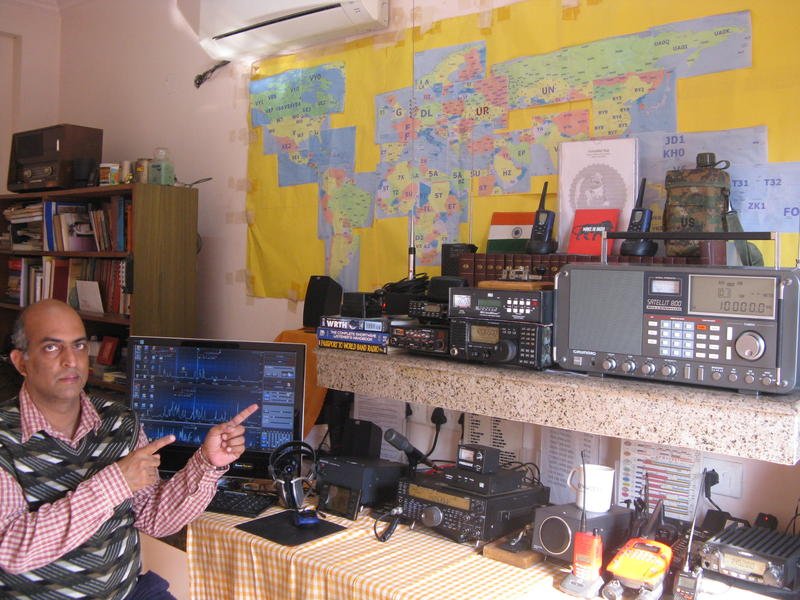
Rajesh Chandwani (VU2OEC), Gurgaon (Haryana), India INDIA

Several months ago, we conducted a shack photo contest sponsored by Universal Radio. I’m posting all of your excellent photos as time allows and putting them under the tag, shack photos.

The following is the third set of ten photos along with any notes that were included.

Click on images to enlarge and enjoy:


Robert Gulley (AK3Q)
ak3q-shack

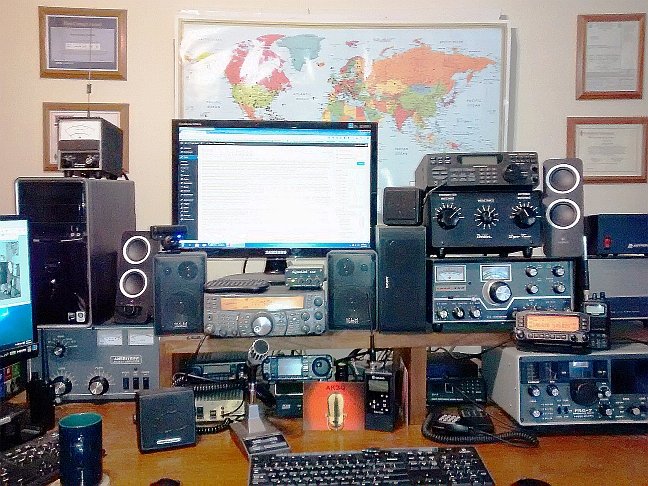
Notes: I have a Kenwood TM-D710G with lots of bells and whistles (center-right), including APRS and packet capability, Echolink, computer control, programming and data output, not to mention the regular functions of a dual-band, cross-band repeat radio. Another rig above and to the left (under the computer monitor) is my main all-mode rig, a Kenwood TS-2000. To the right is an old Swan 350 transceiver and power supply. There is an old manual Dentron tuner above that, and sitting atop of it all is an analog Uniden Bearcat BC898T scanner. There is an amplifier, a 220Mhz rig, several HTs, and on the bottom right my pride and joy Yaesu FRG-7 shortwave receiver. I currently have 6 speakers for various sound outputs. Out of the frame are two more computers, two SDR receivers, another monitor and a sound mixing board. I won’t begin to mention all the portable SW radios and several old DX-160s (my first real SW radio). I love listening/transmitting here, but I also take portable radios around the house and on the front or back porch as the mood hits.


Mahesh Jain (57HS4688)
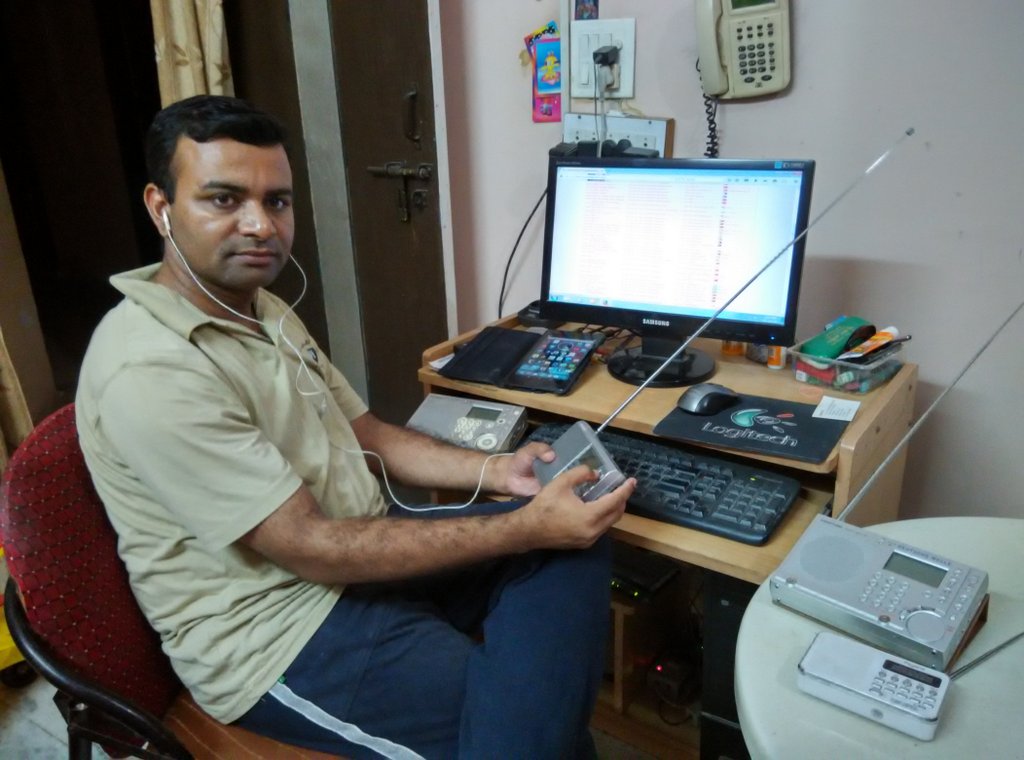
IMG_20151006_202620_HDR

Notes: I am radio hobbyist particularly my beloved shortwave radio. But it makes me sad to see that most of the radio stations on shortwave in my country India are closing their shortwave broadcast and they are going online and digital, which is available to few not the all people. Hope the radio and specially shortwave radio revive soon. Hope we all have good old days back. 🙂

I love my Graundig Yacht boy 80 radios which I won from DW (german radio) and later i bought Sony ICF SW35. I use telescopic antenna and sometimes I use a reel antenna. I have very little technical knowledge about the radios and antennas used. Still, I keep on experimenting and sometimes found far far away stations, which is obviously a thrilling experience. with this hobby of DXing I have learned a lot about different cultures and nations. Moreover i am using the internet technology to get far away stations which are not targeting my country/region and the WEB SDR is the best source.


Ray Sylvester (NR1R)
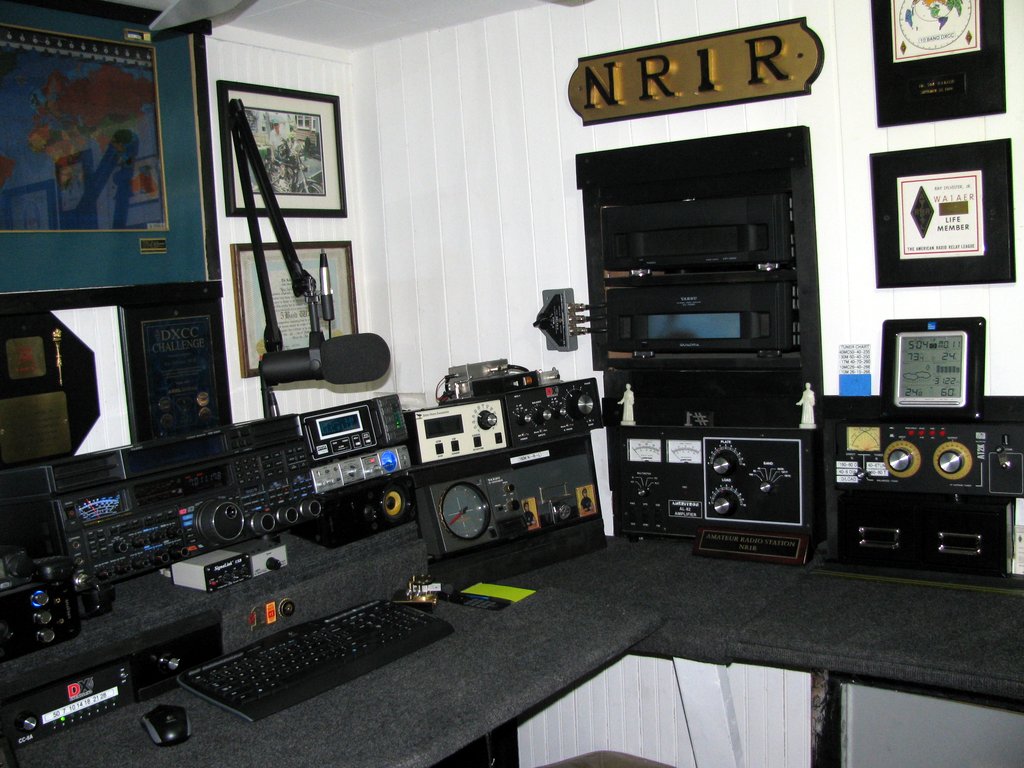
radio room 001

Notes: Ray’s main shack rig is the Yaesu FTDX5000MP.


Darwin McDonald (SWL/W8)
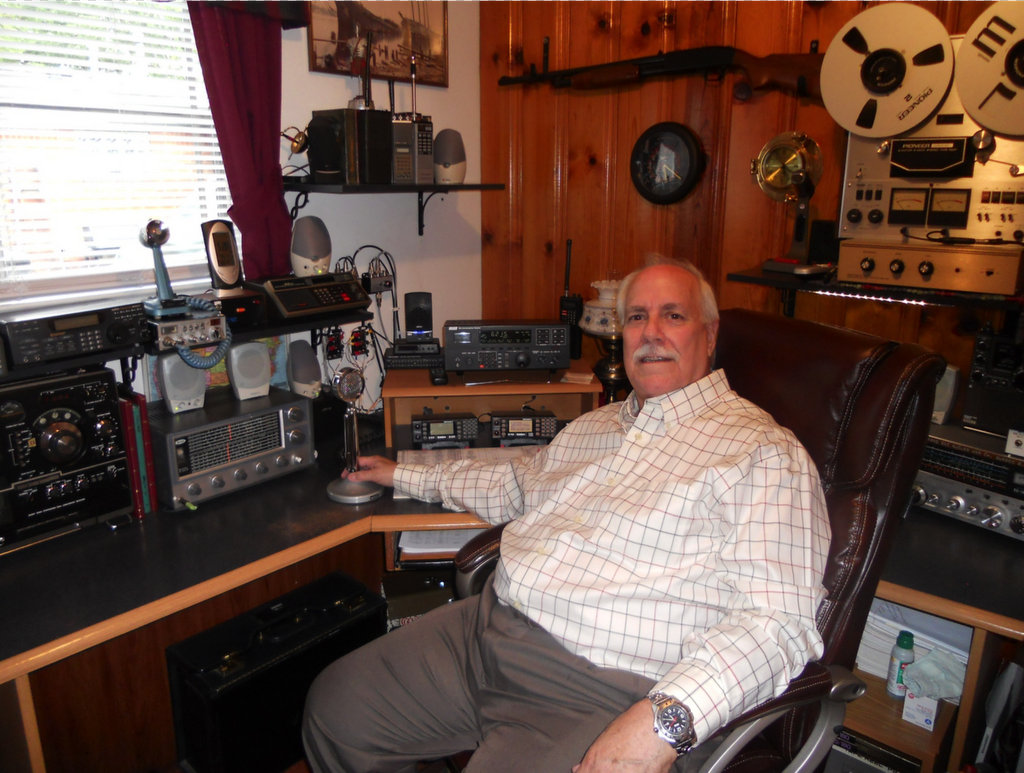
Shack2 Shack1Shack4 Shack3

Notes: The Drake Receiver is my best–using a long wire and an antenna tuner.


S B Sharma
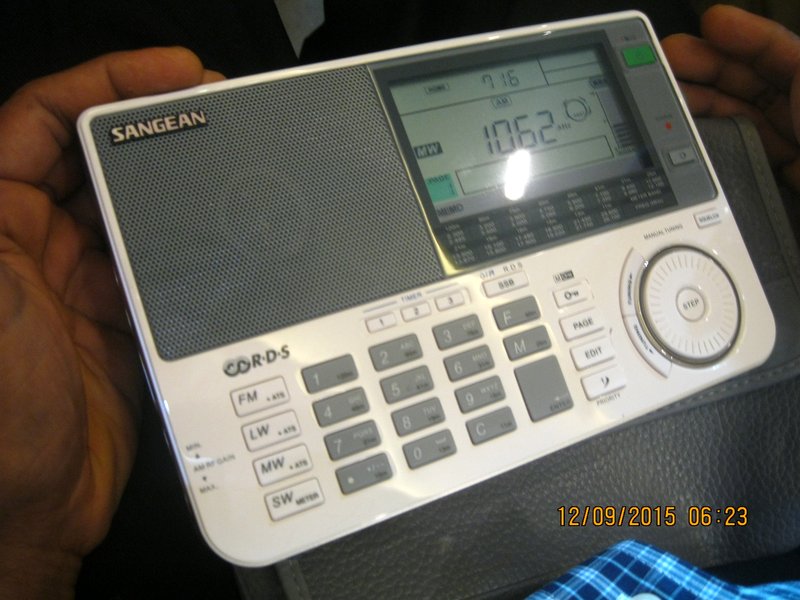
my radio_1087 radio & me_1447

Notes: In the photo above, I am listening to radio at world famous Buddhist temple in Barbadur, Indonesia. Photo taken while I was surfing and listening voice of Indonesia and general overseas service of India on the temple. I have been listening to radio for the past 32 years and continue today. Due to this hobby, I won two free foreign tours till date and hope there will be some more.


Clyde Ramsdell (N1BHH)
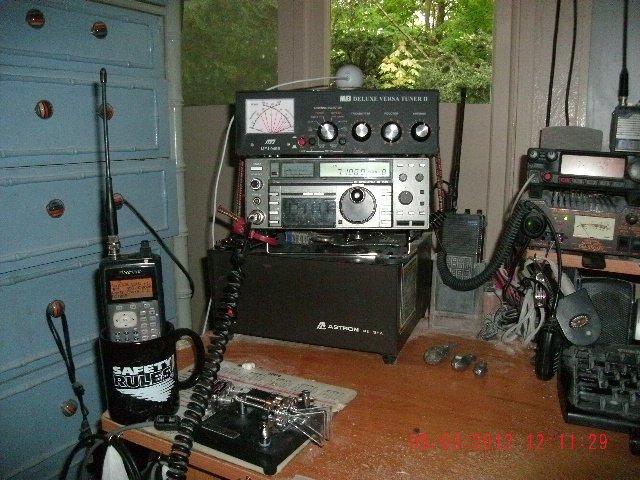
my_station_004

Notes: My simple station/listening post is the Icom IC-735 using one of three antennas:

  1. Off Center Fed Dipole (130 feet) at 45 feet high,
  2. 160 meter (250 feet long) dipole at 30 feet high,
  3. Random wire, roughly 45 feet draped around my room.

My bedside radio is a Grundig Yachtboy YB-400 with another random wire draped around the room. In the photo (above) you’ll find the Icom IC-735 on the Astron RS-35 power supply, MFJ-949E tuner and Bencher paddle, a Radio Shack Pro-106 scanner, Icom IC-3AT 220 HT and Yaesu FT-2900R.


Jawahar Shaikh
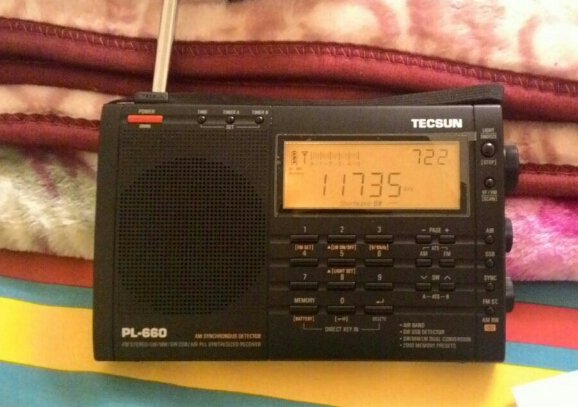
Screenshot_2015-10-06-22-27-45

Notes:  My favorite receiver is none other than Tecsun PL-660 as it pulls a lot of far away radio stations without any external antenna!!! On MW I could log a number of South Korea, Japan, and Australian radio stations.On shortwave, numerous far away radio stations including 1 KW Australian Marine Weather Broadcast station VMW. On longwave…Vow…Ireland radio on 252 khz…What else do I need from a budget Tecsun?

The tinyTecsun PL-660 is my DX magic box !!!! So,This is my listening post!

Location: Tamil Nadu state, India.


José William
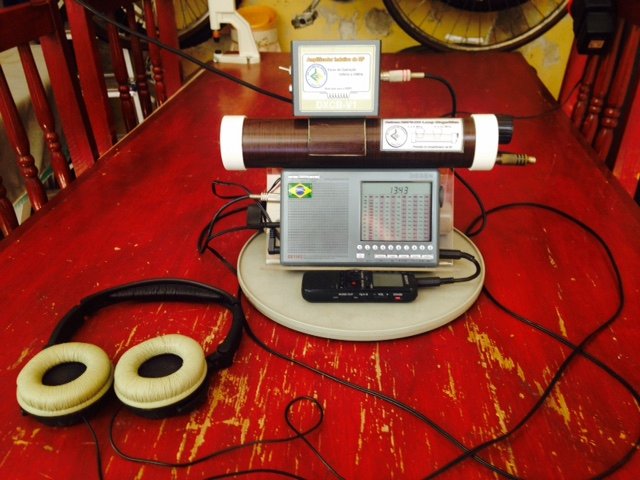
image

Notes:  This is my little shack that is located in my backyard.

Features:
Receiver- DEGEN DE 1103
Antenna- RGP3-OC Loop Magnética and DEGEN 31MS active loop antenna
Amplifier- Amplificador Indutivo de RF DXCB-V1
Recorder- Sony ICD-PX312F


Peter Ströhlein
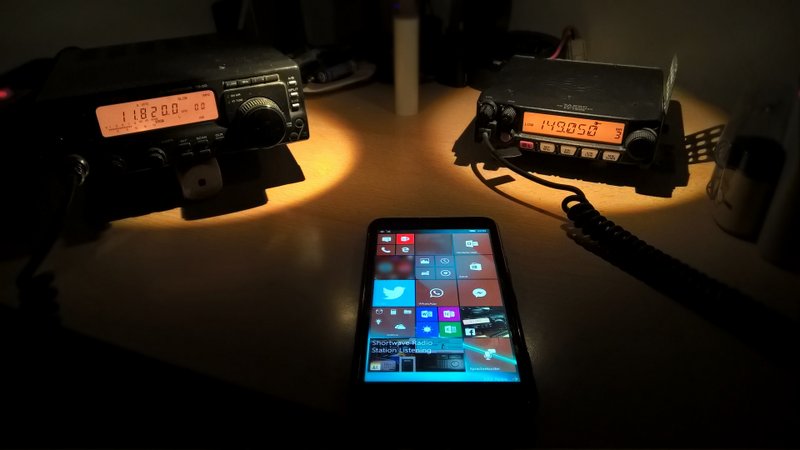
WP_20151010_22_04_21_Pro

Notes: My Listeningt post consists of my fav. Kenwood TS-50 (30khz – 30Mhz) and a VHF YAESU FT-1900.

All night long when my kids are in bed, I spend my time listening to numerous SW Stations.

This is my hobby since nearly 30 years! 🙂 So that’s my little listening post, illuminated with two little LED-Spots for SWL Nights with “Style”. 🙂


Hank Dean (KU8S)
DSCN0918 DSCN0917 DSCN0916 DSCN0915

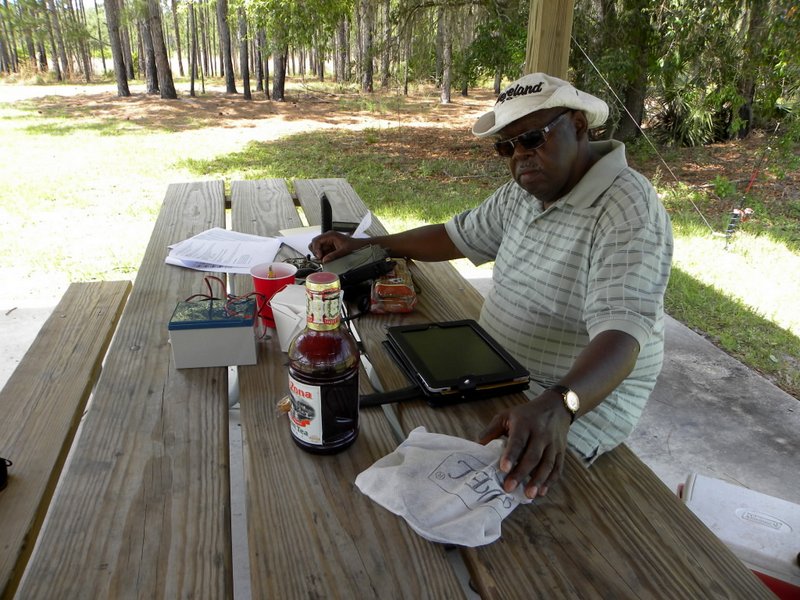
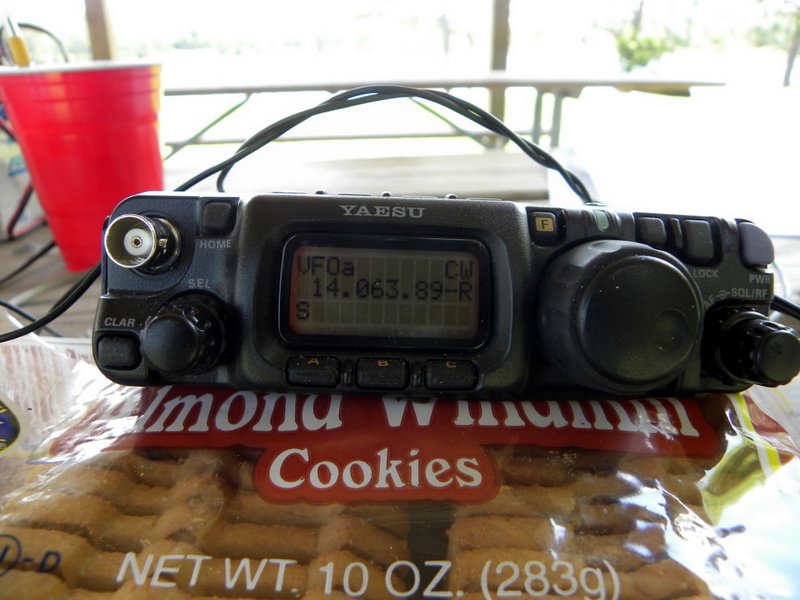
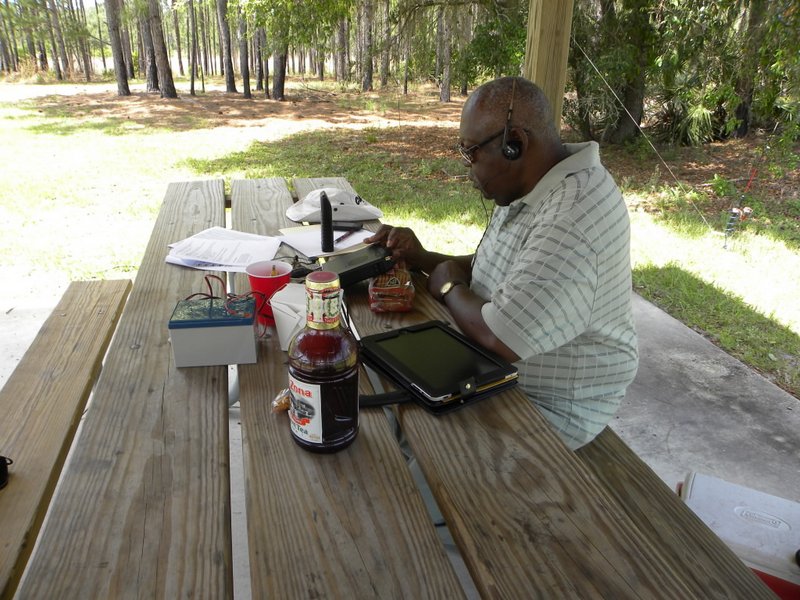
Notes:  Here are four photos of a portable outing “QRP to the field” op in April 2013. This park is called Bear Pond and is located in the Seminole State Forest, west of Sanford, FL on SR 46, about four miles from my house. I love this place. Great place to have lunch and play radio.

The rig is a Yaesu FT-817ND QRP transceiver, a PAR end fed wire antenna, and SLAB 12v 10AHr battery. Apple IPad does the logging chores. Add some Chinese food, some almond cookies, a little sweet tea, Hmmnnnnnn, life is good!


Life is good, indeed, Hank!  What a great way to cap off this third set of shack photos!

Again, many thanks to all who sent in their listening post photos. I absolutely love the variety! 

Follow the tag Shack Photos for more!
Mike’s overview and review of the $40 Soft66RTL3 SDR by Kazunori Miura (JA7TDO)

RTL3

Many thanks to SWLing Post contributor, Mike Ladd, for the following guest post and overview of setting up and using the Soft66RTL3 SDR:


Soft66RTL3 SDR: A low cost…Good performer direct from Japan

by Mike Ladd

Much has changed in the last 8 years in the world of SDR radios. Fast forward to 2016 and just about everyone in the hobby has heard the buzz word “SDR radio”. When SDRs first came out to the market they were all aimed at HF listening and you had two types to pick from. The first being soundcard based and the second being direct sampling. The price gap between the two were several hundred dollars. The more expensive being direct sampling. As the hobby progressed, so did the technology and the prices started to shift dramatically.

You can now purchase a TV dongle for $10.00 and turn it into a SDR. The Soft66RTL3 is basically a TV dongle but with a lot more features.

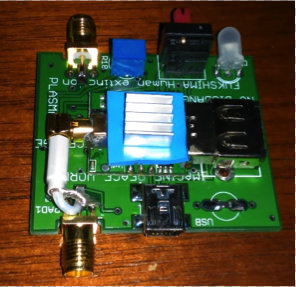
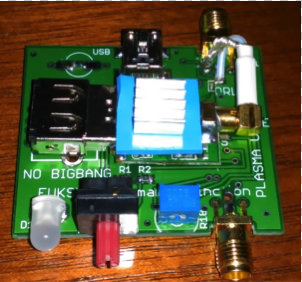
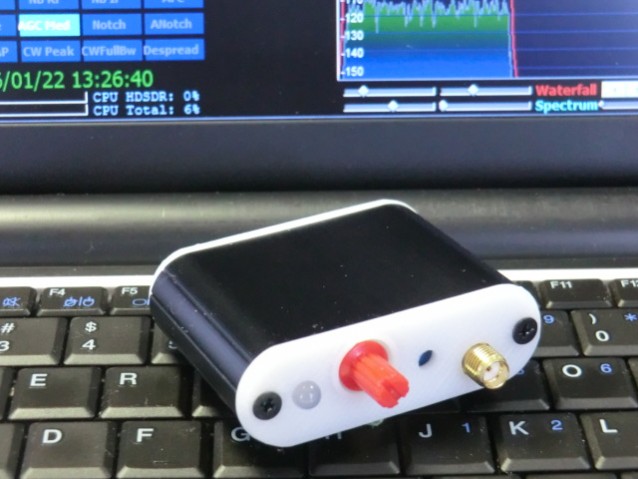
The Soft66RTL3 comes from an engineer who is no stranger to the world of SDRS. Kazunori Miura (JA7TDO) has been designing and selling many models of SDRS over the internet and shipping them direct from Japan for about 7 years. The Soft66RTL3 is his latest of model hot off his bench. This SDR is a dual input RTL-SDR with a built in 50 MHz upconverter along with 4 user selectable band pass filters that greatly increase your signal to noise ratio in the HF bands.

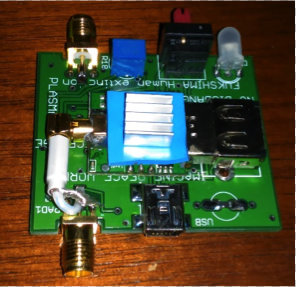
Soft66RTL3-board-001 Soft66RTL3-Board 2 Soft66RTL3-board

The frequency range of the RTL3 is from DC to Daylight (0.4 kHz to 1.7 GHz). Miura also addressed a heat issue with the previous version (RTL2) by adding a thermal pad and heatsink. RTL dongles are notoriously unstable due to overheating. In theory, the thermal pad should add frequency stability and keep drift to a minimal.

RTL3-TrimmerPot

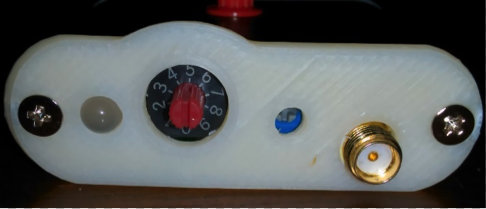
The last feature of the RTL3 is the input gain trimmer pot (see image above). The trimmer pot is for the HF side of the SDR and is already set before it’s shipped from Japan. If you would like to reduce or increase it the trimmer pot is easily accessible. I would suggest leaving it as is.

The RTL3 is broken down into two sections: the HF input side and the VHF/UHF input side.

Soft66RTL3-encoder

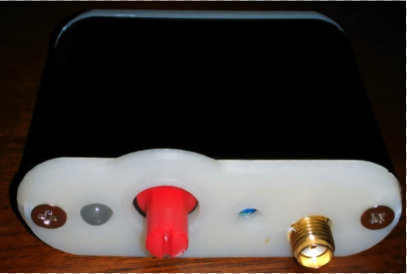
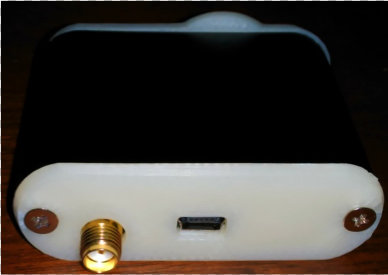
The HF side of the SDR (above) has a red rotary encoder and trimmer pot port. The VHF/UHF side (below) has the USB Mini-B connection.

Soft66RTL3-back

Both sides of the RTL3 terminate to a SMA-Male connection and Power comes from a single USB Mini-B cable.

Soft66RTL3-BandPassFilter

Band pass filter selection

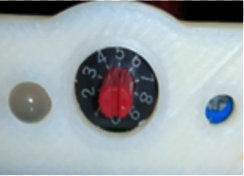
If you look at the rotary encoder (red cap cover) you will see a small notch window. The 12 o’clock position is #5 on the encoder dial. One click clockwise will take you to switch position #6 and one click counterclockwise will take you to #4. You should pull the red cap cover off to have a look and get your bearings.

The band pass filter selection is as follows:

  • #4 enables BPF 0.4 to 1.2MHz
  • #5 enables BPF 1.2MHz to 5MHz
  • #6 enables BPF 5MHz to 15MHz
  • #7 enables BPF 15MHz to 30MHz
  • #8 or #9 enables the VHF UHF side of the SDR

All other positions will bypass the filtering section on the HF side of the SDR.

Installation

If you already have a RTL-SDR on your system then all you need to do is swap it out with the RTL3 and change the offset of -50,000,000 in HDSDR or SDR# to listen to the HF side of the RTL3–but if this is your first SDR we will need to install 2 items: the front end app and the driver.

I will assume your system is Win-7 or better and we will be using SDR# as our program of choice to drive the RTL3. The RTL3 runs just fine in HDSDR and SDR-Console, but by choosing SDR# it will reduce our setup time considerably.

ScreenShot-SDR

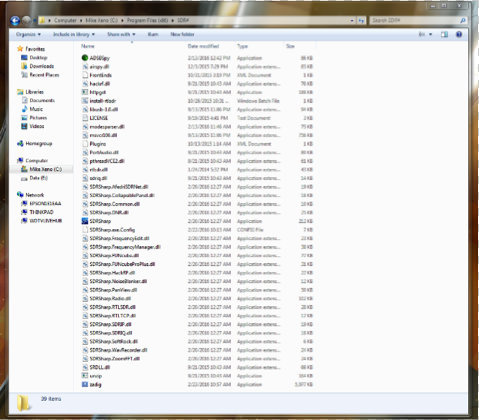
  1. Plug in the RTL3
  2. Make a folder on your desktop and name it SDR#
  3. Download the latest version SDR# from www.airspy.com and copy the contents of the zip file to your newly created SDR# folder
  4. Inside of your SDR# folder, double click on install-rtlsdr
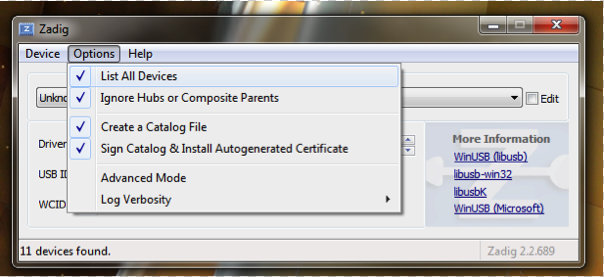
  5. After the batch completes, double click on the “zadig.exe” inside your SDR# folder

screengrab

When you run the “zadig.exe” make sure you select “list all devices” as shown above.

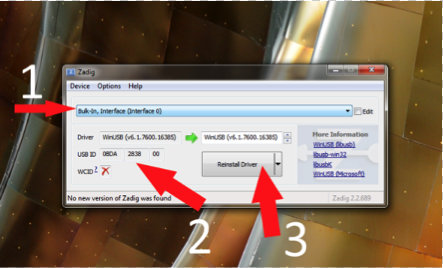
ScreenGrab-Window

The next 3 steps are:

  1. Select “Bulk-In Interface” (Interface 0)
  2. Make sure the proper USB device is selected (2838)
  3. Click “install driver”

The RTL3 is now ready to be used and no further setup is required.

For a more detailed installation I would visit RTL-SDR.COM for a complete setup instructions: http://www.rtl-sdr.com/rtl-sdr-quick-start-guide

I will assume you did not have any issues setting up the ZADIG driver and now move on to using the RTL3 inside of SDR#. I will show you real world conditions that are not from any scientific standpoint.

Antenna wise, for the HF side I will be using a G5RV mini and for the VHF/UHF side I will be using a Scanntenna ST-2.

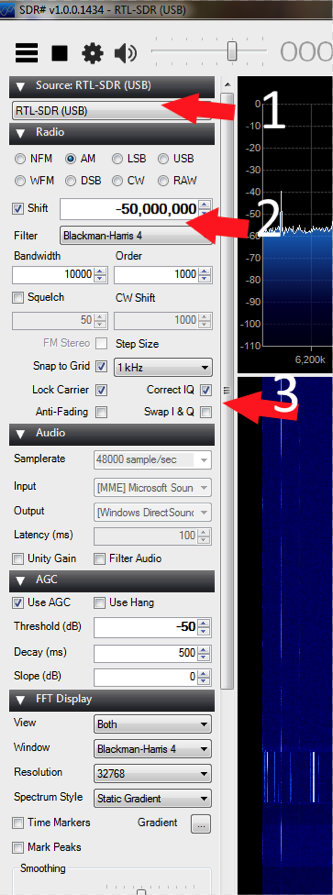
You can now launch SDR# and check the following settings (see image below).

SDRSharp-Settings

For the VHF/UHF side of the RTL3 you will want the rotary encoder on position #9. You want the cutout in the encoder cap showing the 5 o’clock position.

Summary

I have been using this SDR for a little over 3 months. Out of all the low cost SDR’S on the market, this one gives you the most bang-for-your-buck and it is a great entry level SDR with some “Pro” features.

Pros:

  • Low Price
  • HF VHF/UHF in one package
  • Works with any app that supports the RTL-SDR front end
  • 4 user selectable band pass filters for HF
  • Highly sensitive user controlled input RF amp
  • Small & very compact metal case
  • Dual input SMA jacks
  • ESD protection diode

Cons

  • Some intermod in the 460-470 MHz range
  • Inputs are on opposite sides of the SDR body

The Soft66RTL3 price is $40.00 US shipped–click here to order.


Mike, thank you so much for this excellent overview of the Soft66RTL3!  I’m especially appreciative of the time you’ve taken to explain the installation process–for many, this is one of the more difficult RTL-SDR learning curves.

I’m very tempted to check this out for myself–I love the fact that this little SDR has bandpass filters.

Post Readers: I suspect Mike will monitor the comments in this post, so feel free to ask questions. Make sure to check out Mike’s website, where you’ll find more articles about software defined radios.

Heard VK0EK on the radio

Heard Island (Image: VK0EK)

Heard Island (Image: VK0EK)

Regular SWLing Post readers know that I’m a ham radio operator (call sign K4SWL). Being a shortwave radio enthusiast, of course, I spend most of my time on the air in the HF portion of the amateur radio spectrum. Contacting distant stations and connecting with other ham radio operators around our little planet gives me immense joy.

Most of you also probably know that I’m a fan of all things Antarctic, so it should come as no surprise that I really wanted to work VK0EK: the Heard Island DXpedition.

Thing is, my life has been so hectic lately, I’ve barely been home during the Heard Island DXpedition (March 29th – April 11th). And the days I have been home, VK0EK’s signals have been incredibly weak.

In short: timing and propagation were all working against me.  And VK0EK was soon to pack up and come back home. I was becoming desperate…and beginning to lose hope that I’d make any contact with this unique and rare entity in the isolated stretch of ocean between Madagascar and Antartica.

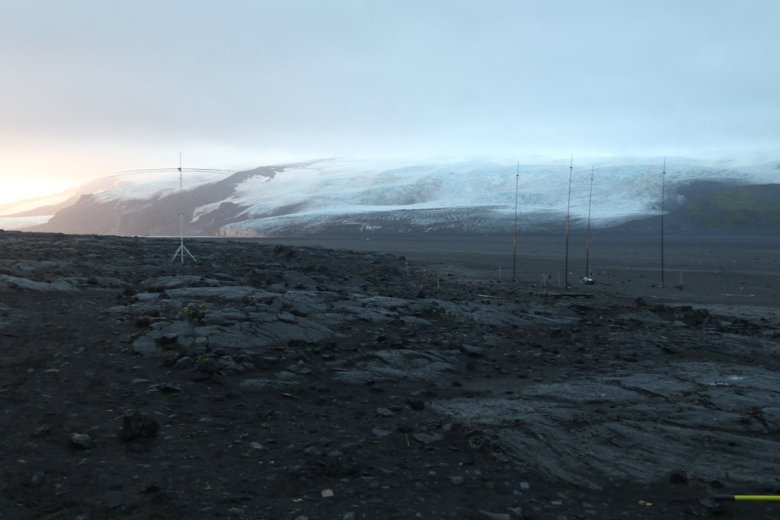
"Antennas with a clearing" on Heard Island (Photo by Bill, AE0EE)

“Antennas with a clearing” on Heard Island (Photo by Bill, AE0EE)

My hope was waning.  Then, Tusday evening, I gave a presentation about shortwave radio at the Blue Ridge Amateur Radio Club. On the hour-long drive home, I stopped by my good friend Vlado’s (N3CZ) to confess my troubles to the radio doc.

Now it just happens that Vlado has a much better antenna set-up to work DX than I do, and what’s more, (close your ears, fellow QRPers) he has an amplifier.

Most importantly, though, Vlado is a keen DXer.  He’s got 330 countries under his belt, and ever up for a challenge, routinely pushes himself to accomplish more with less. In January, with members of the local club, he entered a QRP challenge; he had 100 countries worked by the following month, all in his spare time. And a few years ago, Vlado actually built a radio of his own design and worked 100 countries within two months (you can read about that here).

So, of course, he was game to help me make a contact…even if it was a long shot.  A very long shot.

Juan de Nova

When I arrived at Vlado’s QTH around 21:00 local, VK0EK was impossibly weak, so we focused our efforts on 30 meters and FT4JA: the Juan de Nova Island DXpedition (another all-time new one for me).

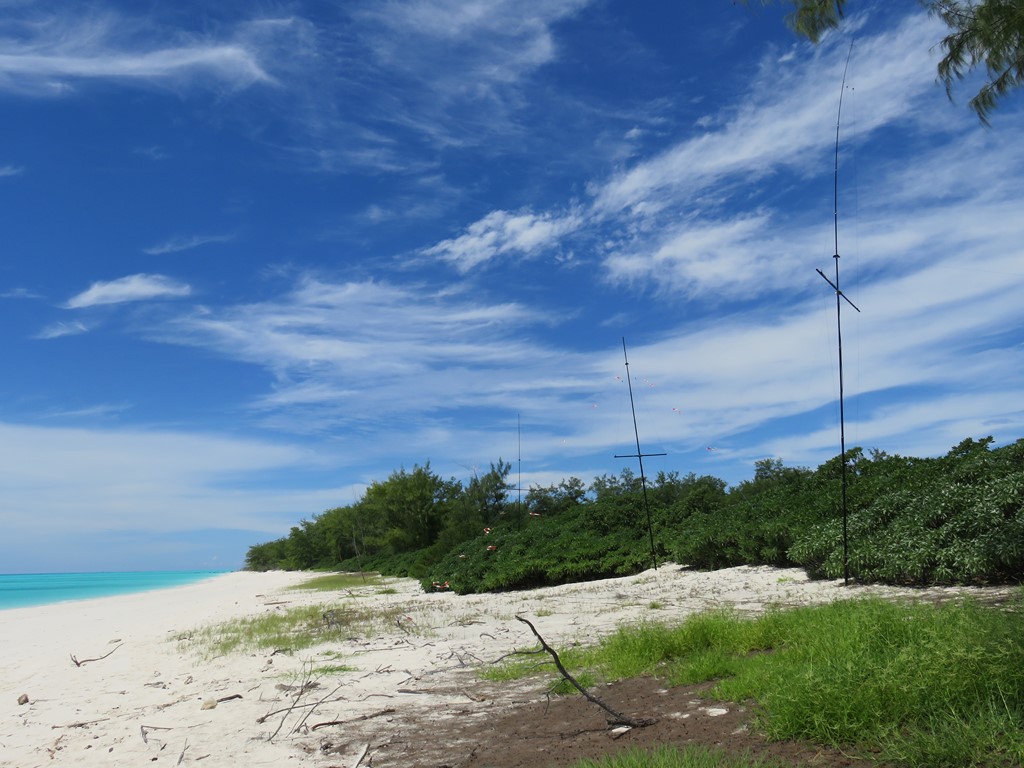
A portion of the FT4JA antenna farm. (Image: FT4JA)

A portion of the FT4JA antenna farm. (Image: FT4JA)

After more than an hour of calling, FT4JA finally heard my call and (woo hoo!) I was confirmed in their log.

But what about Heard Island?

penguin-chow-line4_6-1600px

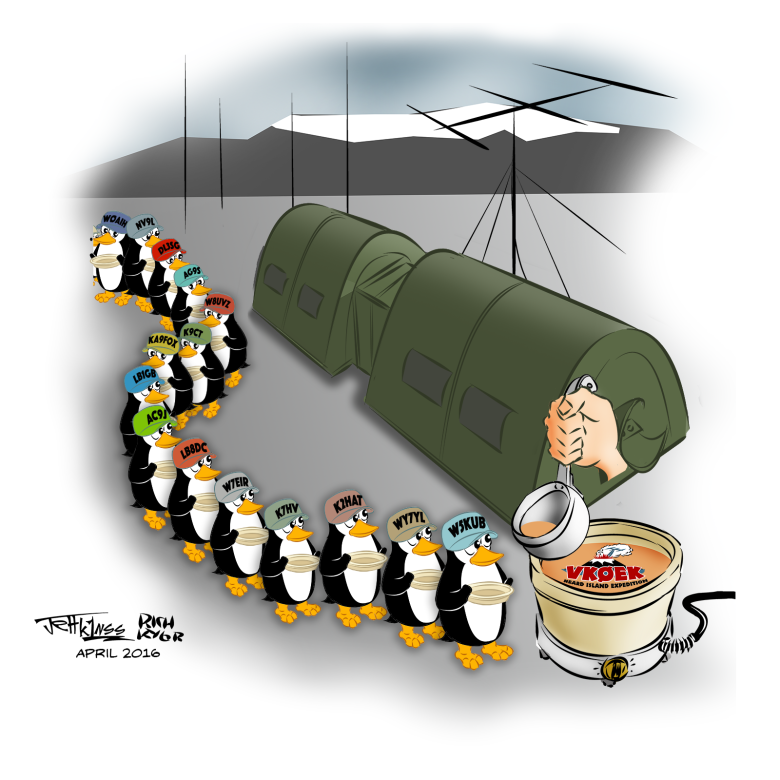
After working FT4JA, we moved down to 40 meters where VK0EK was slightly louder than before. Well, maybe it’s not impossible, I thought hopefully. Just next to it.

Between QSB (fading) and tuner-uppers, my ears were bleeding trying to hear Heard’s minuscule CW signal–so faint, so distant were they.

After only about ten minutes of steady calling, Vlado made a sign to get my attention, and we strained to listen, very carefully.

VK0EK came back very faintly with just one letter incorrect in my call–it was enough that I didn’t catch it at first. But Vlado heard it, and after sending the call back a couple of times, then the report, VK0EK confirmed my call with a signal report, and I reciprocated.

Vlad and I leapt to our feet, yelling, “WOO HOO!” (and hopefully didn’t wake up any of Vlad’s neighbors).

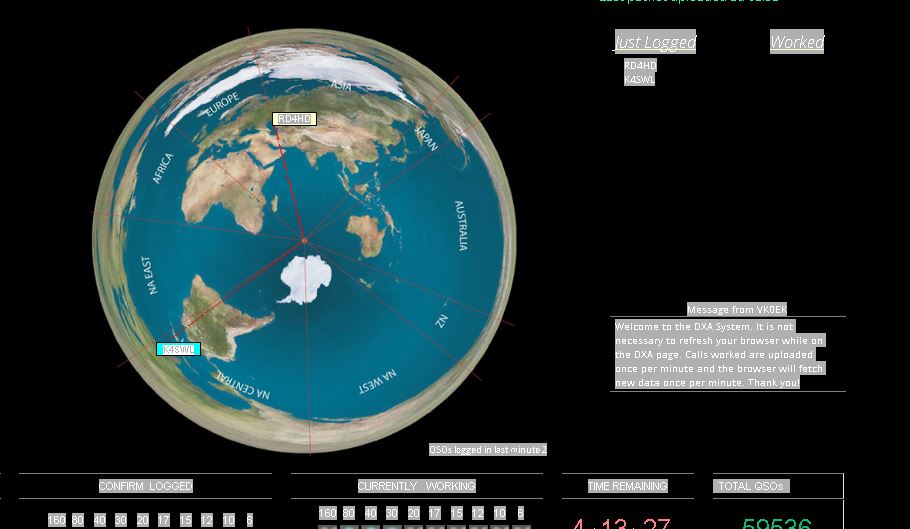
Heard Island is actually running an online log that is updated live. We immediately looked there to confirm I was in their log, and was greeted with this great circle map and a line from Heard Island to my call sign in the States. Vlado made this screen capture as a momento:

k4swl VK0EK 40m cw 0231 april4 2016

Here’s to good friends and mentors

In one incredible evening, I snagged two all-time new ones–and I owe it all to my good buddy, Vlado. Most importantly, I’ve been learning so much from him as he patiently coaches me through some weak DX with serious pileups. Plus it’s just always fun hanging around Vlado, the best broken radio doctor I know, to whom “challenge” is…well, a piece of cake.

Thanks Vlado, for your enthusiasm and patience–I’m lucky to have a friend like you!

World Amateur Radio Day April 18th

Picture

This announcement for World Amateur Radio Day was posted on the IARU website along with links for clubs (or individuals) to download flyers and posters to promote the event.

World Amateur Radio Day

Every April 18, radio amateurs worldwide take to the airwaves in celebration of World Amateur Radio Day. It was on that day in 1925 that the International Amateur Radio Union was formed in Paris.

Amateur Radio experimenters were the first to discover that the short wave spectrum — far from being a wasteland — could support worldwide propagation. In the rush to use these shorter wavelengths, Amateur Radio was “in grave danger of being pushed aside,” the IARU’s history has noted. Amateur Radio pioneers met in Paris in 1925 and created the IARU to support Amateur Radio worldwide.

Just two years later, at the International Radiotelegraph Conference, Amateur Radio gained the allocations still recognized today — 160, 80, 40, 20, and 10 meters.  Since its founding, the IARU has worked tirelessly to defend and expand the frequency allocations for Amateur Radio. Thanks to the support of enlightened administrations in every part of the globe, radio amateurs are now able to experiment and communicate in frequency bands strategically located throughout the radio spectrum.  From the 25 countries that formed the IARU in 1925, the IARU has grown to include 160 member-societies in three regions. IARU Region 1 includes Europe, Africa, the Middle East, and Northern Asia. Region 2 covers the Americas, and Region 3 is comprised of Australia, New Zealand, the Pacific island nations, and most of Asia. The International Telecommunication Union (ITU) has recognized the IARU as representing the interests of Amateur Radio.

Today, Amateur Radio is more popular than ever, with over 3,000,000 licensed operators!


The full article and a list of several amateur-radio related activities may be found here.

Robert Gulley, AK3Q, is the author of this post and a regular contributor to the SWLing Post. Robert also blogs at All Things Radio.

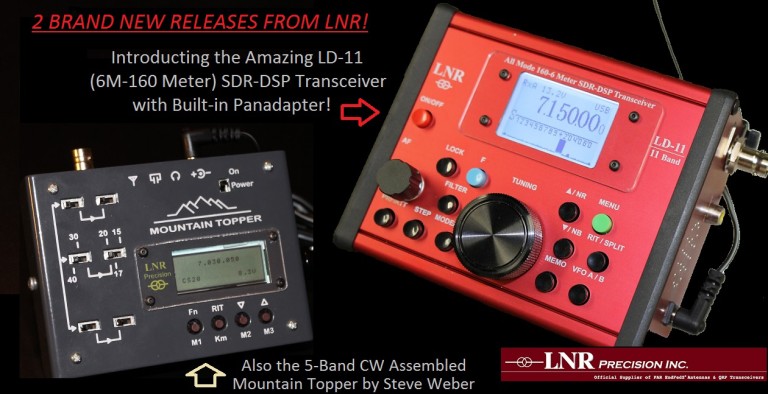
LRN Precision introduces two new QRP transceivers: the LD-11 and MTR5B

LNR-MountainTopper-LD11-Announcement

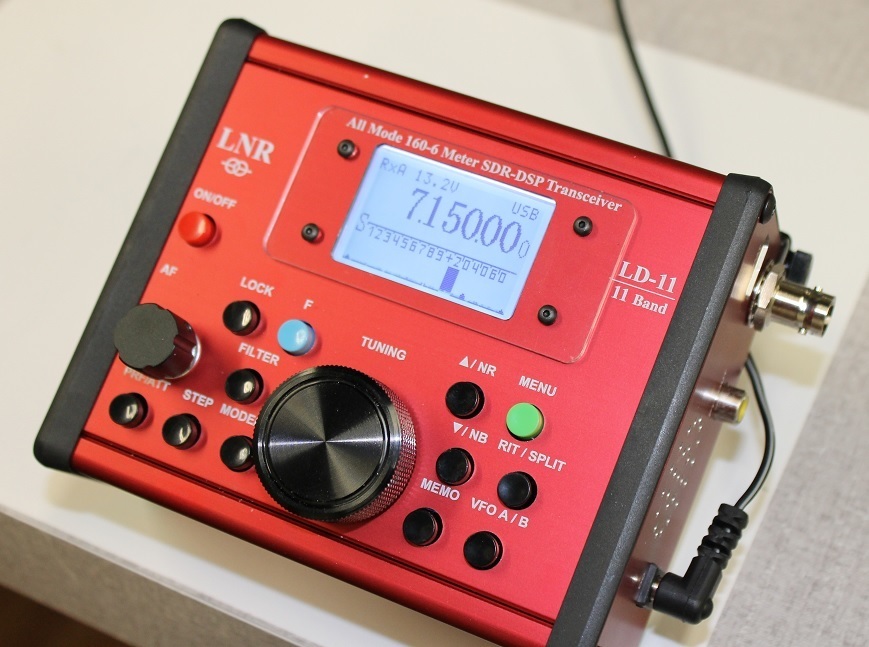
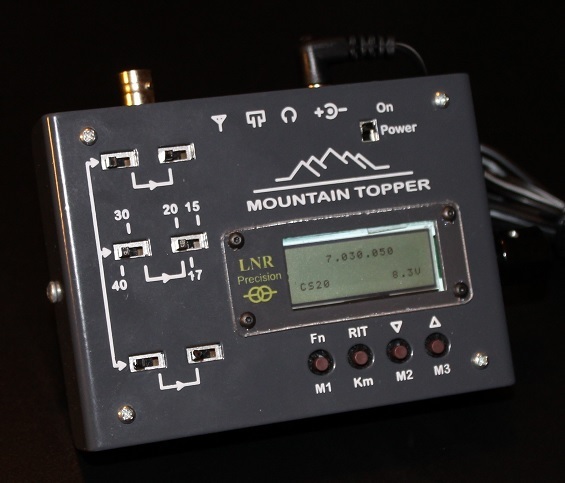
LNR Precision announced two new QRP transceivers this weekend: the MTR5B and LD-11. Below, you can find details I pulled from LNR’s press release and website for both units:

LNR-Precision-LD-11

The LD-11

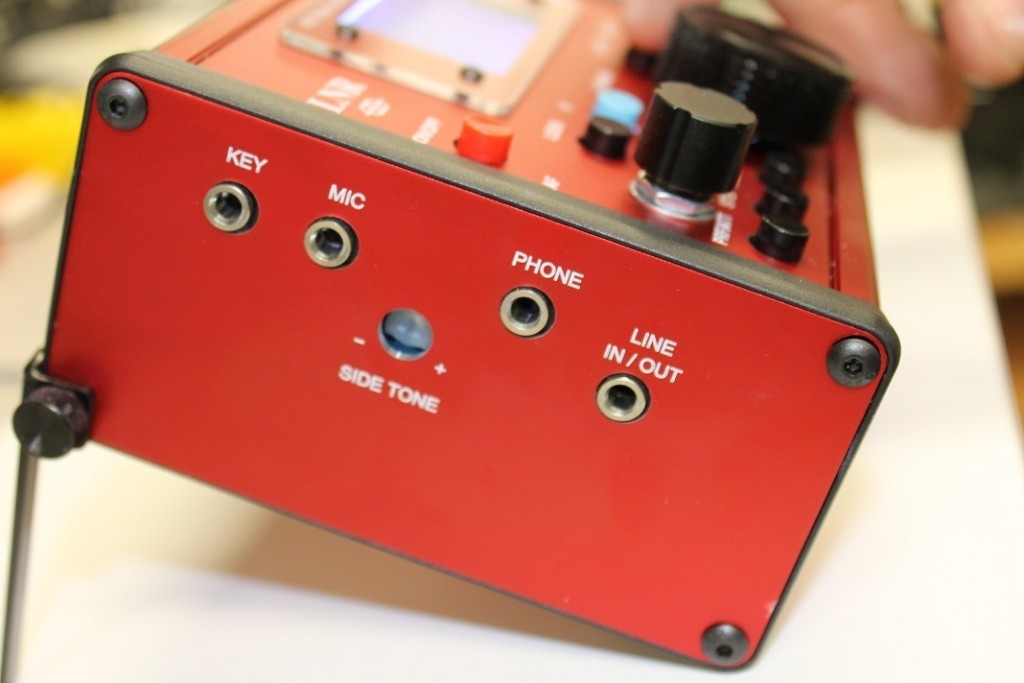
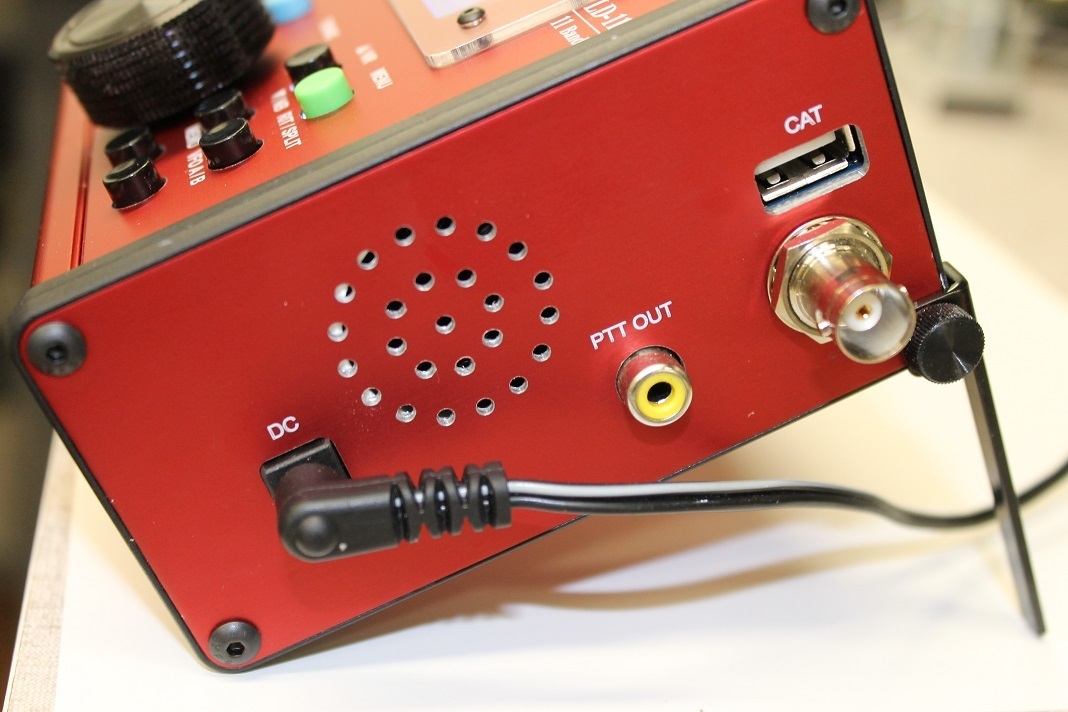
The LD-11 is a new 11-band QRP transceiver based on the LNR’s LD-5 transceiver. The LD-11 covers from the 6 meter band down to the 160 meter band. A new feature on this model is a built-in panadapter. AM/FM/SSB and CW modes are all included.

Here is the description from LNR’s website:

The new LD-11 is Digital Direct Conversion, SDR type, build-in CPU (SM32a) DSP radio in which RF signals are directly converted to a digital data via differential and balanced A/D converters. This enables direct sampling with extremely low phase and floor noise.

The DSP is unique and features two independent channels. It also employs a unique differential algorithm within the software which is applied for IQ processing of the channels with phase suppression of the unwanted side-band channel.

The balanced ADC and DAC gives additional noise floor reduction and the receiver can handle interfering signals that are 100 dB stronger than the desired signal at a frequency separation of 10 kHz, and is about 130 dB stronger at 50 kHz separation. As the receiver and transmitter are using the same DSP channel, there is no gap between the receiver performance and the transmitter performance. Thus, there is a clean neighborhood on the bands. At the development stage, our intentions were motivated by the TX side-band noise of existing SDR manufacturers, so our aim was to fully equalize our transmitter to have noise performance that is compatible with the best modern receivers, or even better. After a arduous year of development , we think we achieved it!

This 11+ band radio is based on the LD-5, which has proven to be one of the most exciting QRP transceivers introduced in the last few years. Quite frankly, the performance rivals high end units offered by other manufactures at a much lower price point. Our motto is that we make QRP transceivers that you will want to take out in the field (without fear of breaking the bank).

Price is $774.99 US

LNR-Precision-LD-11-L-Side LNR-Precision-LD-11-R-Side

Note: Larry Draughn (AE4LD), President of LNR Precision, will be issuing an LD-11 transceiver to me on loan for review. I’m looking forward to putting it on the air.

What fascinates me about the LD-11 is that, although it’s designed as a ham band-only transceiver, the band edges of the 30 meter ham band can be expanded to include the full 31 meter broadcast band. There are, perhaps, other ham bands that can include nearby broadcast bands as well.  I will plan to experiment with the band edges.

MTR5B

The MTR5B

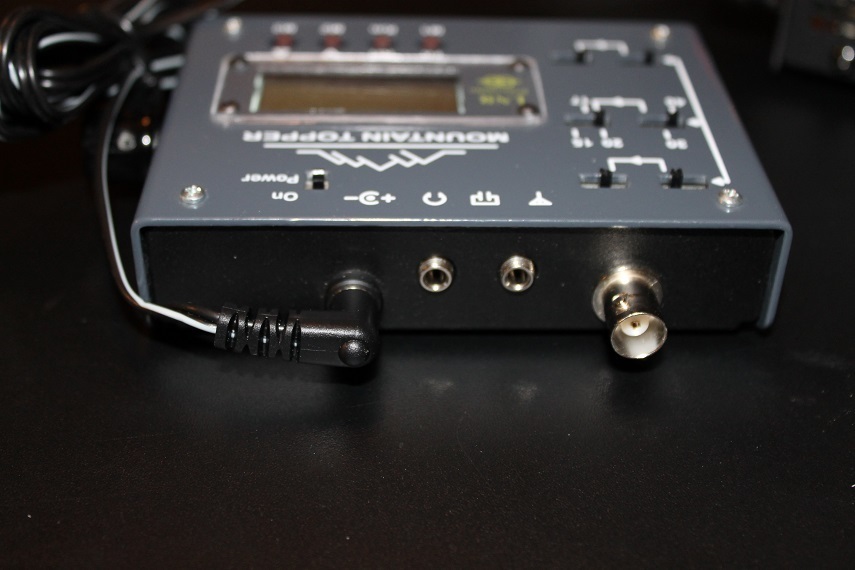
The new MTR5B 5-Band Mountain Topper is a fully-assembled 5-band CW transceiver KD1JV designs “Steve Weber” kit. The following are specifications/features from the LNR website:

40M, 30M, 20M, 17M, 15M
Size: 4.337″L x 3.153″W x 1.008″T
Weight: approx 6.4 OZ.

Features:

  • Switch selected 40/30/20/17/15 meter bands (no band modules to lose or change out)
  • Wide operating voltage range, 6 to 12 volts 15 ma Rx current at 12V supply
  • Efficient transmitter. Low current with 4W output
  • LCD display
  • Push button or Optional rotary tuning
  • 24 hour clock built in, with battery back up
  • Three 63 character programmable message memories
  • Message beacon mode with adjustable pause time

MTR5B-1

Price is $379.99 US

Steve Weber’s QRP transceivers are amazing and incredibly portable. His MTR-3B trail radio has received very favorable reviews over the past year; I expect the same from the new MTR-5B.

If you were lucky enough to grab a first production unit of either of these radios, I would love to post your overview/review! I’m looking forward to checking out the LD-11 soon. I’ll post updates with the tag: LD-11

Guest Post: Building a magnetic loop antenna & broadband amplifier for your SDR

Many thanks to SWLing Post contributor, Dave Gahimer (K9ZCE) for the following guest post:


Loop-Antenna

Small Magnetic Loop Antenna with Broadband Amplifier for SDR Reception

by Dave Gahimer (K9ZCE)

Those with limited space, or antenna restrictions, might find a small 1 meter loop antenna a solution.

My son lives in an apartment. One Loop leaning against a wall gives him acceptable reception with the SDRPlay RSP on the ground floor–2nd or 3rd level flats should have very good reception.

Ten meters off the ground outside should give reception equal to any SWL antenna. We all with SDRs fight the image problem. Normal resonate ham band antennas show too strong reception of unwanted bands/stations. Did I mention noise? Loops are well known for –6 db noise reduction.

Then there is the possibility of SDR chip damage from your 1.5 KW station! In researching Loops we came across LZ1AQ. A Brilliant design /engineer (http://www.lz1aq.signacor.com/). Deep reading sometimes, but a great understanding of what makes a good receiving loop antenna.

Those who chase DX know that sometimes fading is caused by the signals’ polarization changing in the Ionosphere. Having both vertical and horizontal loops, and the ability to combine both signals diminishes this fading problem. Being able to filter the powerful, commercial FM transmitters diminishes image problems. Clipping strong signals at the antenna from very near powerful antennas/transmitters could save the SDR receiver from damage.

The LZ1AQ broad band Amp solves all these problems. http://active-antenna.eu/amplifier-kit/.

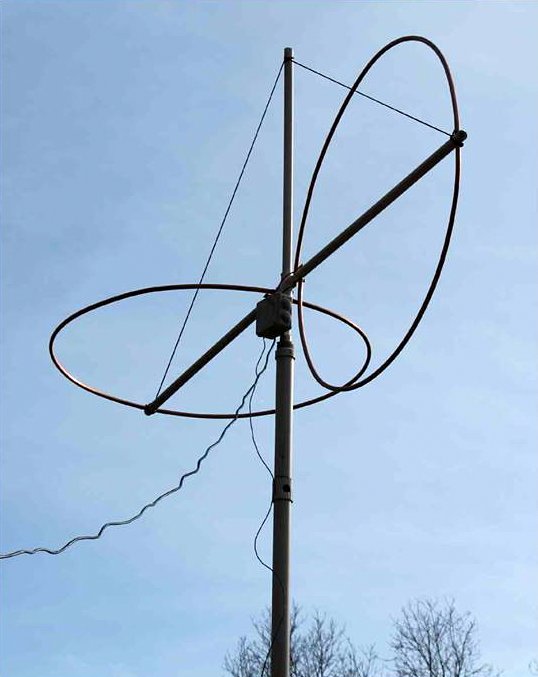
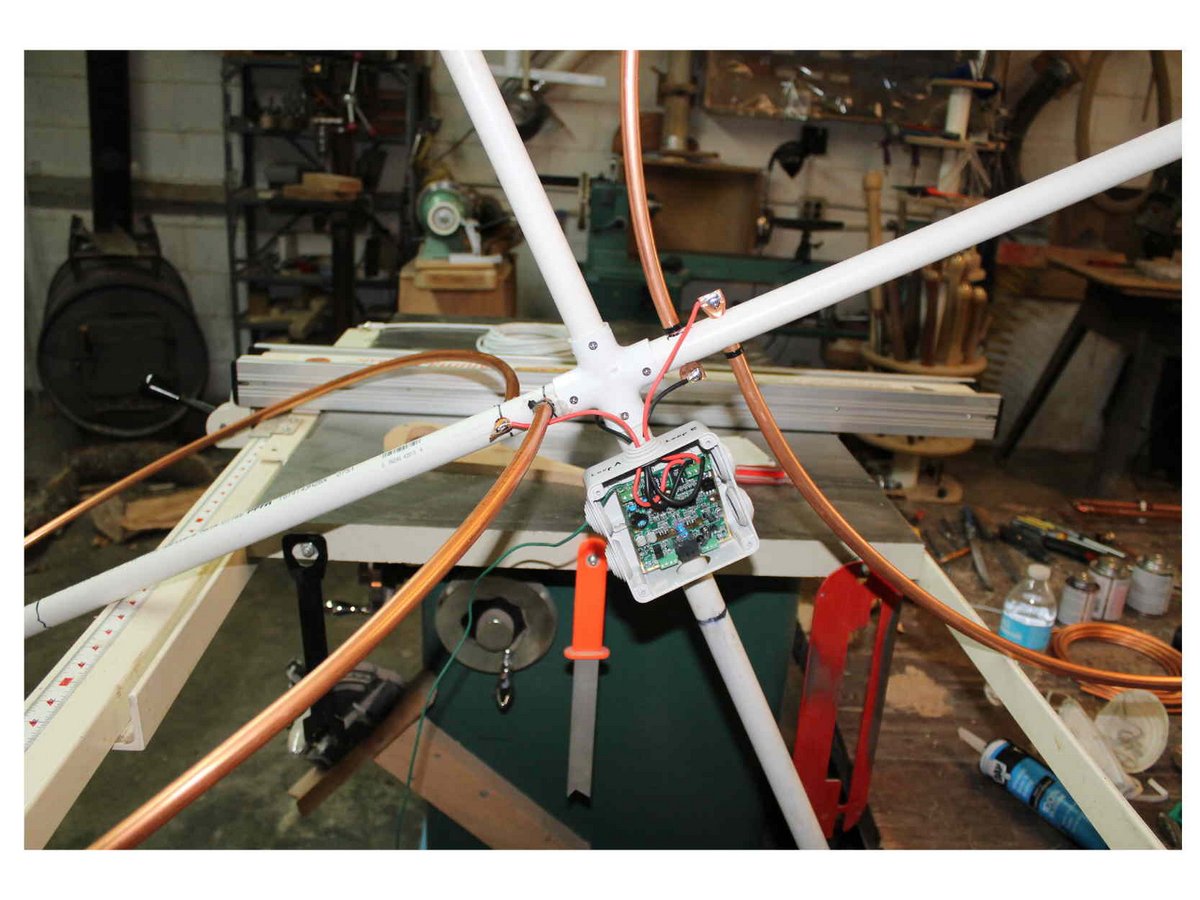
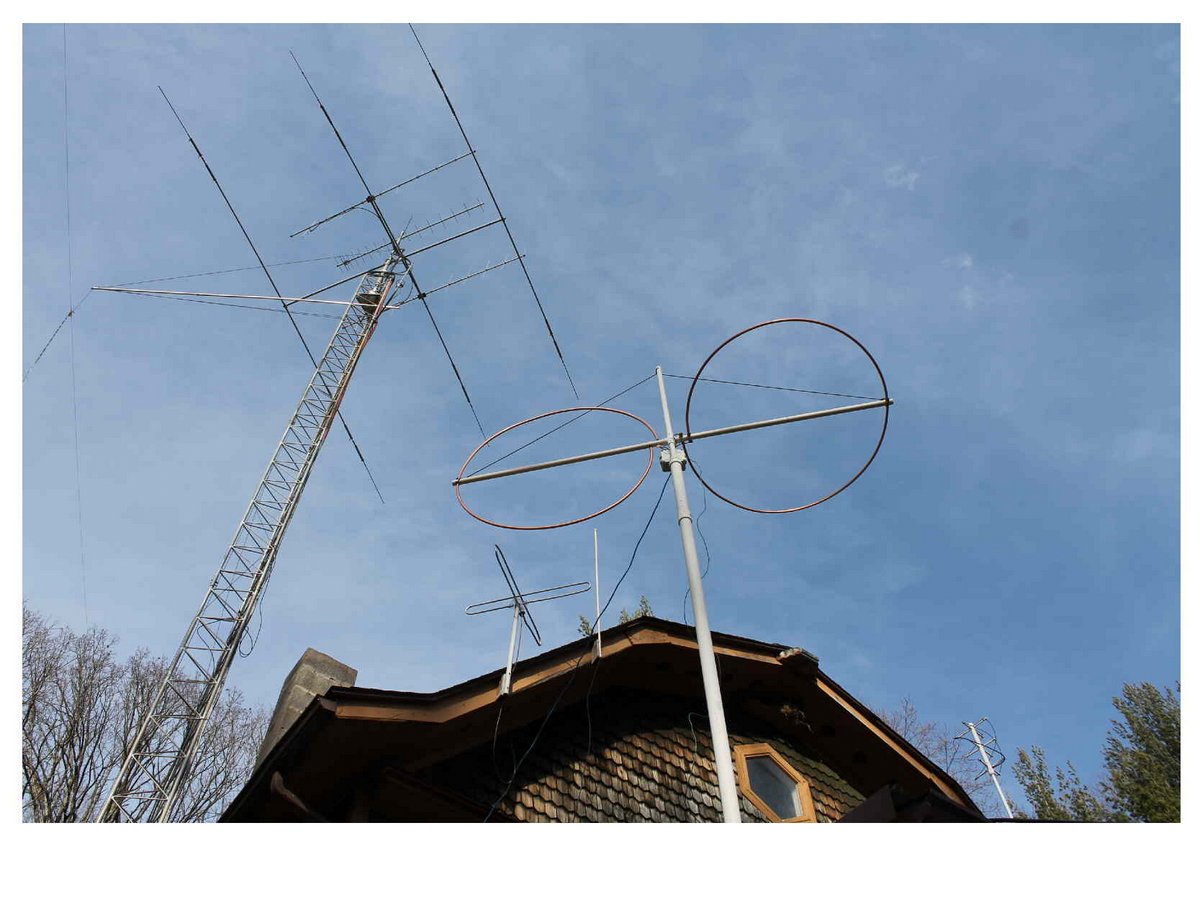
My son Ted and I built three, one meter loops from soft ½ inch copper plumbing tubing. One for his apartment, two for my crossed loops antenna. We weather proofed the Copper from corrosion by coating with outdoor clear spar varnish. We shaped the circle by drawing the tubing around a round glass top patio table.

The soft copper loop in held by white PCV plastic plumbing pipe. 1” or 1.25 inch schedule 40. Be careful to check that the PVC is schedule 40, thick wall. The thin wall pipe is not strong in the wind and will crack when you try to drill it.

Drill up to a 3/8 hole for the ½” copper tube to go through, then file out to fit. Here are some photos (click to enlarge):

crossed loops up 3 crossed loops up 4

Check out these links (all courtesy of LZ1AQ) to acquaint yourself with the loop construction and amplifier installation:

http://active-antenna.eu/tech-docs/2_ActiveAA_Mount_20.pdf

http://active-antenna.eu/tech-docs/1_ActiveAA_DandS_20.pdf

http://active-antenna.eu/tech-docs/3_ActiveAA_Antena_11.pdf

Many SDR receiver owners have seen improved noise and Image reduction by placing the plastic cased SDR unit on a small shielded/ grounded case.

crossed loops up 5

The Amp needs 12VDC from in the shack. The Amp has two relays that you can switch, from in the shack, to select Vertical or Horizontal loops, or a dipole. The loop amp connects back to the shack via a shielded Cat 5 cable, Make sure you get shielded CAT 5 to reduce noise pickup. Make sure you provide an adequate good Ground below the antenna, less noise pickup and lightening protection.

crossed loops up

Have fun!
Dave, K9ZCE
Retired from EE Dept @ Rose-Hulman Institute of Technology
Terre Haute, Indiana


Thank you so much, Dave!

Readers: yesterday I saw Dave’s loop antenna photos on the SDRplay RSP Facebook page. I was fascinated by his horizontally/vertically oriented loops and asked if he would write up a short guest post.  He kindly obliged in a matter of hours!

If you have an antenna project you’d like to share, please contact me. So many SWLs and ham radio operators live in areas with restrictions and pervasive RFI–projects like Dave’s can revive one’s radio life!

Heard Island DXpedition (VK0EK) live via WBCQ tonight

heard-live-with-text

(Source: ARRL)

[…]At 0000 UTC on March 23 (the evening of Tuesday, March 22, in US time zones), Tom Medlin, W5KUB, host of the weekly “Amateur Radio Roundtable” video webcast and radio program, hopes to make ham radio media history by interviewing the DXpedition team live on his webcast. Audio will be simulcast on international shortwave broadcaster WBCQ on 5130 kHz.

Heard Island is an Australian protectorate, part of a subantarctic island group(Heard Island and McDonald Islands) in the southwest Indian Ocean, some 4000 kilometers (approximately 2480 miles) southwest of Western Australia and 1000 kilometers (approximately 620 miles) north of Antarctica. 

 I will certainly be listening to WBCQ tonight and, hopefully, recording the show for the SRAA.
For updates about the Heard Island DXpedition, check out their website (and admire Jeff Murray’s excellent official DXpedition artwork while you’re at it!).