 In 2013, I wrote the following feature for the Monitoring Times Magazine.
Looking back, I realize that I never posted this article on the SWLing Post.
Since we’re in the midst of the summer travel season here in the northern hemisphere, I thought I’d post this feature from five years ago.
I’m also adding a number of photos I took at the Radio Canada International Sackville, New Brunswick, transmitting site–one of my stops on this trip. I only recently rediscovered these (400+) photos in my archive and I’ve yet to curate them and post a proper photo tour. Look for that in the coming months.
After you read this article, I’d love to hear where you plan to travel this year in the comments section of this post! Enjoy:
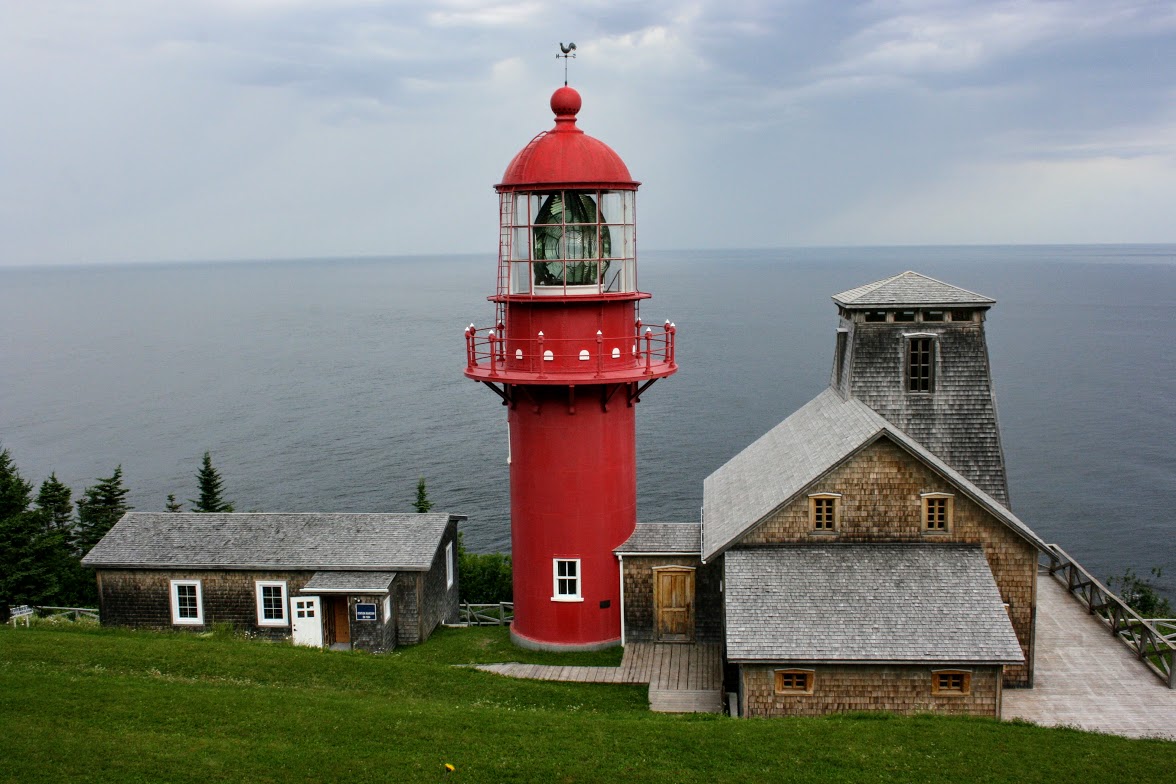
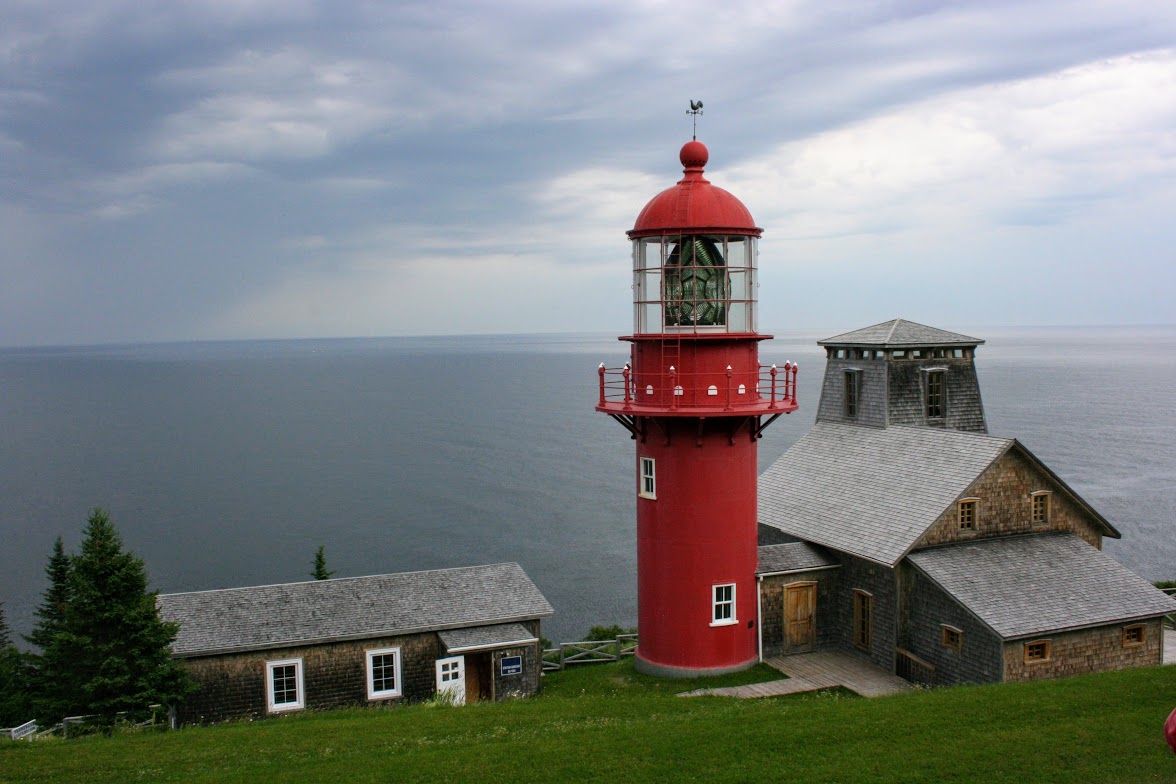
Phare De La Pointe À La Renommée (Marconi Station, Museum and Lighthouse, Quebec, Canada.
A Radio Vacation: escaping RFI in an off-grid vacation cabin
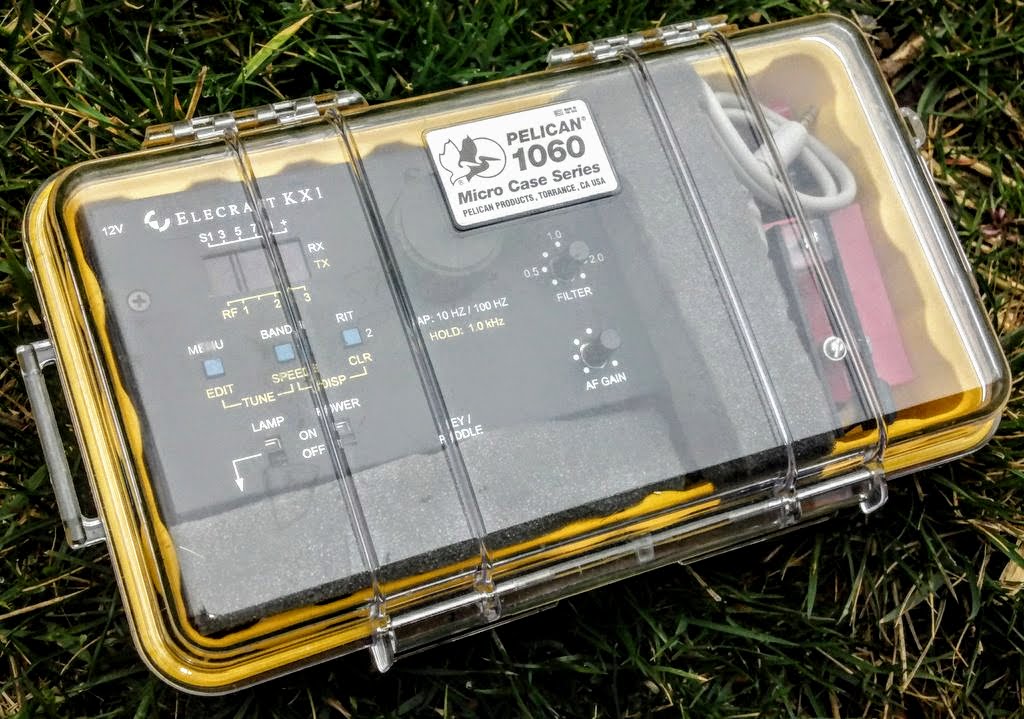
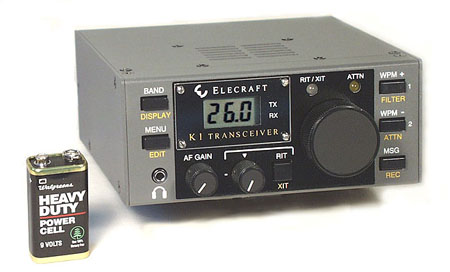
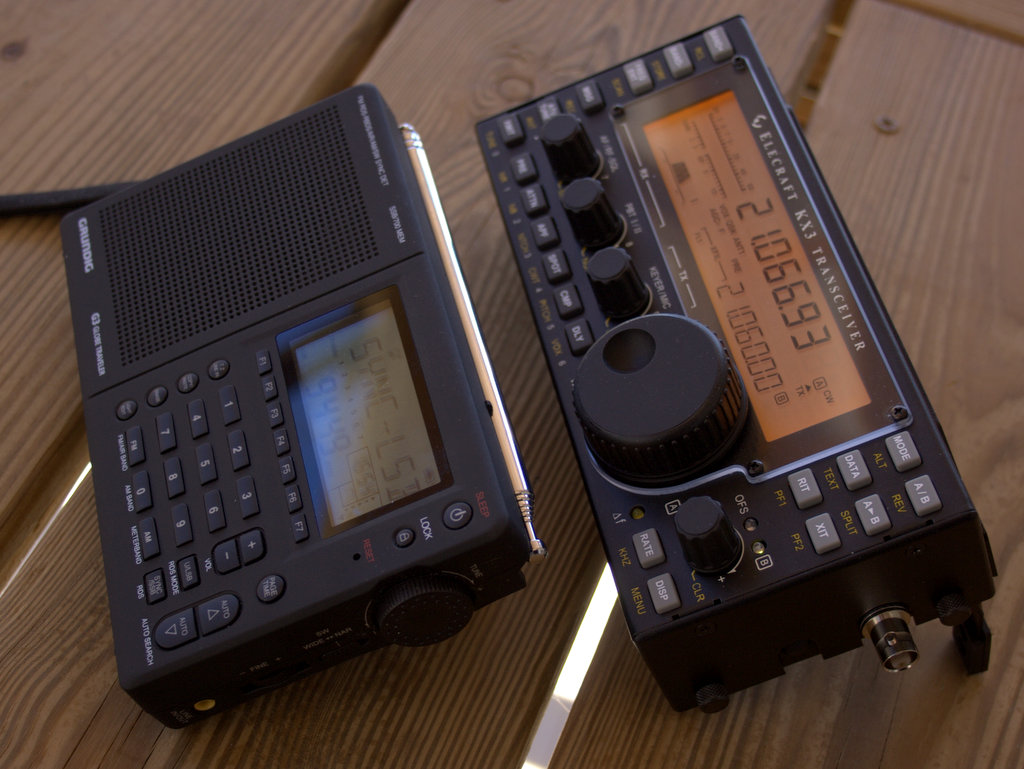
If you’re like me, a vacation–or, for that matter, any kind of travel–is an excellent reason to pack up your radio gear. I nearly always travel with a shortwave radio, and typically with some portable recording equipment. If space allows, I also pack a small QRP transceiver–specifically, my Elecraft KX1–even if I know my opportunities to get on the air may be limited. But on an extended family vacation? Well, that affords some excellent hamcation possibilities!
Last year [2012], our family had a golden opportunity: to spend an entire month in an off-grid cabin on the eastern coast of Prince Edward Island, Canada, some 2,500 miles from our home in the US.
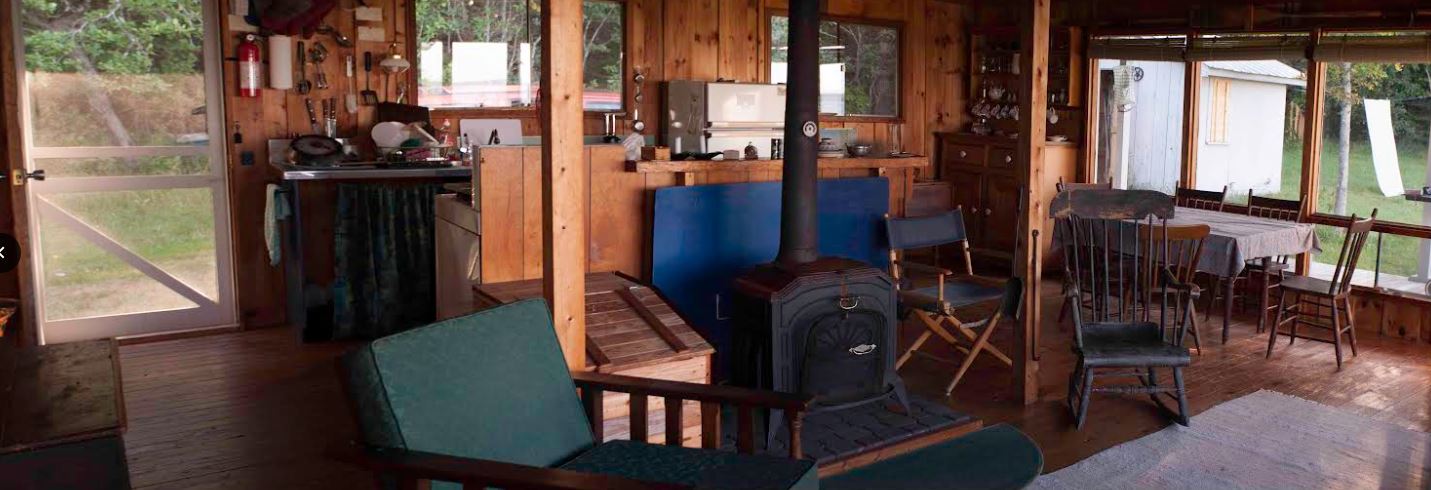
Permit me to paint a picture of this little spot of paradise: the rustic cabin is nestled on a 22-acre site on a beautiful eastern bay. From the cabin’s large front windows facing the bay, there is a long-range view of Panmure Island and, further still, of the Georgetown marina.
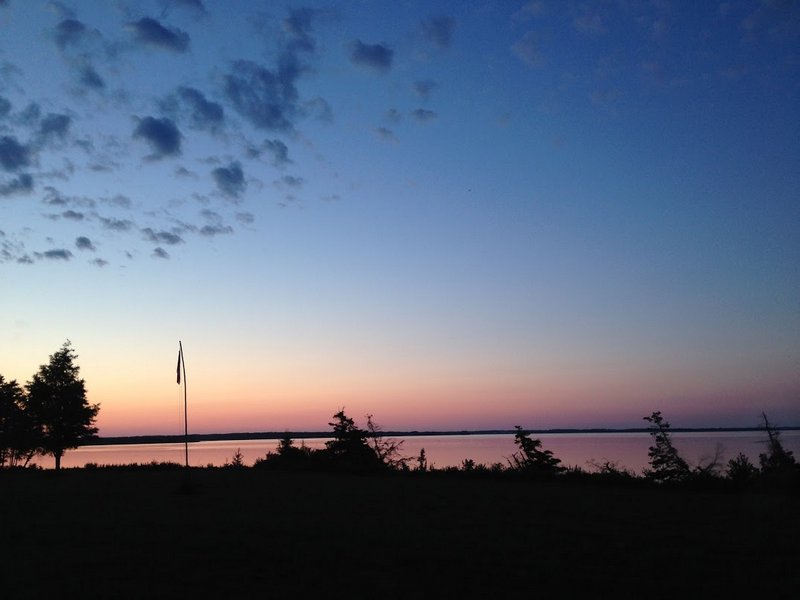
The view from our off-grid cabin on Prince Edward Island.
As the site is wooded to the rear of the cabin, the environ feels very isolated from the rest of the world; no other homes or outbuildings are visible. And although off-grid, this little cabin sports simple versions of all of the comforts of home: propane gas meant that we always had hot water, a working refrigerator/freezer, and light after sunset in the form of two wall-mounted gas lanterns. Meanwhile, running water was provided by a unique “on demand” petroleum-powered pump.
While to some readers, this may not sound like paradise, this charming cabin gave our family a front-row view of nature’s varied character, from the shimmering sunsets over PEI’s famed terra cotta sands or the last stormy lashes of Hurricane Debbie, to the front-yard wildlife in the form of woodpeckers, owls, gulls, egrets, foxes, mink, and even “Black-Eyed Susan,” our resident raccoon. “Off-grid,” meanwhile, afforded all of us a refreshing break from those electronic devices we often become so –with the exception of radios, of course!
On the return route, we planned to take a driving tour of the Gaspe region of Quebec, via the New Brunswick Acadian coastline. Having made the decision to spend four weeks in the little cabin, I instantly started preparing my radio equipment.
Preparations
As you can imagine, an isolated off-grid cabin poses some serious power-supply challenges for a radio hobbyist, but the benefit is a completely RFI-free zone. In truth, not only was I ready for the challenge, I was enthusiastic about it!
It’s worth noting that on most days of the week, I wear two hats: that of radio hobbyist and that of radio-based humanitarian organization director, Ears To Our World (ETOW). At ETOW, we work in classrooms located in very remote, rural and impoverished parts of the world, delivering appropriate support technologies, such as radios, to those who need them most. While in the isolated setting, I charged myself with the task of testing some of our solar and self-powered technologies–specifically, a portable power pack made by GoalZero called the Escape 150, and several portable panels and chargers made by the US manufacturer, PowerFilm Solar.
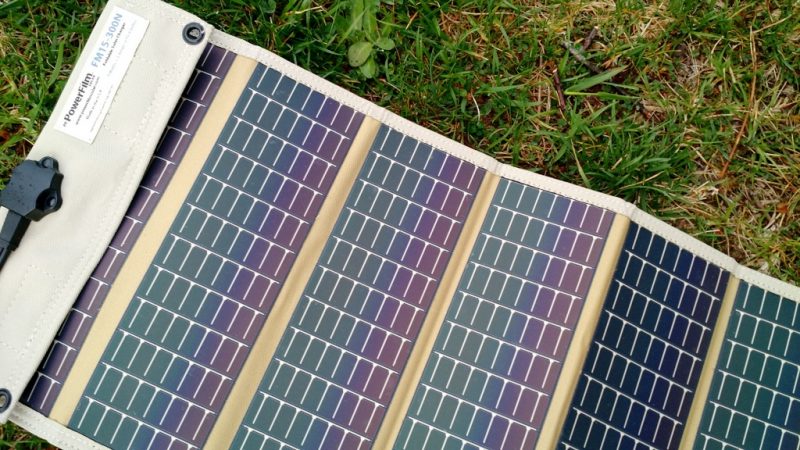
Living in an off-grid cabin for a month would give me the necessary time to evaluate the charge/discharge times and simulate the “real life” usage these items would experience in the developing world. Fortunately as a radio hobbyist, I had the means to put that powerpack to the test! My two radio-inspired passions combined harmoniously in this venture.
All told, all the radio equipment and power supplies I packed consumed no more space in our van than two standard suitcases. Even after packing, we found we had room to spare–the children in their carseats had plenty of room to swing their feet. So, we set our compass on due north, and set out!
Two nights in Sackville, New Brunswick
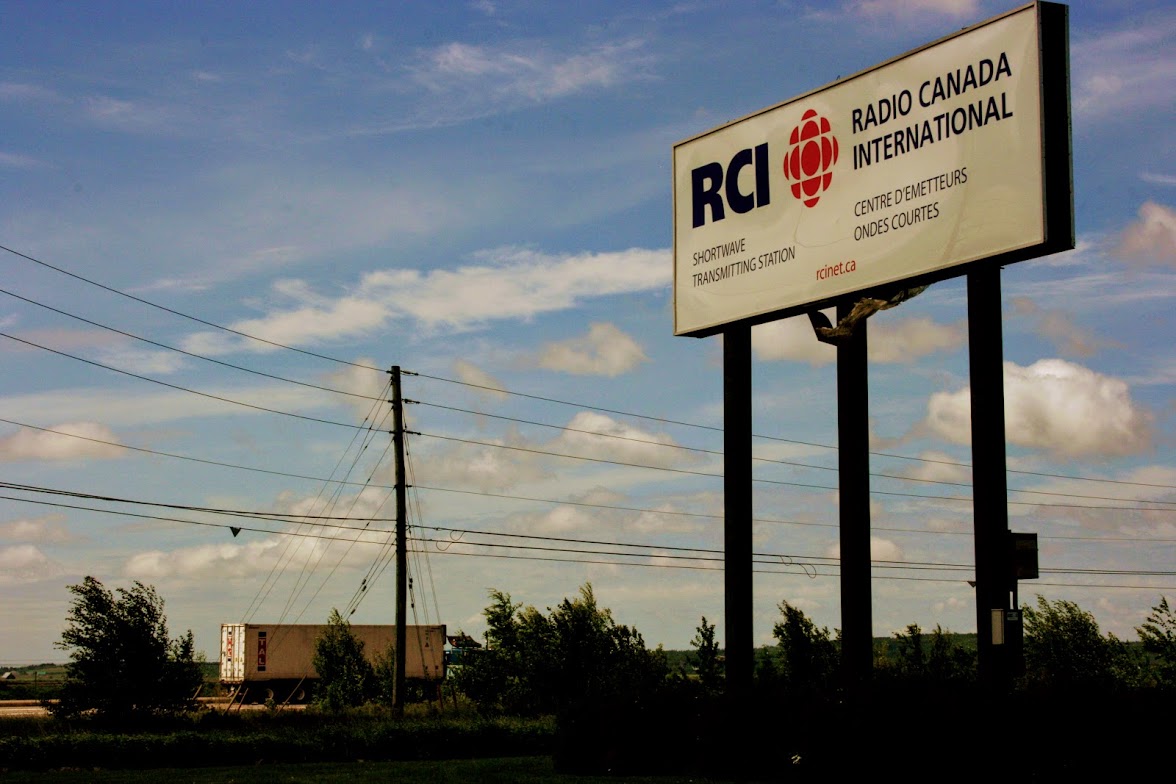
En route to Prince Edward Island, it’s hard to miss the (now) former Radio Canada International transmission site in Sackville, New Brunswick. The massive site, with its array of curtain antennas and large sign, is a fixture on the Trans-Canada Highway. Only a few months earlier, I had learned that RCI had been dealt devastating cuts by the CBC and that Sackville’s days were numbered; as a result, I felt I had to make a pilgrimage to the site before it was dismantled.
I arranged to tour the site, and was warmly greeted in Sackville. Though the staff were dealing with the oppressive news of the pending cuts, were bravely doing their professional best to carry out their duties as usual. The site was immaculate, the transmitters humming. On my tour, I took as many photos as my digital camera would hold, and soon I found myself taking up the cause, mentally working out an action plan to save it from total dismantlement. For many years, this site has been a landmark near the New Brunswick/Nova Scotia provincial line, and I hope in some capacity it will remain there, even for history’s sake. This relatively remote part of Canada has broadcast memorable events and news to every corner of our globe. It seemed a shame to undo the work of so many previous years. And indeed, the petition I authored this fall has garnered over 600 signatures, so it is clear there are many that feel the same. The decision is now in the hands of politicians.
Photos of RCI Sackville


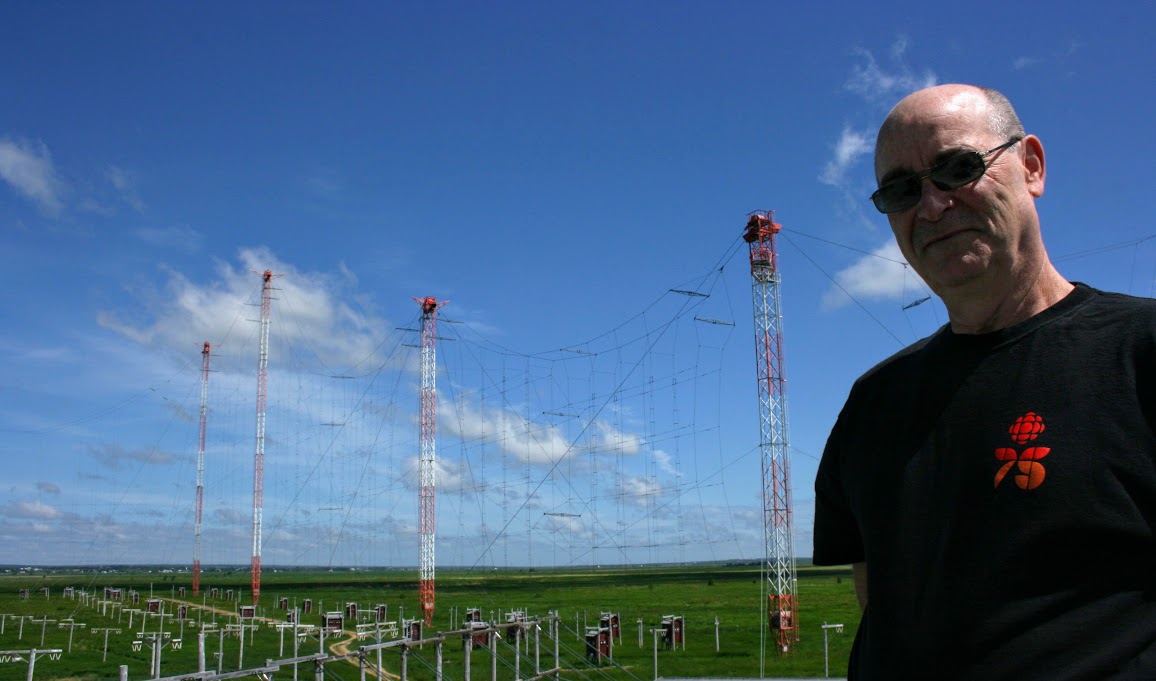
Many, many thanks to my amazing tour guide, Marcel Cantin, who gave me unfettered access to the RCI Sackville site. Merci bien, Marcel!
Arriving at the cabin

After leaving Sackville for Nova Scotia, we took the Wood Islands ferry across the Northumberland Strait and arrived at our cabin well before dinner time. The morning after arriving at our little off-grid cabin, I sprayed myself down with a little insect repellent and spent an hour installing an inverted vee. I’ve found that, instead of pre-building an antenna, it’s easier for me to conduct a site assessment and simply put the pieces together in a configuration that makes sense. That’s the great thing about temporary QRP antennas: no soldering required. I simply fed my antenna with ladder line, used a PVC “T” joint as a center insulator and large plastic buttons for the insulators at the end of the legs of my antenna. I held the whole thing together with wire nuts and black electrical tape. Yet because it was electrically sound and balanced, it worked like a charm. Indeed, I didn’t even worry about the length of the radiating elements since I had my Elecraft T1 auto antenna tuner on hand.
That Sunday morning, I set up my entire ham radio and shortwave listening station all before my family was ready to venture out for the day. That afternoon, I worked stations in the US, Canada, and many of the islands in the Caribbean. I was delighted, to say the least.
Off-grid ham fun
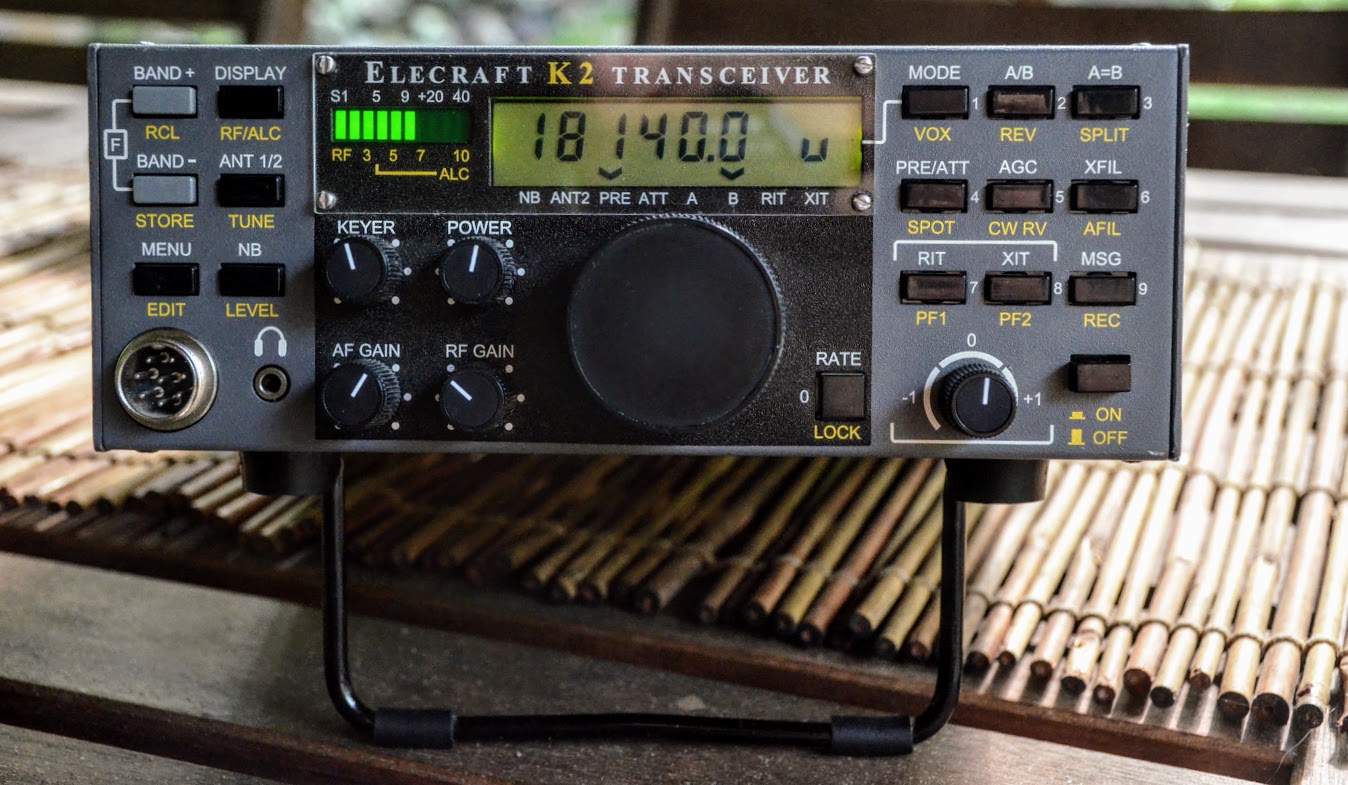
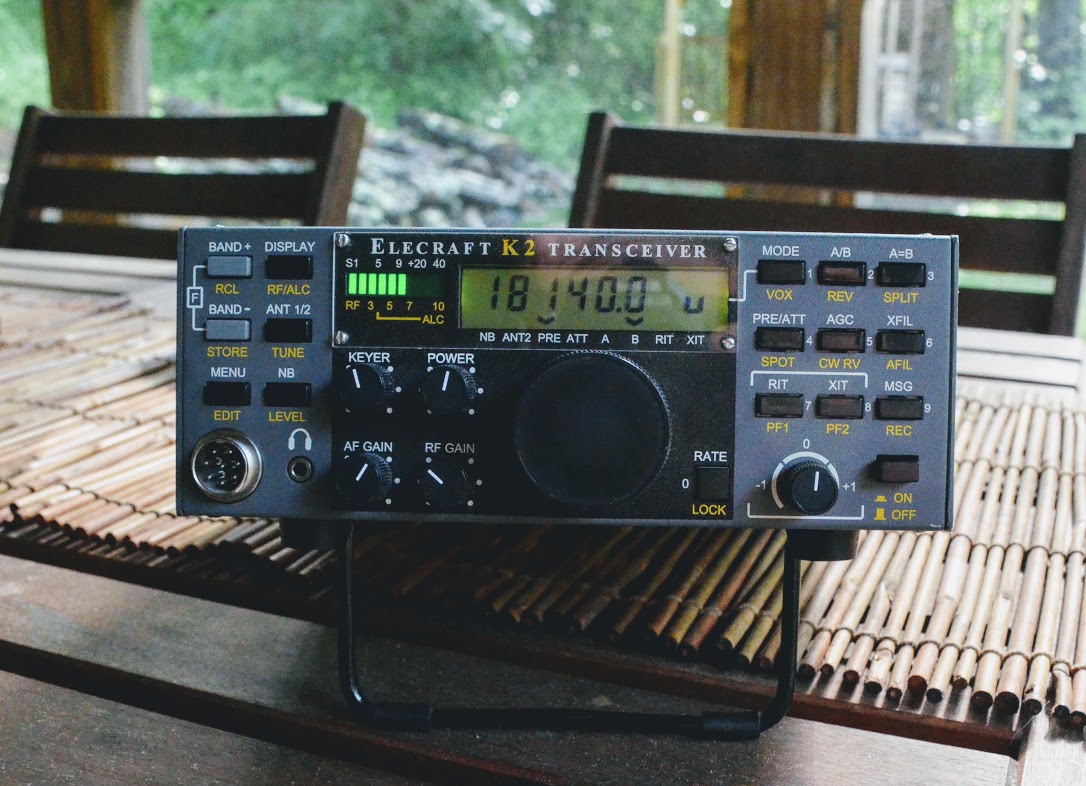
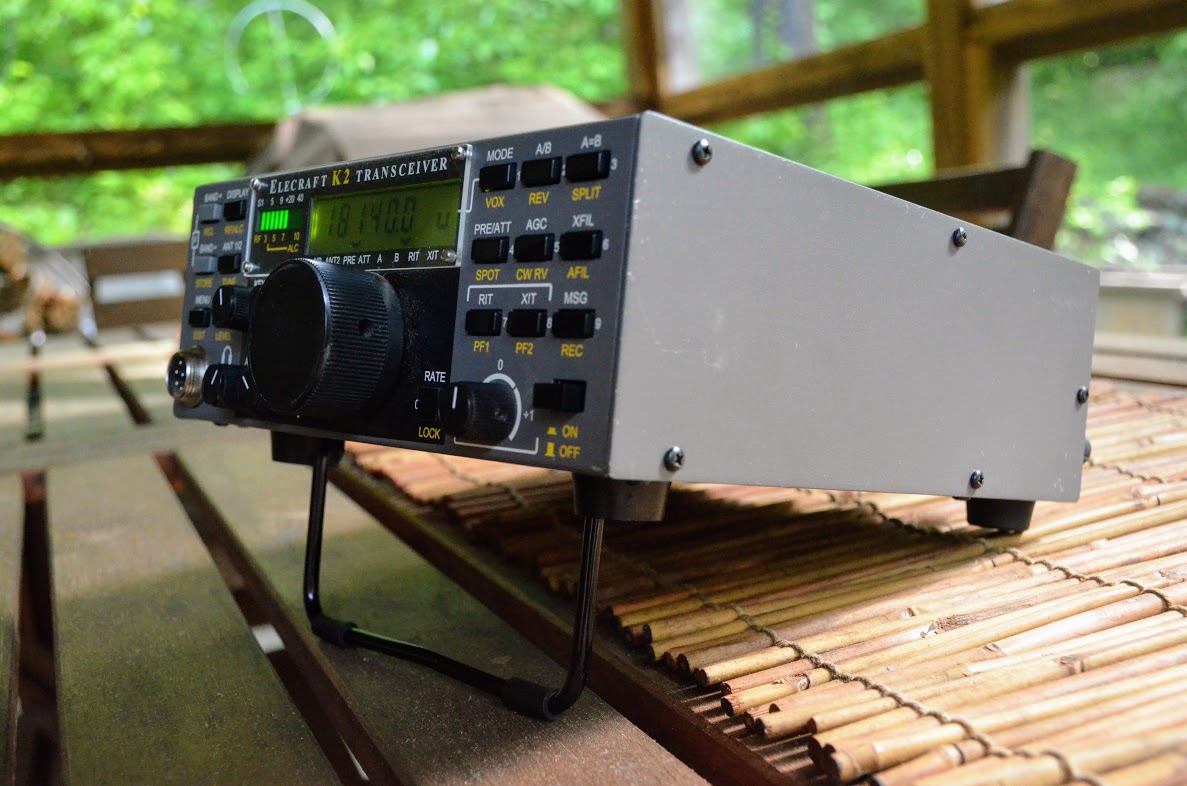
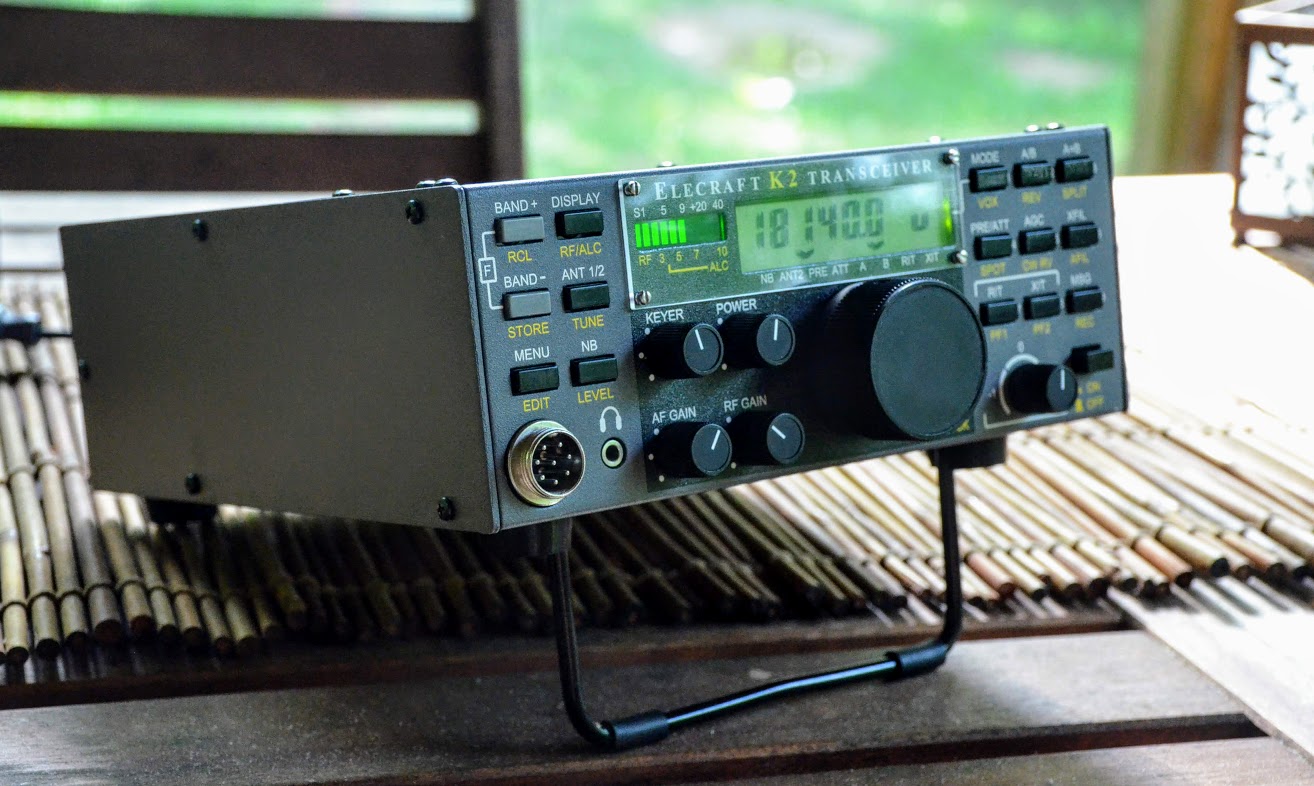
My Elecraft K2 and Elecraft T1 combination was working beautifully on all bands down to 80 meters. I found that, even with heavy use, the K2 required very little of my 30 aH battery. Each day, I charged the battery with two of my foldable 5 watt PowerFilm Solar panels fed in parallel (equating to 10 watts). I never ran out of power for the K2 and had enough surplus to easily power some 12V LED lanterns, as well.
I was most impressed with the performance of my solar-powered Elecraft K2–no doubt, the very close proximity of salt water (perhaps 200 feet from the antenna) and the height of my inverted vee both helped. Though I worked some CW, I made more SSB contacts than I typically make while portable. I even found that I punched through a couple of pile-ups. Some kind operators also noted me on DX watch lists, and I found myself on the other end of mini pile-ups. Most encouraging were the numbers of other QRP stations I worked, even on SSB. In short, I was having a great time…!
SWLing
I brought four receivers with me on this trip, the plan being to compare their reception: a Winradio Excalibur, Bonito RadioJet, Sony ICF-7600GR, and a Tecsun PL-380. Shortwave radio listening in this coastal spot was nothing short of amazing. In my band-scanning, I heard many of the international stations audible from my southern-US home, like Voice of Greece, All India Radio, Radio France International, the BBC World Service, and Radio Australia.
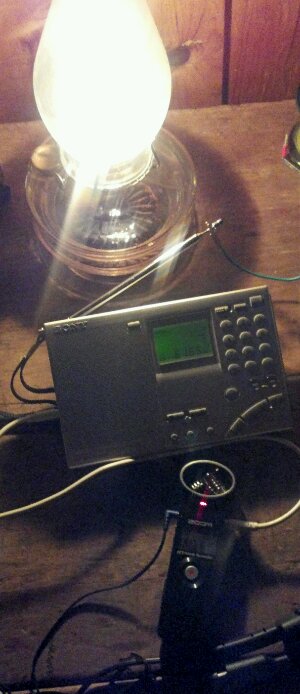
Listening to the final broadcast of Radio Netherlands on Prince Edward Island.
Though I planned to do some serious 2 MHz spectrum captures on my WinRadio Excalibur, I had not taken one thing into account: the amount of noise that the built-in modified sine wave inverter on the GoalZero Escape 150 generated. It overwhelmed the Excalibur and rendered listening useless. I could have easily remedied this, had I realized that the input on the WinRadio receiver required a steady 12VDC–I could have used an appropriate battery and never bothered with the inverter. The RadioJet, meanwhile, performed quite well, though my laptop’s battery had a hard time supporting itself and the receiver for more than an hour without the need of a total recharge. While the GoalZero Escape 150 power pack performed very well with DC usage, the inverter could drain a full charge in less than two hours of use.
Any given morning during that vacation, you would find me lounging in front of the cabin’s large glass windows–often watching the sunrise–and listening to CKZN in St. John’s, Newfoundland, on 6,160 kHz–a CBC Radio One shortwave relay in Newfoundland. Though I can hear CKZN back home when conditions are just right, it’s faint. On PEI, however, it was armchair listening as I sipped my morning java.
Sadly, I lost two shortwave broadcast companions on that trip to PEI: Radio Canada International, and Radio Netherlands Worldwide, each of whom played their final broadcasts. In both cases, I listened. Most notable were RNW’s final hours, as they actually broadcast tributes throughout the day, targeted at North America. I actually made several recordings from our cabin, and have posted them online: https://swling.com/blog/2012/07/radio-netherlands-says-farewell-in-style/
Marconi stations
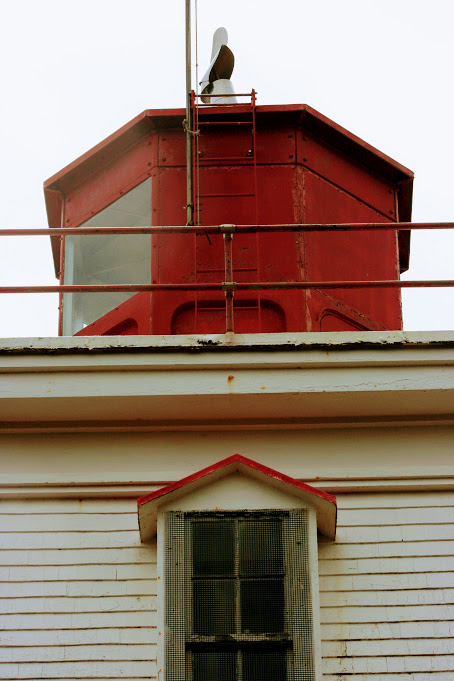
Top of the Cape Bear Lighthouse
What’s more, I even got to relive a little radio history in our travels. On PEI we visited the Marconi Station at the Cape Bear Lighthouse. According to lighthouse staff, this little station was one of the first (they will claim, the first) to receive the distress call from the Titanic.
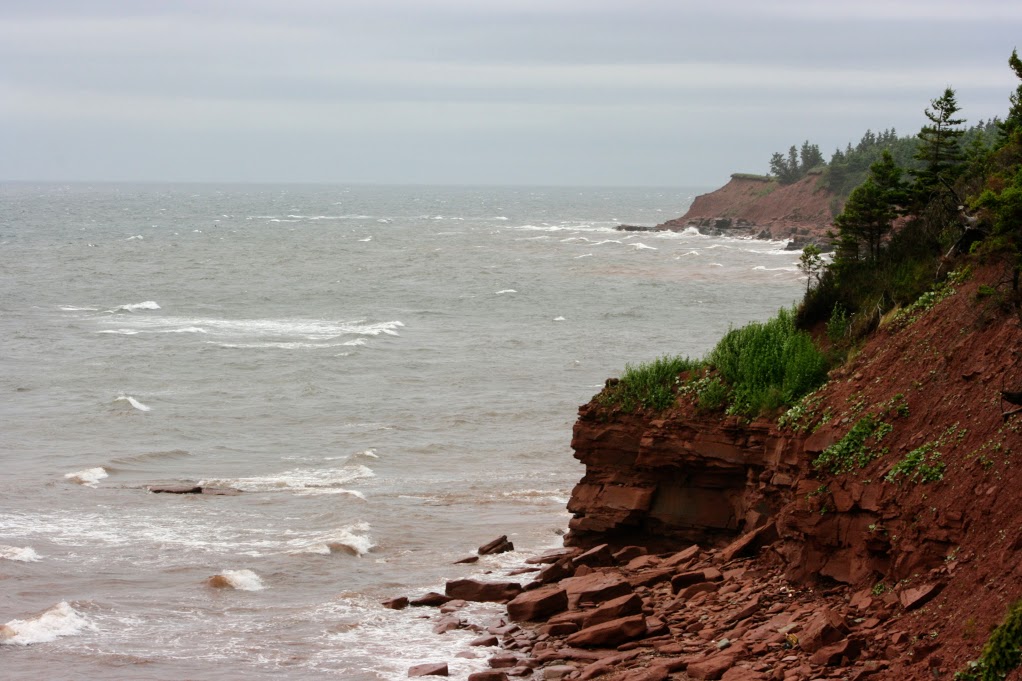
View from the Cape Bear Lighthouse
An amazing bit of history from this wind-battered, rusting little lighthouse perched on the edge of a small cliff now being undercut by the Atlantic waters, as are so many along that eroding coast. The station tour includes a lot of radio history to this effect, but unfortunately the radio operation display is completely inaccurate: I seriously doubt any Marconi operator used a Heathkit to hear the Titanic distress signal. (Consequently, if any generous radio historians have a Marconi station they would like to donate, this deserving Lighthouse Society would greatly appreciate the fitting gift.)

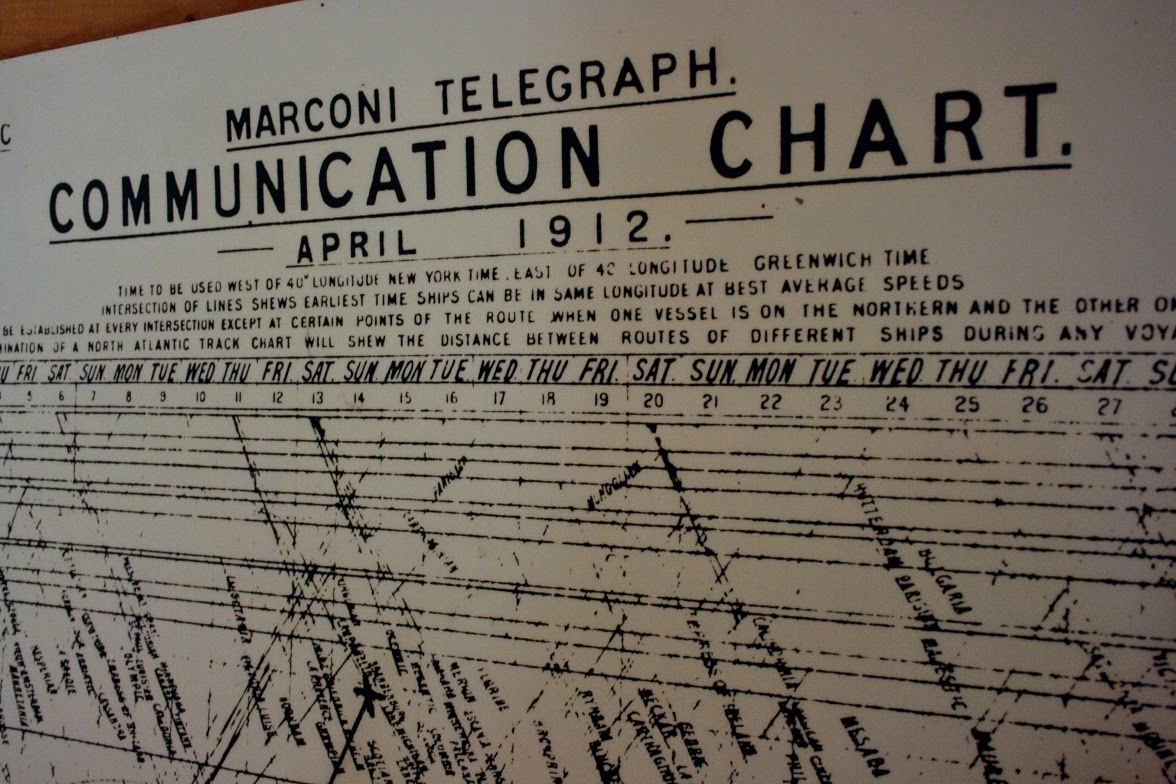
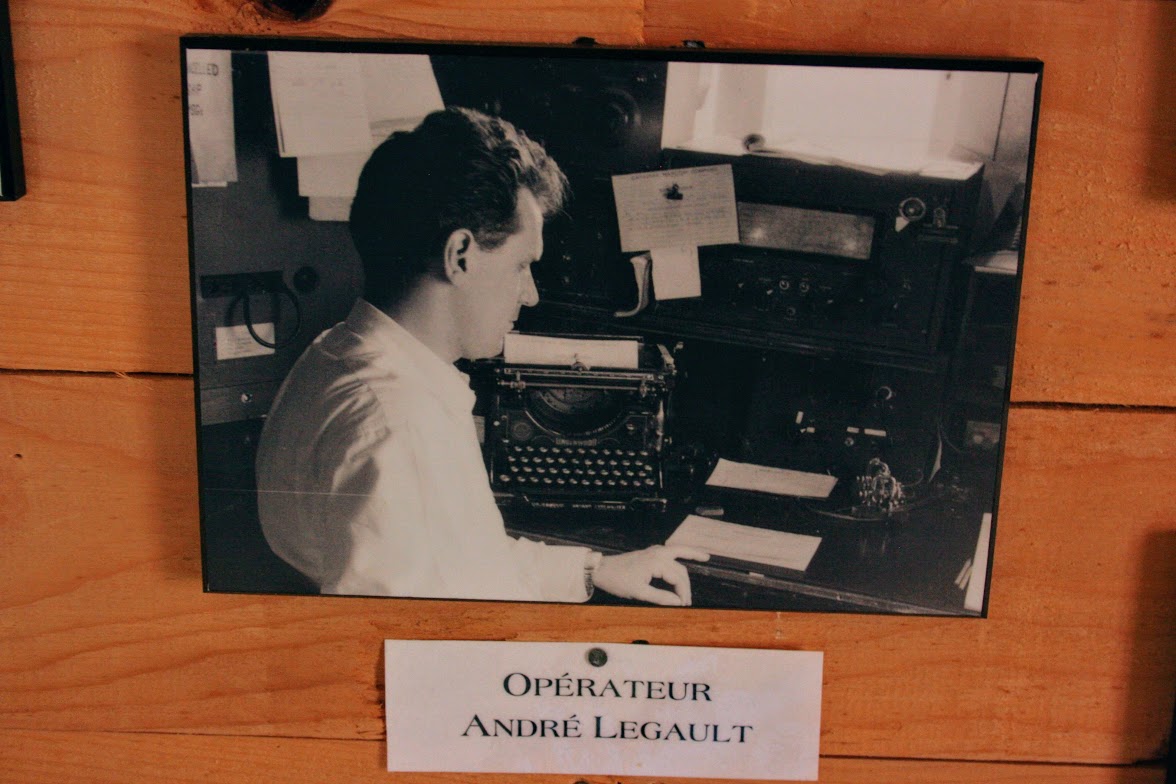
On the final leg of our trip, we visited another Marconi Station at a breathtakingly beautiful lighthouse–Pointe-à-la-Renommée–where it stands on a bluff overlooking the mouth of the St. Lawrence on the very northeastern tip of Quebec’s Gaspé peninsula. This station, sited by Marconi in 1904, has many historic displays with original photographs spanning the decades, copy from messages sent and received, and a guided history of the station. Pointe-à-la-Renommée also features a very respectable collection of telegraph keys and Marconi console receivers. But the red lighthouse itself is the real show-stopper, with its gorgeously-faceted crystal above a charming lighthouse keeper’s house and cluster of outbuildings, on the green wind-swept bluff dotted with wild strawberries, and surrounded by the dark blue Atlantic waters far below.
Photos from Pointe-à-la-Renommée and the Marconi museum
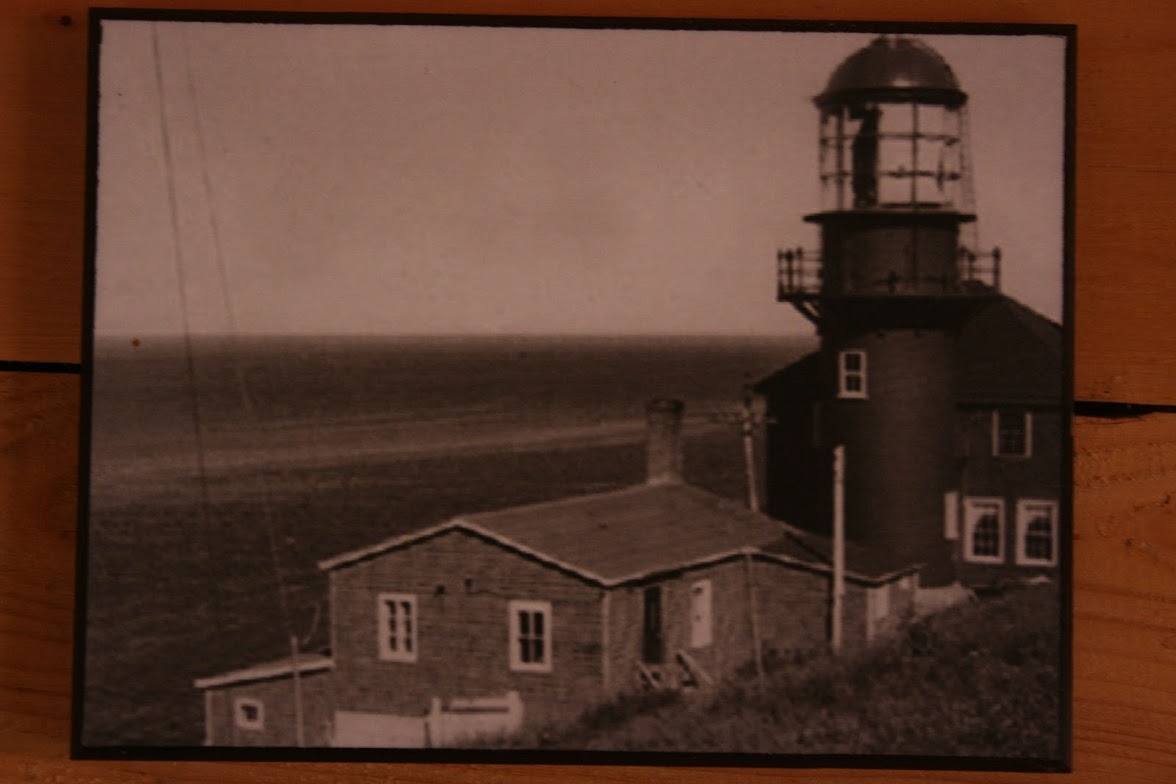
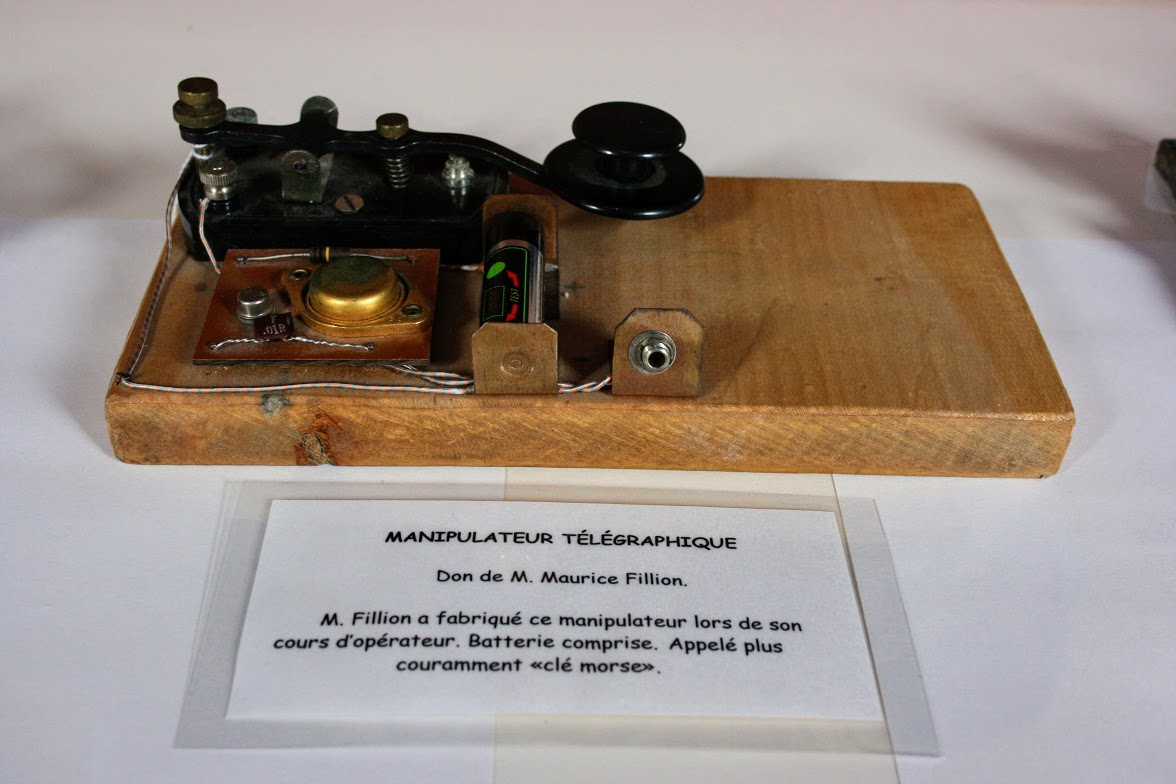
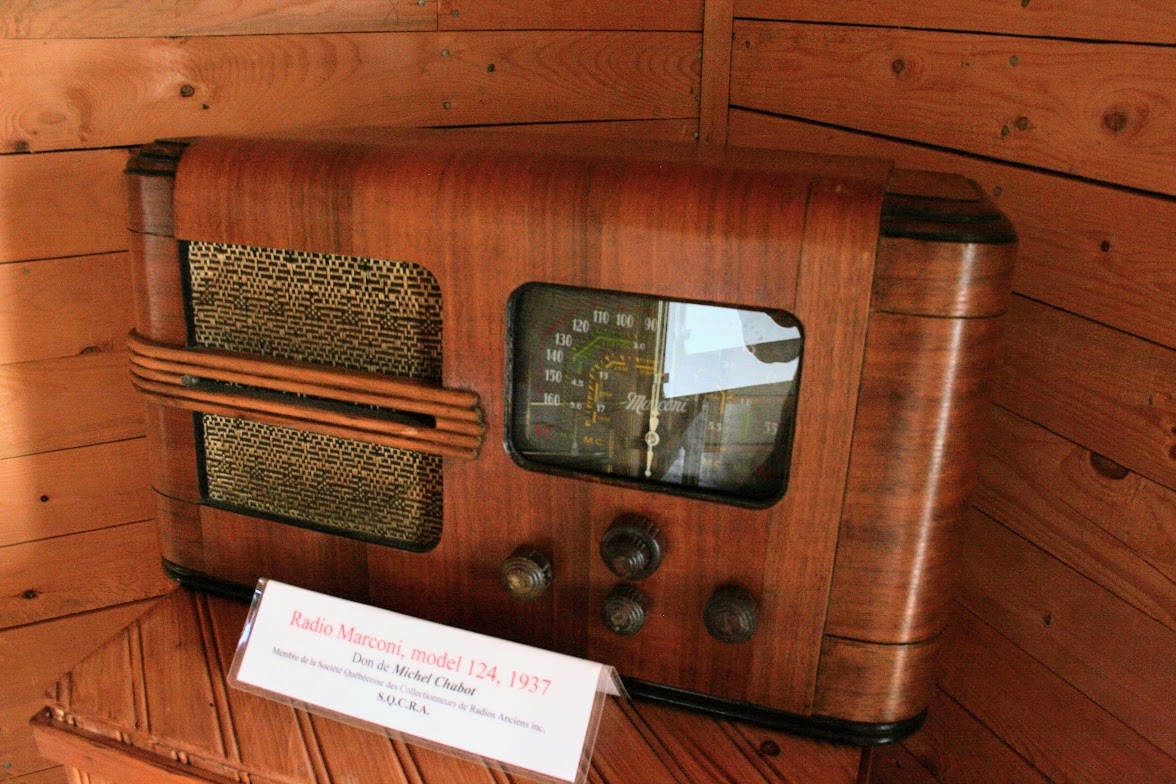
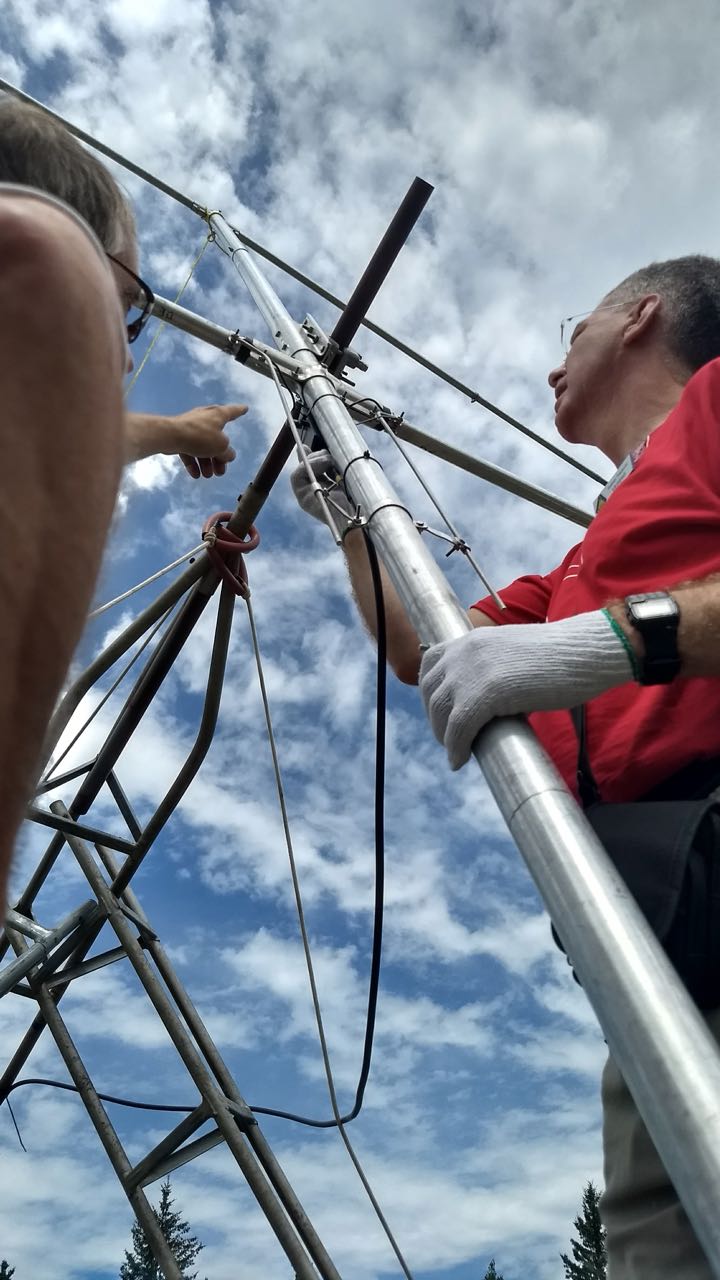
Field Day with the Charlottetown Amateur Radio Club
Field Day coincided with our summer vacation, too, and I hated to miss hanging out with my local ham buddies on my favorite event day of the year. I decided to attempt to turn this relative misfortune into an opportunity: before we left on vacation, I did a bit of research and learned that there would be a Field Day event near Charlottetown, PEI. After a few inquiring emails, I discovered that this Field Day site was only twenty minutes from where we were staying. The stars had clearly aligned.
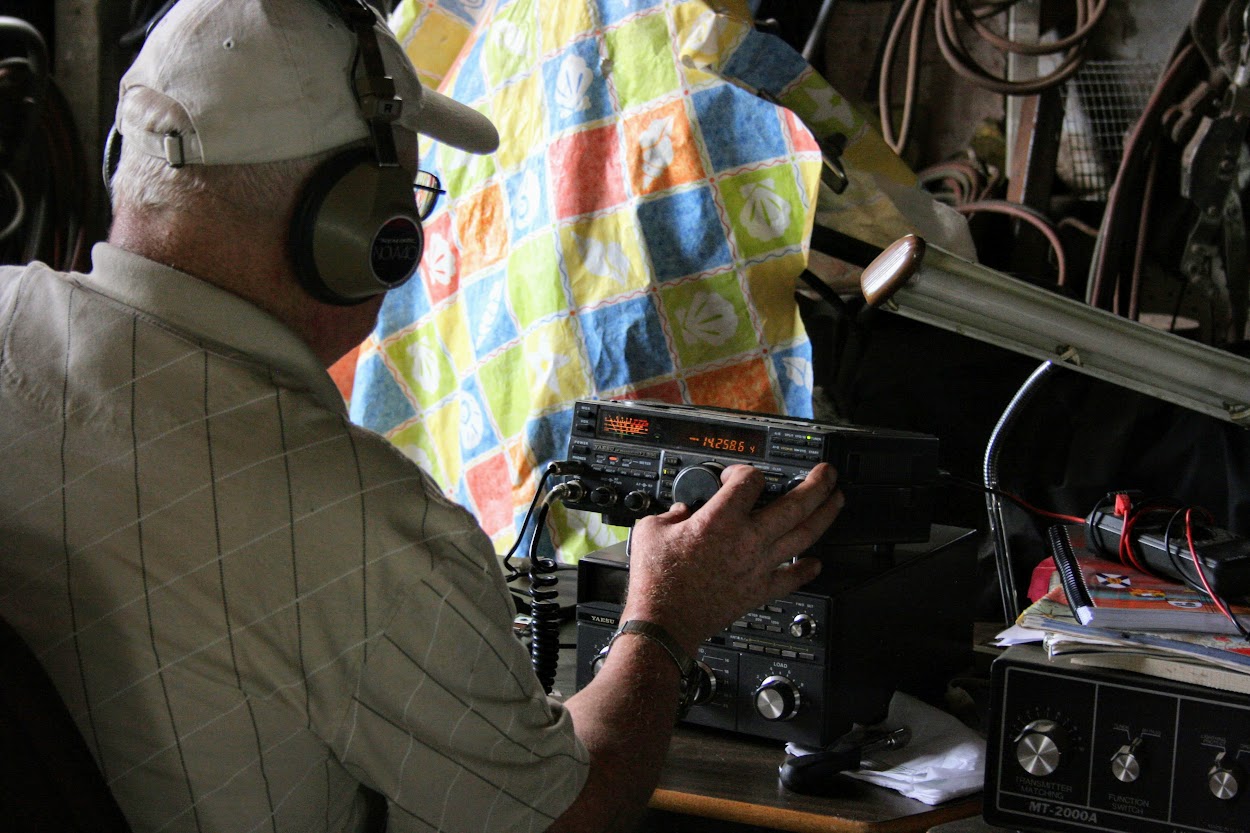
One of the Charlottetown Amateur Radio Club members working SSB contacts.
On Field Day, I was greeted most warmly by the good folks at the Charlottetown ARC. They instantly took me in as one of their own–offering food and drink, and chatting with me as if I had always been a part of their club. Best of all, when Field Day officially began, they put me on the mic on 20 meters. Evidently, they decided it would be fun to hear me announcing their callsign on the air in my southern accent. They got what they asked for! From the moment I took the mic, I had almost an instant pile-up; not because of my accent, however, but because Charlottetown offered one of the few stations on PEI, and the opportunity for participants to log the Maritime section.
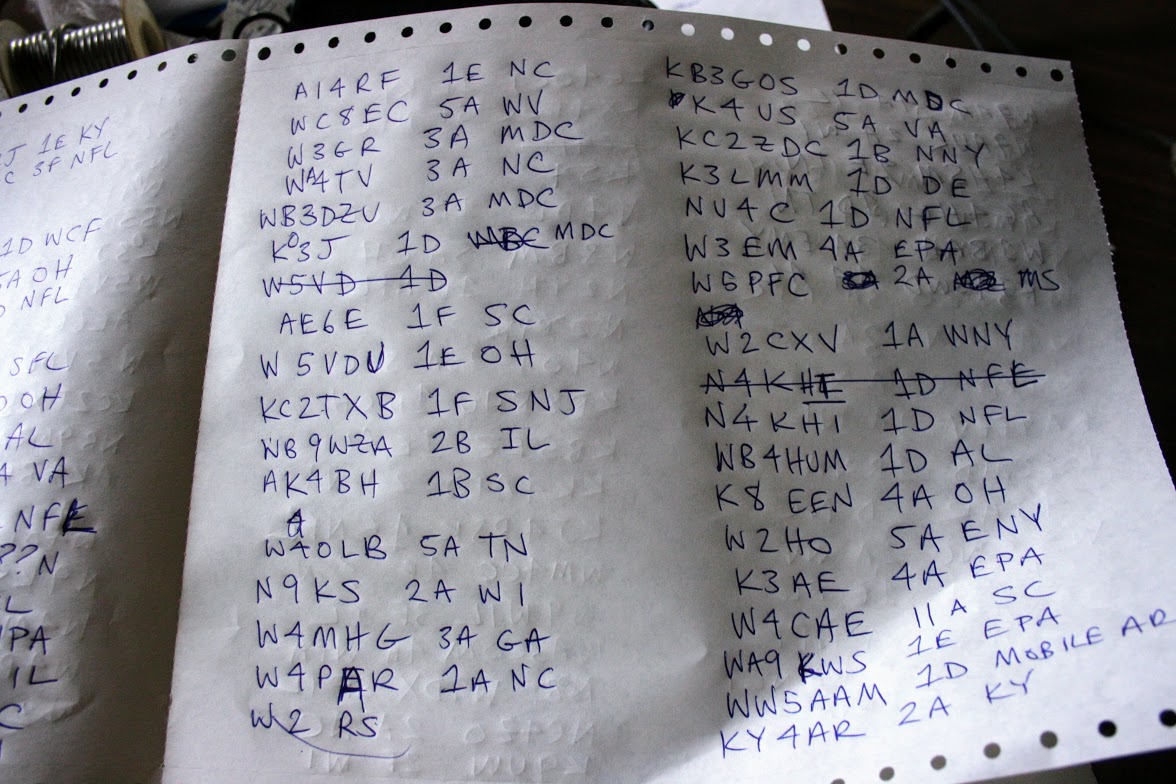
I spent the better part of Saturday with them and hated to leave. Upon returning to the cabin and my family, I found that my artistic wife had created a little birthday present for me: a watercolor painting of my Vibroplex single-lever paddle. Truly, the key to my heart. (Ahem!)
It was a wonderful Field Day, after all.
Looking back
Both the family vacation and my personal “hamcation” were a treat, and I’m ready to do this all again in the near future. Having such an extended stay made all of the difference, as I didn’t have to squeeze radio in, nor was it in competition with our other plans. Rather, radio became the thing I turned to when we were relaxing in the cabin, when my kids were drawing or playing, and my wife painting or reading–during our laid-back interludes between exploratory outings and adventures.
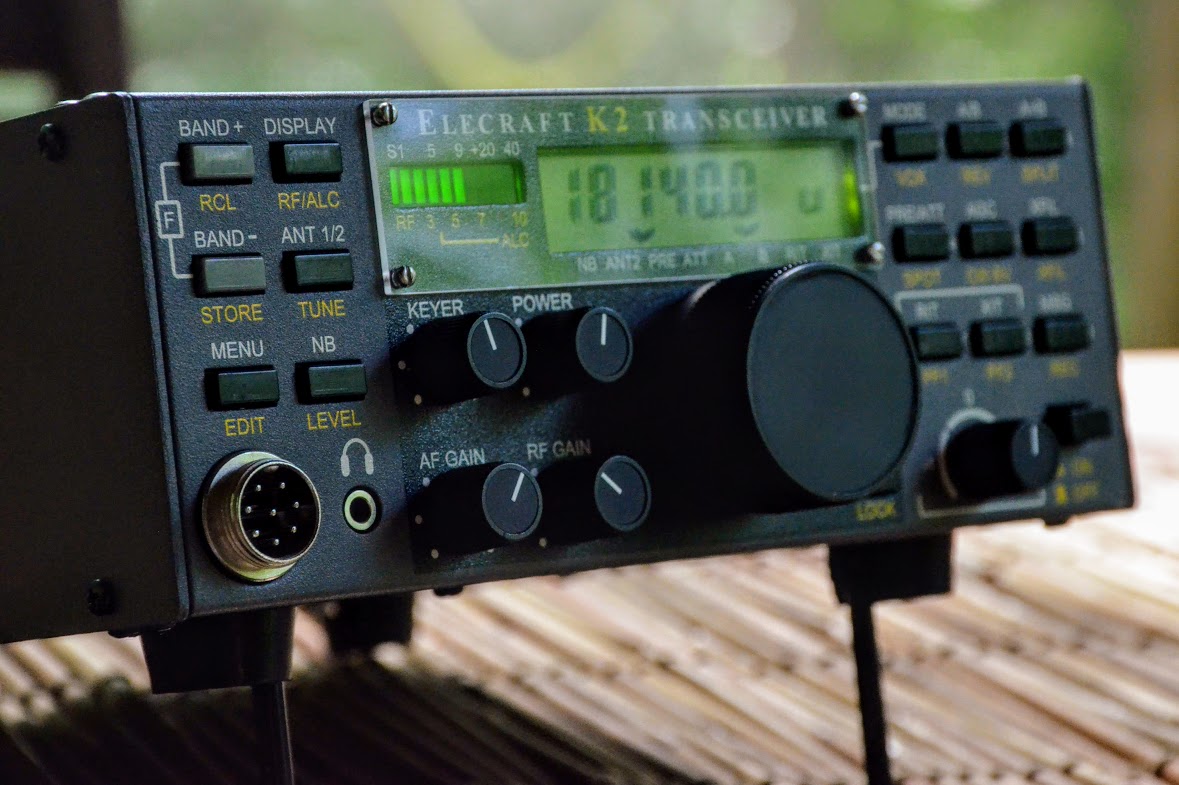
My Elecraft K2 turned out to be a superb off-grid transceiver
I did learn a few things about playing radio completely off-grid. First of all, my QRP field events (like Field Day, FYBO, FOBB, etc.) had me totally prepped for off-grid ham radio. In fact I didn’t forget a single connector, battery, tool or accessory. Setting up my outdoor wire antenna was a simple matter and I had fun on the bands, even though propagation wasn’t always perfect.
What did surprise me was the number of times I turned to my portable shortwave radios over my PC-controlled receivers. Simply put, a good portable radio connected to a random length wire antenna gave the right amount of performance vs. battery consumption. Though the SDRs performed better when hooked up to my inverted vee, they used quite a lot of battery resources since both my laptop and the receiver had to be powered.
If I could go back in time, I would have left the Excalibur at home, brought a general coverage portable transceiver and/or a dedicated tabletop receiver like my Alinco DX-R8. Capturing spectrum on a very RF quiet island location is very appealing, though. To make it work, it would require that I bring a separate 12VDC power supply and spare laptop batteries. With a modest PV system to recharge the batteries, it would also require constant planning–deciding when and where to listen, in order to recharge.
Most of all, I discovered that no matter where you go, as a ham radio operator, you will find others in your fraternity that will take you in. Field Day is one of my favorite days of the year and spending it with the good folks of the Charlottetown PEI Radio Club made it all the better. Not only did they get a kick out of hearing a southern accent announce their station on the air, but I got a kick out of being on the other end of Field Day pile-ups.
Hamcations don’t have to be month-long ventures, however. Even squeezing a little radio time in can be fun. A portable shortwave radio tucked into your suitcase on an extended business trip or a portable QRP transceiver on a week at the beach can add to your holiday fun–and if you’re lucky, create a few memories, and possibly even friends.
My Pack List
Transceivers
Receivers
Accessories/Tools
- One multi-band dipole
- Sony AN-LP1
- Grundig roll-up antenna
- Radio tool box (connectors, tape, crimpers, wire, etc.)
Power
- Qty 2 PowerFilm Solar 5 Watt foldable PV panels (FM15-300N)
- Qty 3 PowerFilm Solar AA Foldable Solar Chargers (AA)
- Qty 1 GoalZero Boulder 15 Solar Panel
- Qty 1 GoalZero Escape 150 Power (Battery) Pack
- Qty 1 30 aH gel cell battery in waterproof case
Again, I’d love for readers to share their upcoming travel and radio plans. Please comment!