Shortwave listening and everything radio including reviews, broadcasting, ham radio, field operation, DXing, maker kits, travel, emergency gear, events, and more
You can’t keep a good pirate down. Another snow-filled weekend in NYC seems like a good time to go back in time to November 11, 1990. Al Gore had not yet invented the internet, but somehow Dan Lewis was able to talk to the world on international shortwave — despite almost not being able to board a flight home from Paris. And this was before the TSA!
Give a listen over at the blog.
We haven’t posted any new (old) content lately, but I’m going through some old, unlabeled, reel-to-reel tapes and have discovered a few RNI Mailbag shows from 1990. One has been posted and another will follow next week.
Next week’s show features letters from noted piratologists Andy Yoder and George Zeller and noted DXers Jerry Berg and Rich D’Angelo.
Andy Yoder and George Zeller? That’s certainly going to be a good show! Let us know when it’s posted, Dan!
Want to own an bit of shortwave radio broadcasting history? Many thanks to Mike Barraclough who shares this listing on eBay: a BBC World Service Broadcast Radio Studio Desk from the Bush house in London.
Starting bid is £999–yep, that’s some serious money–and you’ll need to travel to Bristol, England to pick it up.
Here’s the full item description:
This is a genuine BBC World Service Studio from Bush House. I bought this when the BBC moved out of Bush House in July 2012. Unfortunately I have no room for it and so sadly I must sell it. All the components are still original as seen in the images.
Just think of the famous people who were interviewed at this desk. The whole desk is bespoke, beautifully made and crafted by BBC engineers, there is nothing quite like it. It still has all the detail such as the panic button underneath the desk, stands for computer monitors, telephone, the professional CD player and cassette desk player. Also original mixing desk, router board and switches – all you need to start your own radio station! The desk is mono as used by the BBC World Service.
Original Revox Professional Series CD player C-221
Original Kenwood Stereo Cassette Deck KX-4520
The original ElectroVoice RE20 Microphone with adjustable stand is NOT included and will be sold separately on eBay
BBC speaker will be sold separately.
The lucky winner will have to ship this from my home in South Bristol at their own expense. It will require a medium sized van and two people to lift it.
More pictures to follow including accurate measurements. Approx 8ft wide, 3 feet deep and 3.5 feet high.
Since I’m a complete sucker for Signal Corps radios, my buddy David Korchin (K2WNW), thought it would be a great idea to tempt me with this recent listing on eBay: a rare Zenith R520A/URR.
Let’s be fair. It’s gorgeous.
And I would like to know the full story behind this radio.
Fortunately, the reserve is $1200 US–high enough that I know I need not bid.
For Zenith folks, though, this would make a handsome addition to their collection.
Very curious if this radio will make its reserve price.
Description of Zenith R520A/URR:
“Up for auction is a rare Zenith Transoceanic R520A/URR. It comes with the Zenith headphones that plug into the rear of the chassis.
It was restored electronically replacing capacitors, resistors, and tubes that needed to be replaced. All tubes are NOS.
It comes with the Zenith headphones that plug into the rear of the chassis. It also comes with a modern battery holder that has been placed into the green battery box that I painted up to look a little more authentic.
It plays wonderfully on all bands with amazing sensitivity on the shortwave bands. Broadcast band can receive stations as far as 750 miles away. Antenna is straight and extends fully. The wave magnet antenna has the metal post that allows it to be placing into the handle so you can rotate it for best reception.
The chassis is extra clean and has all the tube shields.
This has the original cord with a NOS plug with new fuses incorporated.
Both fuse boxes on the back door have been filed with NOS fuses.
Has the manual that came with it and many specs that I printed out for this radio.
The exterior is very clean and the brass was polished and then sprayed with gloss clear coat so it cannot tarnish in the future. Knob inserts are new solid brass that were polished and sprayed as well. The I.D. Tag is an exact reproduction of an original tag.
All the feet are original and in excellent shape.
The cabinet has all the original military markings and are in excellent condition.
Runs wonderfully on AC or DC. I have always run it on batteries.
I have shipped quite a few of these transoceanics and the average cost for the lower 48 states is around 49.00 shipped via USPS Priority Mail.
My reserve is set at 1200.00. If it doesn’t reach this amount, I will keep the radio in my collection.”
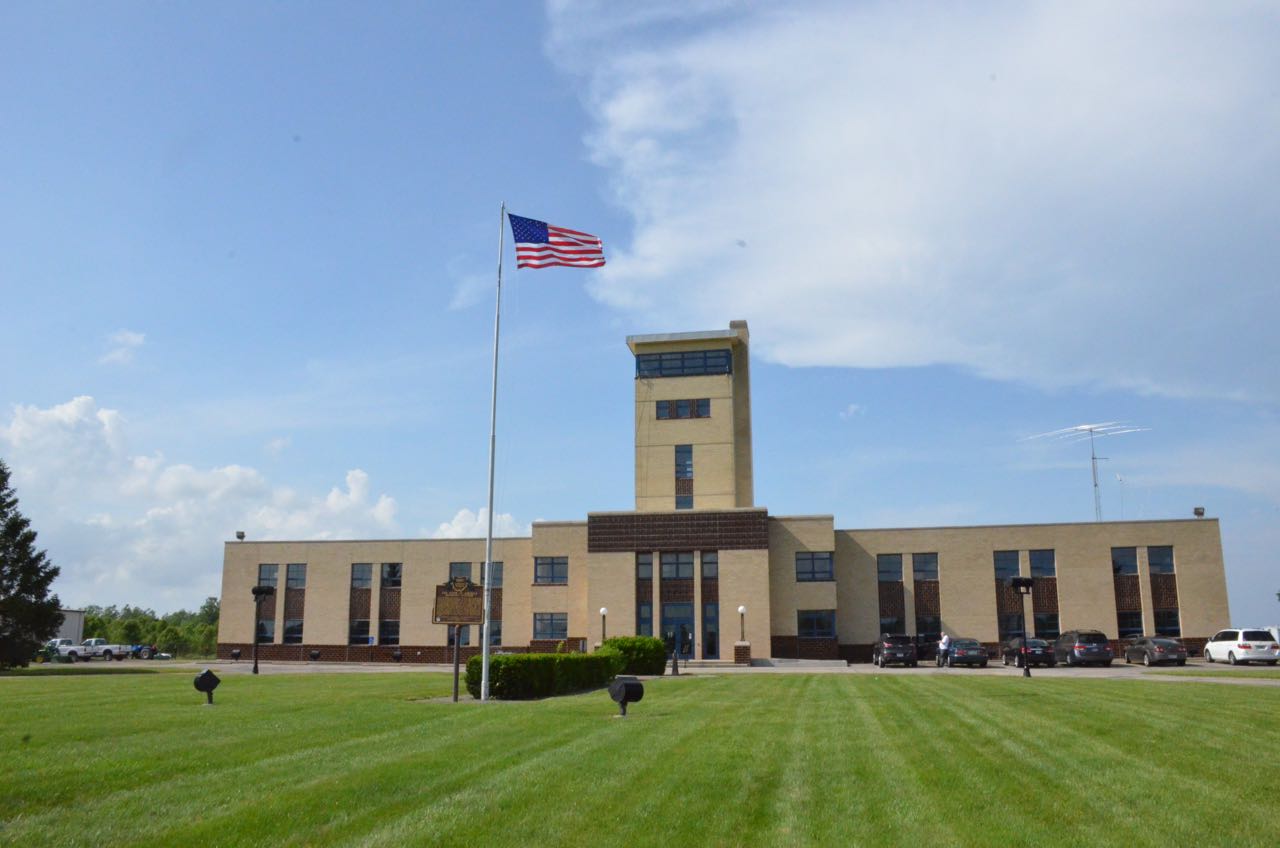
The transmitter building of Radio Canada International, Sackville, NB.
I spent the summer of 2012 in an off-grid cabin on the eastern coast of Prince Edward Island, Canada. That summer, I listened as two of my favorite shortwave broadcasters left the air within weeks of each other: Radio Netherlands Worldwide and Radio Canada International.
Ironically, though I was only a geographic stone’s-throw from the RCI Sackville transmitter site, I struggled to hear any Sackville signals as my location was too close for skywave propagation and a little too far for ground wave. Though I paid a visit to the transmitter site only two days prior, I was unable to hear or record RCI’s final broadcast.
Unlike RNW’s final broadcasts, RCI’s ended without fanfare and quite abruptly. This week, I heard a recording of that final RCI broadcast for the first time. My friend, Rajdeep Das, recorded it on June 24, 2012 in Kolkata, India. Rajdeep has kindly shared his recording with the Shortwave Radio Audio Archive and here on the SWLing Post.
This is a short 10 minute recording, beginning at 1550 UTC, June 24, 2012 on 11,675 kHz. Listeners will note that the broadcast ends abruptly during the mailbag program–obviously the Sackville transmitters were turned off prematurely.
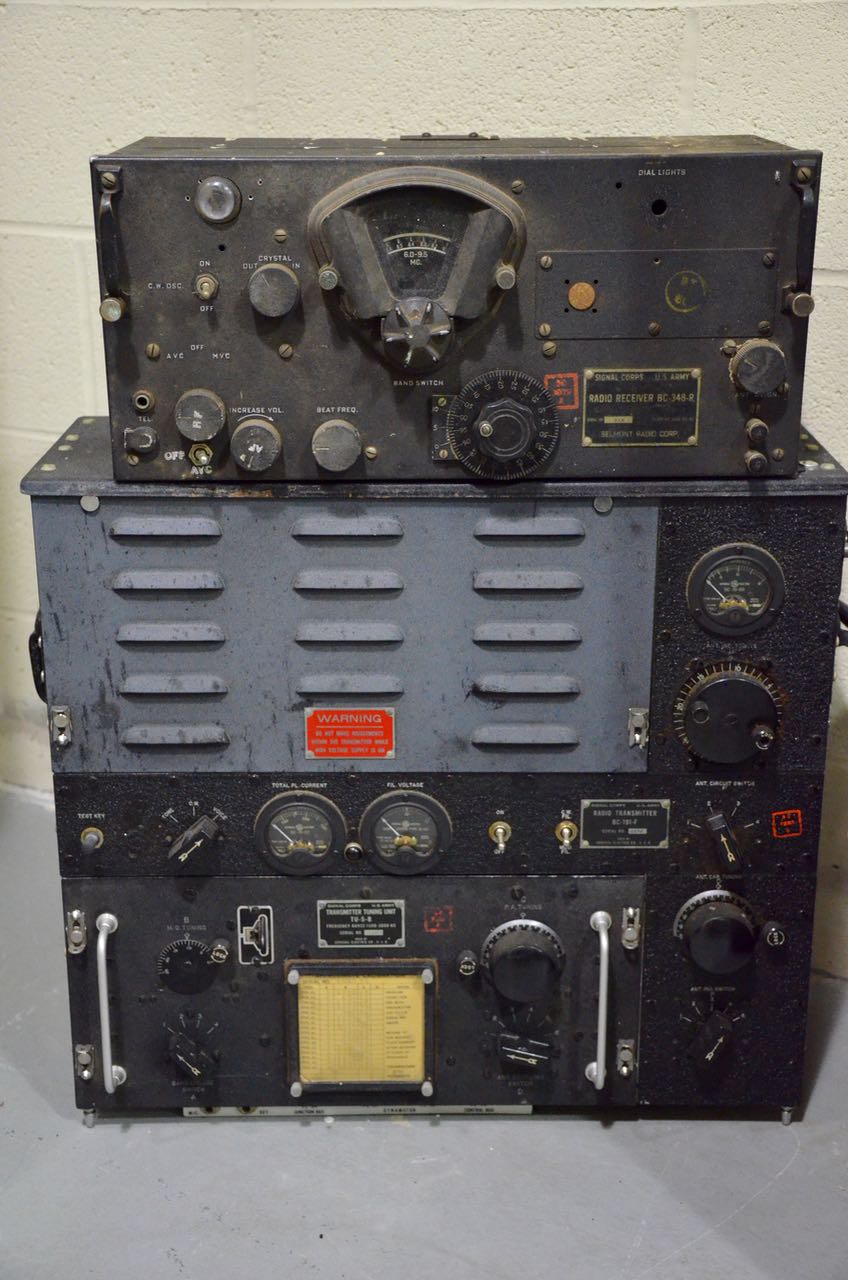
On Tuesday afternoon, I made a pilgrimage the to the National Capital Radio and Television Museum in Bowie, Maryland, USA. The museum is located in a modest and beautiful historic house on the corner of Mt. Oak and Mitchellville Roads in Bowie.
Museum Curator and volunteer, Brian Belanger, kindly gave me a private tour of the museum collections (the museum is closed on Tuesdays).
Many thanks to Brian for taking time out of his day for the tour, and for allowing me to take some photos for the SWLing Post!
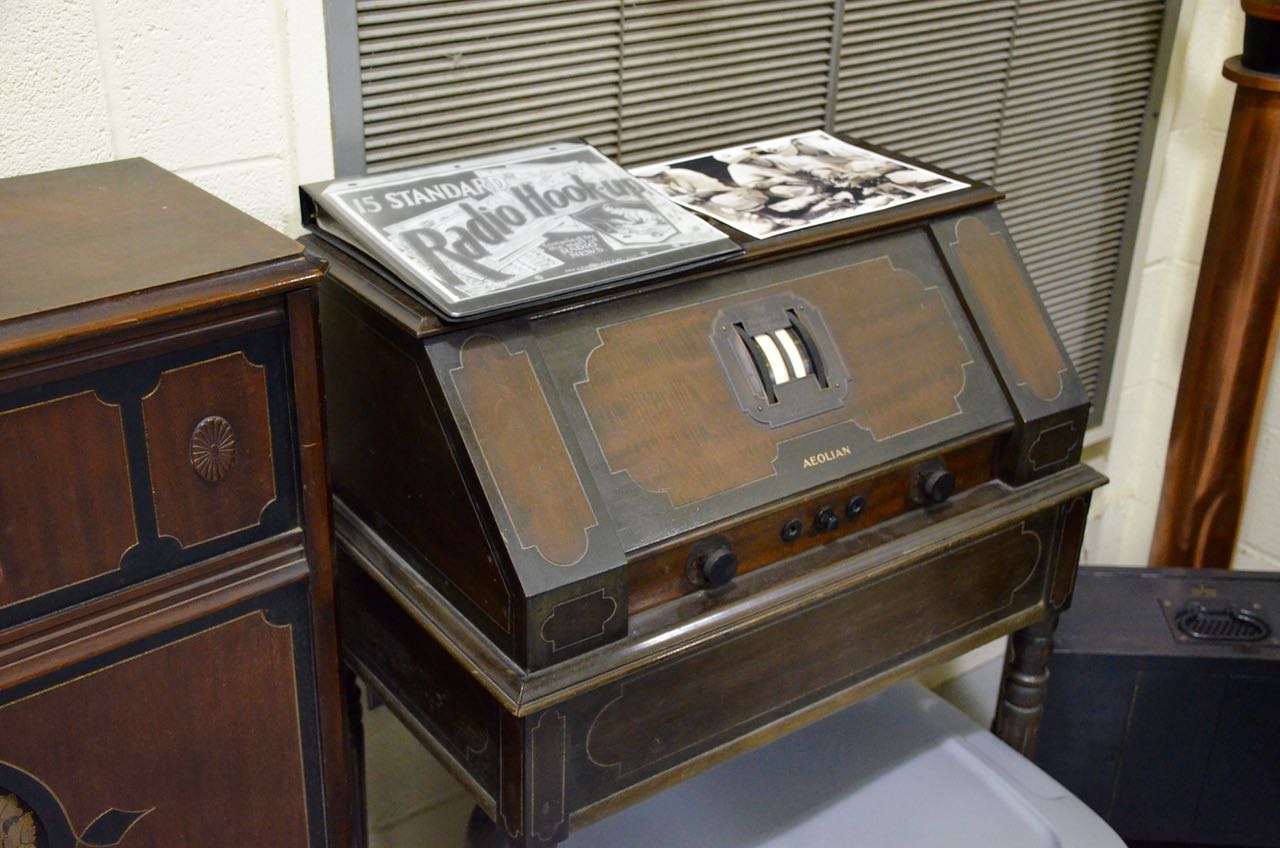
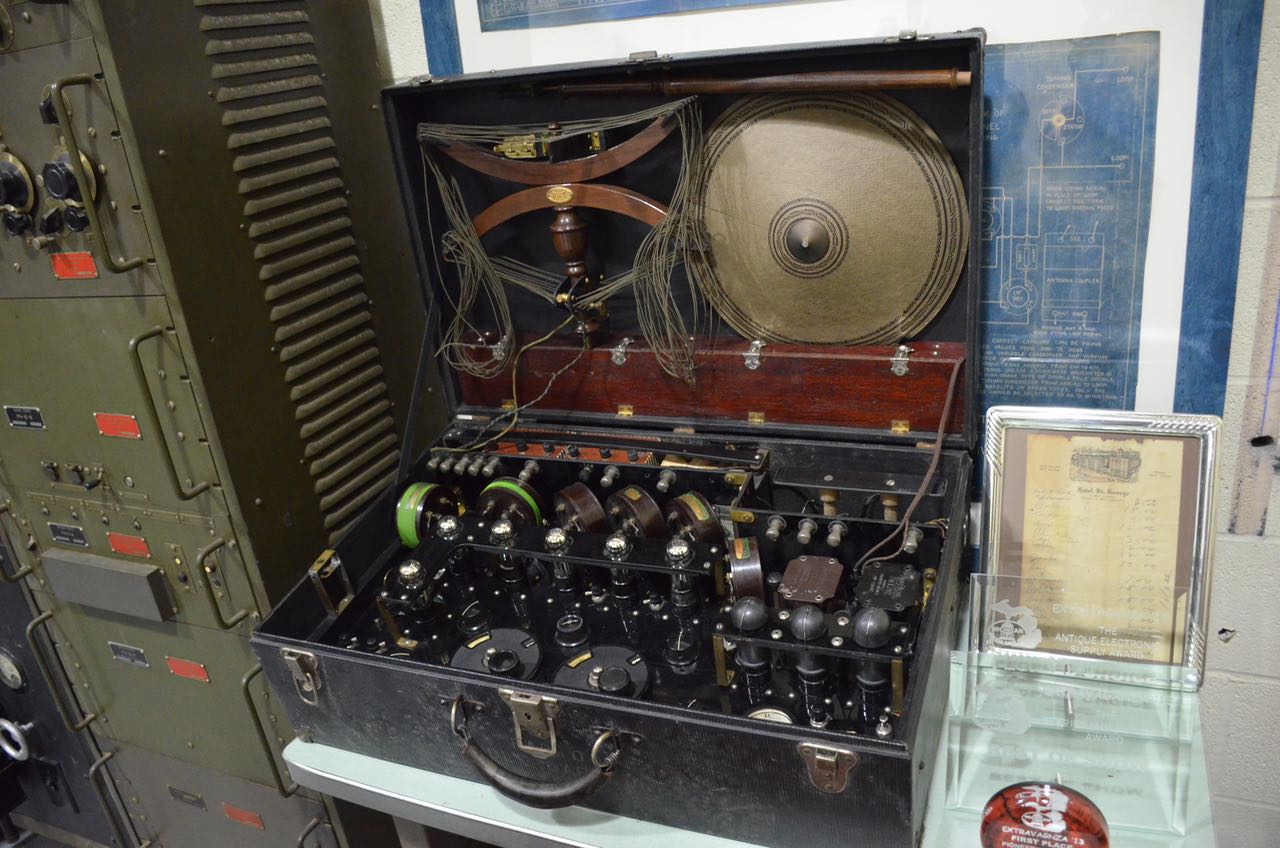
The museum has a number of display rooms with radios broadly grouped by style and decade. The first room offers examples of some of the earliest radios produced–including the venerable crystal radio (below).
[Click photos to enlarge.]
Like Brian, numerous volunteers work to keep the collections in working order. This isn’t a place where vintage radios come to die; they actually come to life here.
Even examples of some of their earliest radios are on the air and can be tuned to local and international stations.
This RCA “portable” (below), housed two batteries on either side of the center faceplate. Note the ad on the wall above–a couple enjoy the RCA as they recline on a beach.
Speakers of the day were pretty amazing, too–check out this hand-painted 1927 Air Chrome Double Cone Speaker, below.
The museum also has an extensive collection of studio and off-air recordings that can be played over an AM carrier throughout the building.
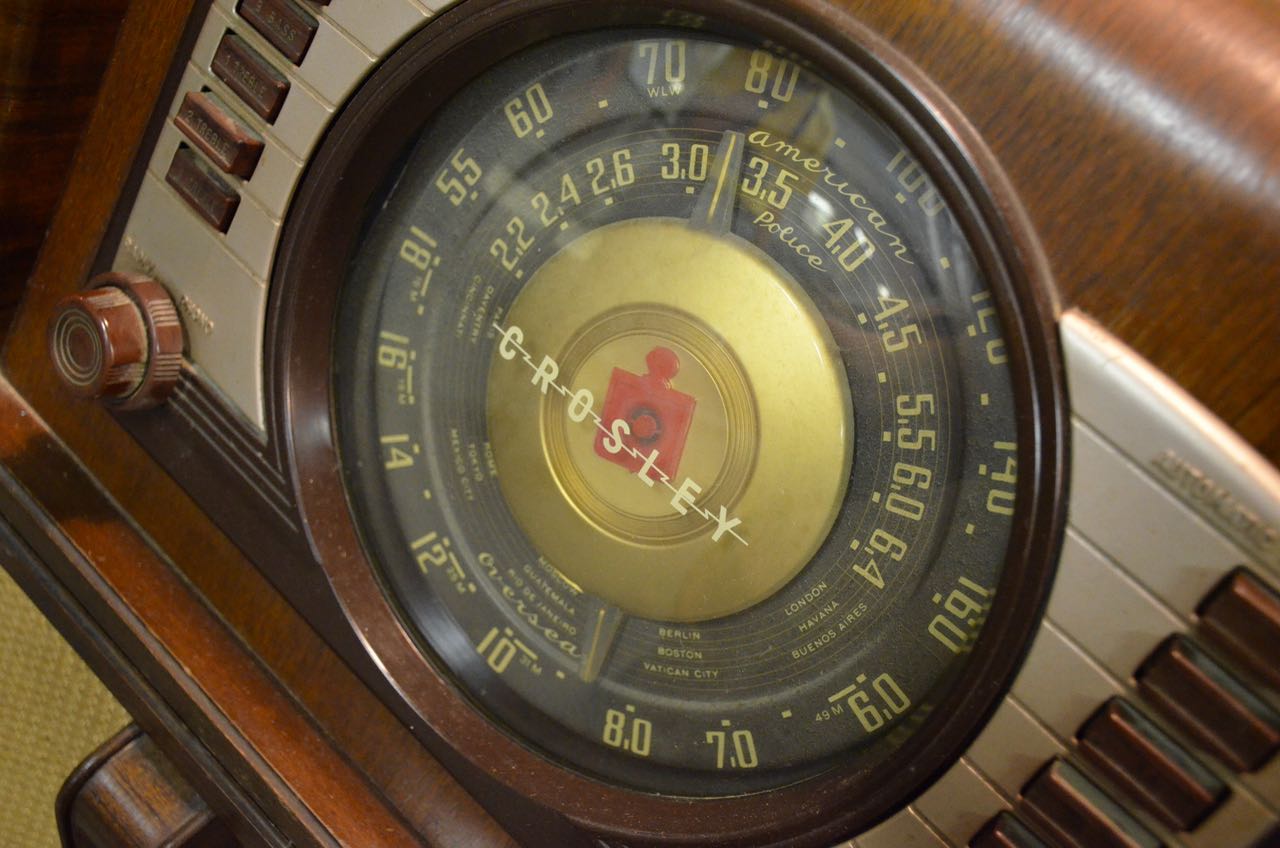
By the late 1920s and early 1930s, radio manufactures built gorgeous console radios, features in the living rooms and parlors of many lucky homes.
This E.H. Scott All-Wave 23 console (above and below) sported not only twenty-threee vacuum tubes, but a large, robust internal speaker. Radio collectors consider the All-Wave 23 to be one of the finest performing radios of the vacuum-tube era.
The museum also features the Zenith 12-S-232 tabletop radio with working shuttle dial–a futuristic band-switching mechanical wonder with a stunning dial.
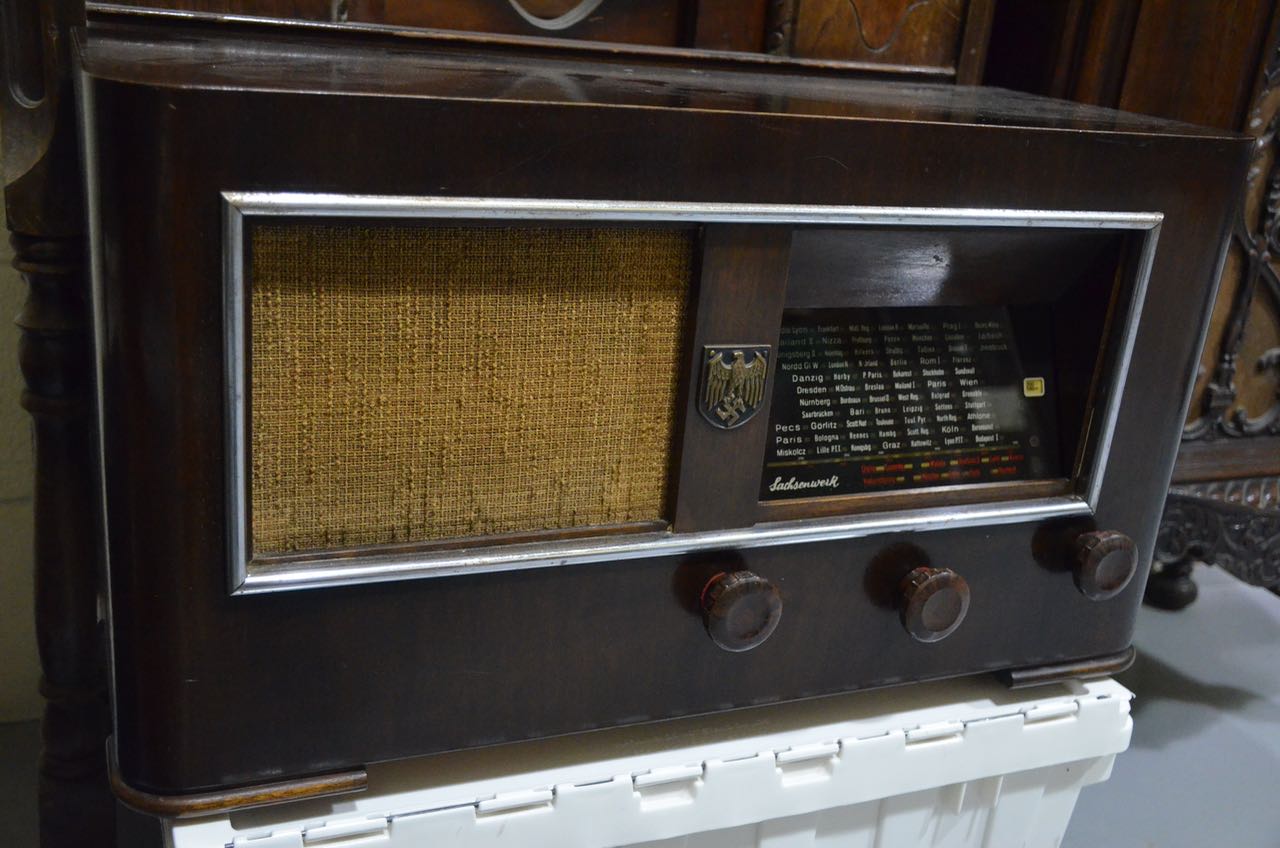
A number of tabletop and portable radios that span the decades have found their homes in this museum. No doubt many SWLing Post readers cut their teeth on these classics!
I love the design of the Garod Model 5A2–wow! And I’m sure many kids of the fifties wished they had an official Hopalong Cassidy AM radio (below).
The museum, of course, also houses a large number of classic televisions.
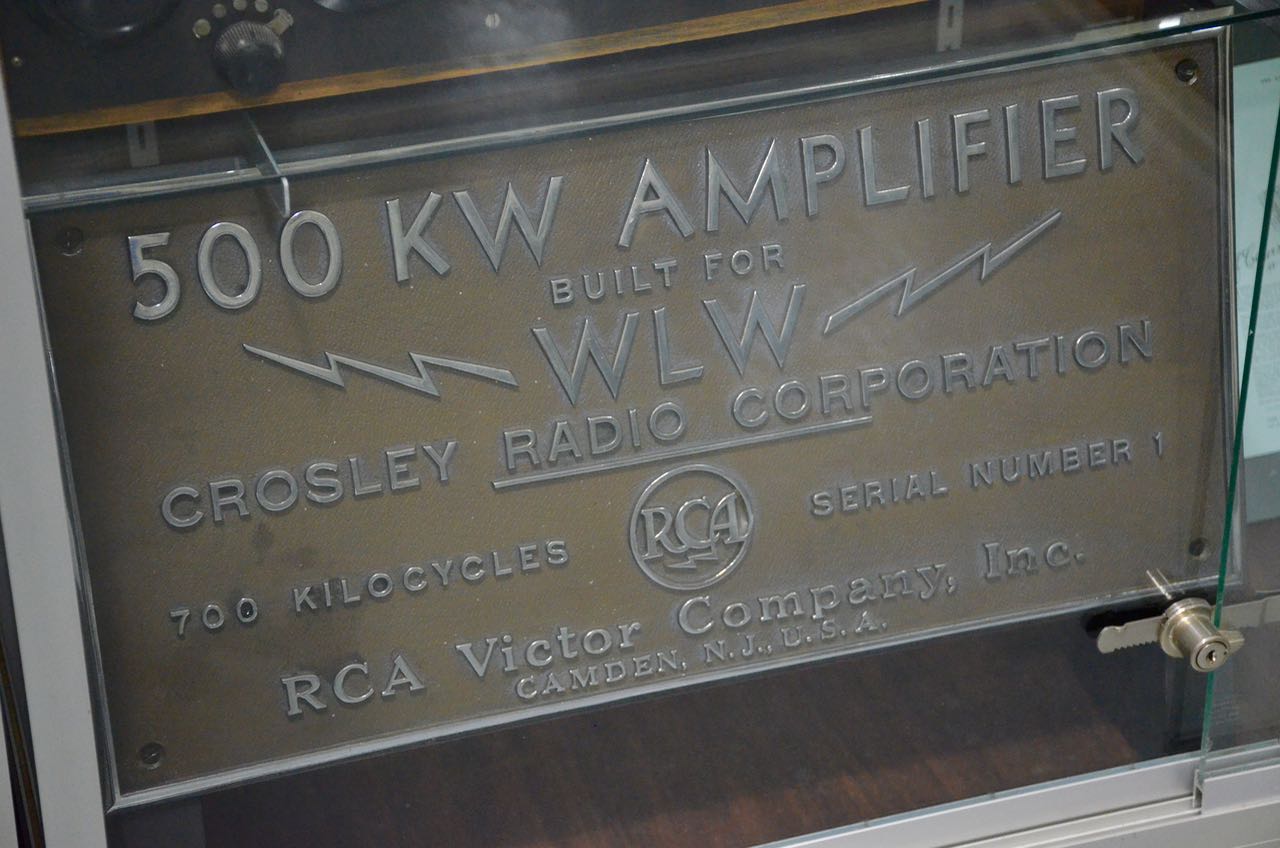
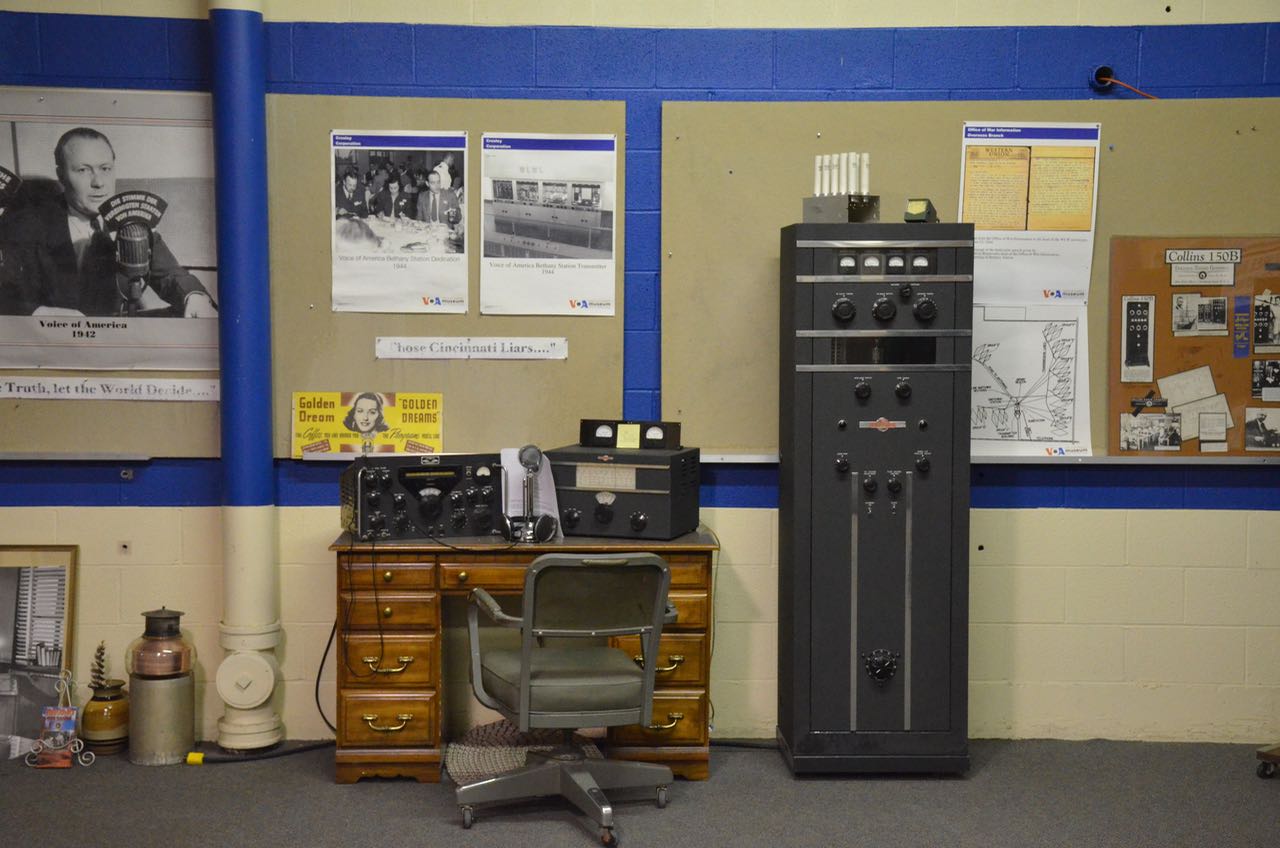
Radio stations and benefactors have also donated many items used in the industry, both in broadcast and retail.
Brian was also kind enough to take me to the building, next door, where they repair radios and store others for eventual rotation into the collection.
Museum volunteers also teach radio repair and restoration classes.
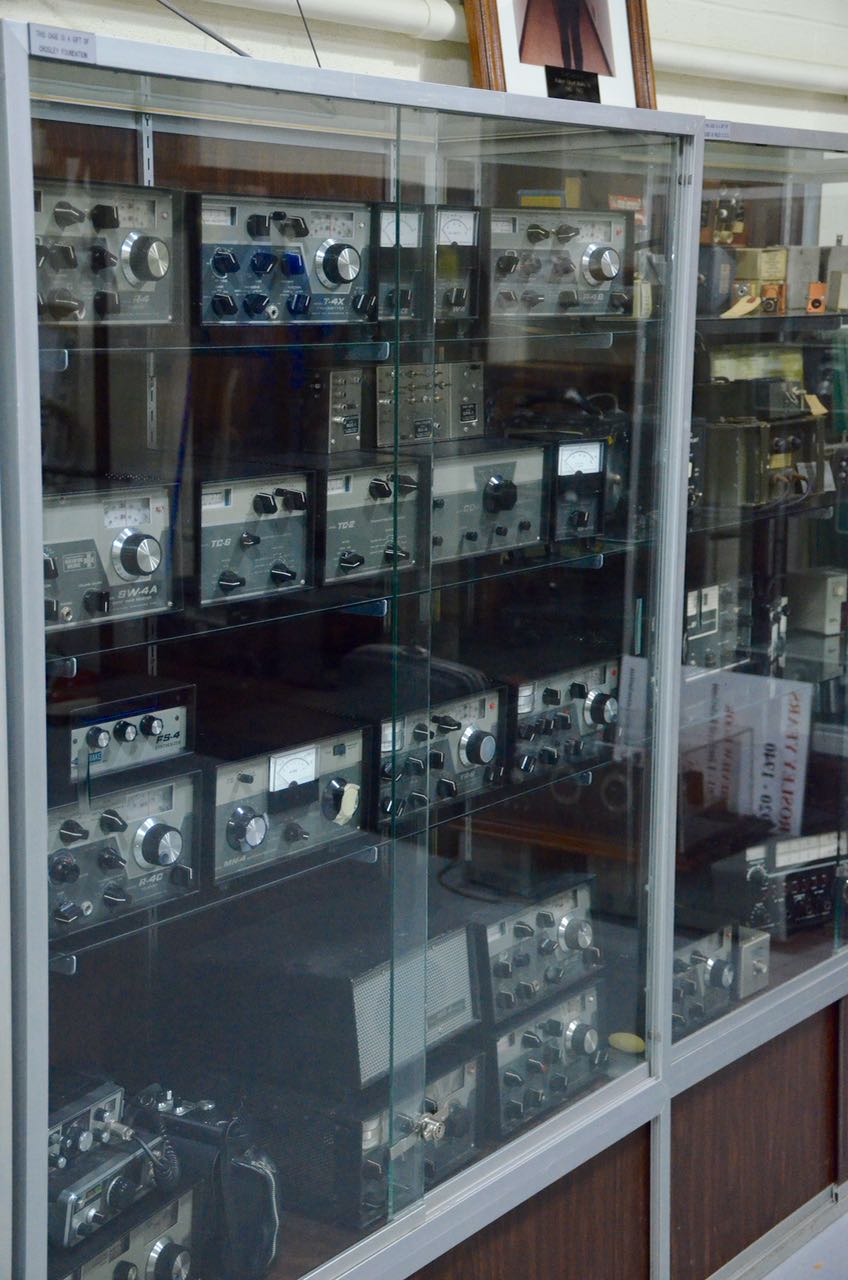
The number of classic ham radios, home brew receivers and transmitters was simply amazing. Indeed, I felt like a kid in a candy shop!
By the end of the tour, I had decided to become a member of the National Capital Radio and Television Museum. Even though I live a few states away, I like knowing that my membership funds not only help preserve vintage radios and televisions, but also provide me members-only access to many of their scanned archives. Click to view a full list of benefits for a modest $25 membership.
Again, many thanks to Brian Belanger for the amazing tour of this wonderful museum! Brian, I’ll be back next year…
In the meantime, many thanks to Landon for sharing his personal radio history:
Landon (KF4CAU)
My interests in SWL’ing began back when I was a teen, in the 1970’s. I was inspired by two of my maternal uncles, who as teens, had started out pretty much as I was at the time, when they were teens in the 1960’s. One of them had also given me his collection of 1960’s era ‘Popular Electronics’ and ‘Electronics Illustrated’ magazines, which were filled with information about the hobby of radio monitoring.
The neighbors next door to my grandmother, an elderly couple, had a shortwave radio, which I can remember listening to out on their patio in the summer. Another neighbor of mine, had an old AN/GRR-5 military receiver, which I was infatuated with.
I spent much of my childhood monitoring the AM Broadcast Band, seeking out far away stations, until I finally got my own shortwave radio.
I had acquired a used transistor radio that had some of the shortwave bands on it, and began picking up what I could. Transistor radios were a new thing back in those days.
Finally, when I turned 16, I got my first job as an orderly at the local hospital. I saved my money, and purchased my own AN/GRR-5 from Fair Radio Sales. I was hooked! I still have that radio today.
I remember I used to salivate over the Allied Radio, Lafayette Radio, and Radio Shack catalogs, dreaming of someday owning a ‘good’ receiver, like the Realistic DX-160. And today … I have one that I purchased on e-Bay! Yes, it’s outdated, but I purchased it more for nostalgia, as well as listening to now and then.
Through the years, I’ve purchased and owned a lot of shortwave radios, and now, as a licensed amateur radio operator, I own some of the latest equipment. Yet, I like going back and listening to the ‘old school’ equipment for the nostalgia of it all.
Realistic DX-160 (Source: Universal Radio)
Last night (Jan 31, 2015), I sat with my 15 year old son, who has recently gotten an interest in shortwave and ham radio. As we sat there and he scanned across the SWL bands, I saw myself, and I saw the excitement in him that I had begun with. His first experience last night was tuning across the bands with the 70’s era Realistic DX-160!
Some of my favorite memories are tuning in HCJB in Quito, Ecuador, and receiving QSL cards from far away stations. Today, decades later, I still have those QSL cards, program guides, and yes … the collection of 1960’s era radio magazines my uncles gave me.
Some things change, and some things never will.
Many thanks, Landon, for sharing your memories with us!
If I ever find a AN/GRR-5 in good shape, I will snatch it up! You must have had some great memories listening to that military receiver. Amazingly, Fair Radio Sales, in Lima, Ohio, is still very much in business. I hope to visit their store next time I’m in the area (possibly for the Dayton Hamvention).
Ironically, you mention the Realistic DX-160 and only a couple days ago, Dan Robinson shared a video of a DX-160 he recently purchased that was still “NIB” (new in box). The DX-160 is a great rig, as Dan demonstrates in this video:
Thanks again, Landon, and I encourage other SWLing Post readers and contributors to submit their own listener post! Tell us how you became interested in radio!