Shortwave listening and everything radio including reviews, broadcasting, ham radio, field operation, DXing, maker kits, travel, emergency gear, events, and more
Shortwave Radio Audio Archive contributor, Tom Gavaras, shares some of the most amazing off-air, studio, and personal recordings our archive.
Recently, he submitted a very unique recording. Tom notes:
Rudy Espinal of Radio Clarin (Dominican Republic) keynote speech at 1979 Association of North American Radio Clubs (ANARC) convention held in Minneapolis, Minnesota. Convention took place in June 1979.
In this recording, you’ll hear a number of familiar names (including an early shout-out to our friend Kim Elliott).
I was in elementary school at the time of this convention, so it’s amazing bit of audio time travel for me.
Do you recognize any names in this recording? Do you remember Radio Clarin? Did you attend the 1979 ANARC Convention? Inquiring minds want to know! Please comment!
Radio Waves: Stories Making Waves in the World of Radio
Because I keep my ear to the waves, as well as receive many tips from others who do the same, I find myself privy to radio-related stories that might interest SWLing Post readers. To that end: Welcome to the SWLing Post’sRadio Waves, a collection of links to interesting stories making waves in the world of radio. Enjoy!
Many thanks to SWLing Post contributors Dennis Dura, Dan Robinson, Datta Deogaonkar, and the Southgate ARC for the following tips:
Four industry veterans weigh in on how they’d “fix” a medium that remains popular but lacks innovation
The first broadcast from a commercial radio station took place on November 2nd, 1920. Here’s how I imagine listeners responded to the debut of KDKA-AM in Pittsburgh:
Nov. 2: This is amazing! I can hear someone from hundreds of miles away talking through this device! The world will never be the same!
Nov. 3: They’re playing “Wang Wang Blues” again already?
The joke here is twofold: First, there’s a popular song called “Wang Wang Blues” from 1920. And second, by day two, KDKA had already developed the repetitive play-the-hits format that would become one of its hallmarks for the following century.
The first commercial broadcast actually related to the election — it was the idea of a radio manufacturer, Westinghouse, to offer up programming to go along with their newfangled tech (a century later, Apple and Sonos thought exactly the same thing). The first commercial broadcast featured updated results of the Harding-Cox presidential race “before [people] read about it in the newspaper,” as this PBS retrospective notes.
One hundred years later, commercial radio still holds a place in American daily life. The average American still listens to about 106 minutes of radio per day (with the coronavirus and its attendant lockdowns projected to increase that number), and there are more than 15,000 stations in this country alone.
We’re certainly listening to radio differently: according to Statista, 57% of Americans do so online, whether by streaming, downloads, satellite or digital radio. If you asked me how I listen to radio, I’d offer up services like Apple Music 1, Sonos Radio and Dash Radio; podcast downloads from ESPN Radio; online streaming of overseas entities like BBC 1 and Triple J or any occasional college station like WSOU; NPR stations for news and commentary (and music if it’s KCRW); and for new music, a DJ-free experience via Spotify’s New Release Radar playlist. In other words, while audio-only, passive-listening medium has survived and thrived for a century, which is astounding and worthy of celebration, the need for traditional, turn-the-dial “commercial” radio is decidedly on the wane.[…]
Special event station commemorating Aacharya Jagadish Chandra Bose
Sir, I want to mention with great pride that I am (VU2DSI) celebrating the birthdate 30 November of Aacharya Jagadish Chandra Bose- every year with a special callsign- AU2JCB for the last 15 years. He is well known as the “Father of Wireless Communication” in the world of science.
AU2JCB will operate from 20 Nov 2020 to 15 DEC 2020.
The Details of operation
Period: 20 NOV 2020 to 15 DEC 2020
Frequencies: 10 M– 28545, 28510,28490. 21 M—21235, 21310, 21350. 20M—14210, 14250, 14310. 40 M—7040, 7150. 80 M — 3710. IN FM MODE—– 6M –50800, 51500. 10 M—29700.
QSL— Direct to VU2DSI, “SURABHI” MEHERABAD. AHMEDNAGAR.414006. INDIA.
This year VU2EVU & VU2XPN will operate with AU3JCB & VU5JCB call-signs respectively.
From Kolkatta, VU3ZHA & VU3MZE will operate with AT2JCB & AU8JCB call-signs respectively. Ten more stations will operate from Kolkatta with JCB in the prefix.
On November 13, 2000, the ISS Expedition-1 crew turned on the ARISS Ericsson radio for the first time and completed several contacts with ARISS ground stations around the world to validate the radio communications system
These inaugural contacts launched an incredible two-decade operations journey on ISS, enabling ARISS to inspire, engage and educate our next generation of explorers and provide the ham radio community a platform for lifelong learning and experimentation.
In celebration of the ISS 20th anniversary, ARISS was part of an ISS Research and Development Conference Panel session entitled “20 years of STEM Experiments on the ISS.” The video below, developed for this panel session, describes our program, celebrates our 20th anniversary, conveys some key lessons learned over the past 20 years and describes the ARISS team’s vision for the future. Enjoy watching!
20 years of continuous operations is a phenomenal accomplishment. But what makes it even more extraordinary is that ARISS has achieved this through hundreds of volunteers that are passionate in “paying it forward” to our youth and ham radio community. On behalf of the ARISS International team, I would like to express our heartfelt thanks to every volunteer that has made ARISS such an amazing success over the past 20 years. Your passion, drive, creativity and spirit made it happen!!
Many thanks to SWLing Post contributor, Kris Partridge, who writes:
Last night I sent the link to the SWLing Droitwch item to a former colleague. He replied this morning, reply below, and includes a couple of useful links. I’m very sure the SWLing Post knows about MB21.
Thinking that maybe the item on Crowbourgh will be of interest to SWLing readers. It contains the ‘magic’ word “Aspidistra” ! Lot of SW history there.
Radio Waves: Stories Making Waves in the World of Radio
Because I keep my ear to the waves, as well as receive many tips from others who do the same, I find myself privy to radio-related stories that might interest SWLing Post readers. To that end: Welcome to the SWLing Post’sRadio Waves, a collection of links to interesting stories making waves in the world of radio. Enjoy!
Many thanks to SWLing Post contributors Todd R, Skip Arey and Tracy Wood for the following tips:
Playing Bollywood soundtracks and songs about safety shoes, this shopfloor station made stars out of Dale Winton and Nicky Horne, and paved the way for UK commercial radio
nless you spent your summers packing Jaffa Cakes into boxes in the 70s, you are unlikely to have heard of the United Biscuits Network (UBN). It was a radio station for biscuit-makers, broadcasting around the clock to factories in London, Manchester, Liverpool and Glasgow. One part industrial psychology, another part community radio, UBN was intended to make factory life more bearable, but over its nine-year lifespan, it emerged as one of the most daring, anarchic and pioneering stations to hit the UK airwaves.
Music has long been a point of contention in the workplace. Prof Marek Korczynski, who co-authored Rhythms of Labour (2013), describes the history of British working life as “a battle over soundscapes”. Bosses first wanted silent factories, but during the second world war, Korczynski says, “industrial psychologists – the forerunners to HR departments – started looking at playing cheerful music in factories, at the times of day when productivity would dip”. After the war, as Britain rebuilt itself, this strategy was maintained with muzak: inoffensive background tunes, played to lighten the monotony of factory work.
There was one issue, according to Korczynski: “Workers grew to hate muzak.” As jobs on the production line were deskilled and made ever more monotonous, muzak’s effectiveness weakened and staff turnover soared. For Sir Hector Laing, the chairman of United Biscuits in the 1960s, stemming the flow – and its cost – was desperately necessary. Drawing on the success of commercial pirate stations such as Radio Caroline, Laing put adverts in Melody Maker, bought state-of-the-art broadcasting equipment and set up his very own station from UB’s headquarters in Osterley, west London (where Sky’s HQ sits today).[…]
When the four orange and white steel towers first soared over Bethesda in 1941, they stood in a field surrounded by sparse suburbs emerging just north of where the Capital Beltway didn’t yet exist. Reaching 400 feet, they beamed the voices of WMAL 630 AM talk radio across the nation’s capital for 77 years.[…]
LITTLE CURRENT – Great Lakes Country 103 FM and Hits100 FM have opened a new broadcasting studio and office space at the Flat Rock Entertainment Centre, home of Manitoulin Countryfest and Rockin’ the Rock, becoming the first off-grid commercial radio stations in Canada, according to CEO Craig Timmermans.
“It’s super nice to not have an electricity bill anymore,” says Mr. Timmermans as he leads The Expositor on a tour through his company’s new headquarters at 1 Radio Road on the southeastern edge of Little Current.
Through the front doors of the building lies a reception area floating in the centre of a large, open rectangular space. All of the central furniture is moveable so the team can empty the space for special events and small live concerts.
To the right is a small seating area featuring a wood and epoxy tabletop made by Kelly ‘KT’ Timmermans, president of the company. She has also built the live-edge wooden shelving and a table inside the adjacent boardroom.
“This is what I did with my quarantine,” she says with a laugh. “It’s nice to have our own space and to be in charge of our own destiny. We loved being downtown but it didn’t help our business like we had hoped.”[…]
02 November 2020: Telecom Egypt and St Helena Government (SHG) have signed an agreement to connect the Island to Telecom Egypt’s subsea system over the Equiano submarine cable system.
Telecom Egypt will be the first to provide St Helena with a fibre optic connection to the rest of the world, which is a crucial step towards the Island’s economic growth. The cable, along with the associated high-speed internet, is planned to be delivered to the Island by early 2022.
The branch that connects Telecom Egypt’s system to St Helena will be 1,140km long. The cable itself will run from the West Coast of Africa and provide St Helena with access to both Lisbon, Portugal and Melkbosstrand, South Africa with scalable connectivity ranging from a few hundred gigabits up to multiple terabits, as demand varies. It, therefore, provides the most cost effective solution to the growth in the Island’s bandwidth needs.
In light of its vast experience in the subsea connectivity business, Telecom Egypt, in conjunction with SHG, will provide a Dynamic Circuit Network functionality, which will ensure that SHG’s communication partners have access to fixed bandwidth.?Telecom Egypt will also support SHG in the design, installation, and configuration of the submarine and network equipment.[…]
Many thanks to SWLing Post contributor, Bill Tilford, who shares the following:
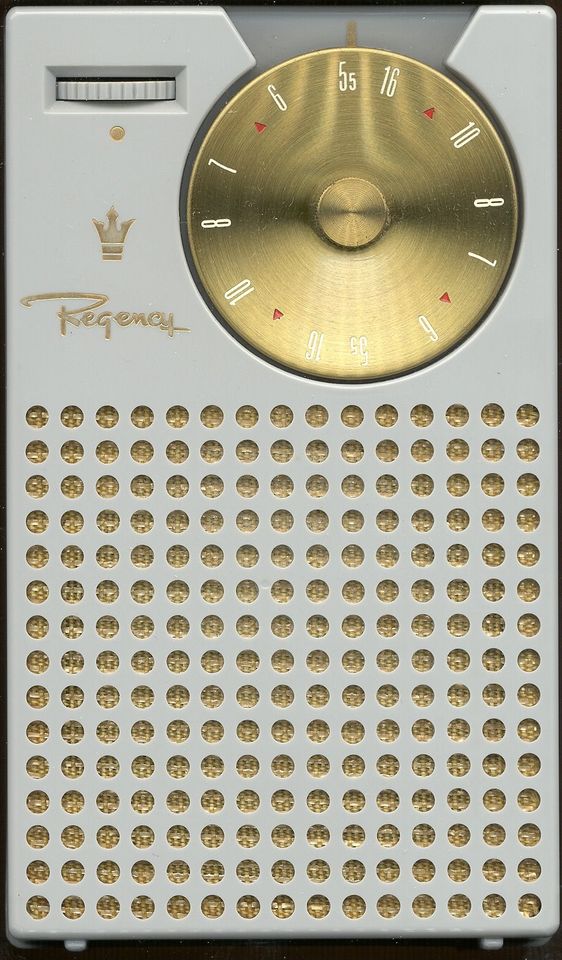
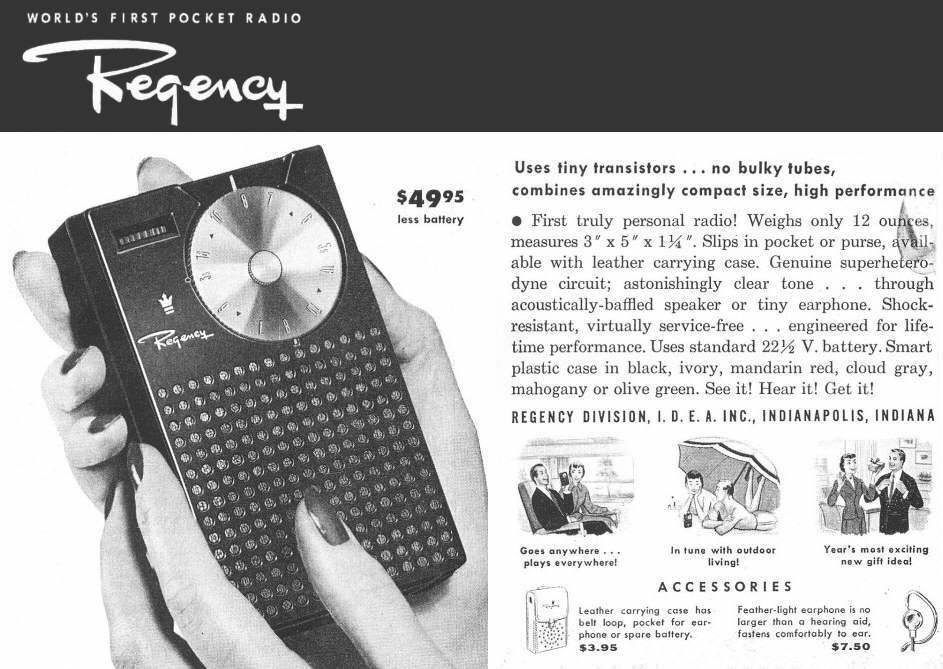
Today is the anniversary of the announcement of the first commercially available transistor radio, the Regency TR1, in 1954. It wasn’t very good, but it started something.
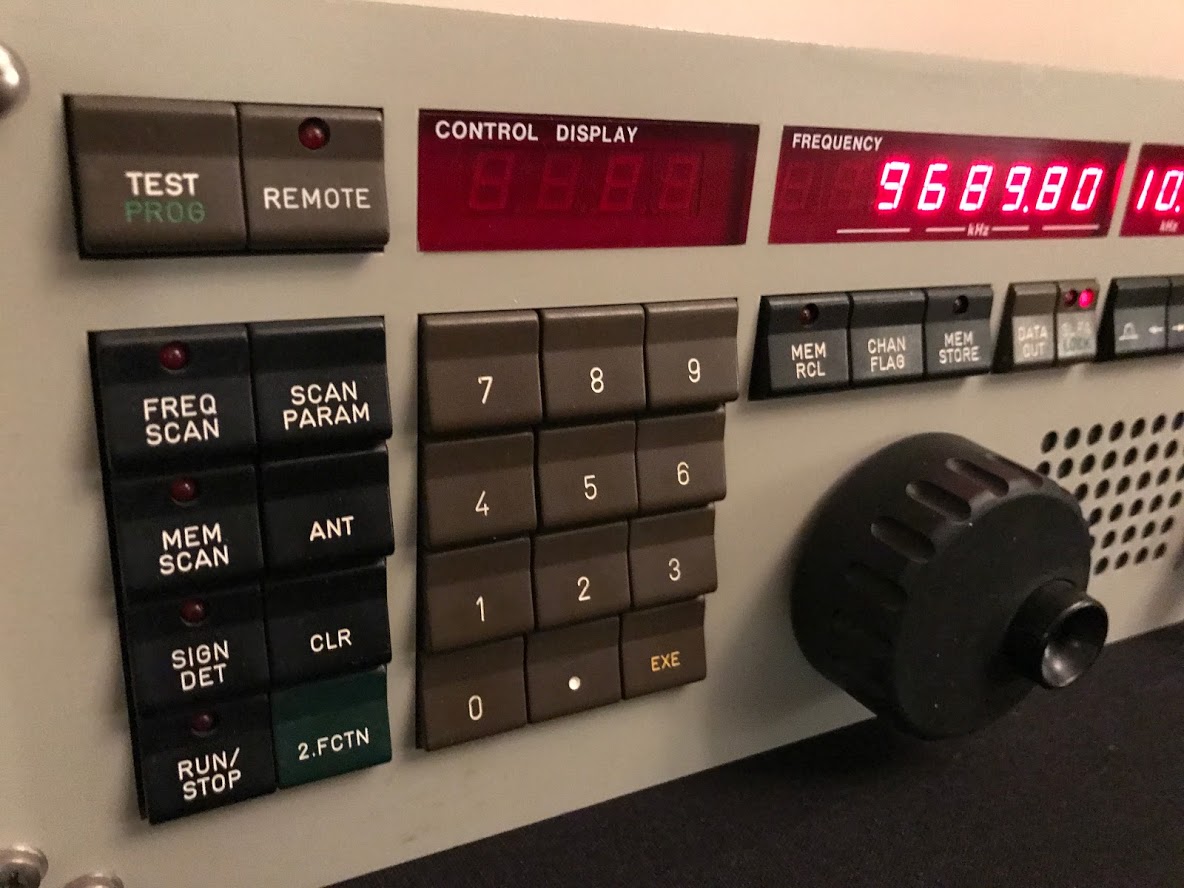
You can tell something about the frequency allocations of the time by how the numbers are spaced.
To put the ad below in context, the median weekly family income in 1954 was about $81.00.
Thank you for sharing this, Bill! If you’d like to read more about the TR1 and view a wide variety of product photos, check out this dedicated TR1 website.
I’m curious if any Post readers own a Regency TR1. Please comment!
I was recently contacted by Shortwave Radio Audio Archive subscriber, Geoff Gilham, who asked: “Do you know if any recordings of Edward Startz exist?”
That’s a very good question, because unfortunately, we have no off-air recordings of Eddy Startz in the archive at present. Startz had a very long tenure at RNW retiring from the Happy Station at the end of 1969, so there must be recordings out there.
Post readers: If you have off-air recordings of Eddy Startz on The Happy Station Show, please comment or contact me. We’d love to add them to the archive! Many thanks!
Radio Waves: Stories Making Waves in the World of Radio
Because I keep my ear to the waves, as well as receive many tips from others who do the same, I find myself privy to radio-related stories that might interest SWLing Post readers. To that end: Welcome to the SWLing Post’sRadio Waves, a collection of links to interesting stories making waves in the world of radio. Enjoy!
Many thanks to SWLing Post contributors Alan, Paul, Bruce Hardie, Josh Shepherd, and Paul Evans for the following tips:
Digital Radio Mondiale says its technology deserves to be tested in the United States
The Federal Communications Commission has been hearing from the National Association of Broadcasters and other interested parties about whether to allow AM band stations to turn on all-digital transmission, and under what parameters.
In addition to publicly filed comments, the NAB, which supports the idea, has made presentations to FCC staff about certain specifics — including whether the FCC should allow Digital Radio Mondiale to be tested in this country. NAB says it should not.[…]
A UNICEF survey found that 94% of countries implemented some form of remote learning when COVID-19 closed schools last spring, including in the United States.
This is not the first time education has been disrupted in the U.S. – nor the first time that educators have harnessed remote learning. In 1937, the Chicago school system used radio to teach children during a polio outbreak, demonstrating how technology can be used in a time of crisis.
[…]In 1937, a severe polio epidemic hit the U.S. At the time, this contagious virus had no cure, and it crippled or paralyzed some of those it infected. Across the country, playgrounds and pools closed, and children were banned from movie theaters and other public spaces. Chicago had a record 109 cases in August, prompting the Board of Health to postpone the start of school for three weeks.
This delay sparked the first large-scale “radio school” experiment through a highly innovative – though largely untested – program. Some 315,000 children in grades 3 through 8 continued their education at home, receiving lessons on the radio.
By the late 1930s, radio had become a popular source of news and entertainment. Over 80% of U.S. households owned at least one radio, though fewer were found in homes in the southern U.S., in rural areas and among people of color.
In Chicago, teachers collaborated with principals to create on-air lessons for each grade, with oversight from experts in each subject. Seven local radio stations donated air time. September 13 marked the first day of school.
Local papers printed class schedules each morning. Social studies and science classes were slated for Mondays, Wednesdays and Fridays; Tuesdays, Thursdays and Saturdays were devoted to English and math. The on-air school day began with announcements and gym. Classes were short – just 15 minutes – providing simple, broad questions and assigning homework.
The objective was to be “entertaining yet informative.” Curriculum planners incorporated an engaging commercial broadcasting style into the lessons. Two principals monitored each broadcast, providing feedback to teachers on content, articulation, vocabulary and general performance. When schools reopened, students would submit their work and take tests to show mastery of the material.
Sixteen teachers answered phone calls from parents at the school district’s central office. After the phone bank logged more than 1,000 calls on the first day, they brought five more teachers on board.[…]
Electronic devices can be surprisingly leaky, often spraying out information for anyone close by to receive. [Docter Cube] has found another such leak, this time with the speakers in iPhones. While repairing an old AM radio and listening to a podcast on his iPhone, he discovered that the radio was receiving audio the from his iPhone when tuned to 950-970kHz.
[Docter Cube] states that he was able to receive the audio signal up to 20 feet away. A number of people responded to the tweet with video and test results from different phones. It appears that iPhones 7 to 10 are affected, and there is at least one report for a Motorola Android phone. The amplifier circuit of the speaker appears to be the most likely culprit, with some reports saying that the volume setting had a big impact. With the short range the security risk should be minor, although we would be interested to see the results of testing with higher gain antennas. It is also likely that the emission levels still fall within FCC Part 15 limits.[…]
“War of the Waves: Radio and Resistance during World War II.” (American Economic Journal: Applied Economics)
Abstract: We analyze the role of the media in coordinating and mobilizing insurgency against an authoritarian regime, in the context of the Nazi-fascist occupation of Italy during WWII. We study the effect of BBC radio on the intensity of internal resistance. By exploiting variations in monthly sunspot activity that affect the sky-wave propagation of BBC broadcasting toward Italy, we show that BBC radio had a strong impact on political violence. We provide further evidence to document that BBC radio played an important role in coordinating resistance activities but had no lasting role in motivating the population against the Nazi-fascist regime.

 Shortwave Radio Audio Archive contributor, Tom Gavaras, shares some of the most amazing off-air, studio, and personal recordings our archive.
 Recently, he submitted a very unique recording. Tom notes: