Category Archives: Radios

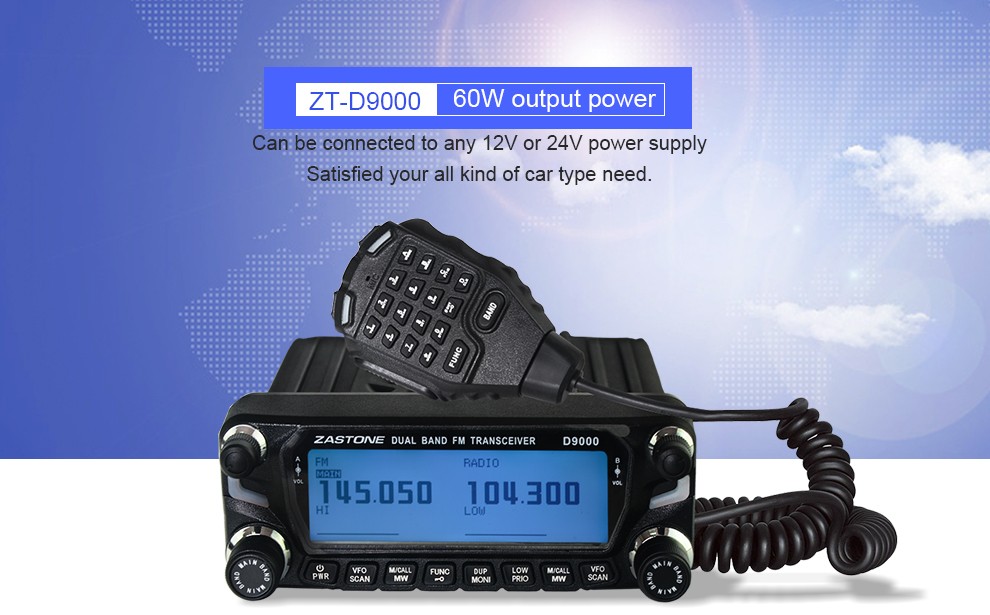
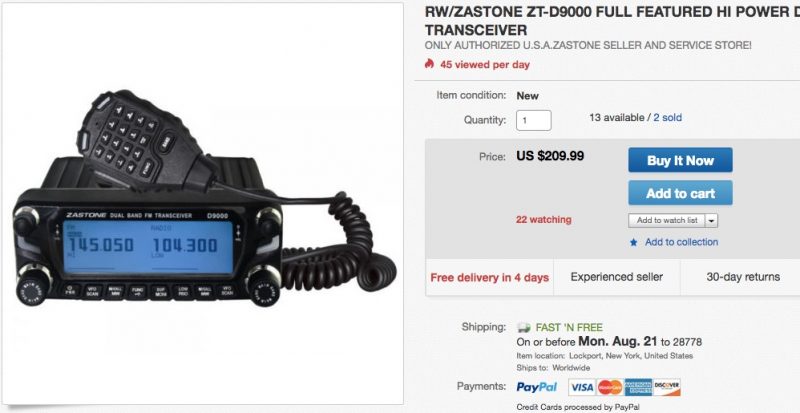
The Zastone ZT-D9000 dual band mobile includes HF and LW coverage

Many thanks to SWLing Post contributor, Cap Tux, who writes:

The Zastone ZT-D9000 radio has actually been out for a while and is a Dual Band Mobile (Triband with option), nothing fancy there and bears a striking resemblance to the Icom IC-2820H (clone?). Options include GPS, Bluetooth, 220Mhz and LW (The latter is really weird!).

What caught my eye is the 2.3-30 MHz Shortwave coverage, a quick search on YouTube turns up a video showing Shortwave working!

Yes, probably as wide as a barn door with no filtering except the 12kHz default but an extremely useful feature if you did need a dual band mobile in your jeep/car.

Two other noteworthy features are a dedicated RX BNC antenna socket and a built in FM Transmitter so you can listen to it on the FM Radio in your car/jeep, very cool. A bit like a pimped IC-2820H. Also has all the bells and whistles a Dual Bander should have,

This is the OEM site:
http://zastonetech.com/2-7-mobile-transceiver/291931

This site has the spec:
http://radioaficion.com/cms/zastone-d9000/

YouTube video showing Shortwave in use:

Click here to view on YouTube.

Click here for eBay UK.

Click here for eBay US.

Some Specs:

A/B Band RX:
136-174MHz
200-260MHz (OPTION)
400-470MHz
470-520MHz

B Band RX:
153-279kHz (AM) (OPTION)
0.5MHz-1.8MHz (AM)
2.3-30MHz (AM)
64-108MHz (WFM)
113-137MHz (Airband – AM)

TX:
136MHz-174MHz
222-225MHz (Type USA 200-260MHz) (OPTION)
400-520MHz

Channel Steps: 1.5, 6, 6.25, 10, 12.5, 15, 20, 25, 50, 100kHz
Frequency Stability: +-2.5ppm
Repeater Shift: +-600kHz(144MHz), +-5MHz (430MHz)
Emission Type: F1D, F2D, F3E
Antenna Impedance: 50 ohms
Supply Voltage: Nominal: 13.8VDC, Neg Gnd, Operating: 12-24V Neg Gnd
Operating Temp: -40F to +-1400F(-20C to +-60C)
RF power Output: UHF: 40W/25W/5W VHF:50W/25W/5W
Case Size: (WxHxD) 6″ x 2.3″ x 1.3″ (Panel w/o knobs and connectors)
6″x6″x 1.8″ (Rear chassis w/o connectors)
Weight: 3.7 lbs

Transmitter:
RF Power Output: UHF: 40W/25W/5W, VHF: 50W/25W/5W
Modulation Type: Variable Reactance F1 D, F2D, F3E
Maximum Deviation: +- 5KHz
Spurious Emission: at least 60 dB below
Microphone Impedance: 2 k ohms

Receiver:
Sensitivity Radio Band:
B Band:
5uV TYP for 10db SN (153-279 KHz, AM)
5UV TYP for 10 db SN (0.5-1.7 MHz, AM)
2uV TYP for 10db SN (203-30 MHz, AM)
2Uv TYP for 12db SINAD (64-108 MHz, WFM)
0.8 uV TYP for 10 db SN 9113-134 MHz, AM)

A&B Band:
0.2 uV for 12db SINAD (136-174 MHz, FM)
0.2 uV TYP for 12db SINAD (200-260 MHz, FM)
0.2 uV for 12 db SINAD (400-470 MHz, FM)
0.2 uV TYP for 12 db SINAD (470-520 MHz, FM)
Squelch Sensitivity: 0.16 uV (144/430 MHz Band)
Selectivity: NFM, AM 12 KHz/30KHz(-6dB/-60dB)

AF Output:
6W@4 ohm for 10% THD (@13.8V) EXP SP
3W@ 8 ohm for 10% THD (@13.8V) Normal EXP SP/CH
AF Output Impedance: 4-16 ohm
3 Speakers

Included in Purchase:
– Radio
– Microphone
– Power Cables
– Remote Install Kit
– Software CD
– Programming Cable
– All Mounting Hardware
– 1 Year Warranty

Options:
– Bluetooth
– GPS
– Barometric altimeter and thermometer
– 220MHz
– LW Band

Very interesting, Cap! Thank you for sharing.  Honestly, I have a very difficult time keeping up with the radio equipment being produced and sold out of China.

And you’re right: what a surprise to find HF coverage on a dual-band mobile radio and especially longwave coverage! Like you, I wouldn’t anticipate stellar performance. The price is certainly “bargain basement” at $210 US shipped.

SWLing Post readers: Has anyone purchased and tested the ZT-D9000?  Please comment!

Dan demonstrates the Cubic R-2411 receiver

Many thanks to SWLing Post contributor, Dan Robinson, who shares the following video where he demonstrate a recently-acquired Cubic R-2411V3/U commercial rack-mounted receiver:

Click here to view on YouTube.

Wow–and you found this beauty at a hamfest, Dan? What an incredible catch! Thanks for sharing.

Escaping the noise while traveling

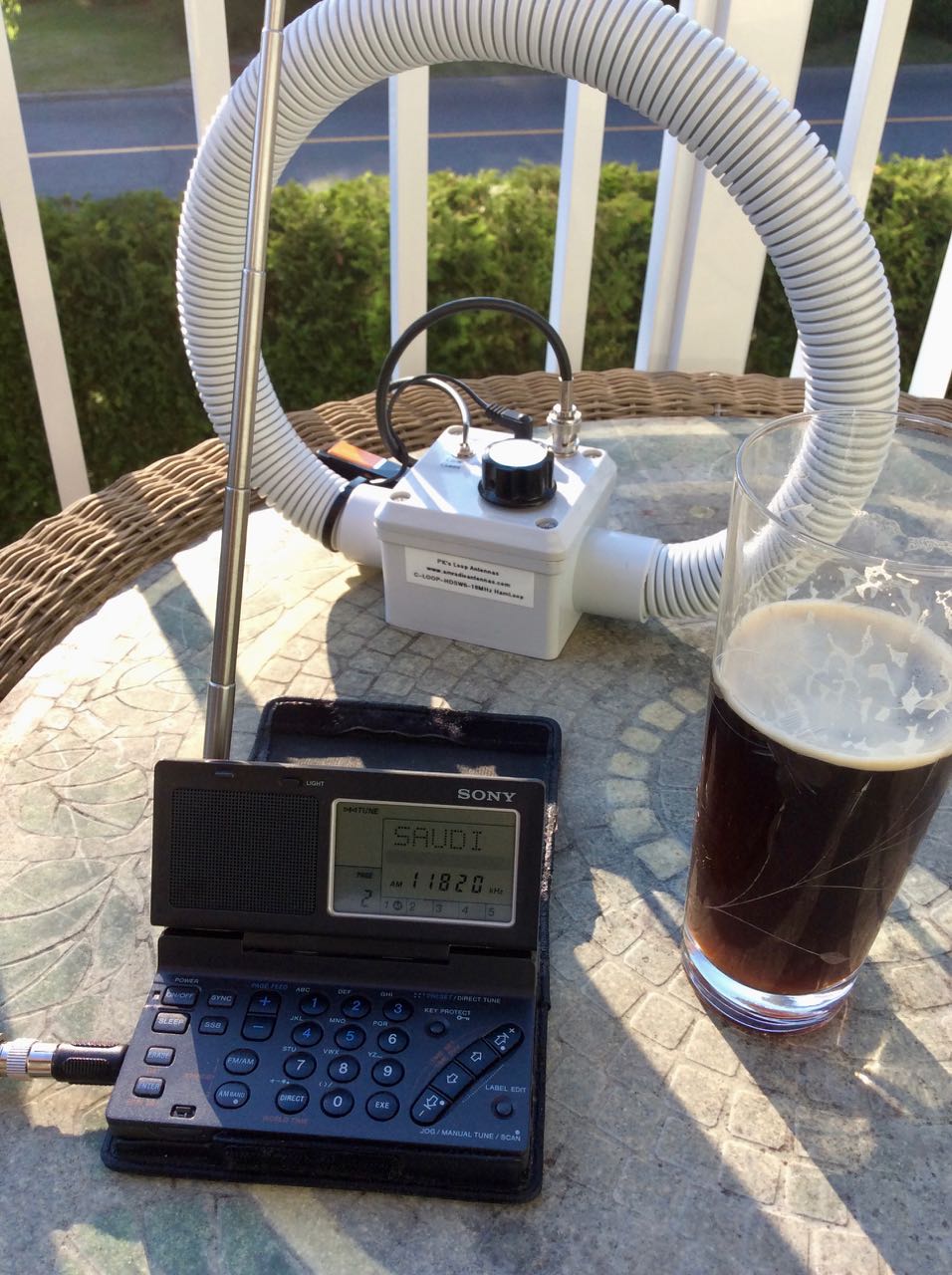
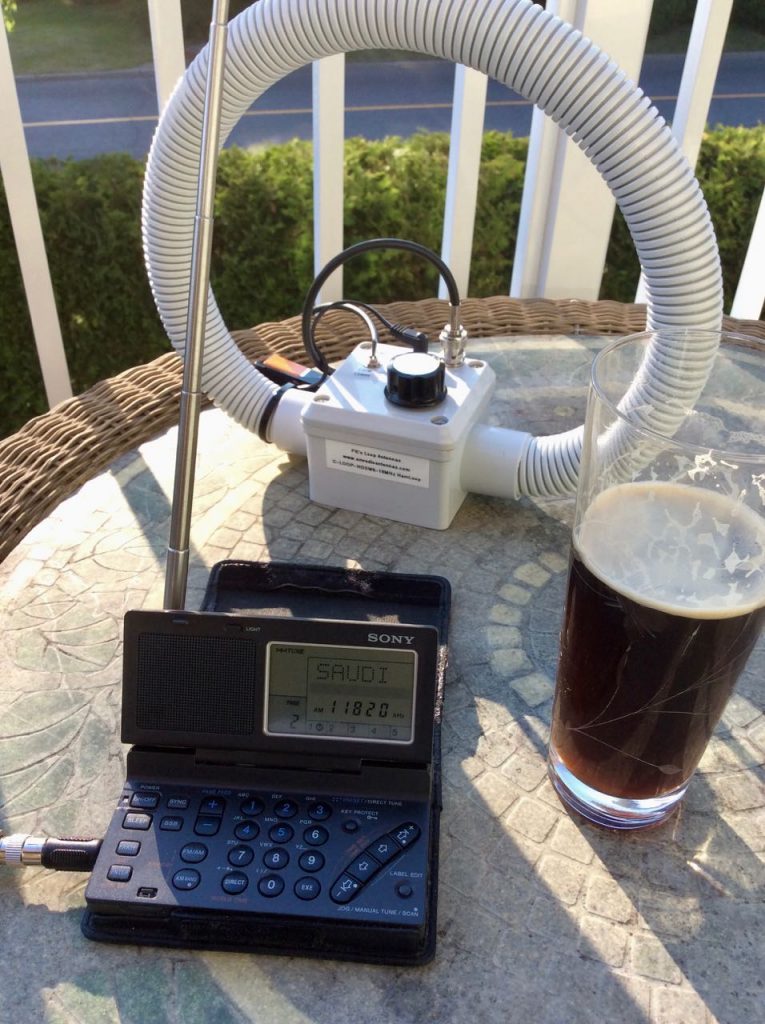
A Sony SW100, a PK Loop, and a pint of L’Écurieux brown ale. Lovely trio!

If you’re a regular Post reader, you’re probably aware that I enjoy a relatively RFI-free environment at my rural mountain home. RFI-free living is something of a luxury, even though our rural location also equates to appallingly slow Internet service.

But unfortunately, when I travel, I usually find that I’ve traded my RFI-free atmosphere for the chaos of noise-ridden bands. If you’ve ever stayed at a modern hotel and tried to tune to anything on mediumwave or shortwave, you’ll know just what I mean.

We’ve spent this summer, like last, near Québec City, Canada.  Near this fairly large city, I’ve been greeted by more than enough RFI to make up for the lack of RFI most of the year.

I attribute the atrocious RFI to the number of light dimmers the developers put in this condo complex and the proximity to a field of noisy electrical poles. Of course, all of the unregulated power supplies in the area don’t help, either. It’s a jungle of noise.
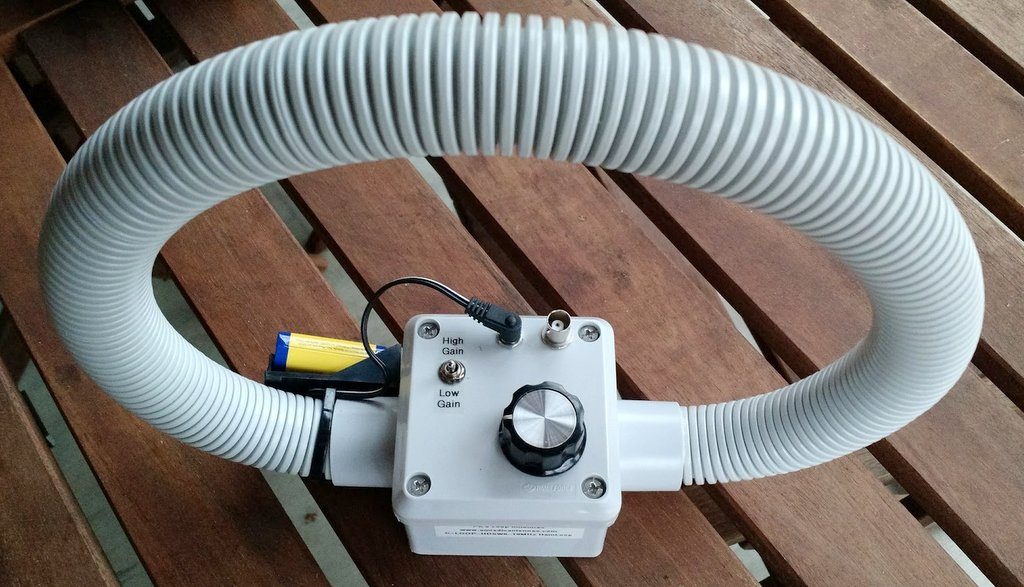
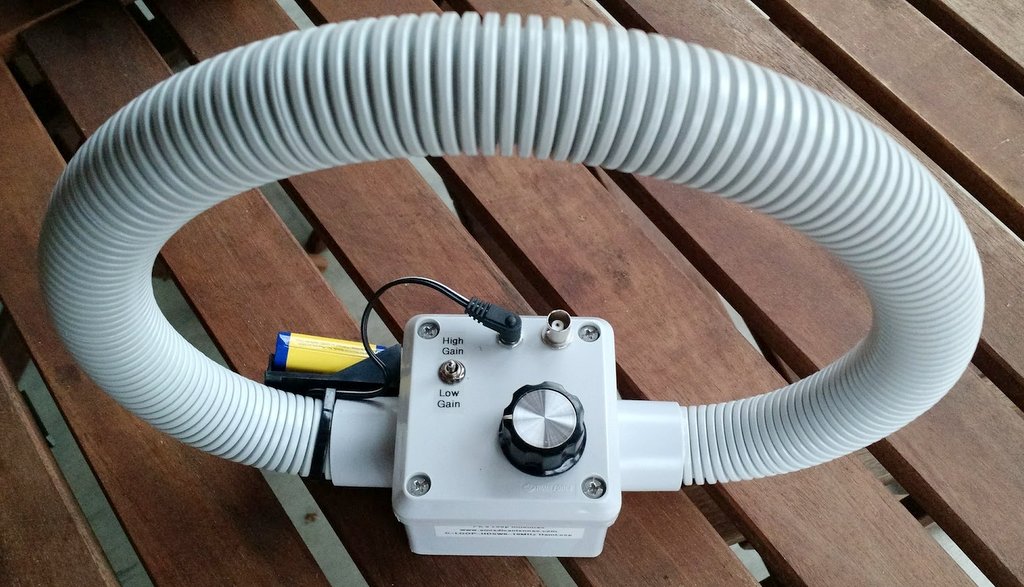
The PK Loop

Last year, I purchased a PK Loop portable HF loop antenna (about $150 on eBay)–specifically with hotels and this very condo in mind. I must say, it has been a welcome travel companion on this trip.
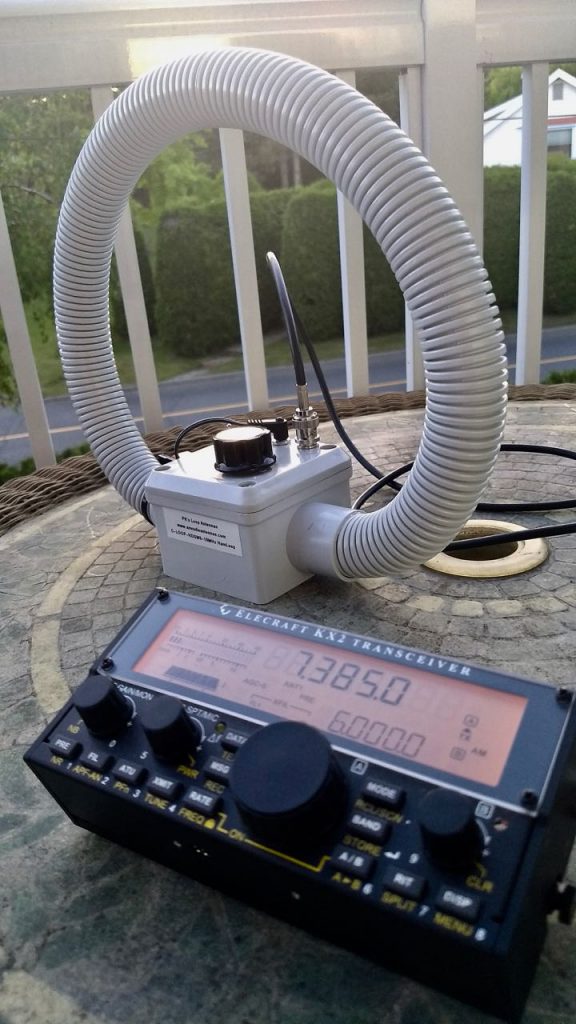
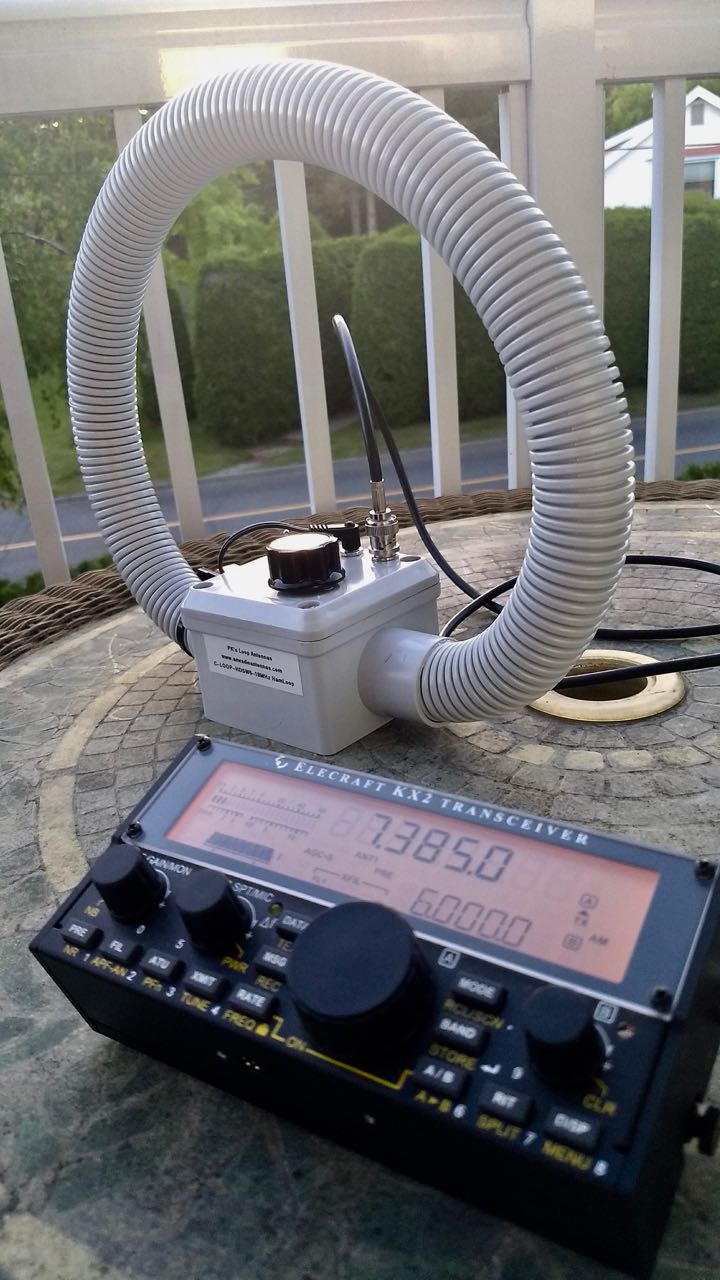
The Elecraft KX2 and PK Loop

While the PK Loop seems to pair well with my Sony SW100, I also love using it with my Elecraft KX2 for SWLing.

Sadly, the PK Loop doesn’t provide the noise mitigation of a large wideband mag loop antenna–like a Wellbrook or Pixel Loop–but it does lend itself to excellent portability and takes the edge off the noise.

While it’s easy to do my radio listening in the condo from a comfy chair, in reality, it limits what I can receive in a serious way. The 31 meter band, for example, is so heavily submerged in RFI that only the strongest stations can punch through (for example, Voice of Greece, Radio Romania International, WRMI, WBCQ, Radio Havana Cuba, China Radio International).

So, what can I do?

Hit the field, of course!

That’s right. Taking a page from the books of SWLing Post contributors London Shortwave and Clint Gouveia, I realize I can simply leave the RFI behind and seek a sound, radio quiet spot for SWLing/DXing!

My listening post last year–during the BBC Midwinter broadcast–in the parking lot of St-Anne-de-Beaupré basilica.

Over the past two months, I’ve taken time to escape the RFI and do a few live listening sessions and spectrum recordings in the field. I’ve always got my SDRplay RSP, Elecraft KX2, and Sony ICG-SW100 at the ready. In terms of wire antennas, I’ve deployed my NASA PA30 and even my QRP Trail-Friendly EFT, with good results.
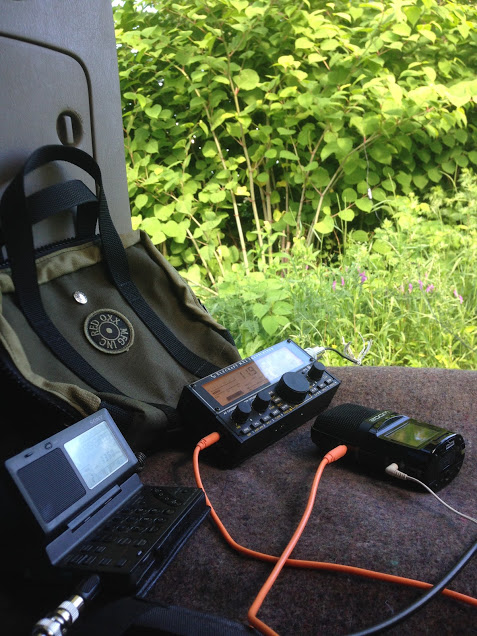
Listening to the 2017 BBC Antarctic Midwinter Broadcast from the back of my vehicle in Saint-Anne-de-Beaupré, Québec, Canada.

I’ve also been experimenting with the homebrew Miniwhip antenna that SWLing Post contributor, Steve Yothment, provided earlier this year, based on the design used by the U Twente WebSDR. As Guy Atkins recently demonstrated, miniwhip designs do require some distance from sources of RFI, however.

The field is your friend…

Just a friendly reminder that if you live in an RFI-dense environment, you can certainly design a system to help mitigate RFI at home. After all, home is where you likely spend the bulk of your free time.

View of the Saint Lawrence River from my back-of-the-minivan listening post.

But, again, the easiest way to substantially increase your chances of snagging DX stations is to simply hit the field.

Join me in giving it a try. Find an RFI-free location with access to a couple of trees to hang a simple wire antenna–say, in a park, at the side of a rural road, on a friend’s farm…and if you find the listening good, make it your radio get-away. You’ll likely find that your portable shortwave radio can outperform your at-home tabletop receiver simply by removing yourself and your radio from the noisy environ of indoors.

When you first start doing radio in the field, it might feel a bit awkward–especially if you’re taking more than a portable shortwave along for the ride–but you’ll soon enjoy the fresh air ambiance and maybe even prefer it to indoors.  Even if you’re in a public setting where curious passers-by may want to know what you’re doing, as they undoubtedly will…When questions arise, take a (brief!) moment to educate your questioner(s) about the fascinating and nearly-forgotten world of shortwave radio––maybe you’ll inspire others to listen in, too.

And trust me: once you’ve been to the field a few times, you’ll start to look forward to playing radio in the great–and noise-free–outdoors!

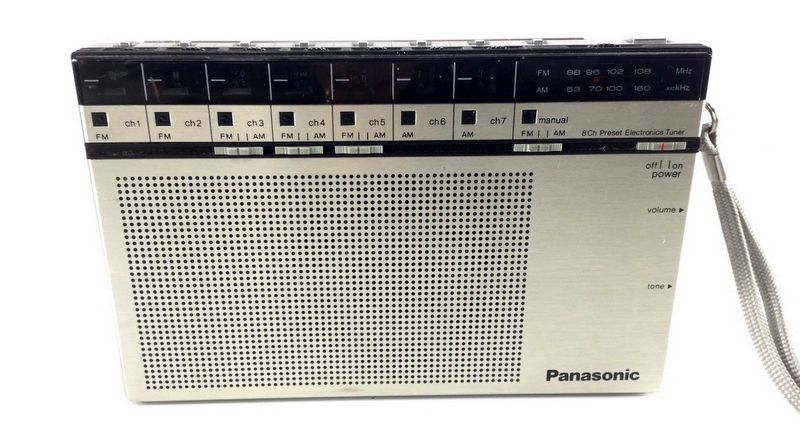
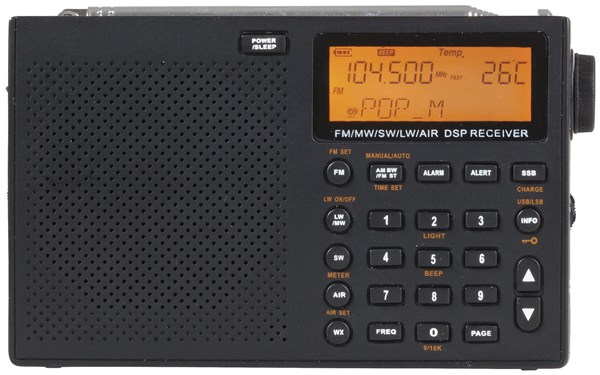
Digitech AR-1780 on order!

This morning, I bit the bullet and ordered the recently introduced Digitech AR-1780.

I’ve had a massive amount of inquiries about this radio–mainly from readers in Australia and New Zealand–so I thought it would make sense to check it out and compare it to other portables.

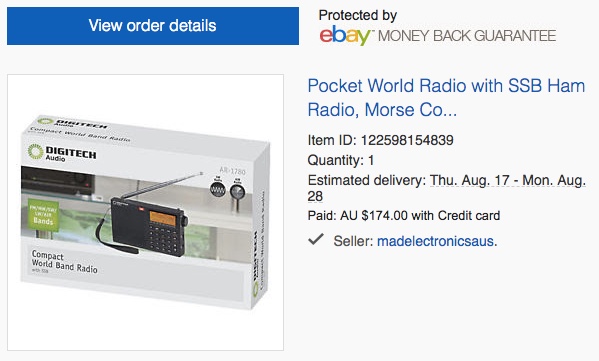
This radio is only available from retailers in Australia (so far), so I placed the order with an Australia-based eBay retailer:

The price, with shipping, will equate to about $142 US.

The AR-1780 is being sent via the postal service so I don’t expect it to arrive for at least a couple of weeks. eBay estimates a delivery between August 17-28.

Stay tuned! Bookmark the tag Digitech AR-1780 to follow updates.

Ed’s Homebrew Fruitcake Tin Radio

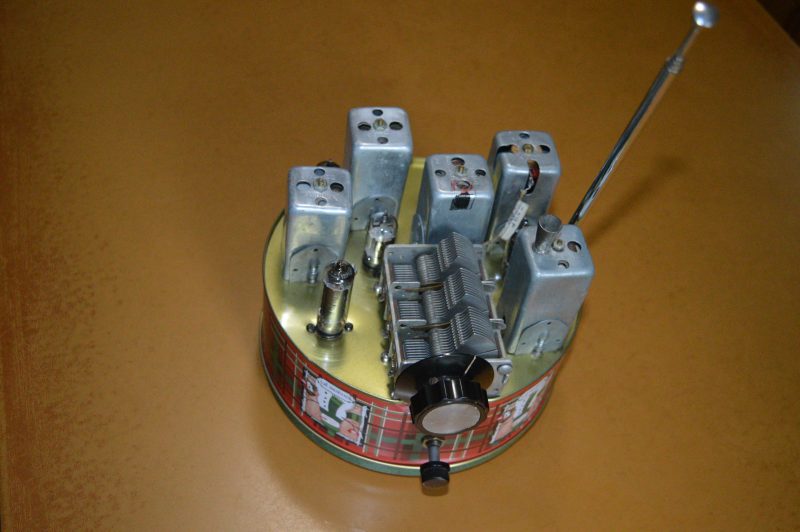
Fruit Cake Tin Radio

Many thanks to SWLing Post contributor, Ed Ganshirt, who writes:

I had an old car radio from the 1940’s I salvaged the parts from, and a rudimentary schematic to build by. I decided to re-assemble in the container I stowed away the parts in. Nothing special just another AM broadcast radio in an unusual cabinet (fruitcake tin.)

I love it, Ed! It’s like a broadcast band version of Rex’s Tuna Tin QRP radios!

It must have been a challenge to mount all of the components on that tin.  So how does she play?

Post readers: please comment and consider sharing your homebrew project!

Richard’s initial impressions of the Sony XDR-S41D FM/DAB receiver

Many thanks to SWLing Post contributor, Richard Langley, who recently attended a conference in Paris and picked up a Sony XDR-S41D. Richard writes:

The workshop closed around noon on Friday so I spent part of the afternoon walking around the nearby Darty consumer electronics and appliance store.

I wanted to buy a DAB/DAB+ portable receiver just to see what Europe was doing with digital radio. I bought a recently introduced Sony XDR-S41D DAB/DAB+/FM(with RDS) receiver for 79€ (about 11€ off list price).

I can use it in North America to listen to FM and take it with me when I visit Europe for DAB/DAB+ as well as FM.

It has reasonable sound from its 8-cm speaker and pretty good stereo sound on headphones. It has an automatic search mode on both DAB/DAB+ and FM and creates a list of available stations.

In my hotel room in the 13th arrondisement, I could receive 46 DAB+ stations. One of the stations is World Radio Paris (WRP) and they provide English language programming 24 hours per day from BBC World Service, Public Radio International, Radio France International, and Radio Canada International, among others as well as their own programming.

Another available station was Medi 1, which just dropped its shortwave transmissions. I recorded some of the WRP programming:

Audio Clip 1 (MP3)

Audio Clip 2 (MP3)

There is no line output from the receiver but I was able to use the earphone output and crank the volume to maximum to get an acceptable recording level without noticeable distortion.

Happy with my purchase and can’t wait to go back to Europe again, say to England, to try out DAB+ there.

I also spotted three receivers with SW capability on the shelves at the Darty store:

  • Panasonic RF-3500 for 45€
  • Brandt BR200D for 45€
  • Brandt BR120A for 15€

You don’t see SW receivers in North American consumer electronics stores anymore and I’ve not spotted any in airport duty free stores lately either.

I’ve been listening to the XDR-S41D at home and it sounds pretty good on FM, too, and does a good job of displaying the RDS information although a character or two is sometimes cut off the end of the data but that could be the fault of the station. Need to investigate that some more.

By the way, the radio doesn’t come with a case but I found (just before I was going to toss it) that it just fits in the magnetic-clasp case of one of those Air Canada amenities kits that they give you in business class (see photo below).

That’s the second Air Canada item I have recycled. They used to use full-ear headphones with disposable foam covers. They were a perfect fit for the deteriorating covers on my old Sony noise-cancelling headphones. I’ve since upgraded to Bose. 😉

Thank you for sharing your thoughts, Richard! The Sony XDR-S41D sounds like a keeper for sure and is certainly compact enough to easily accompany you on travels to Europe. I was not aware of World Radio Paris either–I see they’re available via TuneIn, so I’ll add them to my WiFi radio station favorites!

Schematic for the PLL EDUTEC 4-Band Digital Radio Weltempfänger?

Many thanks to SWLing Post contributor, Cezar Vener, who writes with the following inquiry:

I would like to ask you if you can help me with a schematic diagram for an EDUTEC 4-Band digital radio (PLL EDUTEC 4-Band Digital Radio Weltempfänger). It is not broken, but I would like to modify it. Of course, I could spend some time and manually extract the schematic, but I would lose too much time.

While I know that “EDUTEC” is a registred trade mark for technical (“non-food”) products that was sold by “Eduscho Handelsgesellschaft” in Bremen and also I found that it is now owned by Tchibo, well – I would like to kindly ask you for help in this matter? (course, if you can).

It is an old product, probably made in the 90’s and until now, I didn’t find anything on the net about it. I opened it and I found that its core is TA8132AN, and the FM section is made around TA7358AP. The audio stage is built with C1212C, and there is one more integrated circuit there, TA8148S (no datasheet on the net, but I found that is a DC-DC converter for electric tuning – built-in stabilized supply output for biasing VHF tuner variable capacitor / sine wave oscillation).

BTW, I found it also in SONY CFS-W504L 🙂

The PLL chip is soldered with the unmarked side, so I don’t know what type it is.

[See photo at top of post.]

Here is a photo of the rear back stand:

Unfortunately, there is no other model or name written on the radio.

I see there “CENTRON LABORATORIES LTD”, that points to the company with the same name from Gujarat, India. Very interesting :))

In the hope of an answer from you, please allow me to thank you and to congratulate you for the very nice site that you maintain there!

Many thanks, Cezar! It’s readers like you who make this site such a great one!

Post Readers: I hope someone may be able to help Cezar. This radio looks familiar–perhaps I’ve seen it badged with a different company name?  Please comment if you can help Cezar locate a schematic.