Shortwave listening and everything radio including reviews, broadcasting, ham radio, field operation, DXing, maker kits, travel, emergency gear, events, and more
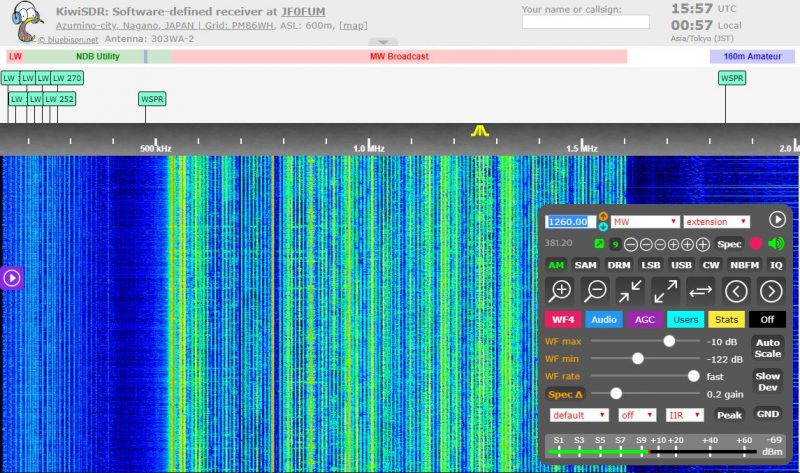
Many thanks to SWLing Post contributor, April TimeLady, who shares her latest collection of Japanese language WebSDR recordings–this time, for November 2020.
Feel free to listen to her recordings via the clickable playlist below, or on her Archive.org page.
Thank you, April for once again uploading and sharing your recordings!
Many thanks to SWLing Post contributor, David Shannon, who writes:
Hi Thomas
A little treat for my fellow readers of your blog (is that the right word?). The RTE interval signal, a rendition of O’Donnell Abú (“O’Donnell Forever”), that is played at 0529 daily, apart from the weekend when it’s played at 0629 (even interval signals need a lie in) and received on longwave here in Scotland.
I know that longwave broadcasting is a very European thing with the exception of the likes of Mongolia (holy grail stuff for me) but it’s where my fascination for the bands started way back in 1978/9.
Sláinte mhaith gach duine
(Irish Gaelic for good health everyone)
That’s a beautiful interval signal, David. Thank you so much for sharing it with your fellow Post readers! There are few things in this world that make me feel more nostalgic than an off-air recording of an interval signal. Go Raibh Maith Agat!
Many thanks to SWLing Post contributor, Matt Blaze (WB2SRI), for sharing another brilliant audio comparison featuring benchmark portable radios:
Medium wave selectivity shootout
by Matt Blaze
I did another monster medium wave portable receiver comparison, this time with the aim of comparing receivers’ ability to deal with weak signals in the presence of strong adjacent channels.
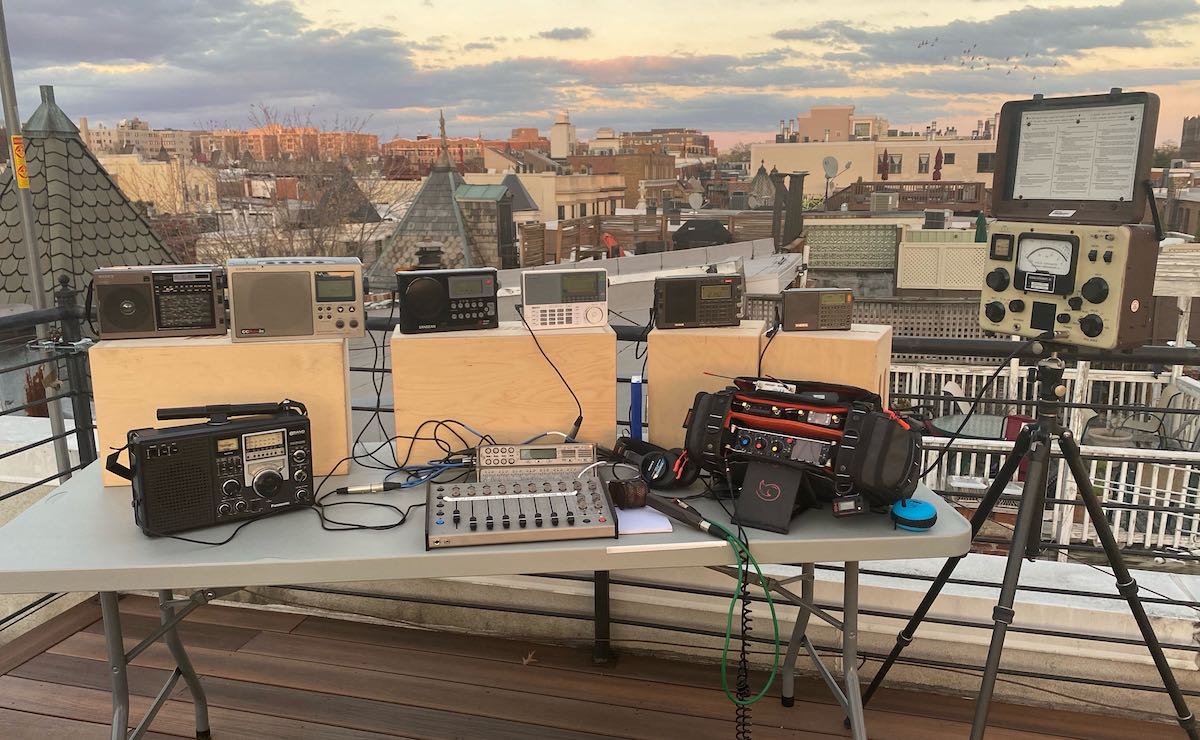
Once again, I went up to the roof with eight MW portables with built-in antennas and recorded them simultaneously along with my “reference signal”, from an Icom R-9500 with an active loop on the roof. As before, I recorded a narrated stereo mix with the Icom on the left and the rotation of radios for a minute or two each on the right, but have “solo” tracks available for the full time for each radio. The nine receivers in the lineup this time included:
Icom R-9500 (with amplified Wellbrook loop antenna on roof)
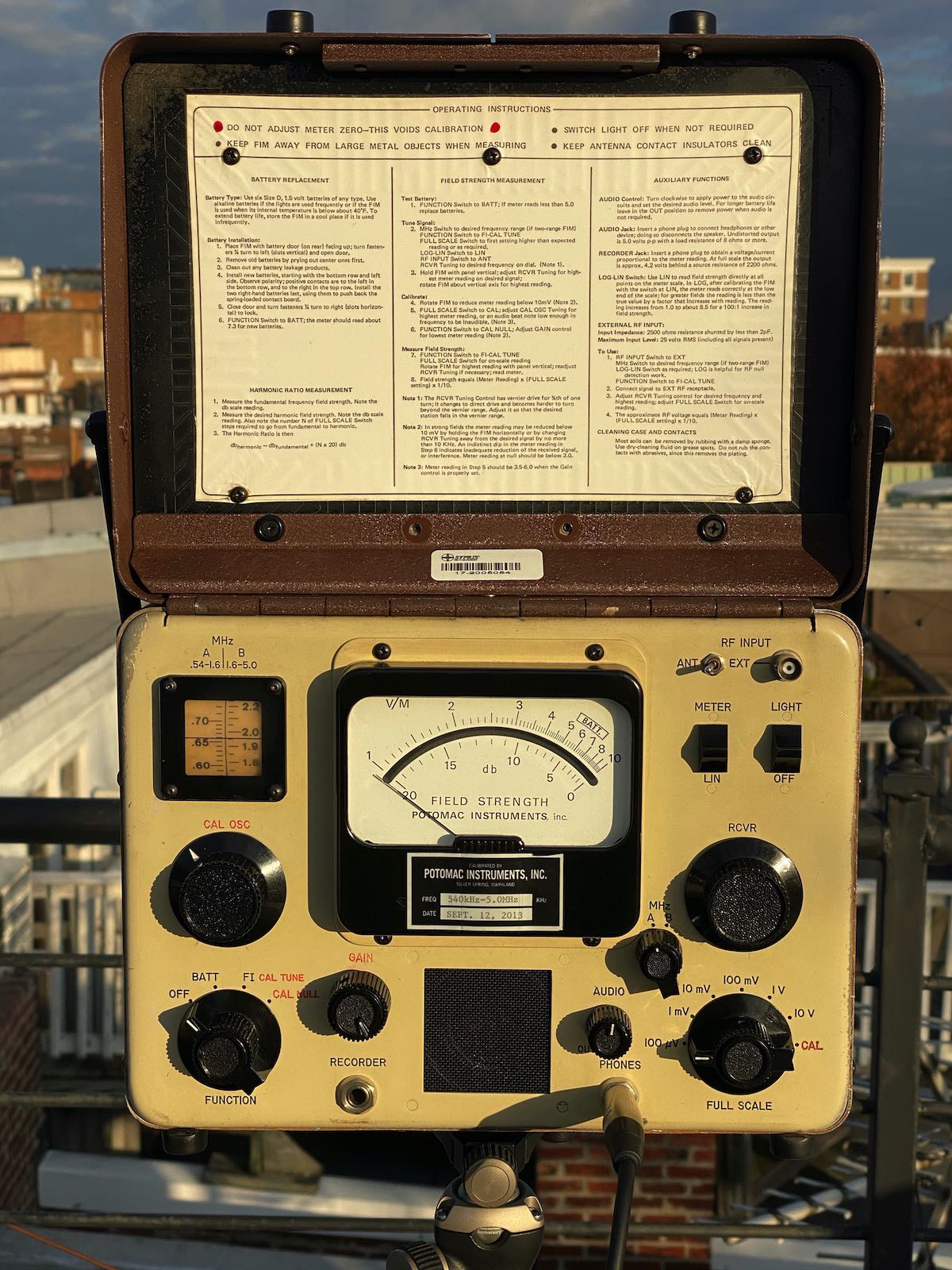
Potomac Instruments FIM-41 Field Intensity Meter (my personal favorite)
Panasonic RF-2200
Sony IC-EX5MK2
C.Crane Radio 2E
Sangean PR-D4W
Sangean ATS-909X
Tecsun PL-990X
XHDATA D-808
I recorded two signals, one at night and one during the day.
Nighttime Signals
The first was at night: WWL New Orleans on 870 KHz. This signal is usually weak to medium strength here, but is a challenge for two reasons: first, it shares the frequency with Cuba’s Radio Reloj, and it is squeezed between two much higher strength signals: Toronto’s CJBC on 860, and NYC’s WCBS on 880. So you need a decent receiver and careful antenna orientation to receive it well here. That said, everything did pretty well, though you can see that some radios did better than others.
The mix
Solo tracks
Icom IC-R9500
Potomac Instruments FIM-41 Field Intensity Meter
Panasonic RF-2200
Sony IC-EX5MK2
C.Crane Radio 2E
Sangean PR-D4W
Sangean ATS-909X
Tecsun PL-990X
XHDATA D-808
Daytime Signals
The second signal was during the day and was MUCH more marginal: WRJR Claremont, VA on 670 KHz. This was real challenge for any receiver and antenna. The signal was weak, and overshadowed by WCBM Baltimore on 680, a 50KW daytimer that is very strong here. (I’m not 100% sure that we were actually listening to WRJR – I never got an ID, but the station format and signal bearing was right). We can really hear some differences between the radios here.
The mix
Solo tracks
Icom IC-R9500
Potomac Instruments FIM-41 Field Intensity Meter
Panasonic RF-2200
Sony IC-EX5MK2
C.Crane Radio 2E
Sangean PR-D4W
Sangean ATS-909X
Tecsun PL-990X
XHDATA D-808
Everything (except the Icom) was powered by batteries and used the internal MW wave antenna, oriented for best reception by ear (not just maximizing signal strength, but also nulling any interference). The loop for the Icom was similarly oriented for best intelligibility.
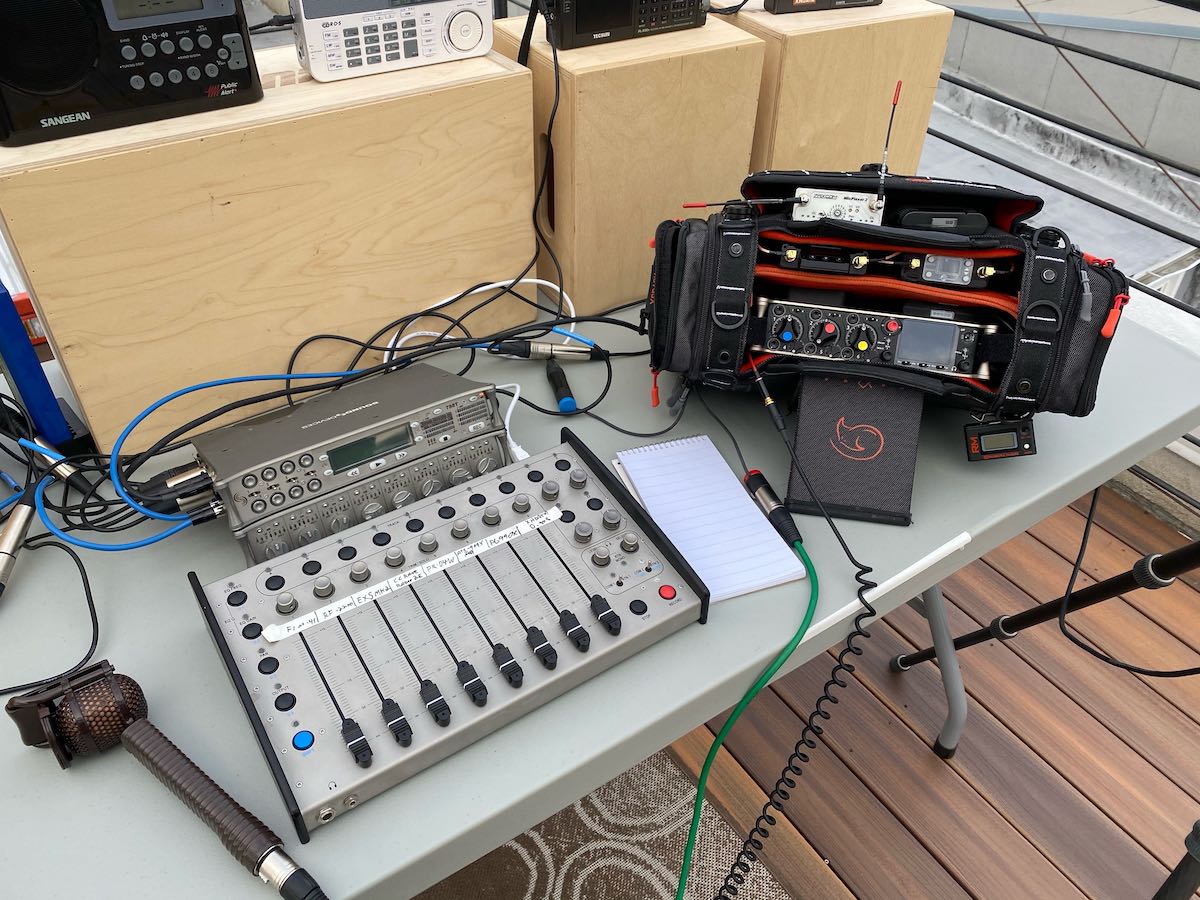
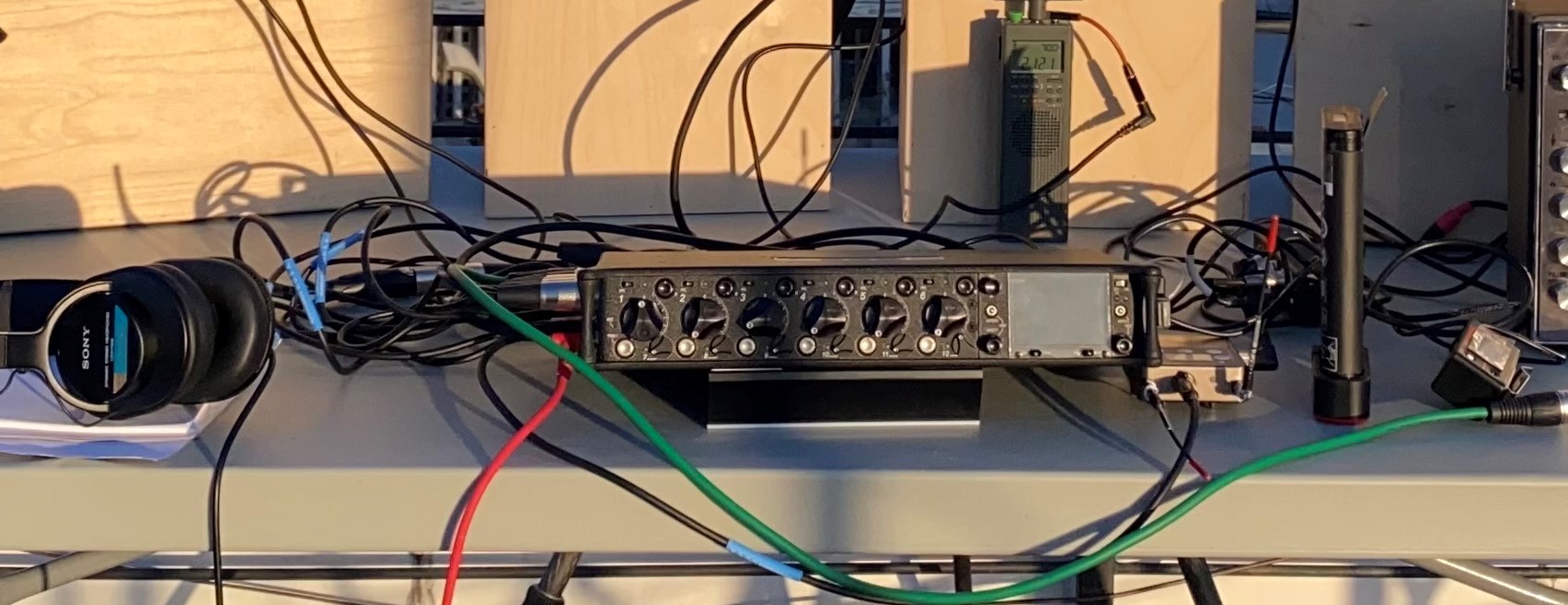
For audio nerds: The recording setup involved a lot of gear, but made it fairly easy to manage capturing so many inputs at once. The portable radios were all connected to a Sound Devices 788T recorder, with levels controlled by a CL-9 linear mixing board control surface. This both recorded the solo tracks for the portables as well as providing a rotating mix signal for each receiver that was sent to the next recorder in the chain, a Sound Devices 833. The 833 received the mix audio from the 788T, which went directly to the right channel. The left channel on the 833 got audio from a Lectrosonics 822 digital wireless receiver, which had the feed from the Icom R-9500 in the shack (via a Lectrosonics DBu transmitter). The center channel on the 833 for narration of the mix, which I did with a Coles 4104B noise-canceling ribbon mic. This let me record fairly clean audio in spite of a fairly noisy environment with some wind.
All the radio tracks were recorded directly off the radios’ audio line outputs, or, if no line out was available, from the speaker/headphone jack through a “direct box” interface. I tried to make the levels as close to equal as I could, but varied band conditions and different receiver AGC characteristics made it difficult to be completely consistent.
Making the recordings was pretty easy once it was set up, but it did involve a turning a lot of knobs and moving faders in real time. I must have looked like some kind of mad scientist DJ to my neighbors, some of whom looked at me oddly from their own roofs.
Happy Thanksgiving weekend!
Thank you, Matt, for another brilliant audio comparison! I appreciate the attention and care you put into setting up and performing these comparisons–not an easy task to say the least. That Potomac Instruments FIM-41 is an impressive machine!
By the way, I consider it a badge of honor when the neighbors look at me as if I’m a mad scientist. I’m willing to bet this wasn’t your first time! 🙂
Post readers: If you like this audio comparison, please check out Matt’s previous posts as well:
Shortwave Radio Audio Archive contributor, Tom Gavaras, shares some of the most amazing off-air, studio, and personal recordings our archive.
Recently, he submitted a very unique recording. Tom notes:
Rudy Espinal of Radio Clarin (Dominican Republic) keynote speech at 1979 Association of North American Radio Clubs (ANARC) convention held in Minneapolis, Minnesota. Convention took place in June 1979.
In this recording, you’ll hear a number of familiar names (including an early shout-out to our friend Kim Elliott).
I was in elementary school at the time of this convention, so it’s amazing bit of audio time travel for me.
Do you recognize any names in this recording? Do you remember Radio Clarin? Did you attend the 1979 ANARC Convention? Inquiring minds want to know! Please comment!
The original files are in .wav, archive.org converts them to mp3 and flac. Files with sas in them are supposed to be in stereo. There are many shortwave recordings in it, as well as mediumwave.
For anyone who is hunting IDs, Japanese radio stations definitely announce their full ID at 5 AM Japan Standard Time each day. On the top of the hour commercial radio stations ID. On Mondays between 1 and 2 AM (commonly given as between 25:00 and 26:00 Sundays on Japanese radio schedules) many Japanese radio stations go off the air for transmitter maintenance and give a very full, 5 minute long ID. I believe I have included one that I clipped for 1008 AM in Osaka in this month’s collection; 1008 AM, JONR is definitely in full AM stereo.
Many thanks to SWLing Post contributor, Matt Blaze (WB2SRI), who shares the following guest post:
Matt’s Marathon MediumWave Matchup
by Matt Blaze
Here’s another simultaneous receiver comparison, this time of ten portable medium wave receivers plus the Icom IC-R9500 (as a “reference receiver”). Previously, I used the same antenna for all the comparisons, but since these are portable receivers, I wanted to compare their performance using their built-in antennas. I did two comparisons, both of moderate to weak signals, one in the evening of a DX signal and the other in the daytime of a regional station.
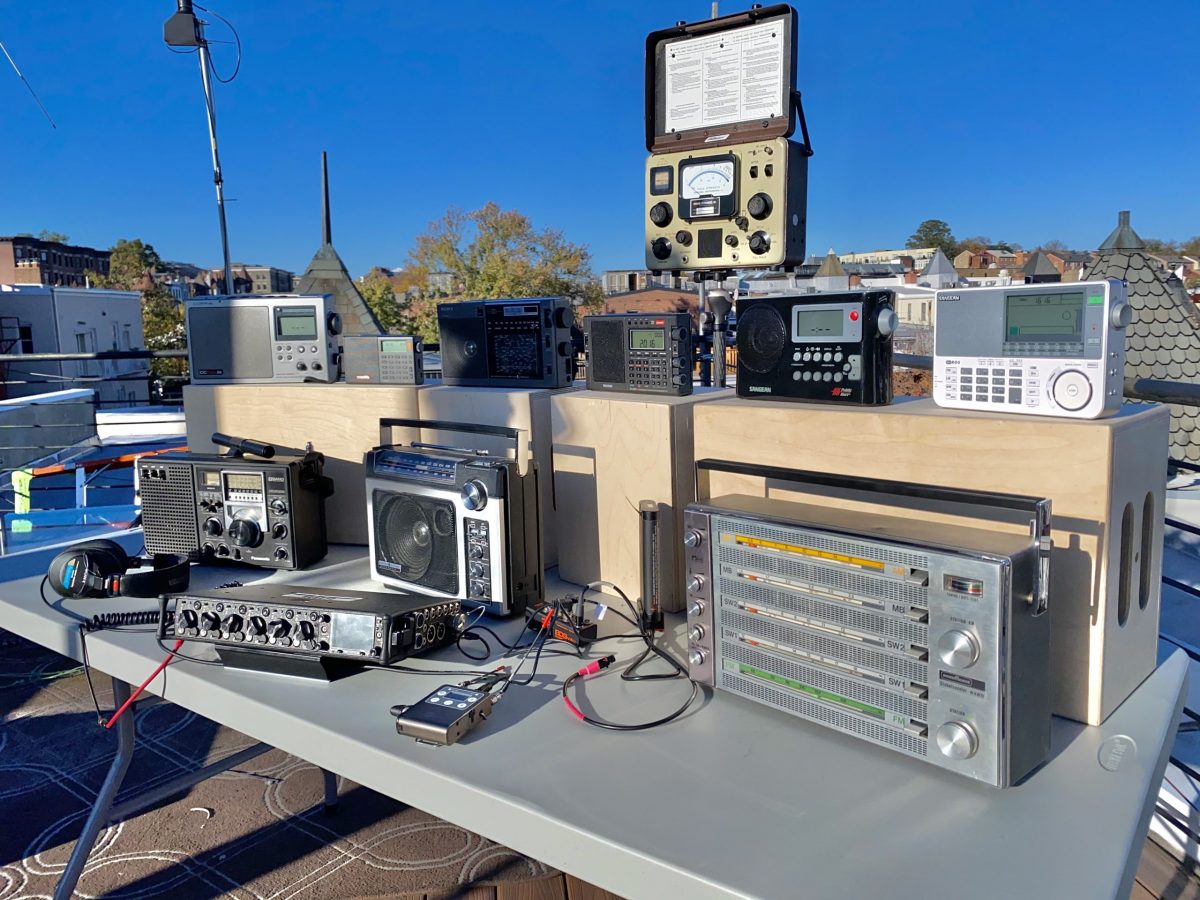
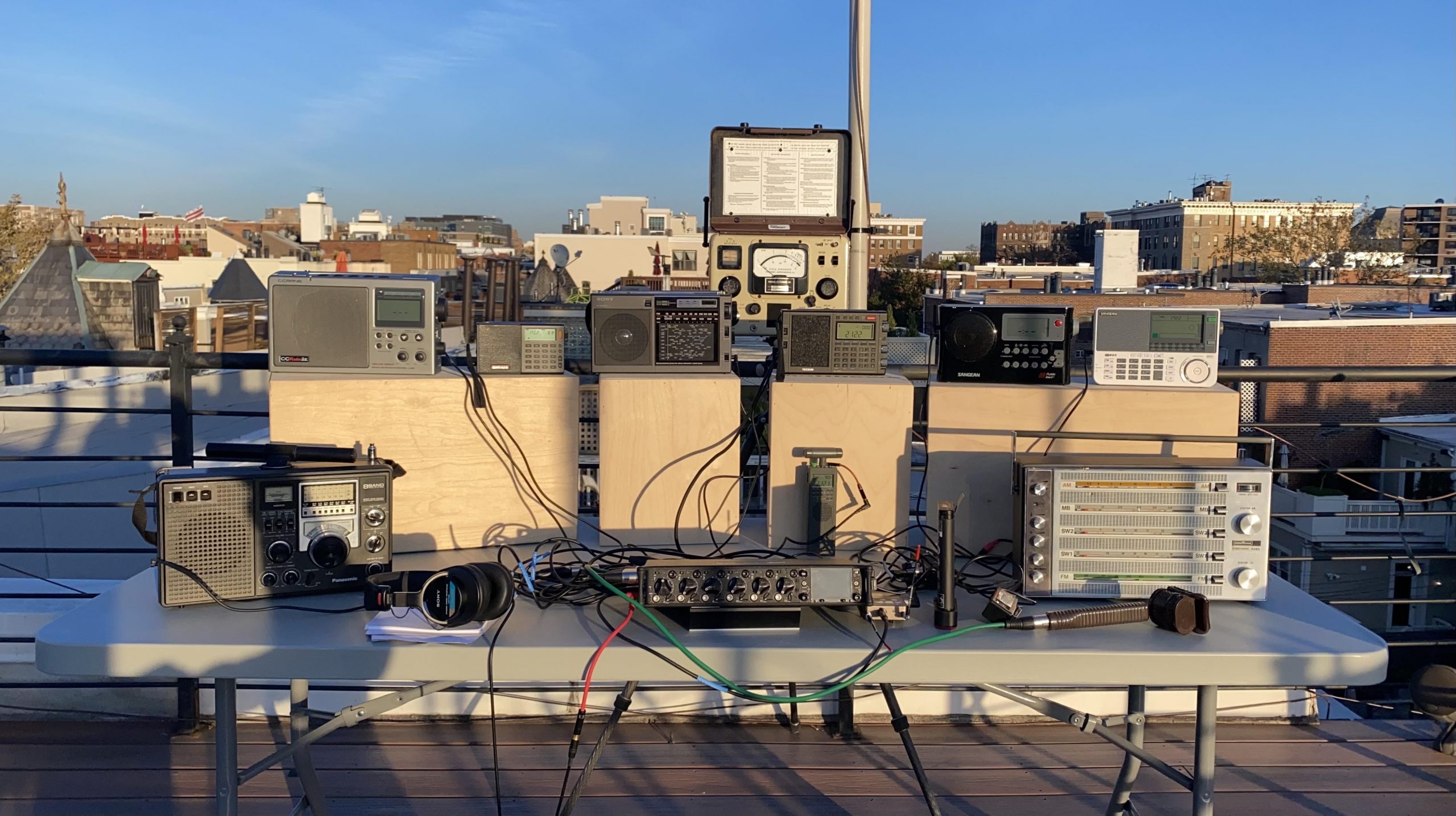
The receivers were the Potomac Instruments FIM-41 (a “field intensity meter”), the Panasonic RF-2200, the Nordmende GlobeTraveler Exec (a beautiful German SW portable from 1968), the Sony ICF-EX5MK2, the CCrane Radio 2E, the Sangean ATS-909X, the Sangean D4W, the new Tecsun PL-990X, the XHDATA D-808, and finally the CountyComm GP5-SSB, plus the Icom IC-R9500.
All the receivers were recorded simultaneously. The radios (except the Icom R9500) were on the roof of my building and oriented for best reception (signal/noise) and kept sufficiently away from each other and other metal objects to avoid interference, The R9500 was in the shack and used a Wellbrook loop on the roof, also oriented for best signal/noise. I took the audio from the Line Out if one was available and from the headphone jack (via a “direct box” level converter) if not. I tried to match the audio levels reasonably closely, but different ACG characteristics made it difficult to be completely consistent across all the receivers throughout the sessions.
As in previous comparisons, for each session I’ve got a narrated stereo mix with the R9500 on the left channel and each receiver, for a minute or so one after the other on the right channel. You definitely want to use headphones to listen to these so you easily tell the left from the right radio. I’ve also provided mono “solo” recordings of each receiver for the full 15 minute-ish sessions so you can hear a receiver you’re interested in in detail.
Sound Devices 688 Multitrack Recorder
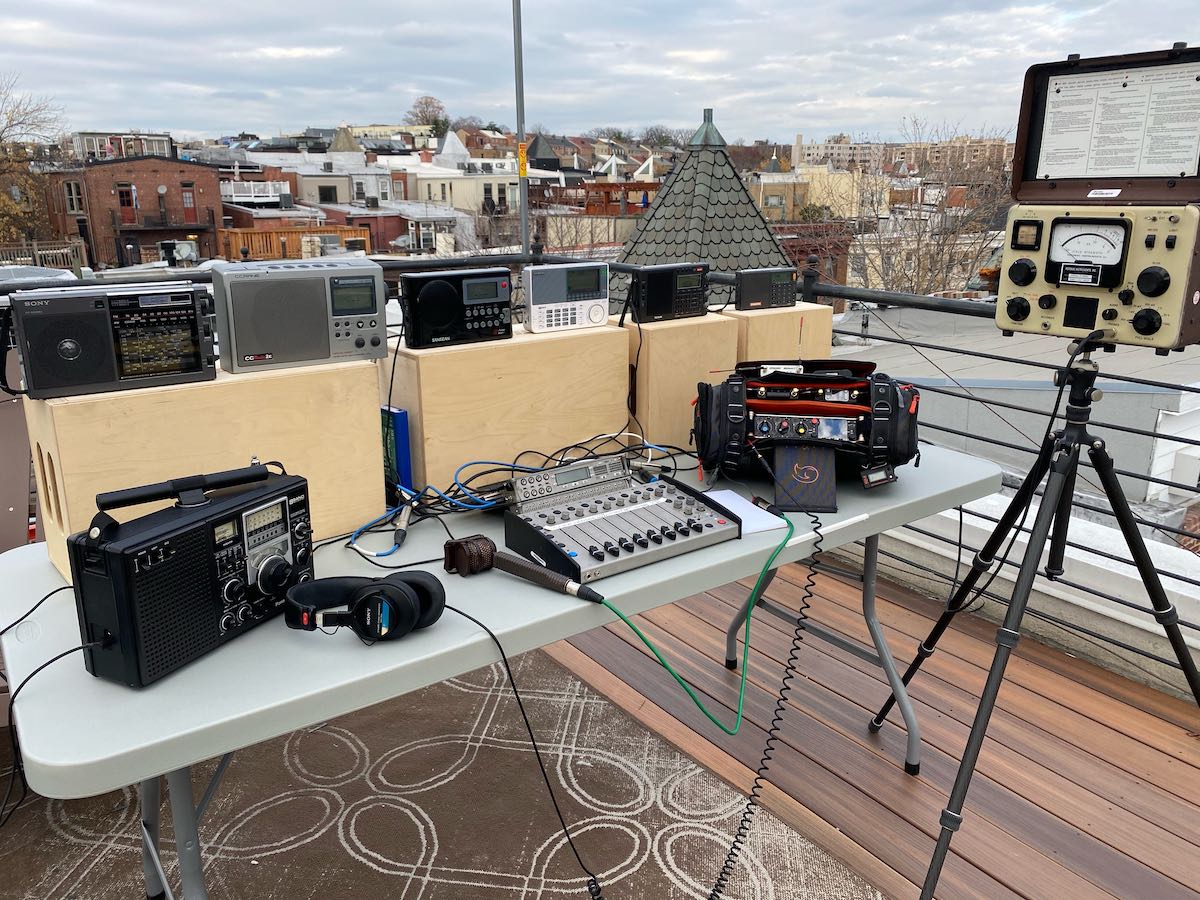
The recordings were made with a Sound Devices 688 recorder/mixer (which can record 12 simultaneous channels of audio). The portable radios were hardwired to the recorder, and the 9500 (which was downstairs) was connected via a Lectrosonics digital radio link. (Everything except the R9500 was on battery power to avoid mutual interference and ground loops, etc). The narration used a Coles noise canceling ribbon mic. Everything was done in a single take per session – there was NO postproduction editing – so I apologize for a few glitches and awkward moments.
You can see a “class photo” of the setup below, although the position and orientation of the radios was different during the actual recordings.
KCJJ
The first recording was at night, where we tuned to 1630 KCJJ in Iowa City, IA. This is effectively a 1KW clear channel; other than a few TIS stations, there’s not much else there on the east coast, and the signal is reliably weak to moderate but readable here on the east coast.
Narrated L/R stereo comparison:
Individual solo tracks:
CCrane Radio 2E
Sangean D4W
XHDATA D-808
Sony ICF-EX5MK2
Potomac Instruments FIM-41
CountyComm GP5-SSB
Nordmende GlobeTraveler Exec
Tecsun PL-990X
Icom IC-R9500
Panasonic RF-2200
Sangean ATS-909X
WSVA
The next recording was made during the day, of WSVA, a regional station in Harrisonburg, VA running 5KW in the daytime. Their signal is also reliably weak-moderate but readable here.
Narrated L/R stereo comparison:
Individual solo tracks (receiver should be obvious from the file name):
CCrane Radio 2E
Sangean D4W
XHDATA D-808
Sony ICF-EX5MK2
Potomac Instruments FIM-41
CountyComm GP5-SSB
Nordmende GlobeTraveler Exec
Tecsun PL-990X
Icom IC-R9500
Panasonic RF-2200
Sangean ATS-909X
Hope your readers find it useful!
-matt
An absolutely amazing job again, Matt! Thank you so much for taking the time to put this comparison together and sharing it here on the SWLing Post.
Many thanks to SWLing Post contributor, Matt Blaze, who writes:
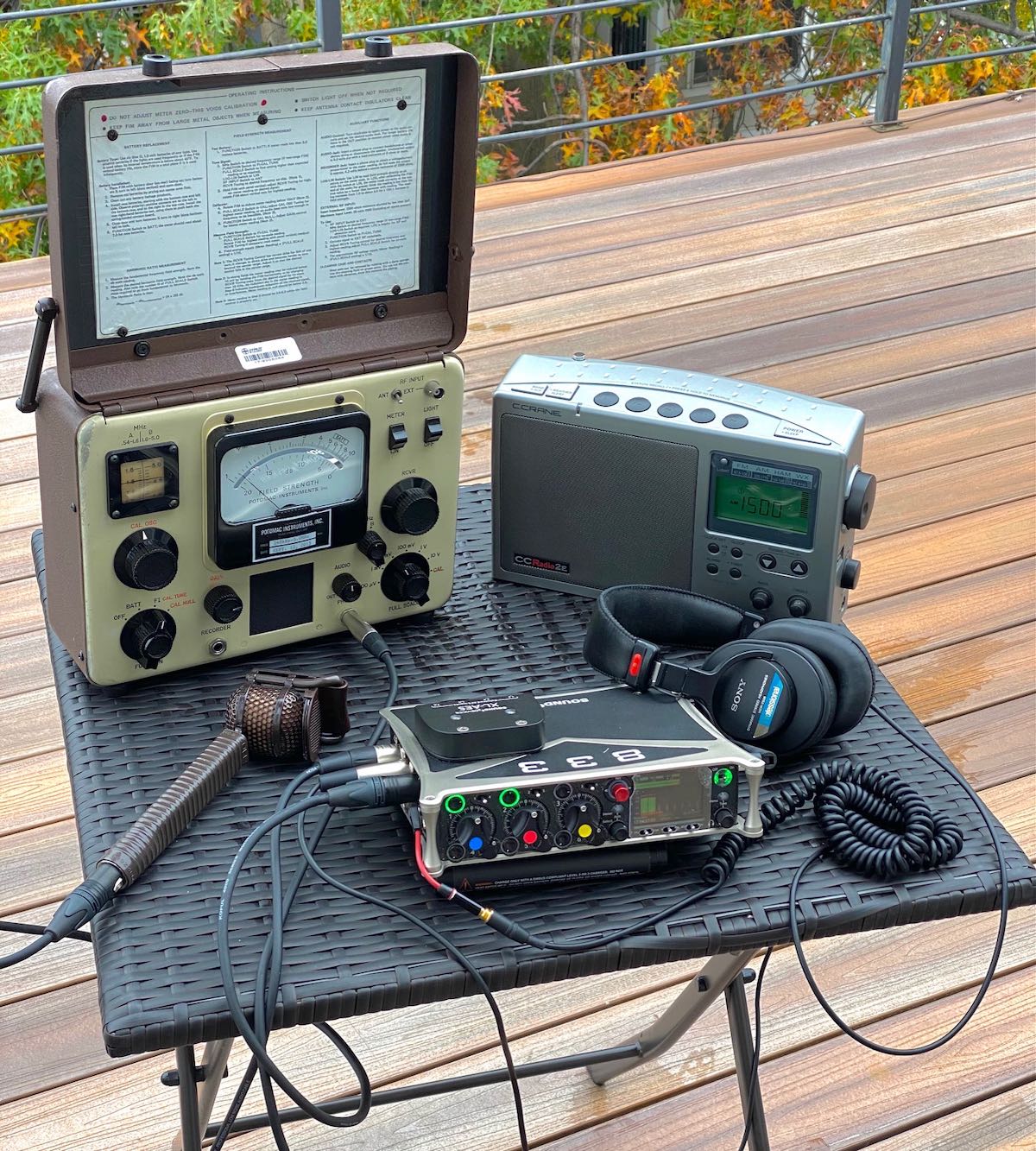
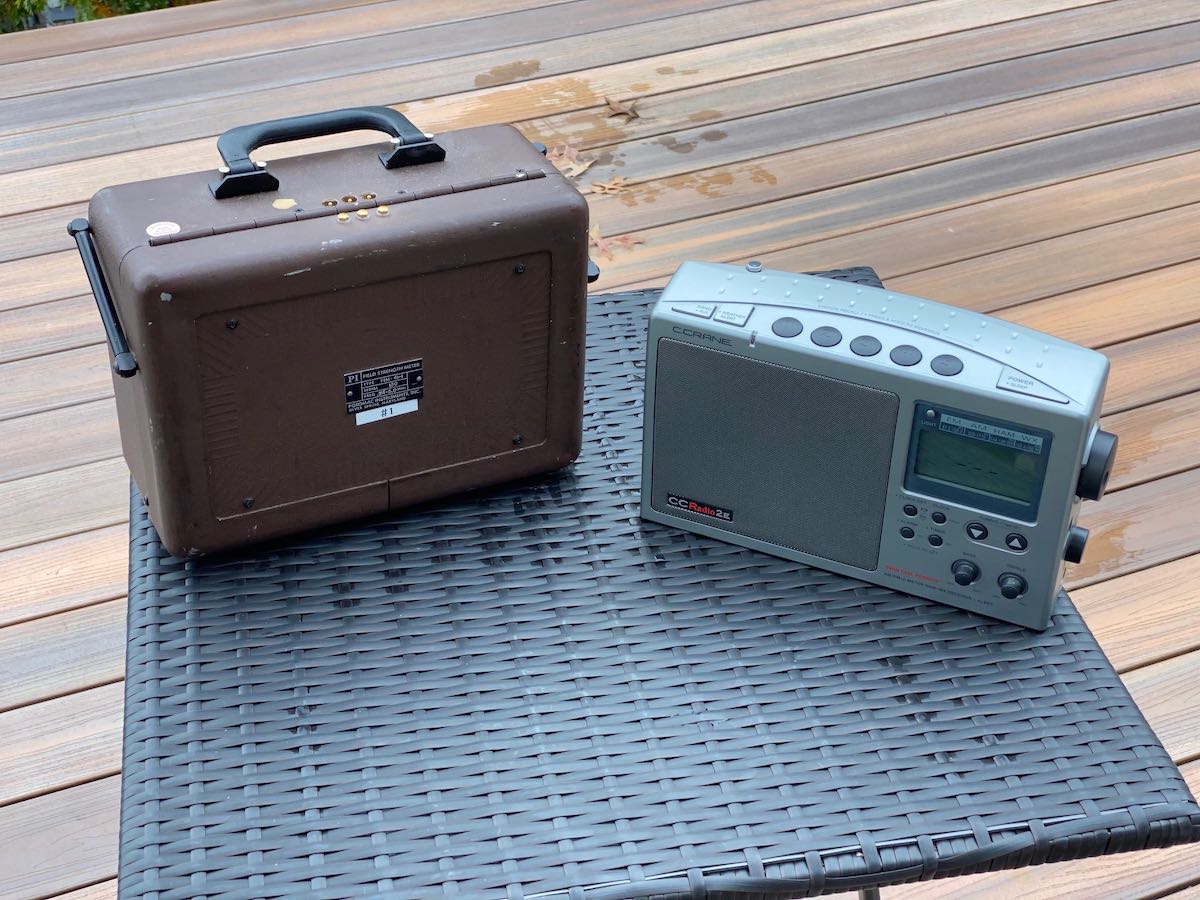
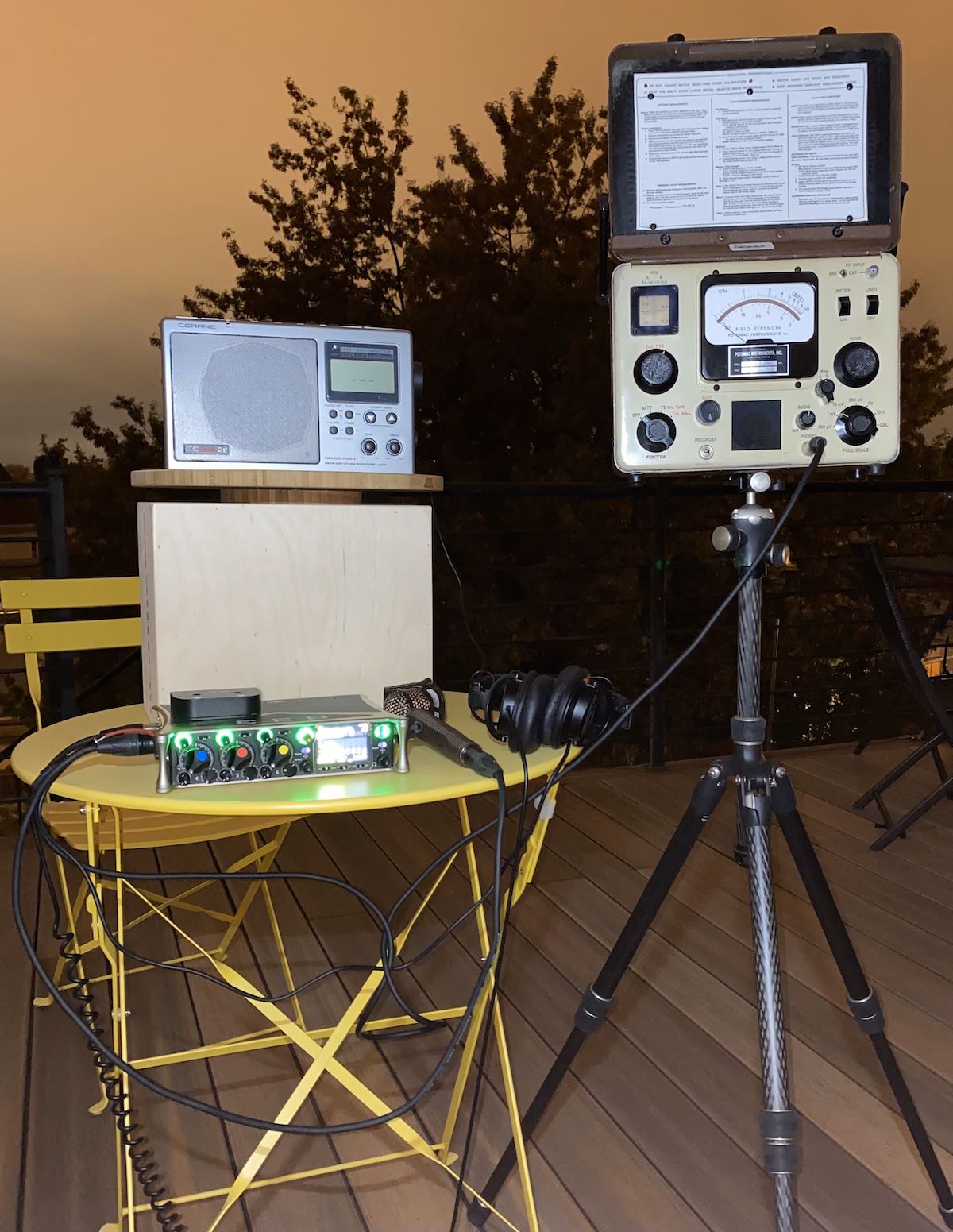
I did another head-to-head receiver comparison, this time of two MW BCB AM portables: The C.Crane Radio 2/e vs. the Potomac Instruments FIM-41 field intensity meter.
The latter is not intended as a receiver, but rather a test instrument, but it turns out to be the among most sensitive MW receivers I’ve ever used. So I thought it would be interesting to compare its performance with that of a well-regarded modern portable.
Audio Comparison:
Our two contenders with comparable portable radios: the GE Super Radio, Panasonic RF-2200, and Sony ICF-EX5MK2.
Another brilliant audio comparison, Matt! Thank you so much for taking the time to put this together! I actually believe audio comparisons, as you’ve set them up, are a fantastic way of sharing A/B comparisons.

 Many thanks to SWLing Post contributor, April TimeLady, who shares her latest collection of Japanese language WebSDR recordings–this time, for November 2020.