Category Archives: Shortwave Radio

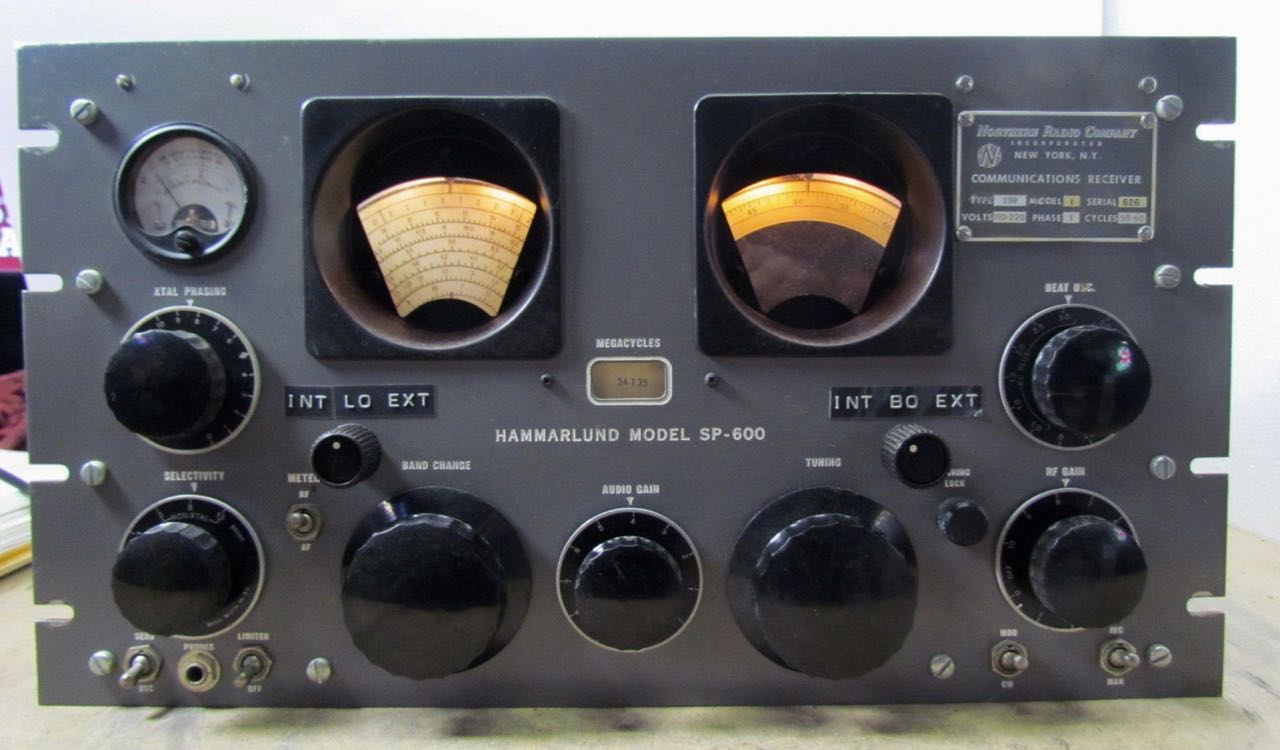
Exceedingly rare Northern Radio modified SP-600

Many thanks to SWLing Post contributor, Dan Robinson, who writes:

Those of us who still use SP-600s, and those of us who once did but can’t deal with them in retirement, lust after some of the rarer versions of the radio. This is one of them, the Northern Radio modified SP-600.

Click here to view on eBay.

Wow! Many thanks for the tip, Dan!

I must say that when Dan finds these rare treasures on eBay, they usually carry a very hefty price.  In my opinion, this is a good deal for a rare SP-600. Best of all, it has a BuyItNow price, so first-come, first serve and no bidding up the amount.  The shipping price is a bargain considering this radio probably weights upwards of 80 lbs.

This SP-600 may need some electrical restoration and possible re-capping. It’s listed as: “For parts or not working.” If you’ve been looking for an SP-600 to restore, this might be worth consideration. Thanks again, Dan.

Dan’s take on ADS-B with the Raspberry Pi B model

Many thanks to SWLing Post contributor, Dan Srebnick (K2DLS), who recently posted a detailed overview of his ADS-B installation on his blog:

Monitoring NextGen ATC (on the cheap!)

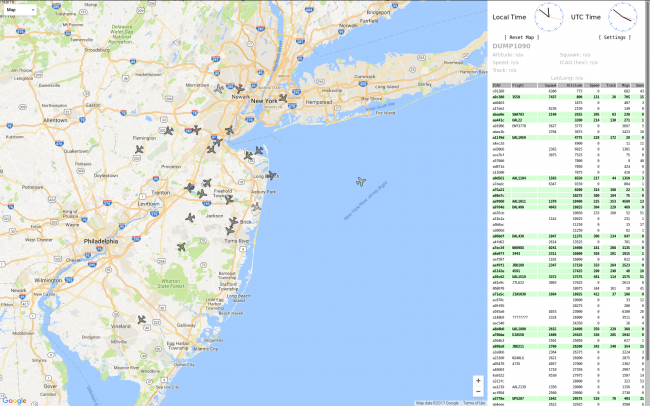
A key component of next generation air traffic control is Automatic Dependent Surveillance – Broadcast (ADS-B). The current FAA mandate is for all included aircraft to output ADB-B transmissions no later than January 1, 2020. But you don’t have to wait to receive and map ADS-B. There is a lot of air traffic to be seen.

[…]I decided to use a spare older RTL-SDR stick based on the RTL2832U and R820T chips. This USB device comes with a small antenna that I hoped would be good enough to get me started. It is not in any way optimized for the 1090 MHz signals that are used by ADS-B and is roughly 19 parts per million (ppm) off frequency. It cost a bit over $10 at a hamfest a couple of years ago. The designs have improved since the early models were offered. Newer models include a TCXO (thermally compensated crystal oscillator) for stability and accuracy.

I needed software to take signals from the RTL-SDR stick and plot them on a map. That software is “dump1090”, originally written by Salvatore Sanfilippo. I added an install stanza to the Makefile, along with a systemd service file, for a smooth system install. I also needed to install the RTL-SDR USB drivers. The complete installation runs “headless”, meaning no monitor, keyboard or mouse need be connected. Remote management can be done via ssh.[…]

Continue reading on Dan’s blog…

This is fantastic, Dan! Thank you for taking the time to share all of the code snippets you needed to do the installation on the Raspberry Pi B as well. Post Readers: if you have an older Raspberry Pi and RTL-SDR sitting on a shelf, use Dan’s guidance to turn them into an ADS-B feeder!

Click here to read my ADS-B feeder tutorial based on the Raspberry Pi 3.

Tony performs a quick LNA4ALL test

Many thanks to SWLing Post contributor, Tony Roper, who shares the following guest post which originally appeared on his blog, Planes and Stuff:


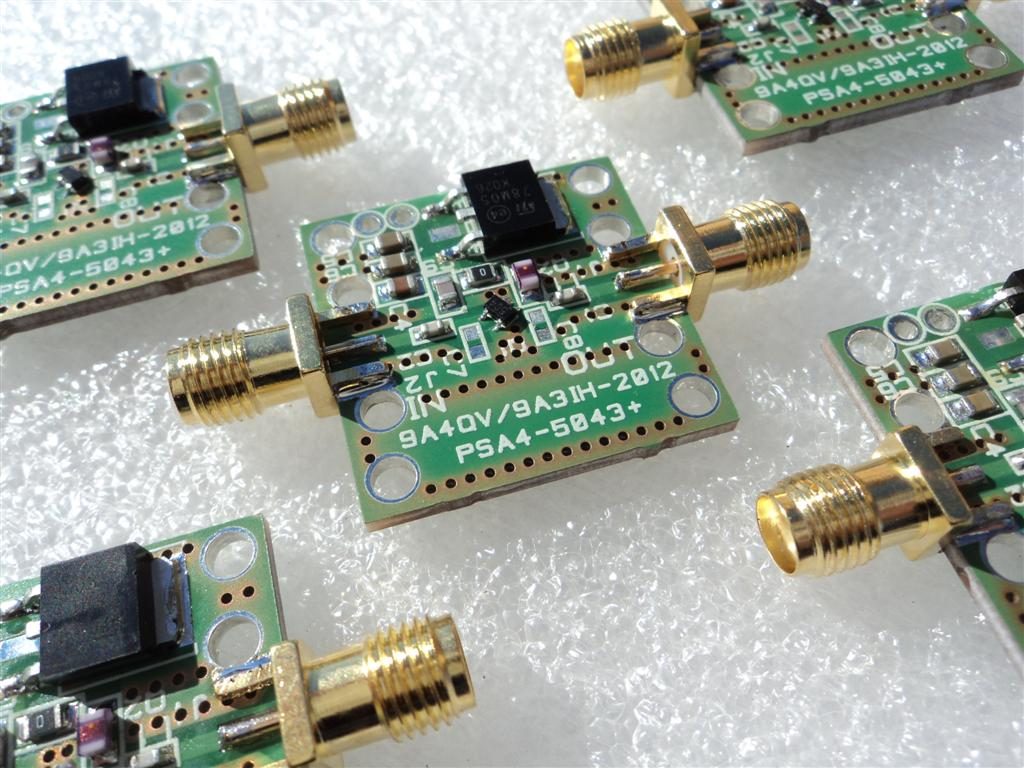
Quick LNA4ALL test

by Tony Roper

Despite the best efforts of the Royal Mail service, I have been able to get my hands on a Low Noise Amplifier created by Adam at LNA4ALL. The Royal Mail showed just how useless it is, when the parcel arrived here in the UK in just 11 hours from Croatia on February the 14th, but then not getting delivered to me until March the 14th – yes, one month! There is no surprise that courier companies such as DPD and Hermes are getting more business than the Royal Mail – they are bloody useless.

Anyway, the reason for the purchase is for a later review on an AIS dongle that I will be testing, but which has unfortunately been possibly damaged before getting to me.

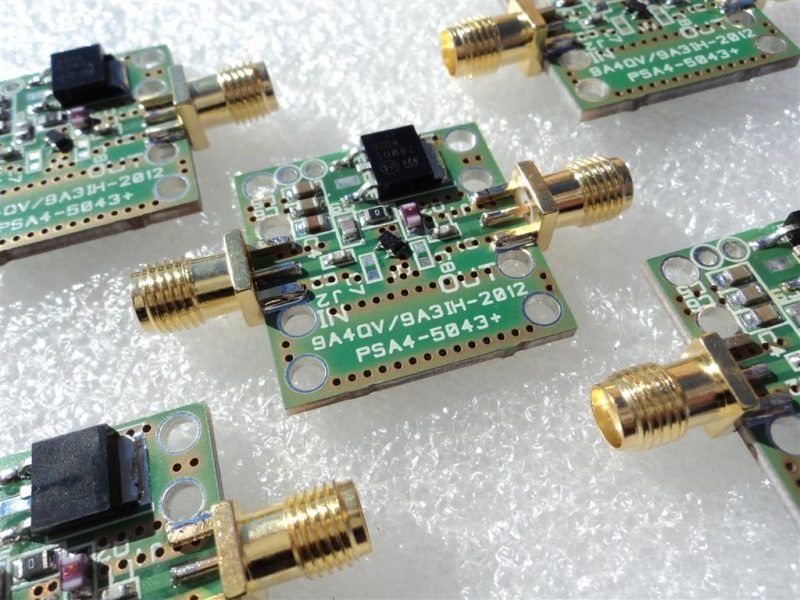
So, as I had some time to spare I thought I’d run a quick test on how the LNA performs against the claims that is shown on the LNA4ALL website. For the test I used a quickly built 12v to 5v PSU that was connected to a Maplin bench PSU and also a Rigol DP711 Linear DC PSU where I could ensure a precise power input. As it was, it was good that I used the DP711 because my quick PSU was only chucking out 1.2v at connection to the LNA4ALL, despite an unconnected output of 5v – some work needed there I think.

Despite this lower power the LNA4ALL still worked with just the 1.2v input, though the results where not as good.

Other equipment used were a Rigol DSG815 Signal Generator and a Rigol DSA1030 Spectrum Analyser (no longer available), along with various Mini-Circuits shielded test cables. The Rigol equipment I purchased from Telonic Instruments Ltd last year.

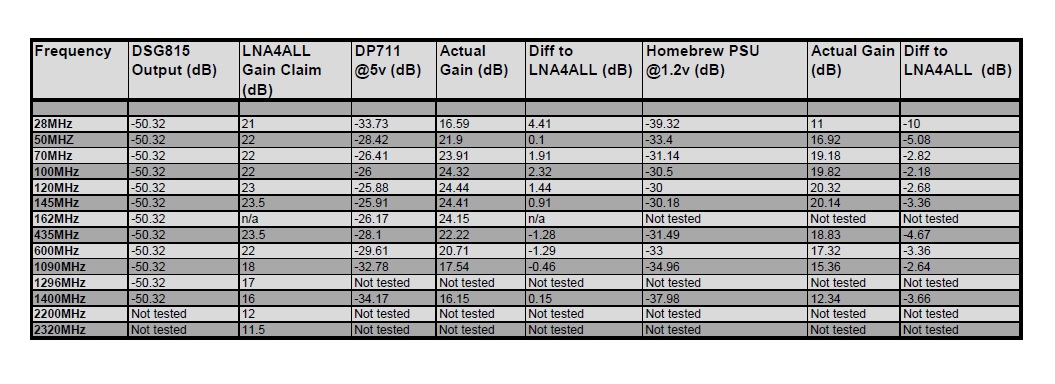
Below then is a table that contains all the relevant data. As you’ll see the Gain claim is pretty much spot on with some being over. Just a couple of frequencies are below that which is claimed, especially at 28 MHz.
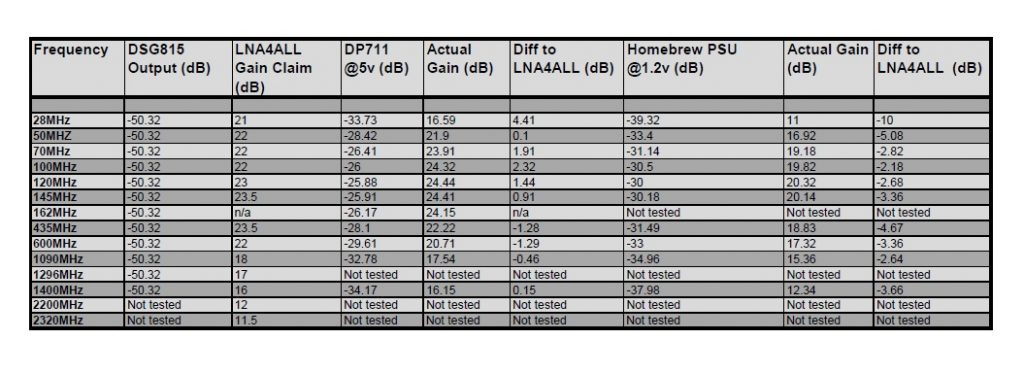
LNA4ALL Frequency data

A couple of things to note.

Firstly, somehow I managed to miss testing 1296 MHz. I obviously didn’t put it in the table in Excel before I started ? Also, the DSG815 only goes up to 1.5 GHz so I couldn’t test above that.

Secondly I ran a test for the AIS centre frequency of 162 MHz, for which there was no comparison to the LNA4ALL data. A gain of over 24dB though shows that the LNA would be perfect for those of you with AIS receivers that may want to get better reception. To prove the theory I compared the LNA reception against data without it connected to the NASA Engine AIS receiver that I currently use. In ShipPlotter I average a max range of around 15nm without the LNA, but with it connected this increased to around 22nm. The number of messages received also tripled as it was able to dig out the weaker signals.

The NASA Engine isn’t a bad receiver, but it is a frequency hopper rather than a dual monitor, and so it changes between the two AIS frequencies every 30 seconds (161.975 MHz and 162.025 MHz). I suspect a dual monitor would give better message numbers and range.

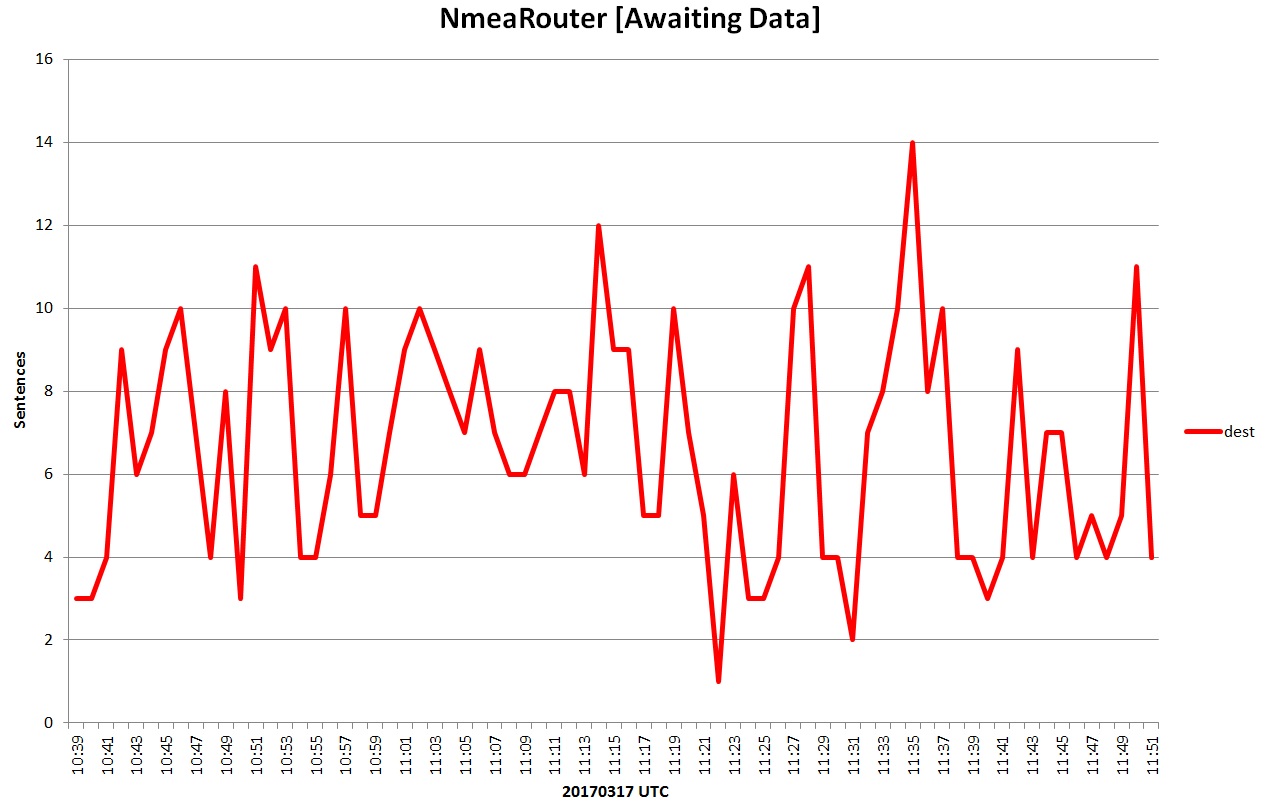
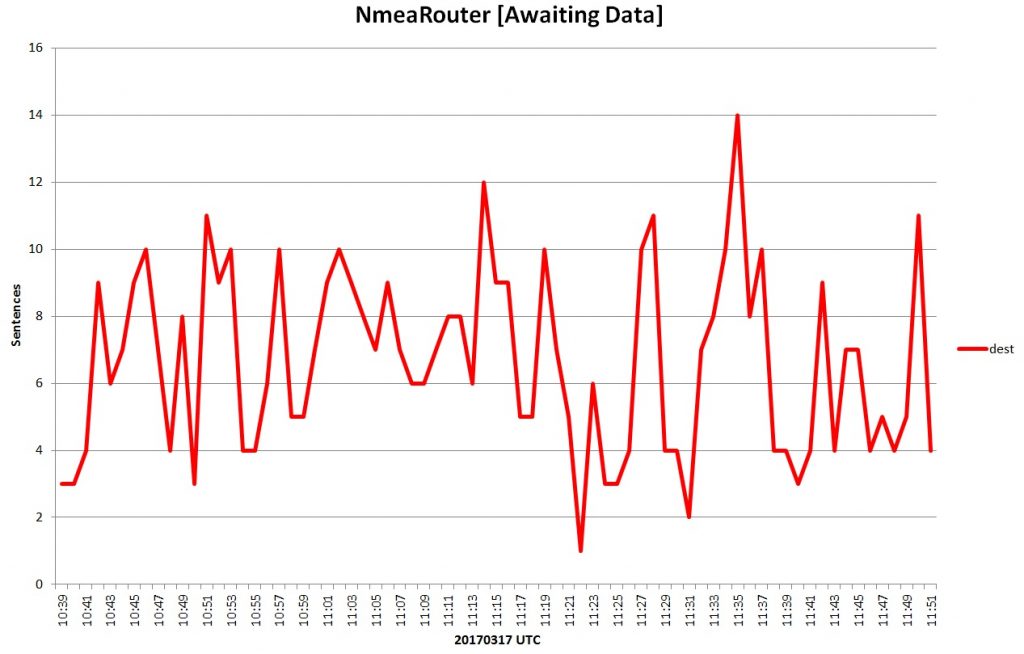
Below is a graph made using the excellent software by Neal Arundale – NMEA AIS Router. As you can see the message numbers (or sentences) for over an hour are pretty good – well, it is a vast improvement on what I used to get with my current “temporary” set-up, with 419 messages received in an hour. The software is available at his website, for free, along with various other programs that you can use with AIS. If you’d rather not use ShipPlotter he has created his own AIS Decoder which can be linked into Google Earth and such like. Visit his website for more information.
My antenna isn’t exactly top-notch. It is at a height of just 4 metres AGL in the extension loft, and it is made from galvanised steel angle bead used by plasterers to strengthen corners prior to skimming – this I cut down as a dipole for a target of 162 MHz. As usual with my trimming of antennas, I cut just too much off and ended up with it cut to 161.167 MHz. It gives a VSWR of 1.018 and Return loss of 40.82dB, with 162 MHz being approx. 30dB Return loss which equates to 1.075 VSWR – that will do.

Also, as I live right on the coast, about 50 metres from the sea, I’m practically at sea level, which doesn’t help much with range and signal reception either. Despite this the antenna produces great results, though it is just temporary until I can get a new homebuild up on the roof.
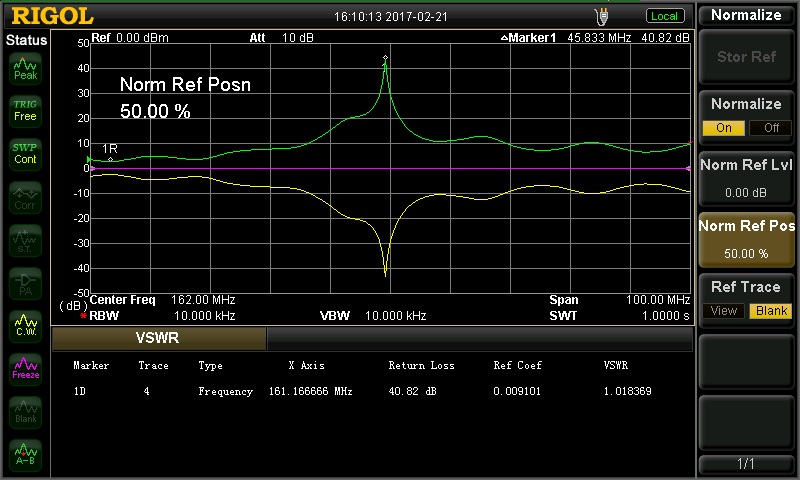
VSWR reading for the homebrew loft AIS Antenna

The LNA4ALL retails at various prices depending on what option you go for. I went for the aluminium box version so it was around £54 including the delivery. I had looked at a Mini-circuits equivalent, and when it looked like the LNA4ALL was lost I did actually order one. But this was nearly twice the price, and seeing as the LNA4ALL contains many components from Mini-Circuit I doubt it is any different really.

All in all the LNA4ALL is all you need to boost your weak signals – couldn’t get any more all’s in ?.


Many thanks for sharing your quick test of the LNA4ALL, Tony! Post Readers: if you’d like to read more of Tony’s work, check out his blog, Planes and Stuff.

Pirates playing Chuck

Chuck Berry (1926-2017)

If you’re a fan of rock’n’roll, you no doubt heard the sad news of Chuck Berry’s passing today after 90 years at full throttle.

Many thanks to SWLing Post contributor, Mike Hansgen (K8RAT), who notes that a number of pirate stations have been playing Chuck Berry tributes tonight; these will, no doubt, continue into tomorrow night, as well.

Mike’s message prompted me to trigger a spectrum recording, as I’m currently on the road. I’ll pull out a portable tonight and listen live, but it’ll be nice to catch up with Chuck later as I play back my spectrum recordings. (This is why I love SDRs.)

Many thanks to the pirates who are paying tribute to the legend.

Rest in peace, Chuck. A toast to the grandfather of rock’n’roll.

All India Radio investing heavily in DRM tranmitters

All India Radio (AIR) Headquarters in Dehli, India. Photo: Wikimedia Commons

Many thanks to SWLing Post reader, Pradip, who shares the following story from Radio and Music Biz online:

AIR has acquired 37 DRM transmitters, in talks to get cheaper radio sets

NEW DELHI: All India Radio (AIR) has introduced digital radio technology in the AIR Network by installing new state of the art Digital Radio Mondiale (DRM) Technology transmitters by replacing old outlived 37 Medium Wave/ Short Wave transmitters.

Minister of State for Information and Broadcasting Rajyavardhan Rathore told Parliament however that the provisions contained in Policy Guidelines on expansion of FM Radio broadcasting services through private agencies (Phase-III) do not provide for private FM broadcasters to adopt digital radio technology.

He said Digital Radio allows significant improvements in service reliability, audio quality, more radio services and higher efficiency.

The new AIR transmitters include 35 new state of art technology Medium Wave (MW)/ DRM transmitters as a replacement of old technology valve based MW transmitters. Additionally, two new state of the art technology Short Wave (SW) DRM transmitters have been approved for installation as a replacement of old SW transmitters.[…]

Continue reading at RadioAndMusic.com.

Icom RS-BA1: Setting up the IC-7300 for remote operation

(Source: Southgate ARC and Dave Zantow)

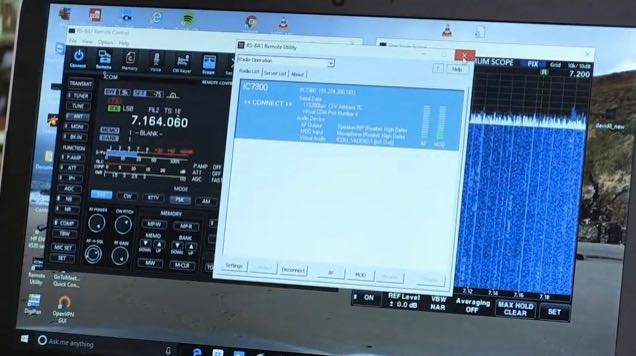
New video: Icom RS-BA1. Installing & setting-up remote control for your IC-7300

The TX Factor have produced a video that logically goes through the step by step process of remote controlling an Icom Amateur radio, more specifically in this case, the IC-7300 using the RS-BA1 remote control software.

The video shows Bob McCreadie (G0FGX) of TX Films demonstrating:

• Setting up your computer and radio
• Installing the RS-BA1 remote control software
• Accessing the IC-7300 remotely
• Introduction to the RC-28 remote controller encoder.

To view this video visit: 
Icom RS-BA1. Installing & Setting up Remote Control for your IC-7300 SDR Radio

To found out more about Icom’s remote control software, visit the
RC-28 IP Remote Control System page where you will also find a list of compatible Icom HF radios.

For more information about the IC-7300 visit the
IC-7300 HF/50/70MHz Transceiver product page.

Both the RC-28 IP Remote Control System and IC-7300 are available from all authorised Icom Amateur radio dealers.

Of course, you could use the RS-BA1software to use the Icom IC-7300 as a remote shortwave receiver. Click here to read our review of the IC-7300.

Shortwave Relays This Weekend

(Source: Tom Taylor)

Relays This Weekend

Hamurger Lokal Radio via Shortwave Station Göhren, Germany with 1KW to Western Europe:
6190 KHz Every Saturday 07.00 to 11.00 UTC
7265 KHz Every Saturday 11.00 to 16.00 UTC
9485 KHz Every Sunday 10.00 to 13.00 UTC
Contact email: [email protected]

Next scheduled transmissions from Radio City:
Friday March 17th at 19 – 20 UTC via IRRS on 7290 kHz,
repeated Saturday March 18th at 09 – 10 UTC via IRRS on 9510 kHz.
Older programmes may be repeated at random other Saturdays.
Older programmes may also be transmitted by Challenger Radio in Italy on 1368, 846 and 567 kHz, Saturdays at 00 UTC and Saturdays at 20.30 UTC (two different slots)
There will be a different programme via Hamburger Lokalradio Saturday March 25th at 13 – 14 UTC on 7265 kHz.
After that, during the period of daylight shifting time transmissions will be one hour earlier in UTC schedules.
Our contact address remains [email protected]

European Music Radio Transmissions via;
WBCQ to Central & North America on 5130 KHz on 18th March between 23.00 to 00.00 UTC
Shortwave Station Göhren on 9485 KHz on 19th March between 09.00 to 10.00 UTC
Channel 292 on 6070 KHz on 19th March between 16.00 to 17.00 UTC
Contact email: [email protected]

Internet Repeats on 19th March 2017:
EMR will repeat this months Transmissions via two streams running at the following Times:16.00, 18.00, 20.00 UTC
http://nednl.net:8000/emr.m3u will be on 96 kbps /44 KHz stereo for normal listening
http://nednl.net:8000/emr24.m3u will be 24 kbps / 22 KHz mono will be especially for low bandwidth like mobile phones.

KBC via:
Media Broadcast to America on 6145 KHz Every Sunday between 00.00 to 01.00
Contact email: [email protected]

Hobart Radio via:
Channel 292 to Western Europe on 6070 KHz Saturdays fortnightly between 09.00 to 09.30 UTC.
WRMI to Americas, Asia/Pacific on 9955 KHz Sunday between 04.30 to 05.00 UTC
WRMI to Americas, Asia/Pacific on 9955 KHz Tuesday between 23.30 to 00.00 UTC
WBCQ to North America on 5130 KHz Mondays 04.30 to 05.00 UTC
Contact email: [email protected]

For outside the listening area please try the Twente/Netherlands Web RX at http://websdr.ewi.utwente.nl:8901/

You can also hear many European free and alternative stations via the Internet at: http://laut.fm/jukebox

Radio Channel 292 Transmission schedules on 6070 KHz (on the air every day):
http://www.channel292.de/schedule-for-bookings/

Radio Mi Amigo Transmission schedules:
http://www.radiomiamigo.es/shortwave