Category Archives: Shortwave Radio

KNL Networks is developing shortwave-powered global Internet access

Earth

Many thanks to SWLing Post contributor, Steve T, for sharing the following news from Business Insider:

KNL Networks, based in Oulu, Finland, has been in stealth mode during the past four years while developing a revolutionizing system that enables internet connection anywhere in the world – even in the middle of the Pacific Ocean – without using expensive satellite systems.
Today, KNL announced the completion of its series A funding round. The funding amounted to more than $10 million making it one of the biggest Nordic series A rounds. Creandum is the biggest investor.

[…]Facebook and Google have been exploring the possibility of bringing internet to remote locations by relaying data through a network of balloons. KNL’s technology, on the other hand, proposes the opposite: incredibly long range signals, by sending internet protocol over the radio.

KNL’s technology is already being used to provide robust internet connections to ships on the Atlantic and Pacific Oceans, but can be used anywhere on the globe for many different applications.

[…]KNL’s technology relies on shortwave radio transmissions, which can transmit data for thousands of kilometers, for a fraction of the cost of a satellite system. Accomplishing this has required the innovation of long-distance high frequency radio systems. In comparison with satellite internet, the radio technology offers the additional advantages of being easier to use, always on.

Read the full article at Business Insider.

This is very exciting news, Steve!

I’ve always had confidence that inherent HF bandwidth and data integrity issues could be addressed with time as our receivers, codecs and digital signal processing improve with each iteration.

As I wrote in, Does Shortwave Radio Have a Future?, I’ve always believed that the shortwave medium could be leveraged for international digital/data communications, and should be. In my article, I focused on Radio Canada International (RCI), which was then dismantling their shortwave transmitter site:

[B]roadcasters should not dismantle their transmission sites as Canada is currently doing. Not only is the current service originating from these sites a more reliable form of emergency communications than the Internet, should a national disaster befall us; not only do they continue to provide a broad-spectrum mode of diplomacy; but should future digital communication modes find a way to take advantage of the HF spectrum as is now under discussion, this would be most unfortunate.

Imagine a wi-fi signal with a footprint as large as several countries, digital devices with tiny fractal antennas that receive this signal containing rich media (e.g., audio and video)––these are not science fiction, but highly plausible uses of these transmission sites, even within the next decade…

We’ll be watching developments at KNL Networks and reporting updates here on the Post. Follow the tag: Shortwave Internet
FlexRadio PowerSDR now incorporates SWLing features!

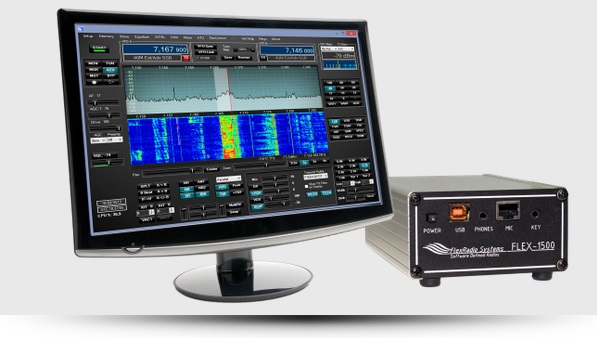
flexradio-1500Many thanks to SWLing Post contributor, John (AE5X), who writes:
Hi Thomas – I thought you might be interested to know that KE9NS has updated PowerSDR software for Flex 1500, 3000 and 5000 series radios with the following features:

  • SWL BANDS: 14 standard Shortwave Listening bands, each with their own Bandstacking memories.
  • SWL SPOTTER: SWL.CSV database file (from eibispace.de) provides over 11000 shortwave broadcast, utility, and government frequencies all displayed directly on the Panadapter. Right Click on a station to open up a google search.
  • SWL Listing screen: Displays currently operating SWL stations by Frequency and is
  • SEARCHABLE by Station Name. Left Click to go to frequency. Attempts to determine the mode (AM, DIGU, USB, CW).

Here’s a YouTube video demonstrating:

Thank you for sharing this info, John!

I know a number of Flex owners that will be happy with this added functionality. At one point in the past, I considered purchasing a Flex 1500 and using it as both a QRP transceiver and shortwave listening SDR. I’ve held off, though, mainly because so many other affordable receive-only SDRs have hit the market. Someday, I may take the plunge and add an SDR transceiver to the shack, though. Nice to know KE9NS has SWLs in mind.

Post readers: Any SWLs out there using their FlexRadio SDR for SWLing?  I’m curious if you can record spectrum and, if so, how wide the bandwidth can be set. Please comment!

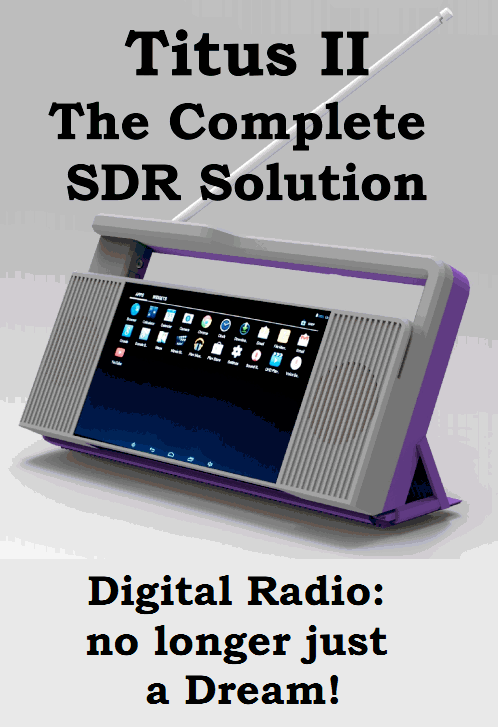
DRMNA: Interview with Mike of PantronX, maker of the Titus II

titus 2 big

Those of you following the upcoming Titus II receiver will enjoy reading this interview with Mike of Pantronix. Here’s a short excerpt taken from DRMNA.info:

[DRMNA] Can you tell us a little about the process taken to develop the new receiver?

[Mike] We became aware of the need for a digital capable receiver by a visit from TWR representatives about three years ago. Having designed RF products and receivers in the past, it intrigued me that there were no low cost method to receive DRM. This began research into the problem. Initially we envisioned and designed what we call an ATU (Antenna Tuner Unit) that plugged into a ‘standard’ Android tablet. Unfortunately as time and testing proved, ready made tablets had varying problems from vendor to vendor, model to model. The decision was made about a year ago that we had to do our own Android ‘tablet’ and integrate the ATU into it. Hence the Titus II was developed.[…]

Click here to read the full interview on DRMNA.info.

Radio Eritrea and Radio Ethiopia jamming intrudes on amateur frequencies

eritrea-ethiopia

Many thanks to SWLing Post contributor, Vlado (N3CZ), for sharing the following story from the South African Radio League newsletter:
Broadcasters, jammers wreak havoc on amateur radio frequencies

The ARRL reports the battle in the amateur radio 7 MHz band continues between Radio Eritrea and Radio Ethiopia, which is said to be jamming the Eritrean broadcaster with broadband white noise

The problem for radio amateurs is that the battle is taking place in the 40 meter phone band 7,145 and 7,175 MHz with the jamming signal reported by the IARU Region 1 Monitoring System (IARUMS) to be 20 kHz wide on each channel.

The on-air conflict has been going on for years; Ethiopia constructed new transmitting sites in 2008 and is said to use two or three of them for jamming purposes. The interfering signals can be heard in North America after dark.

According to IARUMS Region 1 Coordinator Wolf Hadel, DK2OM, Radio Eritrea is airing separate programs on each frequency. He said in the IARUMS September newsletter that telecommunications regulators in Germany, Austria and Switzerland have been informed, so they could file official complaints.

Read the full ARRL story at
http://www.arrl.org/news/broadcasters-jammers-wreak-havoc-on-amateur-radio-frequencies

IARU Region 1 Monitoring System latest news
http://www.iarums-r1.org/iarums/latest.pdf

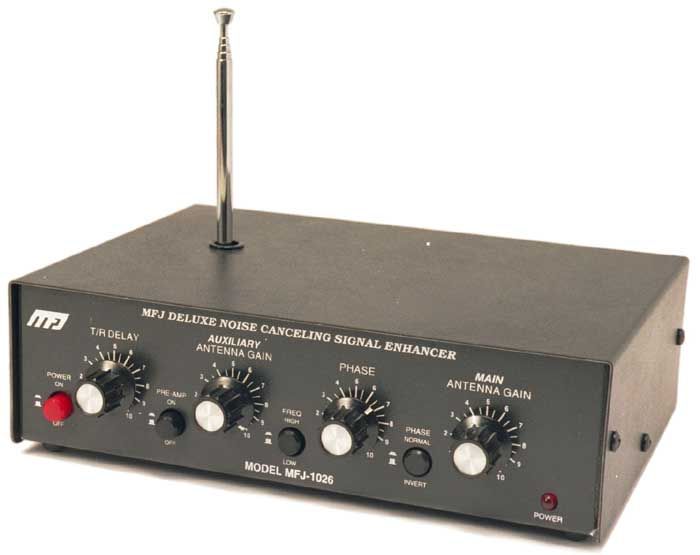
Dave’s review of the MFJ-1026/1025 and regulated AC adapter recommendations

mfj-1026

Many thanks to SWLing Post contributor, Dave Zantow (N9EWO), who shares the following reply to TomL’s post More Anti-Noise Ideas:

My VERY NOISY Sony CRT TV has gone to the great electronics recycling bin in the sky thank goodness. But I still have a MFJ-1026 here and need to use it when the neighborhood gets noisy. Intermittent power line noise is the main issue these days for me.

[Note that] my Monitoring Times review from April 2007 on the MFJ-1026 (and 1025 model without the preamp, but is best to have it) is still available here :

http://www.monitoringtimes.com/mtrevu0407.pdf

(is also linked on my web page, with many other of our other favorite ones : http://webpages.charter.net/n9ewo2/links.html )

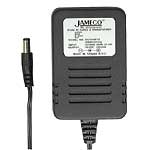
jameco-ac-adapterI still power it with a analog REGULATED Jameco 170245 12 volt (1 amp) ac adapter.

Last batch I purchased a few years ago were still 100% clean and analog regulation. As I have covered in the past, SOME of Jameco excellent REGULATED AC adapters have gone to using switching regulator devices inside (and these no longer clean for any radio use).

Click here to view the170245 12 volt AC adapter on Jameco.

DX Engineering is about to come out with a improved version of the premium priced NCC-1, called the NCC-2. Mid late November Delivery ?? Never had our hands on one the pricey NCC-1 critters as the MFJ gets the job done for us (let alone affording it).

https://www.dxengineering.com/parts/dxe-ncc-1

https://www.dxengineering.com/parts/dxe-ncc-2

You make an excellent point: it’s important to power your noise-canceling device with a quality, clean, regulated AC adapter.

Thank you for sharing the links to your review and the AC adapter recommendations, Dave!

Shortwave Radio Recordings: Voice of Korea

north_korean_propagandaMany thanks to SWLing Post contributor, Paul Walker, who shares the following:
This is the English service broadcast for The Voice Of Korea to “Latin America” from Kujang, North Korea. Recorded 0430-0530UTC October 17, 2016 using a Tecsun PL-880, Wellbrook ALA1530LNP, EmTech ZM2 antenna tuner and DXEngineering HF Preamp.

Listening location is Galena, Alaska. A village of 500 people in the rural central interior, 300 miles east of Nome and 300 miles west of Fairbanks.

I would give this a SINPO Rating of 66666!

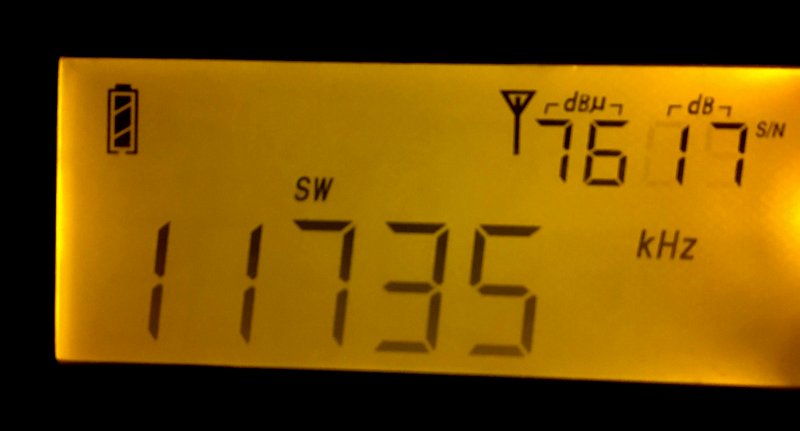
Check out this image taken of the front of the Tecsun PL-880 while listening to this broadcast, showing just how strong the signal is.

img_3322

I was a bit surprised, never seen something this high before, especially on shortwave!

Click here to view on YouTube.