Category Archives: Shortwave Radio

Rob Wagner visits a Former Radio Australia Transmitter Site

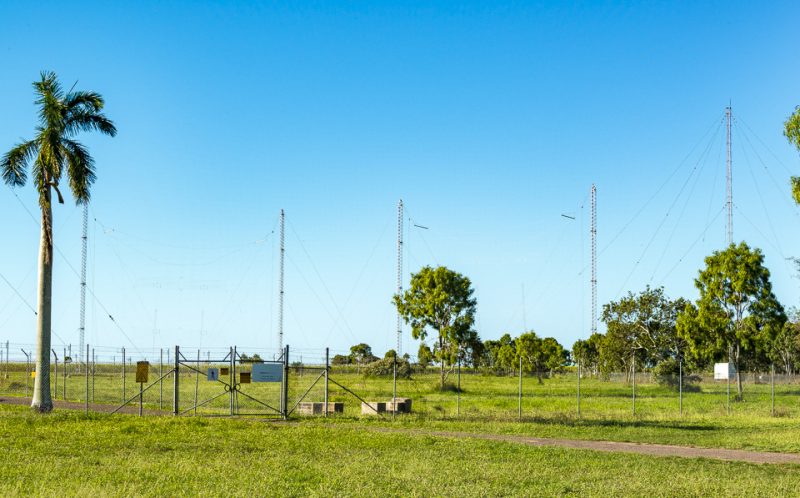
Two shortwave antennas a  backup antenna at the Brandon RA transmitter site. (Image: Mount Evelyn DX Report)

Two shortwave antennas a backup antenna at the Brandon RA transmitter site. (Image: Mount Evelyn DX Report)

My buddy, Rob Wagner (VK3BVW), has just posted an article with detailed photos of the Brandon Antenna farm on his excellent blog, the Mount Evelyn DX Report.

Rob introduces his article:

During our recent two month trip north from Mount Evelyn through Queensland and New South Wales, we had an opportunity to visit the former Radio Australia transmitter site near the little town of Brandon, about 85 km southeast of Townsville in Far North Queensland. Well, actually I visited the site while my wife Jan sat in the car, exhibiting a state of relative boredom!

Officially, I had not made arrangements to inspect the transmitters. We were just passing through the town one warm Sunday afternoon. The site is only 5km out of Brandon on Jack Road. The topography is quite flat, making it ideal land for the sugar cane plantations that grow vigorously throughout this region. Here you’ll find the powerhouse 50 kW mediumwave outlet of 4QN Townsville on 630 kHz with local programming from the ABC North Queensland studios. This frequency is well heard across a 250 km radius during the daytime, and easily heard throughout most of Queensland (and well beyond) in the evenings. Indeed, 4QN has been broadcasting reliably from the Brandon site to its local communities throughout all sorts of weather including many tropical cyclones since 1958.[…]

Click here to read the full article on the Mount Evelyn DX Report.

A Good Friend Who’s Always There

cas-pro-relaxThis summer has been a tough one for me in many ways, not the least of which is the minimal amount of time I have been able to spend playing radio. I have several commitments involving radio each week/month, but I do not consider that “playing” radio. To me, playing radio is where we get to sit down in front of a radio of any kind and do something with it just for the pure joy of it. The good thing about this hobby is it is always there whenever you are ready. It is like a good friend who is always there. Radio is, in fact, a bit like my dog.

For those who enjoy dogs like I do, one of the most rewarding things is to come home and find your dog waiting for you, tail wagging, and excited to see you. It does not matter how long you have been gone — a short trip elicits the same excitement upon your return as you would get being gone all day. Good dogs require very little maintenance to be happy, and they are ready for love and attention whenever you are available to give these to them.

My radios do not wag their antennas when I walk into the room, but they are there ready to go when I am, and they provide a world of enjoyment when called upon. As I sit here looking at the radios in front of me (only a small portion of the radios I have around the house overall), each one means something special and calls to mind enjoyable times. My 220 rig gets very little use overall, but it always reminds me of an amateur radio friend who was an Elmer to me in the hobby.

As I am typing this my 2-meter APRS channel has come alive with signals from the digipeater in the International Space Station (ARISS) and I am hoping for a contact or two. This past week I made a contact with AF4B in Texas, which was his first ISS contact! What an honor that is for me — whenever I have the privilege of being someone’s first contact in any manner of radio I am thrilled!! It always brings to mind my “firsts” and how exciting were those moments!

As I look at my Uniden Bearcat BC898T I remember going to my first Dayton Hamvention and buying this beautiful analog scanner. One of the fellows there tried to talk me out of it because it was only analog, and some of the local departments had moved to digital. Fortunately there are still many analog signals to catch in my area, and I am interested in more than just Public Service transmissions. I like Marine, Aviation, Railroads, Coast Guard, and a dozen other things which can be picked up by analog scanners. The 898T was my entrance back into the scanning hobby after many, many years away from it. There was a great deal to learn, but this was my re-introduction to scanning.

I have previously talked about my Yaesu-Musen FRG-7, in some ways the ultimate in shortwave radios for nostalgia, quality workmanship, and manual control of a radio. 40+ years old and still a gem!! Oh yes, and then there is my Swan 350, another marvel of a radio from the past. Never known as a top-of-the-line rig by any means, I treasure its heft, its vacuum tube warmth, and its mechanical tuning which turns like tire compared to the optical tuning wheels on modern rigs. In fact, its a lot like me — slow to get going and needs some time to warm up, but gets the job done eventually. (Why does it seem getting up out of bed and getting started each day gets harder and harder . . . I can’t be that old, can I??)

Fall and winter are coming, definitely great times of the year to play radio, and I hope to do just that. A little work on my antennas should get me back up to  speed in terms of capabilities, and my hope is life will slow down enough to let me have some fun. I know whenever I have the time my old friends will be there ready and waiting! I hope the coming months are filled with radio fun for each of you! 73, Robert

Robert Gulley, AK3Q, is the author of this post and a regular contributor to the SWLing Post. Robert also blogs at All Things Radio.


A quick recap of yesterday’s Carl Sandburg Home NPOTA activation

img_20160908_172739245_hdr

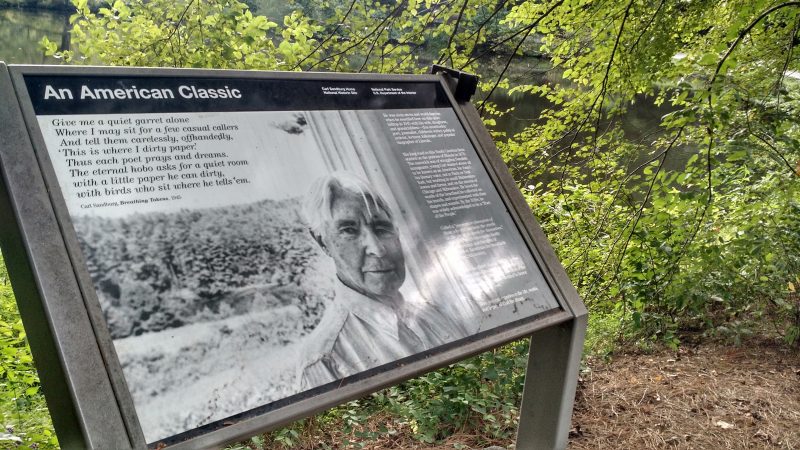
Yesterday, I fit in yet another activation of the Carl Sandburg Home (NS01) for the ARRL National Parks on the Air. You might recall, I activated the same site last Sunday.

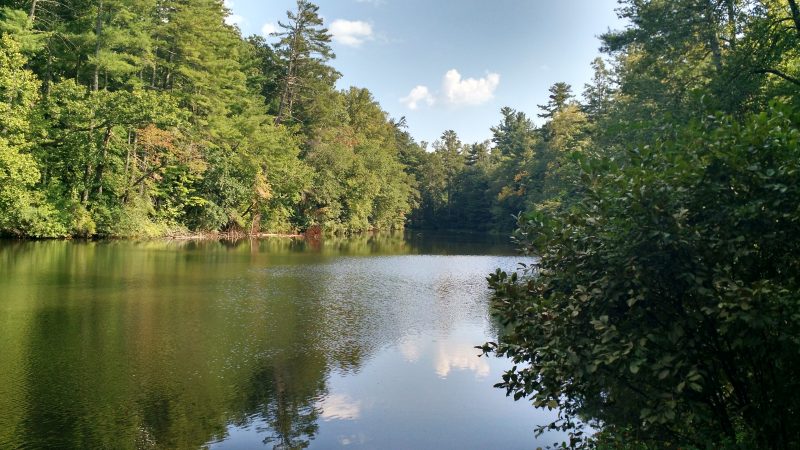
The lake at the trail head.

The lake at the trail head.

Second time’s a charm!

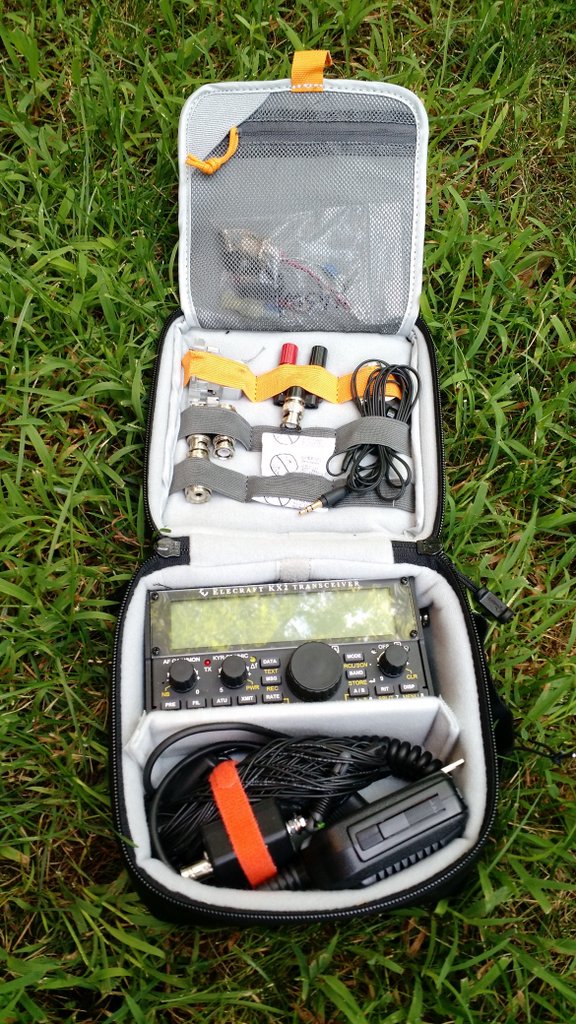
Since I had already scoped out the site and the trail where I operated last time, I took a minimum of supplies: My Elecraft KX2, EFT Trail-Friendly antenna and the accessories in my go kit:

LowePro CS 60 Closed

I didn’t even need a folding chair as I hiked further into the trail system and found a bench in an ideal shady location where I could hang the EFT antenna without any part of the wire being close to the trail itself.

The only negative was that I had to fight off a few mosquitoes–par for the course!

img_20160908_163154954_hdr

After firing up the KX2, I found that both frequencies I announced (14,286 and 7,286 kHz) were occupied. I tuned around and found clear frequencies then posted the changes on Twitter and the ARRL NPOTA Facebook page. Fortunately, I was spotted on the DX clusters after my first contacts (thanks, Mike and others!).

In short: this was about the busiest I’ve ever been on the radio.

In 43 minutes, I logged 41 stations: many stations here in the southeast US, and stations from New Mexico to Italy! Propagation and timing were certainly in my favor.

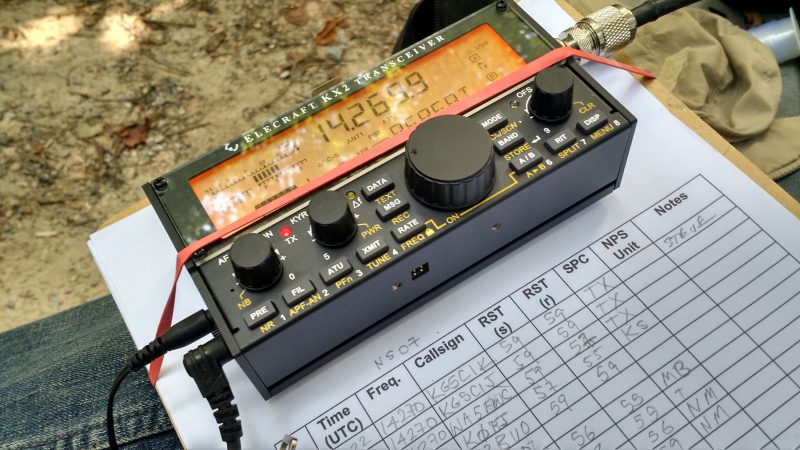
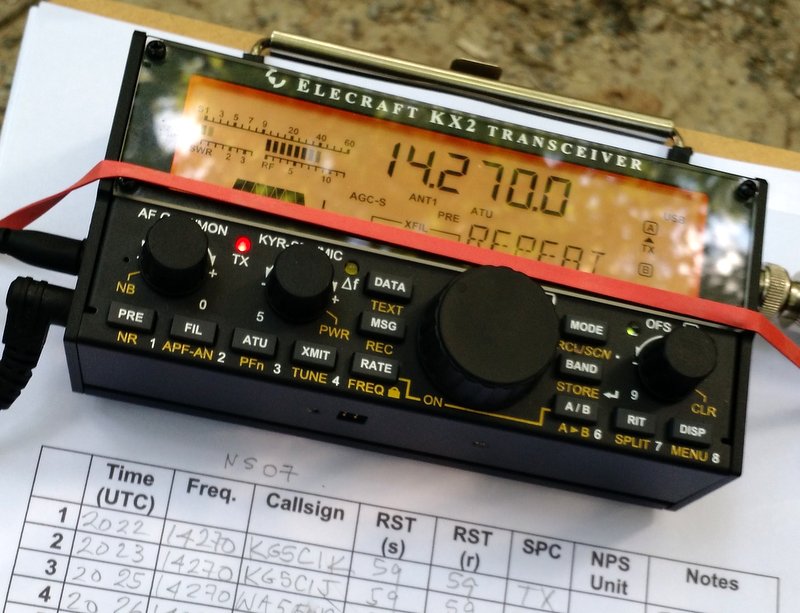
The rubber band held my KX2 to the clipboard, but I hope to sort out an even better way of securing it.

This red rubber band held my KX2 to the clipboard, but I hope to sort out an even better way of securing it in the future.

The pileups were heavy enough that I didn’t even have time to properly pull log sheets once I had completed them–instead, I folded them over the KX2 and continued writing.

I was very pleased that I logged at least one SWLing Post reader: Randy (KS4L). Thanks for the contact, Randy!

Not all portable operations go so well…but when they do, it’s energizing!

I might be able to squeeze in a 30 minute activation on the Blue Ridge Parkway (PK01) this afternoon.  Listen for me (K4SWL) around 14,286 kHz SSB sometime between 20:30-21:30 UTC. That is, if propagation and my schedule cooperate again!

eBay find: a “LNIB” Sony ICF-6800W

sony_icf-6800w

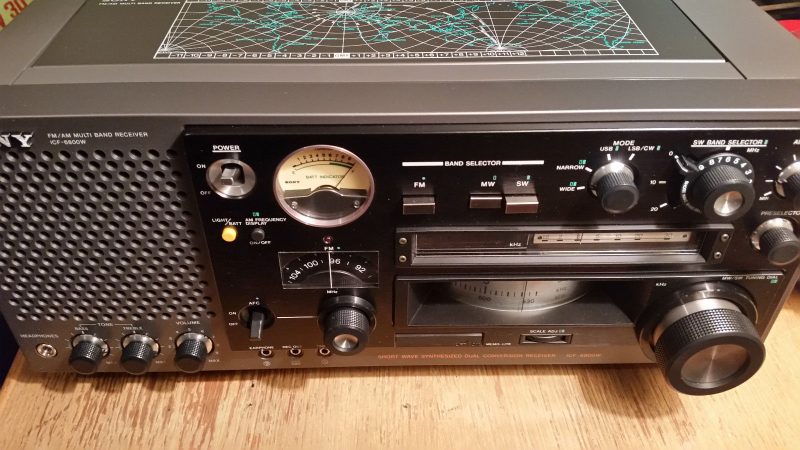
Many thanks to SWLing Post contributor, Dan Robinson, who points out this “Like New In Box” (LNIB) Sony ICF-6800W on eBay.

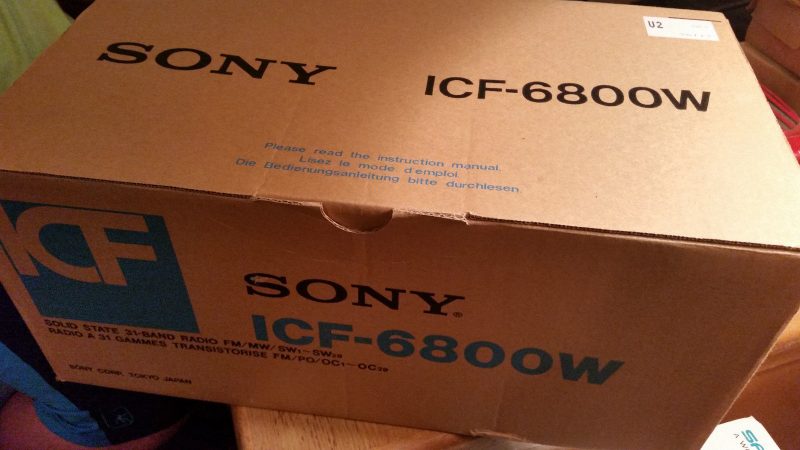
Even the box appears to be in good shape:

sony_icf-6800w-box

Dan has been watching this auction and forecasts that it’ll fetch a healthy sum in the end.  I’m pretty sure he’s correct.

Click here to view on eBay.

ABC Northern Territory Shortwave Services: returning September 13

SX-99-Dial-Nar

ABC RadioMany thanks to SWLing Post contributor, Harald Kuhl (DL1ABJ), who clears up a little confusion:

it was reported that ABC Northern Territory Shortwave Services left shortwave for good.

I asked them and they replied they will be back on coming Tuesday:

Dear Mr Kuhl,

Thank you for your note. The service you are referring to will be re-established next Tuesday morning at 9am local time.

Kind Regards,

ABC Reception Advice
Communications Networks

Thank you Harald. I, too, have seen a lot of notices on social media that the ABC Northern Territory Shortwave Services had shut down permanently. I had not posted anything here because I couldn’t find any mention or confirmation from ABC. Looks like they’re probably doing routine maintenance.

From The Radio Netherlands Archives: September 18 and 19

pcj(Source: PCJ/Keith Perron)

September 18th and 19th PCJ Radio International will present part 3 of From The Radio Netherlands Archives.

In the 1960s to the late 1970s Radio Netherlands produced radio dramas that were for export to radio stations overseas.

Some of the radio plays were commissioned specially for RNW and others were adaptations of popular Dutch plays.

There will be a special E-QSL issued for this program. PCJ Radio International’s partner stations will receive this program in two parts.

The program will be presented by Paulette MacQuarrie.

  • Europe: 0600 to 0800UTC – Frequency 7780 kHz
    September 18, 2016
  • North America: 0100 to 0300UTC – Frequency 7570 kHz
    September 19, 2016

For more information contact PCJ at [email protected]

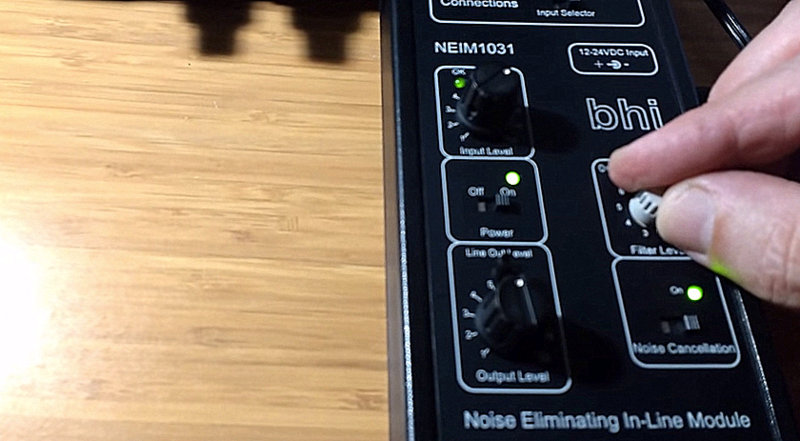
Phil demonstrates the BHI NEIM1031 Noise Eliminating In-Line Module

bhi-dsp

Many thanks to SWLing Post contributor, Phil Brennan, who writes:

[Recently] one of your contributors mentioned that he purchased a BHI DSP unit at a discounted price. I purchased one (a different model to the one in the previous post) some months ago before I headed away travelling.

The post reminded me that I had made a small video demonstrating the DSP unit on my FRG7. The video shows me tuning the DSP on a broadcast of Voice of the People on 3912 khz. While QRM at my place isn’t too bad, it’s still present and the DSP does aid in clearing up a signal.

Voice of the People is usually jammed by the DPRK and the DSP also assists in reducing the roar of the jammer. Of course one can go to far with DSP and the audio can suffer from that underwater sound.

Thank you, Phil! The FRG-7 is an ideal receiver for something like the BHI module since it precedes on-board DSP. The great thing about an in-line module, of course, is that it can be used with a variety of receivers.

Click here to view the BHI NEIM1031 MKII on BHI’s website.