Category Archives: Shortwave Radio

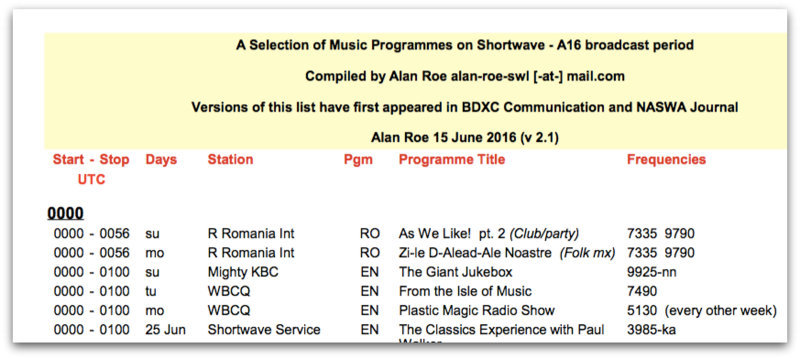
A16 version 2.1: Alan Roe’s guide to music on shortwave radio

Alan-Roe-Guide

Many thanks to SWLing Post contributor, Alan Roe, who shares his updated  Music on Shortwave list for the A16 period. This version (2.1) incorporates several suggested additions by SWLing Post readers.

Alan, again, thank you so much for publishing this excellent little guide!

Click here to download Music on Shortwave A-16, Version 2.1 (PDF).

Correction: The Giant Jukebox broadcast time

MightyKBCTruck

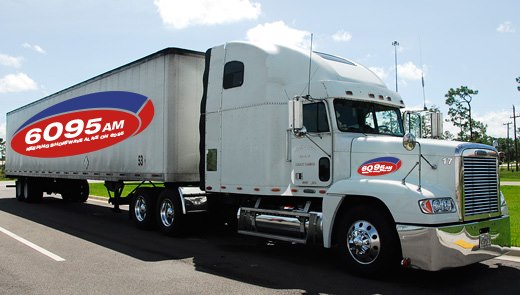
I’ve just received a confirmation from The Mighty KBC that The Giant Jukebox will be on the air this Sunday (June 19) from 08:00-10:00 UTC. This is a correction to the UTC time in our previous post..

If propagation isn’t favorable where you live, consider tuning to 6095 kHz on Sunday via the University Twente WebSDR.

Version 2.0? Julio’s positive review of the Degen DE1103

IMG_20151126_165751594_HDR

[Correction: Julio’s version of the DE1103 is the first, non-DSP (current) version.]

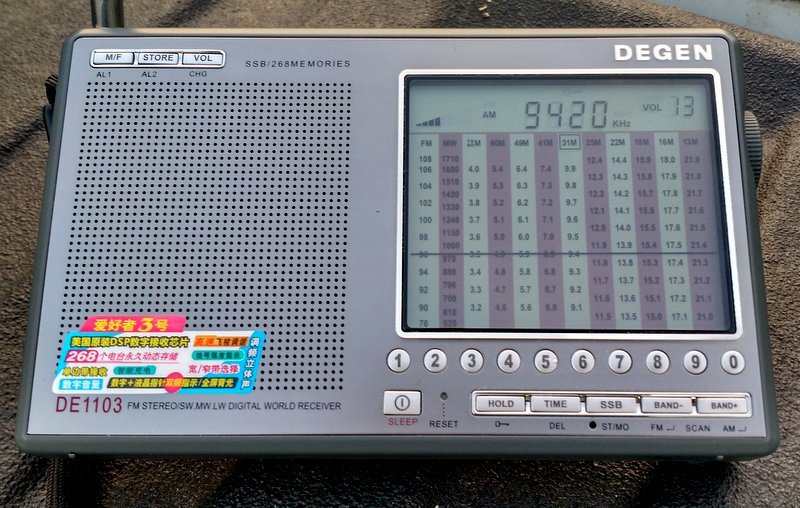
Many thanks to SWLing Post reader, Julio Cesar Pereira, who comments with his mostly positive impression of the DSP version of the Degen DE1103 receiver:

I’ve got a DE1103 and haven’t noticed any AM bleeding on SWL so far. I sometimes stay at one of my family’s properties located at the center of a city with lots of stations. There I use the balcony on the 9th floor and I get a lot of spurious interference from FM stations, which is normal once you’re surrounded by buildings. However, I already tuned some images on SW. I used an old SW7600G to check it out and it didn’t get any.

I kind of started to dislike DSP, for it can be annoying to hear it engage and disengage when a signal constantly drops down and recovers. It is fantastic when a signal is strong and constant for it improves audio quality whether it is MW, SW or FM.

At one time, I even thought it would be perfect for the DE1103 to have this [DSP] feature, but you know what? I’m very happy with the way mine is right now. I find this receiver to have the best FM reception compared to the others of my little collection of tabletop and portable receivers, which includes scanners ICOM IC-R20 and R5, receivers PL-660, SW7600GR, ICF-2010, etc. The DE1103 is by far the most sensitive and selective one, it even beats my old Realistic DX-440.

As for SW, I like the combination of its very good AGC and very low floor, which allows me to do DXing with the RF attenuator on and does not have any annoying filter like the PL-660. I also enjoy its audio quality, especially on the headphones, for it is more natural, not processed like the PL-660’s or over-processed like the SW7600GR’s.

You can tell I’m a big fan of this little radio. It has its flaws, but I can live with them.

Thank you for sharing your experience with the DE1103 DSP, Julio!

Degen DE1103 DSP Version 2.0?

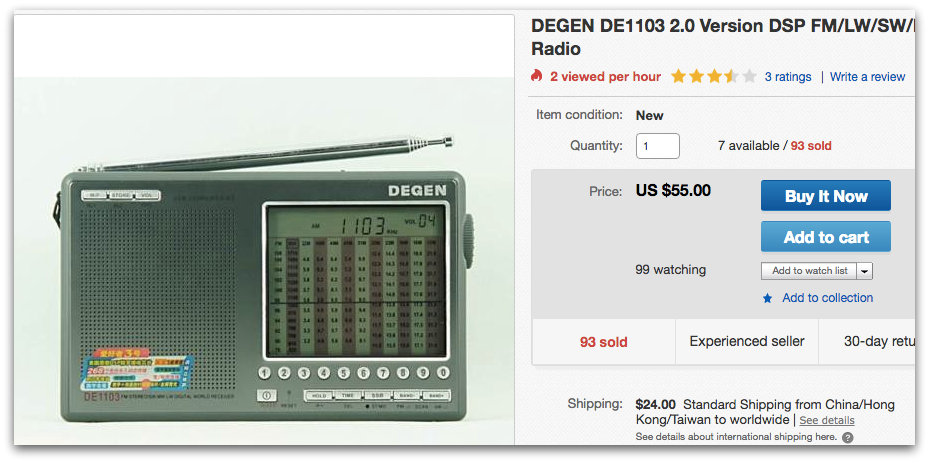
Julio, I’m now very curious if your receiver is the “Version 2.0 Model” mentioned by this seller on eBay. [ Julio has now confirmed that it is not the DSP version.]

DegenDE1103-2.0

If you’ve read my DE1103 DSP review, you’ll note that I haven’t been the biggest fan of the new DSP version of the DE1103. I did review a very early model and wonder if Degen has tweaked the DE1103 DSP to provide better performance? Can any other readers comment?

I’ll search through the various models of the DE1103 on eBay and see if there are any specifics about the new 2.0 version in product descriptions. I’ll also attempt to contact sellers for details.

Please comment if you have any information.

Update: Several readers pointed out that the “Version 2.0” might simply be a way sellers are using to indicate that this is the DSP-based DE1103–rather than this being an improved version of the original DSP receiver I tested. 

The Giant Jukebox is on the air again this weekend

MightyKBCTruck

Many thanks to SWLing Post contributor, Thomas Ally, for noting that The Mighty KBC has announced that The Giant Jukebox will be back on this air this Sunday, June 19 at 10:00-12:00 CET (8:00-10:00 UTC) on 6095 kHz.

If propagation isn’t favorable where you live, tune to 6095 kHz via the University Twente WebSDR.

Today: Test transmission for the BBC Midwinter Antarctic Broadcast

Halley VI: The British Antarctic Survey's new base (Source: BBC)

Halley VI: The British Antarctic Survey’s new base (Source: BBC)

(Source: Dan Ferguson via Mauno Ritola on the WRTH Facebook group)

Babcock has tests today, June 14, at 2130-2145, to Antarctica on 5985 (Woofferton), 6035 (Dhabayya), 7360 (Ascension), and 9720 (Woofferton).

I think we can assume three of these frequencies will be used for the annual mid-winter transmission to Antarctica on June 21 at 2130-2200.

I will attempt to receive the tests broadcasts today here in Québec; it will give me an indication if I stand a chance of reception next week.

I would appreciate any recordings of the test broadcast to add to the Shortwave Radio Audio Archive.

As Dan mentions above, next week, Tuesday, June 21, the BBC Antarctic Midwinter broadcast will take place once again.  This is one of my favorite shortwave events of the year.  Like last year, I hope we receive recordings of the on air event from across the globe!

Click here to listen to the recordings from 2015.

Shortwave Logs from Alaska’s Central Interior Region

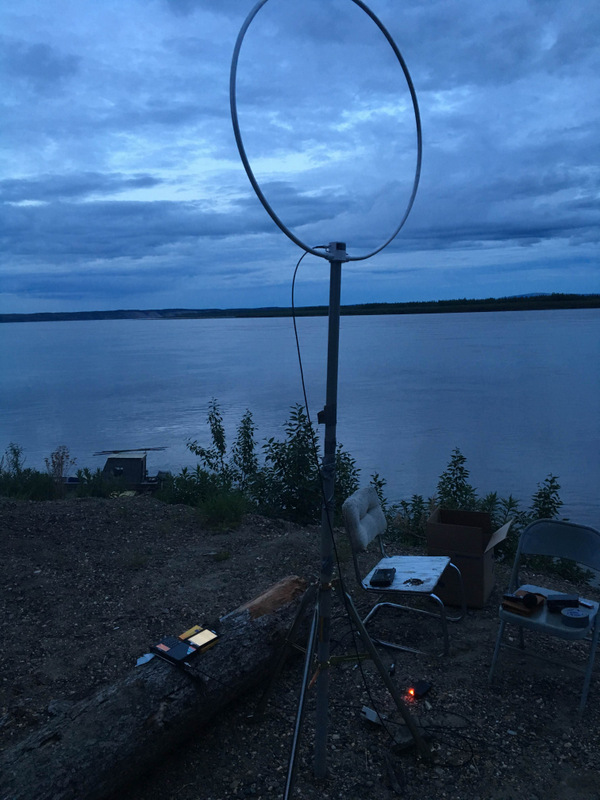
Wellbrook-Paul-Walker-Galena-AK

Here are some Shortwave logs from the central interior region of Alaska. I used a Tecsun PL880 and 225 foot long wire with Emtech ZM2 Tuner or a Wellbrook ALA1530LNP.

I’ve only used the Wellbrook for two days so I can’t really offer a thorough comparison yet. There was one case in particular where the 225 foot long wire and ZM2 tuner beat the Wellbrook by a large margin.

I don’t log everything I hear, but everything I do log gets recorded into an mp3 format audio clip. The audio recording helps tremendously with my QSL return rate, especially when I am hearing a broadcast in a language I don’t understand

I hear China Radio International, China National Radio, Radio Nacional de Brasilia/Amazonia, FEBC, World Harvest Radio and others regularly so I don’t log them because I try and keep my logs to what is interesting for one reason or another (programming, music, etc.) or rare/interesting.

3260 & 3325 kHz Papua New Guinea, NBC Radio. 1027 to 1034 UTC. 3325 Bouganville is carrying a man talking in a combination of Pidgin and English discussing mines, mine safety and mine regulations. Better then average signal with only light fading and interference. 3260 kHz Mandang is running music followed by an announcer talking about what I think are upcoming programming highlights. Fair signal, way better then usual

NBC Radio Mandang 3260 kHz audio: https://goo.gl/pmB8DD

NBC Radio Bouganviulle 3325 kHz audio: https://goo.gl/WKKEPJ

4870 kHz Indonesia, Radio Republik Indonesia Wamena. June 12 1001 UTCA regular visitor in the early morning hours here. not daily, but here often. Today’s signal is fair but with a moderate amount of fading and static crashes/interference. Usual fair of what I think is local music is being played.

Radio Republik Indonesia Wamena 4870 kHz audio: https://goo.gl/hjF1JL

5020 kHz Solomon Islands, Solomon Islands Broadcasting Corporation. June 12 1011UTC. Higher side of good signal with all factors taken into account. Only a little bit of fading during christian music.

Audio of Solomon Islands Broadcasting Corporation 5020 kHz here: https://goo.gl/d8BFX2

5745 kHz US, VOA Radio Gram. June 11 0943. The first time I logged VOA’s Radio Gram broadcast. There was something creating a loud buzzing noise but I could still hear the digital data. Only a little Russian text and text in english decoded for me. I will definitely try again!

VOA Radio Gram 5745 kHz audio here: https://goo.gl/LfxJ6w

6070 kHz DPRK, Voice of Korea.June 11 1005UTC. Fair signal, but low modulation. Announcers voice is lower then the music. Fair amount of fading. I heard their usual marching/patriotic music. This is not a frequency I usually hear them on, wether owing to I am not out when this frequency is on, conditions or I hear usually CFRX Toronto.

Voice Of Korea 6070 kHz audio here: https://goo.gl/SzXuEg

6115 kHz China, Voice of Strait. June 11 1008 UTC. Fair signal with a fair amount of fading. Sounds like a man talking, could be a news broadcast or interview. Not sure.

Voice Of Strait 6115 kHz audio here: https://goo.gl/V92tlD

7260 kHz Vanuatu, Radio Vanuatu. June 7 0857UTC. Low side of fair signal with interview in english and mentions of Vanuatu. Interview ends and music plays, one song sounds like it’s a kids chorus. There is a fair amount of fading and static crashing/atmospheric noise. Radio Vanuatu is habitually, chronically, woefully unde rmodulated on a daily basis. Just a few days after this logging was made, I had what my radio signal meter showed as a good signal but NO audio. The signal was so under modulated I had no audio but I had a signal! I would actually listen to them if they played more music and had better modulation

Radio Vanuatu 7260 kHz audio here: https://goo.gl/V1GMQS

9545 Solomon Islands, Solomon Islands Broadcasting Corporation. June 11 0835. SIBC was on over 3 hours late on 9545 kHz, it’s supposed to sign off at 0500UTC and switch to 5020 kHz but at 0835UTC this night it was still on. 9545 kHz staying on late has been happening a lot lately. 9545 kHz is used as SIBC’s workday frequency with 5020 kHz being used in the early to mid morning and afternoon/evening. In this recording SIBC is fairly strong here with light fading and static. Whenever 9545 kHz is on late, it seems to be stronger then 5020 kHz would be. My logging tonight starts with an interview then music is being played.

Audio of SIBC 9545 kHz here: https://goo.gl/0AIj5n

12035 Mongolia, Voice of Mongolia. June 11 1018UTC. NEW! This is a new logging for me. weak signal playing music. Was able to match the interval tune and the announcers voice heard during my logging with a clip of a recent broadcast on their website.

Audio of Voice of Mongolia 12035 kHz here: https://goo.gl/Y2QXH7

15400 kHz Romania, Radio Romania International. June 12 1006 UTC. News broadcast in French. Somewhat weak, but steady signal with only light fading.

Audio of Radio Romania International 1540 kHz here: https://goo.gl/OBK0Q9

17770 kHz Phillipines, Radio Liberty targeting Siberia. June 12 0948. What sounded like a man in Russian during a news broadcast or interview. Weak but steady signal.

Audio of Radio Liberty 1770khz here: https://goo.gl/5fxzxJ

I could use some opinions and inputs from others on something:

I am DXing about 500 feet from the transmitter sites for KXES-LPFM 92.9 and KIYU-FM 88.1 along with K10LJ Channel 10. The FM’s are only 100 watts and the TV station is only 10 watts of Digital RF. However, the FM’s overload my Shortwave radio around 9.4 to 9.6 MHz along with the lower to mid part of the tropical bands. I have a MCM Electronics and Radio Shack FM trap and they help a bit, but don’t do nearly enough. I am willing to spend $100 or so for a good FM Trap/Filter. I’ll spend a little more if I have to and the product is proven at works. I can null out the interference by rotating my Wellbrook ALA1530LNP, but I may be nulling out the signal I want to hear at the same time. Returning things for me is a hassle so I’d rather pay good $ for something that works. Feel free to email me, [email protected] or reply to this thread.

Paul Walker is located in Galena, Alaska and is a regular contributor to the SWLing Post. Be sure to check out Paul’s YouTube channel and SoundCloud channel where everything he logs is recorded and posted. Click here to read his other contributions on the SWLing Post.

Shortwave Radio Recordings: KNLS test transmission circa 1983

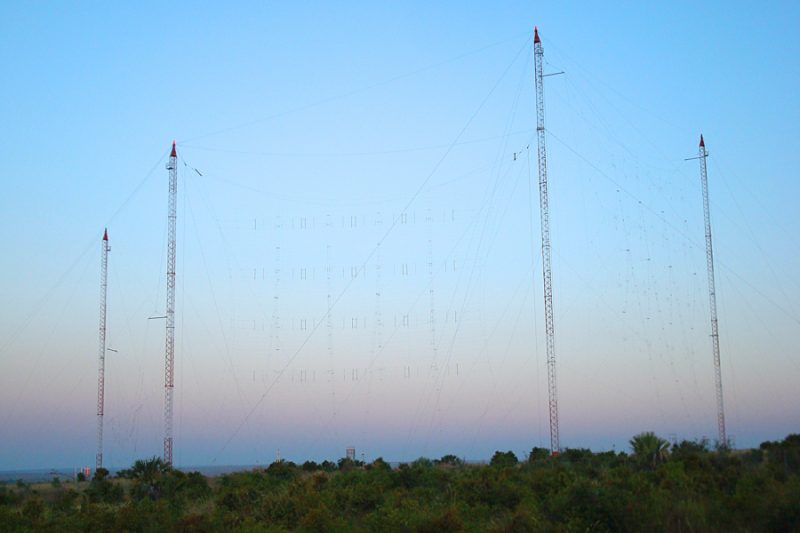
A.4towers3antennas

We’ve just posted yet another excellent recording by Tom Laskowski to the Shortwave Radio Audio Archive. I thought a number of Post readers might appreciate this one.

Tom notes:

KNLS – Anchor Point, Alaska, from what I believe is a test transmission on August 1, 1983. According to Wikipedia, KNLS signed on the air July 23, 1983. The program consists of the sign-on ID in English and Russian then is mostly a mix of Big Band music. This recording is 31 minutes long.

Tom’s receiver was a Sony ICF-2001 and he started recording at 09:00 UTC on 11.820 MHz. His location, at the time, was South Bend, Indiana (USA).

Click here to download the recording as an MP3, or simply listen via the embedded player below:

You can listen to more archived shortwave recordings at the SRAA website, or by subscribing to the audio feed via iTunes. You can also listen to the archive on TuneIn radio.