Category Archives: Shortwave Radio

How Bob McGwier used a Cray-2 supercomputer to decode a ham radio transmission heard in Star Trek IV

Startrek4-MoviePoster-SmallIn response to our recent post with a message to us from Star Wars sound designer Ben Burtt, SWLing Post reader, David Guilbeault, comments:

Here’s a similar story that circulated on the Internet around 1990 (pre WEB!). I worked in packet switching at that time and was very impressed with Bob’s achievement (even with a CRAY to work with) .

I reached out to Bob McGwier (N4HY), who is a Facebook friend, and he has kindly given us permission to share his message again here and with a few new comments:


Star-Trek-IV-Cap

Decoding HF packets in Star Trek IV

Originally posted on December 4, 1989 by Bob McGwier (N4HY)

Several months ago, Harold Price, NK6K, challenged me to demodulate what he thought might be HF packets in Star Trek IV.

Chekov-Uhura-Star-Trek-IV

During the scenes where Scotty is valiantly trying to beam both Chekov and Uhura back from the U.S.S. Enterprise, where they have been stealing Nuclear vessel high speed photons, Scotty is having a hard time hearing them.

Scotty-Star-Trek IV

Listen to the audio clip by clicking here or using the embedded player below (target sound is at 5 seconds):

One of the sources of interference is what appeared to Harold to be HF packet. Always being one to rise to a challenge, I took on the job of doing some fancy Digital Signal Processing footwork. Almost from the first I was certain that it must be an HF packet since my very first demodulator attempt clearly revealed flags before the start of a frame and end of frame was also clear. I knew it was HDLC of some variety.

Several things impeded the effort, including Scotty’s voice on top of the packets, some SSB from 20 meters was also nearly on top of the signal. All of this had to be filtered out. I spent an hour of time on the Cray-2 at work and used the fanciest FSK demodulator I could write and I finally had noisy baseband signal plotted on paper in front of me. I did my best to get an integral number of samples per baud as the signal was very noisy, and though the bits could be made out by eye, I could tell that it was going to take another hour of Cray-2 time to get the clock recovered and to make good bit decisions. In a couple of places, HDLC showed me what were clearly bit errors, and these could be done by eye as well.
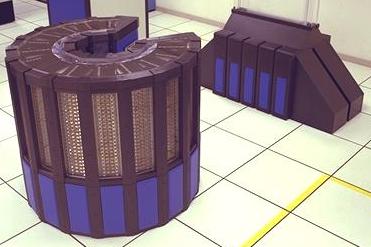
A Cray-2 operated by NASA. (Source: NASA)

After the filtering, and building a demodulator for the badly mis-tuned signal (almost 900 Hz below), I took the bits to Phil Karn, KA9Q and he decoded the NRZI data and proved beyond a shadow of a doubt that it was indeed an HF amateur radio packet. It was WA8ZCN-0 sending an RR for NR-3 to N6AEZ on 20 meters. I got Bill Harrigill, WA8ZCN on the phone and he agrees that it was probably him.

Thanks Harold for the challenge and Phil for the help.

Bob N4HY

P.S. A Cray-2 is about 50% faster than the fastest Pentium-Pro computer available today.

Again, keep in mind that the message above dates from 1989! This past week, Bob added the following comment when I contacted him:

The Cray Supercomputer on which the work was done was being operated on behalf of the National Security Agency by my research institute.

I received permission to “to test optimal algorithms for software decoding of FSK transmissions” and this was my test case!!!!

That is why Phil Karn was decoding the AX.25 bits by hand. I did not have permission to develop link layer protocol code, though I tried.

A few years later when half the bad guys in the world seemed to be using AX.25 and cheap ham gear I said “See, I told you so several years ago and you didn’t listen”.

I used that transmission in so many different ways I no longer remember them all.

That’s fantastic, Bob, and so great to know the back story on your decoding process! Thank you again for sharing this with us!

Star Trek fans can find the scene Bob references starting around time mark 1:12 in the film.
Phil’s review of the Digitech AR1946

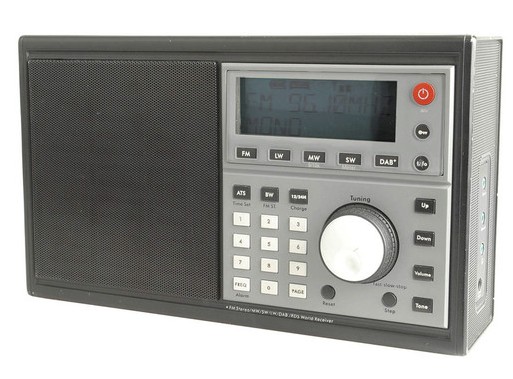
digitech-AR1946-frontMany thanks to SWLing Post reader, Phil Ireland, who shares his review of the Digitech AR1946:
I’ve now purchased the AR1946 and I have to say, I’m very impressed! No noise problems at all with mine, although if you listen very carefully under certain conditions, you can discern a slight digital hash. Not in anyway imposing though.

This radio is super sensitive, AM comes very close to the CCRadio-EP in performance and FM is outstanding. SW is very impressive but there are a few quirks in tuning:

  • below 10MHz, you hit the Frequency button, key in the value and hit the Frequency button again to tune [to the desired station]
  • above 10MHz, you hit the Frequency button, type in the value and it jumps straight to the frequency [without pressing the Frequency button again].

Not a great issue but worth knowing.

This radio has 7 bandwidths in AM both accessible on MW and SW and rudimentary fine tuning with a separate wheel control. Unfortunately FM only has 1 bandwidth but seems well chosen. DAB+ is not available in Regional NSW so that cannot be commented on.

The telescopic antenna is ridiculously small but seems to pull in the signals with no problems. There are external antenna connections for improved performance.
Audio is very pleasant and you can control both treble and bass with the push of a button. The display is bright, well lit and easy to read with a useful tuning indicator.
There are a number of useful features and with 700 memories, there are more that needed. The radio is very reminiscent of the Grundig Satellit 700 in some respects. Build quality seems very good, time will tell if reliability becomes an issue.

What I don’t like is the radio partially mutes when tuning, this is annoying when bandscanning with the rotary tuning control. I have noticed what appears to be synchronous detection being used as occasionally when tuning onto a frequency, you will hear the detector lock on frequency. If so, there is no control over this feature. That may explain the display showing synch but the final model has automatic synch lock..

The AR1946 dispenses with Airband that was good on the AR1945 and SSB. Its a pity that SSB is omitted but along with the Tecsun PL310ET with DSP, they don’t have SSB capabilities as well. I suspect the same DSP chip is being used in this radio.

Can I recommend the radio? A resounding yes! As mentioned I’m very impressed. Try before you buy, though, as it may be that QC is variable along with many Chinese radios of late.

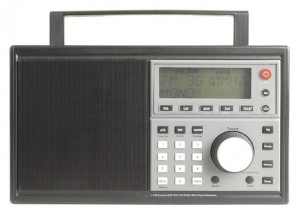
Digitech-AR1946-Front-HandleMany thanks for your review, Phil!
When Phil notes a lack of noise in his receiver–he’s referring to a previous review we posted from Avo, who complained of internally-generated noise in his AR1946.

It seems, like with many other DSP portables (including the Sangean ATS-405) internally-generated noise may vary from unit to unit. I’m guessing this could have to do with slight variations in the board assembly (variations in soldering, grounding, shielding connections).

As Phil advises, please check your radio immediately after purchase and compare it to another shortwave portable if you have one available. This way, if you detect a noisy receiver, you can get a refund or exchange within the time limits of the return policy.

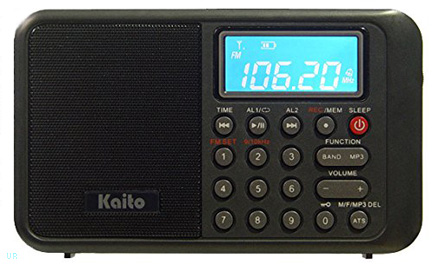
The Kaito KA108: a shortwave portable with built-in record function

Kaito-KA108

Many thanks to SWLing Post reader, Ante, who writes:

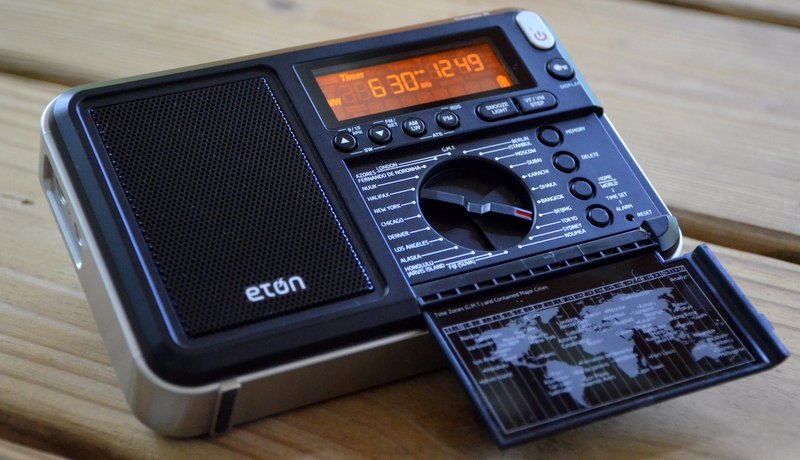
Looks like Kaito has a new radio in the works. Portable shortwave receiver with record function. It looks very much like some of the Eton portables.

Here’s Universal Radio’s description:

The Kaito KA108 is a great AM, FM shortwave receiver with a very special feature. It has a record function that allows you to record off the air automatically! It can save the audio to a Micro SD Card or USB Thumb Drive (not included) inserted via the top panel. It also features a large backlit display with battery indicator, signal meter and conventional alarm function with two programmable wake up times.


There is a Line Input Jack and stereo earphone output jack. Power input is via a USB port. The KA108 comes with: Li-ion battery and USB charging cable. One year limited mfg. warranty.

Thank you for the tip, Ante! Universal has pricing and availability listed as TBA at time of posting.

I noticed that Amazon has the same radio via Kaito for $67.20 (shipped). Interestingly, the Amazon description reads:

“Kaito KA108 Super Sound quality AM FM Shortwave Radio with MP3 Player and Radio Recorder, Radio Time Schedule Recorder,Alarm Clock+ More”

I hope the “Super Sound” part means that the internal speaker is like that of the Melson S8, with an acoustic chamber. Those speakers have amazing fidelity for such a compact size. Checking this morning, the Amazon listing only has one review–a 5 star–but it wasn’t a verified purchase, had few details on performance and, frankly, smacked of shill a little too much for my taste.

I certainly hope this isn’t simply a Melson S8 with a re-designed body. As I mention in this review, the S8 suffered from terrible internal noise, rendering it useless on shortwave.

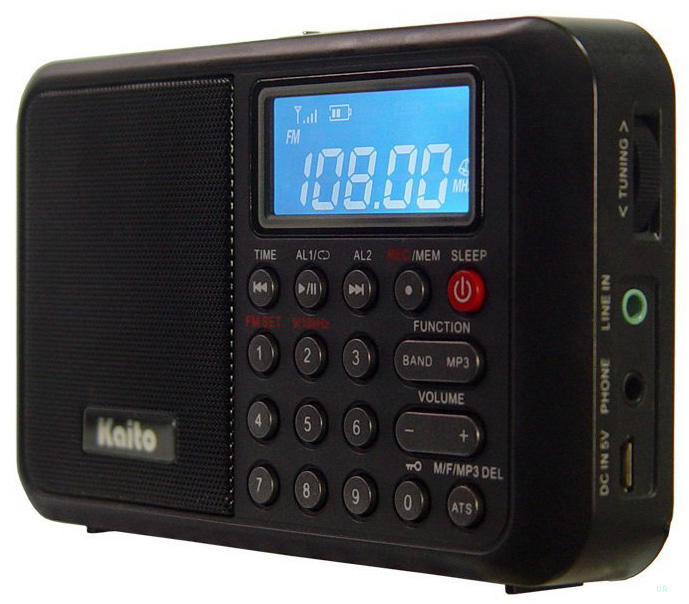
Kaito-Ka108-side

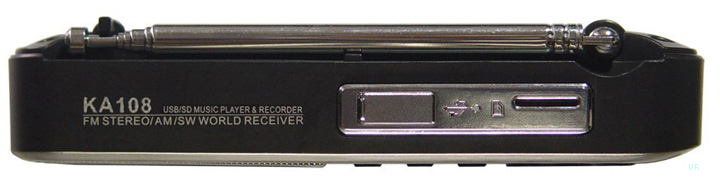
The Line In, Phone and DC IN 5V jacks are in the same placement and order as the S8–but the S8 also has the power button and MicroSD card on the side panel, the KA108 has the MicroSD card slot on top, along with a USB thumb drive slot.

Kaito-KA108-Top

I have hope that this is not a re-badged Meson S8 because the KA108 has features the Melson S8 did not, including the ability to record and even schedule recordings!

There are so few portables on the market that can record on the shortwave bands. There are no portables currently on the market that have a sensitive/selective receiver and do a good job of recording.  Even if the KA108’s receiver is only average, if it has a clean recording function, it will be a keeper for me.

My fingers are crossed!

Of course, I will certainly review the Kaito KA108 here on the SWLing Post.  I will most likely wait until Universal Radio has the units in stock, which I imagine will be soon.

Eton Traveller III on sale at Amazon

The Eton Traveller III

The Eton Traveller III

SWLing Post reader, Mark, writes:

There [has been] an Eton NGWTIIIB Traveler III radio on sale at Amazon: $38.05 for a couple of days now.

Thanks for the tip, Mark! The Traveller III is a great little radio and certainly worth $38.05. I bought mine on a similar deal about a year ago. Lacks a keypad but has the classic traveller world clock.

Vasily discovers an ETM quirk on his GP5/SSB

Vasily-GP5SSB

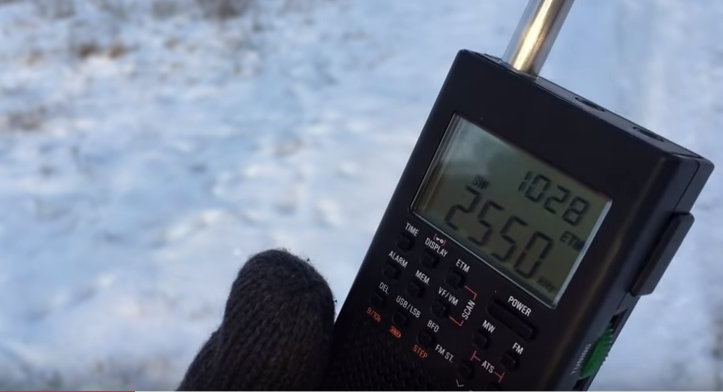
While doing a little shortwave listening in the field (obviously a very cold field) Vasily Strelnikov noted an anomaly while using the ETM function on his CountyComm GP5/SSB. He posted the following video on the Shortwave Listeners Global Facebook page and on YouTube so that I could share it with Post readers:

Click here to view Vasily’s video on YouTube.

I’ve never noticed this on my GP5/SSB. My first thought would be that there’s a strong broadcaster nearby that may be overloading the front end on Vasiliy’s receiver. With that said, it looks like a pretty rural area. Anyone else notice this on the GP5/SSB?

WRTH 2016: A look inside

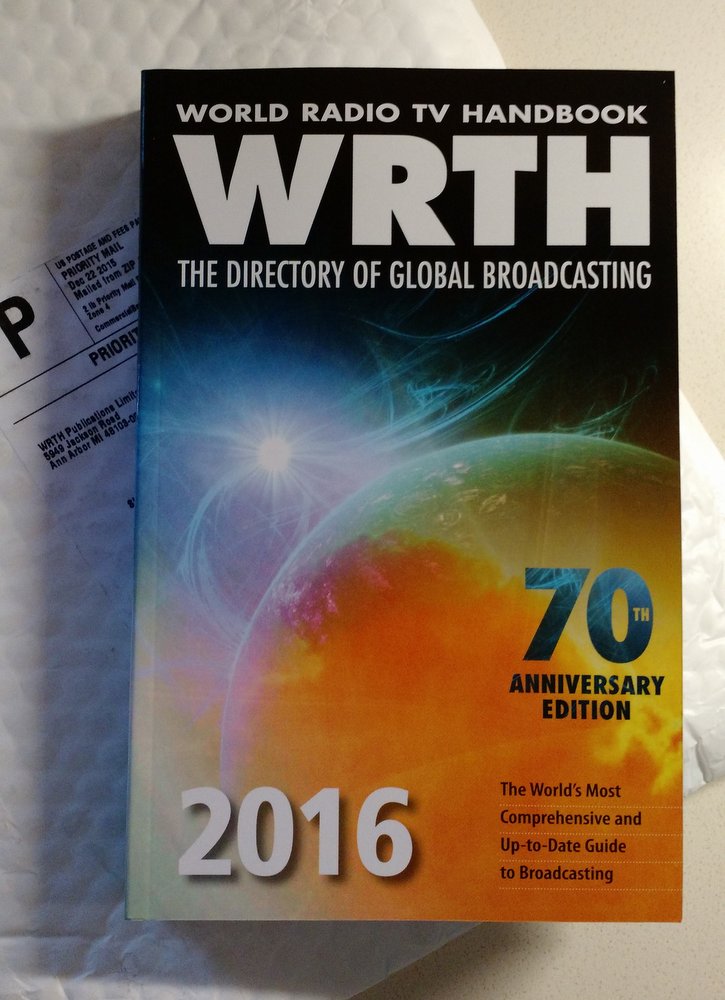
WRTH-2016

I received my copy of the 2016 World Radio and TV Handbook (WRTH) directly from the publisher on Christmas Eve 2105. As many SWLing Post readers know, I always look forward to receiving this staple radio reference guide each year. This is a special year for the publication, too: it’s their 70th edition!

I should note that it was a special edition of the WRTH for me as well: upon request, I contributed two receiver reviews and a feature article. It was an honor working with the WRTH publication staff and being included in the 70th edition.

WRTH’s team of noted DXers from around the world curate frequencies and broadcaster information by region; while I’m not sure how they orchestrate all of this, the end result is truly a symphony of radio information. In addition to broadcaster listings, WRTH’s radio reviews, feature articles, and annual HF report make for excellent reading.

But the WRTH isn’t just a frequency guide: the publication always devotes the first sixty or so pages to articles relating to various aspects of the radio hobby. Following, I offer a quick overview of these.

The first article always features a WRTH contributor (indeed, it’s this very network of contributors that make WRTH and its listings such a success):  this year, Dave Kenny tells us how he got interested in the hobby and what being a contributor means to him. It’s fascinating to read about how his SWLing hobby turned into a career as he worked for BBC Monitoring for many years.

The second set of articles is always my favorite: WRTH receiver reviews.

AOR-AR-DV1

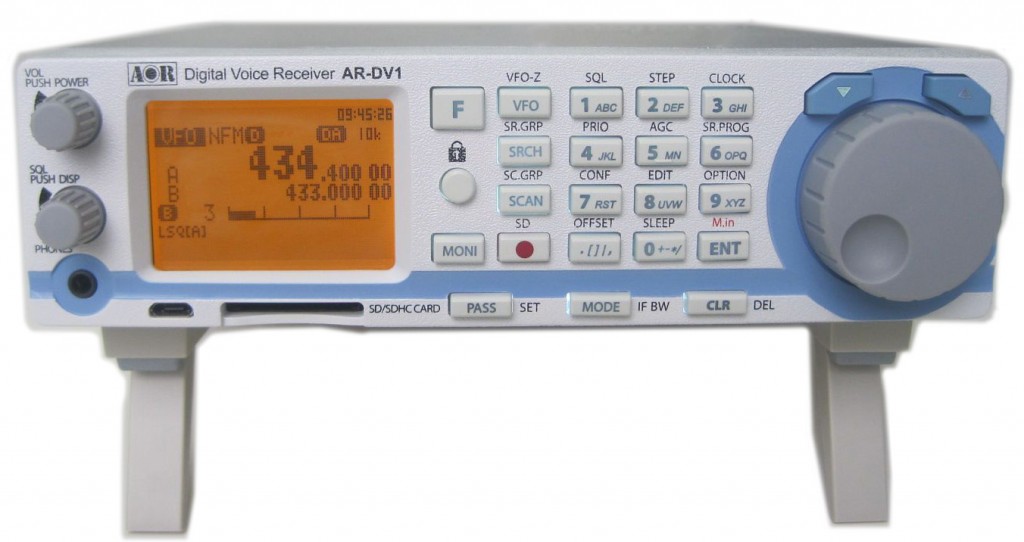
This year, WRTH reviewed the C.Crane CC Skywave (an update to one of my reviews on the Post).  They also review the new AOR AR-DV-1 (above), the Etón Satellit Grundig Edition (which impressed them favorably), the Tecsun PL-680 (again, an update of one of my Post reviews), and the Nti ML200 Megaloop.

The following article is “A Brief History of World Radio TV Handbook” which traces the publication’s history back to the Nazi occupation of Denmark in World War II. It’s a fascinating read and puts the publication into context as technology, international broadcasting and the WRTH team have evolved over the course of 70 years.

In the next article, UK MW & LW Broadcasting: the first 95 years, WRTH contributor Dave Porter (G4OYX), outlines the history and current use of MW & LW broadcasting. A fascinating history written by a former BBC senior transmitter engineer!

Next is the added feature 70 Years of Reception which looks at receiver technology and innovations that have had an impact over the course of WRTH’s long history. They highlight a few select receivers over the decades like the RCA AR-88, Eddystone 840-A, Eddstone EC-10, Barlow Wadley XCR-30, Kenwood R-1000, Drake R8 and the WinRadio Excalibur Ultra.

Timore-Leste-Map

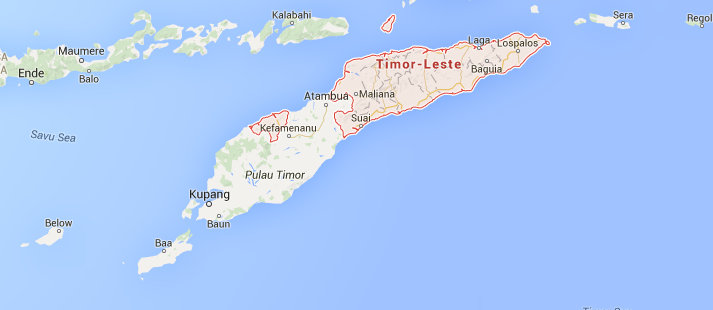
Following this, WRTH contributor, David Foster, features an article on Radio in Timore-Leste.  Foster has been involved in Timore-Leste for many years–his article gives excellent insight into this part of Southeast Asia. Indeed, I always look forward to David Foster’s articles in WRTH!

This year, WRTH also features an updated and revised article I wrote for them on The Future of Shortwave. Again, I’m honored to have contributed to the 70th edition of WRTH.

WRTH International Editor, Sean Gilbert, also wrote an excellent Guide to SDRs–a brilliant little summary of what SDRs are, how they work, and some common terminology used in reviews.

The final article–a tradition–is the WRTH  HF propagation report/forecast by Ulf-Peter Hoppe. Always an informative read (even if the prediction isn’t positive for DXers).

As expected, the 70th is another great edition of the World Radio TV Handbook.

As I’ve said many times, though I use online frequency databases fairly regularly, there is just no replacement for a good printed frequency guide–especially for all of my off-grid DXing.

For DXers who collect QSL cards, you’ll find that broadcaster contact information in WRTH is often more up-to-date than a broadcaster’s own website. When readers ask me for station contact information, it is the current WRTH I reference.

Not only does WRTH contain more in-depth information on broadcasters and schedules, but it makes for quick reference, and doesn’t require a computer or Internet connection–much like, well, your shortwave radio.

Purchase your copy of WRTH 2015 directly from WRTH’s publishers, or from a distributor like Universal Radio (US) and Amazon.com (US), or Radio HF (Canada).

SWLing Post contributor, Richard Langley (Canada), also noted that  BookDepository.com, a U.K.-based seller, is offering WRTH at a discount and with free worldwide shipping. Thanks for the tip, Richard!

2015 summary of shortwave pirate radio activity

pirateMany thanks to Chris Smolinski at HF Underground who has released his annual summary of shortwave pirate radio activity for 2015. The summary is built upon a computer script that parsed thread titles and timestamps of the messages from the HF Underground pirate radio board.
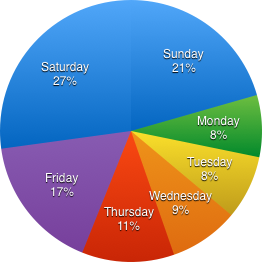
Message board activity based on the day of the week.

Message board activity based on the day of the week.

It’s a fascinating read and reinforces my belief that the HF pirate radio scene is certainly one of the most dynamic and active components of our shortwave radio listening hobby here in North America (and Europe). Thanks, Chris, for putting together this summary!

Click here to read the 2015 summary on HF Underground.