Category Archives: Shortwave Radio

Software Defined Receivers (SDRs) for the visually impaired listener

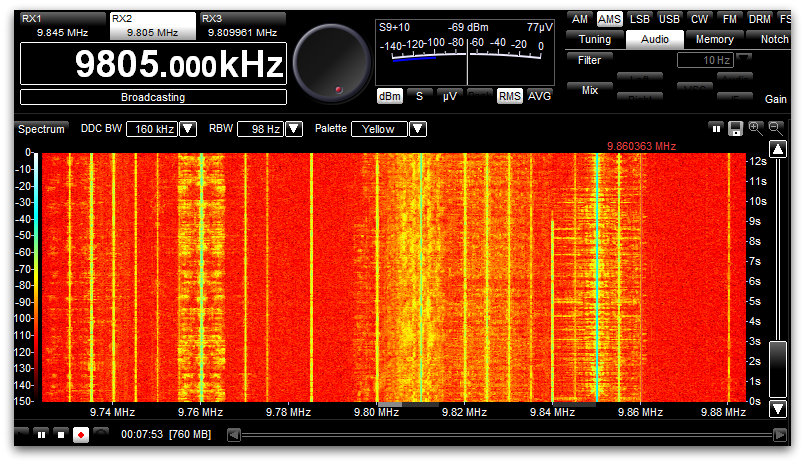
Spectrum Display 31 Meters on the WinRadio Excalibur

At the 2015 Winter SWL Fest, I co-hosting a forum on Software-Defined Radios.  Afterwards, a radio friend–who happens to be visually impaired–approached me to ask:

“What is the best SDR for those who are blind or visually impaired?”

I’d never been asked the question before, and replied that I’d have to do a little research. In truth, I suspected that research would turn up very little that was useful:  after all, SDRs require a lot of pointing and clicking, and some of the interfaces are rather complicated. Spectrum and waterfalls displays, often at the heart of the SDR app, are visual displays.

But I kept thinking of my friend’s question. Upon my return, I set out to do a little research and possibly pose the question here on the SWLing Post.  Then assistance stepped in…in the form of medium wave DXer Tore Johnny Bråtveit.

If Mr. Bråtveit’s name sounds familiar, that would be because I recently posted a link to an Oregon Public Broadcasting interview with him. In the interview, he mentioned that he uses SDRs to chase MW DX, and that he is visually impaired.

I reached out to Mr. Bråtveit via his website and asked for any advice he could give about SDRs for those who are blind or visually impaired.  His enlightening response:

“In the interview I mentioned screen reader software and the need to find SDR software that plays well along with such screen reader software. For those visually impaired who have some eyesight, this aspect may not apply, since many of them are well helped by a screen magnifier software package.

For those without eyesight at all, or with so little left of the eyesight that they cannot make practical use of the screen, there are these screen reader software packages. They all do the same, but they solve the job in a somewhat different way and are good at different tasks.

I began using SDRs back in 2007. First I used some [RFspace] SDR-IQs for a few years, until I purchased a Winradio G31DDC in 2010. The user experience with Winradio was so good that I have stayed with those radios since then, using both G31DDC and G33DDC receivers at my remote listening places.

I think I can say that all the software packages delivered with SDRs have issues and challenges when it comes to using them along with a screen reader. The worst example of unusable native software I have seen so far, is the software package delivered with the [Microtelecom] Perseus. I had a thought purchasing one some years ago and make some scripts for my screen reader JAWS to see if I could make the Perseus possible to use effectively, but I dropped the idea at that time in favor of Winradio.

The SpectraVue software delivered with SDR-IQ was usable, but I had to script it quite extensively, especially to be able to use the timeline when playing back recordings. Also the frequency selector was a bit tricky, so I had to assign some hotkey combinations to it. Otherwise it worked fine.

The Winradio software for the G3x series works quite fine right out of the box. They have apparently thought [through] keyboard operation, and there are shortcuts for almost everything. Such shortcut keys are necessary, as navigating the program interface with a screen reader can be a bit too complicated, especially for those only using speech output from the screen reader to access the screen content.

I personally am living in a country where we have good access to refreshable Braille displays, which gives me the opportunity to turn off the speech entirely if I want and only use Braille output. This way I can navigate the program interface quite effectively to understand how things are laid out.

The only real issues I have had with Winradio software, is:

1. Changing shortcut keys:
Normally, the Tab key is used to move between elements on a screen, so it would be natural to think that pressing the Tab key will bring me to the next shortcut key definition. Not in Winradio. Tab can be defined as a shortcut key itself, so trying to navigate the shortcut keys dialog with that key gives you a number of options, all connected to the Tab key. My way around this was to navigate with the Braille display until I found the shortcut key definition I wanted to change, focus on it by pressing a cursor routing key in that position and changing the definition. Then navigate further down to the OK button and activate it.

2. The timeline:
The timeline used when playing back recordings can be hard to locate when using a screen reader, and even more difficult to work with, since when you press a cursor routing key on the Braille display to simulate a mouse click on it, the focus often moves to somewhere else on the screen. Then you have to work hard to locate back to that timeline again. My solution here was to script my screen reader with a hotspot at the timeline with a shortcut key assigned to it, so that I could move focus back there by pressing a key.

Among the third-party software packages developed for SDRs, I have found few that I can recommend. The only one I can think of, is HDSDR. Especially in the current version from November 2013, there are a number of useful shortcut keys, and the program seem to work very well. I have used it a bit with an AFEDRI SDR I have, and have also used it to play back older SDR-IQ recordings.

So, if nothing else works, Iwould say that HDSDR is the solution, since it is both easy to use and have support for a number of receivers. And it is free, as you certainly know.

[…]Please write back if I can help you any further”

Brilliant!  What a treasure trove of information for our visually-impaired SDR listeners and operators.  Thanks so much, Mr. Bråtveit, and please keep in touch with us here at the SWLing Post.  73s!

Radio Vanuatu back on the air

Radio-Vanuatu

My friend and fellow DXer, Rob Wagner, writes:

R. Vanuatu has been off the air for ages. It has suddenly come back on in the last hour or so on 7259.95 kHz and 3945 kHz with post-cyclone assistance and information. There is also a report from a visiting R. New Zealand transmission engineer talking about the SW and MW txers at Port Vila; interviewed on RA – quite interesting. Just thought I’d let you know. details at MEDXR:

http://medxr.blogspot.com.au/2015/03/station-news-and-log-book-march-20-2015.html

Many thanks for the information, Rob! Very good news indeed!

On a side note, SRAA contributor, Julie (also based in Australia) has done a fantastic job posting cyclone coverage recordings from Solomon Islands Broadcasting. She’s also posted pre-cyclone Vanuatu recordings as well. Click here to browse her contributions on the Shortwave Radio Audio Archive.

BBC Bush House desk on eBay

BBC-BushHouse-Desk

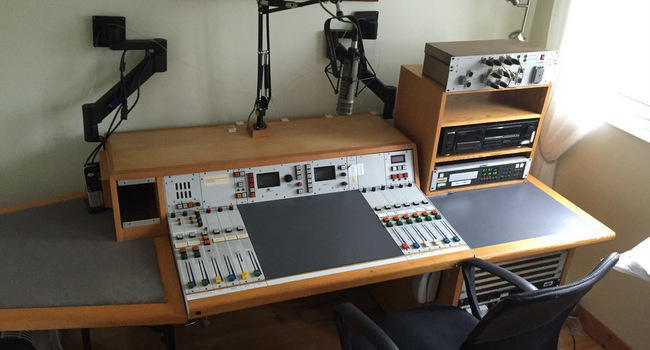
Want to own an bit of shortwave radio broadcasting history? Many thanks to Mike Barraclough who shares this listing on eBay: a BBC World Service Broadcast Radio Studio Desk from the Bush house in London.

Starting bid is £999–yep, that’s some serious money–and you’ll need to travel to Bristol, England to pick it up.

Here’s the full item description:

This is a genuine BBC World Service Studio from Bush House. I bought this when the BBC moved out of Bush House in July 2012. Unfortunately I have no room for it and so sadly I must sell it. All the components are still original as seen in the images.

Just think of the famous people who were interviewed at this desk. The whole desk is bespoke, beautifully made and crafted by BBC engineers, there is nothing quite like it. It still has all the detail such as the panic button underneath the desk, stands for computer monitors, telephone, the professional CD player and cassette desk player. Also original mixing desk, router board and switches – all you need to start your own radio station! The desk is mono as used by the BBC World Service.

Original Revox Professional Series CD player C-221
Original Kenwood Stereo Cassette Deck KX-4520
The original ElectroVoice RE20 Microphone with adjustable stand is NOT included and will be sold separately on eBay
BBC speaker will be sold separately.

The lucky winner will have to ship this from my home in South Bristol at their own expense. It will require a medium sized van and two people to lift it.

More pictures to follow including accurate measurements. Approx 8ft wide, 3 feet deep and 3.5 feet high.

Click here to view on eBay.

SDRplay RSP: now $149 or £99

SDR-PLay-RSP

I just received the following tweet from @SDRplay:

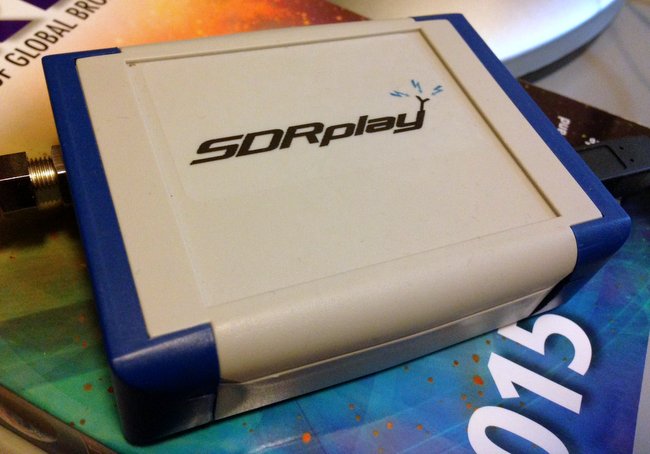
We’ve been able to reduce the SDRplay RSP price to $149 or £99 (approx €149 ) + tax/shipping. See

I’ve just started reviewing the SDRplay RSP for the June 2015 issue of The Spectrum Monitor Magazine. Preliminary impressions of this SDR are quite positive–especially for a receiver in this price class. At $149 US, the SDRplay RSP is now less expensive that the Funcube Dongle Pro+. Indeed, the RSP is even less expensive than portables like the Tecsun PL-880 and Sangean ATS-909X.

Over the next two months (as I get to know the RSP better) I will post the occasional broadcast recording using the SDRplay RSP with HDSDR and SDR#.

Missing Cities Mix

Aircraft-Jet-Boeing-VOLMET

Regular SWLing Post readers may recall a peculiar VOLMET recording I published in 2013 where all of the regional aviation weather was noted as “missing.”

My buddy, David Goren–you know, the fellow behind the Shortwave Shindig and Shortwaveology–gave me the original tip for that VOLMET broadcast.

David recently posted a new mix on Soundcloud. David’s description reads:

“So, a year or two ago Ryan Stively made an instrumental piece called Missing Cities and around the same time I recorded a chunk of shortwave sound that I called Missing Cities. When making some pieces for the recent Shortwave Shindig 2015 broadcast I decided the twain should meet.”

Readers: follow all of David’s shortwave mixes by bookmarking his website, Shortwaveology.net.

Shortwave Radio Recordings: Australia Bureau Of Meteorology

Australia-BureauOfMeteorologyThis morning, I re-discovered a recording I made in the early morning hours of January 25, 2015 on 6,230 kHz SSB: the Australian Bureau of Meteorology’s marine weather radio service.

This was actually a new station for me and, no doubt, decent DX (though I’m sure the broadcast is quite audible when conditions are favorable). While I prefer old-school recorded voice for shipping forecasts, this nonetheless has a catchy cadence.

Click here to download the audio as an MP3, or simply listen via the embedded player below:

Zenith R520A/URR Transoceanic Radio on eBay

Zenith-Transoceanic

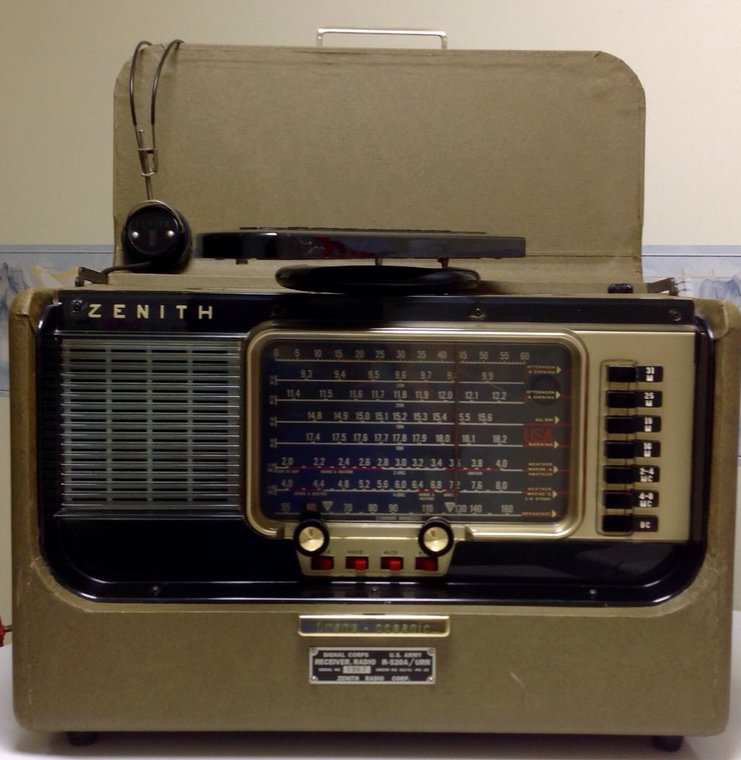
Since I’m a complete sucker for Signal Corps radios, my buddy David Korchin (K2WNW), thought it would be a great idea to tempt me with this recent listing on eBay: a rare Zenith R520A/URR.

Let’s be fair. It’s gorgeous. 

And I would like to know the full story behind this radio.

Fortunately, the reserve is $1200 US–high enough that I know I need not bid.

For Zenith folks, though, this would make a handsome addition to their collection.

Click here to view on eBay. I’ve also pasted the full description below.

Very curious if this radio will make its reserve price.

Description of Zenith R520A/URR:

“Up for auction is a rare Zenith Transoceanic R520A/URR. It comes with the Zenith headphones that plug into the rear of the chassis.

It was restored electronically replacing capacitors, resistors, and tubes that needed to be replaced. All tubes are NOS.

It comes with the Zenith headphones that plug into the rear of the chassis. It also comes with a modern battery holder that has been placed into the green battery box that I painted up to look a little more authentic.

It plays wonderfully on all bands with amazing sensitivity on the shortwave bands. Broadcast band can receive stations as far as 750 miles away. Antenna is straight and extends fully. The wave magnet antenna has the metal post that allows it to be placing into the handle so you can rotate it for best reception.

The chassis is extra clean and has all the tube shields.

This has the original cord with a NOS plug with new fuses incorporated.

Both fuse boxes on the back door have been filed with NOS fuses.

Has the manual that came with it and many specs that I printed out for this radio.

The exterior is very clean and the brass was polished and then sprayed with gloss clear coat so it cannot tarnish in the future. Knob inserts are new solid brass that were polished and sprayed as well. The I.D. Tag is an exact reproduction of an original tag.

All the feet are original and in excellent shape.

The cabinet has all the original military markings and are in excellent condition.

Runs wonderfully on AC or DC. I have always run it on batteries.

I have shipped quite a few of these transoceanics and the average cost for the lower 48 states is around 49.00 shipped via USPS Priority Mail.

My reserve is set at 1200.00. If it doesn’t reach this amount, I will keep the radio in my collection.”

Click here to view this item, along with several detailed photos, on eBay.