Category Archives: Shortwave Radio

Trevor Baylis: a CBE in the New Year Honours list

Trevor Baylis (Source: Wikimedia Commons)

Trevor Baylis (Source: Wikimedia Commons)

Inventor of the clockwork radio, Trevor Baylis, has been made a CBE in the New Year Honors list.

Mr. Baylis very much deserves this honor as his inventions have directly and indirectly fueled many self-powered innovations we enjoy today.

I’m honored to have spoken with Mr. Baylis over the years; he’s a brilliant, caring fellow with a sharp mind for solving problems and inventing solutions. Indeed, his advice has been invaluable for my charity, Ears To Our World. [Thank you, Trevor!]

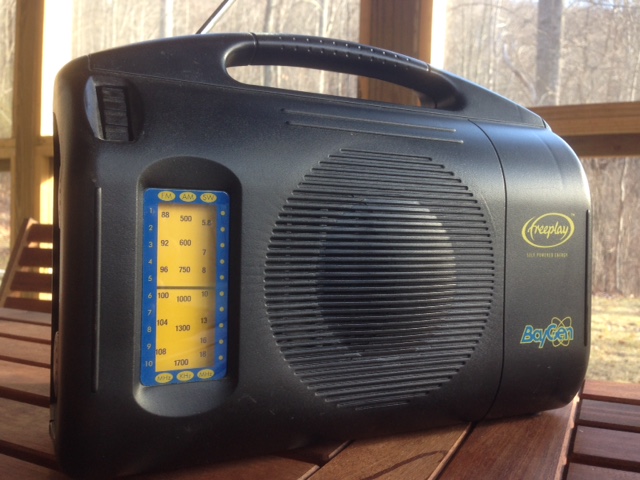
I’m proud to own an original Freeplay/BayGen clockwork radio; somehow, winding up this radio and listening to it play from that released energy never gets old. Indeed, it’s still magic to me.

FreePlay-BayGen-Radio

Read the full news item about Trevor Baylis at the BBC News Technology site:

Inventor Trevor Baylis has been made a CBE in the New Year Honours list.

Best known for creating the Baygen wind-up radio, Mr Baylis was honoured for services to intellectual property.

Throughout his colourful life, which involved a stint as a stuntman, Mr Baylis has spent much of his time inventing or involved with engineering.

Most recently he has campaigned to make the UK a more hospitable place for inventors, and is seeking to help them safeguard their creations.

Continue reading on the BBC website…

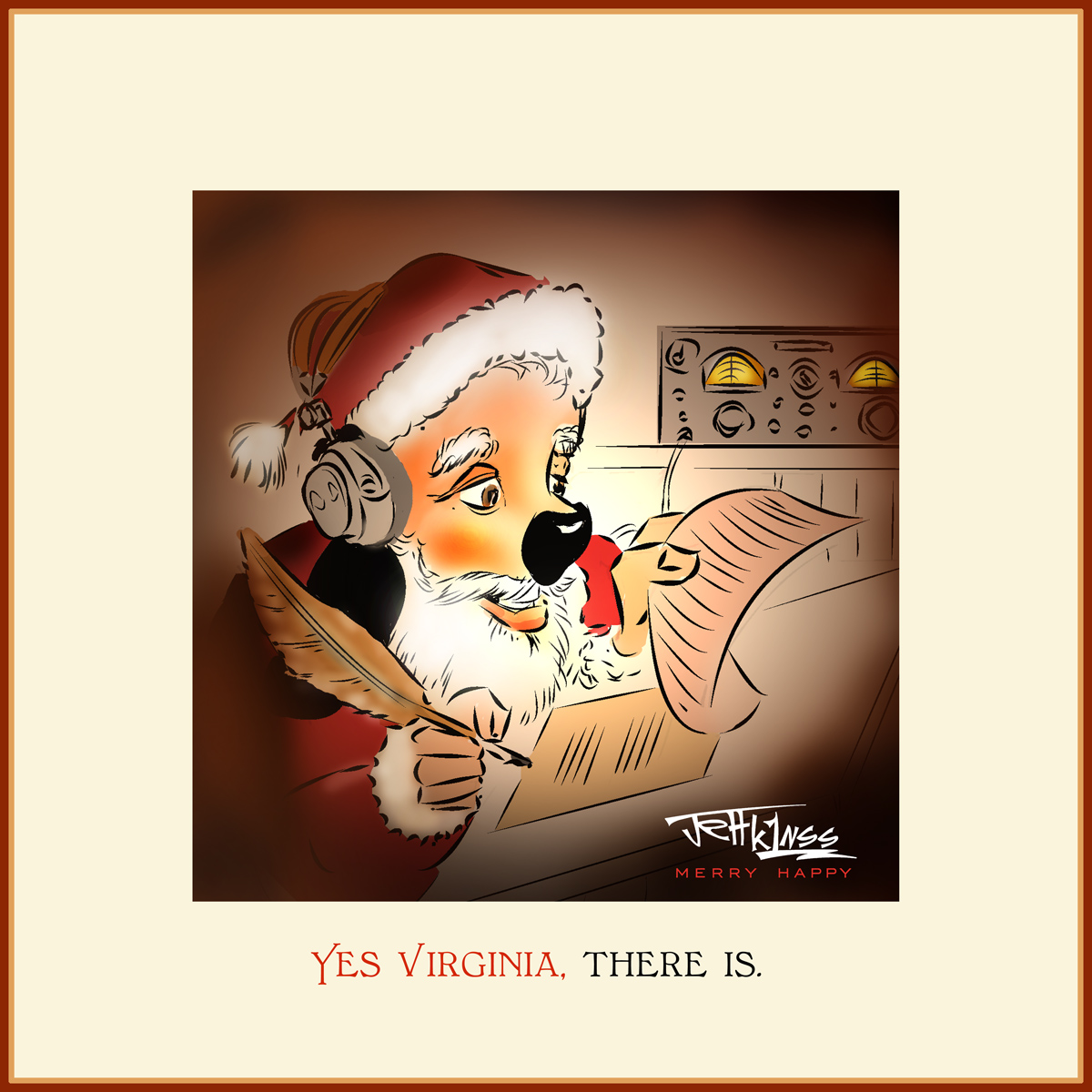
Yes, there is a shortwave…!

Virginia letter Dash

Dear Editor—

I am 8 years old. Some of my little friends say there is no shortwave. Uncle DX Dash! says, “If you see it on the SWLing Post, it’s so.” Please tell me the truth, is there a shortwave?

Virginia E. Layer
330 Independence Ave., S.W.

Virginia, your little friends are wrong. They have been affected by the skepticism of a digital age. They do not believe what can’t be heard or seen on their smart phone. They think that nothing can be which is not comprehensible by Google. They seek credit cards, not QSL cards.

Yes, Virginia, there is a shortwave. It exists as certainly as sound and circuits and tubes exist, and you know that these abound and give to your life its highest beauty and joy. Alas! how dreary would be the world if there were no shortwave! It would be as dreary as if there were no Virginias. There would be no heterodynes, no band openings, no propagation to make tolerable this existence. It would be a world without London Calling.

Not believe in shortwave! You might as well not believe in the ionosphere. You might get your papa to hire men to listen to all of the wi-fi radios of the world, but even if you did not hear shortwave, what would that prove? The most real things in the world are those that neither children nor men can see. Did you ever see ground waves dancing on the lawn? Of course not, but that’s no proof that they are not there. Nobody can casually conceive or imagine all the wonders there are heard and unheard in the listening world. For that, you must wear headphones.

No shortwave! Thank goodness! It lives, and lives forever. A thousand years from now, Virginia, nay 10 times 10,000 years from now, shortwave will continue to make glad the hearts of listeners.


Happy Holidays from your friends at Dashtoons and the SWLing Post!

With apologies to The New York Sun.  Our tongue-in-cheek editorial borrows from the timeless classic, “Is There a Santa Claus?” printed in the September 21, 1897, issue of The New York SunClick here to read the original

A report from Antarctica

McMurdo Station, Antarctica. (Source: USAP.gov)

McMurdo Station, Antarctica. (Source: USAP.gov)

Regarding our post about Christmas carols in Antarctica, Nathaniel Frissel (KC4/W2NAF) at the McMurdo Station in Antarctica writes:

Hi, everyone! Merry Christmas!

We had a wonderful time singing over the radio from Antarctica this year on 7995 kHz. We heard carols not only from McMurdo Station, but many of the other bases and remote field camps as well. This includes South Pole Station (American), Mario Zuchelli Station (Italian), Siple Dome Station (Italian), Grounding Station (American), Diamond Hills Field Camp (We think!) (American), and Science Event I-196 (American).

I have already received SWL reports from a number of listeners, and am very happy to report that a number of operators reported that they heard Hark the Herald Angels

Sing come through the static for about 30 seconds. This transmission originated from South Pole Station. So far, these reports have come from the Netherlands, Germany, and Australia. A few US stations believe they heard the transmission as well. Many reported using the University of Twente Web SDR.

Here are some recordings you can listen to:
Hark the Herald Angels Sing transmitted from South Pole Station recorded on 7995 kHz USB with U of Twente Web SDR (Netherlands):
http://youtu.be/KY7Qhhd6C3w


Hark the Herald Angels Sing transmitted from South Pole Station recorded on 7995 kHz USB from MacOps (McMurdo):
http://youtu.be/0q4gFNWdBK0


We Wish You a Merry Christmas transmitted from McMurdo Station (Recorded live in McMurdo): http://youtu.be/TAaWGlwq4B0

Your e-mail reports made everyone very happy down here. We are all very excited to receive Christmas greetings from around the world!

Merry Christmas, and VY 73 from the Ice,
Nathaniel, KC4/W2NAF

——————————————–
McMurdo Station – Deck the Halls
Mario Zuchelli (Italian Base) – Italian Christmas Carol
McMurdo Station – Let It Snow
Siple Dome – Anges We Have Heard On High (in Italian)
McMurdo Station – Little Drummer Boy
South Pole Station – Jingle Bells
Grounding Station – Grandma Got Run Over by a Reindeer
Diamond Hills Field Camp – Silent Night (with Ukelele Accompaniment)
Mario Zuchelli Station – Adeste Fideles
South Pole Station – Joy to the World
Siple Dome – Silent Night (in Italian)
McMurdo Station – 12 McMurdo Days of Christmas
Science Event I-196 -Rudolph the Red Nose Reindeer
Siple Dome – Adeste Fideles
McMurdo Station – We Wish You a Merry Christmas
South Pole Station – Hark the Herald Angels Sing (Reported heard by SWL Stations)

Nathaniel, I’m so happy to hear your signal was heard around the world. I listened, but never heard your carols break through the static; in truth, conditions were less than favorable here. I did make a spectrum recording, and will go back through it again.

Here’s wishing you and all of your colleagues and family a very Merry Christmas!

Video: 1940s-era holiday treat from Tommy Dorsey (c/o a vintage rig)

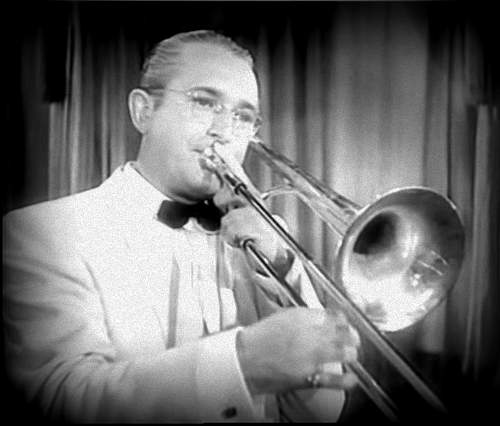
Tommy_dorsey_playing_trombone

Below you’ll find a short video of my 1945 Scott Marine Radio Model SLR-M playing Tommy Dorsey and his Orchestra’s  jazz-infused version of “March of the Toys” from Victor Herbert’s holiday classic “Babes in Toyland.”

It’s a little holiday time-travel I cooked up for you on this great vintage rig. I’m actually playing the song via an SStran Model AMT3000 AM transmitter I built from a kit (more on that in a future post). The transmitter has been set to 1410 kHz, to which the SLR-M is tuned.

Though the microphone on my Flip Video camera makes the sound in this little recording tinny (you’ll have to trust me that, live, it’s remarkably warm and rich), it does feel a bit like radio time-travel to hear a 1940s-era song played on a 1940s era-radio. This is just how WWII servicemen might have heard this music.

For your holiday enjoyment: “March of the Toys” by Tommy Dorsey and his Orchestra:

Dave’s review of the CountyComm GP5/SSB

GP5SSB-FrontDave Zantow (N9EWO) has just posted his review:

CountyComm GP5/SSB Pocket Portable (with SSB) Review Now Posted

Now posted up on my web page. It’s mid way down. Note : I also totally updated my Tecsun PL-360 review as well (the first top review on this same page).

http://webpages.charter.net/n9ewo2/pl360.html

Dave’s reviews are always top-notch, so you should read this one if considering the GP5/SSB. If you haven’t already, you can click here to read our recent review of the CountyComm GP5/SSB as well.

The Spectrum Monitor: only $24 for a year’s subscription

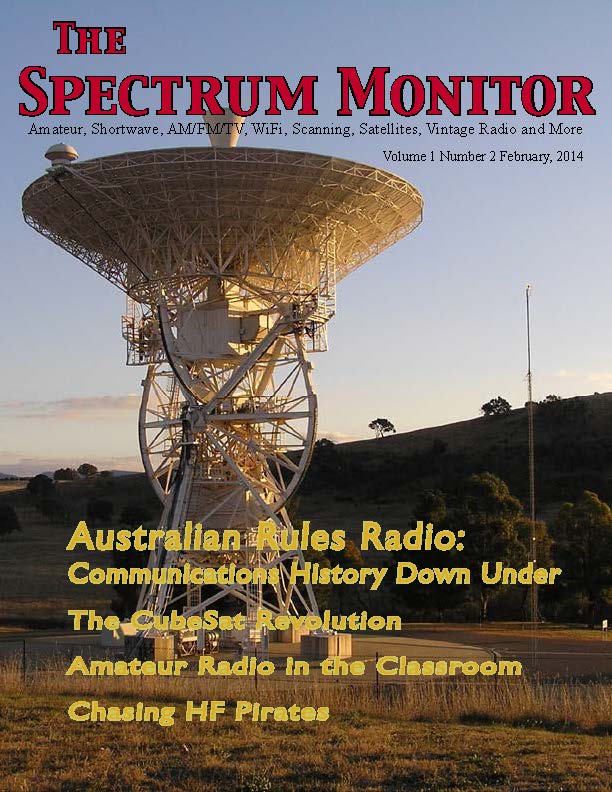
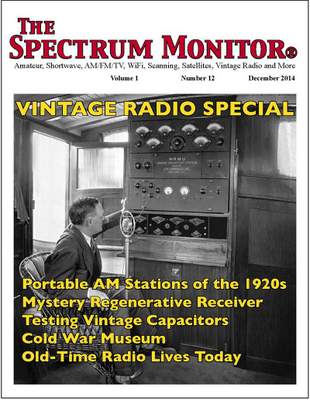
December14Cover.1On occasion, the things you enjoy most, you forget to share with your friends. Not sure why this happens, but this is certainly the case with the Spectrum Monitor magazine (TSM). I’m long overdue to properly pitch TSM to my readers, which I feel is an absolute bargain at just $24 per year.

Why? Many of you may recall that it was only July of last year when we learned about the closure of The Monitoring Times magazine.  I had always loved the magazine–not only were the management and editors a great group, but the magazine content was some of the best in the communications business when I began writing features and reviews for MT. But the owners of MT, Bob and Judy Grove, were ready to retire; ultimately, they decided to close their magazine down rather than sell it off.

Shortly after the announcement, MT‘s managing editor, Ken Reitz (KS4ZR), decided to make a go of a new publication. Albeit wholly digital, this magazine was to cover the same scope and content depth as MT, and would be known as The Spectrum Monitor (TSM).

In January of this year, TSM launched, and like many SWLing Post readers, I was eager to see if the content met the benchmark MT had set for so many years.

I needn’t have worried.  Ken had corralled many excellent contributors, in many cases drawing upon previous writers for MT.  And in the past year, I don’t believe it’s a stretch to say that in many respects, TSM not only met that benchmark, but has actually even exceeded itTSM is now–unquestionably–a good, solid, thoroughly enjoyable publication. 

Each issue is packed with topics covering the radio spectrum: shortwave, ham radio, vintage radio, pirate radio, scanning, public service, satellite, AM/medium wave and host of digital/mobile technologies, as well. Really, everything a listener could hope for.

November2014Cover Initially, I had my doubts.  I frankly wasn’t sure whether I’d like reading a “digital-only” radio publication, or whether other readers would. I confess to being a bit “old school;” as a radio listener, I like to hold a radio in my hands, to physically tune it; as a reader, I prefer holding a printed publication in hand, to turn the (paper) pages…How would I feel with an e-reader or laptop, instead? Would reading that way feel like work?

But TSM soon swayed me toward the digital as both reader and as a columnist. As a writer, there was less stress on word count. If it was a bit short, or lengthy– as my October column was–I soon found it mattered less. In a digital publication, page count is comparatively irrelevant as long as content is worthwhile and captivating for the reader.  And as a reader, I appreciated that the columnists that I was reading would have the freedom to write at length, too.

Secondly, a digital publication gave its writers an opportunity to infuse columns with a multi-media element–something I’d become accustomed to as a blogger here on the SWLing Post. When I published a review of a radio, I could include actual audio clips in the article. If I wrote about pirate radio, for example, I could embed actual pirate radio recordings. Brilliant! And, again, more fun for the reader.

Also, including links or references to external websites is a cinch in a digital format, and quite easy for the reader to check out. Instead of copying a long gangly URL from a printed page, you simply click on a link as you would on a website, such as on this one. Second nature, really.
FEB2014CoverFinally, in a digital publication, I found writers could use more full-color images in their articles. I really enjoy the addition of the images; they make articles come to life…

So, I soon learned to relax with the e-reader just as I had with the printed Monitoring Times.  No pages to turn, but then again, not so different from reading…well, a blog like this.  I’ve received excellent feedback from TSM readers, too, many of whom admitted their initial bias against a “digital” magazine had since been withdrawn completely.

I continue to enjoy reading TSM every month.  And although–due to time constraints–I’m no longer TSM‘s primary shortwave radio columnist, I still enjoy writing for TSM when time permits, so you will see my reviews and features pop up in TSM now and again.

But why take my word for it?  Check it out for yourself–it’s one of the best magazines for the radio enthusiast, digital or print…And at only $24 annual cost, it’s a terrific and affordable last minute Christmas gift for a friend, family member, or–let’s be honest–for yourself.

Afraid to commit to a one year subscription? Individual issues of TSM are available online for $3 each. If you like what you’re reading (you will), you can then purchase a one year subscription, and the cost of your issue will be refunded.

If you’re lucky enough to receive a subscription to TSM in your stocking, I can assure you that you’re in for a real treat.  Happy reading!