Category Archives: Software Defined Radio

The Airspy Youloop is a freaking brilliant passive loop antenna

Before I start talking Youloop, I have a little confession to make up front:

At the Winter SWL Fest when I gave a presentation about Portable SDR DXing, not only did I give attendees the wrong name of the Airspy Youloop antenna, but I also configured it incorrectly, hence the poor performance via my Miscrosoft Surface Go tablet PC.

I had assumed the the crossover component of the antenna was the transformer component. I realized the mistake I made when I saw some of the first promotional photos of the Youloop antenna a few weeks ago.
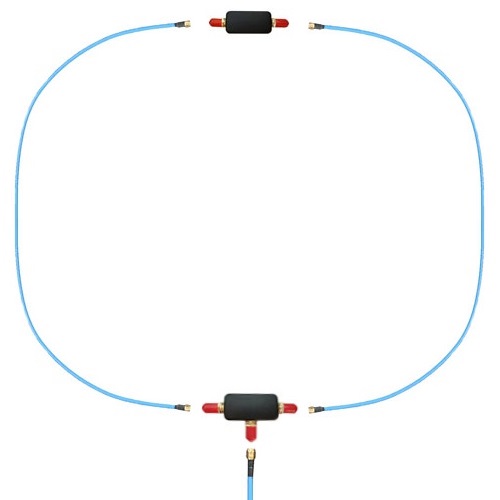
The crossover connects both sides of the loop while the tee junction contains the transformer.

Doh! I’m trying to forgive myself for making such an obvious mistake, but in my defence–and in the spirit of full disclosure–my antenna was a very early sample prototype without instructions, diagrams, etc. so I set it up imagining it being similar to the homebrew loop Vlado and I built. (FYI: When I say “Vlado and I built” it, I really mean, “Vlado built it.”) 

So obviously I made a poor assumption.

Once I assembled the antenna correctly? Wow. Just. Wow!

Youloop: The ideal travel antenna for high dynamic range SDRs

The Youloop, Airspy HF+ Discovery, SDRplay RSPdx, and all cables easily fit in my Red Oxx Lil Roy pack.

The Youloop is truly the travel antenna I’ve always wanted for portable SDR DXing. Here’s why:

  • It’s incredibly portable and can be rolled up to fit in a small travel pouch
  • It has all of the low-noise characteristics of other magnetic loop antennas
  • It’s wideband unlike many passive loop designs
  • It requires no variable capacitor or tuner
  • It’s made of quality components
  • It requires no external amplifier nor power source
  • It takes one minute to assemble
  • It’s affordable (~$35 USD shipped)

The only caveat? To take advantage of the Youloop, you must use a high dynamic range receiver.
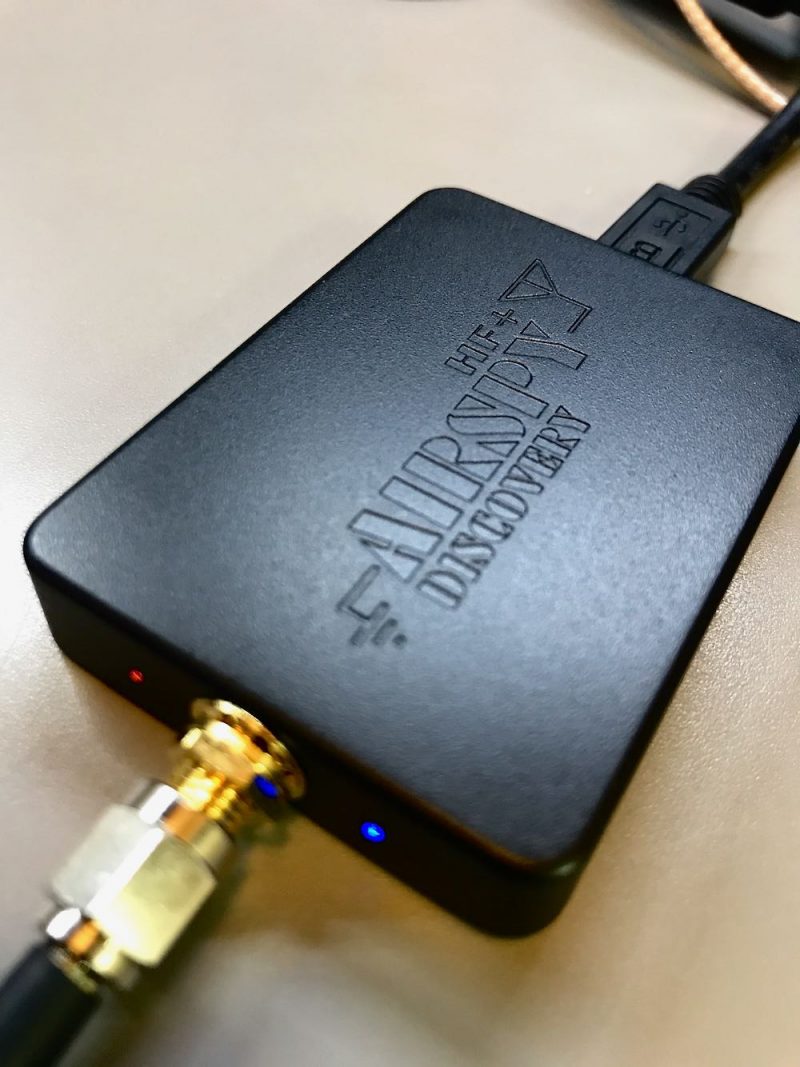
Airspy HF+ Discovery SDR

I can verify that this antenna works brilliantly with the Airspy HF+ Discovery.
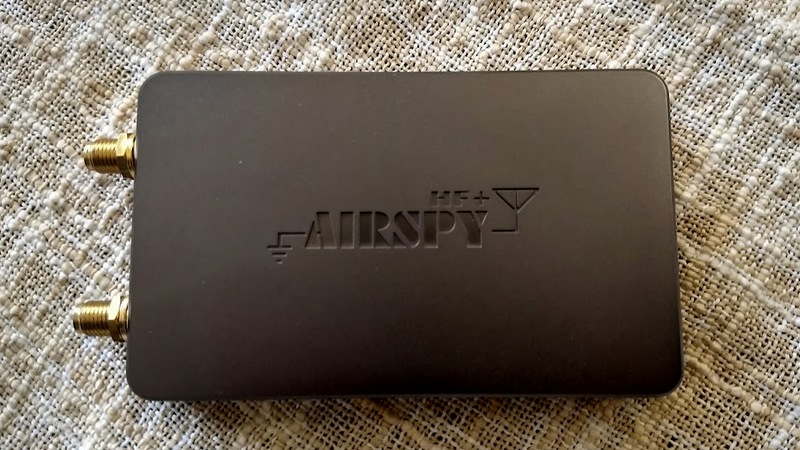
The AirSpy HF+ SDR

It will also pair well with the Airspy HF+  if you shortcut R3 via the R3 modification.
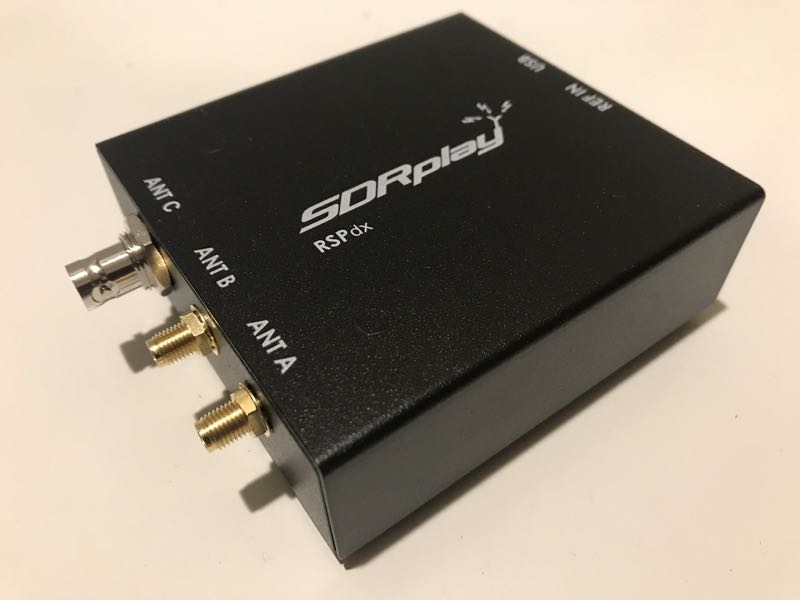
SDRplay RSPdx SDR

I’ve also used it numerous times with the new SDRplay RSPdx while using SDRuno in High Dynamic Range (HDR) mode. With the RSPdx, I can make spectrum recordings of the entire AM broadcast band. Note that HDR mode is only available on the RSPdx at 2 MHz and below, using the SDRuno app.

I have not tested the Youloop with other SDRs yet. I will soon test it with my WinRadio Excalibur.

So how well does the Youloop perform?

Listen for yourself!

I’m doing a little cargiving family members today. Their home is swimming in RFI (radio interference/noise). In the past, I’ve struggled to make good mediumwave recordings at their home–certainly an ideal situation for a mag loop antenna.

This morning, I wanted to record one of my favorite local AM stations (WAIZ at 630 kHz), so I set up the Youloop in the middle of a bedroom, hanging off a large bookshelf set against an interior wall. In other words: not an ideal situation.

When I plugged in the Airspy HF+ Discovery and loaded the Airspy SDR application, I fully expected to see a spectrum display full of broadband noise.

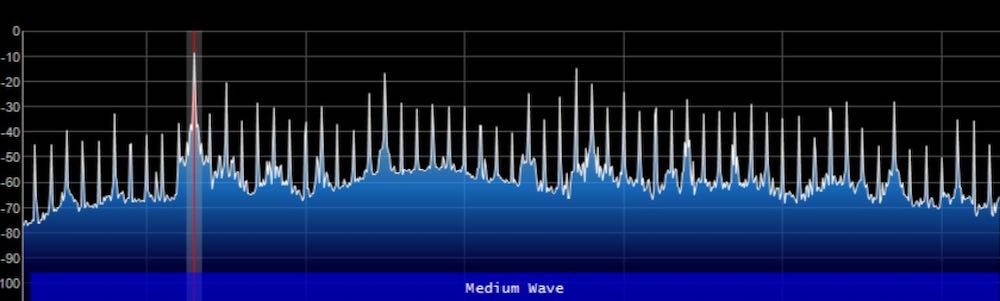
Instead, I saw signals. Lots of signals:
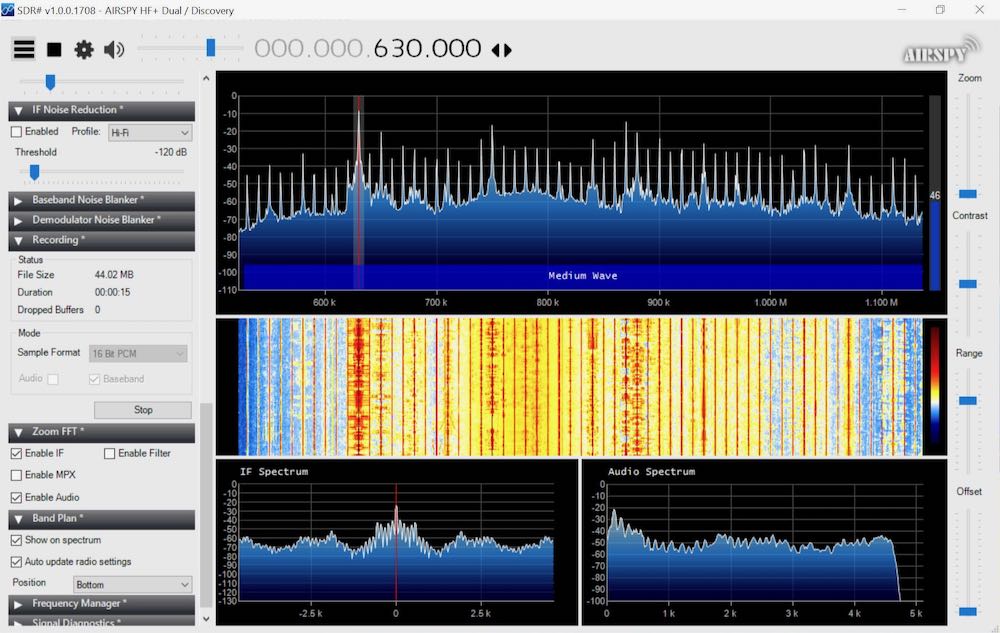
Sure, there’s some noise in there, but it’s low enough I could even do proper mediumwave DXing on most of the band if I wished.

In fact, if you’d like to experience the HF+ Discovery/Youloop pairing in this compromised, less-than-ideal DXing setup, why not tune through one of the spectrum recordings I made?

Click here to download the spectrum file [885.7MB .wav].

The recording was made on March 30, 2020 starting around 10:50 UTC. You’ll need to open this file in AirSpy’s free application SDR# or a third party SDR app that can read AirSpy .wav files.

I can’t wait to try the Youloop in other locations. Since we’re in lock-down due to Covid-19, I won’t be able to try the Youloop in a hotel any time soon. Almost all of my 2020 travel plans have been canceled.

Highly recommend

If you have one of the SDRs mentioned above, go grab a Youloop. At $35 USD, it’s a fantastic deal.

Click here to check out the YouLoop at the RTL-SDR.com store ($34.95 USD shipped).

Click here to check out the YouLoop at Airspy.US ($29.95 + shipping).

Click here to search for AirSpy distributors in your region/country.

If you don’t have a high dynamic range receiver, note that Airspy is exploring the idea of making a pre-amp for the Youloop. If interested, you might drop them a note of encouragement!

Do you have a Youloop? Please share your comments!


Do you enjoy the SWLing Post?

Please consider supporting us via Patreon or our Coffee Fund!

Your support makes articles like this one possible. Thank you!

AirSpy YouLoop passive magnetic loop antenna now shipping

Many thanks to SWLing Post contributor, Michael Agner (KA3JJZ), who notes that AirSpy  now has the YouLoop passive mag loop antenna posted on their retail websites.  You can grab one for $30 – $35 US, depending on your location. That’s a fantastic deal in my book.

Click here to check out the YouLoop at Airspy.com.

Click here to check out the YouLoop at Airspy.US ($29.95 + shipping).

Click here to search for other AirSpy distributors.

Note that the YouLoop only works well with high dynamic range SDRs and receivers like the AirSpy HF+ Discovery.

A Compact RSPdx & Wellbrook Loop Kit for the Beach — My Approach

I have enjoyed three to four medium wave and shortwave DXpeditions per year since 1988, to sites on the Washington and Oregon coasts. I love the chance they give to experiment with antennas in a (hopefully!) noise-free location, and concentrate on catching stations that might not be heard from home.

All of my DX trips have been via car–until now! I’ve just returned from nine vacation days in Hawaii (Waikoloa Beach, on the Big Island), and I thought others might like to see the radio related items I chose to take along for air travel. I’m pleased to report that everything worked as planned, and I have five days of SDR IQ WAV files of the MW band for review, all recorded in the time frame surrounding local dawn.

My goal was not the smallest, most compact portable setup, but one with high performance and modest size. Fitting everything into a day pack was another requirement. A simple wire antenna and an even smaller Windows tablet or laptop than the one I’ve used (and a smaller SDR like the HF+ Discovery, for that matter) would make a much smaller package. However, the items I’ve assembled worked excellently for me during my enjoyable Hawaii vacation. The directional loop antenna provided nulls on medium wave of 30 dB during preliminary tests indoors, a less-than-ideal test situation.

Waikoloa Beach–just one of a zillion picturesque scenes in Hawaii.

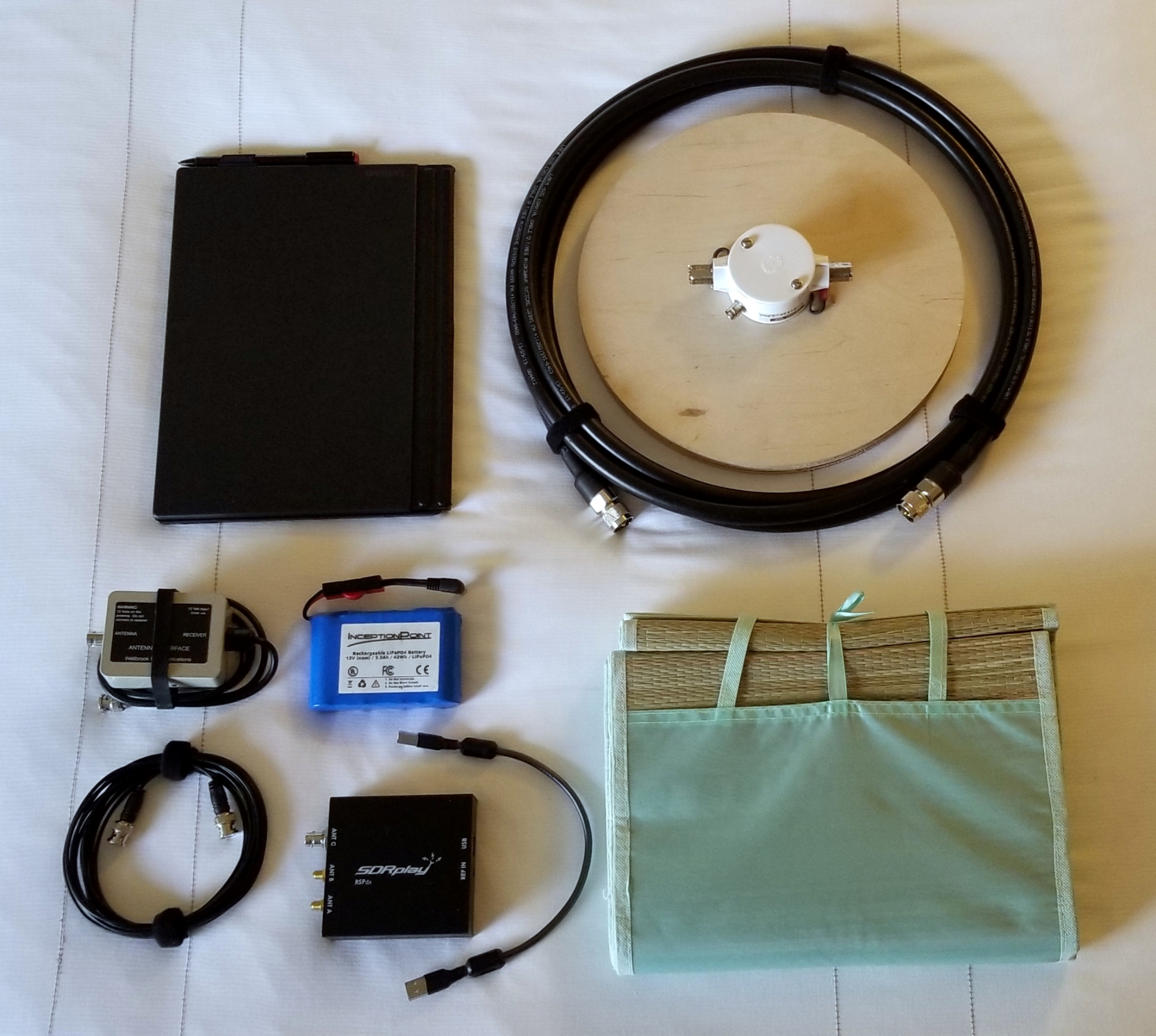
Here is a list of what I’ve put together for my DXing “kit”:

    • SDRPlay RSPdx receiver
    • Short USB cable for receiver<>PC connection, with two RFI chokes installed
    • Lenovo X1 tablet— a Windows 10 device with magnetically attached keyboard; this model is a competitor to Microsoft’s Surface Pro tablet
    • Wellbrook Communications’ ALA1530 head amp module, modified for female SO239 connectors enabling use of large diameter LMR-600 coaxial cable as a 2-turn loop element. My antenna setup is similar to Wellbrook’s commercial flexible loop
    • Wooden base for the antenna (ALA1530 is bolted to the base)
    • 20 feet of lightweight RG-174 coax
    • Wellbrook DC interface module for the ALA1530
    • 3.0 Ah LiFePO4 rechargeable battery for the Wellbrook antenna
    • 15 foot long section of high grade “Times Mfg.” LMR-600 coax cable with PL259 connectors (bought from Ebay already assembled/soldered)
    • Fold-up beach mat
    • Small day pack to hold everything

All the contents of this DXing setup fit a standard size day pack.

You’ll note the absence of headphones in the list. This is because my intent from the start was to record all the DX (MW band) as SDR WAV files for DXing post-vacation. That said, I did have headphones in my travel luggage for later spot checks of a few frequencies. That’s how I found 576 kHz Yangon, Myanmar lurking at their 1700 sign-off with national anthem and English announcement. The remainder of the DX to be uncovered will have to wait until I’m back home near Seattle!

The LMR-600 is a very thick and stiff coax cable, whose diameter approaches that used in the standard aluminum tubing ALA1530 series from Wellbrook. It has the benefit of being self-supporting in a 2-turn configuration and will also coil up into an approx. 12-inch package for transport. It just barely fits within the day pack I’m using. As I understand it, magnetic loops with tubing or large coax as the active element, versus simple wire, are more efficient in operation. Whether or not this holds true in practice remains to be seen.

I fashioned a wooden disc 3/4″ thick to attach the ALA1530 head amplifier, as I didn’t want to bring along a tripod or other support stand. The Wellbrook antennas all work well near or at ground level, so I was able to get great reception with the antenna right on the beach. The diameter at two turns of the coax is only a few inches smaller diameter than Wellbrook’s aluminum tubing loops. Three strips of strategically placed Velcro straps help keep the turns together when deployed as well as during storage.

In theory a two-turn loop should give 5 dB less gain than a single turn version; however, my older ALA1530 module has 5 dB more gain than the newer “LN” type, according to Andrew Ikin of Wellbrook Communications. The net result is that my two-turn antenna should have equal gain to the larger one-turn variety. Future experimentation with this DIY coax loop antenna is in order!

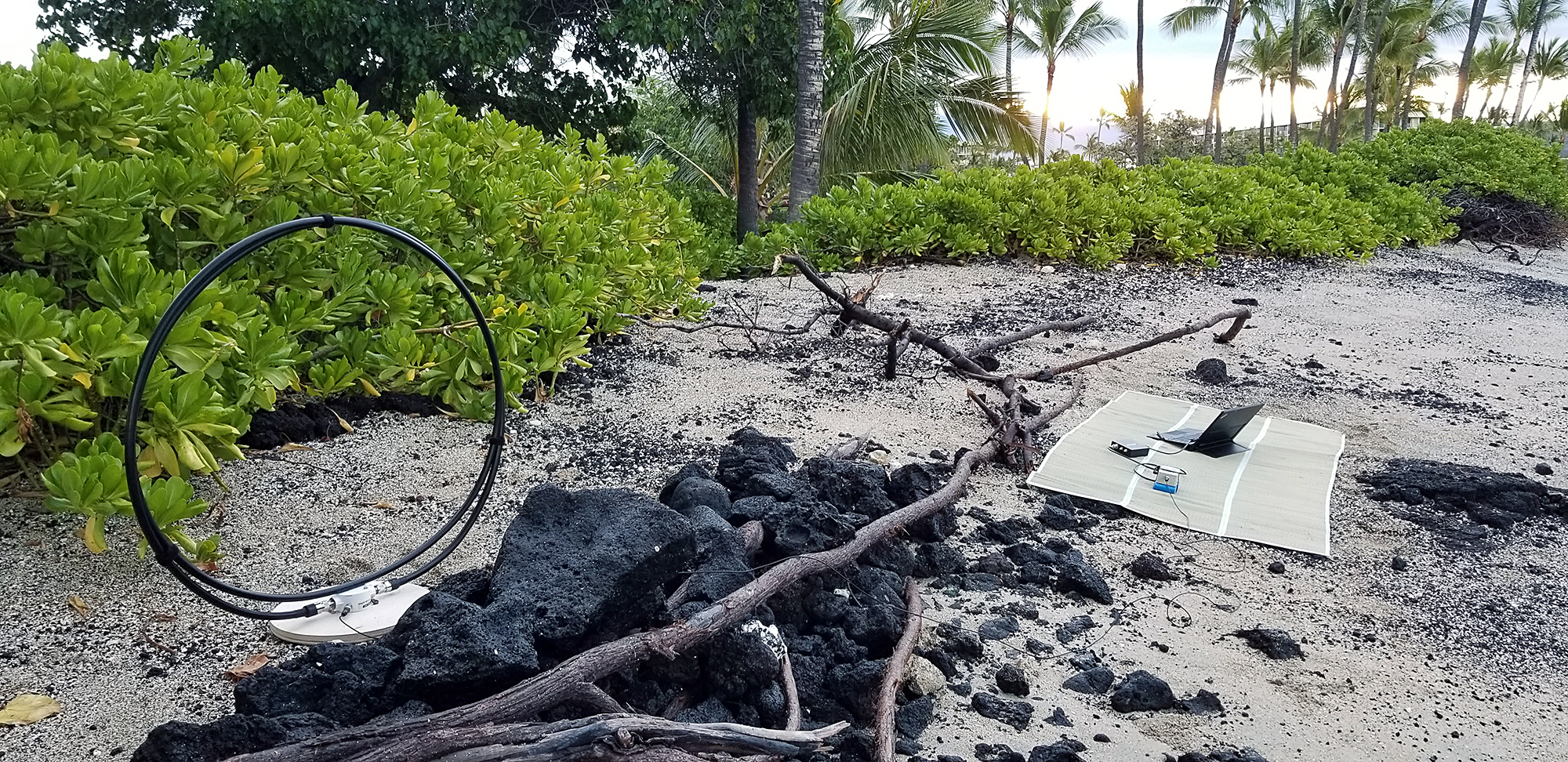
The Wellbrook loop antenna, RSPdx receiver, and Windows 10 tablet on the beach in Waikoloa, Hawaii.

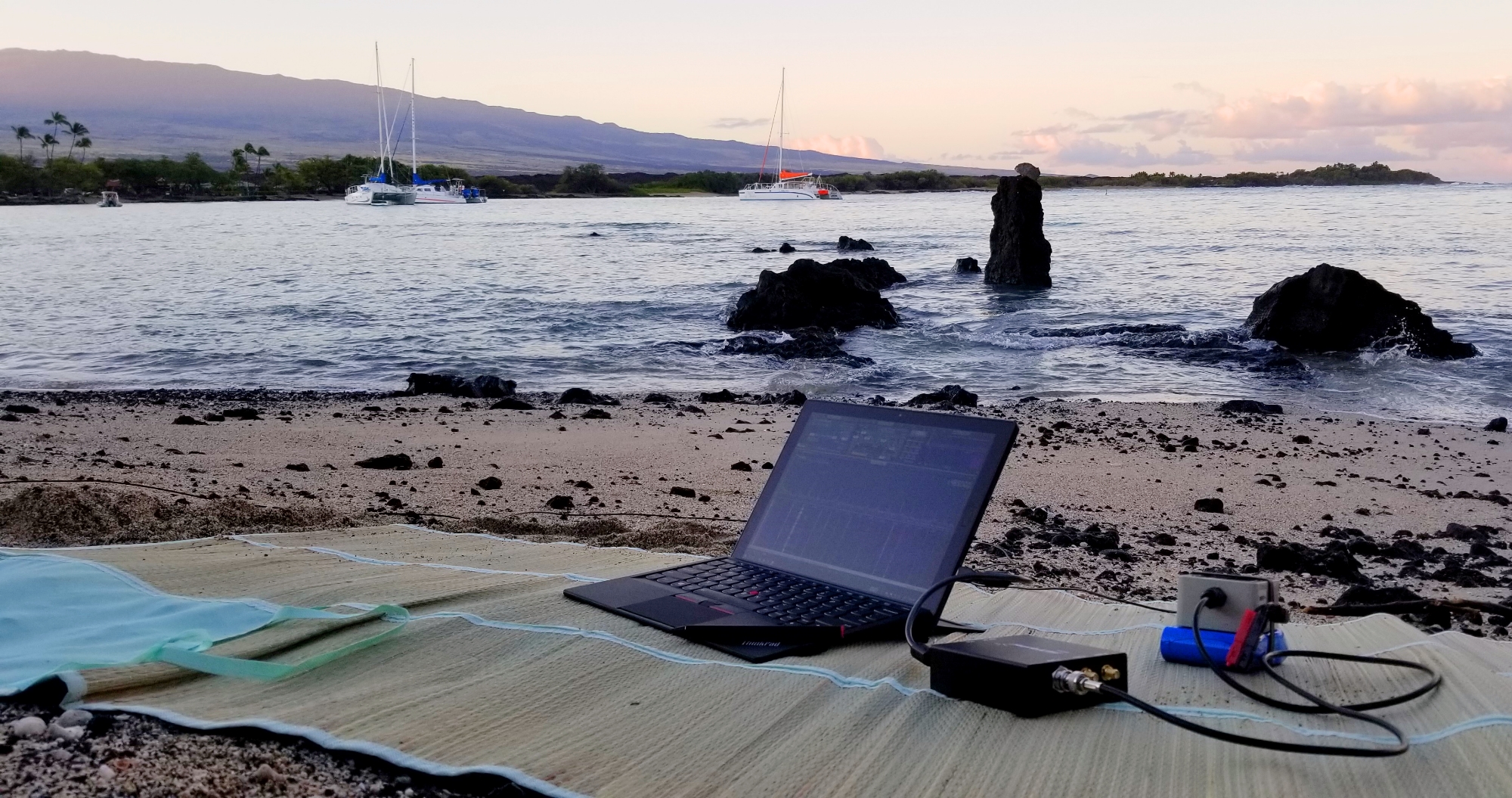
Another view of the DXing position. Being this close to the water with my radio gear was unnerving at first, but the wave action on a calm Hawaii beach is totally different from the Oregon/Washington beaches with waves that can move in and out by a hundred feet or more.

The Wellbrook “DIY FlexLoop” works fine at beach level, and is less conspicuous this way, too.

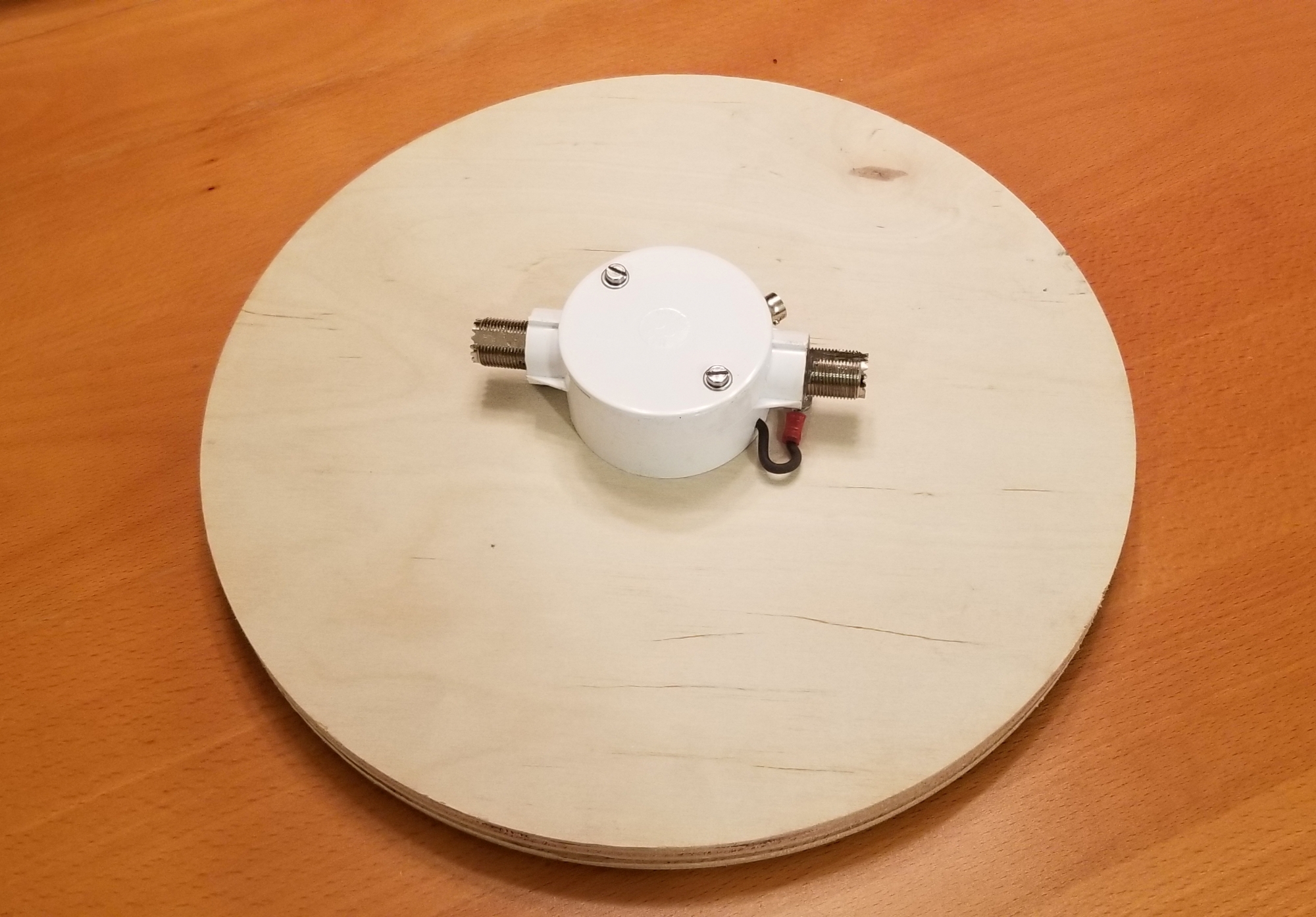
The ALA1530 module is bolted to the 11-inch wooden disc for support. I’ve modified the module’s sockets to securely hold SO239 female connectors.

The commercial Wellbrook FLX1530LN is a fine product, and worthy of your consideration as a compact and high performance travel antenna. Full details can be found at this link.

SDR WAV Files for Download

One of my goals from the start for my Hawaii trip was to bring back SDR “IQ” WAV files for sharing with others. These approx. 900 Mb files cover the entire medium wave band as heard from my beach location in Waikoloa.

The overall page is: https://archive.org/details/@4nradio   Clicking on any of the entries will bring you to a details page. From there just right click on the “WAVE” link, and choose “Save as…” to download. For a few of the recordings I also posted the file that precedes the one that goes across the top-of-the-hour, because things seemed a bit more lively prior to 1700 (which  was at local sunrise, give or take a couple of minutes).

The IQ WAV files are only playable with suitable SDR radio software: SDRuno is first choice (but you need a RSP receiver connected). The files are also is compatible with HDSDR and SDR-Console V3. It may also play on Studio 1 software.

I hope other DXers enjoy the chance to tune through the MW band, as heard from the Big Island of Hawaii.

Guy Atkins is a Sr. Graphic Designer for T-Mobile and lives near Seattle, Washington.  He’s a regular contributor to the SWLing Post.

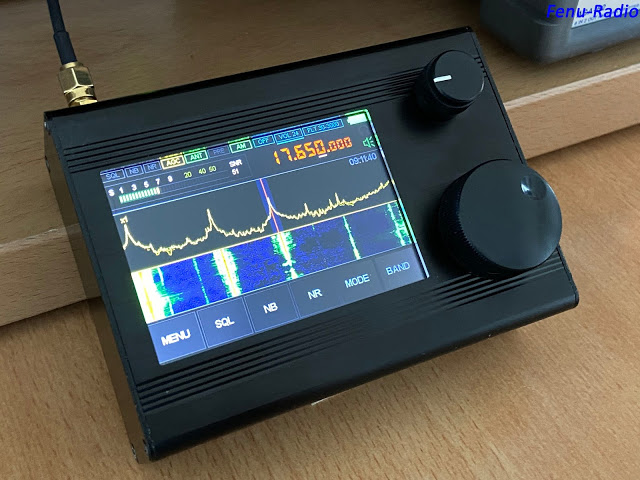
The Malahit-DSP: A potential Holy Grail portable SDR?

(Image via Fenu Duarte)

Many thanks to SWLing Post contributor, Dan Robinson, who provides this update to his article on the Belka DSP receiver. Dan writes:

One of the other DSP radios shown being demonstrated on YouTube is this one by Georgy Yatsuk, presumably from somewhere in Russia. In his comments posted on January 14th, Fernando Duarte who runs the FENU site says:

“This little gem makes a name for itself. Everyone wants it. But it is still difficult to get. Georgy Yatsuk (RX9CIM) developed this small portable SDR with two of his colleagues. What this little guy offers is simply phenomenal! -Frequency range: 50KHz-2GHz -All important types of operation -160KHz wide waterfall & spectrum display zoomable -Noise reduction adjustable -Noiseblanker adjustable -Equalizer for adjusting the timbre – Controllable via PC -Control via CAT -etc, etc … Because the firmware is still in full development, certain functions will definitely be added. A test and a detailed presentation will be available on my website in the near future. Stay tuned !!”

https://fenuradio.blogspot.com/2020/01/malachit-dsp-der-edelstein-aus-russland.html

As of this moment there is no additional information as to whether this seemingly excellent receiver will ever become available and in what numbers.

Many thanks for this update, Dan! We published a post about the Malahit-DSP in November on a tip from H. Garcia (PU3HAG). I have put in an inquiry to purchase one to evaluate here on the SWLing Post as well.  This does look like a fascinating portable SDR!


Do you enjoy the SWLing Post?

Please consider supporting us via Patreon or our Coffee Fund!

Your support makes articles like this one possible. Thank you!
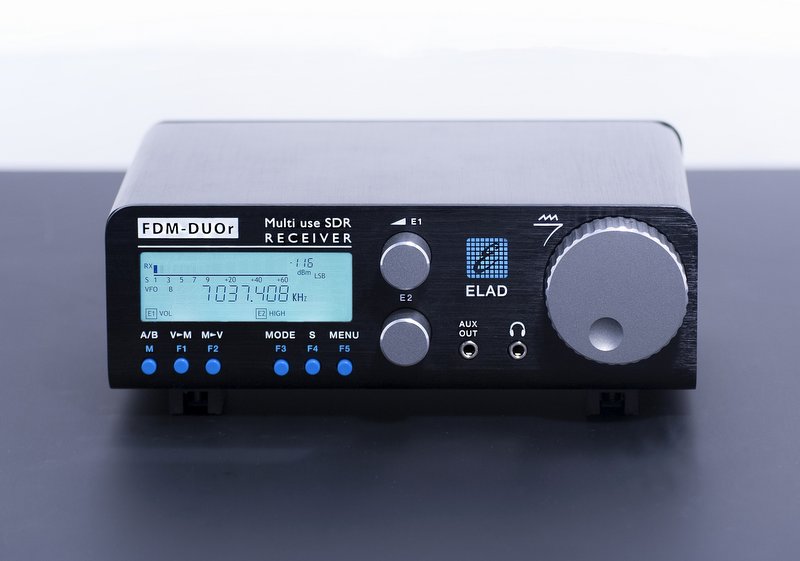
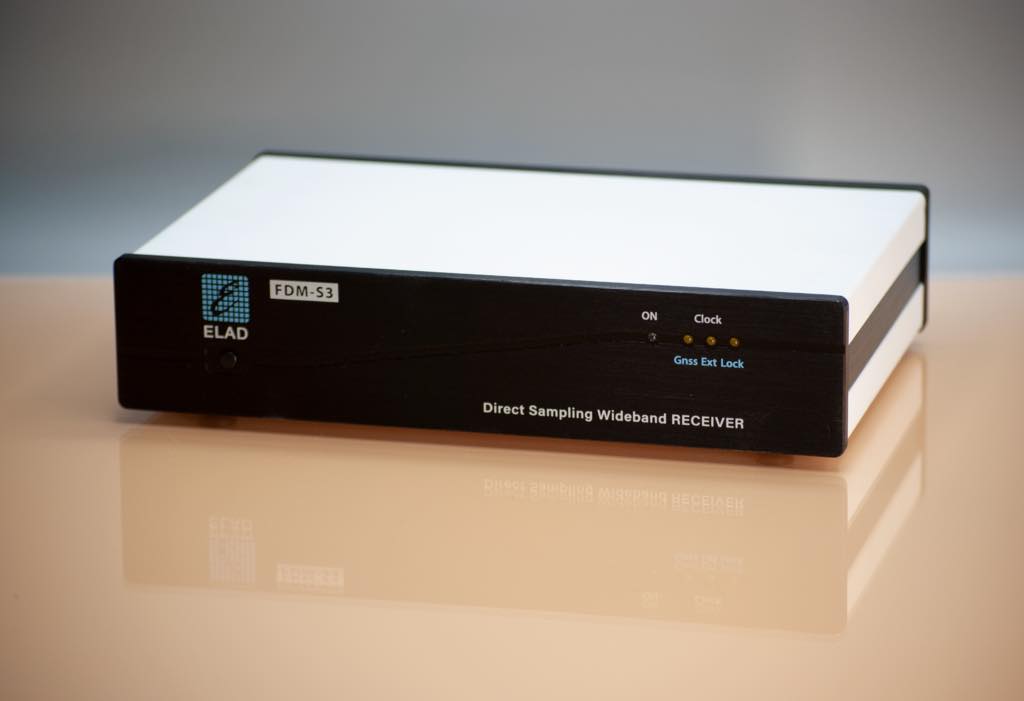
New ELAD FDM-S3 Direct Sampling Wideband Receiver – Specifications and Photos

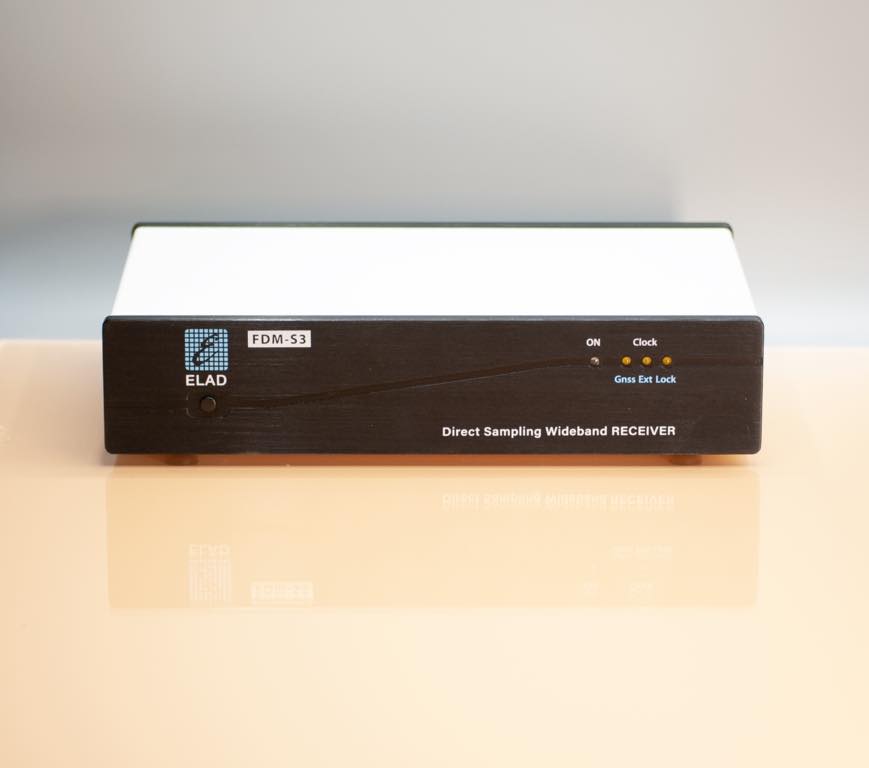
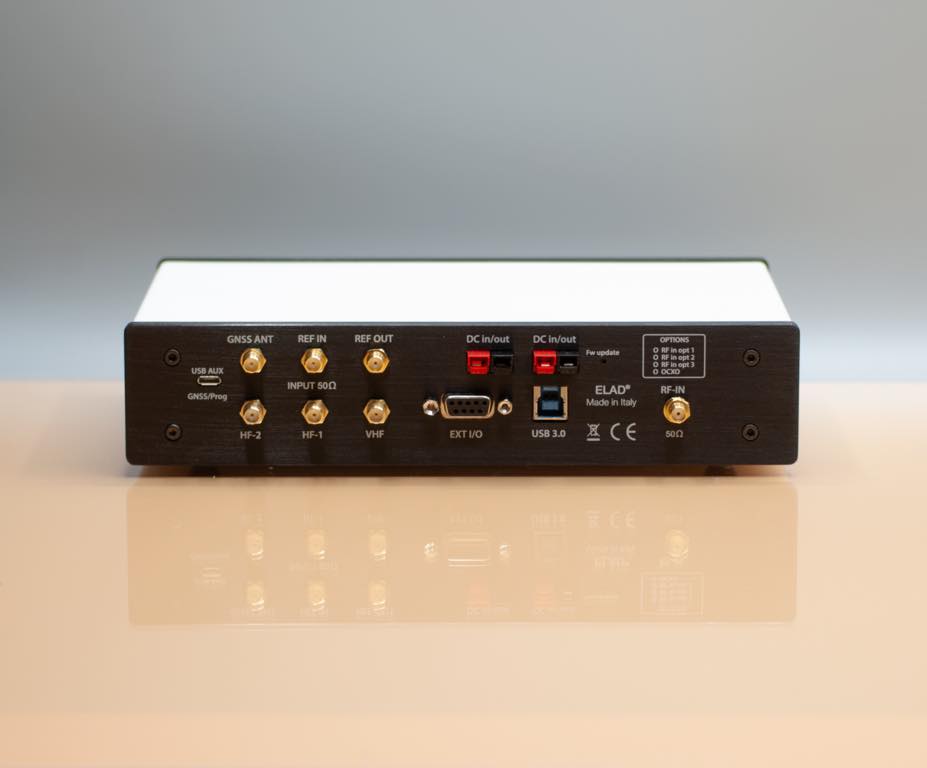
Many thanks to Paul Jones with ELAD who recently shared the following photos and specifications of the upcoming FDM-S3 SDR:

ELAD FDM-S3 Direct Sampling Wideband Receiver

JAN 2020 SPECIFICATIONS

2 switchable HF Antenna inputs direct sampling

1 VHF Antenna input direct sampling

Works with FDM-SW2 ELAD Software & SDR Console

Optional: Antenna RF input downconversion (50MHz – 2GHz preview)

Real Time I/Q Stream Bandwidth 192kHz, 384kHz, 1536kHz, 12880kHz, 24576kHz

122.88 MSPS – 98.304 MSPS 16bit A/D converter

Clock synchronized to GNSS Global Navigation Satellite System or 10MHz Ext Ref

GNSS works with GPS, GLONASS, GALILEO, BEIDOU

Auxiliary USB used to monitor GPS status or for clock firmware updates

10MHz Clock reference Output

10MHz internal standard TCXO 100ppb referenced, optional 3ppb OCXO referenced

Paul notes that the price will be 949 Euro (roughly $1040 USD). No delivery updates were mentioned.

I’m a bit in awe of the maximum working bandwidth: 24.576 MHz–!

No word on availability yet, but I will post it when ELAD has a firm date. I do plan to review the FDM-S3 once it’s released. Follow updates by bookmarking the following tag: ELAD FDM-S3

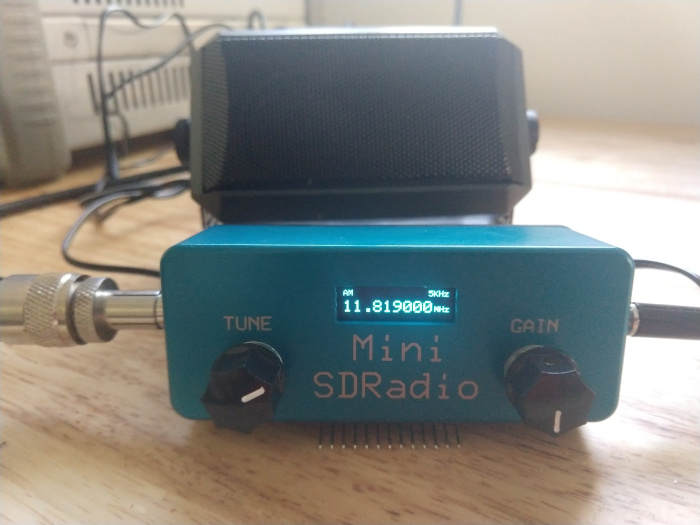
A compact homebrew Si5351-based SDR

(Image source: Circuit Salad)

Many thanks to SWLing Post contributor, Paul Evans, who writes:

I see this receiver as a remarkable break through. Using audio processor to emulate modes from IQ is very, very clever. This is perhaps the article of the year!:

(Source: Circuit Salad)

[…]This is a revised version of my FV-1 based SDR. I replaced the CS2100 clk generator with the Si5351 clk generator. The Si5351 has some advantages over the CS2100, namely you can generate quadrature clks directly. This simplifies the hardware design and improves the quadrature accuracy. The sideband rejection in LSB/USB modes is impressive..somewhere around 60 db as best I can measure. The DSP processing is accomplished by the use of a FV-1 audio processor. The device makes the base band signal processing a snap. It requires some code to be loaded on a EEprom but the circuitry is simple and allows for up to 8 selectable programs. I created three: AM/USB/LSB . The FV-1 provides for three analog POT inputs to control any parameters you choose. Gain, variable filter bandwidth and depth, AGC are some examples of adjustable parameters if you desire. I kept it simple and created fixed band pass filters to taste. I did use one of the controls for AF gain. The design has no tuned circuits or band pass filters but they could easily be added.  It works just fine without them. Occasionally, I come across a ghost signal from harmonic mixing, when tuning, but not enough to matter. The design uses an OLED display and a rotary encoder for tuning. The frequency coverage is from 2.7 Mhz to 25Mhz. The bottom limit is created by the inability of the Si5351 to support quadrature below this frequency. Although I have improved my DSP programs for the FV-1 and have developed new display drivers and the new code for the Si5351, useful detail about using the Fv-1 can be found in my original design from a few years ago: https://circuitsalad.com/2015/06/19/comming-soon-stand-alone-software-defined-radio-baseband-demodulator-no-computer-required/

The design uses a LTC6252 low noise op amp as an RF input with gain. It provides a constant and reliable resistive Rf termination for the sampling detector.  This allows for random antennas to be used without adversely affecting the input termination to the detector. All the code to operate the main processor(display/clk generator/tuning, band select and receive mode) was written in MikroC which is a C compiler for PIC and AVR processors. The generation of quadrature signals out of the Si5351 is not difficult to implement once you know how but..figuring that out took me a couple weeks of experimentation! You can connect switches, the encoder, volume pot and display directly to the main board for operation but I created a secondary board to mount the display and encoders. Instead of an analog pot and selection momentary switches, I used another microcontroller and two encoders(with one built in momentary push switch each) to create all of the switching signals, gain control, etc. This allowed me to have just two controls for all features.  The controls include: tuning, audio gain, mode, and tuning step. Tuning resolution is from 1Hz to 100KHz . For fun, I made the output of the FV-1 differential into the audio amp. This is not necessary.

Here is a link to all the files used to build this radio in a zip file(updated 1/18/20):

https://www.adrive.com/public/Fq3pNr/Si5351%20SDR%20Data.zip[…]

Demo video

Click here to read the full article, download all design notes/files and watch videos at Circuit Salad.

Wow–that is fascinating! Thanks for sharing, Paul. I’m curious if any SWLing Post readers have experimented with the Si5351.

Interestingly, SWLing Post friend Dave Richards (AA7EE), also recently shared this video of an amazing Si5351-based VFO built by JF3HZB:

This must be one of the best analog emulations I’ve seen on a display. Marry the SDR receiver above to this VFO and you could have a top-shelf homebrewed receiver!