Category Archives: Software Defined Radio

Visualising shortwave band activity throughout the year

This article originally appeared on the London Shortwave blog.
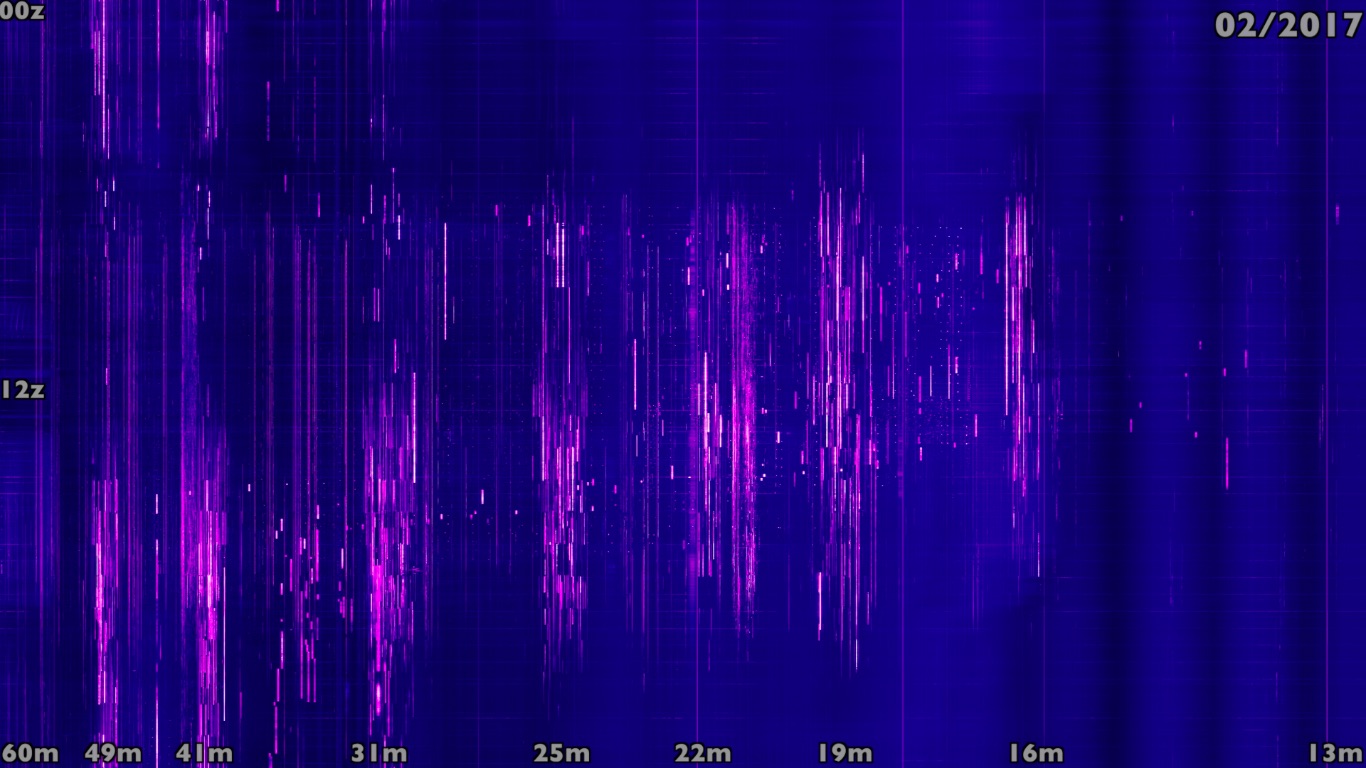
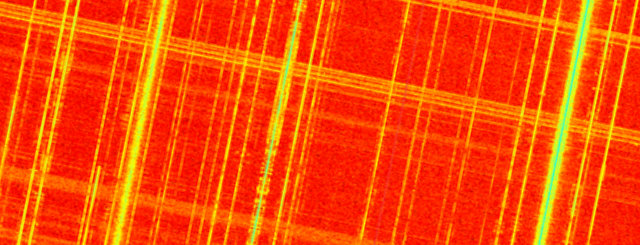
24-hour shortwave spectrum image, showing activity for a single day in the first week of February 2017 (©PA3FWM, Twente WebSDR).

As many of my readers and followers will already know, these days I mostly enjoy listening to shortwave radio via the outdoor spectrum captures I make in my local park. Although I have built a system that helps me deal with urban radio interference at home, some of the weaker signals still can’t make it through the indoor noise. Since I have a limited amount of time for making outdoor trips, capturing entire portions of the spectrum allows me to record a lot of shortwave signals simultaneously, which I can then explore individually at a later time. However, these trips still need to be carefully planned because the time of the day and the time of the year both affect long-distance signal propagation, and do so differently depending on the frequency range. For example, signals on the 16 meter band are usually at their strongest during the daylight hours, whereas the 31 meter band is at its busiest around sunrise and sunset. Because my current portable recording set-up allows me to capture only 10% (3 MHz) of the shortwave spectrum at any one time, I decided to carry out a systematic exploration of activity on the shortwave bands to help me time my outings so as to capture as many signals as possible during each trip.
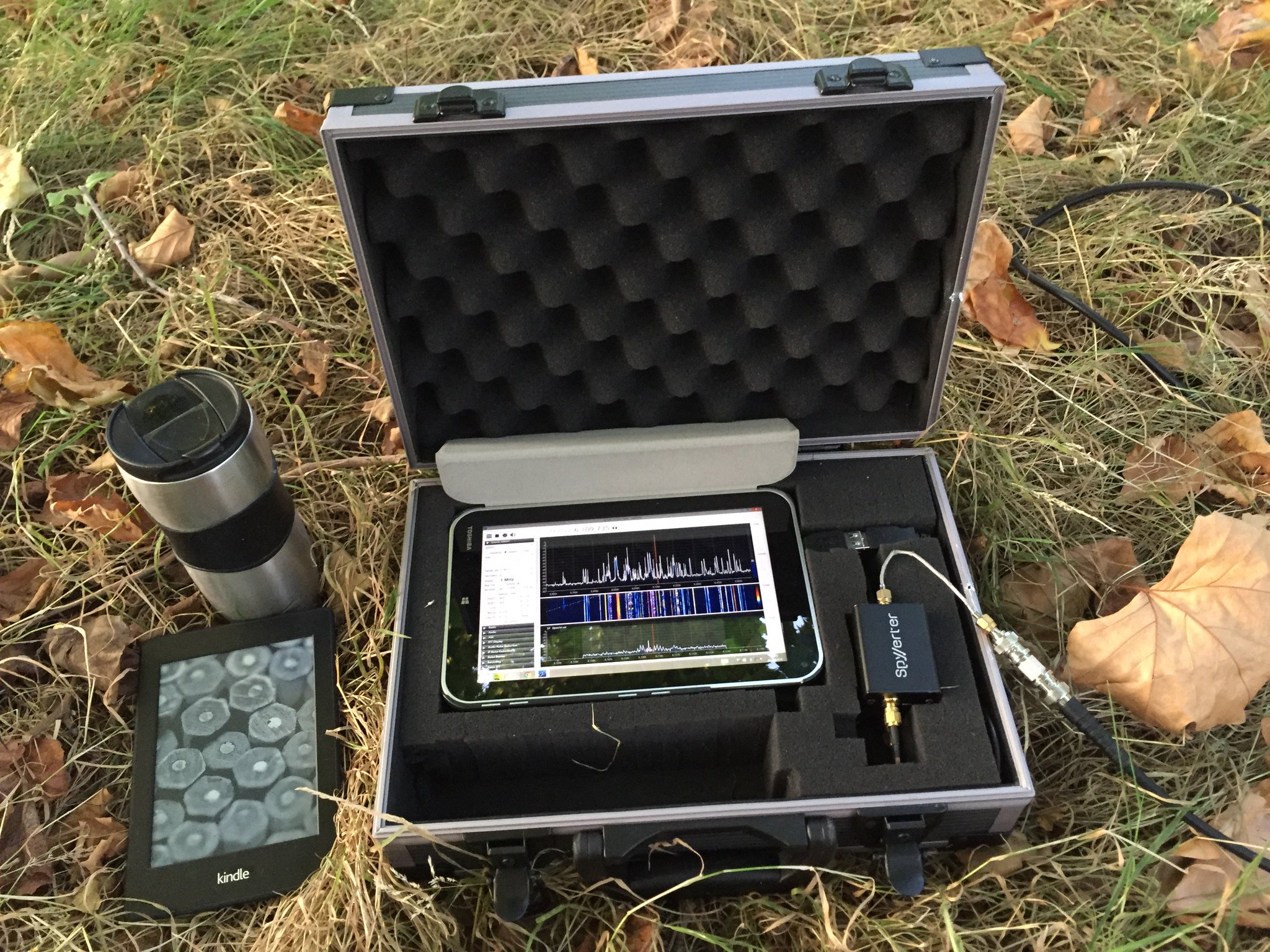
Capturing the shortwave spectrum out in the field with a portable SDR set-up.

Luckily, I didn’t need to make any of my own measurements for this. For over a year, the wide-band WebSDR at the University of Twente has allowed its users to see what the shortwave spectrum has looked like over the past 24 hours in a single image. More recently, however, the creator of the service, Pieter-Tjerk de Boer PA3FWM, has opened up his spectrum image archives, so it is now possible to see the past conditions of the bands on any single day in the last two years. Intrigued by how band activity changes depending on the time of the year, I created a timelapse animation of these images by taking two from each calendar week and lining them up in sequence. With Pieter-Tjerk’s kind permission, I share this animation below.

First, a really fast version to illustrate the broad effects the time of the year has on peak activity times across the bands:


 Click here to view on YouTube

The X axis represents the frequency and the Y axis is the time of day, starting at the top. Conventional wisdom about band behaviour can be easily confirmed by watching this video: the 60m, 49m and 41m bands are mostly active after dark, with the 60m and the 49m bands being generally busier during the winter months. The 31m band is most active around sunset, but carries on all night until a few hours after sunrise. The 25m band is active during sunrise and for a few hours afterwards, and around sunset during the winter months, but carries on all night during the summer. Peak activity on the 22m and 19m bands is also clustered bi-modally around the morning and the evening hours, though somewhat closer to the middle of the day than on the 31m and the 25m bands. The 16m band is mostly active during the daylight hours and the 13m band is quiet throughout the year except for the occasional ham contest.

It almost seems as though someone positioned in the middle of the image’s right edge (corresponding to noon UTC) is shining two flashlight beams on the bands in a V-shaped pattern, and is changing the angle of this pattern depending on the time of the year: wider in the summer and narrower in winter. Here’s a slower version of the animation that shows some finer week-on-week changes:


 Click here to view on YouTube

Thanks to this data being made freely available, visualising and understanding these dynamics will help me schedule my spectrum capture outings in the weeks and months ahead.
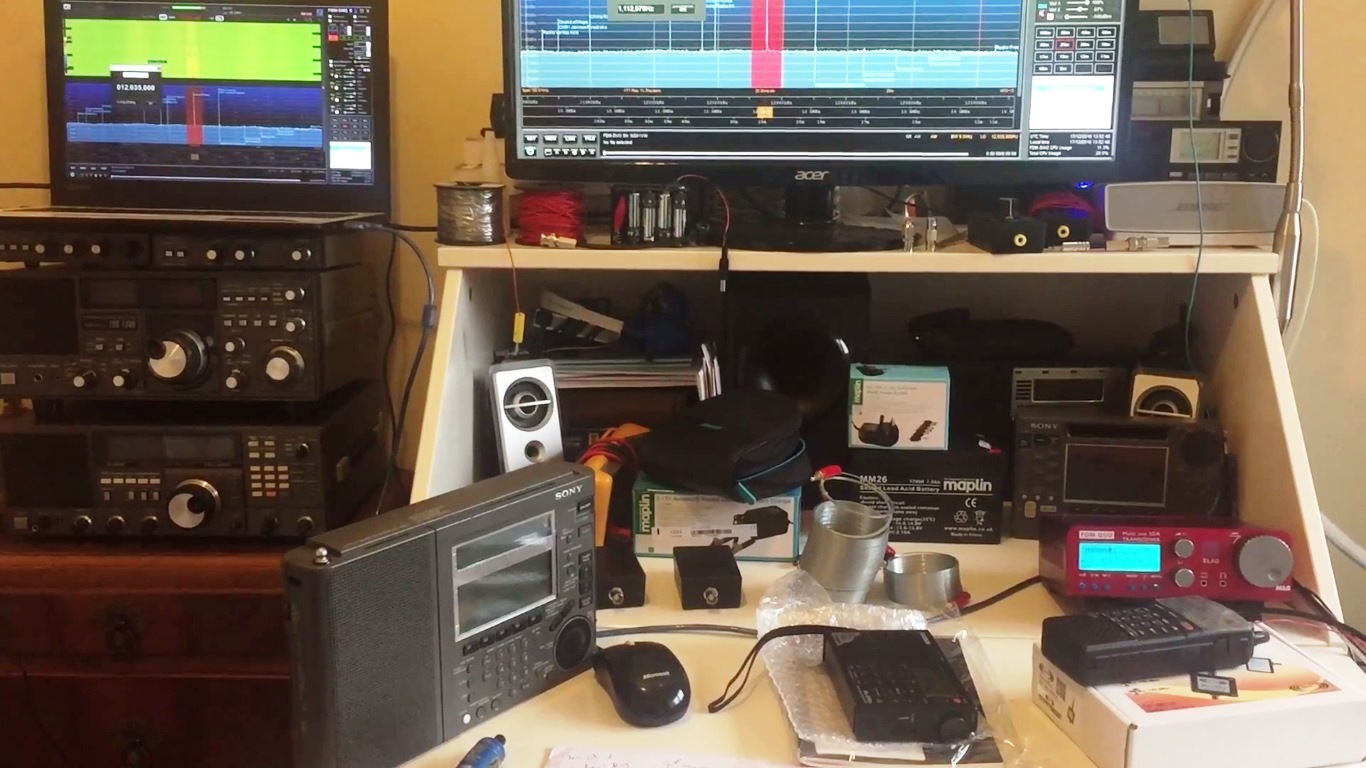
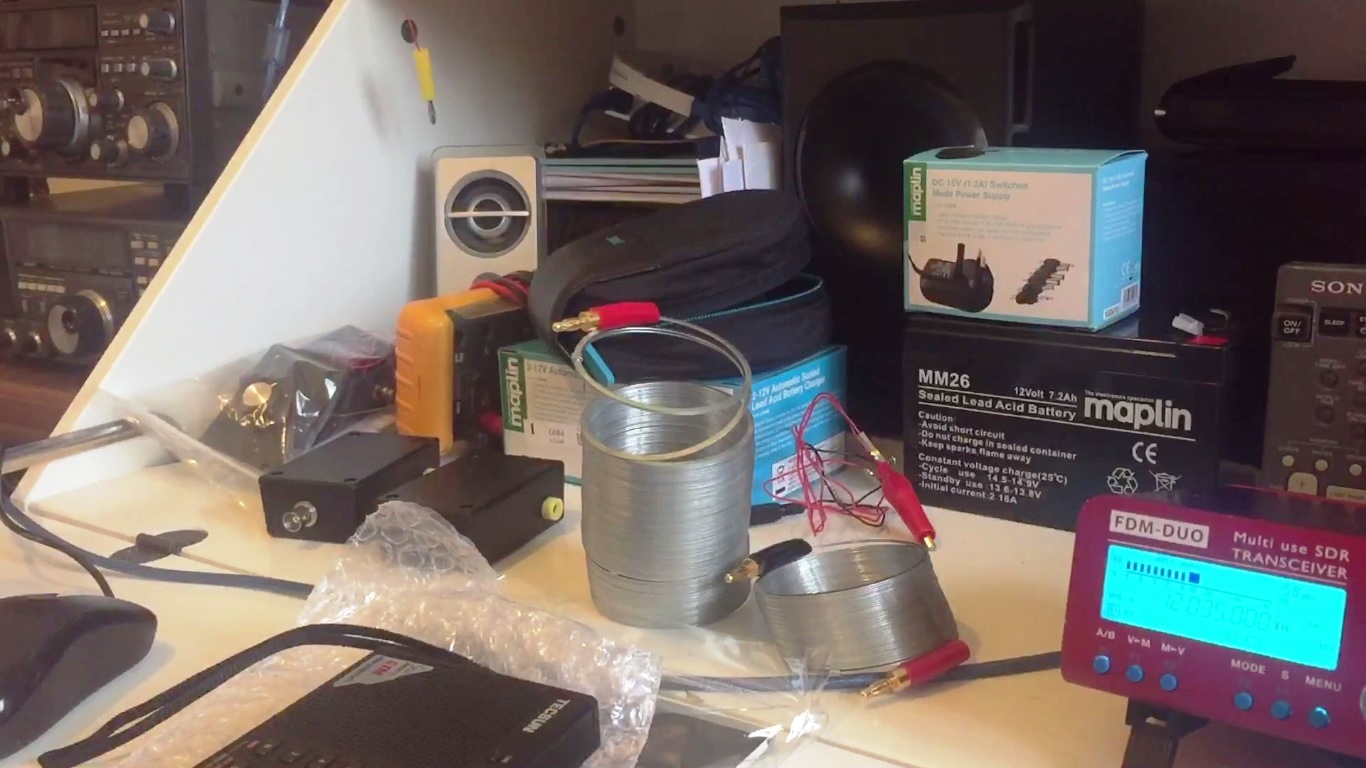
A quick view of my shack in Oxford, UK & recent transatlantic medium wave DX

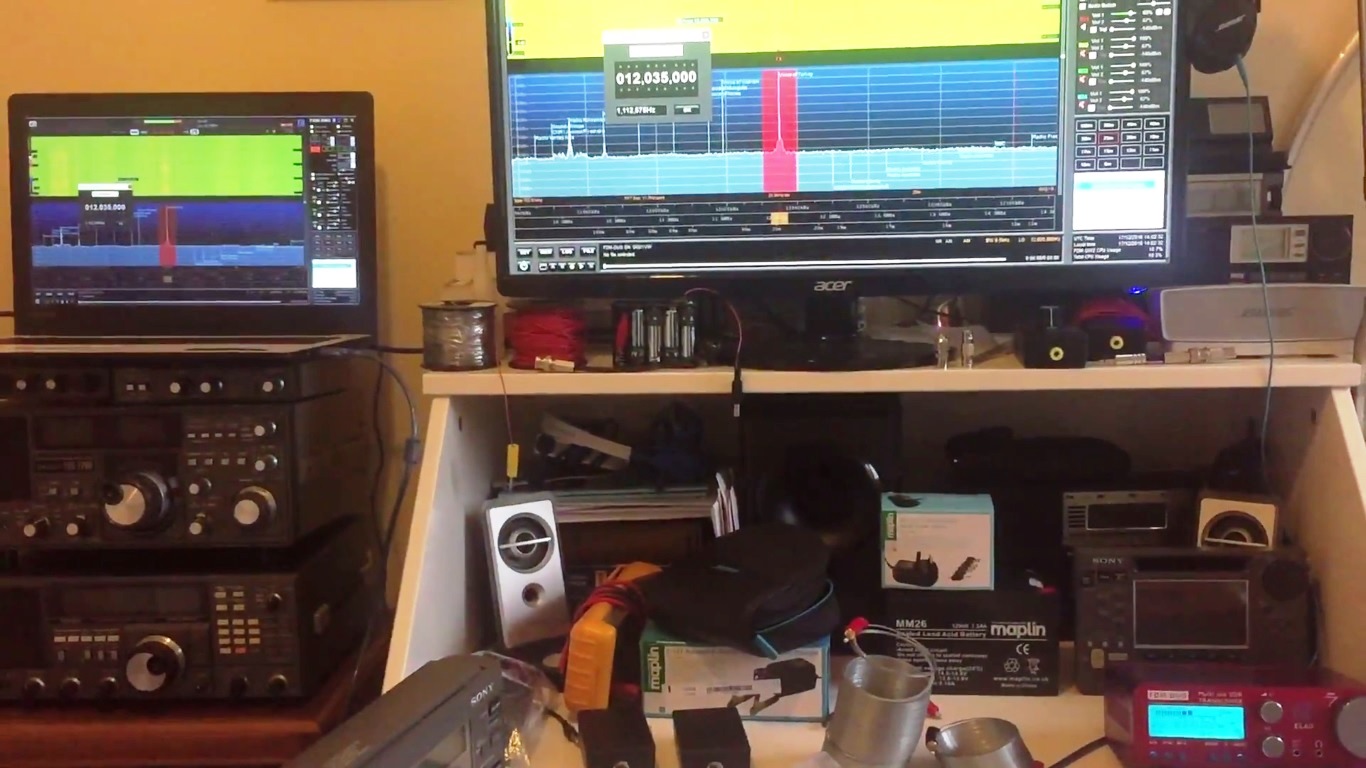
Someone recently described my shack in Oxford as ‘an impressive mess’…. and that really is just about the most positive comment I’ve ever received regarding my listening post! So, my apologies for displaying the mess in public, but in response to having been asked many times by subscribers to Oxford Shortwave Log to ‘share my shack’, here it is, well most of it at least, in all it’s unadulterated glory.


The primary reason however for this post is to share my most recent transatlantic medium wave catches using the brilliant Elad FDM DUO and Wellbrook ALA1530 magnetic loop antenna. This excellent combination continues to pull in really nice DX, although not so much very recently as propagation has been fairly rubbish. However, since early to mid December, the dynamic duo have managed to pull in a number of transatlantic medium wave signals, including Radio Rebelde, Cuba on (670 and 710 kHz), KVNS Texas, CHIN Radio, Toronto, WFED Washington DC, WWNN Health and Wealth Radio, Pompano Beach, Florida, and huge signals from WMEX Boston and WWKB Buffalo, New York. Embedded reception videos and text links follow below and in the mean time, I wish you all great DX!


Click to watch on YouTube

Click to watch on YouTube

Click to watch on YouTube

Click to watch on YouTube

Click to watch on YouTube

Click to watch on YouTube

Click to watch on YouTube

Click to watch on YouTube


Clint Gouveia is the author of this post and a regular contributor to the SWLing Post. Clint actively publishes videos of his shortwave radio excursions on his YouTube channel: Oxford Shortwave Log. Clint is based in Oxfordshire, England.


HDSDR version 2.76: updates and additions

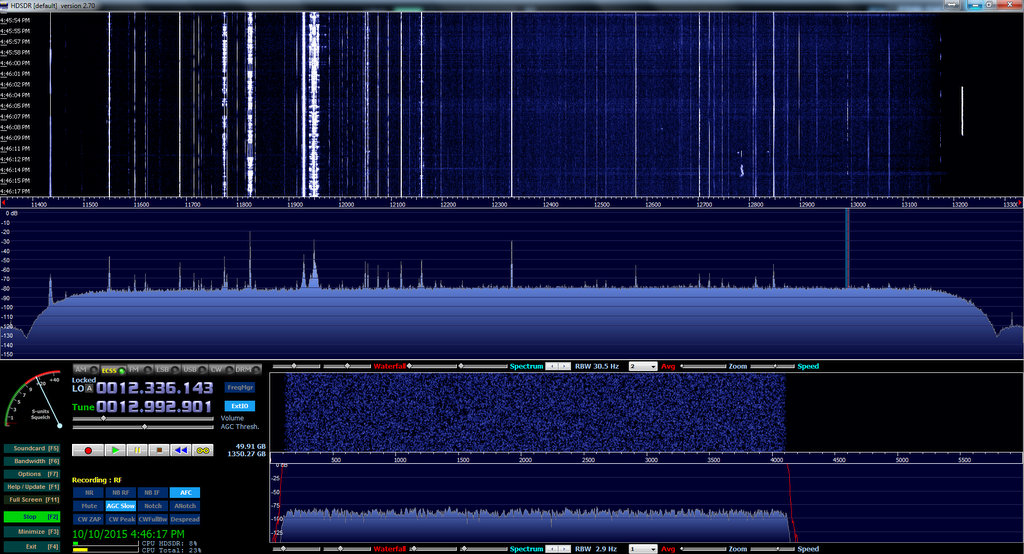
Many thanks to Light Coder at HDSDR who notes a recent update to HDSDR:

HDSDR bugfix release 2.76 just went online.
There are also some minor additions.
See http://hdsdr.de/wnew.html

Think it’s worth to have a look into the keyboard shortcuts:
http://www.hdsdr.de/hdsdr_keyboard_shortcuts.htm

Many thanks! HDSDR is a great (free!) SDR app–happy to hear about this recent update including keyboard shortcuts.

SDRplay RSP2 Pro now shipping from HRO

Many thanks to SWLing Post contributor, Ken Hansen (N2VIP), who notes:

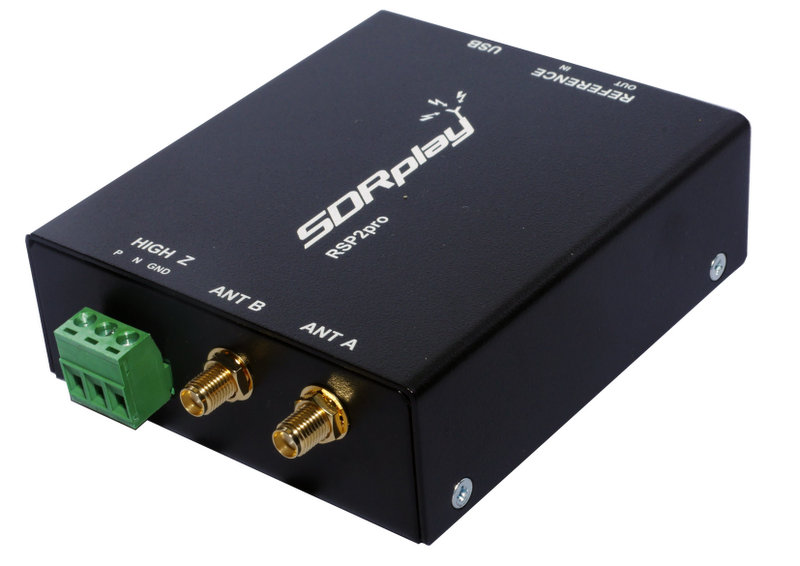
Ham Radio Outlet has the SDRplay RSP2pro in-stock for $192.95.

As a reminder, the SDRplay RSP2pro is the version enclosed in a full-metal case for maximum RF shielding. Like the SDRplay RSP2 it has three software selectable antenna connections (long wire and two SMA), whereas the original SDRplay RSP1 has just the one SMA connector.

http://www.hamradio.com/detail.cfm?pid=H0-015447

Propagation-Triggered Spectrum Recording

Many thanks to Jon Hudon of SDRplay who shared the following on the SDRplay Facebook page:

One of the SDRplay user community, Jukka, has started an interesting discussion on what he has called ‘propagation-triggered recording’ – he outlines the concept, and what he is doing, on our forum – see http://www.sdrplay.com/community/viewtopic.php?f=9&t=1839

The idea is that you monitor signals to determine if conditions are particularly good and can thereby trigger an I/Q recording of a whole band during that particular propagation high point -Jukka welcomes more comments on this idea.

Many thanks, Jon. I would certainly be a fan of this as so many times I’ve missed fantastic band openings while travelling. It would be nothing short of brilliant to come home to automatic SDR spectrum recordings taken during prime propagation. At the moment, propagation is so dismal, rare openings are worth recording!

As Jon points out above, check out the SDRplay forum for more details.

The Icom IC-R8600 shipping early 2017

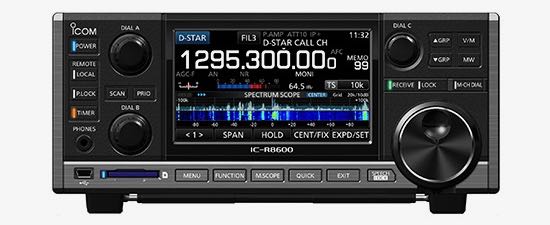
The Icom IC-R8600 (Image source: Icom)

This morning, while browsing the latest ARRL QST magazine, I noticed an advertisement for the new Icom IC-R8600 wideband receiver.  If you recall, last August, Icom made the announcement that it was introducing two new receivers: The IC-R8600 and the IC-R30 handheld.

The IC-R30 is the successor to the IC-R20 compact handheld receiver, but will have advanced receiving capabilities and be able to decode D-STAR, P25, NXDN and dPMR digital (conventional) modes.

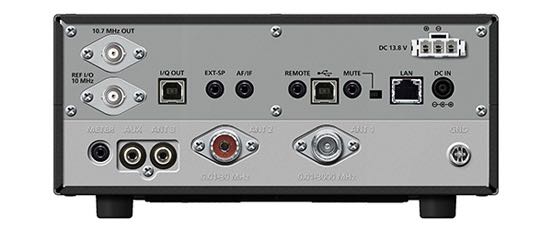
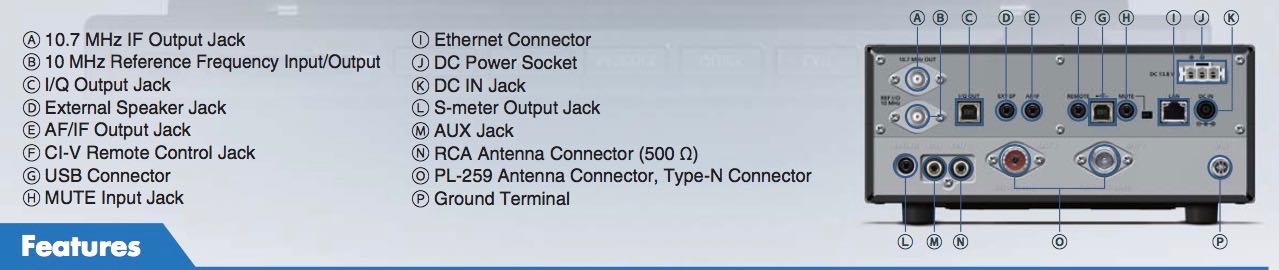
Icom IC-R8600 back panel (Image source: Icom)

The IC-R8600, on the other hand, is more akin to the IC-7300 transceiver in terms of design, but has much more functionality than the IC-7300 and covers a wide range of frequencies (10kHz-3GHz).

The Icom IC-R8600 is essentially a tabletop SDR receiver.

Here are a few features mentioned on the IC-R8600 pre-release brochure:

  • Ultra-wide frequency coverage with RSSI (Received Signal Strength Indication) function
  • Fast moving, real-time spectrum scope and waterfall functions
  • Decodes multiple digital protocols, including D-STAR, NXDNTM, dPMRTM and APCO P25
  • Large 4.3 inch TFT color touch screen display
  • Clear audio quality using FPGA/DSP base architecture with superheterodyne circuitry
  • Optional RS-R8600 PC remote control software allows control of all receiver functions
  • I/Q signal output for use with third-party SDR software and/or external decoding
  • The SD card slot for received log, decode log and voice recording
  • Optional SP-39AD external speaker with integrated power supply

The back panel connections are pretty comprehensive (click to enlarge):

I will plan to review the IC-R8600 once it has become available. I have no clue yet what pricing will be.

I will post all IC-R8600 updates with the tag: IC-R8600

Cloud-SDR: a remote access system for a number of popular SDRs

Many thanks to SWLing Post reader, Sylvain (F4GKR), who writes:

I am Sylvain, from Cloud-SDR, a new company selling software to get remote access to your existing SDR receivers through the Internet.

Coud-SDR

  • currently supports : SDRPlay, Perseus, BladeRF and AirSpy. LimeSDR to come when received and tested.
  • client software is free (can be used as standard SDR receiving software with locally connected devices),
  • server software starts at 110 Euros, VAT may be added depending on customer location,
    easy to use

From the Cloud-SDR website:

The Cloud-SDR Concept

You need a way to remotely access your existing SDR receiver? To stream your IQ samples to another remote computer over the network?

Cloud-SDR is a commercial software solution to enable real time RF data sharing or processing through the cloud.

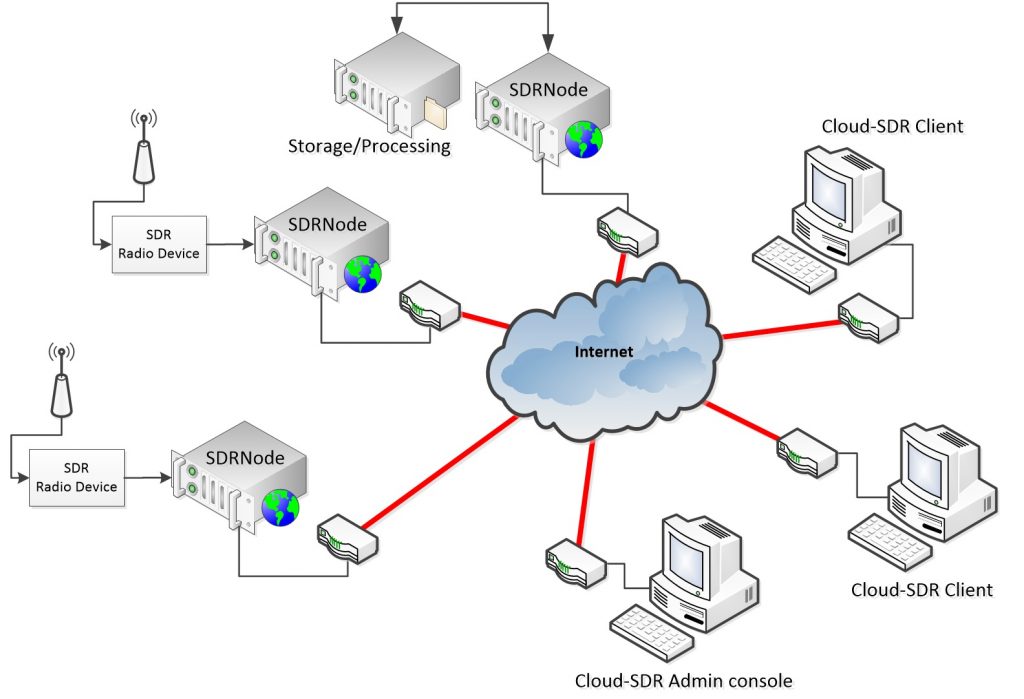
Cloud-SDR can collect real-time IQ complex samples from an SDR hardware device connected on one machine, stream the samples to a second machine for demodulation or analysis, then send the resulting stream to third machine for storage.

In standalone mode, Cloud-SDR can execute signal processing tasks described with embedded JavaScript DSP engine.

Because network bandwidth is limited compared to SDR receiving bandwidth, the core concept of Cloud-SDR is to move the processing along the cloud to where it is required or possible : the DSP chain is divided in sub-tasks that are spread between computers interconnected through Internet.

Very cool, Sylvain!

I like the fact your system supports popular affordable SDRs like the SDRplay RSP & AirSpy and that you can stream your IQ samples.

Click here to read more on the Cloud-SDR website.