Category Archives: Vintage Radio

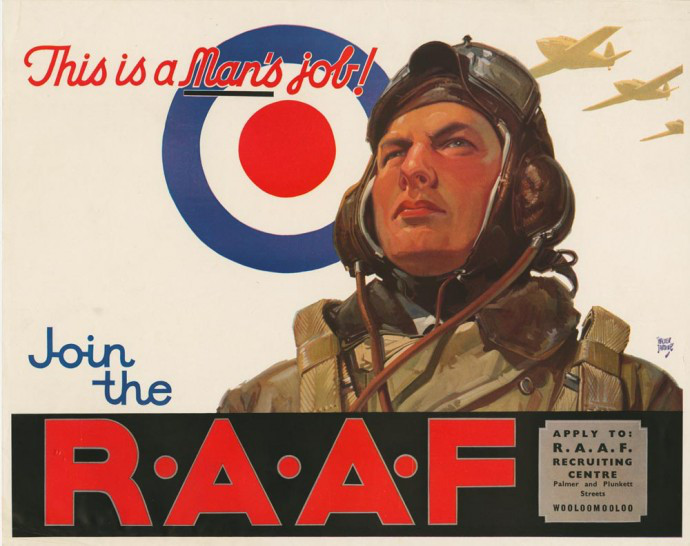
The RAAF No. 4 Wireless Unit: Never to march, never to be mentioned

Many thanks to SWLing Post contributor, Neil Bolitho, who shares the following story in reply to our post yesterday Australian Codebreakers in WWII. Neil writes:

Never to march, never to be mentioned.

Since the end of the Second World War, many thousands of returned service personnel have marched at Anzac Day services throughout Australia.

My father never marched.

My father served in RAAF No 4 Wireless Unit, Central Bureau.

Central Bureau was under the direct command of General Douglas MacArthur, and was set up to detect, record, and translate all messages transmitted by Japanese forces in the Pacific.

Central Bureau was headquartered in Brisbane, but its Wireless Units worked in the field, moving forward with MacArthur, constantly intercepting and deciphering enemy messages.

As the war progressed, the units became so efficient in their work that they were monitoring all enemy radio traffic, and in fact frequently knew the Japanese intentions before the messages reached their intended destination.

The Wireless Units served throughout the Pacific islands providing vital information about enemy strengths and positions.

RAAF No 4 Wireless Unit was formed as a highly mobile unit, and served at Hollandia, Morotai, Labuan Island, and at Luzon, Philippines.

The U.S. High Command highly praised the Wireless Units of Central Bureau, stating that their work effectively shortened the War in the Pacific by at least two years.

At the end of the war, Central Bureau was dismantled. All personnel signed a lifetime secrecy order to not speak of their wartime activities.

No promotions applied. No evidence of their Central Bureau service was recorded, including overseas service. No medals were struck.

Family members, including children, were not told in any detail, of their father’s war experience.

It was only in the late 1990’s that the Australian government allowed information to be released.

In the early 1960’s, my father mysteriously went on an unexplained visit to Brisbane.
It was not until over thirty years later that I found out that he attended a twenty-year anniversary of his unit’s graduation.

I write this on behalf of the children and grandchildren of those Central Bureau personnel that served diligently and efficiently when called upon, and who, when the job was done, quietly went home. They are our heroes.

Indeed. Thank you so much, Neil, for taking the time to share your father’s story. We’re honored to post it here.

If you’re interested in WWII signal intelligence, here are a few fascinating posts from our archive:
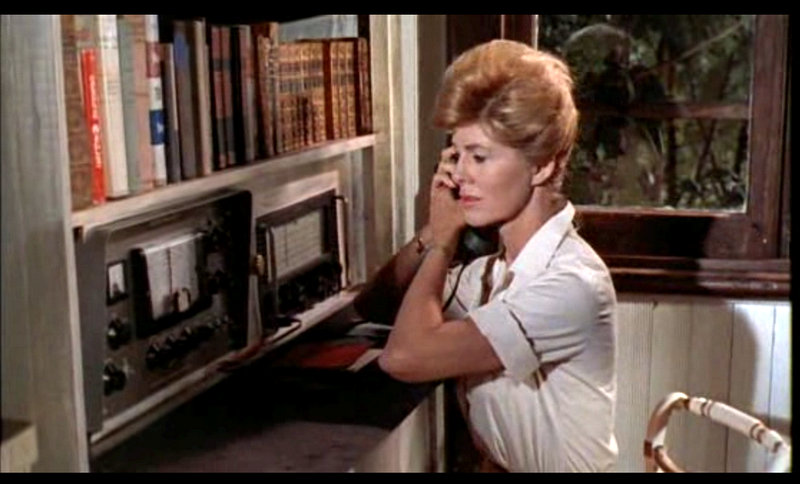
More radios in the movies: James Bond “Dr. No” (1962)

Many thanks to SWLing Post contributor, Bruce Fisher, who adds the following to our growing archive of radios in film. Bruce writes:

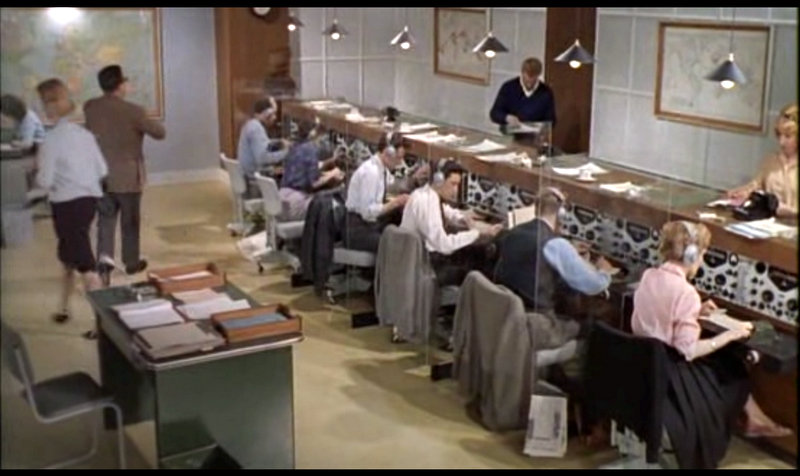
Here are three shots from the first few minutes of the 1962 James Bond
film “Dr. No”:

The second shot is a close up of the radio in the first shot. (These appear at about 4:30)

I suppose the last shot is from the BBC Monitoring Station? (about 5:30).

Thanks for sharing these screen shots, Bruce!

That looks like a K.W. Vanguard amateur transmitter in the first two photos, of course, but I can’t determine what the receiver is on the right. Can someone identify?

Any leads on this Sony plug?

Many thanks to SWLing Post reader, Paul Beckett, who writes with the following question for our community:

Hi Thomas

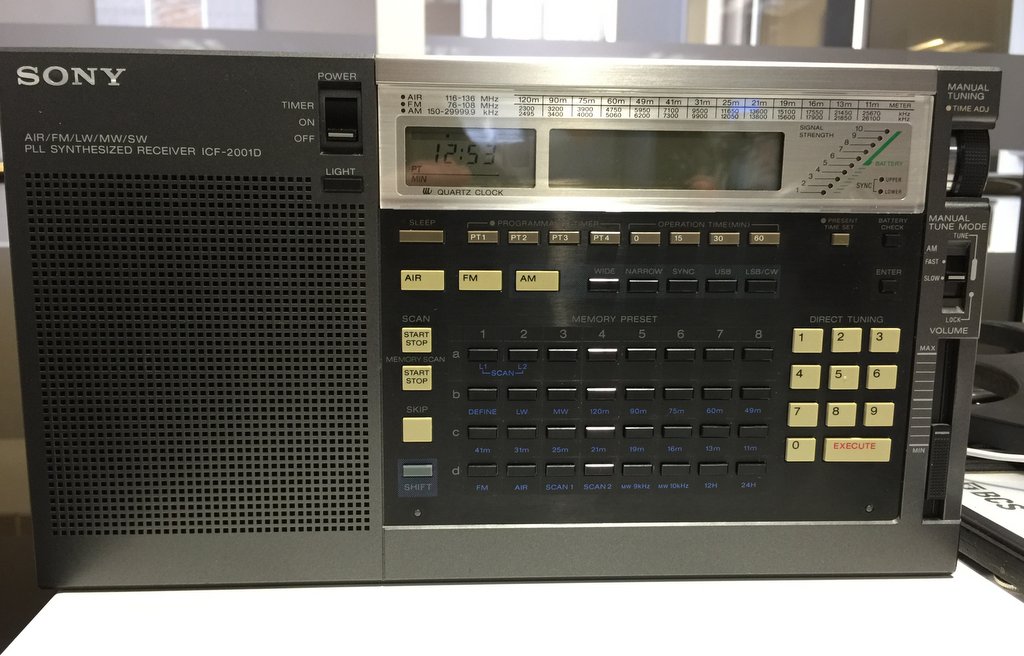
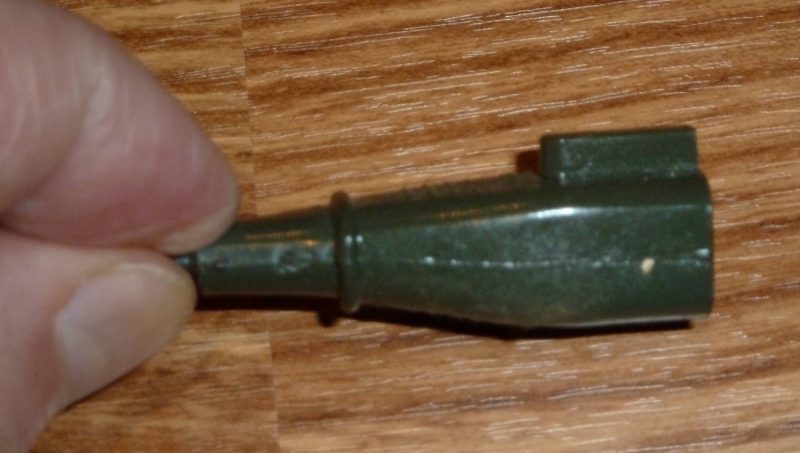
I am hoping you may be able to help identify the fly lead plug which fits on the jack plug of the Sony mains adapter lead for the 2001D. It terminates in a four pin female socket but i cannot find any description of it on the internet.

Appreciate any info if you recognise it. It is definitely part of the 2001D “kit” as the plug is clearly marked “Sony” and was among my radio “bits”.

Regards

Paul

Post readers: can anyone help Paul identify this particular 2001D plug so that he can search for a replacement on the Internet? If so, please comment!

Pristine Condition Braun T-1000 Receiver Appears on Ebay

The German industrial designer Dieter Rams is world renowned for his beautiful and functional product designs, including the Braun T-1000 portable receiver.

These fine, collectable receivers appear on Ebay regularly, but this one is in pristine shape:

The asking price is a cool $1,800 USD, but for the near mint condition of this T-1000 it is likely appropriate; perhaps the new owner will acquire it for a “Best Offer” price. Other T-1000s on Ebay currently are priced from $370 to $1,299.

Of course, the cost is in-line with a collectable value; functionally, it’s reception abilities are almost certainly surpassed by a modestly priced SDRPlay RSP1 or a vintage Sony ICF-2010 for instance. The radio aficionado interested in the 55 year old T-1000 is not expecting best-in-class reception, but the chance to own a recognized icon of industrial design (the T-1000 is in NYC’s Museum of Modern Art’s permanent collection).

Click here for the Ebay auction of the Braun T-1000: http://www.ebay.com/itm/BRAUN-T1000-GERMAN-GRUNDIG-SATELLIT-LIKE-SW-TRANSISTOR-RADIO-NEAR-MINT-/201891688853

Guy Atkins is a Sr. Graphic Designer for T-Mobile and lives near Seattle, Washington.  He’s a regular contributor to the SWLing Post.

One vintage radio in two classic films

Many thanks to SWLing Post contributor, Dan Hawkins, who writes:

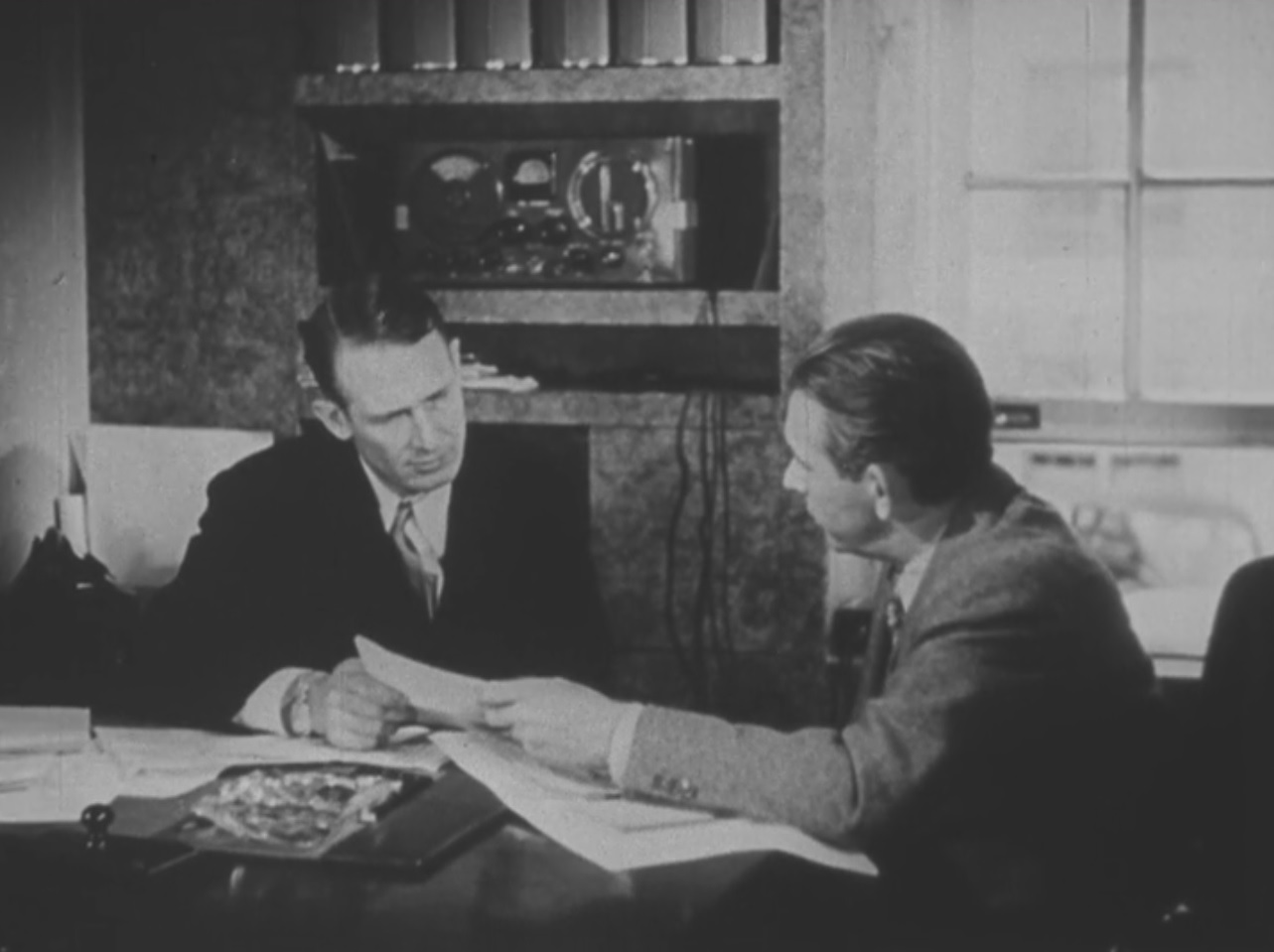
This evening I watched the excellent Undercover: How to Operate Behind Enemy Lines on Netflix streaming. This is a 1943 training film for Office of Strategic Services personnel learning how be secret agents. The film was directed by the legendary John Ford who also took an acting role in the film. In this scene, Al is receiving his forged papers from an OSS agent before leaving for Germany. A radio may seen on a shelf in the background.

Undercover: How to Operate Behind Enemy Lines is also available on YouTube:

Click here to view on YouTube.

The next film is much better known. The same model radio makes a foreground appearance in Some Like it Hot. Osgood Fielding III has one of these on his yacht.

Maybe Osgood is laughing because the film takes place in 1929 and the company that made the radio was founded several years later.

I won’t spoil the secret of this radio’s maker and model. It will probably not take long for SWLing Post readers to come up with an answer.

Post readers: are you up for the challenge? 🙂 What model of radio do we see here? I’ll keep quiet, because it’s one of my favorite manufacturers.

And, Dan, many thanks. I really do owe you one because I was not familiar with Undercover: How to Operate Behind Enemy Lines. I can’t believe there was a WWII era Ford film I had missed. I, too, have Netflix but the YouTube copy you suggested is actually a better restored version in terms of audio.  Thanks again!

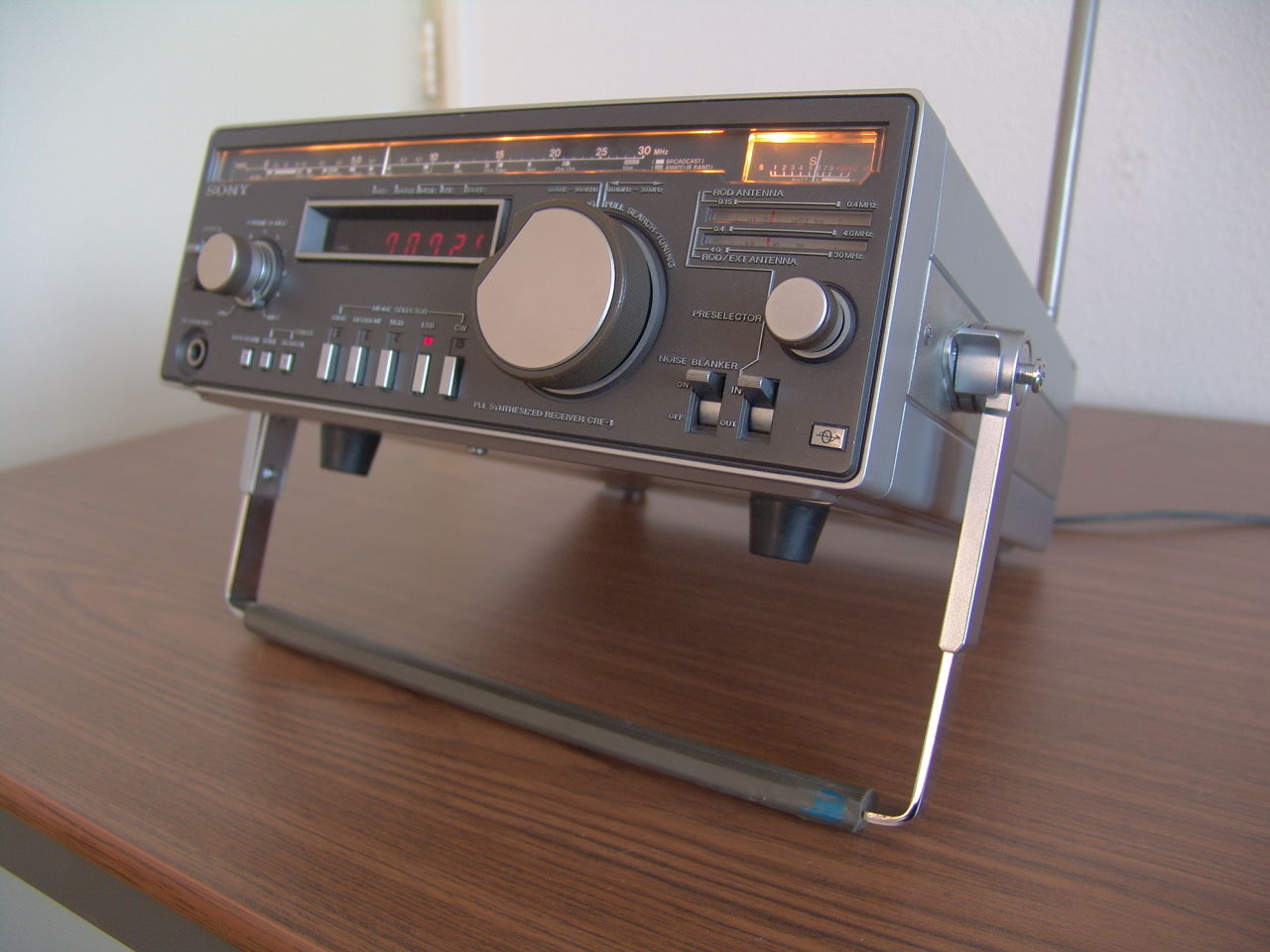
eBay sighting: The Sony CRF-1

The Sony CRF-1

Many thanks to SWLing Post contributor, Mark Hirst, who shares the following:

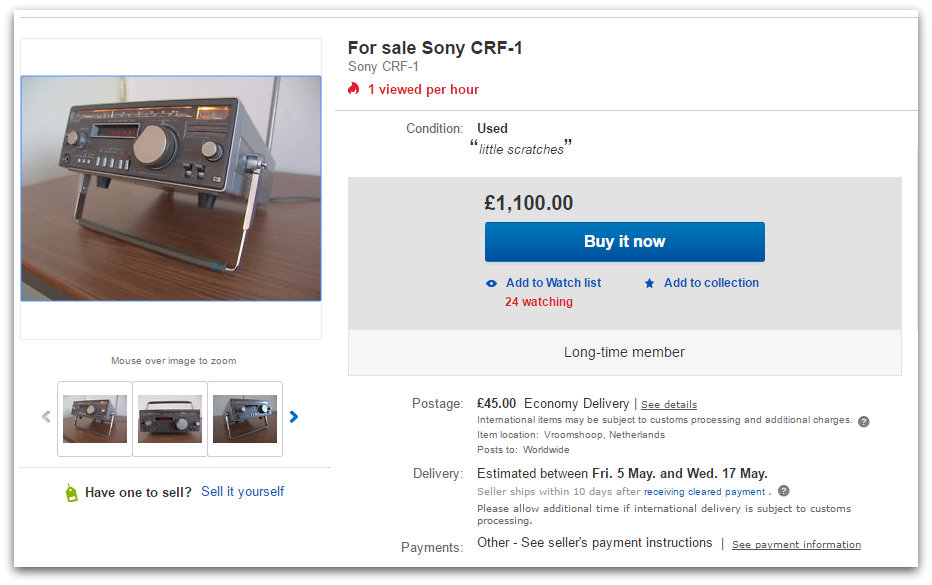
This eBay item grabbed my attention primarily for its price. I see that you blogged about one in June last year.

Click here to view on eBay.

Thank you Mark!  While the price is quite high at 1,100 GBP (roughly $1,375 US), it’s still much less than the CRF-1 we mentioned last year.  Steep, but easily within reach of a Sony collector. Perhaps Dan Robinson can comment, but I’ve not noticed many CRF-1s on eBay as of late.

I love the classic handle/bail design.

Post readers: Any lucky CRF-1 owners in our community? Please comment!

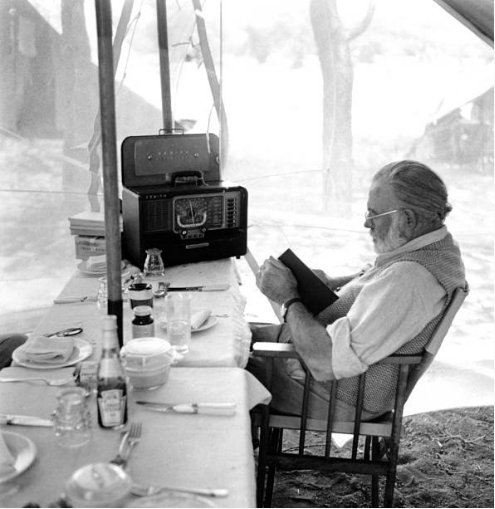
Hemingway and a Zenith Tranoceanic?

In a Twitter exchange yesterday @dean_frey shared the photo above of Ernest Hemingway on Safari in Kenya in 1952.

I believe this may be a Zenith Transcoceanic model H500. Could a Transoceanic expert in the Post community confirm of correct me? Please comment!

I know this: I love Earl Thiesen photos.

Thanks for sharing, Dean!

Check out Dean’s twitter feed for other vintage photos.