Interval Signals + Radio Astronomy = Bliss

Yesterday, I spent part of the better part of the day at the Pisgah Astronomical Research Institute (PARI): a place that has begun to feel like a home away from home.

As you might imagine, radio astronomy observatories are places with very low levels of radio frequency interference. Since I had a few hours on the PARI campus to play radio, I used it as an opportunity to evaluate the CCRadio-EP Pro‘s AM/mediumwave performance.

For comparison purposes, I packed the CCRadio-EP Pro, Tecsun PL-660 and (for kicks) my Sony ICF-5500W.

Now isn’t the ICF-5500W a handsome boy?

I’ll post some of the CCRadio-EP Pro videos in my final review.

Though it was immense fun tuning through the AM broadcast band right through the gray line,  being an SWL, I eventually turned to the shortwaves. The only shortwave radio I had on hand was the amazing little Tecsun PL-660. Conditions weren’t as bad as I had expected–propagation was decent and did I mention no noise?

After tuning around a bit, I happened upon one of my favorite interval signals: that of the Voice of Turkey.

Everything around me–all that was on my mind–simply took a backseat to the simple pleasure of listening to an interval signal on a cool, foggy spring evening surrounded by the beauty of PARI’s campus and those giant radio telescopes.

Though the feeling was nearly impossible to capture, I did make a recording to share with SWLing Post friends and readers from around the world. I hope you enjoy:

Click here to watch on YouTube.

RSGB and WWII Voluntary Interceptors

(Source: Southgate ARC)

WWII role of the RSGB and Voluntary Interceptors

A new RSGB web page highlights the role of Voluntary Interceptors in the Second World War and the crucial involvement of the Society

At the outbreak of WWII in 1939 MI5 established a unit known as the Radio Security Service (RSS) to detect and monitor enemy radio transmissions. The RSGB were approached to help pick and recruit radio amateurs with advanced Morse skills. These volunteers became known as the Voluntary Interceptors.

Read the RSGB story at
http://rsgb.org/main/about-us/national-radio-centre-gb3rs/the-role-of-the-rsgb-and-voluntary-interceptors/

The former President of the Chelmsford Amateur Radio Society, Harry Heap G5HF (SK), was a Voluntary Interceptor, further information at
http://g0mwt.org.uk/society/g5hf-sk/g5hf.htm

Click here to read at the Southgate ARC.

RadioWorld: “Radio Caroline Returns to Its Roots”

(Source: RadioWorld via Mike Hansgen)

The station is now operating 24 hours seven days a week on AM

NEAR COLCHESTER, England — Well into its second half-century of broadcasting, Radio Caroline has begun the next phase of its operations, returning to wide-area AM transmissions for the first time in nearly 30 years. Although by no means the first offshore radio station (that honor probably goes to one of the gambling ships that operated off the coast of California back in the mid-1930s), it is nevertheless the archetypical “pirate” station and one of the most famous names in European broadcasting.

[…]Under its new license, Radio Caroline is permitted to broadcast with a radiated power of 1 kW, not a particularly high-power service in terms of its earlier offshore activities. However, given the lack of incoming interference on the frequency, and its long-wavelength signals, the result is effective coverage that, in practice, for many listeners is larger than planning criteria might suggest.

In many ways, Radio Caroline has both kept up with the times in terms of the broadcasting technologies it uses and come full circle with its recent return to AM broadcasting.[…]

Click here to read the full article via RadioWorld.

Email restored!

Dear Post readers: If you tried to contact me yesterday, you likely received a “Message not delivered” reply.

After turning off our old web server yesterday morning, I discovered late in the day that our “MX” records (which route email) did not convey with the DNS settings. Our host updated the records and it seems email has been back as of 03:00 UTC today.

This was the only major snag after our server migration, so I count us quite lucky!

BBG sets five-year goals

(Source: Radio World via Richard Langley)

BBG Sets Itself a Series of Five-Year Goals

Agency points to security, need to keep pace with changing media landscape

The Broadcasting Board of Governors has a definite goal for the next five years — advance America’s national interests, work in tandem with the current administration’s national security strategies, and keep its networks up to speed with the way the media landscape has changed.

The board, known widely as BBG, recently released its 2018–2022 Strategic Plan titled “Information Matters: Impact and Agility in U.S. International Media.” The plan was presented to the board during the group’s March board meeting in Washington.

“This plan is a comprehensive roadmap for moving the agency forward in the next five years, including significantly increasing our audience reach,” said BBG Chief Executive Officer and Director John F. Lansing.[…]

Click here to read the full article at Radio World.

“The Shape of Water” features a benchmark Cold War receiver

Many thanks to SWLing Post contributor, Dan Hawkins, who writes:

The Academy Award for Best Picture of 2018 goes to Guillermo de Toro’s “The Shape of Water.

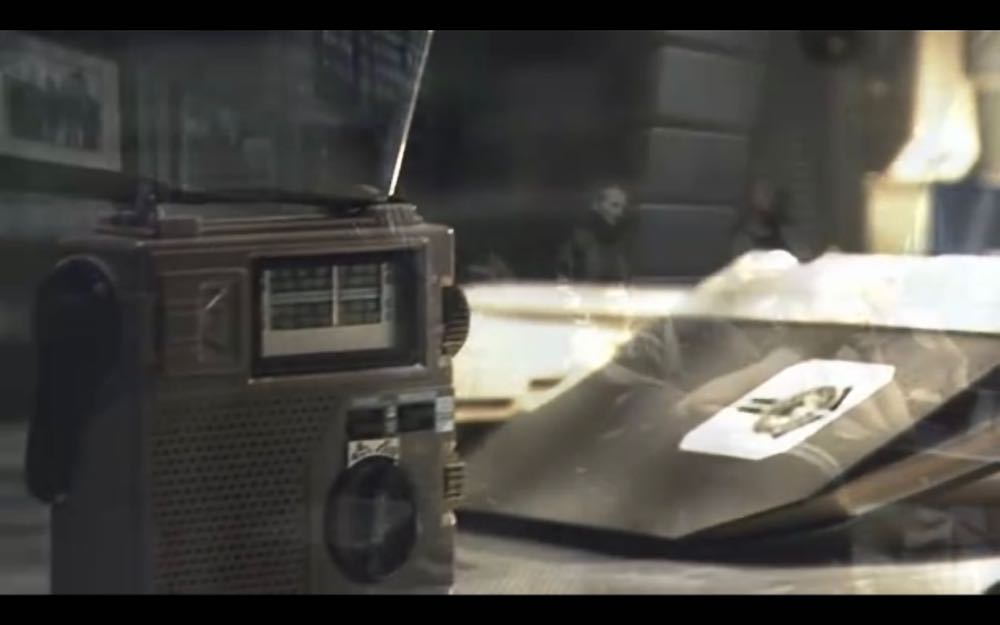
This celebrated shortwave radio appears several times in the move as a prop for the Cold War-era control room of Richard Strickland (played by Michael Shannon).

Oh what a celebrated shortwave radio indeed! How could it be a Cold War without this benchmark boat anchor?!? Thanks for this fantastic addition to to our growing archive of radios in film, Dan!

Post readers: Anyone recognize or–better yet–own this amazing machine? Please comment!

Backpack Shack 2.0: an update from the field

Finished Backpack Loop 2.0 and accessories assembled together

Many thanks to SWLing Post contributor, TomL, who shares the following update about his homebrew Backpack Shack 2.0 portable loop antenna:


Quick Field update

by TomL

This is just a quick Field Update for my Backpack Shack 2.0 antenna. It is not the most powerful antenna but in the right location it can be useful, especially with using an SDR. It was used during February in two Forest Preserve (County Park) locations outdoors and once from my usual Grocery Store parking lot!

Field Recordings

Please excuse some of the computer generated noises (caused by a slow CPU) as well as some audio connector problems on a couple of recordings.

Each Time is in UTC and Frequency in kHz. Where can you hear unique programming like these samples except Shortwave Radio??? Enjoy!

VOA, @03:00 on 6080 kHz in English from Sao Tome towards Africa (backside of their antenna, opposite of my location)

China Radio Int’l, @23:00 on 9415 kHz in Vietnamese from Beijing (not sure if this traveled around Antarctica to get to me or a backside of their antenna over the North Pole?)

WHR, @15:59 on 9965 kHz in Korean from T8WH Palau

Mighty KBC, @01:48 on 6150 kHz in English from Nauen Germany (announcer sound effects included!)

Voice of Greece, @20:34 on 9420 kHz in Greek from Avlis (unique stylized Greek music, INTERESTING artistic expression)

Vatican Radio, @20:27 on 9660 kHz in English from Vatican City to Africa

WINB, @21:30 on 9610 kHz in English from Red Lion, PA USA (a FUN song about promoting Radio listening!)

And my favorite Government-run authentic folk music station of Mexico, tiny 1KW XEPPM @04:17 on 6185 kHz with clear station ID

I will be working on a larger version of this antenna to transport in my car as well as a small VHF loop antenna for the outside deck for Air/Police/Weather scanning.

Hope to report sometime this Spring.


Thank you so much for the update, Tom! It looks to me like you’re having an amazing time with you homebrew loop in the field! 

As always, keep us in the loop! (Yeah…bad pun, I know!)