Shortwave listening and everything radio including reviews, broadcasting, ham radio, field operation, DXing, maker kits, travel, emergency gear, events, and more
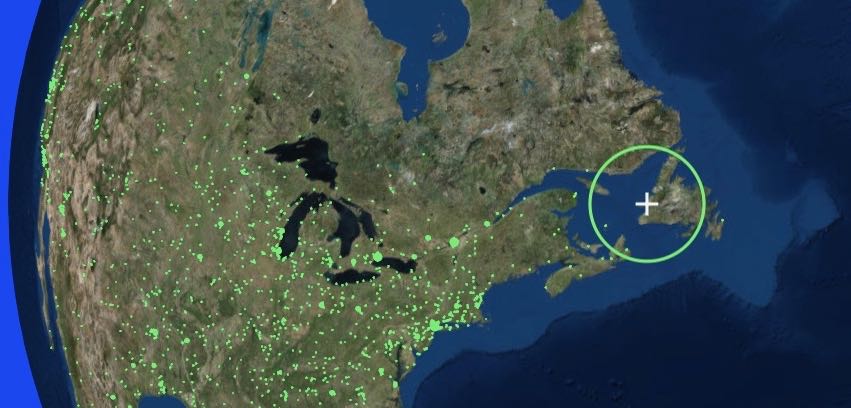
Many thanks to SWLing Post contributors David and Monti who share a link to Radio Garden, a new web-based interface for exploring online radio stations across the globe.
[…]Radio Garden, which launched today, is a similar concept—a way to know humanity through its sounds, through its music. It’s an interactive map that lets you tune into any one of thousands of radio stations all over the world in real time. Exploring the site is both immersive and a bit disorienting—it offers the sense of lurking near Earth as an outsider. In an instant, you can click to any dot on the map and hear what’s playing on the radio there, from Miami to Lahore to Berlin to Sulaymaniyah and beyond.
The project, created for the Netherlands Institute for Sound and Vision by the interactive design firms Studio Puckey and Moniker, was built using an open-source WebGL globe that draws from thousands of radio stations—terrestrial and online-only streams—overlaid with Bing satellite imagery.
The result is the best kind of internet rabbit hole: Engrossing, perspective shifting, provocative, and delightful. […]
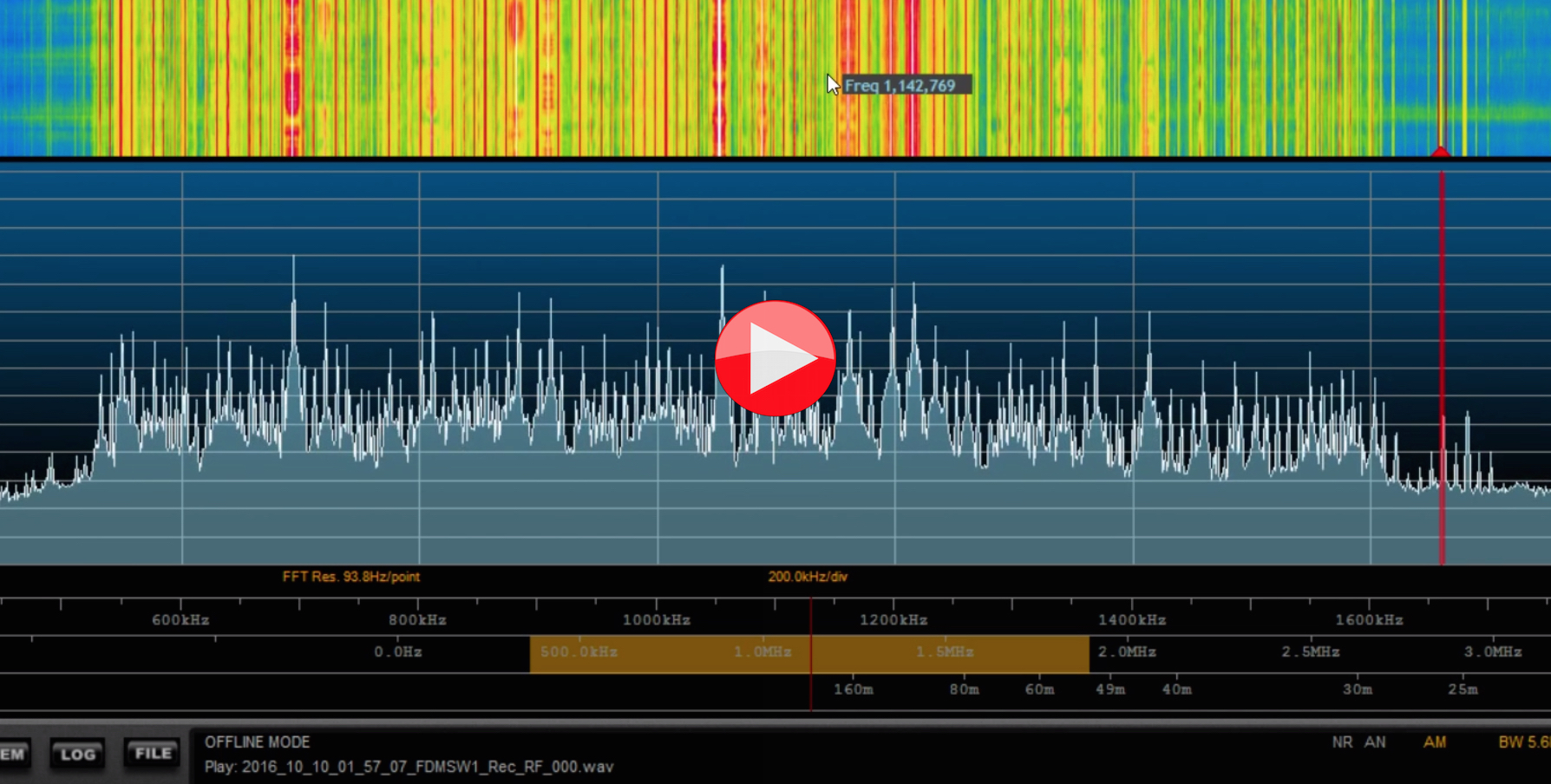
Hi there, I thought some of the readers of SWLing Post might be interested in a review of a MW spectrum with multiple transatlantic signals – all with audio. This is one of the recordings I took with the 200 metre Beverage antenna and although I haven’t properly counted, I believe it generated about 50 catches that were either personal firsts or best-ever receptions. You will note that this video is nearly 20 minutes long, whilst the recording is only just over 5 minutes, thus to capture the signals listed below and demonstrate audio to you, it was necessary to effectively ‘rewind’ a few times. I haven’t annotated the video, however, the stations I’ve paused on to demonstrate audio are listed below. There are actually more catches in this spectrum, but hopefully the video will give you a good idea of propagation on the morning of 10/10/16 and the effectiveness of the Beverage/Elad FDM DUO combination. Also note, I didn’t have time to fully optimise the demodulation settings, so for example, I haven’t used AM SYNC in this demonstration. Individual videos of all catches, with optimised settings appear on my YouTube channel Oxford Shortwave Log. I hope you enjoy it! Recorded in Oxford UK on 10/10/16 at 02:00 hrs UTC. Thanks for watching and I wish you all great DX!
590 kHz VOCM Saint John’s
600 kHz CBNA Saint Anthony
620 kHz CKCM Grand Falls-Windsor
660 kHz WFAN New York
710 kHz WOR New York
730 kHz CKAK Montreal
750 kHz CBC Radio 1 Bonavista Bay
790 kHz WAXY (presumed)
800 kHz VOWR
970 kHz WBGG
1010 kHz CFRB Toronto
1030 kHz WBZ Boston
1130 kHz WBBR New York
1190 kHz WLIB New York
1280 WADO New York
1390 WEGP Presque Isle
1400 kHz CBC Radio 1 Gander
1440 kHz WRED Westbrook
1510 kHz WMEX Boston
1520 kHz WWKB Buffalo
1570 kHz XERF La Poderosa, Mexico
1580 kHz HJQT Verdad Radio 1580 kHz, Bogotá, Colombia
1610 kHz Caribbean Beacon, Anguilla
1660 kHz WGIT Puerto Rico
Clint Gouveia is the author of this post and a regular contributor to the SWLing Post. Clint actively publishes videos of his shortwave radio excursions on his YouTube channel: Oxford Shortwave Log. Clint is based in Oxfordshire, England.
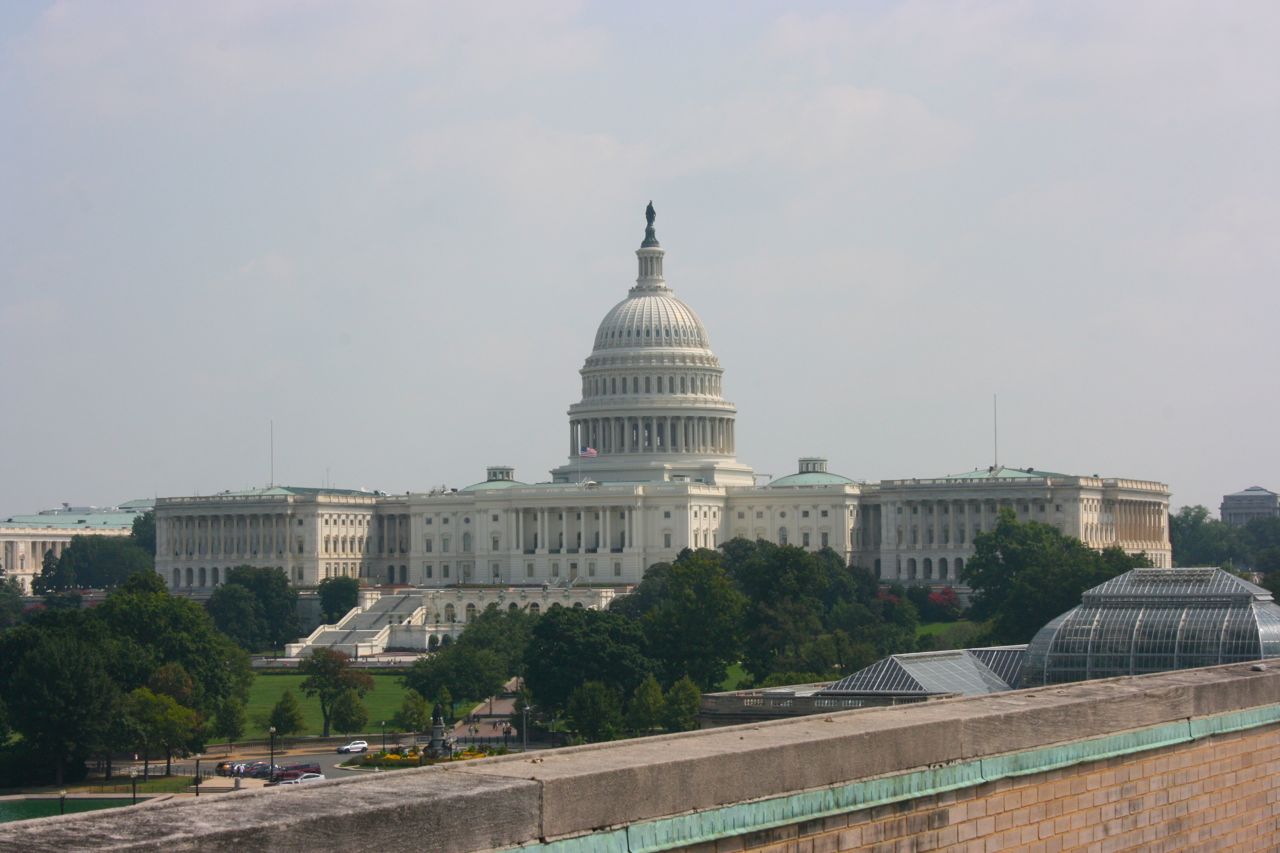
View of the Capitol Building from the roof of the Voice of America on 330 Independence Ave., S.W.
Many thanks to SWLing Post contributor, Richard Langley, who shares this editorial from the The Washington Post:”
“FOR YEARS, members of Congress have fumed about what they regard as ineffective U.S. public diplomacy, including the failure of broadcasting operations such as the Voice of America and Radio Free Europe/Radio Liberty to match the reach and apparent influence of networks such as Russia’s RT and Qatar’s al Jazeera. A frequent and arguably fair focus of criticism has been the Broadcasting Board of Governors, the body created to supervise government-funded media outlets while serving as a firewall between them and the political administration of the day.
A radical change to that system is now coming — and it looks like one that Vladimir Putin and Qatar’s emir might well admire. An amendment quietly inserted into the annual National Defense Authorization Act by Republican House leaders would abolish the broadcasting board and place VOA, RFE/RL and other international news and information operations under the direct control of a chief executive appointed by the president. The new executive would hire and fire senior media personnel and manage their budgets.
[…]The point of board governance was to prevent direct political interference in programming by the White House, State Department or other agencies. It was a guarantee that for decades has helped to attract journalistic talent to the broadcasting organizations, as well as listeners seeking reliable information. The board of governors had serious problems: Its members served part time, and not all took their duties seriously. But the system’s biggest flaw was remedied three years ago with the creation of a chief executive position.
The new reform, driven by House Foreign Affairs Committee Chairman Edward R. Royce (R-Calif.), enhances that executive’s power and makes him answerable to the White House rather than the bipartisan board. A new advisory panel will be created, but it will be toothless: Its members will also be nominated by the president from a pool provided by Congress.[…]”
Many thanks to SWLing Post contributor, Kris Partridge, who writes:
[R]esearch on DTH satellite TV service took me to a public website which is an archive going back to 1934. And boy, there is so much information there ..!
So what I pass to you for the Blog is this one as a start:
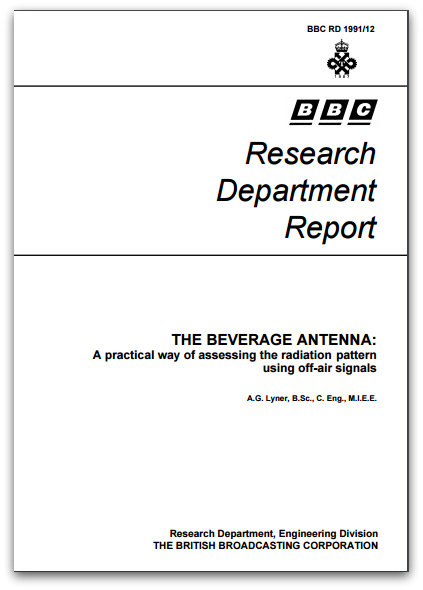
Knowing that many of your readers/contributors have made mention of using Beverage antennas I think this may make interesting reading. The report describes a method for accessing the performance of a Beverage, long wire, receiving antenna using off-air HF broadcast signals.
[…]It looks like the lower the better. And yes, there’s some heavy maths formula in there ..!
Wow–you’re right, Kris! This is very useful information. I’ll skip the maths bit and just follow the advice! Thank you for sharing.
Hamurger Lokal Radio via Shortwave Station Göhren, Germany with 1KW to Western Europe:
6190 KHz Every Saturday 07.00 to 11.00 UTC
7265 KHz Every Saturday 11.00 to 16.00 UTC
9485 KHz Every Sunday 10.00 to 13.00 UTC
Contact email: [email protected]
Radio City via:
IRRS to Europe on 9510 KHz (every Saturday) between 09.00 to 10.00 UTC
Challenger Radio to Northern Italy on 1368 KHz every Saturdays from 20.00 UTC onwards
Radio Merkurs on 1485 KHz Every Saturday between 20.00 onwards
Contact email: [email protected]
KBC via:
Media Broadcast to America on 6145 KHz Every Sunday between 00.00 to 01.00
Contact email: [email protected]
Atlantic 2000 will be on the air this Sunday 11th of December:
10:00 to 11:00 UTC on 6005 and 7310 kHz
18:00 to 19:00 UTC on 3985 kHz
+ streaming at the same time on our website: http://radioatlantic2000.free.fr
Reports to: [email protected]
Hobart Radio via:
WRMI to Americas, Asia/Pacific on 9955 KHz Sunday between 03.30 to 04.00 UTC
WRMI to Americas, Asia/Pacific on 9955 KHz Tuesday between 22.30 to 23.00 UTC
WBCQ to North America on 5130 KHz Mondays 03.30 to 04.00 UTC
Unique Radio to North Australia Fridays at 08.00 & 14.00 UTC
Unique Radio to North Australia Saturdays at 07.30 & 14.30 UTC
Contact email: [email protected]
FROM THE ISLE OF MUSIC NEW WINTER SCHEDULE STARTS DECEMBER 12
This week, our special guest will be guitarist and composer Sergio Valdés Garcia, who in addition to doing much of the soundtrack for the film Juan de los Muertos also recorded some excellent music with his group Elévense. Also, we will have some authentic Rumba by Team Cuba de la Rumba in honor of the Rumba’s recent recognition by UNESCO.
NEW! Three options for listening on shortwave:
WBCQ, 7490 KHz, Tuesdays 0100-0200 UTC (8pm-9pm EDT Mondays in the Americas)
Channel 292, 6070 KHz, Fridays 1100-1200 UTC (1200-1300 CET) and Saturdays 1600-1700 UTC (1700-1800 CET)
See the From the Isle of Music Facebook page for more information.
Many thanks to SWLing Post contributor, TomL, for the following guest post:
“Car Shack” radio listening
by TomL
My car is an unusual place to listen to shortwave radio but has interesting possibilities. Due to the obscene noise at my home QTH, I decided that I must try something away from this unfortunate situation. So I took my homemade 14-inch loop antenna and outfitted the appropriate ancillary equipment with DC power packs. My trusty Sony ICF-2010 is the radio “vehicle” to “drive” this experiment (LOL). And, seriously, this is a way to show the public that it is not that hard to have a portable radio listening setup. Believe me, if I can do this, anyone can!
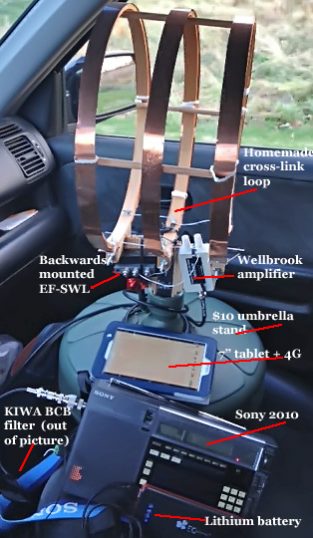
The basic ingredients are pictured here with some variations (see text):
Wellbrook amplifier powered by DC power pack of 10 eneloop AA batteries
KIWA Broadcast band (mediumwave) inline filter
Palstar preselector (active antenna) plugged into car cigarette lighter
Sony 2010 connected to a second DC power pack
Sony ICD PX333 digital recorder
Sennheiser earbuds
7 inch Samsung tablet and 4G MiFi device to do internet schedule lookups
Illustration SEQ “Illustration” 1: Car Shack in operation.
An important finding was that anything that has a cheap IC circuit to regulate and/or convert DC power can be extremely noisy! The pictured 16000 maH lithium brick would initially be quiet but after a while it would start spewing noise all over the bands. Power cycling it sometimes helped but I decided that it is too unpredictable. Also, converter cables that convert 5V to 12V for devices needing 12V also produce overwhelming amounts of noise. Even a small 5V USB converter plugged into the cigarette lighter makes a modest amount of ubiquitous noise. I am ditching the lithium power pack and converter cables and any cigarette lighter adapters!
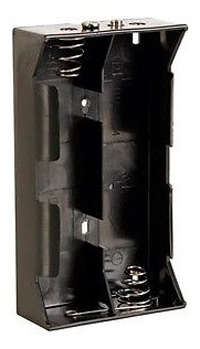
So, the main radio power pack will use the internal Sony battery comparment consisting of nine 2700 maH NiMH AA’s inside three D-cell battery holders that can each hold 3 AA batteries in parallel. This boosts the capacity to around 8100 maH for a modest cost (I already have NiMH chargers and the 4.5V requirement is not too high for the batteries in question). Pictured are examples of a single D-cell AA holder of which I bought 12 and the silver-top Powerex 2700 maH AA’s from fleaBay. The total voltage is slightly low (3.6V) but the Sony 2010 still works at a slightly lower performance (received signals are slightly weaker). I run the Sony on Local sensitivity and crank up the Palstar active antenna to compensate.
In a further quest for clean, portable DC power without noisy IC chips, I have been researching lithium batteries and it is quite a large amount of work to sift through all the variables. The Palstar active antenna and the Wellbrook amplifier both use external connections of 12V, 2.1mm (+ tip) plugs. NiMH is not going to cut it, too many needed and getting too heavy. Amongst the variables are things like:
Using a proper charger and not leaving it unattended or it could burn down your house
Chinese fakes being sold by the zillions that look exactly like the real thing
Initial cost being higher than current NiMH
Avoiding 1.5V step down batteries with noisy step down converter built-in
Learning the new terminology for sizes: AA = 14500 = 14mm diameter & 50mm length
Learning the differences between type of lithium: Lithium, Li-ion, LiFePo4, IMR, etc.
The difference between protected vs. non-protected batteries
How to avoid discharging the batteries too much which could render them completely useless (not just usage but also NON-usage as well)
How to physically handle Lithium batteries to avoid shock and temperature extremes
Learning how to compare maH’s of lithium to NiMH batteries
Finding out that most top rated 14500 Li-ion batteries are too long to fit into AA battery holders without risking damage to the protection PCB mounted at the bottom of the battery
and the list goes on and on…..
Here are some of the web pages I read to try to understand this technology:
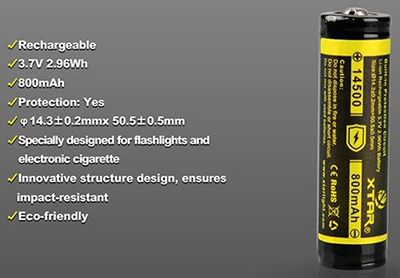
So, to cut to the chase, I have decided to order this one from XTARDirect because:
I can order from a USA distributor who orders from the factory in Shenzen China
The price is very reasonable for “protected” lithium ion batteries
They actually should fit into typical AA battery holders without damaging it
Illustration SEQ “Illustration” 2 XTAR 14500 800 maH Li-ion
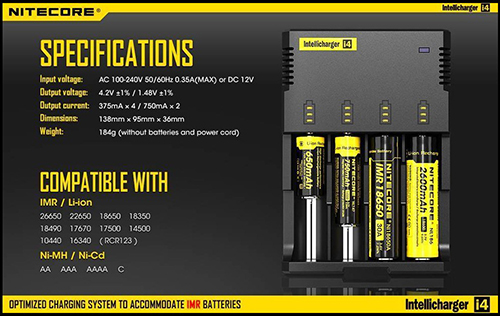
They are not the highest rated in terms of capacity, load drain, amp surge ability, etc., but they seem to have enough positive statements from users that indicate it gets the job done. Since I don’t have the lithiums yet, I am using some temporary 10-cell AA holders with good old Eneloops – good enough for now. And I am buying this discontinued charger at a discount to recharge lithiums:
Illustration SEQ “Illustration” 3: Nitecore i4 original version
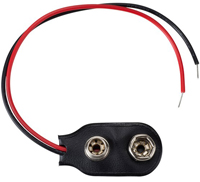
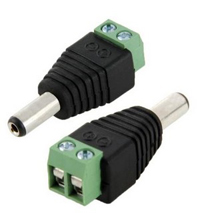
I will make two power packs made from these items pictured. The wire is fragile so I super glue the insulation directly to the DC power plug housing (avoiding getting any glue onto the bare wire inserted at the back). I will use three sets of lithiums (9 batteries) plus one set of Eneloop Pro’s (3 batteries) per power pack in the aforementioned parallel AA holders.
Illustration SEQ “Illustration” 6: 2.1mm x 5.5mm DC power plug.
Other items of note: The umbrella stand is optional since I found I like to move the antenna around and even tilt it to get slightly better directional signal. More importantly, I found that if I cut the Sony 2010 sensitivity from DX to Local, and then crank the Palstar preselector’s amplifier, I get a cleaner sound with less background noise. Also, the KIWA mediumwave filter is essential due to overloading.
One of my favorite stations is Radio Educacion (XEPPM) on 6185 kHz. A 1 kW station near the foot of Vulcan de Guadalupe in Mexico City, it is so weak that I almost never hear it and their wonderful selection of music representative of regional & cultural heritage. It is also 1675 miles distant according to Google Earth. Now, if I want to bother, I can go out and listen in my car at locations less noisy than home. So far, the safest places have been the parking deck at work (only two stories high) and the local grocery store parking lot. What I would really like is a very tall parking deck whose owners let me stay up on top long into the evening without harrassment (not sure I want to risk security personnel questioning me about the strange contraption and equipment – paranoia reigns these days)!
Sample of XEPPM, moderately good propagation from the work location:
Unexpected reception happens with this experiment. I mounted the antenna in the back, away from the engine and against the rear side window. Was traversing the local restaurant drive-through lane to get a hot dog, and turning the corner next to the long empty brick wall, the reception became dramatically stronger and clearer! Apparently, the brick wall blocked some interference as well as enhanced the signal coming from the Northeast. You can hear the effect starting at 25 seconds into the recording of RRI:
Also, not recorded from a previous evening at the grocery store location, 6135 kHz Radio Santa Cruz in central Bolivia, a 10 kW station playing Spanish rock music and a clear ID near the top of the hour.
More experiments to do, like
Mount the antenna as high I as dare with PVC pipe (too cold out now and I would rather not open any windows but I am itching to mount the umbrella stand and antenna on a 3 foot PVC pipe on the roof of the car, the increase in received signal strength is significant)
A bigger backpack to carry all this equipment away from the car
If Elon Musk has his way and builds the Gigafactory (and competitors follow suit), there could be many more experiments with lithium type batteries in the future
Perhaps get an SDR and cheap laptop computer to replace the Sony radio
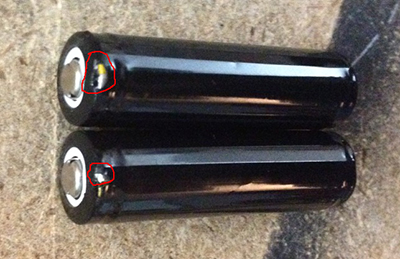
PS: I found out that the three-AA battery holders do not make contact at the (+) tip of the XTAR lithium batteries I purchased. I just gently lifted up the contact inside the battery holder to allow it to reach the battery tip, that’s all that is needed. Whatever you do, do not put an extra piece of metal inside the battery holders! I accidentally damaged the outside skin of two of the batteries with a common piece of copper metal and the batteries immediately started to get HOT. I took them out as soon as I could and the batteries cooled down. So, don’t use any extra metal surface inside the battery holders; lithium batteries do not tolerate any kind of short circuit!
Cheers from Noizey Illinoiz,
TomL
Thank so much, Tom, for sharing your experiences and your ongoing experiments! Lately, I’ve been doing NPOTA activations with a portable loop antenna on top of my vehicle. I completely understand what you mean about getting strange looks from passers-by! We look forward to hearing about your future experiments fighting RFI.
Please support this website by adding us to your whitelist in your ad blocker. Ads are what helps us bring you premium content! Thank you!