Tag Archives: BBC

BBC World Service features DRM

In this BBC World Service report, Mark Whittaker explores Digital Radio Mondiale (DRM) and, especially, its potential in India. Use the embedded player or link below to listen:

(Source: Audioboo via Tarmo Tanilsoo on Facebook)

drmlogoYou’ll note the BBC World Service fails to mention that DRM has been in use now for over a decade.

The report ends by suggesting that portable DRM receivers will be on the market in a few months. Even if DRM radios start appearing, whether or not they’ll be effective and inexpensive remains to be seen. So far, portable DRM radios have been mediocre performers (at best) and relatively expensive.

Don’t get me wrong: I would love to see DRM take hold, I just have my doubts. DRM might stand a chance if a manufacturer like Tecsun were to build an inexpensive portable radio, with a form factor much like that of their other portables. If they made a DRM version of the PL-380, for example, it could be a winner for both the company and the medium/mode.

By the way, if you’ve never heard what DRM sounds like over the shortwaves, I just posted a fifty eight minute recording of All India Radio on the Shortwave Radio Audio Archive. Contributor, Mark Fahey, recorded the broadcast from his home in Australia.

I’ve embedded a link to the audio below, but you can listen to the broadcast and read Mark’s notes on the shortwave archive (click here).

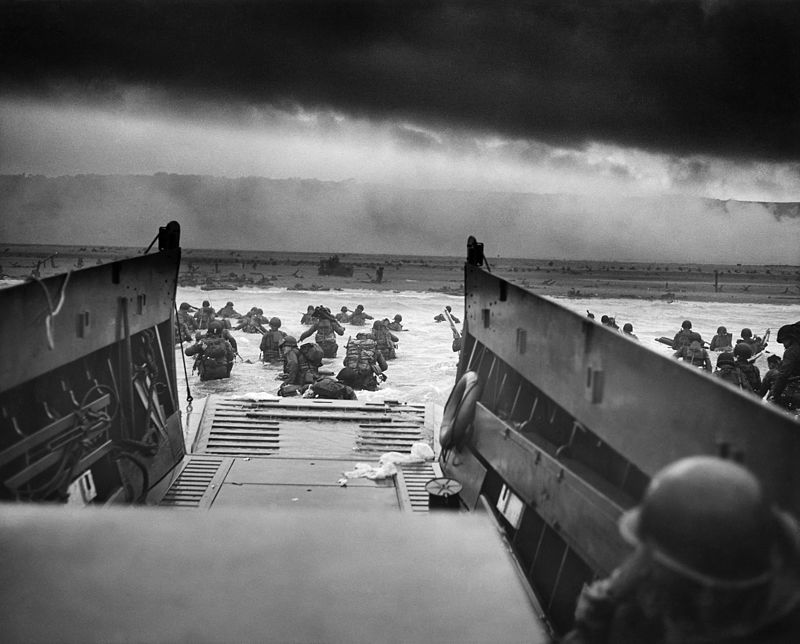
BBC World Service to get more money, but less influence?

(Image source: BBC)

(Image source: BBC)

Jonathan Marks takes a look at the future of the BBC World Service under the umbrella of the BBC News group board.

His conclusion? Just doing the news may be “too narrow a remit.”

I tend to agree.

Read for yourself on Jonathan’s blog, Critical Distance.

BBC World Service ‘can make a difference’ in North Korea

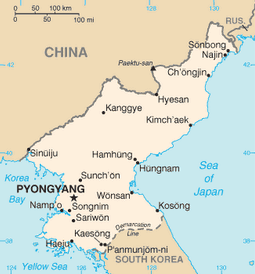
NorthKoreaMap

Many thanks to SWLing Post reader, Ulis, for the tip:

(Source: The Independent)

One of the world’s experts on North Korea has called on the BBC to “be part of the solution” in fighting human rights abuses under Kim Jong-un’s repressive regime by initiating Korean-language broadcasts by the BBC World Service.

Michael Kirby, the eminent retired Australian judge who chaired a recent Commission of Inquiry (COI) on North Korea for the United Nations Human Rights Council, told The Independent that the BBC could make a difference to the lives of people in “a country that has been largely cut off from the rest of the world”.

Speaking in a personal capacity, Mr Kirby said the BBC was in a position to make a difference in North Korea.

[…]He told The Independent: “The strict controls on sources of information in North Korea, revealed in the COI report, surely add to the arguments for an increased outreach by the civilised world to the people of North Korea. With its hard won reputation for truthful reporting, fair coverage and proper priorities, the BBC has a special potential to be part of the solution.”

[…]Funding of the World Service has passed from the Foreign & Commonwealth Office to the BBC. Previous BBC studies have identified problems in providing a Korean service, especially in relation to the difficulties of the North Korean population tuning in and defying the ban on listening to foreign broadcasts.

Foreign Secretary William Hague said recently that it was “not currently possible for the World Service to offer a meaningful, effective and cost-effective service”. But last week Foreign Office minister Hugo Swire gave renewed hope to campaigners for a Korean service when he said: “We have approached the BBC and are waiting for its detailed response.”[]

Read the full story at The Independent.

Confession time: I love the BBC countdown

BBC-Countdown

Most shortwave radio listeners are familiar with interval signals–those ditties that precede a shortwave radio broadcast–indicating a specific broadcast frequency and that a broadcast is about to begin.

On television, there’s really no need for an interval signal: channel selection is accurate and schedules are ubiquitous. Indeed, there’s no guess work involved at all. Tune to channel 3 at 6:00, and you know the evening news awaits you.

Still, many television news services around the world provide a visual-plus-aural countdown for their viewers which, in essence, serves the same purposes as an interval signal. As on the radio, it’s a build up…a “get ready, here comes the news” statement that’s separate from the title sequence. The most notable example I know of is the BBC’s television countdown, which, depending on timing, might count down for one minute–or even for several minutes on satellite feeds.

Here is the BBC’s latest (2013) countdown:

News agencies in the US, alas, never bother with a one-minute countdown to the hour because this is profitable time that can be filled with a sponsors’ advertising.

Perhaps that why I’ve always been a fan of the BBC, and even proudly payed my TV tax when I lived in Britain. The BBC, in general, represented a refuge from other TV mass media and the accompanying news network over-stimulus. While I still have many criticisms of the BBC–indeed, they’re stumbling now–I nonetheless prefer this broadcaster to most TV news services stateside.  [Of course, what I find most objectionable are the changes which could affect the integrity of the BBC World Service, now directly funded by the UK’s TV licensing fees instead of the Foreign Office.]

But I do enjoy this countdown.


If you share my appreciation for this “TV interval signal,” here are a few other examples starting with a compilation of BBC countdowns from 1999-2007 produced by a fan:

ABC News 24:

NBC News Special Report Countdown:

Sky News:

And if you can’t get enough of the BBC’s countdown montage, here’s a 10 minute filler version:

Will anyone else confess their love for a broadcaster’s countdown? Please comment!

Why shortwave? Russia blocks web pages linked to Ukraine protests

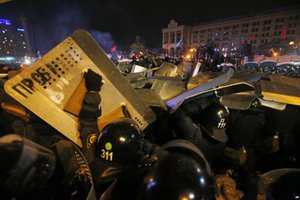
(Photo: VOA News)

(Photo: VOA News)

In response to the BBG’s request for comments on the relevancy of shortwave radio, SWLing Post reader, Rick, writes:

Here is the reason why VOA needs to keep broadcasting on shortwave.

Russia (or China or Angola or Zimbabwe or Iraq or Afghanistan or Syria) can easily block Internet access — to include, and particularly from, VOA. While shortwave can be jammed it takes a little more effort (and a considerable amount of budget to pay the electric bill for the high-powered jamming signals).

Unlike AM and FM radio transmission, shortwave transmitters can be located continents away from the strife for protection of the transmission infrastructure.

Shortwave transmission — coupled with the surreptitious distribution and proliferation of cheap shortwave radio receivers for target audiences — can help insure that the voice of freedom and democracy can continue to be heard in geopolitical hotspots throughout the world.”

Read the story Rick refers to here: http://www.politico.com/story/2014/03/russia-ukraine-protests-websites-internet-104171.html

Richard voices his opinion about BBC World Service commercialization

BBC-OverToYouRichard Cuff–noted SWL and festmeister for the Winter SWL Fest–sent a message to the BBC World Service listener feedback program Over To You deploring the BBC’s decision to incorporate limited advertising on the World Service as of April 2014.

Over To You contacted Richard and invited him to an interview where he discussed these changes with Mark Bunting, head of BBC WS Strategy.

The program aired earlier this week. Richard noted that the discussion was “chopped quite a bit” to fit a nine minute time slot.

Click here to listen to Richard’s interview on Over To You: http://www.bbc.co.uk/programmes/p01sbmkt

BBC World Service to further reduce shortwave

(Image source: BBC)

(Image source: BBC)

I appears the BBC World Service is cutting shortwave broadcasts even further in an attempt to meet tighter budget numbers. Not many details, at the moment, in terms of what language programs will suffer the most.

Many thanks to Richard Cuff for the tip:

(Source: The Guardian)

The BBC World Service will further reduce its shortwave transmissions next year as part of a £15m savings drive which staff have been warned will be a “real stretch”.

The money will be used to invest in new TV and digital services, part of a programme called Invest to Innovate.

An extra £6.5m is being pumped into the World Service’s budget this year, alongside an extra £1.5m of savings, helping to create 130 jobs. New initiatives include a global version of Radio 1’s Newsbeat.

But the BBC’s director of global news, Peter Horrocks, said further savings would be required in the future.

[…]Horrocks said changes would include more multilingual reporting, with staff filing for their own language service and in English, as well as a further reduction in shortwave transmissions.

He said the World Service would also have to integrate further with the main BBC News operation.

Horrocks also announced that the BBC’s global news division, which includes its world news TV channel, would be renamed “World Service Group … a sort of World Service-plus” and the World Service board would be axed with the change in its funding.

[…]It closed five language services, stopped radio broadcasts in seven languages, cut back on shortwave and medium-wave transmissions and axed a number of World Service English programmes.[…]

Read the full article at The Guardian online.