Shortwave listening and everything radio including reviews, broadcasting, ham radio, field operation, DXing, maker kits, travel, emergency gear, events, and more
James Cook, associate editor, at The Kernal has written an excellent article about the Russian numbers station UVB-76. Those of us who listen to numbers stations are very familiar with this reliable buzzer on 4.625 MHz. Cook writes:
The radio signal that occupies 4625 kHz has reportedly been broadcasting since the late 1970s. The earliest known recording of it is dated 1982. Ever since curious owners of shortwave radios first discovered the signal, it has broadcast a repeating buzzing noise. Every few years, the buzzer stops, and a Russian voice reads a mixture of numbers and Russian names.
A typical message came hours before Christmas day, 1997:
Instead of shutting down with the fall of communism in Russia, UVB-76 became even more active. Since the millenium, voice messages have become more and more frequent.
A pair of Russian agents was convicted on Tuesday of spying in Germany for more than 20 years. Russian President Vladimir Putin is personally conducting the negotiations for a potential exchange, but now a new case is straining German-Russian relations.
A treasure in the exhibit room at the German Federal Criminal Police Office in the western city of Wiesbaden has aroused a great deal of curiosity among the world’s intelligence agencies. It looks like an ordinary, black laptop bag. It contains a Siemens hard drive, or at least it looks that way. But a notch reveals that it is not an off-the-shelf product. It’s a high-frequency satellite transmitter, with an antenna hidden in the flap of the bag.
The device is state-of-the-art military technology, a “top quality intelligence product,” raves an expert. In the spy wars, German authorities haven’t gotten their hands on anything this important in years. The significance of this high-tech device, however, approaches that of the legendary Enigma code machine from World War II. Domestic intelligence officials at the Federal Office for the Protection of the Constitution (BfV) in Cologne are eager to examine the device. The American intelligence agencies, the CIA and the NSA, as well as Israel’s Mossad have also asked for permission to inspect the miraculous piece of equipment.
The satellite device served Andreas and Heidrun Anschlag as a connection back home. They were Russian spies who lived as agents in Germany for more than 20 years, until they were arrested in October 2011.
[…]In their dispatches, which the couple received with a shortwave radio, the agent controllers in Directorate S of the SWR referred to the Anschlags as “Pit” and “Tina.” They were given the state-of-the-art satellite equipment during a trip to St. Petersburg and Moscow. They also attended a course on the use of a decoding program called “Sepal” and an encoding program called “Parabola.”
This enabled “Pit” and “Tina” to establish a secure connection to Moscow. All they had to do was pay attention to the times when one of the six to eight satellites sent into space by Russian intelligence for spying activities came into range. A red light on their radio device signaled to the Anschlags that the satellite was approaching, while a blue light indicated the transmission of encoded messages.
Sometimes, when the equipment failed, the Anschlags placed the transmitter below one of their attic windows, among the fruit trees in the garden or on a nearby hill. The hills directly behind the house proved to be unsuitable, because nearby wind turbines apparently interrupted communication with the satellite.[…]
SWLing Post readers: I received the following email request today. Sounds fun and intriguing. Perhaps you can help solve this mystery…
Boards of Canada (Source: Last.fm)
Hello, readers of The SWLing Post, and please forgive the intrusion. I admittedly know very little about shortwave radio, but there has been a bit of a puzzle going on for fans of the band “Boards of Canada” recently, and there is the distinct possibility that its solution could involve shortwave radio. A message I posted over on Reddit was forwarded to Thomas, who very graciously offered to post the plea here.
Some background — Boards of Canada is an instrumental electronic music duo from Scotland who are, to put it mildly, somewhat private and aloof, in all the right ways. Their references tend to be very math-heavy and their music has some innovative and fascinating-sounding tape loops, synths, etc. This puzzle has been going on for the better part of a week, and we fans been very impressed with the complexity of it, though we are not even certain of the meaning of it — though we hope and suspect it is a lead-up to a new release by the band.
Someone (presumably the band) has been currently leaving these (for lack of a better word) “clues” in several key places in the media. First, a single album was sold to one person on National Record Store Day in the US — an album containing a “numbers station” style reading of a series of 6 numbers. Then a cryptic YouTube video with another series of 6 numbers also being read like a voice on a numbers station. 6 additional numbers were played (unannounced and without explanation) over a commercial radio station in England. Then on April 25, the band stealthily released 6 more numbers by encoding a link hidden in a gif — a link to two soundfiles that had to be played simultaneously in order to cancel out the phase and reveal — you guessed it — another numbers station-style broadcast.
We have reason to believe that there are 1 or 2 more series of numbers out there — and given the nature of the broadcasts, plus the picture of a radio tower on the band’s Facebook page and the different media by which the band has released some clues, there is at least some reason to believe that perhaps there is another series of numbers being broadcast somehow over shortwave radio.
Here is where I’m hoping the expertise of your readership might come in — as I say, I apologetically have no idea how the world of shortwave radio works. But I’m wondering: in your journeys across the frequencies recently, have any of you stumbled across anything that sounds like this:
http://youtu.be/Qe4UCjjyr8U — specifically something with that same chime pattern at the beginning and then the 6 numbers? (This is obviously not a “real” numbers station broadcast, but something made to sound like it). I would not put it past Boards of Canada to transmit a signal somehow and expect their listeners to find it.
And/or does this series of numbers mean anything to you in the shortwave world:
xxxxxx/628315/717228/936557/xxxxxx/519225
The Xs are gaps where we’re waiting to fill in the numbers, but we have yet to discover them — though one of the series might likely be 699742.
Thanks so much, and apologies if this is a waste of your time — this may end up having nothing to do with shortwave transmissions — I just figured it might be worth a shot, and also an opportunity to learn more about this particular passion.
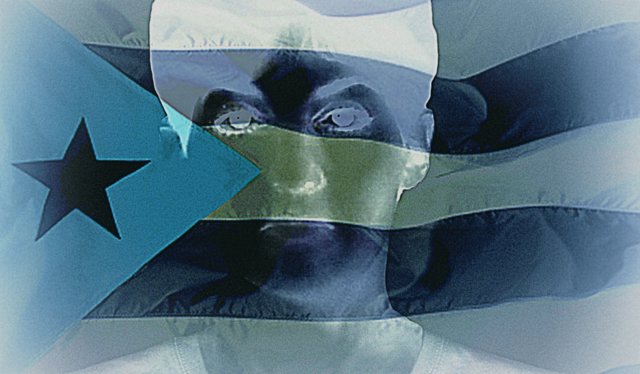
Wednesday morning, I suppose I had number stations on the brain. It was no surprise, as I had just watched The Numbers Station the previous night. Nonetheless, I experienced a rather strange coincidence: I was reading an intriguing article about Ana Montes, “one of the most damaging spies in U.S. history,” when my shortwave radio–parked on 5,855 kHz–suddenly began to fire out an eerie series of numbers and data bursts from the Cuban numbers station, HM01. It was, unquestionably, the perfect accompaniment to the words I was reading.
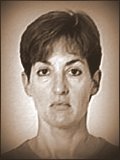
A reader sent Montes’ story–written by Jim Popkin for The Washington Post Magazine–which made for fascinating reading. And as I read the account of Ana Montes’ rise in the ranks of the DIA, while simultaneously becoming one of Cuba’s most important spies, I remembered that it was actually Montes’ case that reader Dirk Rijmenants’ referred to in his paper, and that we posted earlier this year.
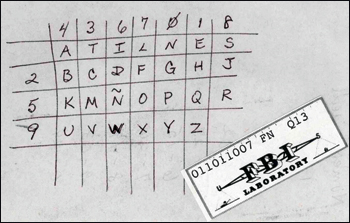
A “cheat sheet” provided by Cuban intelligence that Ana Montes used to help her encrypt and decrypt messages to and from her handlers. (Source: FBI)
Popkin’s account of Ana Montes’ life, character, promotions within the Defense and Intelligence Agency, and the sequence of events that led to her FBI investigation and imprisonment, are the stuff of spy novels. And of course, he mentions numbers stations:
[Montes’] tradecraft was classic. In Havana, agents with the Cuban intelligence service taught Montes how to slip packages to agents innocuously, how to communicate safely in code and how to disappear if needed.[…]
Montes got most of her orders the same way spies have since the Cold War: through numeric messages transmitted anonymously over shortwave radio. She would tune a Sony radio to AM frequency 7887 kHz, then wait for the “numbers station” broadcast to begin. A female voice would cut through the otherworldly static, declaring, “Atención! Atención!” then spew out 150 numbers into the night. “Tres-cero-uno-cero-siete, dos-cuatro-seis-dos-cuatro,” the voice would drone. Montes would key the digits into her computer, and a Cuban-installed decryption program would convert the numbers into Spanish-language text.[…]
On a side note, as Rijmenants points out, using a computer to decipher a numbers station was both unnecessary and risky.
The story continues:
Ana Montes
[…]On May 25, 2001, [an FBI team] slipped inside Apartment 20. Montes was out of town with Corneretto [her boyfriend], and the FBI searched her closets and laundry bins, paged through shelves of neatly stacked books and photographed personal papers. They spotted a cardboard box in the bedroom and carefully opened it. Inside was a Sony shortwave radio. Good start, Lapp thought. Next, techs found a Toshiba laptop. They copied the hard drive, shut down the computer and were gone.[…]The documents, which Montes had tried to delete, included instructions on how to translate numbers-station broadcasts and other Spy 101 tips.[…][…]Later that day, an FBI evidence team scoured Montes’s apartment for hours. Hidden in the lining of a notebook they found the handwritten cipher Montes used to encrypt and decrypt messages, scribbled shortwave radio frequencies and the address of a museum in Puerto Vallarta, Mexico, where she was meant to run in an emergency. The crib sheets were written on water-soluble disappearing paper.[…]
The story Popkin recounts, though, paints the picture of a very complex operative. One who, until discovered, was very successful at her craft. She pulled the wool over the eyes of the DIA and spied for the Cuban government for many years.
The story is complex, and Popkins’ account somehow maneuvers through the twists and turns.
If you want to experience what I did–if a little less coincidentally–click here to read Popkin’s full article, and meanwhile play this recording I made of the Cuban numbers station HM01, below:
Note that the year Montes listened to the Cuban numbers station on 7,887 kHz, it only contained numbers–unlike the recording here of HM01 (Hybrid Mode 01) which contains both voice and RDFT data bursts (which you can also decode, but not necessarily decipher).
The following is a no-spoiler review, as I assume many of you may be waiting for the film to hit the big screen, and I wouldn’t want to reveal any cinematic surprises.
We first mentioned The Numbers Station back in late 2011 –and admittedly, I was eager to see public attention drawn to this public-yet-covert shortwave communications medium that’s still in existence today. Indeed, it’s no wonder that a numbers station became the subject of a film; the subject is truly mysterious. Only a few days ago, while describing numbers stations to a visiting friend who had never heard of them, I played a recording of a numbers station that I made last year–her initial response upon hearing the recording was, in her words, that she experienced “chills” running up her spine.
But what is a numbers station?
Numbers stations, for those of you not familiar with them, are shortwave radio broadcasts that contain only strings of what seem to be random numbers. In truth, these numbers are encrypted messages for operatives in the field (otherwise known as secret agents). The operatives tune in the station with a simple shortwave radio, then decode the message with a one-time decryption key. Once the message has been deciphered, the message pads are immediately burnt or destroyed (or, at least, they’re meant to be…). Oddly, even though this is a very public communication which anyone with a shortwave radio can hear, only one or two individuals will likely ever decode the message. Such messages have been known to exist in a variety of languages at least since the time of the Cold War, but strangely did not conclude with the Cold War’s supposed end–they are ongoing even today. (Click here to check out our other numbers station posts.)
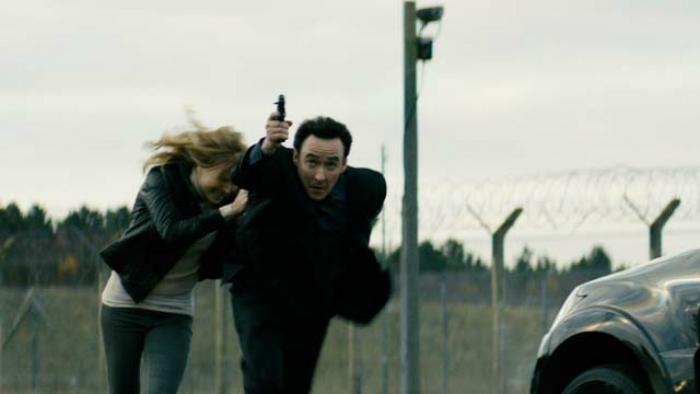
John Cusack as Emerson (Photo: Image Entertainment)
The Movie
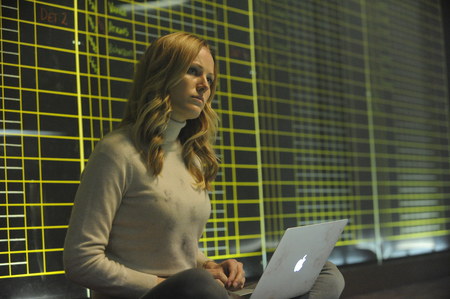
In the movie The Numbers Station, John Cusack’s character, Emerson, is a seasoned field operative–a “black-ops” agent–who faces a life-changing dilemma in the field which places his career in jeopardy. In an attempt to give Emerson some time to reconcile his emotions, his leader (Liam Cunningham) assigns him to what should be a simple, routine assignment: to protect Catherine (Malin Akerman), a cryptologist who broadcasts at a rural remote numbers station in the UK.
Things go terribly wrong when the station is compromised and Cusack finds himself again facing the same dilemma that sent him to this assignment in the first place: whether to “retire” his asset (namely, Catherine) in order to fulfill his duty, by cutting off loose ends? Or will his conscience–and tenuous friendship with Catherine–take him in another direction? It’s a difficult ethical dilemma, one Emerson has been attempting to avoid.
Malin Akerman as Catherine (Photo: Image Entertainment)
I’ve seen a number of John Cusack films over the years, and while he’s an extraordinary talent, The Numbers Stationunfortunately doesn’t quite allow us to see his full range as an actor simply because his character, Emerson, is stoic and quite introspective. But the chemistry between Emerson and Catherine is complex and tense, and one can’t help but believe he cares deeply for her.
On the action front, The Numbers Station is a much greater success: pacing is good, with a few moments to collect your breath; still, there’s always looming conflict. The bulk of the film is set in a dimly lit, underground bunker-come-numbers station, and there are actually very few shoot-’em-out scenes, yet the tension and suspense are constant.
I won’t comment on how the plot resolves, but I can say that if you like dark films with tension, moral decisions, action, and intrigue, this is well worth watching. I enjoyed it.
Moreover, if you love shortwave radio, and are intrigued by numbers stations, you will be pleased to discover that this film treats the concept with due respect and more accuracy than I would have anticipated.
(Photo: Image Entertainment)
How accurate is The Numbers Station?
While those who write about numbers stations have presumably never worked for one, there’s an existing body of knowledge out there built on thousands of hours of listening, cataloging stations and even court documents from cases involving spies. This gives us a fairly accurate idea of the true nature of numbers stations.
Likely inaccuracies
Though it is possible, I have never heard of a numbers station which has a live voice behind the microphone, reading numbers; these would most likely be advance-recorded or computer generated.
In the film, Malin Akerman’s character, Catherine, only seems to read a string of numbers for a matter of seconds, not minutes; in reality, this would take much more time.
I heard no preamble of numbers to ID the correct decipher key.
And yet…likely accuracies
In the film, under standard operating conditions, no one at the station knows the nature of the messages being broadcast–this reflects a probable fact about such stations.
The numbers station is located in a rural and remote part of the UK, a convincing setting for a numbers station (though some may broadcast from major broadcasting sites).
Once the station has been compromised, Cusack’s character explains in some detail how numbers stations work on the operative’s end; this description is very true to what is known or believed of actual numbers stations.
So, should you see it?
I anticipate that most any shortwave radio enthusiast will enjoy The Numbers Station. As a non-movie-reviewer–in other words, as a regular joe public movie-goer–I give it 8 stars out of 10. Go ahead!
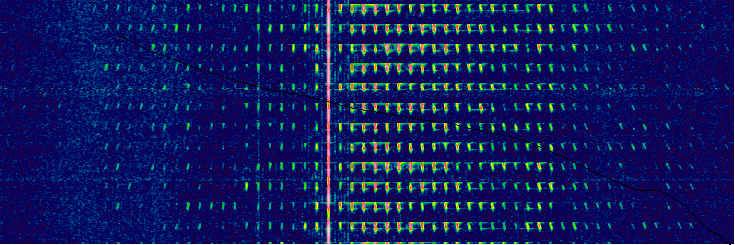
The website Intellihub.com features an Op Ed piece regarding a recently detected numbers station supposedly originating from North Korea. The station, reported by a ham radio operator, is in single-side band and adjacent to the Voice of Korea.
Below is an excerpt from this Op Ed piece; note my comments following:
Within hours of South Korean news sources breaking a story that several Sang-Ho class submarines had disappeared from their North Korean bases, a ham radio operator named Tim, picked up a “numbers station” broadcasting on the same frequency as “The Voice of Korea” propaganda station. [check out our recent post] What makes this even more interesting is that at the tail end of the numbers transmission there was a long duration digital transmission as well.
So what makes this number station significant is the proximity in timing to the disappearance of the San-Ho class submarines, as well as the digital transmission.
[…]What is more significant is the digital signal at the end of the transmission. Digital transmissions such as this one may indicate the presence of a burst transmission which contains a compressed and encrypted message bound for some covert force, somewhere. Typically a burst transmission is used to minimize the download time at the end point to prevent discovery. The unusual part of this potential burst transmission is being attached to a numbers station as well as the length and the power of the broadcast. Normal burst transmissions are in the one second to two second range. This transmission was in the 10 to 15 second range which is almost unheard of, unless the end point is a submarine.
[…]The ham operator who picked up this particular transmission was located in the Midwest of the United States, and he reported the transmission was received 4 by 5 indicating a significant power was used to send the transmission. That level of power coupled with the length and possible submarine end point opens up a new and alarming tangent to this escalating conflict. It is important to point out that the numbers are being read in Spanish but that is typically done to confuse the original source of the transmission. In this case the transmission was detected on a upper side band of the AM range used by the Voice of Korea so while the numbers are Spanish the transmission does appear to originate in North Korea. That fact coupled with the missing submarines seems to provide evidence of the nature of the transmission despite being in Spanish. Its also important to note that the numbers being in Spanish could also be used to employ a different set of codes in the operatives code books.
Two months ago, I posted that David Goren, talented radio producer and shortwave radio artist, created a Numbers Station installation in the Secret Wars exhibition at the Proteus Gowanus gallery in Brooklyn, NY.
David has recently published the audio that accompanies his installation.
Take note that this is not a radio documentary–rather, it’s an expansion of his original piece, and part of his sound installation at Proteus Gowanus. Enjoy:

 James Cook, associate editor, at The Kernal has written an excellent article about the Russian numbers station UVB-76. Those of us who listen to numbers stations are very familiar with this reliable buzzer on 4.625 MHz. Cook writes: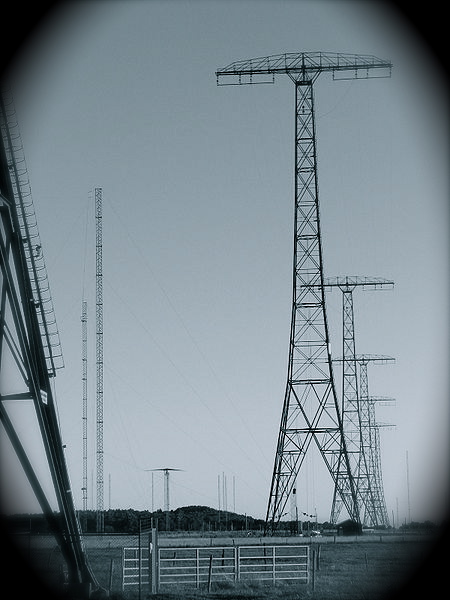




 Two months ago,