Tag Archives: Radio Waves

Radio Waves: Chelmsford Radio at 100 Years, First Broadcast Station Site, Alfred Vail, and News Executives Purged from VOA

Radio Waves:  Stories Making Waves in the World of Radio

Because I keep my ear to the waves, as well as receive many tips from others who do the same, I find myself privy to radio-related stories that might interest SWLing Post readers.  To that end: Welcome to the SWLing Post’s Radio Waves, a collection of links to interesting stories making waves in the world of radio. Enjoy!

Many thanks to SWLing Post contributors John Hoad, Bruce Atchison, and David Korchin for the following tips:


Chelmsford celebrates 100 years of radio with a play (Radio Today)

The city of Chelmsford is celebrating its status as ‘the birthplace of radio’ 100 years ago today with a special live stream of a new play about the Marconi Company tests of 1920.

Britain’s first ever radio entertainment broadcast took place on 15 June 1920, and featured two arias by Australian operatic tenor Dame Nellie Melba, one of most famous singers of the late Victoria era. The broadcast from the Marconi Factory was heard all over Europe and picked up as far away as Canada.

To mark the milestone, Chelmsford City Theatre is streaming a radio play The Power Behind the Microphone: The First Live Radio Entertainment Broadcast about the original broadcast, 100 years to the minute at 7.10pm this evening. International opera star Anna Steiger will recreate the concert given by Madame Melba as part of a radio play based on the story of that fateful night and the breakthroughs that made it possible.[]

https://youtu.be/h5hO9PsxJwM?t=1384

Site of the World’s First Radio Broadcasting Station (Atlas Obscura)

Three plaques mark the spot where the “forgotten father of broadcasting” worked.

CHARLES “DOC” HERROLD WAS A pioneer. After founding his College of Engineering and Wireless in 1909 inside the Garden City Bank building at 50 West San Fernando Street in San Jose, California, he launched the world’s first radio broadcasting station, which beamed music, news, and notably, advertising to listeners on a regular basis.

Herrold and his team at Station FN, which included his own wife, the world’s first female disc jockey, epitomized the mantra of many a Silicon Valley startup today: “move fast and break things.” His early transmitting devices burned out one after the other, and Herrold had to use a water-cooled microphone. He stole wattage from San Jose’s street car line to power his innovative “Arc Fone” transmitter, and cut a deal with a local store to play records on a Victrola that he would point at the microphone.[]

Morse’s Partner Argued He Invented Famous Code—to No A-Vail (HistoryNet.com)

Alfred Vail came up with dots and dashes, but Patent Office gave credit to Samuel Morse, the better known inventor

In 1887, 18 years after his father’s death, Stephen Vail took up metaphorical arms to claim Alfred Vail’s place as a key figure in communications history. Starting a war of words that would last decades and end with a declaration carved into stone, the younger Vail bombarded newspaper editors with letters. Alfred Vail’s son insisted that his dad had invented the dot-and-dash system used in telegraphy and known to all, and most gallingly to the younger man, as “Morse” code.

Before telegraphy, the United States had been more a collection of outposts than a nation—when a treaty ended the War of 1812, word from peace talks in Europe between Britain and the United States took so long to creep across the Atlantic that two weeks after the signatures on the peace treaty had dried British and American troops were fighting the Battle of New Orleans. Until telegraphy arrived for good in 1844, information traveled no faster than horses could gallop, trains could roll, or ships could sail. News from Boston reached San Francisco and vice versa by traveling aboard vessels that had to round South America’s southern tip. Only dreamers spoke of rails crossing North America or a canal traversing the Isthmus of Panama. []

Trump administration purges news execs from U.S. agency meant to counter disinformation, leaving staff fearing more to come (CBS News)

The overnight purge of top news organization officials at the US Agency for Global Media (USAGM) has raised concern among its federal government employees and reporters that their jobs, immigration status, and editorial independence may soon be at risk following the arrival of new CEO Michael Pack.

Pack, who is a conservative filmmaker and close ally of one-time Trump adviser Steve Bannon, and had just stepped into the job after being confirmed by the Republican-led Senate earlier this month, did not respond to a request by CBS News for comment or explanation.

“Pack uses deep state language. Is Bannon calling the shots?”

A USAGM source said this is the question being pondered by executives and journalists inside the organization now.

Four news division heads were removed from their positions, including Middle East Broadcasting Network chief Alberto Fernandez, who is a former US Ambassador, Radio Free Asia’s Bay Fang, Emilio Vazquez of the office of Cuba Broadcasting, and Radio Liberty’s Jamie Fly. Replacements have yet to be named.

Steve Capus, the former CBS and NBC News executive who had been serving as a senior advisor, was also dismissed. Earlier this week, the top director and deputy director at Voice of America resigned as did the head of the Open Technology Fund Libby Liu, which promotes global internet freedoms.[]


Do you enjoy the SWLing Post?

Please consider supporting us via Patreon or our Coffee Fund!

Your support makes articles like this one possible. Thank you!

Radio Waves: RIP Dame Vera Lynn, 1928 London Noises, Repoliticizing VOA, and Shortwave Trading At the Speed of Light

Dame Vera Lynn (1917-2020)

Radio Waves:  Stories Making Waves in the World of Radio

Because I keep my ear to the waves, as well as receive many tips from others who do the same, I find myself privy to radio-related stories that might interest SWLing Post readers.  To that end: Welcome to the SWLing Post’s Radio Waves, a collection of links to interesting stories making waves in the world of radio. Enjoy!

Many thanks to SWLing Post contributors Tracy Wood, Dennis Dura, David Goren, and Kim Elliott for the following tips:


Obituary: Dame Vera Lynn, a symbol of resilience and hope (BBC News)

Dame Vera Lynn, who has died at the age of 103, was Britain’s wartime Forces’ Sweetheart, and remained one of the country’s most potent symbols of resilience and hope.

With songs such as We’ll Meet Again and The White Cliffs of Dover, she inspired both troops abroad and civilians at home during World War Two.

As Britain’s cities came under attack, her wistful songs, with their messages of yearning and optimism, were heard in millions of British homes.

And 75 years later, the country turned to her once again as it faced another stern test.[]

Click here to read our SWLing Post tribute to Dame Vera Lynn from 2015 which includes a recording made from my Scott Marine Model SLRM.

London street noises 1928 (Sound and History)

THERE ARE NO BBC radio recordings surviving from before 1931, so the job of representing the 1920s falls to this curiosity from the Columbia Graphophone Company. It’s a 12” 78rpm disc made in 1928 in association with the Daily Mail newspaper.

It seems likely that the disc was somehow tied in with a Daily Mail campaign over urban traffic noise. The commentator on both sides of the disc is a man named Commander Daniel and he doesn’t approve of everything he hears in the city streets.

The recordings were made from single, static locations in Leicester Square and Beauchamp Place on Tuesday 11th and Thursday 20th September respectively. Columbia probably used a recording van equipped with a disc-cutter.[]

Repoliticizing Voice of America (The Hill)

When Michael Pack takes over as the first politically-appointed CEO of the U.S. Agency for Global Media, his first task will be to comprehend the bewildering array of international broadcasting entities under the USAGM. This includes two government agencies: Voice of America and Office of Cuba Broadcasting (Radio and TV Martí), and four government funded corporations: Radio Free Europe/Radio Liberty, Radio Free Asia, Middle East Broadcasting Networks (the Arabic-language Alhurra and Radio Sawa) and the anti-censorship Open Technology Fund. Within this structure are broadcasting outlets that straddle two entities, such as the Russian-language Current TV. All told, the entities distribute content in 61 languages.

When past that hurdle, Pack must then decide if he wants to maintain the journalistic independence of USAGM’s entities, or if he wants to move them towards advocacy of the administration’s policies.[]

Companies Pitch Shortwave Radio to Shave Milliseconds Off Trades (Bloomberg)

High-frequency traders will famously do almost anything to get the latest market data and send their buy and sell orders a few milliseconds ahead of the competition. They blasted through mountains to build the most direct fiber-optic routes possible between exchanges in a competition that transformed global markets and was made famous by Michael Lewis’s book Flash Boys. Soon, pinging light through glass fiber at more than 124,000 miles per second wasn’t fast enough—the glass slows things down—so traders moved on to microwave transmitters that send signals through the air.

But that has problems, too. Microwaves travel only roughly as far as the eye can see before they peter out and need a signal boost. Now two rival market telecommunications companies have signed a pact that they say will give traders more access to experimental wireless signals which can travel across oceans.

To do that, signals need a longer wavelength—known as a shortwave rather than microwave—that bounces between the water and atmosphere. It’s an imperfect solution. The waves can handle only a fraction of the data that fiber can, carrying about a kilobit per second vs. gigabits. And some signals can be lost.

Raft Technologies Inc., a startup based in Tel Aviv, says the trade-offs are worth it. Raft says it can send data over shortwave from Chicago to Frankfurt in 31.4 milliseconds, which it says is about 4.5 milliseconds faster than the best available fiber route. That’s an eternity in an industry that tends to measure improvements by the thousandth of a millisecond. The company says the signal is about 85% reliable, compared with 100% for fiber. Clients can use a fiber line in parallel as a fail-safe measure.[]


Do you enjoy the SWLing Post?

Please consider supporting us via Patreon or our Coffee Fund!

Your support makes articles like this one possible. Thank you!
Radio Waves: Free Foundation License Course, More Titanic Radio, CQD, and ARRL Field Day Waivers

Radio Waves:  Stories Making Waves in the World of Radio

Because I keep my ear to the waves, as well as receive many tips from others who do the same, I find myself privy to radio-related stories that might interest SWLing Post readers.  To that end: Welcome to the SWLing Post’s Radio Waves, a collection of links to interesting stories making waves in the world of radio. Enjoy!

Many thanks to SWLing Post contributors Trevor, Mark Hirst and Ulis Fleming for the following tips:


Register now for free Amateur Radio Foundation Online training course (Southgate ARC)

The next free amateur radio Foundation Online training course run by volunteers from Essex Ham starts on Sunday, June 7

The Coronavirus outbreak and the RSGB’s introduction of online exams that can be taken at home has led to a surge in demand for free online amateur radio training courses such as that run by Essex Ham.

These courses have been very popular and early registration is advised. 313 people took the course that started on May 3 and a further 235 are on the course that started on May 17.

You can find out more about online training and register to join a course at
https://www.essexham.co.uk/train/foundation-online/

Essex Ham
https://www.essexham.co.uk/
https://twitter.com/EssexHam

US court grants permission to recover Marconi telegraph from Titanic wreckage (ARS Technica)

But NOAA is fiercely opposed to the controversial salvage mission.

When RMS Titanic struck an iceberg on April 14, 1912, crew members sent out numerous distress signals to any other ships in the vicinity using what was then a relatively new technology: a Marconi wireless telegraph system. More than 1,500 passengers and crew perished when the ship sank a few hours later. Now, in what is likely to be a controversial decision, a federal judge has approved a salvage operation to retrieve the telegraph from the deteriorating wreckage, The Boston Globe has reported.

Lawyers for the company RMS Titanic Inc.—which owns more than 5,000 artifacts salvaged from the wreck—filed a request in US District Court in Alexandria, Virginia, arguing that the wireless telegraph should be salvaged because the ship’s remains are likely to collapse sometime in the next several years, rendering “the world’s most famous radio” inaccessible. US District Judge Rebecca Beach Smith concurred in her ruling, noting that salvaging the telegraph “will contribute to the legacy left by the indelible loss of the Titanic, those who survived, and those who gave their lives in the sinking.”

However, the National Oceanic and Atmospheric Administration (NOAA) is fiercely opposed to the salvage mission. The agency argues in court documents that the telegraph should be left undisturbed, since it is likely to be surrounded “by the mortal remains of more than 1500 people.” Judge Smith countered in her decision that the proposed expedition meets international requirements: for instance, it is justified on scientific and cultural grounds and has taken into account any potential damage to the wreck.[]

Why Titanic’s first call for help wasn’t an SOS signal (National Geographic)

When RMS Titanic set sail in 1912, it was blessed and cursed with the latest in communication technology—the wireless telegraph. In the last hours after Titanic hit an iceberg, radio messages sent from the storied sinking ship summoned a rescue vessel that saved hundreds of people, but also sowed confusion with competing distress calls and signal interference. More than 1,500 people died that fateful night.

Now, a recent court ruling may pave the way to the recovery of Titanic’s telegraph, designed by Guglielmo Marconi, a telecommunications pioneer and 1909 Nobel Prize winner in physics who invented the first device to facilitate wireless communications using radio waves.

[…]Despite the limitations of the Marconi telegraph—and the fact that it wasn’t intended to be used as an emergency device—Titanic was outfitted with a radio room and a Marconi-leased telegraph machine. Two young Marconi-employed operators, chief telegraphist Jack Phillips and his assistant Harold Bride, sent Morse code “Marconigrams” on behalf of Titanic’s well-heeled customers 24 hours a day during its maiden voyage in April 1912.

Both Marconi’s technology monopoly and the torrent of personal messages conveyed through Titanic’s telegraph proved fatal on that April night. Phillips was so overwhelmed by a queue of incoming and outgoing guest telegrams —one Titanic passenger wanted to “notify all interested” about an upcoming poker game in Los Angeles—that he didn’t pass on messages about the ice threatening Titanic’s ocean environs. When a nearby vessel, SS Californian, telegraphed that it was already surrounded by ice, Phillips testily responded “Shut up! I am busy.”

Once Titanic hit the iceberg, Phillips tone shifted and he used the Marconi distress signal: “CQD.”[]

Temporary Rule Waivers Announced for 2020 ARRL Field Day (ARRL News)

With one month to go before 2020 ARRL Field Day, June 27 – 28, the ARRL Programs and Services Committee (PSC) has adopted two temporary rule waivers for the event:

1)      For Field Day 2020 only, Class D stations may work all other Field Day stations, including other Class D stations, for points.

Field Day rule 4.6 defines Class D stations as “Home stations,” including stations operating from permanent or licensed station locations using commercial power. Class D stations ordinarily may only count contacts made with Class A, B, C, E, and F Field Day stations, but the temporary rule waiver for 2020 allows Class D stations to count contacts with other Class D stations for QSO credit.

2)      In addition, for 2020 only, an aggregate club score will be published, which will be the sum of all individual entries indicating a specific club (similar to the aggregate score totals used in ARRL affiliated club competitions).

Ordinarily, club names are only published in the results for Class A and Class F entries, but the temporary rule waiver for 2020 allows participants from any Class to optionally include a single club name with their submitted results following Field Day.

For example, if Podunk Hollow Radio Club members Becky, W1BXY, and Hiram, W1AW, both participate in 2020 Field Day — Hiram from his Class D home station, and Becky from her Class C mobile station — both can include the radio club’s name when reporting their individual results. The published results listing will include individual scores for Hiram and Becky, plus a combined score for all entries identified as Podunk Hollow Radio Club.

The temporary rule waivers were adopted by the PSC on May 27, 2020.

ARRL Field Day is one of the biggest events on the amateur radio calendar, with over 36,000 participants in 2019, including entries from 3,113 radio clubs and emergency operations centers. In most years, Field Day is also the largest annual demonstration of ham radio, because many radio clubs organize their participation in public places such as parks and schools.

Due to the COVID-19 pandemic, many radio clubs have made decisions to cancel their group participation in ARRL Field Day this year due to public health recommendations and/or requirements, or to significantly modify their participation for safe social distancing practices. The temporary rule waivers allow greater flexibility in recognizing the value of individual and club participation regardless of entry class.

ARRL is contacting logging program developers about the temporary rule waivers so developers can release updated versions of their software prior to Field Day weekend. Participants are reminded that the preferred method of submitting entries after Field Day is via the web applet. The ARRL Field Day rules include instructions for submitting entries after the event. Entries must be submitted or postmarked by Tuesday, July 28, 2020.

The ARRL Field Day web page includes a series of articles with ideas and advice for adapting participation this year.[]


Do you enjoy the SWLing Post?

Please consider supporting us via Patreon or our Coffee Fund!

Your support makes articles like this one possible. Thank you!

Radio Waves: Hacking Satellites, “Close-Knit” Ham Radio Culture, TV Drama Diplomacy, and Ofcom Relaxes Restricted Service Licence

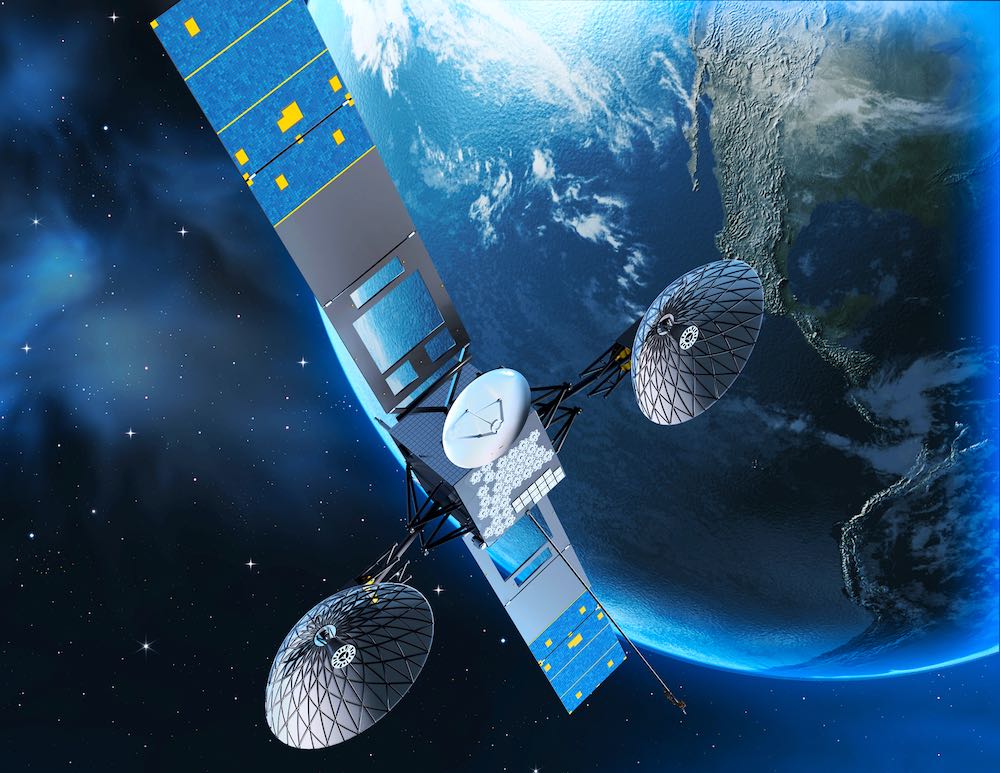
(Image: NASA)

Radio Waves:  Stories Making Waves in the World of Radio

Because I keep my ear to the waves, as well as receive many tips from others who do the same, I find myself privy to radio-related stories that might interest SWLing Post readers.  To that end: Welcome to the SWLing Post’s Radio Waves, a collection of links to interesting stories making waves in the world of radio. Enjoy!

Many thanks to SWLing Post contributors BJ Leiderman, London Shortwave, and Michael Bird for the following tips:


Hacker Used £270 of TV Equipment to Eavesdrop on Sensitive Satellite Communications (CBRonline.com)

“Vulnerable systems administration pages and FTP servers were publicly routable from the open internet.

An Oxford University-based security researcher says he used £270 ($300) of home television equipment to capture terabytes of real-world satellite traffic — including sensitive data from “some of the world’s largest organisations.”

James Pavur, a Rhodes Scholar and DPhil student at Oxford, will detail the attack in a session at the Black Hat security conference in early August.

Pavur will also demonstrate that, “under the right conditions” attackers can hijack active sessions via satellite link, a session overview reveals.

The news comes as the number of satellites in orbit is expected to increase from approximately 2,000 today to more than 15,000 by 2030. (Elon Musk’s SpaceX alone has permission to launch 12,000 satellites.)[]

A close-knit culture, with separation at its core (Christian Science Monitor)

Ham radio operators are a global collective with a common aim: to forge human connections in an expanding network. As COVID-19 makes us all ‘distance,’ we wanted to tune in to their world.

https://youtu.be/BMeVY_JyLFk

You’re logged in, the Zoom meeting underway, and suddenly faces freeze. The best you can do: Reboot the router and cross your fingers. You’re on the phone with a friend, deep in conversation, and the audio gets garbled as the bars on your phone drop from one to none. Technology can fail us at inconvenient times. But imagine a communications technology that could hold up even in the most rugged and remote situations.

It exists, and it’s much older than the smartphone.

Amateur radio, or ham radio, has been around for more than a century, functioning as both workhorse and recreational hobby. After the Boston Marathon bombing in 2013, amateur operators coordinated communications as cellphone systems became overloaded. They played a key role in Puerto Rico in 2017 after Hurricane Maria took down much of the communications infrastructure. Though there hasn’t been as much of a need during the pandemic – with traditional systems up and running – amateur radio is keeping its own user communities in touch, informed, and emotionally grounded.[]

Australia criticised for TV drama diplomacy (Radio New Zealand)

[Listen to full interview above or at RNZ.]

Australia has been told it should not send low-brow TV dramas and reality shows to the Pacific, but find out what the region really wants.

Canberra has announced plans to stream television content to the Pacific as part of efforts to promote Australia’s relationship with the region, and to counter Chinese influence.

But a spokesperson for advocacy group, Australia Asia Pacific Media Initiative, Sue Ahearn, says sending programmes like Neighbours, Border Force is not the answer.

She believes Australia could provide a much greater service for the Pacific.[]

Update: Licensing drive-in movies and church services (Southgate ARC)

Drive-in movie and church service event organisers could be granted temporary radio licences by Ofcom, which may allow film lovers and congregations to come together while still observing social distancing.

Ofcom has today updated its licensing information to offer guidance to individuals or organisations who may wish to hold these types of events. They require a ‘restricted service licence’ from Ofcom, so that people in their cars can hear the film soundtrack, or what is being said, on their FM car radios.

Given the current coronavirus pandemic, we are waiving the usual 60-day notice period for licence applications. We will also process applications quickly, with the aim of providing an answer to applicants within two weeks of it being received.

We recognise that these events may be a way for communities and congregations to enjoy a film or to worship, while still observing social distancing. In granting any licence, however, we are not authorising the event itself. It is for licensees to ensure that any events are permissible under Covid-19-related laws and guidance.

More information, including on how to apply for a restricted service licence, is available.
Licensing information []


Do you enjoy the SWLing Post?

Please consider supporting us via Patreon or our Coffee Fund!

Your support makes articles like this one possible. Thank you!
Radio Waves: Free Magazine from URE, C-19 Effect on Listening, Ampegon Focuses on Transmitters, and EU Directive for Car Digital Radio

(Source: Ampegon)

Radio Waves:  Stories Making Waves in the World of Radio

Because I keep my ear to the waves, as well as receive many tips from others who do the same, I find myself privy to radio-related stories that might interest SWLing Post readers.  To that end: Welcome to the SWLing Post’s Radio Waves, a collection of links to interesting stories making waves in the world of radio. Enjoy!

Many thanks to SWLing Post contributors Mike, Paul Evans,  Josh Shepperd, and Mike Terry for the following tips:


Spain’s URE makes June magazine PDF available (Southgate ARC)

In response to the ongoing Coronvirus situation Spain’s national amateur radio society URE is allowing everyone to download the PDF of the June edition of their magazine Radioaficionados

A translation of the announcement on the URE site says:

One more month, and we have already been three, with the aim of accompanying its readers in the exceptional situation caused by the spread of COVID-19, the URE in its commitment to collaborate and help to cope with the complicated situation we are currently experiencing in our country, has decided to offer free access to the magazine of the month of June and we remind you that magazines prior to December 2019 are also available to you. In this way, citizens who wish to can read these publications for free.

A small gesture so that nobody feels alone at home in the face of this global challenge.

Access is through the website download area, click on “Descargas” under “Junio 2020 – Revista” at:
https://www.ure.es/descargas/

URE in Google English
https://tinyurl.com/SpainURE

Ampegon Puts Focus on Shortwave Transmitters (Radio World)

Ampegon Power Electronics highlights progress on the company’s third-generation solid-state shortwave transmitters, which it says will offer “significant advances in efficiency.”

The company says this work will pave the way toward higher-power broadcast outputs and meet current expectations of a shortwave equivalent to medium-wave and FM transmitters. “Combined, these two developments will bring FM-quality broadcasts with all the benefits of shortwave,” said Simon Keens, Ampegon sales and business development manager.

Ampegon has also developed a retrofit upgrade to current UCS generation control systems for previous generation 100 kW, 250 kW, 300 kW and 500 kW transmitter systems.[]

Listening together, listening alone: A music professor sounds off on his shifting industries (CBC)

Brian Fauteux reflects on the way COVID-19 is affecting his two passions: music and teaching

A lot of great songs effectively reflect the feelings that accompany isolation. The experience of being alone, however, is often constructed in opposition to a longing for togetherness. Heart’s “Alone” (1987) — maybe the greatest power ballad ever recorded — confidently asserts, “‘Til now I always got by on my own.” But this is no longer the case when the song’s protagonist meets and develops undeniable feelings for another: “And now it chills me to the bone.” In another iconic 80s anthem, “Dancing in the Dark,” Springsteen grows tired and bored with himself against the desperate urge to join up with “something happening somewhere.” The act of dancing in the dark can be fun, sure, but it’s much more fun with others. Inspiration in isolation is insubstantial.

I’m an Assistant Professor of Popular Music and Media Studies, and I teach and write about the role of music in society. I’m interested in how our listening practices shape, and are shaped by, issues of sustainability in the music industries — that is, how artists make (or struggle to make) a living in this day and age.[]

EU directive on digital radio in cars (Times of Malta)

Directive (EU) 2018/1972 of the European Parliament and of the Council of December 11, 2018, establishing the European Electronic Communications Code (‘EECC’) entered into force on December 20, 2018. Member states have two years to incorporate it into national law, except where specifically mentioned.

Radio is an important medium through which citizens access a diverse range of information news and entertainment services. The EECC leverages on the ever-increasing connectivity of new generation cars as well as on the digital platforms of radio broadcasters to guarantee a more robust radio experience to all drivers, ensuring good coverage, a wider choice of radio stations and more effective access to information at all times. The EECC ensures that car drivers have access to the benefits of digital terrestrial radio wherever in the EU they have bought their new car.

On April 21, the minister responsible for communications, in consultation with the Malta Communications Authority, published Legal Notice 151 of 2020 amending the Electronic Communications Network and Services (General) Regulations, implementing the provision of the EECC dealing with the interoperability of car radio devices. In line with the regulation, any car radio receiver integrated in a new vehicle of category M which is made available on the market for sale or rent in Malta from December 21, 2020, shall comprise a receiver capable of receiving and reproducing at least radio services provided by digital terrestrial radio broadcasting of type DAB+. Radio programmes in Malta are broadcast terrestrially on DAB+.

The car radio requirement only applies to new cars.[]


Do you enjoy the SWLing Post?

Please consider supporting us via Patreon or our Coffee Fund!

Your support makes articles like this one possible. Thank you!
Radio Waves: ABC Wage Freeze, A Titanic Radio, FCC “Tweaks” LPFM Rules, and Digitizing a DX-160 Display

Radio Waves:  Stories Making Waves in the World of Radio

Because I keep my ear to the waves, as well as receive many tips from others who do the same, I find myself privy to radio-related stories that might interest SWLing Post readers.  To that end: Welcome to the SWLing Post’s Radio Waves, a collection of links to interesting stories making waves in the world of radio. Enjoy!

Many thanks to SWLing Post contributors Michael Bird, Dave Zantow, David Korchin, and Alokesh Gupta for the following tips:


ABC must freeze wages, government warns (The Guardian)

The Morrison government has put the national broadcaster on notice that it expects the ABC to embark on a six-month wage freeze to bring it in line with other taxpayer-funded agencies during the Covid-19 crisis.

The warning follows the government’s decision in early April to defer general wage increases for commonwealth public servants for six months. The public service commissioner followed up that directive by writing to all non-public service agencies – including the ABC – informing them the government expected them to adopt the same practice.

With no clear response from the ABC to the 9 April missive, Guardian Australia understands the communications minister Paul Fletcher wrote to the national broadcaster this week flagging his expectation that the organisation would defer a 2% increase for all employees scheduled to take effect in October under the ABC’s enterprise agreement.[…]

Radio used by the Titanic to call for help can be salvaged, judge rules (CNN)

A federal judge has ruled that RMS Titanic Inc. can salvage the radio used to call for help by the fated ocean liner after it struck an iceberg in 1912.

To get to the radio, divers would need to remove a part of the ship’s deckhand to reach the room known as the Marconi Suite, which houses the device.

The ruling modified an order issued on July 28, 2000, that said that RMS Titanic Inc. could not cut into the wreckage or detach any part of it.

Virginia’s eastern district court amended that order “for a unique opportunity to recover an artifact that will contribute to the legacy left by the indelible loss of the Titanic, those who survived and those who gave their lives in the sinking,” Judge Rebecca Beach Smith wrote.

Experts in the case testified to the “significant deterioration” in areas above and around the Marconi room, according to the document, and photos showed the “increasing breakdown” in the deck above the suite.

The suite, made of steel, consisted of three areas: sleeping accommodations, an operator’s room and the silent room that housed the radio. Each area was separated by wood walls that officials believe have dissolved, according to court documents.

The Marconi device and the artifacts associated with it face “significant threat of permanent loss,” the judge said in her approval of the expedition.[]

FCC Tweaks LPFM Technical Rules (Radio World)

The FCC in April modified the technical rules covering low-power FM stations. It expanded the permissible use of directional antennas; permitted waivers of protections of television Channel 6 by a specific group of reserved channel stations; expanded the definition of minor change applications for LPFM stations; and allowed LPFM stations to own boosters. Read more about the changes here.

Michelle Bradley, founder of REC Networks, is an engineer and longtime LPFM advocate.

Radio World: What’s your overall assessment of the outcome and the scope of its impact in the LPFM community?

Michelle Bradley: While the FCC did not address three major issues that are impacting LPFM stations right now —the ability to address building penetration issues, the ability to reach “local” listeners in rural areas and the disparity in how LPFM stations protect FM translators vs. how translators protect LPFMs — the changes will benefit current LPFM stations by giving them more flexibility in moving locations, reduce the need for waivers and improve LPFM service in the southern border region. It will also open some additional opportunities for new LPFM stations in the next filing window.[]

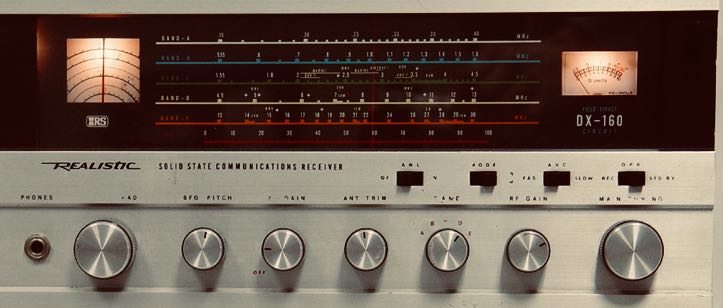
RadioShack Shortwave Goes Digital (Hackaday)

If you spent the 1970s obsessively browsing through the Radio Shack catalog, you probably remember the DX-160 shortwave receiver. You might have even had one. The radio looked suspiciously like the less expensive Eico of the same era, but it had that amazing-looking bandspread dial, instead of the Eico’s uncalibrated single turn knob number 1 to 10. Finding an exact frequency was an artful process of using both knobs, but [Frank] decided to refit his with a digital frequency display.

Even if you don’t have a DX-160, the techniques [Frank]  uses are pretty applicable to old receivers like this. In this case, the radio is a single conversion superhet with a variable frequency oscillator (VFO), so you need only read that frequency and then add or subtract the IF before display. If you can find a place to tap the VFO without perturbing it too much, you should be able to pull the same stunt.

In this receiver’s heyday, this would have been a formidable project. Today, a cheap digital display will do fine.[]


Do you enjoy the SWLing Post?

Please consider supporting us via Patreon or our Coffee Fund!

Your support makes articles like this one possible. Thank you!

Radio Waves: More Solar Minimum, Cold War Moscow, C-19 Ham Radio Event, and a WWII Code-Breaker is SK

Radio Waves:  Stories Making Waves in the World of Radio

Because I keep my ear to the waves, as well as receive many tips from others who do the same, I find myself privy to radio-related stories that might interest SWLing Post readers.  To that end: Welcome to the SWLing Post’s Radio Waves, a collection of links to interesting stories making waves in the world of radio. Enjoy!

Many thanks to SWLing Post contributors Bill Patalon, Dirk Rijmenants, Rodrigo Tarikian, and David (G4EDR) for the following tips:


Deep ‘Solar Minimum’ is feared (Southgate ARC via Forbes)

Forbes magazine reports a deep ‘Solar Minimum’ is feared as 2020 sees record-setting 100-day slump

Jamie Carter writes:

While we on Earth suffer from coronavirus, our star—the Sun—is having a lockdown all of its own. Spaceweather.com reports that already there have been 100 days in 2020 when our Sun has displayed zero sunspots.

That makes 2020 the second consecutive year of a record-setting low number of sunspots

So are we in an eternal sunshine of the spotless kind?

Read the full article at
https://www.forbes.com/sites/jamiecartereurope/2020/05/12/the-sun-is-asleep-deep-solar-minimum-feared-as-2020-sees-record-setting-100-day-slump/

Radio Moscow and the Cold War (SIGINT CHATTER)

Geopolitics and international conflicts during the Cold War made it important for the United states and the Soviet Union to inform people or influence their political views, and this in many countries around the world. But how did they reach their audience?

Today, we can hardly imagine a world without Internet, cable and satellites that brings all the news and information from across the globe in your lap. Yet, during most of the Cold War, people only had newspapers, local TV, FM and AM radio. The only solution to spread ideas was shortwave radio, as these waves travel around the globe and can listened to by everyone with a shortwave radio.

Both East and West had, and still have, shortwave radio stations with a world service. The best known were Voice of America, Radio Free Europe and Radio Liberty on one side, and Radio Moscow, Radio Beijing and Radio Havana Cuba on the other side. Everyone had their own truth and accused the other side of expansion drift, disinformation and inciting across the world.

One truly iconic station was Radio Moscow World Service. Their foreign service broadcasting started in 1929 with transmitters in Moscow and Leningrad, and later also relay stations in Vladivostok and Magadan. Radio Moscow reached whole Eurasia, Africa and North and South America. During the Cold War, their broadcasts reached across the world with transmitters in the Soviet Union, Eastern Europe and Cuba, and they broadcast in more than 70 languages.[]

COVID-19 Radio Communication Event (SRAL)

COVID-19 RADIO COMMUNICATION EVENT
DATE: June 06-07, 2020.
STARTS 10.00 UTC SATURDAY – ENDS 09.59 UTC SUNDAY

For amateur radio operators worldwide, social distancing is not an issue. Our ham radio network of radio-wave signals flies high and wide, across all borders near and far. Amateur radio operators are well-known for their communication on skills during the happy days, but also during times of crisis.Even if ham radio operators are now confined to their homes, they are encouraged to communicate, to enhance their friendships, and to keep their minds and skills sharp for global messaging whenever needed.

Click here to download the full announcement with event details (PDF).

Tributes as World War Two code breaker Ann Mitchell dies aged 97 (BBC News)

Tributes have been paid to Ann Mitchell – one of the last of a World War Two code-breaking team at Bletchley Park – who has died aged 97.

Mrs Mitchell, who deciphered German codes at the British code-breaking centre from 1943, died at an Edinburgh care home on Monday.

Her family and friends said she had been declining in health for some years and had “a life well lived”.

The Scotsman reported she had tested positive for Covid-19 recently.

Her son Andy Mitchell, 61, told BBC Scotland: “She was a loving mother and it’s very sad but she was declining in old age with memory loss and physical frailties.

“I’m pleased she has been given the recognition for a life well lived.”[]


Do you enjoy the SWLing Post?

Please consider supporting us via Patreon or our Coffee Fund!

Your support makes articles like this one possible. Thank you!